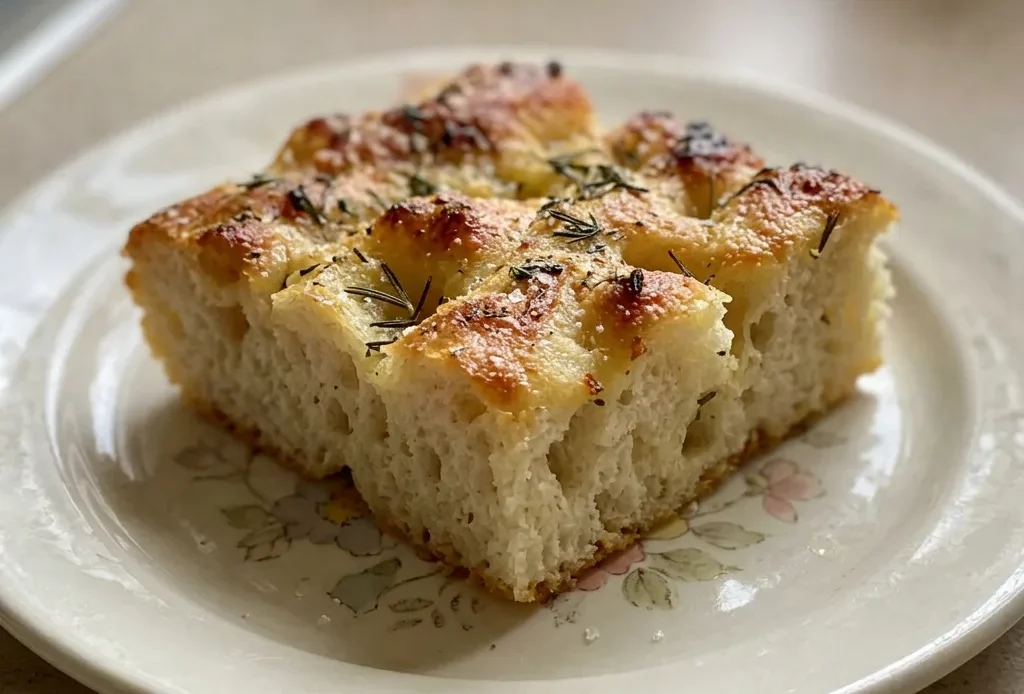
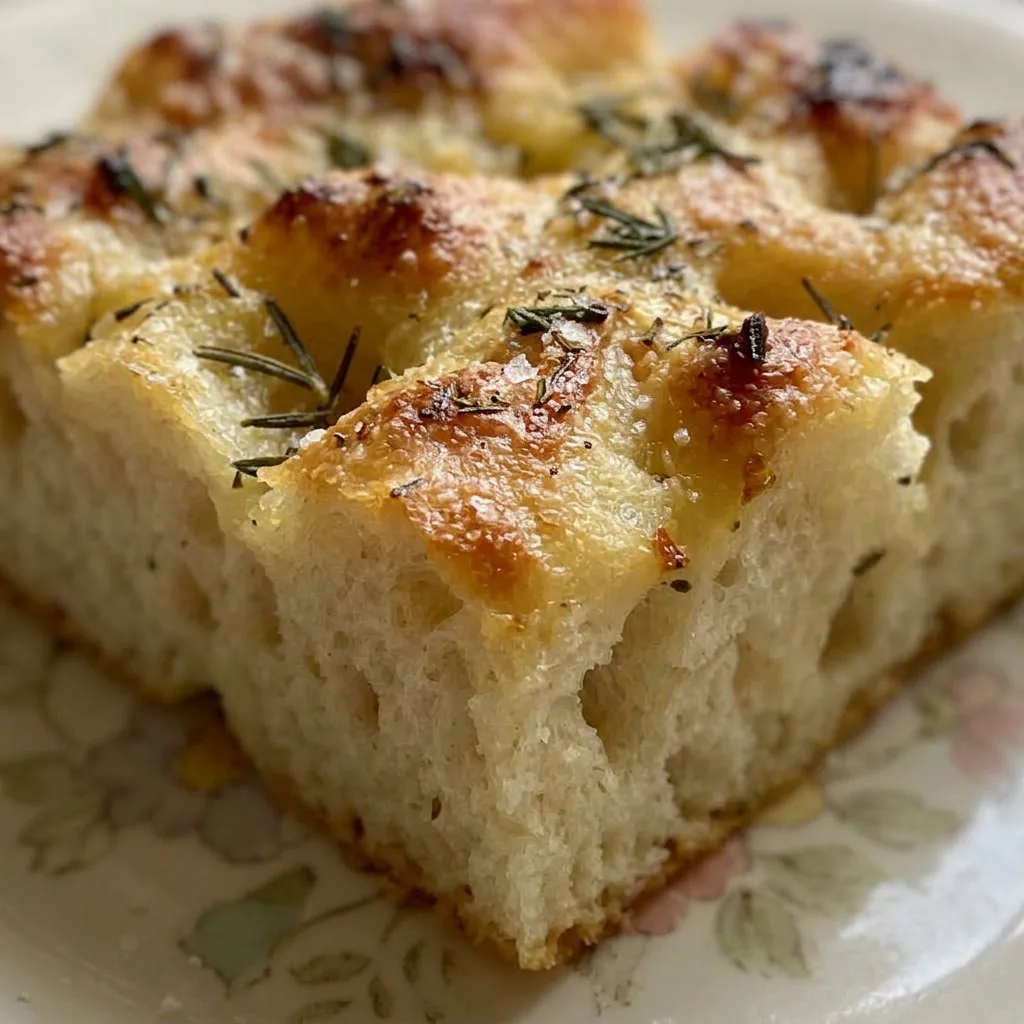
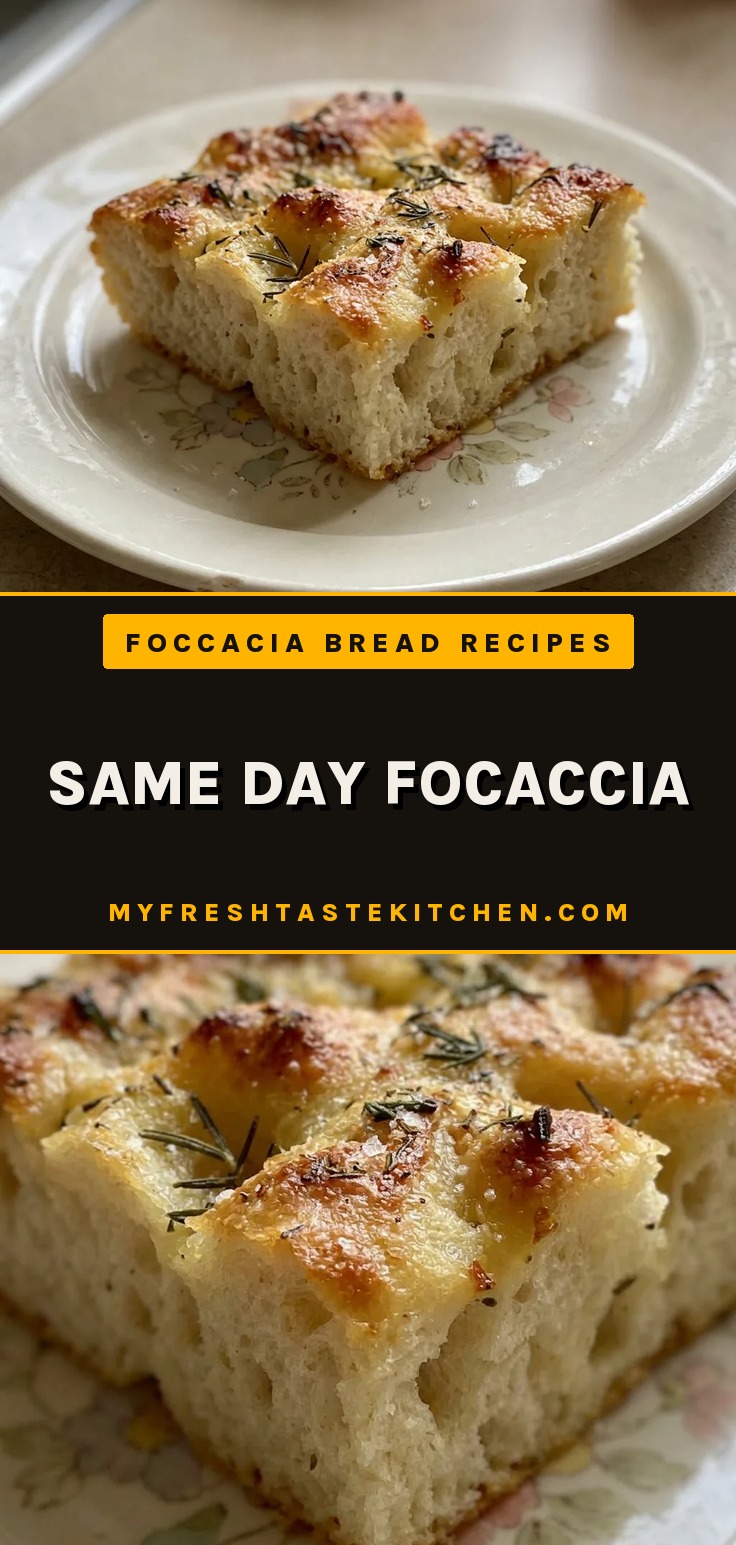
You’d think a handful of flour, water, oil, and salt couldn’t produce much more than a flat, dense bread, but this same day focaccia manages to be both airy and crisp, with a crumb full of irregular holes and a crust that shatters when you tear it. The secret isn’t a special ingredient or a long overnight fermentation; it’s the way the wet dough behaves during mixing and rising, and how the oil interacts with the heat.
Why 80% hydration matters
This dough uses 400ml water for 500g flour, a hydration of 80%. That wetness is what gives focaccia its airy, open crumb, distinguishing it from denser flatbreads.
You’ll notice the initial dough is shaggy and sticky, that’s normal. The high moisture requires a longer rise to develop gluten and trap gas, which is why it doubles in volume over an hour or so.
Despite the wet start, the dough becomes smooth and elastic after kneading. The result is a light, irregular crumb with large holes, not a tight, bready texture.
Oil builds the crust
Generous olive oil in the pan and on top does two things you can see and taste. First, it creates a crisp, golden crust on the bottom and edges, the kind that shatters slightly when you bite.
Second, the oil prevents sticking even without parchment. You brush the pan generously before adding the dough, then drizzle another 2 tablespoons over the top before baking. The surface oil pools in the dimples, frying the dough as it bakes.
That’s why the crust browns unevenly in patches, each one a spot of crunch.
Dimpling does more than look pretty
Pressing oiled fingertips into the dough before baking is the signature move. The dimples serve a real purpose: they release large air pockets trapped under the surface. Without them, those pockets would expand into big bubbles that push the dough up unevenly, leaving pale spots.
Oiled fingers slide in without sticking and leave a slick of oil in each indentation. That oil pools and fries the dough during baking, creating crisp, browned craters across the top.
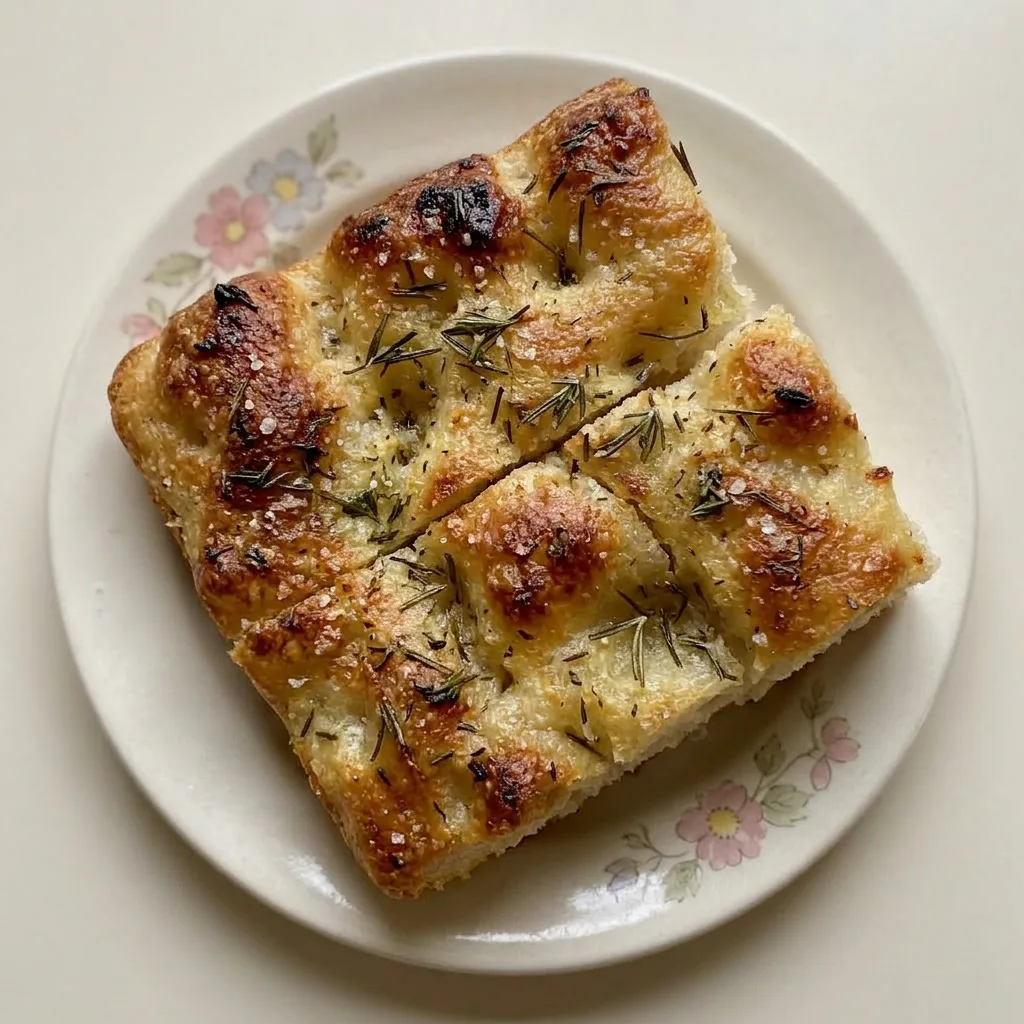
The final result is an even, golden surface with a texture that’s crunchy on the outside, tender within.
Prep: 20 min · Cook: 25 min · Total: 2 hr 30 min · Servings: 12 · Calories: 210 kcal
Ingredient notes for same-day focaccia
Bread flour: Use bread flour for its higher protein content, which builds the chewy, open crumb that focaccia is known for.
Active dry yeast: Make sure your yeast is fresh; proof it in warm water for 5 minutes if you’re unsure of its age.
Extra-virgin olive oil: Use a good quality extra-virgin olive oil for flavor; the 4 tablespoons total are split between dough and top.
Flaky sea salt: Flaky salt like Maldon gives bursts of salinity on top; table salt will dissolve and not provide the same crunch.
I used the same recipe but cut the water back because it felt too wet, then rushed the rise. The first time I accidentally left it to rise for the full time, it came out soft and I never went back.
How to shape, dimple, and bake same-day focaccia
Mix the dough
Whisk flour, salt, sugar, and yeast together. Pour in warm water and 2 tablespoons oil. Stir until a shaggy, sticky mass forms, all flour should be hydrated, no dry patches left.
Knead until smooth
Knead on a lightly floured surface for 5 to 6 minutes. The dough will start tacky but become smooth and elastic. When you can stretch a small piece thin enough to see light through without tearing, stop.
First rise
5 hours. It should double in volume. If the dough springs back quickly when poked, it needs more time.
When the indentation stays, it’s ready.
Second rise in the pan
Brush the pan generously with oil. Transfer the dough and gently stretch it to cover the pan.
Cover and let rise 30 to 45 minutes. The dough should fill the pan and feel puffy and soft.
Dimple and oil the top
Drizzle remaining 2 tablespoons oil over the dough. Press oiled fingertips straight down to the pan bottom at random spots. The oil should pool in each dimple.
If the dough deflates too much, press more gently next time.
Bake until golden and crisp
Bake at 425°F for 20 to 25 minutes. The top should be deep golden brown with darker spots in the dimples. The edges will look crisp and slightly separated from the pan.
A peek underneath shows a browned, crunchy bottom.
Same Day Focaccia
Ingredients
- 4 cups bread flour 500g
- 2 teaspoons kosher salt
- 2 teaspoons granulated sugar
- 2 1/4 teaspoons active dry yeast 10g
- 1 2/3 cups lukewarm water 400ml
- 4 tablespoons extra-virgin olive oil, separated plus additional for greasing and finishing
- Flaky sea salt for garnish
- Fresh rosemary or preferred herbs optional
Instructions
Mix Dough Ingredients:
In a large mixing bowl, whisk together the flour, salt, sugar, and instant yeast. Pour in the warm water and 2 tablespoons of the olive oil. Mix using a wooden spoon or your hands until a rough, shaggy dough comes together.Knead and Rise:
Turn the dough out onto a lightly floured work surface and knead for 5-6 minutes until it becomes smooth and elastic. Lightly coat a clean bowl with olive oil, place the dough inside, cover with a damp kitchen towel or plastic wrap, and allow to rise for 1-1.5 hours until it has doubled in volume.Stretch and Second Rise:
Brush a 9×13-inch baking pan or sheet generously with oil. Carefully transfer the risen dough into the pan. Using your fingertips, stretch and press the dough evenly to cover the entire pan. Cover once more and let it rise for an additional 30-45 minutes.Dimple and Season:
Heat the oven to 425°F (220°C). Drizzle the remaining 2 tablespoons of olive oil over the dough. With oiled fingers, create dimples by pressing gently into the dough at random intervals. Sprinkle generously with flaky salt and, if desired, fresh rosemary or other herbs.Bake Focaccia:
Bake for 20-25 minutes until the focaccia is golden brown and the edges are crisp.Cool and Serve:
Allow to cool slightly in the pan, then transfer to a wire rack. Cut into pieces and serve warm, or store for later.
Swap bread flour for all-purpose, but not the oil or water
Bread flour: All-purpose flour. Use the same weight (500g) but expect a less chewy, slightly more tender crumb.
All-purpose has less protein, so the gluten network won’t be as strong. The focaccia will be softer and won’t puff as high, but still good.
Active dry yeast: Instant yeast. Use the same amount by weight (10g) but skip proofing.
Instant yeast can be mixed directly with the dry ingredients. The rise times remain the same since both are active dry and instant are interchangeable in this recipe.
Extra-virgin olive oil: Regular olive oil or vegetable oil. You can use a milder oil, but don’t reduce the total 4 tablespoons. The oil in the dough affects tenderness, and the oil on top creates the crisp crust and pools in dimples.
Less oil means a drier, less crunchy focaccia. Flavor will be blander with vegetable oil.
Tips
- Use a digital scale to measure both flour and water by weight. Volume measurements can vary by up to 20%, throwing off the 80% hydration that gives this focaccia its open crumb.
- After the first rise, wet your hands with olive oil instead of flour when transferring the dough to the pan. This prevents sticking without adding extra flour that would alter the hydration balance.
Storage and Serving
Focaccia is at its best warm from the oven, same day you bake it. The crust stays crisp, the interior airy.
Once it cools completely, the texture holds well for about 2 days at room temperature, wrapped loosely in foil or stored in a paper bag. Refrigeration speeds staling and softens the crust, so avoid the fridge for whole pieces. For longer storage, freeze the focaccia.
Wrap it tightly in plastic wrap then foil, or use a freezer bag; it keeps for up to 3 months. Thaw at room temperature, still wrapped, then reheat uncovered in a 350°F oven for 5 to 10 minutes to restore some crunch. To reheat a single piece, use a toaster oven or a dry skillet over medium heat, pressing gently until the bottom crisps.
Microwaving will turn it rubbery. If you added fresh herbs or flaky salt as a finishing touch, add those right before serving, not during storage, as salt can draw moisture and herbs lose vibrancy.
For make ahead, you can prepare the dough through the first rise, then refrigerate it for up to 24 hours. Punch it down, shape in the pan, and let it come to room temperature before the second rise and baking.
Frequently Asked Questions
Can I make the dough the night before and refrigerate it?
Yes, you can refrigerate the dough after the first rise. Punch it down, wrap the bowl tightly, and chill for up to 24 hours.
When you’re ready, let it come to room temperature before shaping and doing the second rise. The cold fermentation will develop more flavor, but the total rise time from cold dough will be longer.
Why did my focaccia come out dense and not airy?
Most likely the dough didn’t rise enough during either the first or second rise. 5 hours until doubled; poke it, if the indentation springs back, it needs more time. Also, make sure your yeast is fresh and the water was lukewarm (not hot, which kills yeast).
Under-kneading can also leave the gluten too weak to trap gas, so knead until you can stretch a small piece thin without tearing.
How do I get a really crispy bottom crust?
Use a generous layer of olive oil in the pan, brush it on before adding the dough. The oil fries the bottom during baking, creating a crisp, golden crust.
Also, bake in a preheated 425°F oven on the middle rack; a hot oven ensures the bottom browns before the interior overbakes. Let the focaccia cool in the pan for just a few minutes, then transfer to a wire rack so steam doesn’t soften the base.
Can I freeze baked focaccia?
Yes, freeze baked focaccia for up to 3 months. Wrap it tightly in plastic wrap then foil, or use a freezer bag.
Thaw at room temperature still wrapped, then reheat uncovered in a 350°F oven for 5 to 10 minutes to restore some crunch. Avoid microwaving, which turns it rubbery.
Add fresh herbs or flaky salt after reheating, not before freezing, as salt can draw moisture and herbs lose vibrancy.
What’s the difference between focaccia and pizza dough?
Focaccia dough has a higher hydration, 80% in this recipe, which gives it a lighter, airier crumb with large irregular holes. Pizza dough typically uses less water (around 60, 65%), resulting in a denser, chewier base. Focaccia also relies on generous olive oil in the pan and on top to create a crisp, fried crust, while pizza dough is often stretched thin and baked quickly at higher heat.