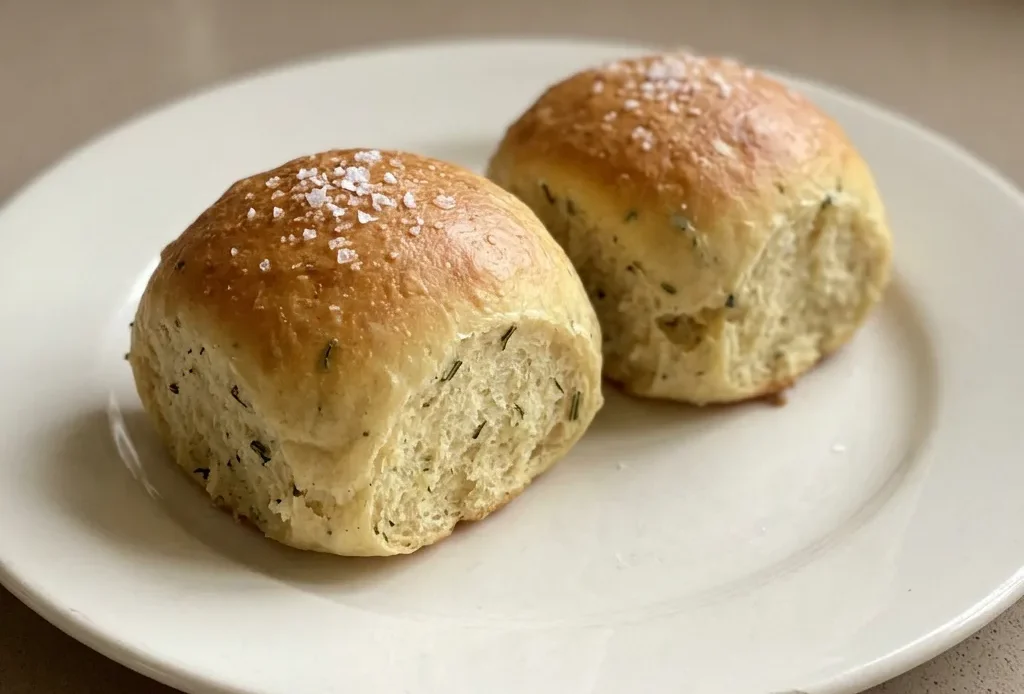
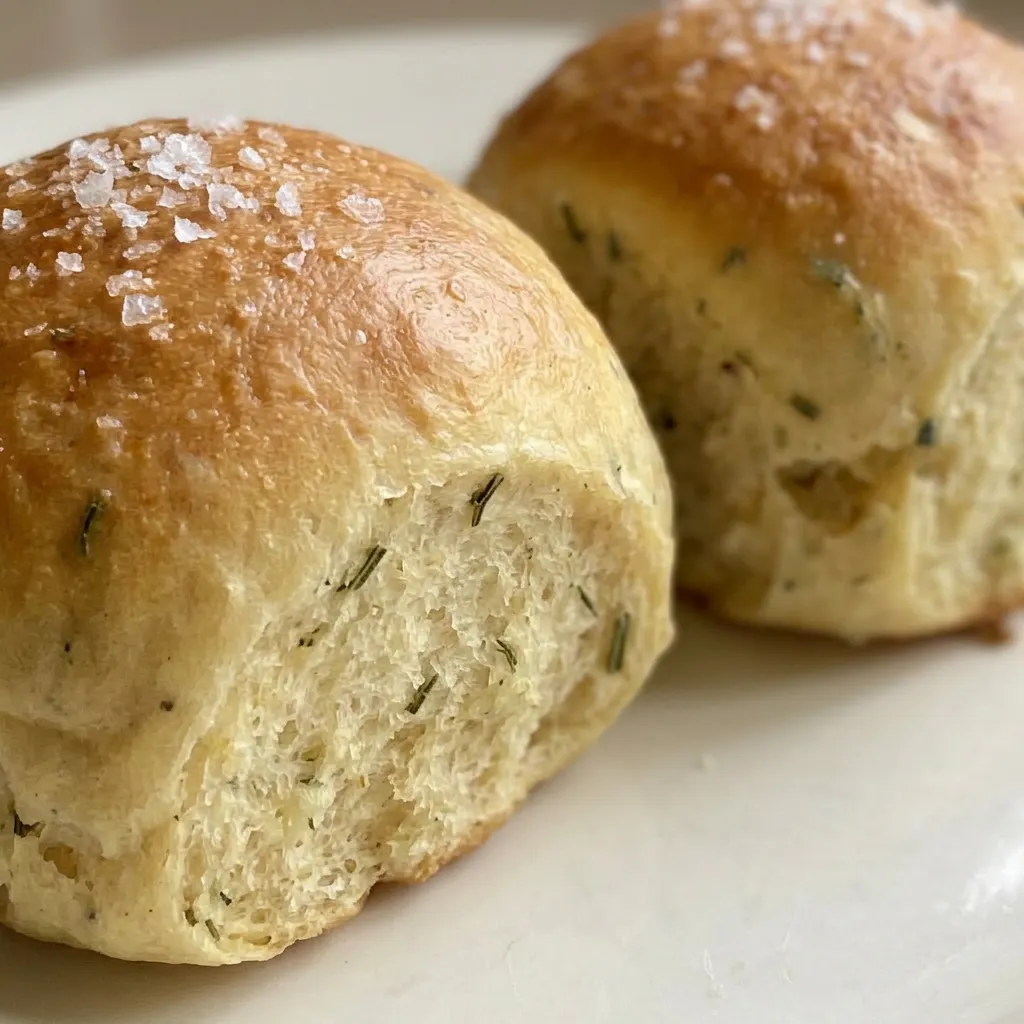
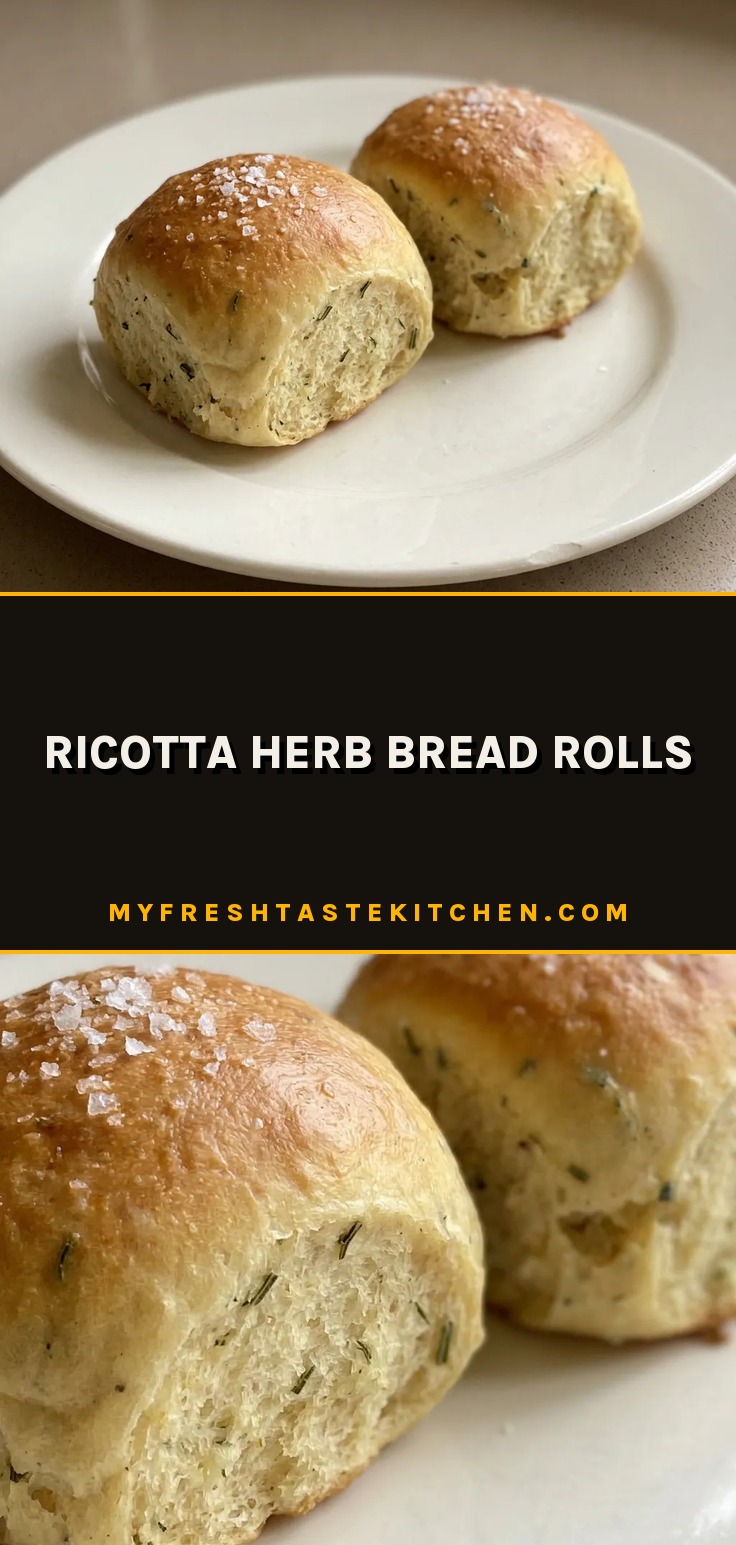
Each roll tears open to reveal a fine, tender crumb that stays moist for days, thanks to ricotta’s double hit of fat and moisture. The fresh rosemary and thyme release their bright oils right into the dough, so every bite carries that piney-herbal punch without the dusty bitterness of dried herbs. This is a forgiving dough, it wants to feel slightly tacky, not dry, and the two rises build both flavor and structure without demanding precise timing.
These ricotta herb bread rolls are soft enough for sopping up sauce but sturdy enough to split for a sandwich, and they’ll make you rethink what a dinner roll can be.
Ricotta’s tenderizing effect
Ricotta brings a double dose of moisture and fat, which means the crumb stays soft and tender rather than drying out. The cheese’s natural acidity also gently weakens the gluten network, so the rolls resist turning tough or chewy. That’s why you want the ricotta at room temperature, cold cheese seizes up the fats and doesn’t blend evenly, leaving some patches rich and others lean.
You’ll notice the dough feels supple and a bit silky from the start, not stiff. When the rolls bake, they puff up with a fine, even crumb that stays moist for days.
Why two rises build flavor
The first long rise lets yeast work slowly, producing organic acids and alcohols that deepen the bread’s character. You’ll see the dough double into a puffy, airy mass after about an hour and a half, that’s the flavor developing. The second rise after shaping is shorter, just 45 minutes, and it’s all about texture.
It gives the gluten a chance to relax and the gas bubbles to redistribute evenly, so the rolls bake up light, not dense. If you refrigerate the shaped rolls overnight, the cold slows fermentation, concentrating flavor even more without over-proofing.
Fresh herbs make the difference
Dried herbs turn dusty and muted when baked into dough. Fresh rosemary and thyme release their volatile oils right into the crumb, so every bite carries a bright, piney-herbal note. The key is mincing them finely, coarse pieces can create dry pockets or burn on the surface.
Mixing them into the liquid ingredients at the very start ensures they’re evenly dispersed throughout the dough, not clumped in one spot. You’ll smell the herbs as soon as the rolls hit the oven, and that aroma carries through to the finished bread.
Dough feel trumps flour amount
A soft roll starts with the right hydration. The dough should feel slightly tacky when you touch it, if it’s dry and stiff, you’ve added too much flour and the rolls will bake up dense.
Add the last cup of flour gradually, stopping as soon as the dough clears the bowl sides but still clings a little to your finger. Kneading until the dough is smooth and elastic builds the gluten structure just enough to trap gas without turning tough. That tacky feel is your cue that the crumb will stay tender; a dry, non-sticky dough guarantees a dry roll.
Prep: 20 min · Cook: 30 min · Total: 3 hr 20 min · Servings: 15
Ricotta, herbs, yeast: what to look for
Part skim ricotta: Use part skim, not whole milk; whole milk makes the dough too slack and greasy.
Fresh rosemary and thyme: Fresh herbs only; dried ones turn bitter and dusty when baked inside dough.
Instant yeast: Instant yeast can be mixed with dry ingredients; active dry would need proofing first.
All-purpose flour: All-purpose gives the right chew; bread flour makes rolls too tough and dense.
Mix and knead until the dough feels right
Mix the wet ingredients with the herbs
Whisk milk, ricotta, olive oil, eggs, sugar, salt, and herbs in the mixer bowl until smooth. If the ricotta clumps, press it through a sieve first. The mixture should look uniform, not streaky.
Add flour gradually
Stir in 2 cups flour by hand to form a shaggy mass. Then switch to the dough hook and add the next 1½ cups slowly. Watch for the dough to clear the bowl sides, stop adding flour when it does.
Knead until tacky, not dry
Knead on medium-high for 4 to 5 minutes. The dough should feel smooth and elastic, and when you press it with a finger, it springs back. It should be slightly tacky, if it sticks and leaves residue, add flour a tablespoon at a time.
First rise until doubled
Place the dough in an oiled bowl, cover, and let it rest at room temperature for about 1½ hours. It should double in size and feel puffy and airy when you poke it. If it hasn’t doubled, give it more time.
Shape the rolls
Punch the dough down gently and divide it into 15 equal pieces. Roll each into a tight ball by cupping your hand and rotating against the counter. Arrange them in the greased pan, they should be nearly touching.
Second rise until puffy
Brush the tops with oil and sprinkle with flake salt. Cover loosely and let rise for 45 minutes.
They should double again and look soft. If you refrigerate overnight, let them sit at room temperature for 30 minutes before baking.
Bake until golden
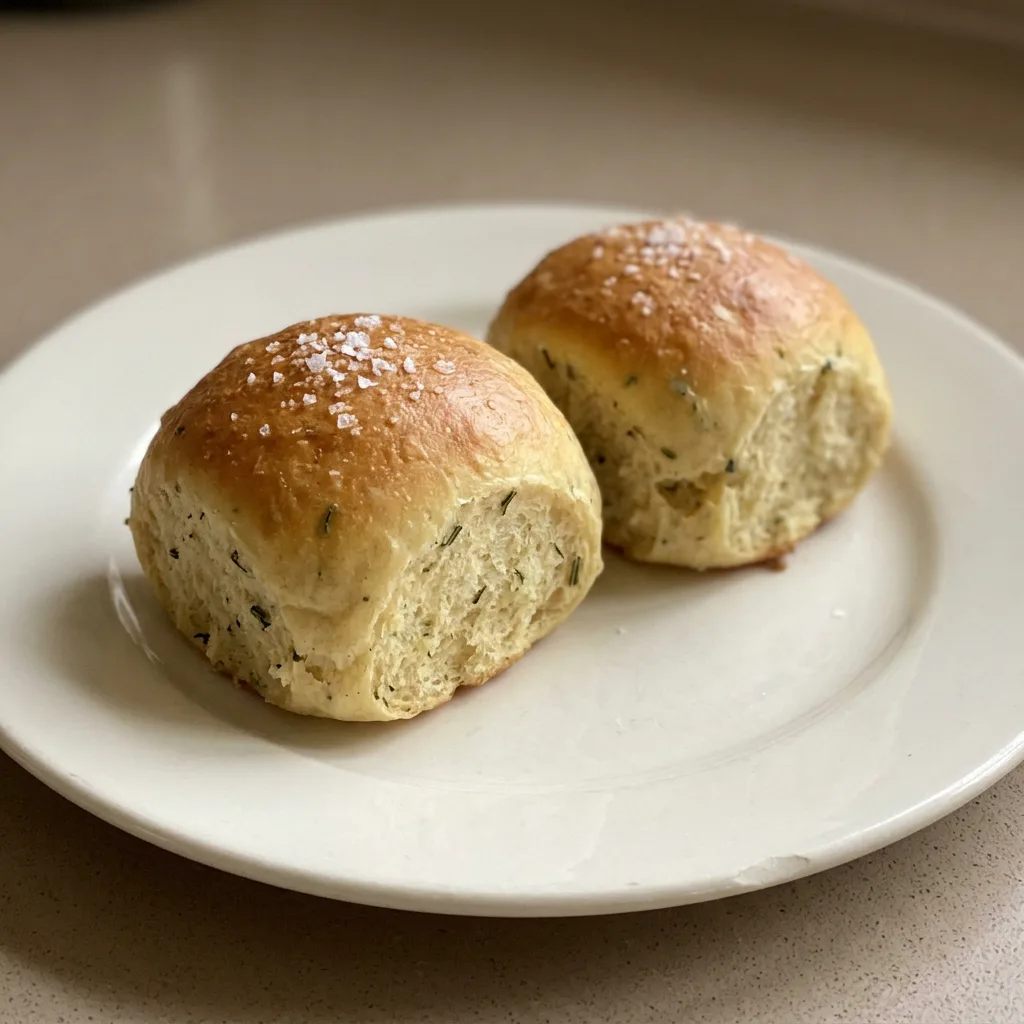
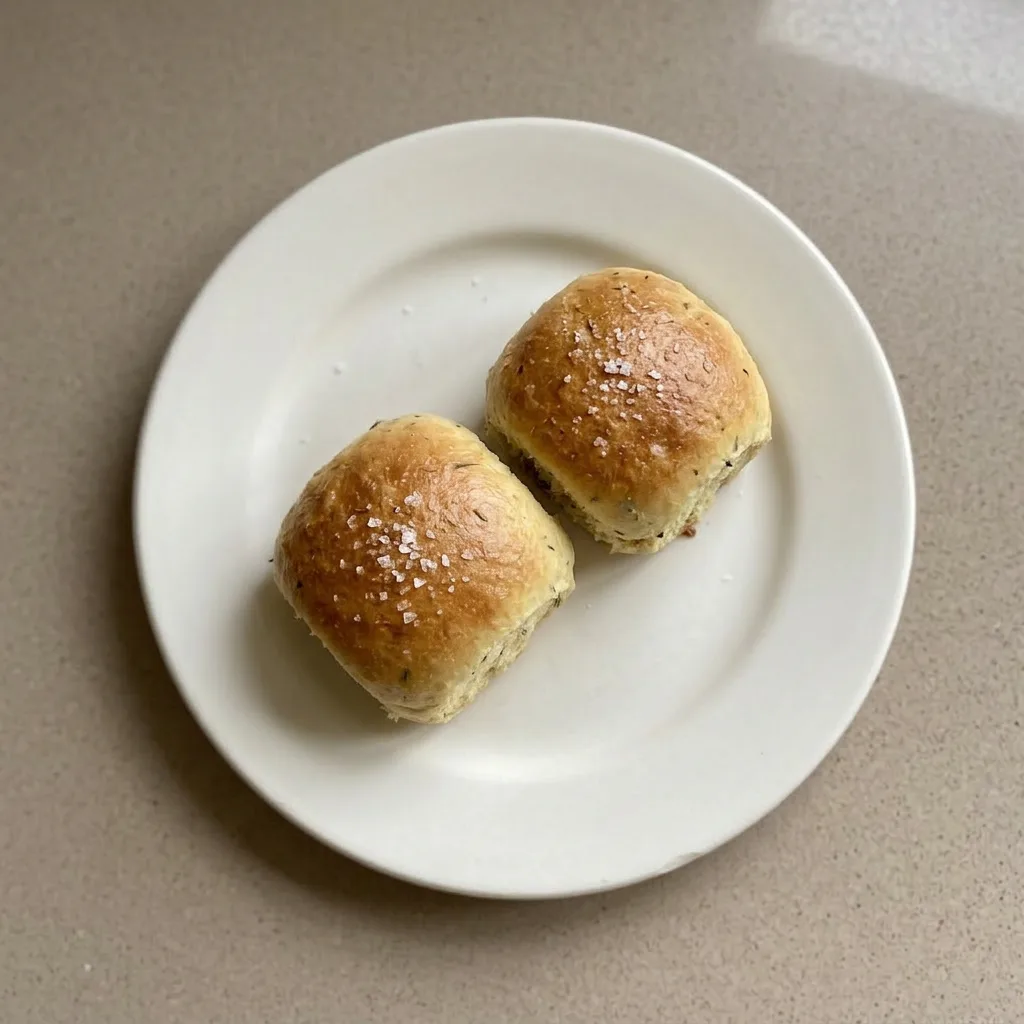
Bake at 375°F for 25 minutes. The rolls should be deep golden brown on top and sound hollow when tapped. If the tops brown too quickly, tent with foil for the last 5 minutes.
Ricotta Herb Bread Rolls
Ingredients
Method
Mix dough ingredients:
In a stand mixer bowl, mix together milk, ricotta, 1 tablespoon olive oil, eggs, sugar, salt, herbs, and yeast. Pour in 2 cups (254 g) flour and mix with a wooden spoon until a coarse, shaggy mass forms. Fit the dough hook, set mixer to medium-low, and slowly add 1 1/2 cups (191 g) more flour, kneading until dough starts to come together. Continue kneading on medium-high for 4 to 5 minutes until a smooth, soft ball forms, adding extra flour only if needed. Dough should be elastic and slightly tacky; do not over-flour.First rise:
Lightly oil a large clean bowl, place dough inside, and cover loosely with plastic wrap. Let rise at room temperature for about 1 1/2 hours until doubled in size and puffy.Shape rolls:
Spray a 13×9-inch baking pan with cooking spray. Gently punch down the dough. Using a bench scraper, knife, or pizza cutter, cut dough into 15 equal portions. Roll each into a ball and arrange in the prepared pan. Brush tops with remaining 1 tablespoon olive oil and generously sprinkle with flake sea salt. Loosely cover with plastic wrap and let rise 45 minutes until doubled. (Make ahead: At this point, shaped rolls can be covered and refrigerated overnight; bring to room temperature before baking.)Bake rolls:
Preheat oven to 375°F (190°C). Bake rolls for 25 minutes until golden brown. Serve warm. Store leftovers in a plastic bag for up to 3 days.
What to swap (and what not to) in these ricotta herb rolls
Part skim ricotta: Whole milk ricotta. Whole milk ricotta adds extra richness, but the dough will feel more slack and may spread more during the second rise. The rolls will be softer and slightly less structured.
Fresh rosemary and thyme: Dried herbs (1 teaspoon each, not 1 tablespoon). Dried herbs won’t release the same bright, piney aroma; the flavor will be more muted and slightly bitter. The texture is fine, but the herb presence is noticeably weaker.
Instant yeast: Active dry yeast (use same amount, proof in warm milk first). Active dry yeast needs proofing: dissolve in the warm milk with a pinch of sugar until foamy (5 to 10 minutes). If the milk isn’t warm enough, the yeast won’t activate and the rolls won’t rise.
All-purpose flour: Bread flour. Bread flour has more protein, which builds stronger gluten.
The rolls will be chewier and denser, not as tender. You may need to add an extra tablespoon or two of milk to compensate for the extra absorption.
Tips
- Use an instant-read thermometer to confirm the milk temperature; if it’s too hot (above 110°F), the yeast will die and the rolls won’t rise.
Storing and Serving
These rolls peak in texture within an hour of baking, when the crust is crisp and the crumb is tender and moist. For leftovers, store them in a sealed plastic bag at room temperature for up to 3 days. The bag traps steam, which keeps the crumb soft; if left uncovered, the rolls will stale and dry out within a day.
To restore warmth and a slight crust, reheat in a 350°F oven for 5 to 8 minutes. Avoid the microwave, it turns the rolls rubbery.
Freezing is not recommended because the ricotta and eggs make the crumb prone to weeping upon thawing, leaving it soggy. If you shaped the rolls ahead and refrigerated overnight (per the recipe), bake them straight from the fridge, adding 5 extra minutes to the bake time.
Serve warm, with butter or alongside soup or salad.
Frequently Asked Questions
Can I make these rolls ahead of time and bake them later?
Yes. After shaping and brushing with oil and salt, cover and refrigerate overnight. The cold slows fermentation, boosting flavor.
Before baking, let them sit at room temperature for about 30 minutes, they’ll look puffy but not doubled. Then bake as directed, adding 5 extra minutes.
Why did my rolls turn out dense instead of light and fluffy?
Most likely the dough was too dry from too much flour. The dough should feel slightly tacky, not stiff. Next time, stop adding flour as soon as the dough clears the bowl sides.
If the first rise didn’t double in 1½ hours, the dough may have been under-kneaded or the yeast was old.
Can I use dried herbs instead of fresh?
You can, but the flavor will be muted and slightly bitter. Use 1 teaspoon each dried rosemary and thyme instead of 1 tablespoon fresh. The texture is fine, but you’ll lose that bright, piney aroma that fresh herbs release into the crumb.
How do I get the tops evenly golden and crispy?
Brush the tops with olive oil before baking, that’s what promotes even browning and a crisp crust. The recipe calls for 1 tablespoon oil brushed on before the second rise. If the tops brown too quickly in the oven, tent with foil for the last 5 minutes.
Are these rolls similar to classic Italian bread or more like American dinner rolls?
They’re closer to American dinner rolls, soft, tender, and enriched with eggs and olive oil. Classic Italian bread is leaner and crustier. The ricotta adds a moist, fine crumb that’s more like a Parker House roll than a ciabatta.
