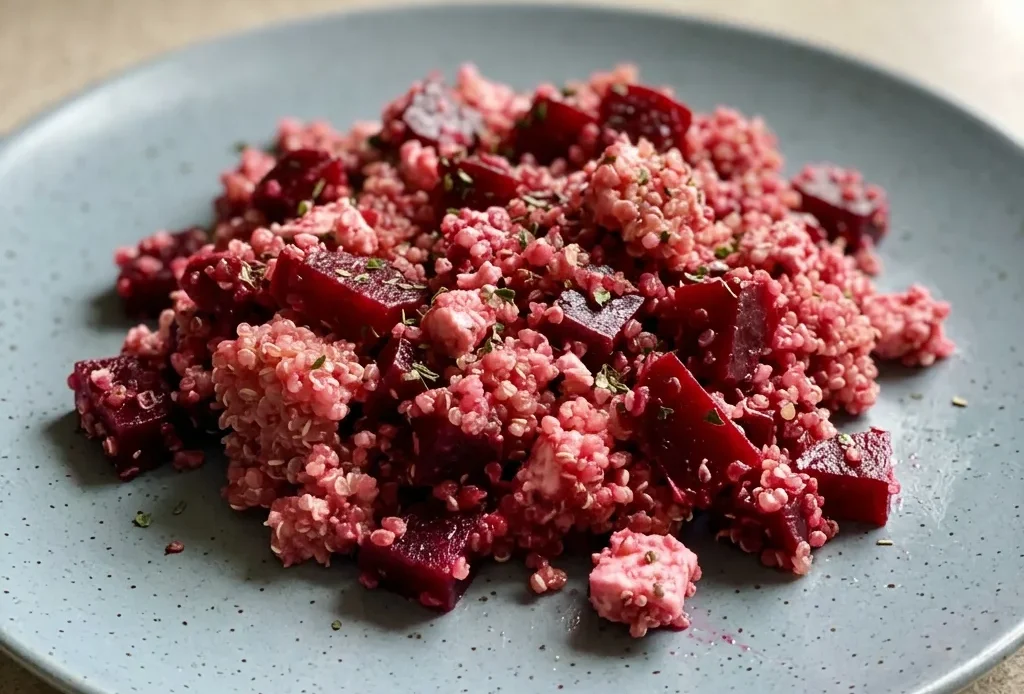
This isn’t a fussy composed salad that requires separate piles and careful plating. It’s a sturdy, all-in-one bowl where earthy beets, salty feta, and fluffy quinoa get tangled together in a sweet-tart dressing, the kind of thing you can pack for lunch or eat straight from the mixing bowl. The quinoa beet feta salad relies on two pantry shortcuts, canned beets and pre-cooked quinoa, that cut the active work to a bare minimum without sacrificing texture or flavor.
The real trick is getting the moisture balance right: too much beet liquid and the quinoa turns sodden, too little and the dressing won’t coat evenly. That’s the margin you’re working with, and it’s forgiving enough that you’ll still end up with a bright, satisfying salad either way.
Why use canned beets instead of fresh?
Canned beets are already cooked, so you skip the roasting or boiling step entirely. That alone saves at least 40 minutes.
The liquid from the can does double duty: a tablespoon goes into the dressing, adding a rosy tint and a mild earthy-sweet note you wouldn’t get from lemon juice alone. Because canned beets are packed at their peak ripeness, the texture stays tender but firm, and the sweetness is consistent batch to batch. No worrying about a fresh beet that’s woody or bland.
For a salad that comes together in minutes, canned beets are a reliable shortcut that doesn’t sacrifice flavor.
How does honey balance the beets and feta?
Beets have an earthy, almost mineral quality that can dominate a salad. A spoonful of honey offsets that with clear sweetness, making the beets taste rounder and more approachable.
The honey also plays off the salty tang of feta, creating a sweet-salty contrast that keeps each bite interesting. Lemon juice adds acidity, but without honey the dressing would be sharply sour; the honey mellows that edge. It also helps the dressing emulsify with the reserved beet liquid, so the vinaigrette clings to the quinoa rather than pooling at the bottom of the bowl.
Why pre-cooked quinoa is the time-saving key
This salad requires no heat at all, so using pre-cooked quinoa is essential. Cooking quinoa from scratch would mean boiling, simmering, and then cooling it completely, adding at least 25 minutes. Pre-cooked quinoa, whether from a pouch or leftover homemade, has already shed its excess moisture and reached that fluffy, slightly chewy texture that works cold.
It absorbs the dressing without turning mushy, and the grains stay separate. The result is a quinoa salad that’s ready the moment you stir in the beets and feta, exactly the texture you’d want from a chilled grain salad.
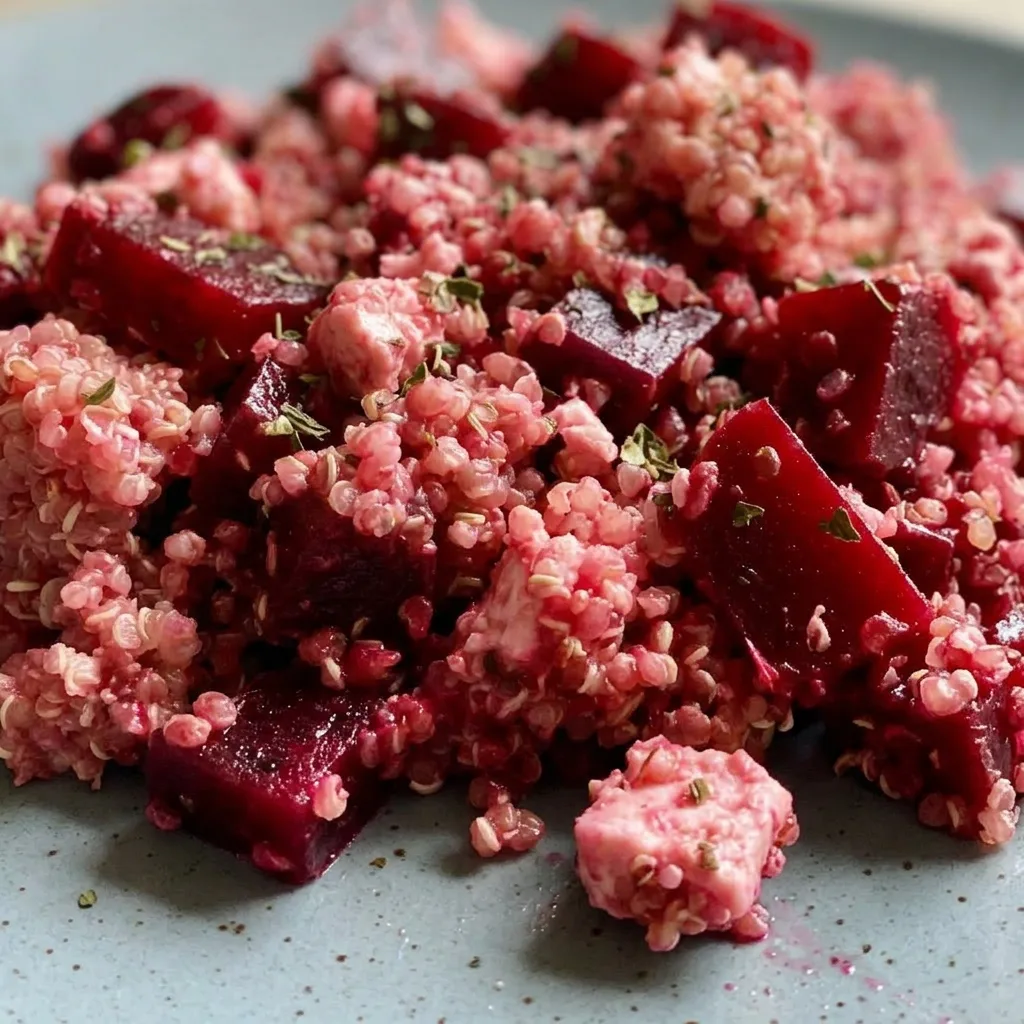
Prep: 15 min · Cook: 20 min · Total: 35 min · Servings: 2 · Calories: 760 kcal
A few things to know about the ingredients
Canned beets: Buy the kind packed in water, not vinegar brine, so the reserved liquid stays neutral and sweet.
Pre-cooked quinoa: Use a shelf-stable pouch or leftover homemade; the grains must be fully cooled and fluffy before dressing.
Feta cheese: Buy a block packed in brine, not pre-crumbled; the texture is creamier and it crumbles without turning to dust.
Honey: Mild clover or wildflower honey works; strong varietals like buckwheat can overpower the delicate beet and feta balance.
I always dress the salad right before serving, even if it means holding up dinner for a minute. It stops the beets from weeping into the quinoa.
Build the salad in two bowls, one for ingredients, one for dressing, then combine.
Chop the beets
Slice each beet disk into strips, then crosswise into bite-size chunks. Reserve exactly 1 tablespoon of the can liquid; the rest can go. You want pieces about the same size as the quinoa grains so they distribute evenly.
Mix the base
In a medium bowl, toss the beets, quinoa, and crumbled feta. The feta should stay in distinct crumbles, not get mashed. If the quinoa clumps, break it apart with a fork first, separate grains soak up dressing better.
Whisk the dressing
In a small bowl, combine lemon juice, honey, dried parsley, dried thyme, salt, and the reserved beet liquid. Whisk until the honey dissolves completely, you should see a uniform pink tint with no streaks of clear honey.
Dress and stir
Pour the dressing over the quinoa mixture and fold gently with a rubber spatula until every grain is tinted pink. Stop when no dry quinoa remains on the bottom; over-stirring can break the feta into dust.
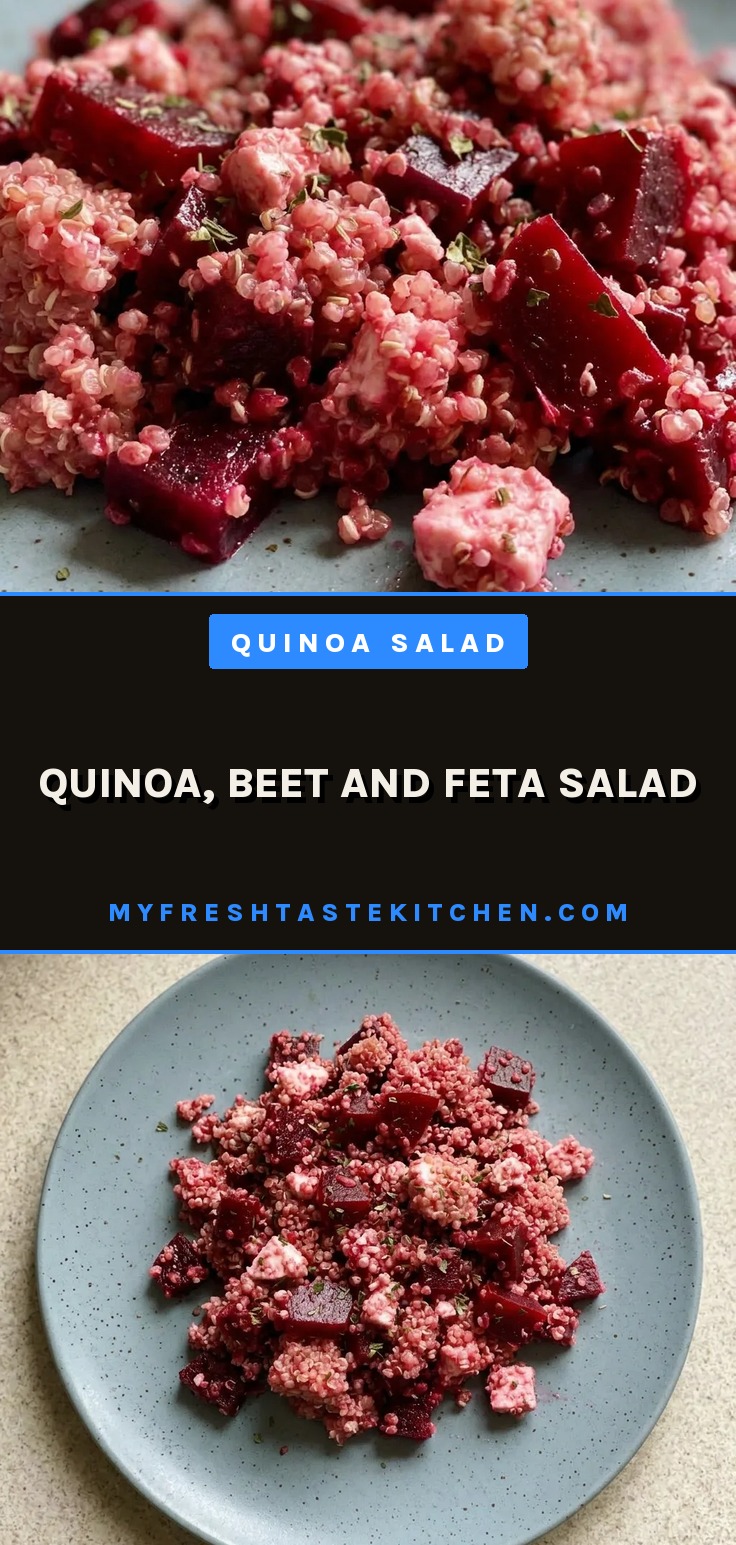
Quinoa, Beet and Feta Salad
Ingredients
- 1 (8 oz) can sliced beets, drained with 1 tablespoon liquid set aside
- 1 package cooked quinoa (or about 2 cups homemade)
- 2 oz (56 g) crumbled feta cheese
- 1 tablespoon lemon juice
- 1 tablespoon (21 g) honey
- 1 teaspoon dried parsley, plus extra for garnish
- ¼ teaspoon dried thyme
- Healthy pinch of kosher salt
Instructions
Drain and Cut Beets:
Drain the beets, saving 1 tablespoon of the liquid for the dressing. Cut the beets into bite-sized pieces.Mix Beets, Quinoa, Feta:
In a bowl, mix together the chopped beets, cooked quinoa, and crumbled feta.Whisk Dressing Ingredients:
In a separate bowl, whisk the lemon juice, honey, dried parsley, dried thyme, kosher salt, and the reserved beet juice to create the dressing.Pour Dressing and Stir:
Pour the dressing over the quinoa, beets, and feta. Stir until well combined.Plate and Garnish Salad:
Plate about 1 cup of the salad per serving, topping with extra dried parsley.
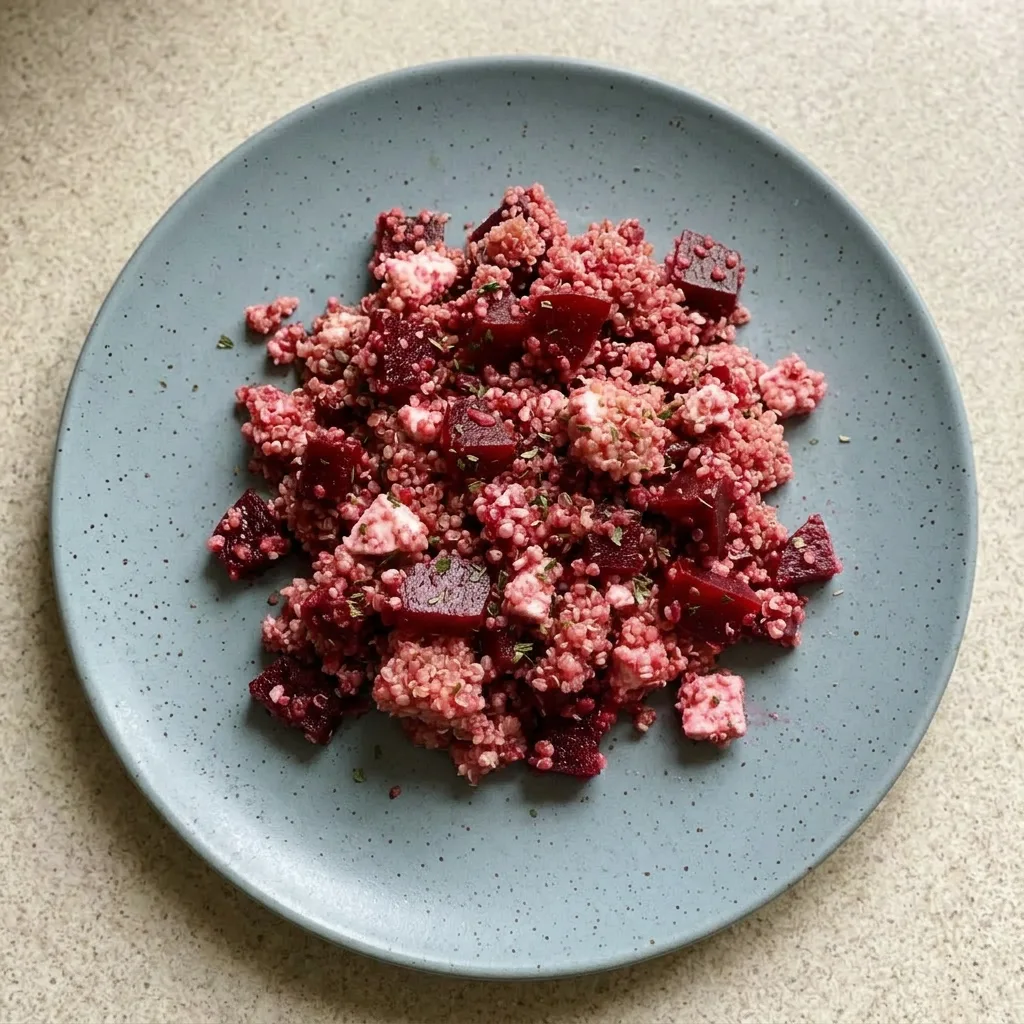
Swap the feta, keep the honey and beets
Feta cheese: Goat cheese (chèvre) or omit for dairy-free. Goat cheese crumbles softer and tastes tangier, losing the salty brine of feta. Omit entirely and the salad turns vegan but loses the creamy-salt contrast; compensate with a pinch of salt and a drizzle more lemon juice.
Honey: Maple syrup or agave nectar. Maple syrup adds a woody sweetness; agave is neutral. Both thin the dressing slightly, you may need a pinch more salt to restore balance.
Stick with honey if you can; its floral note complements the beets best.
Quinoa: Cooked farro, barley, or brown rice. Farro and barley give a chewier, more rustic bite; brown rice is softer. All absorb the dressing well, but the grain-to-beet ratio stays the same.
For gluten-free, choose certified GF grains.
Storage and Serving
This salad is best eaten within an hour of dressing, while the quinoa is still fluffy and the feta maintains its crumbly texture. For leftovers, transfer to an airtight container and refrigerate for up to 3 days. The quinoa will gradually soften as it absorbs the dressing, but the flavors deepen.
Do not freeze the assembled salad; the feta will turn rubbery and the quinoa will become mushy. When serving a stored portion, let it sit at room temperature for 10 minutes to take the chill off, then stir gently. Add the final sprinkle of dried parsley just before serving to restore a fresh herbal note; if added earlier, it will darken and lose its visual appeal.
Tips
- Press the drained beets between layers of paper towels before chopping; this removes surface moisture that would otherwise thin the dressing and make the salad watery.
- Make the dressing first and let it sit while you prep the beets and quinoa; the dried herbs rehydrate in the liquid, releasing more flavor than if whisked and poured immediately.
Frequently Asked Questions
Can I make this salad ahead of time?
Yes, but it’s best within an hour of dressing. The quinoa stays fluffy and the feta keeps its crumbly texture. Stored in the fridge for up to 3 days, the quinoa softens as it absorbs the dressing, but the flavors deepen.
Let it sit at room temperature for 10 minutes before serving and add fresh dried parsley just before eating.
How do I prevent the salad from becoming soggy?
Use pre-cooked quinoa that’s fully cooled and fluffy; excess moisture in warm quinoa makes it soggy. Drain the canned beets well and reserve only 1 tablespoon of liquid for the dressing. Stir gently after dressing to avoid breaking the feta into dust, which can create a pasty texture.
Is this salad served cold or at room temperature?
It’s best served within an hour of dressing at room temperature. If refrigerated, let it sit out for 10 minutes to take off the chill before serving. The quinoa and beets are already cooked, so the salad doesn’t need to be served cold, room temp lets the honey and feta flavors come through more clearly.