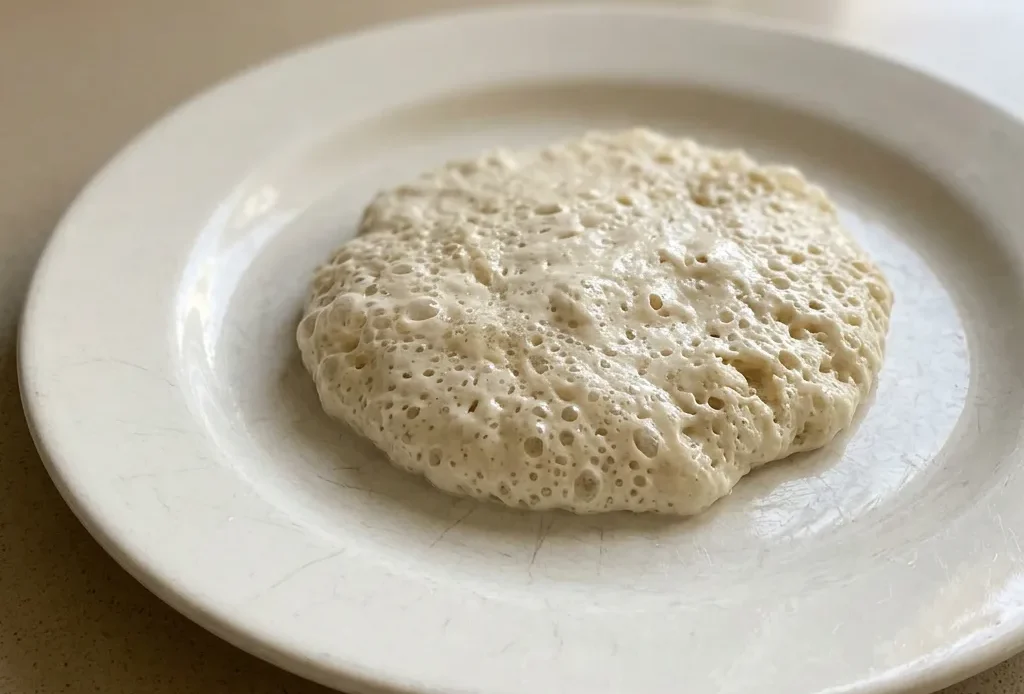
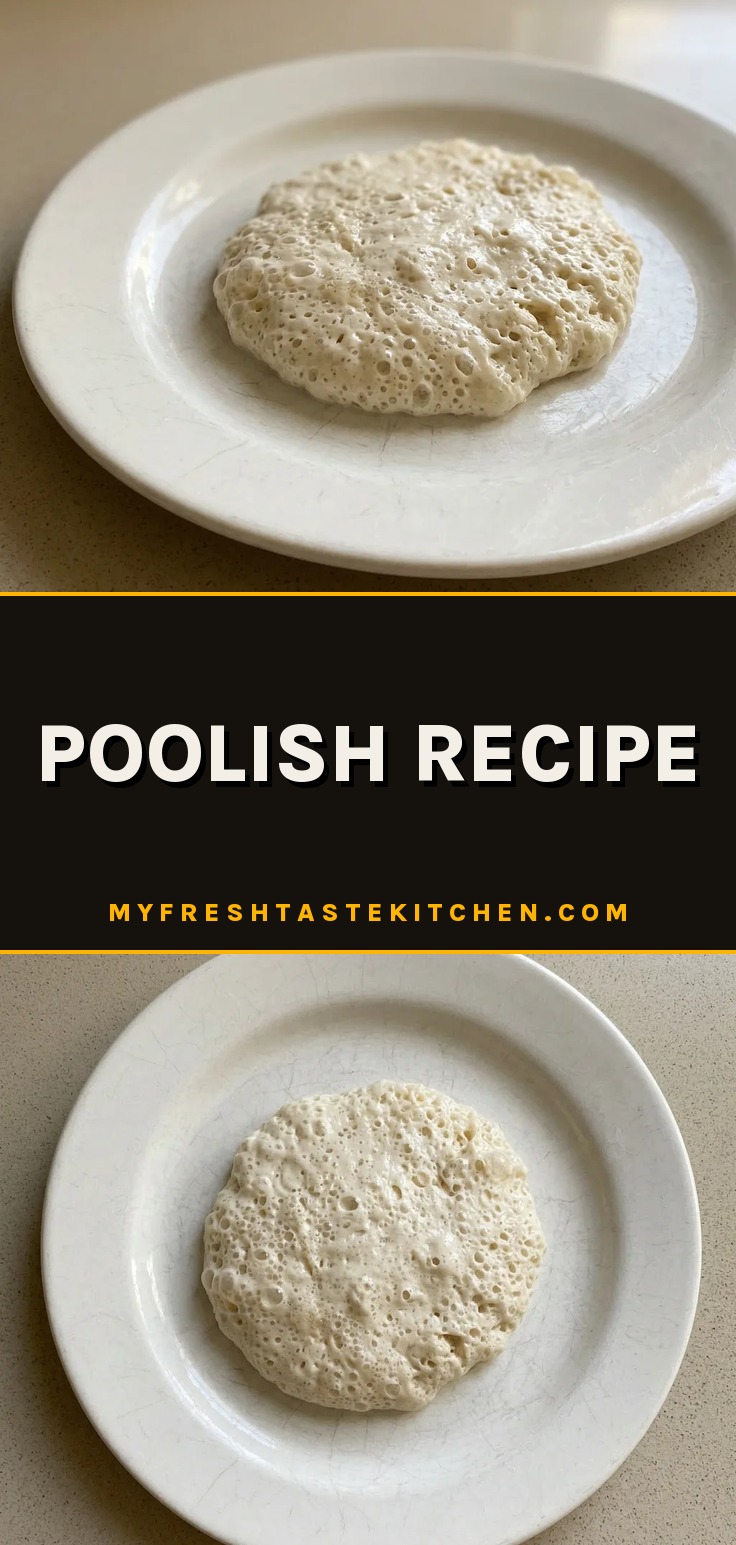
Poolish is the easiest way to get artisan-quality bread without a starter, just flour, water, and a whisper of yeast. That tiny pinch is intentional: too much yeast rushes fermentation, and you lose the subtle tang and complex aroma that only a long, slow rise can build. You’ll see bubbles appear gradually, not a violent froth, and smell a sweet-bready scent with a mild sour edge when it’s ready.
This poolish recipe gives you total control over flavor development, with a generous margin for error if your kitchen runs warm or cool.
Why so little yeast
This poolish uses just 1/4 teaspoon fresh yeast (or 1/16 teaspoon dry) for a 1:1 flour-to-water ratio. That’s far less than a direct dough. The low dose forces a long, slow fermentation that builds flavor without overproofing.
Over 8 hours at room temperature, the yeast produces subtle aromas and a tang you can’t rush. You’ll smell it: sweet, bready, with a hint of sour. That’s the payoff.
Poolish bread recipes often rely on this gentle pace to get complex results. The long rest is key, cut it short and you lose depth.
Equal parts flour and water
Poolish uses exactly 1:1 flour to water by volume (or close by weight). That creates a batter-like consistency that ferments evenly, no dry pockets or watery spots. In this liquid environment, yeast spreads freely and gluten develops without a stiff dough structure.
The ratio sets poolish apart from a stiffer biga or a wetter levain. You’ll see bubbles throughout, not just on top, which tells you fermentation is uniform.
That even activity is what gives the final dough a reliable lift and an open crumb. No surprises.
Room temperature water matters
Water at room temperature, around 70°F, is critical for yeast activation. Too hot kills yeast instantly, you’d feel the warmth if it’s above 120°F.
Too cold, say straight from the tap in winter, and fermentation stalls; the mixture sits dormant for hours. The recipe calls for a 2-minute rest after mixing, which lets yeast hydrate and start working.
You’ll see tiny bubbles or a creamy surface if it’s alive. That short pause is your check: if nothing happens, the water was off.
Stick with room temp and it’ll go.
Prep: 5 min · Total: 8 hr 5 min · Servings: 1
Ingredients for Poolish
Fresh Yeast (or Dry Yeast): Fresh yeast is more perishable but gives a milder flavor; dry yeast works at 1/16 teaspoon.
All Purpose Flour (Bread Flour): Bread flour has higher protein, which builds more gluten for a stronger structure.
How to make poolish
Activate the yeast
Stir the yeast into room-temperature water and let it sit 2 minutes. You should see tiny bubbles or a creamy haze on the surface, if nothing happens, your yeast is dead or the water was too hot or cold.
Mix the batter
Add the flour and stir with a spatula for 2 to 3 minutes until completely smooth, no dry bits remain. The mixture should be thick like pancake batter, not stiff. Scrape the bowl sides well so everything hydrates evenly.
Ferment at room temp
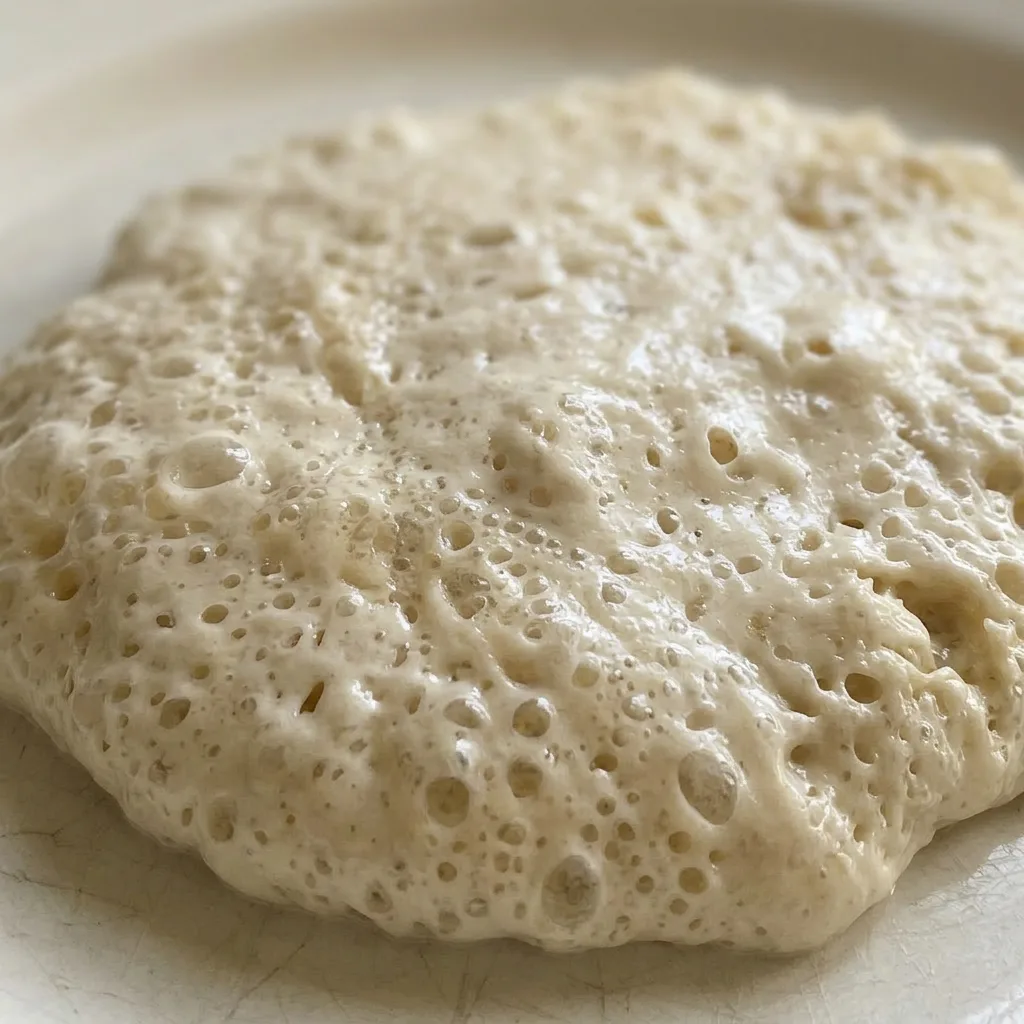
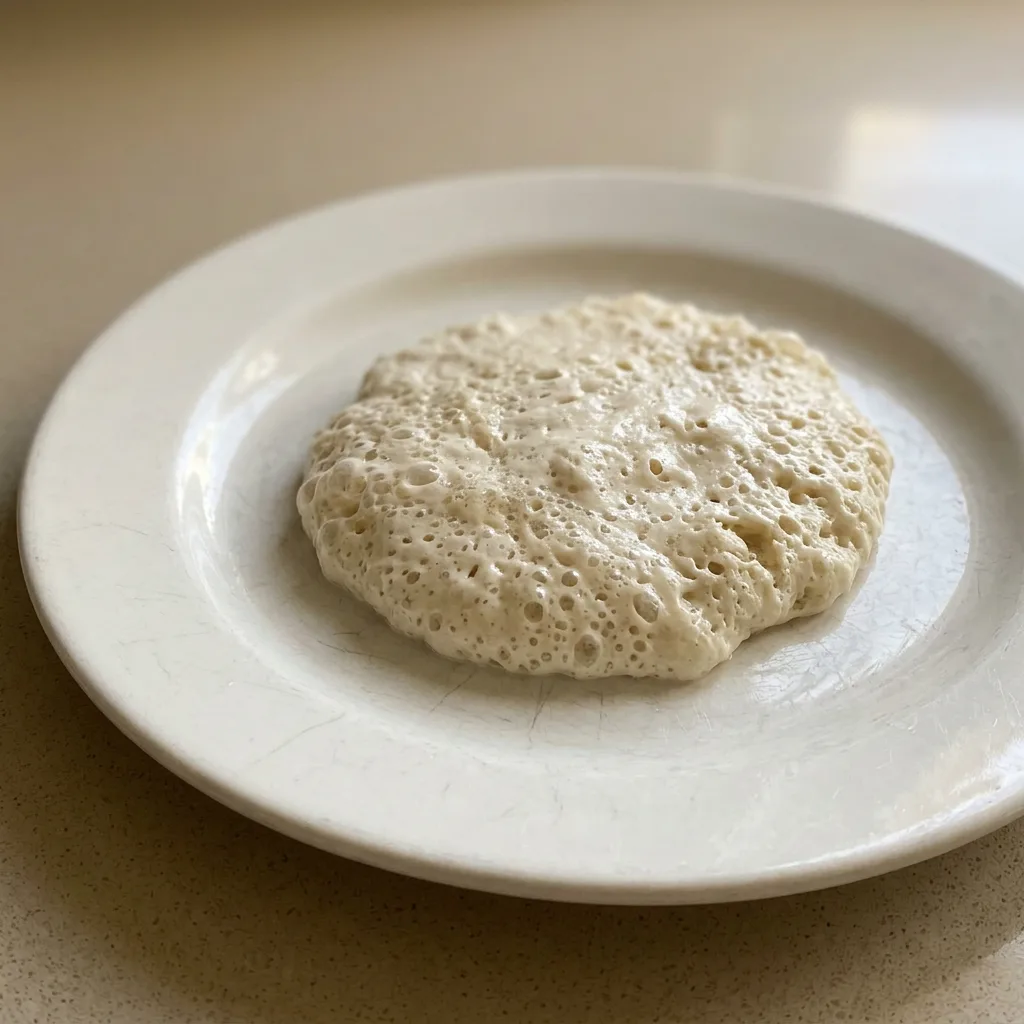
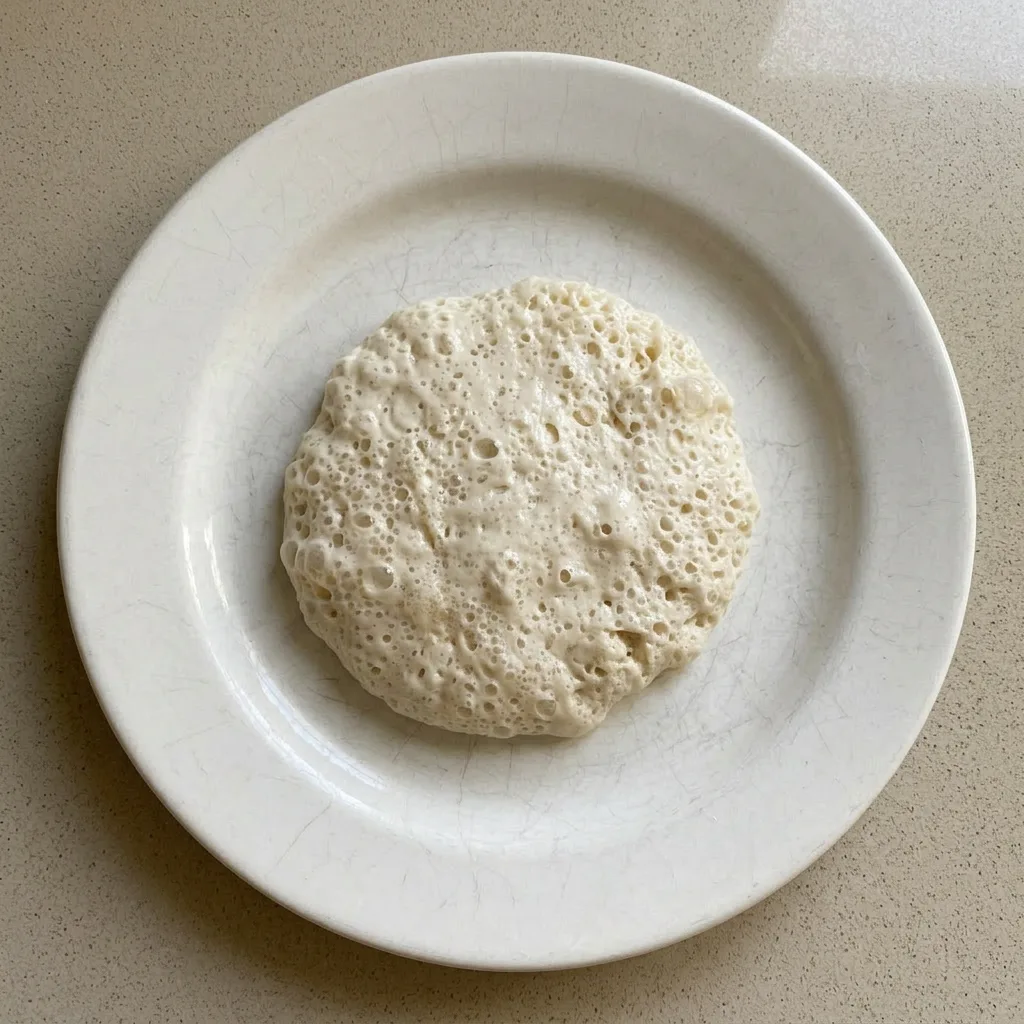
Cover tightly with plastic wrap and leave at room temperature for 8 hours. After 8 hours, you’ll see a dome of bubbles on top and hear a faint fizz, it should smell sweet and mildly sour. If it smells sharp or alcoholic, it overproofed.
Refrigerate if delaying use
If you need to wait longer than 12 hours, refrigerate once bubbles appear (30 min to 1 hr). The cold slows fermentation but doesn’t stop it. When ready to use, the poolish should look active, not flat or separated.
Poolish Recipe: A Complete Guide
Ingredients
Method
Activate yeast in water:
In a large bowl, combine 1/4 teaspoon fresh yeast (or 1/16 teaspoon dry yeast) with 1 cup room temperature water. Stir and allow to rest for 2 minutes to activate.Mix flour into yeast:
Add 1 cup all-purpose flour (or bread flour) to the yeast mixture and stir with a spatula for 2-3 minutes until the mixture is smooth and no lumps remain.Ferment poolish:
Wrap the poolish bowl with plastic wrap to avoid drying and let it ferment at room temperature for 8 hours. If you plan to use it after 12 hours, let it sit at room temperature until bubbling begins (30 minutes to 1 hour), then transfer to the refrigerator.
Storage and Serving
Poolish is a pre-ferment, not a final dough, so it doesn’t store like leftovers. After 8 hours at room temperature, use it immediately or refrigerate.
In the fridge, it keeps for up to 24 hours before the yeast activity fades and the flavor flattens. Beyond that, the poolish overproofs: it smells sharp or alcoholic, loses its sweet-tangy balance, and won’t give your dough the same lift.
If you refrigerate earlier (30 minutes to 1 hour into fermentation), you can extend its life to 48 hours, but expect a milder result. When ready to use, let it sit at room temperature for 30 minutes to take the chill off.
Don’t freeze poolish; the yeast cells rupture and the structure collapses. For serving, poolish is a component, not a standalone dish.
Once mixed into your final dough, bake it within the recipe’s timing. There’s no finishing touch added at the end; the poolish is fully fermented when you use it.
Tips
- To test poolish readiness, drop a spoonful into a glass of water; if it floats, it’s active and ready. If it sinks, let it ferment longer.
- If your poolish hasn’t bubbled after 8 hours, move it to a warmer spot (75 to 80°F) for an extra 1 to 2 hours rather than discarding it.
Swapping flours and yeasts for poolish
All Purpose Flour (Bread Flour): Bread flour. Bread flour’s higher protein (12-14%) absorbs more water and builds a sturdier gluten network. The poolish will be slightly thicker and more elastic.
In the final dough, expect a chewier crumb and better oven spring. All-purpose works fine, just a softer result.
Fresh Yeast (or Dry Yeast): Instant yeast. Use 1/16 teaspoon (a pinch) of instant yeast, same amount as active dry.
Instant yeast doesn’t need activation; skip the 2-minute rest and dissolve directly into the water. Fermentation may start a bit faster; check at 6 to 7 hours instead of 8. No change in flavor.
All Purpose Flour (Bread Flour): Whole wheat flour. Whole wheat absorbs more water and ferments faster due to higher enzyme activity. The poolish will be thinner and may overproof before 8 hours, start checking at 5 hours.
Expect a denser, nuttier final loaf with less rise. Not a straight swap for a light crumb.
Water: None, don’t swap. Water is irreplaceable here. Milk or juice would add sugars and proteins that alter fermentation and gluten development, producing unpredictable results.
Stick with plain water.
Frequently Asked Questions
Can I use poolish after 12 hours if I refrigerate it?
Yes, but only if you refrigerate it early, once bubbles appear, around 30 minutes to 1 hour in. That way it keeps up to 48 hours in the fridge. If you let it go the full 8 hours at room temp first, you’ve got about 24 hours in the fridge before it overproofs.
After 12 hours total, check the smell: sweet and mildly sour is fine; sharp or alcoholic means it’s gone too far.
How do I know when my poolish is ready to use?
After 8 hours at room temperature, look for a dome of bubbles on top and a faint fizz sound. It should smell sweet with a mild sour tang, not sharp or alcoholic. The batter will be thick and full of bubbles throughout, not flat or separated.
Can I make poolish with whole wheat flour instead of all-purpose?
Yes, but expect a thinner batter and faster fermentation, start checking at 5 hours instead of 8. Whole wheat absorbs more water and ferments quicker due to higher enzyme activity, so the poolish can overproof before the 8-hour mark. The final loaf will be denser and nuttier, not as light as with all-purpose.
What’s the difference between poolish and a sourdough starter?
Poolish uses commercial yeast (fresh or dry) and ferments for a fixed 8 hours before being used in dough. A sourdough starter relies on wild yeast and bacteria, requires ongoing feeding to stay alive, and can be kept indefinitely. Poolish gives a milder tang; sourdough delivers a sharper, more complex sourness.
Can I freeze poolish for later use?
No, freezing ruins poolish. The yeast cells rupture and the batter’s structure collapses, so it won’t give your dough the same lift. Make it fresh when you need it, or refrigerate early (after bubbles appear) to buy up to 48 hours.