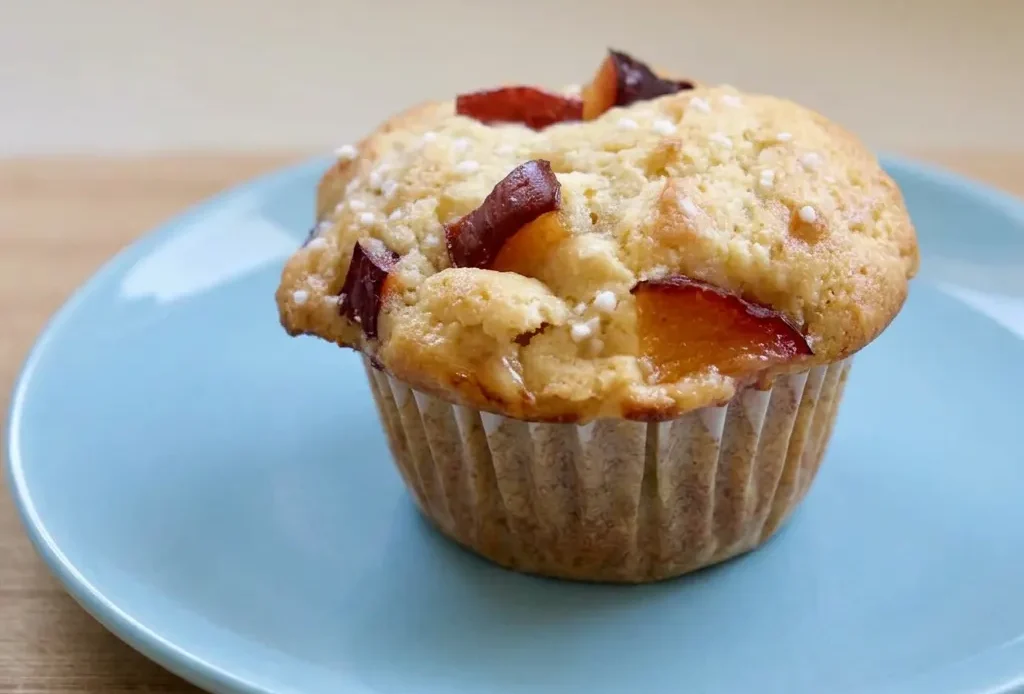
The trick to plum muffins is choosing fruit that’s ripe enough to sweeten the crumb but firm enough to hold its shape through baking. Soft plums collapse into jammy pockets that weigh down the batter; firm ones stay suspended, releasing juice in controlled bursts.
That tart-sweet balance, plus the moistness olive oil brings, makes these stand out from standard fruit muffins. You can taste the difference in every bite, the plums stay distinct, not lost.
Choose olive oil for a moist, tender crumb
Olive oil stays liquid at room temperature, which means these muffins don’t dry out the way butter-based ones can. You’ll notice they stay tender for days.
Light olive oil has a neutral flavor, so it doesn’t compete with the plums. The fat content in oil coats the flour proteins, limiting gluten development.
Less gluten means a softer, more delicate crumb. You can taste the difference: these muffins are exceptionally moist without being greasy.
Let yogurt add tang and lift
Yogurt’s acidity reacts with the baking soda to produce carbon dioxide bubbles, giving the muffins a nice rise. The tanginess cuts through the sweetness of the plums and sugar, making each bite balanced.
Yogurt also adds moisture without thinning the batter too much, so the muffins stay light and tender. If you use Greek yogurt, thin it with a tablespoon of milk so the batter doesn’t get too stiff.
Fresh plums bring juice and acidity
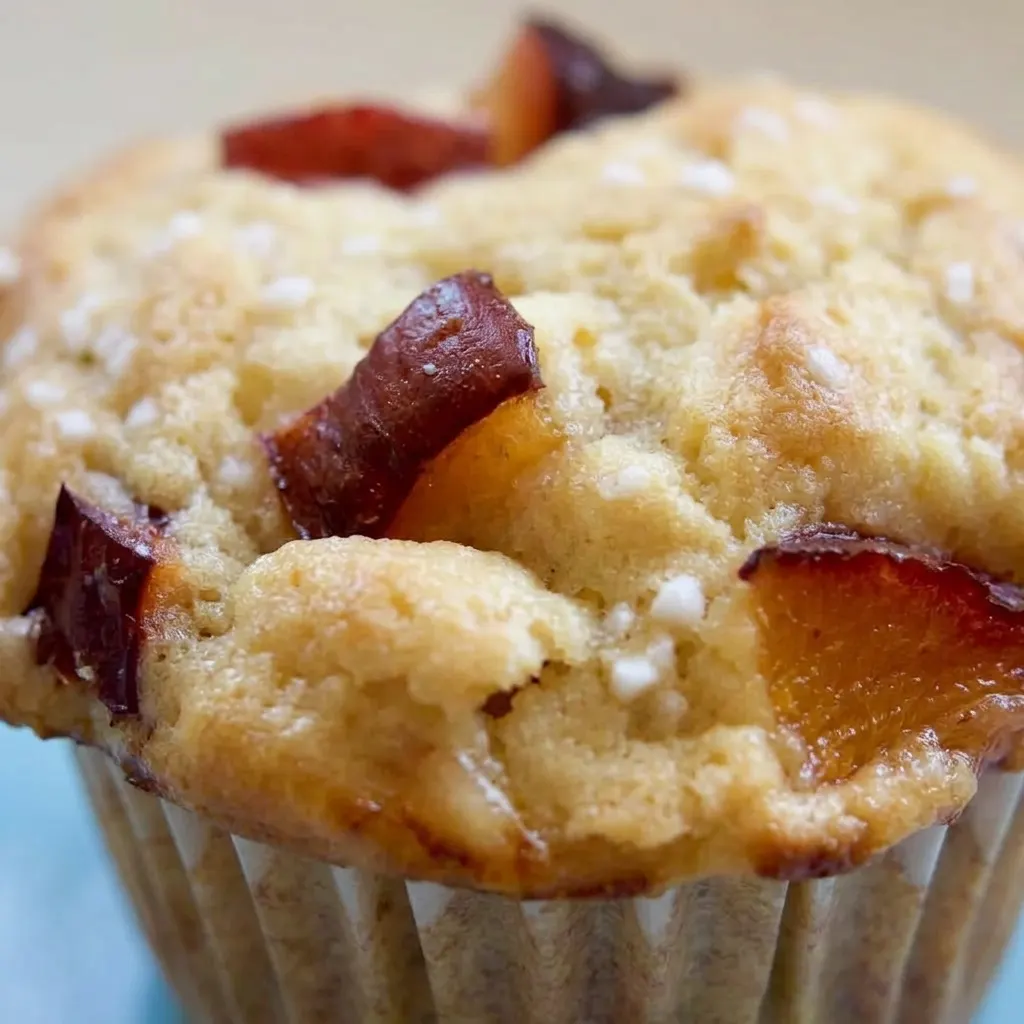
When plums bake, they release their juices, creating pockets of flavor and moisture throughout the muffin. Their natural acidity helps balance the sugar and activates the leavening for a better rise. Cutting them into chunks, not slices, ensures they stay suspended in the batter without all sinking to the bottom.
You’ll get a burst of fruit in every bite, and the juice keeps the crumb from drying out.
Prep: 10 min · Cook: 18 min · Total: 28 min · Servings: 12 · Calories: 230 kcal
Pick plums that are ripe but firm
Plums: Ripe but firm plums hold their shape during baking; soft ones turn into jammy puddles.
Yogurt: Use plain full fat yogurt for tang and moisture; thin Greek yogurt with a splash of milk.
Light olive oil: Light olive oil keeps these muffins moist without adding a strong flavor to compete with the fruit.
I tried mixing by hand with a whisk versus a spatula; the whisk gave me tough muffins, while a gentle spatula fold kept them tender.
Build the batter to keep muffins light and tender
Combine dry ingredients
Sift the flour, baking powder, and baking soda together into a large bowl, then whisk in the sugar. This aerates the mix, so the muffins rise evenly without dense patches.
Whisk wet ingredients
Beat the eggs with olive oil and yogurt until smooth and uniform. You’re creating an emulsion; the mixture should look creamy, not separated. Stop as soon as it’s homogenous.
Cut the plums
Rinse the plums and cut them into roughly 1/2-inch chunks. Irregular pieces are fine, they’ll create juicy pockets. If they’re too large, they’ll sink; too small, they’ll disappear into the crumb.
Combine wet and dry
Pour the wet mixture into the dry ingredients. Fold with a spatula using broad strokes until just a few streaks of flour remain.
Overmixing develops gluten, making muffins tough. Stop while the batter still looks shaggy.
Fold in plums
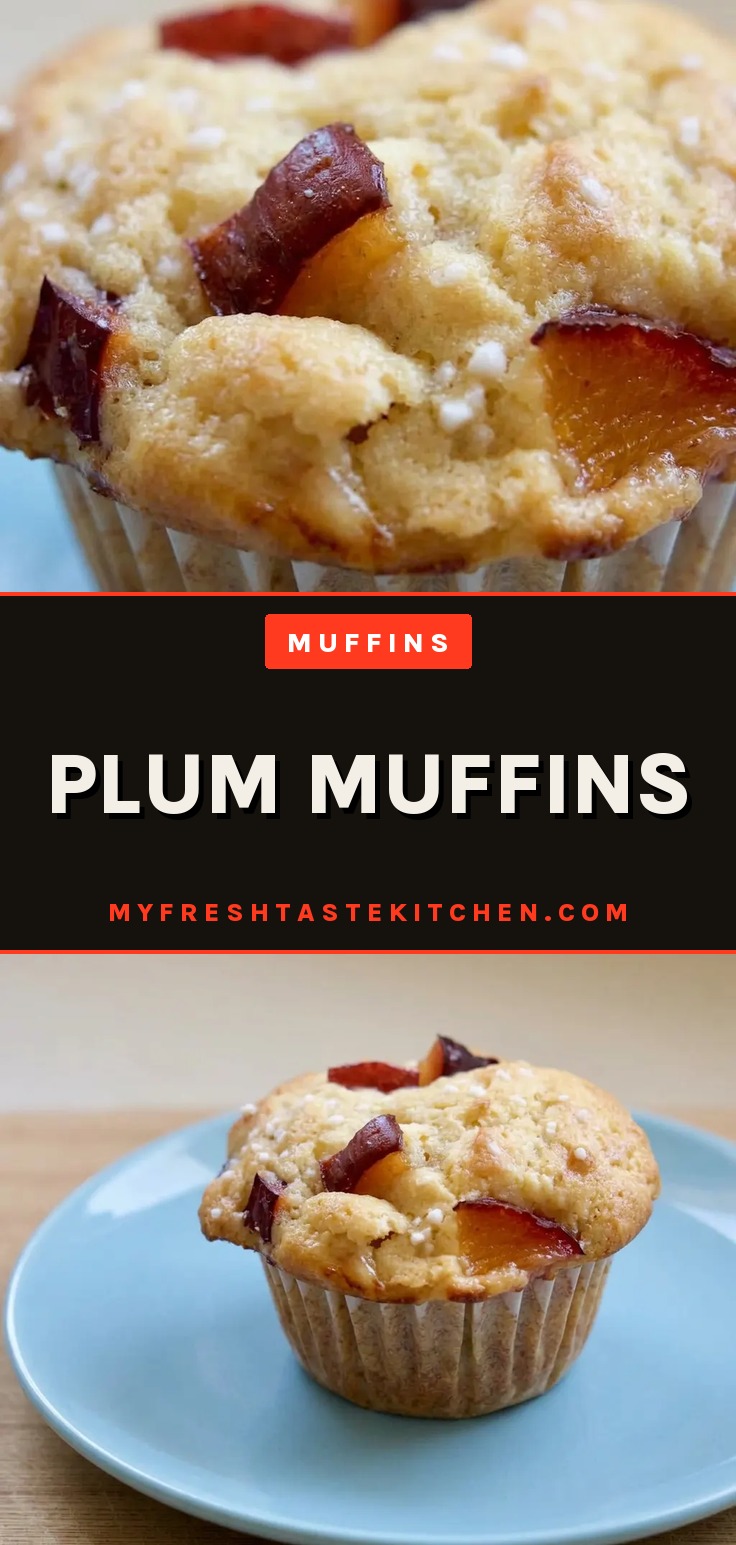
Add the plum chunks and fold with just three or four strokes. The batter should remain lumpy. Reserve a few chunks to press onto the tops before baking if you want visible fruit.
Fill and top
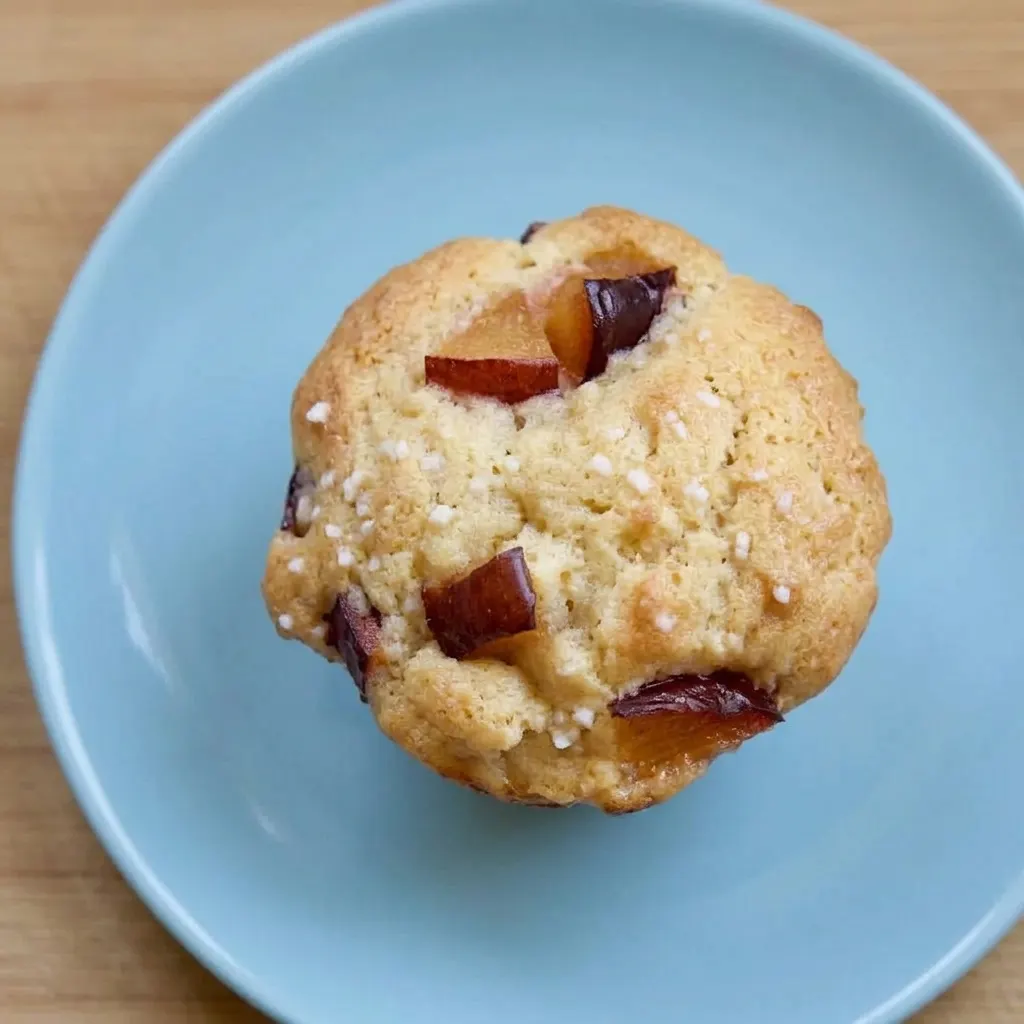
Divide the batter evenly among 12 lined muffin cups, an ice cream scoop works well. If using, sprinkle Demerara or pearl sugar over each muffin. The sugar adds a crunchy top that contrasts with the soft crumb.
Bake until golden
Bake at 350°F for 18 to 20 minutes. The muffins are done when they’re golden brown on top and a toothpick inserted into the center comes out clean, not wet. If it’s still gooey, bake 2 more minutes and test again.
Plum Muffins (Yogurt)
Ingredients
- 2 cups all-purpose flour 250 g, high-quality, unbleached, unbromated, non-GMO
- 2 tsp. baking powder
- ½ tsp baking soda
- ½ cup sugar 100 g
- 2 eggs
- ½ cup light olive oil 120 ml
- 1 cup yogurt 240 ml, if using Greek yogurt, add 1 Tbsp milk or buttermilk
- 8 small plums or 6 medium plums
- 1 tsp Demerara or Swedish pearl sugar for topping optional
Instructions
Preheat oven:
Heat oven to 350°F (175°C).Sift dry ingredients:
Into a large bowl, sift together flour, baking powder, and baking soda. Mix in the sugar.Beat wet mixture:
In another bowl or a measuring jug, beat eggs with olive oil and yogurt until the mixture is uniform.Chop plums:
Rinse the plums and cut them into chunks.Fold wet into dry:
Add the yogurt mixture to the dry ingredients. Fold gently until barely incorporated — avoid overmixing, or muffins will become heavy.Fold in plums:
Fold in the plum pieces with just a few strokes. (Reserve some for topping if desired.)Fill muffin cups:
Divide batter among muffin cups. If you like, sprinkle raw sugar (Demerara) on top for a crisp finish.Bake muffins:
Bake for 18–20 minutes, until golden brown.
Swapping plums and fats for different results
Plums: Nectarines, peaches, or apricots (same volume, cut into chunks). Texture holds similarly; flavor shifts toward the swapped fruit’s sweetness and acidity. Avoid very soft fruit, or you’ll get jammy pockets.
Yogurt: Buttermilk or sour cream thinned with milk (1 cup buttermilk, or 3/4 cup sour cream + 1/4 cup milk). Acidity stays high, so the rise is still good.
Buttermilk gives a sharper tang; sour cream makes the crumb slightly richer. If you use Greek yogurt already, just add milk as written.
Light olive oil: Melted coconut oil or avocado oil (same amount). Coconut oil solidifies at room temp, so muffins may feel a bit firmer the next day.
Avocado oil stays liquid and keeps them moist. Both are neutral flavored, so the fruit comes through.
All-purpose flour: Gluten-free 1-to-1 flour blend (same volume). Muffins will be more tender and crumbly, with less chew.
Avoid overmixing to keep them from getting gritty. Works fine for oatmeal muffins or any quick bread.
Storage and Serving
These muffins are best eaten the day they are baked, when the tops are crisp and the crumb is tender. For the best texture, serve within 4 hours of baking. Store leftovers in an airtight container at room temperature for up to 2 days; the crumb will soften but the fruit flavor deepens.
For longer storage, refrigerate for up to 5 days. Bring to room temperature or warm briefly in a 300°F oven to revive the texture. To freeze, wrap muffins individually in plastic wrap and place in a freezer bag for up to 3 months.
Thaw at room temperature. The sugar topping may soften during storage; if you want a crisp finish, sprinkle fresh Demerara sugar on top just before serving.
Tips
- If your plums are very tart, increase the sugar to 2/3 cup (133 g) to balance the acidity without making the muffins overly sweet.
- Reserve a few plum chunks to press onto the batter after filling the cups; this ensures visible fruit on top and prevents all plums from sinking to the bottom.
Frequently Asked Questions
Can I make the batter ahead of time and bake later?
No, bake immediately. The leavening starts reacting as soon as you mix wet and dry, so any delay means fewer bubbles and denser muffins. If you must prep ahead, combine dry ingredients and wet ingredients separately, then mix and bake right away.
My muffins came out dense, what went wrong?
Overmixing is the usual culprit. You folded only until a few streaks of flour remained, right? That limits gluten.
If you mixed until smooth, the gluten tightened and trapped less air. Next time, stop while the batter still looks shaggy.
How do I keep the plum pieces from sinking to the bottom?
Cut them into 1/2-inch chunks, not smaller or larger. Tossing them in a tablespoon of flour from the recipe before folding can also help, but the key is folding with just three or four strokes so the batter stays thick enough to suspend them.