
The biggest mistake people make with stovetop naan? They rush the heat. This isn’t a high-temperature flash cook, it’s medium heat, a patient skillet, and a dough that’s been given the time to relax and puff.
You don’t need a tandoor to get those blistered bubbles and a tender fold; you need the right pan temperature and two rests. This naan recipe leans on yogurt for a pliable crumb and on garlic butter brushed on hot so it soaks in, not sits on top. It’s a side that actually bends around a curry instead of snapping.
Acid softens the gluten for pliable naan
Yogurt or sour cream does two things here. The acid in them gently weakens the gluten network as the dough rests, so the finished naan stays tender and flexible instead of turning tough and chewy.
You’ll notice the dough feels supple, not tight, even after kneading. The fat from the dairy adds richness and moisture, which keeps the crumb soft after cooking.
Plain flour-and-water flatbreads dry out fast and have a denser bite. This one stays pliable enough to fold around a curry without cracking.
That’s the difference you taste.
Why rest twice for airy naan
The first long rise gives yeast time to ferment, producing gas bubbles and developing deeper flavor. You’ll see the dough double in size and smell faintly yeasty.
After you portion the dough, a second short rest matters just as much. Kneading tightens gluten, and if you try to roll a ball right away it snaps back. That ten-minute bench rest lets the gluten relax, so the dough holds the shape you give it.
Both rests are why the naan bakes up light, with an open crumb, instead of dense and flat. Recipes using naan bread depend on this timing for texture.
Cast iron gives the best char and puff
A cast iron skillet holds steady heat across its surface, so the naan browns evenly without hot spots. Medium heat is key: high enough that the dough puffs and bubbles form on top, low enough that the butter in the pan doesn’t burn before the second side finishes.
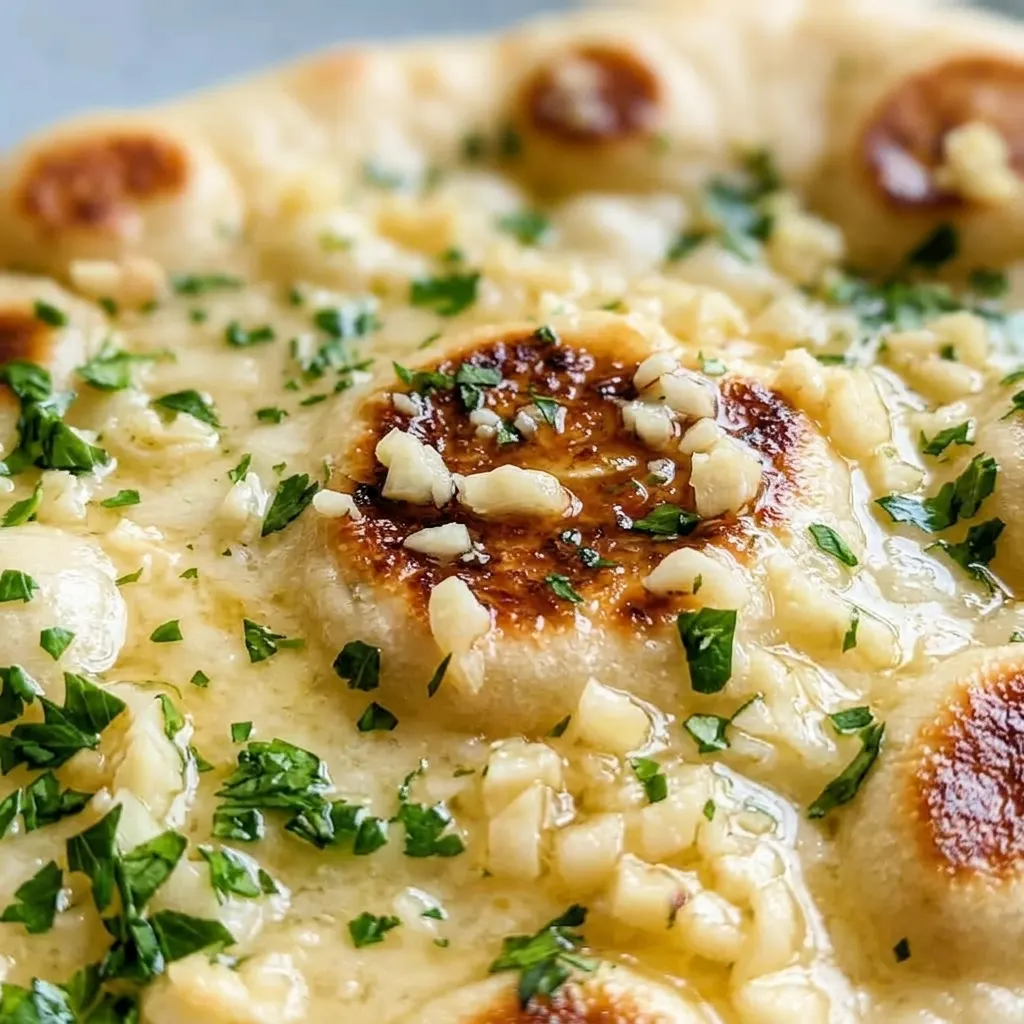
The skillet’s rough surface encourages those dark blisters you want, the ones that mimic a tandoor’s intense heat. You’ll see the naan lift in spots as steam pushes the layers apart.
That’s the crust you’re after. Naan bread recipes ideas often skip the pan choice, but it’s the tool that delivers the result.
Brush hot naan with garlic butter right away
Straight from the skillet, the naan is still steaming and the surface is porous. Melted butter soaks in immediately, coating every bit evenly instead of sitting on top. The heat tames the raw garlic, so its flavor infuses the bread without any harsh bite.
You’ll smell it as soon as the butter hits. That thin layer of fat also keeps the naan from drying out as it sits, adding a glossy sheen and a soft feel. If you wait until the bread cools, the butter just greases the surface and the garlic stays sharp.
Recipes using naan bread should always call for this step.
Prep: 15 min · Cook: 2 min · Total: 1 hr 17 min · Servings: 6 · Calories: 380 kcal
Ingredients that make a difference
Sour cream or yogurt: Use full fat here; the fat and acid keep the crumb tender and flexible.
Active dry yeast: Check the expiration date and proof it until frothy, otherwise the dough won’t rise.
All-purpose flour: Start with 2 cups and add only enough to get a smooth, slightly tacky dough.
Salted butter: Melt it and brush on hot naan so it soaks in; don’t use unsalted, you need the salt.
Warm the dairy gently, then watch for foam
Warm the milk and yogurt
Heat milk and sour cream together until it feels like warm bath water, dip a clean finger in to test. Too hot kills the yeast; too cold slows it down. If you overheat it, stick the cup in the fridge for a minute.
Add sugar and yeast, then wait
Stir in sugar and yeast, then let it sit. You’re looking for a thick, bubbly foam that doubles in volume after about 5 minutes. If the surface stays flat or only a few bubbles appear, the yeast is dead, start over.
Mix in egg and oil
Add the egg and oil to the foamy yeast mixture. Beat the egg first so it blends evenly.
The mixture should look creamy and pale yellow, not separated. If the egg curdles from hot liquid, cool the mixture before adding.
Knead until smooth and tacky
Combine the wet mixture with flour and salt, then knead for about 5 minutes. The dough should feel smooth, elastic, and slightly tacky, it should stick to your palm a little but not leave a residue. Add flour only if it’s truly sticky.
First rise until doubled
Let the dough rise in a warm, draft-free spot for 1 hour. It should puff up to roughly double its size and feel soft when you poke it. If it hasn’t budged after an hour, your yeast or rising spot is too cool.
Portion and rest dough balls
Divide the dough into 6 equal pieces. Roll each into a smooth ball, then cover and let them rest for 10 minutes. You’ll feel the gluten relax, the balls will flatten slightly and won’t spring back when you press them.
Roll and rest again
Roll each ball into an oval about 9×5 inches. Let the rolled naan rest for 3 to 5 minutes before cooking. If the dough snaps back while rolling, it needs more bench rest, cover it and wait a few more minutes.
Cook until bubbles and char
Heat a cast iron skillet over medium to medium-low heat. Cook one naan at a time: first side until bubbles cover the surface and the bottom is golden with dark spots, about 1 to 2 minutes.
Flip and cook the second side until it’s lightly charred, about 1 minute. Adjust heat if it burns before bubbles form.
Brush with garlic butter while hot
As soon as the naan comes out of the pan, brush it with melted butter mixed with minced garlic. The butter should sizzle on contact and soak in instantly, leaving a glossy sheen. If the butter pools on top, the naan has cooled too much.

Naan Recipe
Ingredients
Method
Warm milk mixture:
In a small bowl or glass measuring cup, whisk together 1/3 cup milk and 1/3 cup sour cream or yogurt. Heat in the microwave in 20-second bursts until lukewarm (like bath water; if too hot, chill briefly in fridge).Activate yeast:
Stir in 1 tablespoon sugar and 1 tablespoon yeast. Let stand at room temperature for about 5 minutes until frothy and bubbly. If no foam appears, discard and begin again.Add egg and oil:
Add 1 egg and 3 tablespoons oil to the yeast mixture. Beat the egg and combine thoroughly.Knead dough:
In a large bowl or stand mixer bowl, mix 2 cups flour and 1 teaspoon salt. Pour in the yeast mixture and stir. Attach dough hook (or knead by hand on a floured surface). Knead for about 5 minutes, incorporating up to 1/2 cup additional flour as needed to achieve a smooth, elastic, slightly tacky dough.First rise:
Lightly oil or spray a large bowl. Shape the dough into a ball, place it in the bowl, and turn to coat. Cover with plastic wrap or a tea towel and let rise in a warm spot for 1 hour (or 45 minutes if short on time).Divide and rest:
Punch down the dough and divide into 6 or 8 equal portions (6 yields thicker naan). Set on a lightly floured surface, cover with a tea towel, and rest for 10 minutes.Shape naan:
Flatten one dough ball with your palm, then roll into an oval or triangle about 9×5 inches. Let rest 3-5 minutes before cooking for a thicker texture.Cook naan:
Preheat a 12-inch cast iron skillet or griddle over medium to medium-low heat. Generously oil or spray the surface. Cook one naan at a time: first side for 1-2 minutes until bubbles appear across the top, then flip and cook the second side for about 1 minute. Adjust heat to avoid scorching.Make garlic butter:
In a small bowl, melt 1/4 cup salted butter. Stir in 1-2 minced garlic cloves if desired.Brush and serve:
Remove each naan from the pan; immediately brush with garlic butter, sprinkle with parsley, and serve hot. To keep warm, place naan on a cooling rack in a 170°F (75°C) oven.Store leftovers:
Store leftovers in an airtight container or zip-top bag for up to 3 days.

Storing and Reheating Naan
Serve naan within minutes of brushing with garlic butter. The butter soaks in best when the bread is hot, and the crumb stays soft and pliable.
Once cooled, the texture firms up. Store leftover naan in an airtight container or zip-top bag at room temperature for up to 2 days. After that, it dries out and turns brittle.
For longer storage, freeze for up to 3 months. Stack cooled naan with parchment between each piece, then seal in a freezer bag.
To reheat, warm in a dry skillet over medium heat for about 30 seconds per side, or in a 350°F oven for 5 minutes wrapped in foil. This restores the soft, flexible texture. Microwaving makes it rubbery, so avoid it if you can.
The garlic butter topping stays fine at room temperature for a day or two, but the garlic’s intensity fades. If you want the full hit of fresh garlic, brush it on after reheating.
Do not refrigerate naan; the fridge accelerates staling faster than room temperature.
Tips
- Use instant-read thermometer to check milk mixture temperature: aim for 105 to 110°F (40 to 43°C). Too hot kills yeast, too cold slows activation, and the 20-second microwave bursts can overshoot.
- When kneading, do a windowpane test: tear off a small piece of dough and stretch it thin; if it forms a translucent membrane without tearing, the gluten is developed enough.
Swap sour cream or yogurt, but keep the fat
Sour cream or plain Greek yogurt: Full-fat plain yogurt is the closest swap; use the same amount. Low-fat or nonfat versions work but the naan will be slightly less tender and may dry out faster after cooking. Less fat means a tighter crumb and more drying as the naan sits.
The acid from both still softens gluten, so the pliability is fine, but the richness drops.
Milk: Any milk works: whole, 2%, skim, or unsweetened nondairy (oat, soy, or almond). Use the same volume. Whole milk gives a slightly richer dough because of the fat.
Skim or nondairy milks produce a leaner dough that browns a bit faster and has less cushion in the crumb. The difference is subtle.
All-purpose flour: Bread flour can replace AP flour cup for cup. Start with 2 cups and add only as needed.
Bread flour has more protein, so the dough will be stiffer and require a touch more liquid or a longer rest to relax. The naan comes out chewier with a more open crumb. If you want the original tender bite, stick with AP.
Egg: No reliable swap here. The egg adds structure and richness. Omitting it makes the dough fragile and the naan dense.
If you must skip eggs, try adding an extra tablespoon of oil and 2 tablespoons of water, but expect a flat, less pliable result.

Frequently Asked Questions
Can I make naan dough ahead of time and refrigerate it overnight?
Yes, but the texture will change. The dough will continue fermenting in the fridge, developing a tangier flavor and becoming more elastic. Let it come to room temperature for about 30 minutes before rolling and cooking.
The bubbles may be slightly smaller because cold dough doesn’t puff as readily.
Why didn’t my naan puff up with bubbles?
Most likely the pan wasn’t hot enough or the dough was too cold. You need medium heat and a hot surface so steam builds quickly.
If the pan is too low, the crust sets before steam can lift the layers. Also check that your yeast was frothy before adding, dead yeast leaves no gas.
How do I keep naan warm and soft for serving a crowd?
Place cooked naan on a cooling rack set over a baking sheet in a 170°F oven. That keeps them warm without steaming, which would make them soggy. Brush with garlic butter right after cooking so the fat seals in moisture.
Serve within 30 minutes for best texture.
What’s the difference between this naan and traditional tandoori naan?
Tandoori naan is cooked in a clay oven at extreme heat (900°F), which gives it a smoky char and dramatic puff in seconds. This stovetop version uses a cast iron skillet at medium heat, so it’s browner and slightly denser. The dough here includes egg and sour cream, making it richer and softer than the leaner tandoori dough.
Can I freeze cooked naan? How do I reheat it?
Yes, freeze stacked with parchment between each piece in a sealed bag for up to 3 months. Reheat in a dry skillet over medium heat for about 30 seconds per side, or in a 350°F oven wrapped in foil for 5 minutes. Avoid microwaving, it turns rubbery.