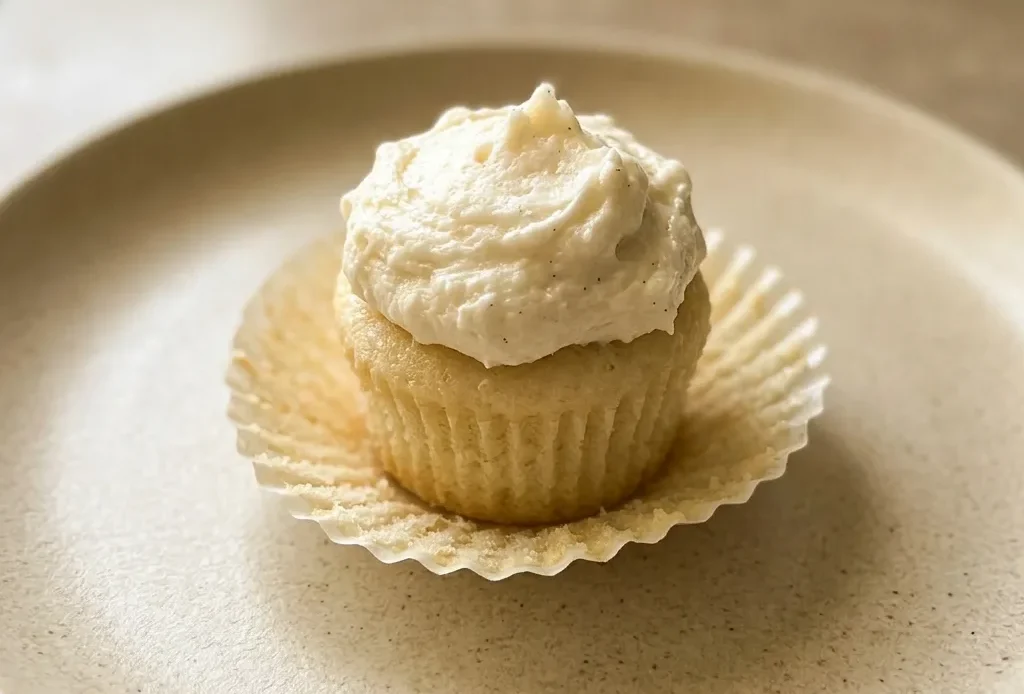
A mini cupcake should taste like a bigger cake, only better, more frosting per bite, a crumb so fine it nearly dissolves. But tiny bakes dry out fast, and the usual all-purpose flour makes them dense, not tender.
That’s where cake flour and sour cream come in: they produce a silky crumb that stays soft even after the short 10-minute bake. The buttercream needs real whipping time to hold a clean swirl on such a small surface, and the window between under- and overbaked is tight, spring back, not a toothpick, tells you when they’re ready.
These mini cupcakes don’t need a special occasion; they’re a weeknight way to get that bakery texture at home.
Use cake flour and sour cream for a tender crumb
Cake flour has less protein than all-purpose, so it forms less gluten when mixed. That keeps the crumb soft and fine, not tough or chewy. Sour cream adds fat and a touch of acidity, which further relaxes gluten strands and tenderizes the texture.
Together they give mini cupcakes a delicate, almost silky bite that holds up without being dense. You can feel the difference when you press one, it gives gently and bounces back.
Beat the buttercream long enough for stable silkiness
The buttercream gets its light, airy structure from extended beating, not just from powdered sugar. Whipping the butter alone for 5 minutes aerates it, turning it pale and fluffy.
After adding the sugar, another 5 minutes incorporates air pockets and dissolves sugar crystals so the finish is smooth, not grainy. The heavy cream goes in last to fine-tune the consistency without deflating what you built.
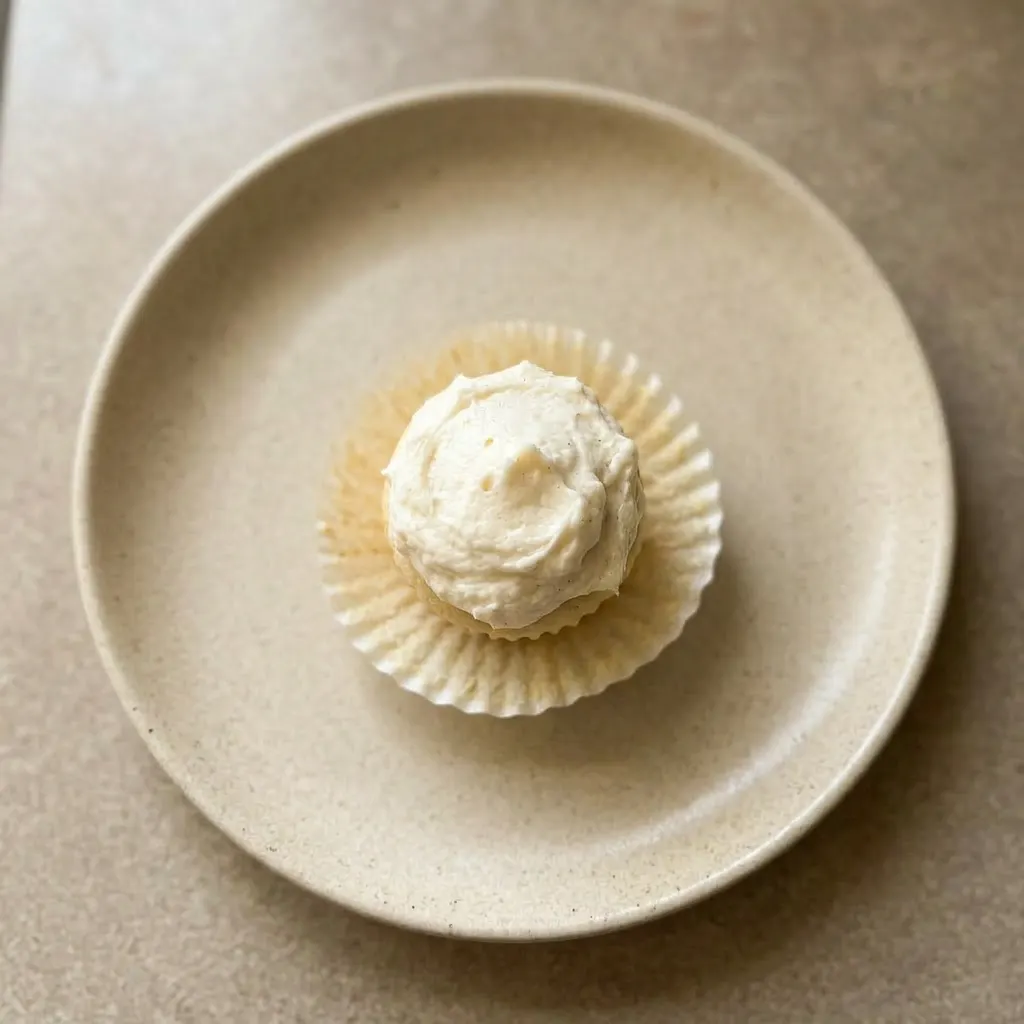
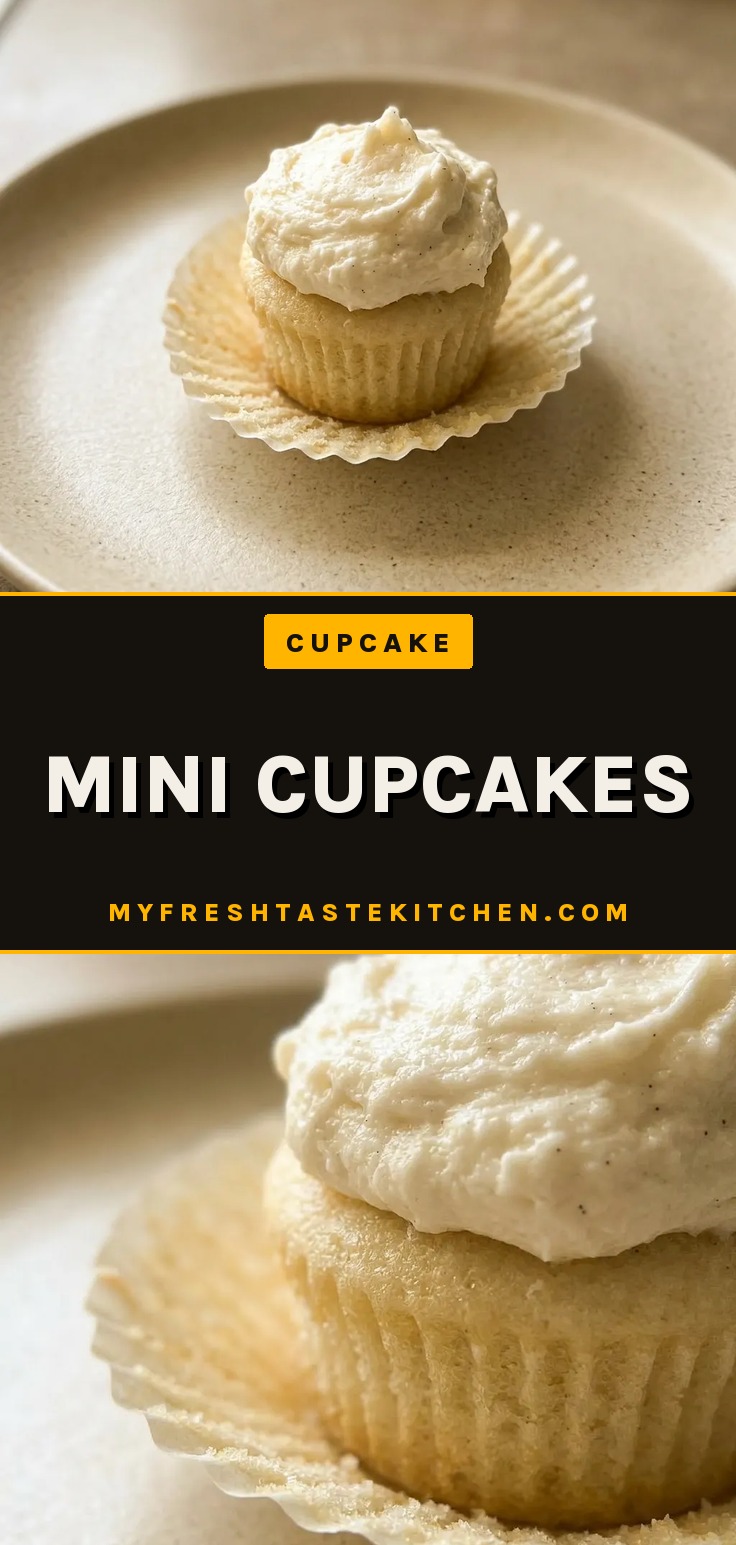
The result is a buttercream that pipes cleanly and holds its shape on tiny cupcakes without feeling greasy.
Adjust baking time for mini size, spring back is key
Because mini cupcakes are small, heat reaches the center fast. That’s why they bake in just 10 to 12 minutes. A toothpick can still leave a wet streak even when they’re done, because the crumb is tender.
Press the center gently instead: if it springs back, they’re set. Overbaking dries them out fast; underbaking makes the centers sink as they cool. You want a dome that stays rounded and a crumb that feels moist, not gummy.
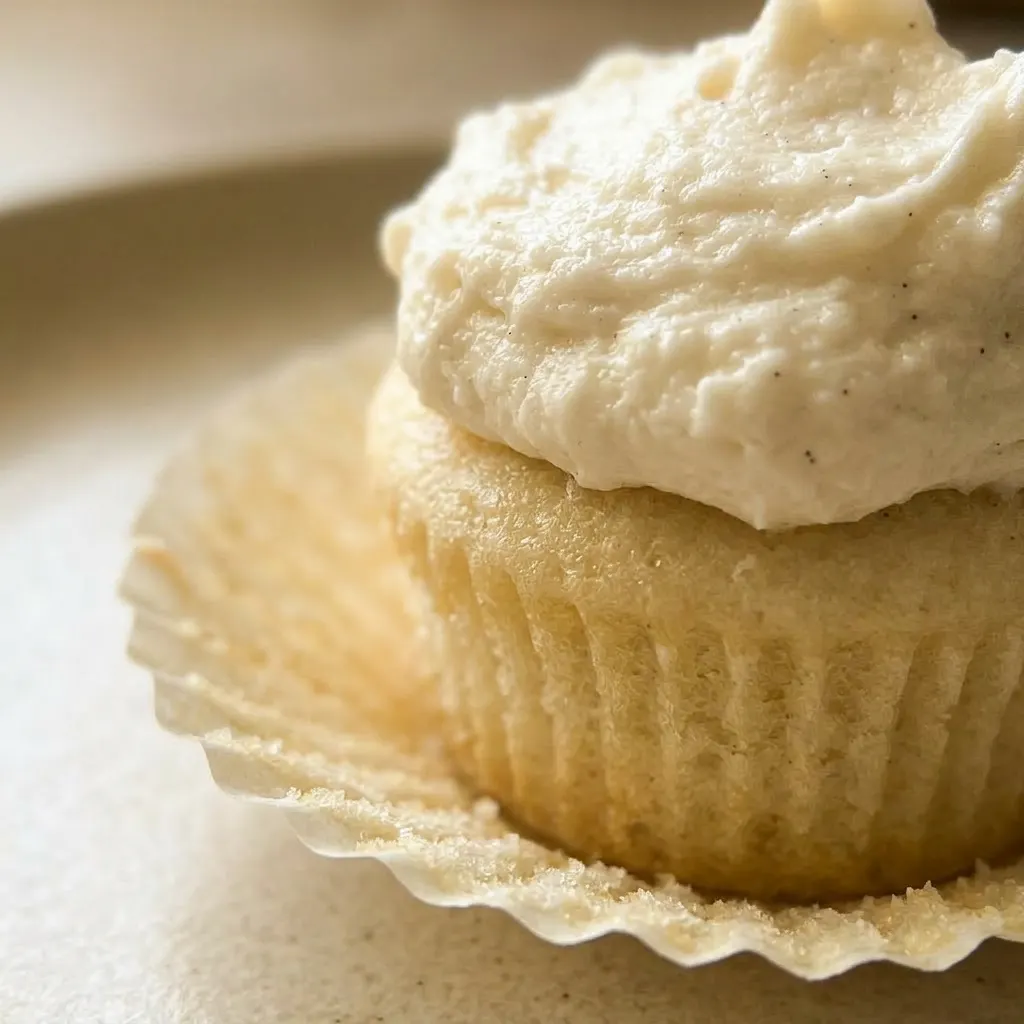
Prep: 45 min · Cook: 10 min · Total: 1 hr 25 min · Servings: 24 · Calories: 140 kcal
Cake flour and sour cream set the texture
cake flour: Spoon and level it; a packed cup adds too much protein and makes the crumb dense.
unsalted butter: Use unsalted so you control the salt; salted butter can throw off the balance.
sour cream: Full fat only; low fat thins the batter and loses the tenderizing effect.
powdered sugar: Spoon and level it; sifting isn’t needed if you beat long enough to dissolve clumps.
heavy cream: Room temperature cream blends smoothly; cold cream can seize the buttercream.
I still stir the milk and sour cream with a light hand, frowning at the bowl like it might toughen if I blink too hard.
Mix batter gently, then fill and bake fast
Combine dry ingredients
Whisk cake flour, baking powder, salt, and sugar in a bowl until uniform. The flour should look evenly colored, no streaks of white.
Add wet ingredients
Pour in melted butter and whisk until fully absorbed. Then add egg white and vanilla; mix until smooth. The batter will be thick and glossy.
Finish batter
Stir in milk and sour cream slowly. Stop as soon as the batter is smooth, no streaks. Overmixing toughens the crumb.
Fill liners
Using a small scoop or spoon, fill each liner to about three-quarters full. The batter should reach just below the liner rim, too full and they’ll dome then sink.
Bake and test
Bake 10 to 12 minutes at 350°F. Press the center gently: if it springs back, they’re done. A toothpick may still show moist crumbs, trust the spring.
Cool before frosting
Let cupcakes rest in the pan for 10 minutes, then transfer to a wire rack. They must be completely cool before icing or the buttercream will melt.
Beat butter first
In a stand mixer with whisk, beat butter on medium-high for 5 minutes. It should become pale and fluffy, almost doubled in volume.
Add sugar and beat
Add powdered sugar and vanilla. Beat on low until combined, then medium-high for 5 more minutes. The mixture will lighten and feel silky smooth.
Finish buttercream
With mixer on low, add heavy cream 1 tablespoon at a time until you reach a pipeable consistency. Beat until just incorporated, overbeating can make it too soft.
Pipe and garnish
Fit a piping bag with a small star tip. Pipe a swirl onto each cooled cupcake. Add sprinkles or other garnish immediately before the buttercream sets.
Mini Cupcakes
Ingredients
Vanilla Cupcakes
- 3/4 cup cake flour 90g, spooned and leveled
- 1 tsp baking powder
- 1/4 tsp salt
- 1/2 cup granulated sugar 100g
- 1/4 cup unsalted butter 56g, melted
- 1 large egg white at room temperature
- 1 tsp vanilla extract
- 1/4 cup whole milk 60ml, at room temperature
- 1/4 cup sour cream 56g
Vanilla Buttercream
- 1/2 cup unsalted butter 113g, softened
- 2 cups powdered sugar 240g, spooned and leveled
- 1-2 tsp vanilla extract or paste
- 2-4 tbsp heavy cream 30-60ml, at room temperature
Instructions
Vanilla Cupcakes
Preheat oven, line pan:
Set convection oven to 350°F (175°C). Line a mini muffin pan with paper liners (light-colored pan works best).Whisk dry ingredients:
In a medium bowl, combine cake flour, baking powder, salt, and sugar; whisk thoroughly.Incorporate melted butter:
Pour in melted butter and whisk until dry mixture is fully incorporated.Add egg white and vanilla:
Add egg white and vanilla; mix until completely blended.Stir in milk and sour cream:
Stir in milk and sour cream, mixing only until batter is smooth and uniform.Fill liners and bake:
Fill each liner to about three-quarters full. Bake 10-12 minutes, until the center springs back when lightly pressed.Cool cupcakes in pan:
Take out of the oven; let cupcakes rest in pan for 10 minutes, then move to a wire rack to cool completely before icing.
Vanilla Buttercream
Beat butter until fluffy:
Put butter into a stand mixer bowl fitted with the whisk. Beat on medium-high for roughly 5 minutes, scraping down the bowl halfway.Add sugar and vanilla, beat:
Add powdered sugar and vanilla; beat on low until incorporated, then increase to medium-high and beat another 5 minutes, scraping the bowl halfway through.Add cream, pipe onto cupcakes:
Pour in heavy cream; beat until mixture is smooth and fluffy. Pipe onto fully cooled cupcakes and garnish as desired.
Swap sour cream but keep the tang
sour cream: Full-fat Greek yogurt. Same amount.
Keeps similar tang and tender crumb. Yogurt is slightly thicker, so batter may feel a touch stiffer, bake as directed.
sour cream: Buttermilk (if you’re out of sour cream). Use 1/4 cup buttermilk and reduce milk to 2 tablespoons. Buttermilk is thinner, so the batter will be runnier; the crumb stays tender but may be slightly less silky.
cake flour: All-purpose flour. Not recommended. Cake flour keeps the crumb delicate; all-purpose makes mini cupcakes tougher and denser.
If you must, replace by weight (90g AP flour) and expect a coarser texture.
butter (in cupcakes): Coconut oil (melted, refined for neutral flavor). Same amount.
Cupcakes will be slightly less rich and may have a coconut scent if unrefined. Crumb stays tender but feels a bit greasier. Best avoided if you want pure vanilla flavor.
Tips
- Use a cookie scoop to portion the batter: it ensures each liner gets the same amount, so all cupcakes bake evenly in the same time. Without it, some may overflow or be underfilled, leading to uneven doneness.
- Let the buttercream sit at room temperature for 5 minutes after beating before piping: this allows air bubbles to settle, giving a smoother, more stable swirl that won’t deflate or look pitted on the tiny cupcakes.
Storage and Serving
Store unfrosted cupcakes in an airtight container at room temperature for up to 2 days. The crumb stays tender; any longer and they start drying out.
Frosted cupcakes keep in the fridge for up to 3 days, but the buttercream firms up and the cake can absorb fridge odors if not sealed well. Bring them to room temperature for about 30 minutes before serving so the buttercream softens and the crumb relaxes.
You can freeze unfrosted cupcakes for up to 2 months: wrap each tightly in plastic wrap, then foil, and thaw in the fridge overnight. Frost them after thawing.
Do not freeze frosted cupcakes; the buttercream’s texture breaks when thawed. For best texture, serve these within a few hours of frosting.
If you’re making ahead, bake and freeze the unfrosted cupcakes, then thaw and frost the day you plan to serve.
Frequently Asked Questions
Can I make the cupcakes a day ahead and frost them later?
Yes, bake and cool the cupcakes, then store them unfrosted in an airtight container at room temperature. They’ll stay tender for up to 2 days. Frost them the day you plan to serve, letting the buttercream come to room temperature first if it’s been refrigerated.
Why did my cupcakes stick to the liners?
Most likely the cupcakes weren’t fully cooled before storing, trapping moisture against the liner. Let them cool completely on a wire rack, then store uncovered for a few hours before wrapping. Another cause: overfilling the liners, which bakes batter up the sides and bonds to the paper.
How do I get domed mini cupcakes?
Fill each liner to about three-quarters full, not more. The batter should reach just below the rim.
Bake at 350°F in a convection oven if you have one; the steady heat helps them dome evenly. Press the center gently after 10 minutes; a springy dome means they’re done.
Can I use this recipe to make regular-sized cupcakes?
Yes, but you’ll need to adjust the baking time. Fill standard liners two-thirds full and bake at 350°F for roughly 15 to 18 minutes.
Use the same spring-back test: press the center gently. The yield will be about 8, 10 regular cupcakes, not 24.