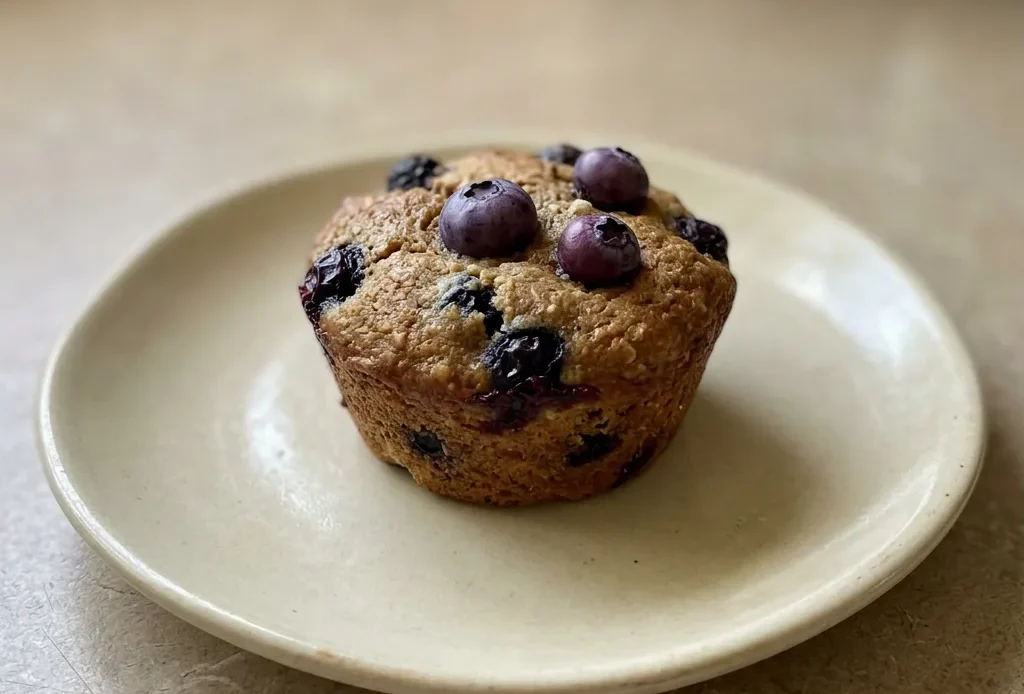
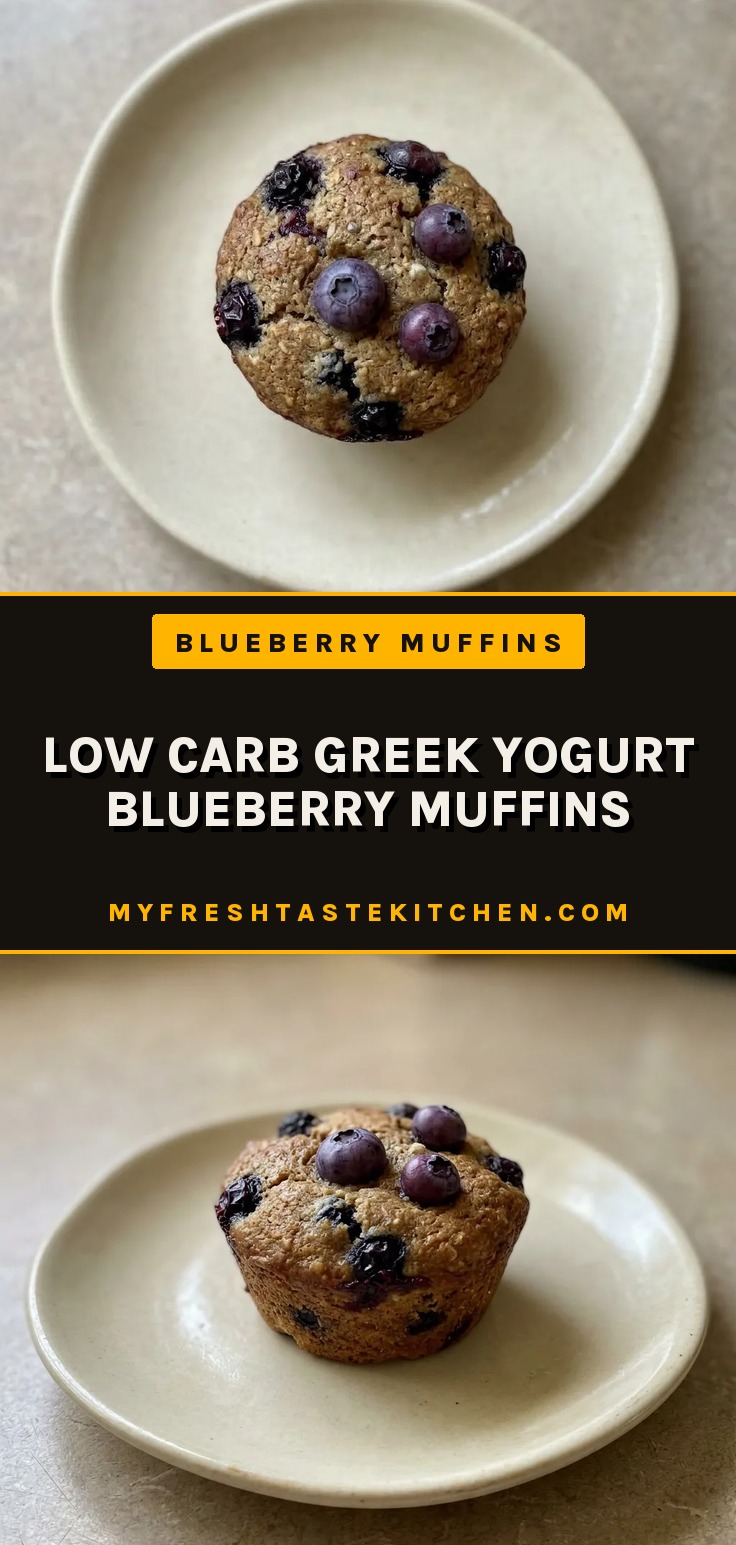
These are not the pale, dense hockey pucks that low-carb baking often produces. They’re tender, golden muffins with a domed top and a moist crumb that holds together without a speck of wheat flour. The secret is in the balance: eggs and Greek yogurt build enough protein structure to replace gluten, while almond flour keeps the texture light and nutty.
Even if you’ve sworn off low carb greek yogurt blueberry muffins after one too many dry failures, this batter behaves like a proper one, thick enough to mound in the liner, not so wet that berries sink. The yogurt’s tang plays off the sweet blueberries, and the crumb stays soft for days without turning gummy. It’s a rare thing: a low-carb muffin that doesn’t ask for a compromise.
The first time I made these, all the blueberries sank to the bottom, leaving a pale, dense layer on top.
Low Carb Structure Without Gluten
Almond flour replaces wheat flour, but it brings a challenge: no gluten means no stretchy network to trap air. That’s where eggs come in, they provide the protein structure that gluten normally would.
Each egg contributes both moisture and binding power, so the muffins hold together without turning crumbly. Greek yogurt adds another layer: its acidity tenderizes the crumb while its protein reinforces the structure.
The result is a muffin that feels moist and tender, not dense or gritty. You’ll taste a subtle tang from the yogurt, a pleasant contrast to the sweet blueberries. These are low carb muffins, yes, but they don’t taste like a compromise, they taste like a proper muffin, just lighter and more delicate.
Batter Balance for Tender Rise
Get the ratio wrong and you’ll have dry, dense pucks or gummy centers. Here the batter is thick but not stiff, it mounds in the liner rather than pouring flat. That thickness comes from almond flour soaking up moisture, balanced by eggs and yogurt that keep things from drying out.
Filling the liners nearly to the top is deliberate: as the muffins bake, the batter needs enough volume to dome upward before setting. If you underfill, you get flat tops; overfill and they’ll spill.
The yogurt’s moisture also creates steam during baking, helping lift the batter gently. These are healthy muffins that rise properly, with a golden dome and a tender interior that stays moist for days.
Blueberries That Stay Put
Fresh blueberries are the way to go here. Frozen ones release extra juice as they thaw in the batter, staining the crumb gray and making soggy spots.
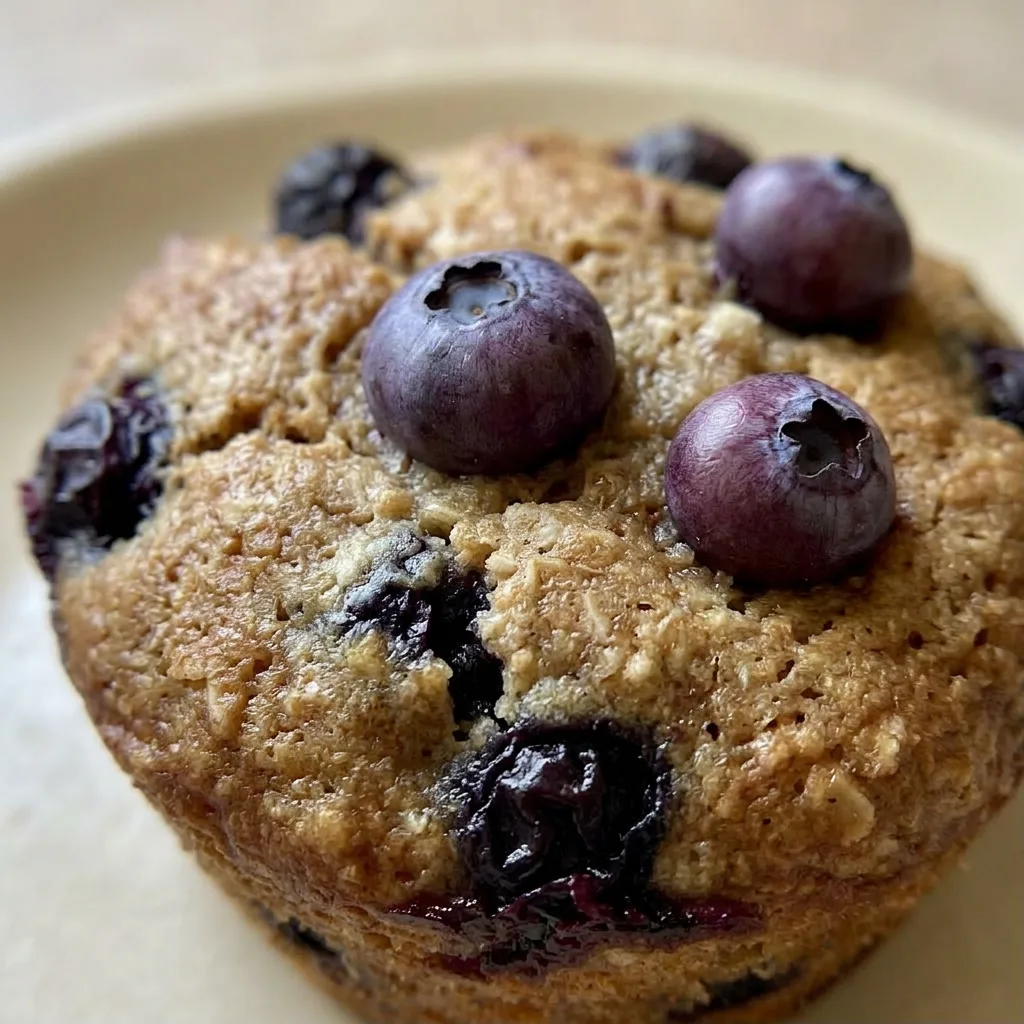
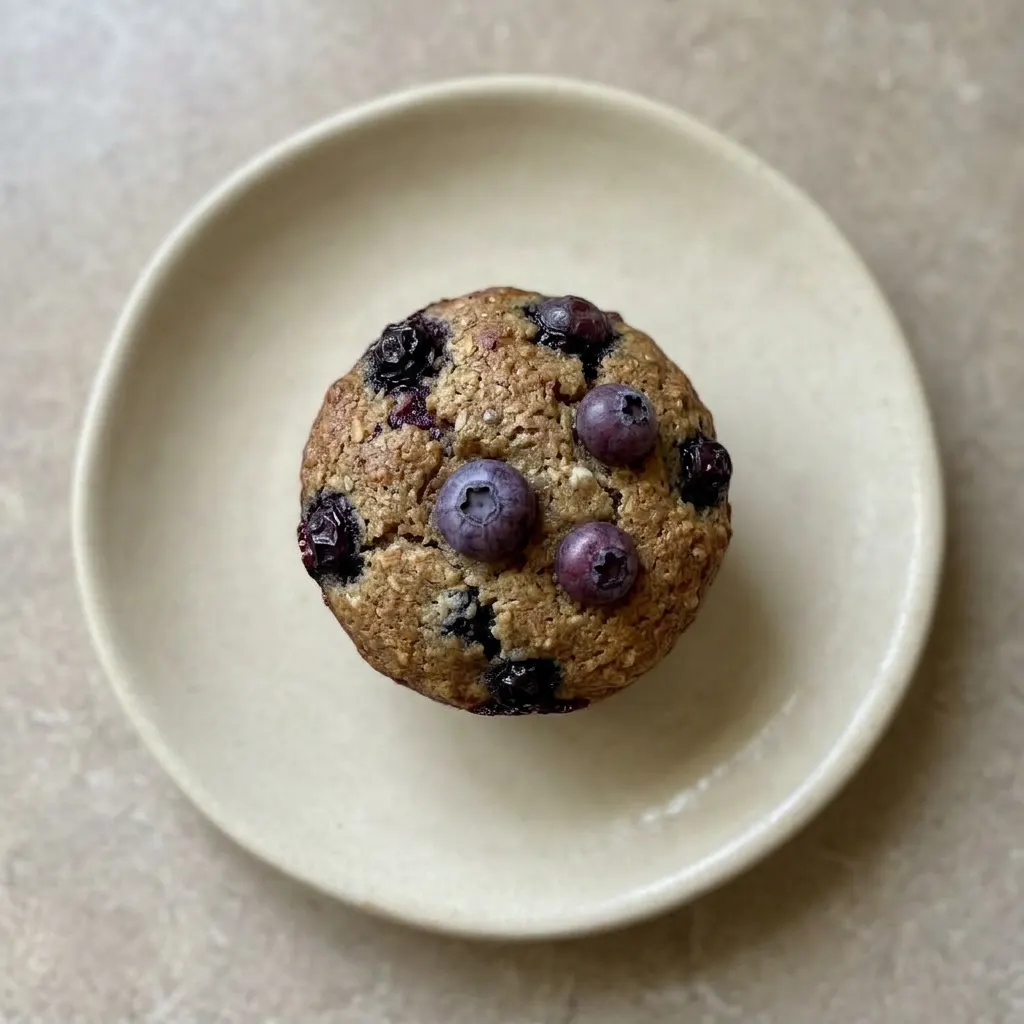
Fresh berries hold their shape and deliver bursts of tart sweetness without the mess. To keep them from all sinking to the bottom, I reserve a handful, now I always hold back a handful of berries to press into the tops before baking, so they stay visible and don’t sink. That also guarantees every muffin gets a few berries right on top, looking inviting.
For gluten free muffins like these, the visual cue of whole berries signals freshness. The batter is thick enough to support them, but pressing them in at the last moment ensures they stay put and bake up juicy, not sunken.
Prep: 5 min · Cook: 25 min · Total: 40 min · Servings: 12
Key Ingredients for Tender, Low Carb Muffins
Almond flour: Fine, blanched almond flour gives a tender crumb; coarse meal makes them gritty.
Eggs: Large eggs provide structure and moisture; room temperature ones blend more evenly.
Greek yogurt: Full fat plain yogurt adds moisture and tang without thinning the batter.
Fresh blueberries: Fresh berries hold shape and stay bright; frozen ones bleed and turn the batter gray.
Making the Batter and Baking
Mix the wet ingredients
Beat the eggs until they’re uniform, then stir in yogurt, vanilla, and sweetener. The mixture should be smooth and slightly thickened, not watery.
Add dry ingredients
Fold in almond flour and baking powder until no streaks remain. The batter will be thick and pasty, that’s normal. Overmixing makes it oily, so stop as soon as it comes together.
Fold in blueberries
Gently fold in the berries, reserving a few for the tops. The batter is stiff enough to keep them suspended; if they sink immediately, your batter is too thin.
Fill the liners
Divide batter evenly among the 12 liners, filling nearly to the top. The batter should mound slightly, not spread flat. Press a few reserved blueberries onto each surface.
Bake and test for doneness
Bake on the lower rack at 375°F for 20 to 25 minutes. The muffins are done when they’re golden brown and spring back when pressed lightly in the center. Overbaking dries them out, so check at 20 minutes.
Cool in the pan
Let the pan rest on a wire rack for at least 10 minutes. The muffins are fragile when hot; cooling sets the structure so they hold together when lifted out.
Low Carb Greek Yogurt Blueberry Muffins
Ingredients
- 4 large eggs
- 1/2 cup plain Greek yogurt
- 1 tsp vanilla extract
- 3 cups almond flour 336 g
- 2/3 cup Swerve sweetener 133 g
- 1 tbsp baking powder
- 1+ cups fresh blueberries
Instructions
Preheat oven and line tin:
Set oven to 375°F (190°C). Place 12 paper liners in a muffin tin.Beat eggs and mix wet ingredients:
Beat eggs in a large bowl. Stir in Greek yogurt, vanilla extract, and Swerve sweetener until smooth.Stir in almond flour and baking powder:
Mix in almond flour and baking powder until fully incorporated.Fold in blueberries:
Fold in roughly 1 cup fresh blueberries, holding back a few for the tops.Fill liners and top with berries:
Evenly distribute batter among the liners, filling them nearly to the top. Add a few reserved blueberries on each muffin.Bake until golden and springy:
Bake on the lower oven rack for 20-25 minutes until golden and springy to the touch.Cool and serve:
Let the pan cool on a wire rack for at least 10 minutes before removing muffins. Serve right away or keep in an airtight container up to 3 days.
Storage and Serving
These muffins are best eaten within a few hours of baking, when the tops are crisp and the crumb is tender. If you have leftovers, store them in an airtight container at room temperature for up to 3 days.
Refrigeration dries out almond flour baked goods, so avoid it unless you plan to reheat. To restore moisture, microwave a muffin for 10 to 15 seconds. For longer storage, freeze the baked muffins in a freezer bag for up to 3 months.
Thaw at room temperature or reheat directly from frozen in a 300°F oven for 5 to 7 minutes. Do not freeze the batter; the blueberries will bleed and the texture will suffer.
If you want to make ahead, bake and freeze the muffins, then thaw as needed.
Almond Flour Is Not a Free-for-All Swap
Almond flour: Coconut flour (do not swap directly; requires major liquid adjustment to avoid dry, crumbly muffins). Coconut flour absorbs far more moisture, swap for almond flour and you’ll get dry, dense pucks.
If you insist, reduce to 1/3 cup plus 2 tbsp and add 1 extra egg plus 2 tbsp melted butter or oil. Even then, texture will be more delicate and less tender.
Swerve sweetener: Erythritol or monk fruit sweetener (granulated, same amount by volume). Both swap 1:1 by volume because the recipe measures by cup, not weight. Erythritol may leave a slight cooling aftertaste; monk fruit blends usually include erythritol anyway.
Texture stays the same, these are dry sweeteners that don’t add moisture.
Greek yogurt: Full fat sour cream or full fat coconut yogurt (dairy-free, same amount by volume). Sour cream mimics the tang and fat content, keeping the crumb tender.
Coconut yogurt works but adds a mild coconut flavor; it may thin the batter slightly, if so, add 1 tablespoon almond flour to compensate. The muffins will be less tangy but still moist.
Fresh blueberries: Frozen blueberries (do not thaw; toss in 1 tsp almond flour before folding to absorb excess juice). Frozen berries bleed purple-gray streaks into the batter and can create soggy spots.
Coating them in almond flour helps, but the color change is inevitable, muffins will look muddled. For gluten free muffins that stay bright, fresh is best.
Tips
- Use a spatula to fold, not a whisk, and stop as soon as the berries are distributed to avoid crushing them and turning the batter purple.
- If your batter turns slightly purple anyway, bake immediately; the color will set and the flavor won’t be affected, but the muffins will look less bright.
Frequently Asked Questions
Can I use frozen blueberries instead of fresh?
You can, but the muffins won’t look as nice. Frozen berries release extra moisture as they thaw in the batter, staining the crumb gray and creating soggy spots. If you must use frozen, toss them in 1 teaspoon almond flour before folding, that helps absorb some juice, but the color change is inevitable.
For the best texture and appearance, stick with fresh.
Why did my muffins turn out dense and flat?
The most likely culprit is overmixing the batter. Almond flour batters are delicate; stir just until the dry ingredients disappear, or the fat separates and weighs everything down.
Another check: if your baking powder is old, it won’t lift the batter, almond flour needs that rise. Next time, mix gently and verify your baking powder’s freshness.
How should I store these muffins to keep them fresh?
Store them in an airtight container at room temperature for up to 3 days. Refrigeration dries out almond flour baked goods, so skip the fridge unless you plan to reheat. For longer storage, freeze the baked muffins in a freezer bag for up to 3 months; thaw at room temperature or warm in a 300°F oven for 5 to 7 minutes.
Can I make the batter ahead of time?
No, it’s best to bake the batter right away. If you let it sit, the almond flour absorbs moisture and the baking powder starts reacting, so the muffins lose lift and turn dense. The article recommends baking and freezing the finished muffins instead, that works well.
Just thaw and reheat as needed.
How are these different from regular blueberry muffins?
They’re low carb and gluten free, made with almond flour instead of wheat. Without gluten, eggs and Greek yogurt provide the structure, giving a tender, moist crumb that’s lighter than a traditional muffin but still satisfying. The taste is subtly tangy from the yogurt, and the texture stays delicate, not dense or gritty.