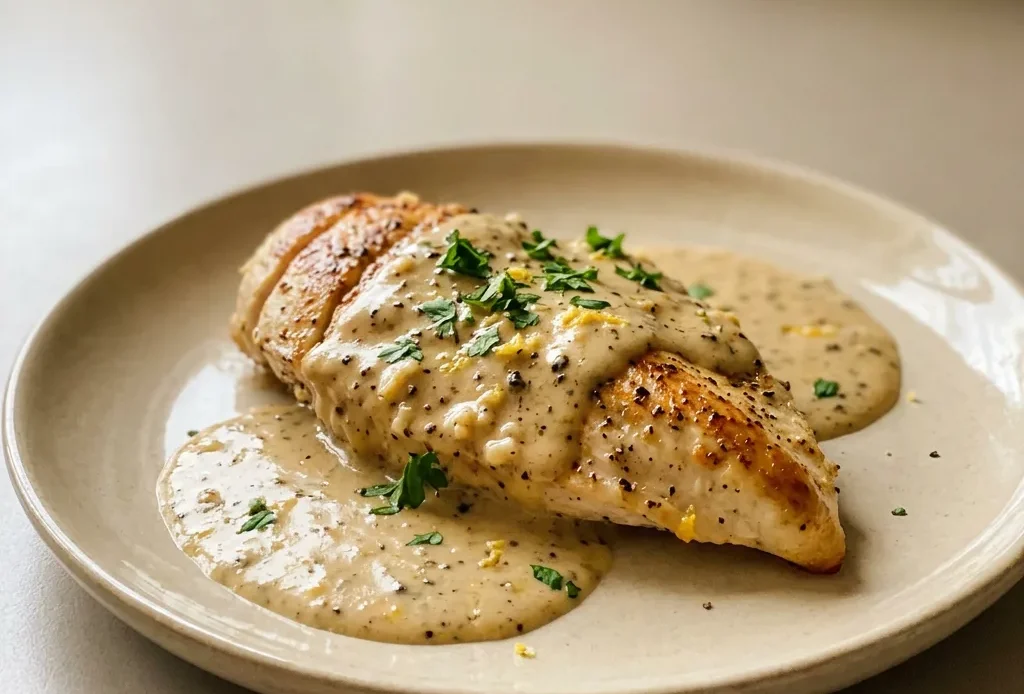
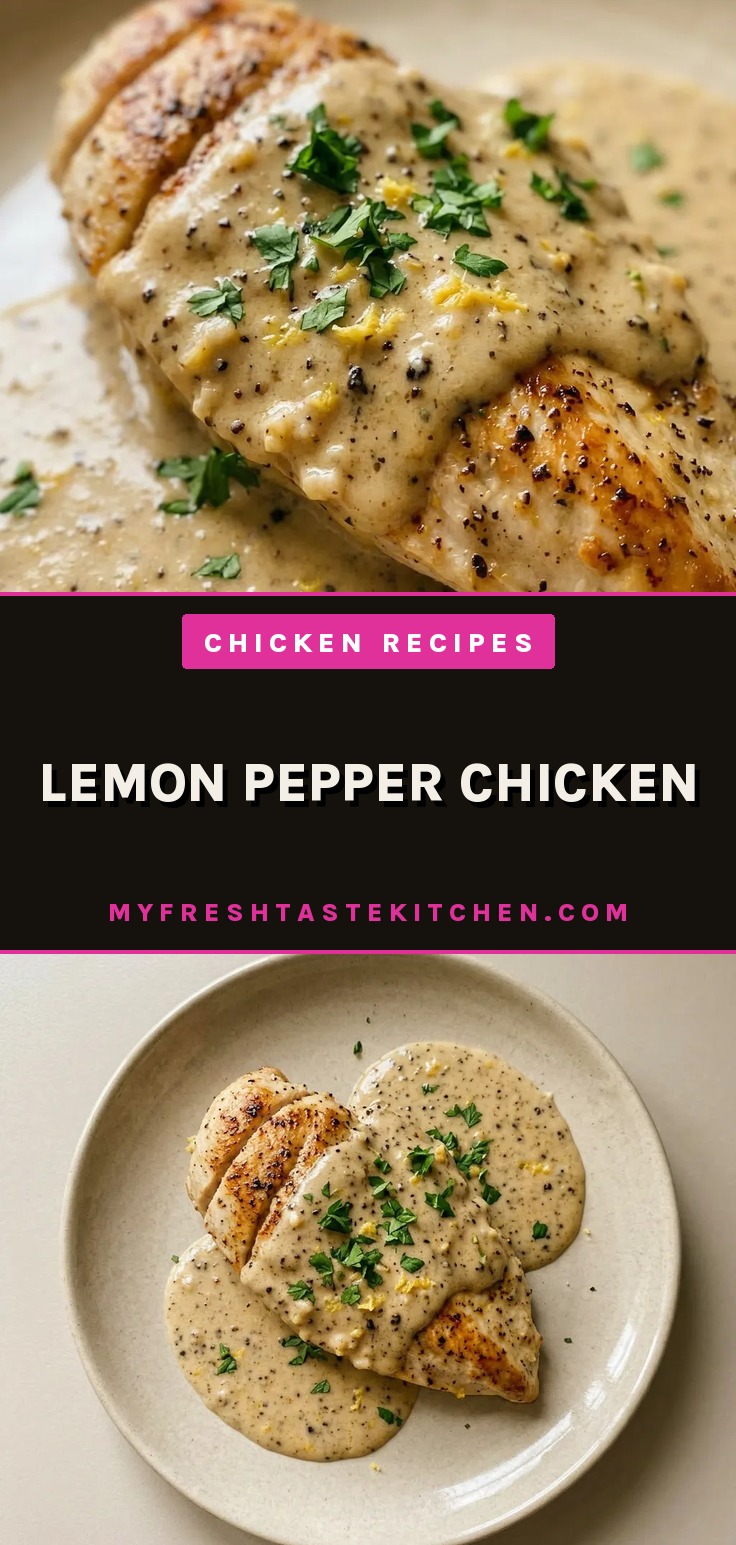
The first bite of this lemon pepper chicken hits you with a bright, citrusy kick, then the creamy sauce wraps around it, rich but not heavy. You get that sharp black pepper warmth lingering after each swallow.
The key is getting the lemon pepper seasoning right; too much salt or too timid a blend, and the whole thing falls flat. It’s a fast skillet dinner that feels like you fussed, but the margin for error is narrower than you’d think.
The cream sauce can break if you boil it hard, and the seasoning’s salt content varies wildly by brand. Get those two things dialed in, and you’ve got a weeknight win.
I still mutter ‘gentle simmer’ to myself every time I add the cream, because I once boiled it so hard the sauce turned into greasy curds.
Halving breasts ensures even cooking
A whole chicken breast is thicker on one end, so the thin side dries out before the thick side is done. Halving lengthwise gives you two pieces of uniform thickness. Now all four pieces cook at the same rate, so you pull them off the heat at the same moment.
No more dry edges or undercooked centers. The recipe starts with 2 breasts and turns them into 4 portions, which also helps with portion control. You get a consistent sear across every piece, and the final simmer finishes them evenly.
Lemon pepper cuts through the cream
Heavy cream and butter make a rich sauce that can feel heavy. Lemon pepper seasoning brings citrusy acidity and black pepper heat. The acid brightens the sauce, so it tastes lively instead of cloying.
The pepper adds a subtle warmth that complements the chicken without overpowering it. Keep in mind that many lemon pepper blends already contain salt, so season the chicken lightly at first. The seasoning is the main flavor here, get a good one.
A quick roux stabilizes the sauce
If you just reduced cream, you’d have to simmer it for a while to thicken, and that could overcook the chicken when it goes back in. Instead, melt butter, whisk in flour, and cook it for half a minute.
That eliminates the raw flour taste. When you add broth and cream and whisk, the flour swells and thickens almost immediately. No lumps form if you whisk steadily.
The sauce comes together in about a minute, silky and stable, and the chicken only needs a short finish.
Resting after searing keeps juices inside
When you sear chicken, the heat pushes juices toward the center. If you dropped it straight into the sauce, those juices would leak out and thin the sauce.
Let the chicken rest on a plate for a few minutes. The juices redistribute back into the meat. Any liquid that collects on the plate gets added back to the pan later, it’s flavor, not waste.
The chicken stays tender even after simmering because it hasn’t lost its moisture. That short rest makes the difference between dry chicken and juicy chicken.
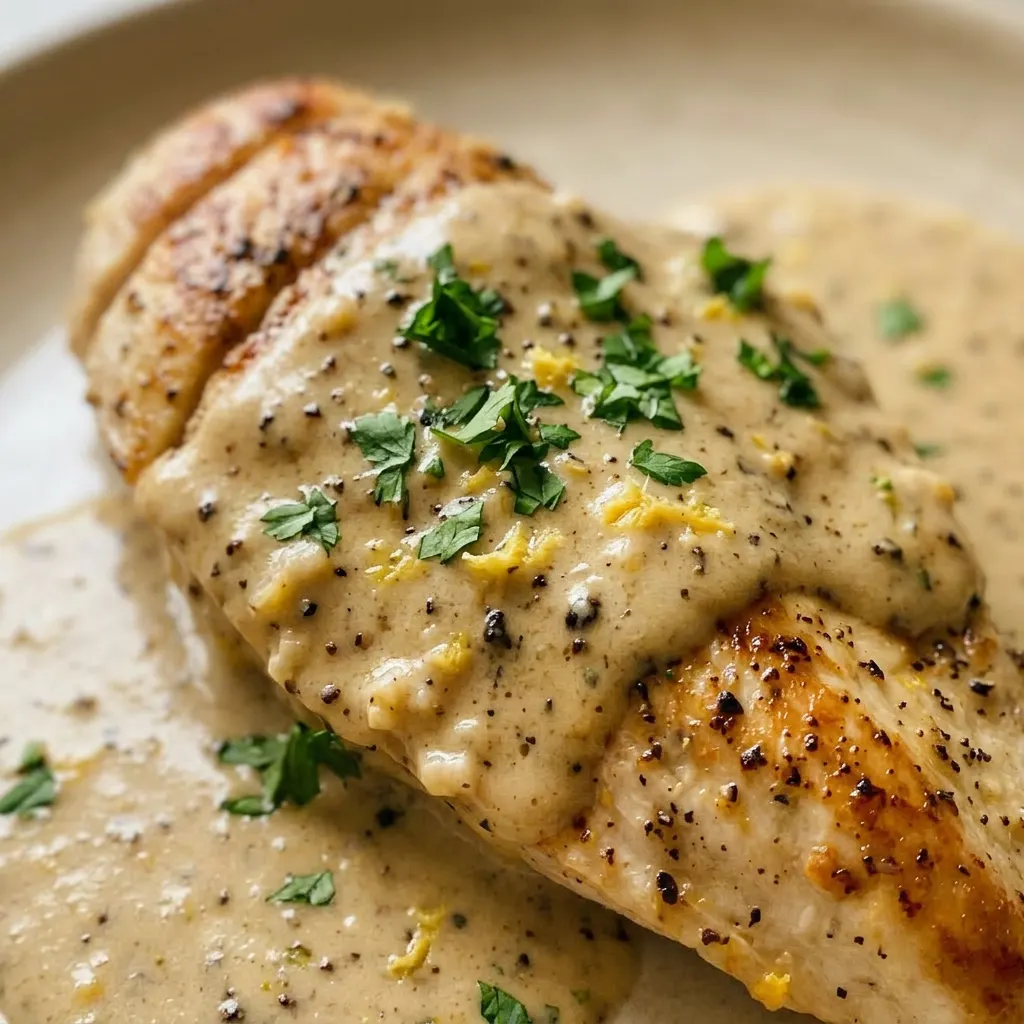
Prep: 10 min · Cook: 20 min · Total: 30 min · Servings: 4 · Calories: 330 kcal
What to look for in the ingredients
Chicken breasts: Buy two large ones; you’ll halve them lengthwise for four even pieces.
Lemon pepper seasoning: Check the label for salt content; some blends are salty enough to skip extra salt.
Heavy cream: Use heavy cream not half and half; the fat content ensures a stable sauce.
Butter: Unsalted butter gives you control over the salt level in the sauce.
Chicken broth: Low sodium broth lets you adjust salt without oversalting the dish.
Building the sauce after searing prevents scorching
Sear the chicken
Get the skillet hot, oil should shimmer before you lay in the chicken. If it doesn’t sizzle on contact, the pan wasn’t ready. Flip only when the underside releases easily, about 4 minutes.
Make the quick roux
After removing the chicken, melt the remaining butter. When it foams, add garlic and flour. Stir for 30 seconds, you’ll smell the raw flour cook off.
If it smells doughy, keep going a few seconds more.
Whisk in the liquids
Pour in broth, cream, and lemon pepper all at once. Whisk steadily, lumps vanish in about a minute.
The sauce should look smooth and start to thicken. If it’s thin, give it another 30 seconds of whisking.
Finish the chicken
Return the chicken and any juices to the pan. Simmer gently for 4 to 5 minutes. The sauce should coat the back of a spoon.
If it’s too thin, let it bubble a bit more; if too thick, splash in a little broth.
Check doneness
The chicken is done at 165°F. If you don’t have a thermometer, slice into the thickest piece, juices run clear and the meat is opaque all the way through. Stop there to keep it tender.
Lemon Pepper Chicken
Ingredients
- 2 chicken breasts halved lengthwise
- Salt as desired
- 1 tablespoon olive oil
- 2 tablespoons butter split
- 2 cloves garlic minced
- 1 tablespoon all-purpose flour
- 2/3 cup chicken broth
- 1/2 cup heavy cream
- 1/2 tablespoon lemon pepper seasoning
Instructions
Slice and Season Chicken:
Slice each chicken breast lengthwise into 2 thinner pieces, yielding 4 total. Season with salt (note: some lemon pepper blends already contain salt, so use caution).Heat Oil and Butter:
Heat olive oil and 1 tablespoon butter in a skillet over medium-high heat. Allow the pan to warm for a few minutes.Sear Chicken Pieces:
Sear the chicken pieces for 4-5 minutes per side, then remove them to a plate.Make Garlic Roux:
Add the remaining 1 tablespoon butter to the pan and let it melt. Stir in the minced garlic and sprinkle the flour over the butter. Cook for 30 seconds to 1 minute, stirring occasionally.Whisk Cream Sauce:
Pour in the chicken broth, heavy cream, and lemon pepper. Whisk for about 1 minute until the flour is fully incorporated.Simmer Chicken in Sauce:
Return the chicken and any accumulated juices to the skillet. Cook for an additional 4-5 minutes until the chicken reaches an internal temperature of 165°F (75°C) and the sauce thickens. If the sauce boils too vigorously, reduce the heat to maintain a gentle simmer. Adjust seasoning with extra salt and pepper if needed, then serve immediately.
Storage and Serving
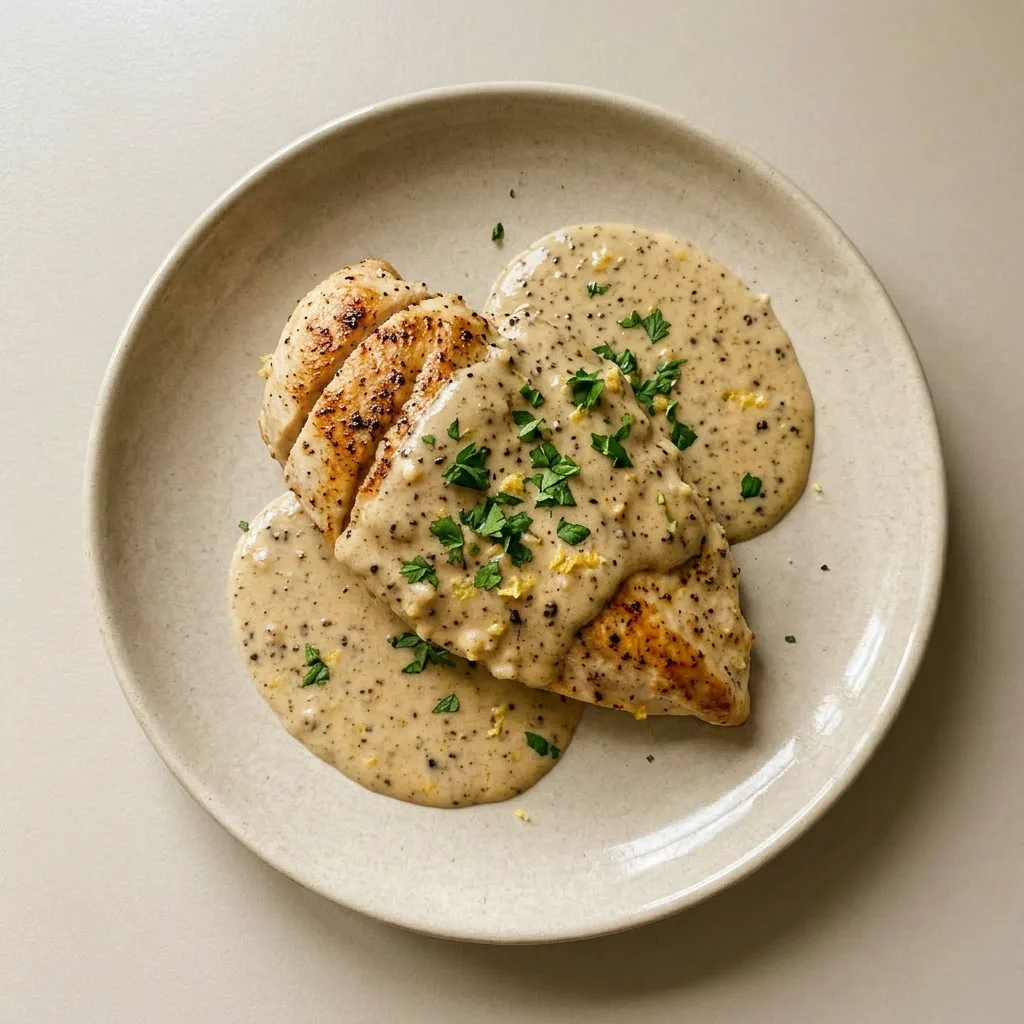
Serve the chicken and sauce right away for the best texture. The sauce is thick and creamy, the chicken tender. If you wait, the sauce continues to thicken as it cools.
Leftovers keep in an airtight container in the fridge for up to 3 days. The sauce will firm up when chilled; reheat gently on the stovetop or in the microwave, adding a splash of chicken broth to thin it back to a silky consistency. Freezing is not recommended.
The cream sauce will separate and turn grainy upon thawing, and the chicken will lose its tender texture. For make ahead, you can sear the chicken and make the sauce up to a day ahead, then combine and finish cooking when ready to serve.
But the final dish is best eaten immediately after cooking.
Tips
- If your lemon pepper seasoning contains salt, reduce or omit the salt added to the chicken and sauce to avoid over-seasoning.
- When whisking the sauce, scrape the bottom of the pan to incorporate any browned bits from searing, which add flavor without scorching.
Lemon pepper seasoning is the star, swap it carefully
Heavy cream: Half-and-half or whole milk. The sauce will be thinner and less rich.
Half-and-half works, but whole milk may need a longer simmer to thicken. The sauce won’t coat the chicken as well, and the richness drops noticeably.
Chicken breasts: Boneless skinless chicken thighs. Thighs stay juicier even if you accidentally overcook them.
They need about the same sear time, but check internal temp: 175°F for thighs. The sauce will taste the same.
Lemon pepper seasoning: Fresh cracked black pepper + lemon zest + a pinch of salt. The seasoning blend includes citric acid and often salt, so fresh zest won’t give the same tangy punch. Use 1/2 teaspoon pepper, zest of half a lemon, and 1/4 teaspoon salt, then taste and adjust.
The flavor will be brighter but less shelf-stable.
Frequently Asked Questions
Can I make lemon pepper chicken ahead of time?
You can sear the chicken and make the sauce up to a day ahead, then combine and finish cooking when ready to serve. But the dish is best eaten immediately after cooking; leftovers keep for up to 3 days in the fridge. Freezing is not recommended because the cream sauce will separate and turn grainy upon thawing.
Why did my cream sauce turn out grainy?
Most likely the sauce boiled too vigorously after you added the cream. High heat can cause the fat in the cream to separate, creating a grainy texture. Keep the heat at a gentle simmer when you return the chicken to the pan.
If the sauce was fine initially and turned grainy upon reheating leftovers, it’s from the cream’s fat breaking during rewarming, add a splash of broth and whisk gently.
How do I know when the chicken is fully cooked without a thermometer?
Slice into the thickest piece, the juices should run clear and the meat should be opaque all the way through with no pinkness. The chicken will feel firm to the touch but still spring back slightly. Since the pieces are halved lengthwise for even thickness, they cook in about 4 to 5 minutes after returning to the sauce.
What’s the difference between lemon pepper chicken and chicken piccata?
Chicken piccata is pan-seared and finished with a sauce made from lemon juice, butter, capers, and often white wine or broth, creating a thin, tangy pan sauce. This lemon pepper chicken uses a creamy sauce thickened with a quick roux and flavored with lemon pepper seasoning, giving it a richer, more silky texture. The seasoning blend also adds black pepper heat, while piccata relies on capers for briny pops.