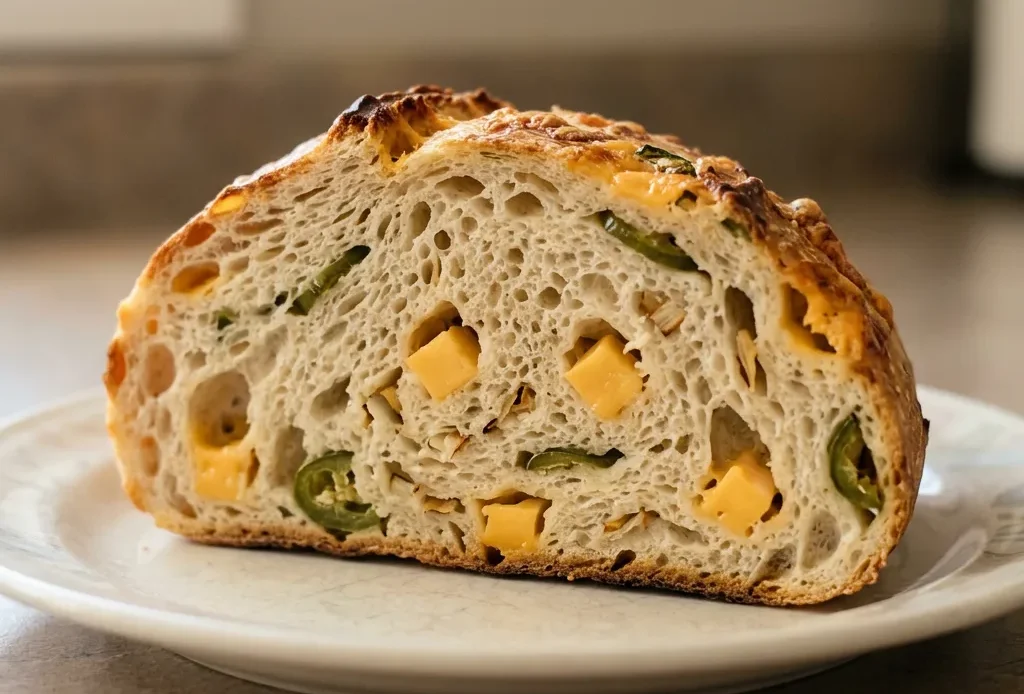
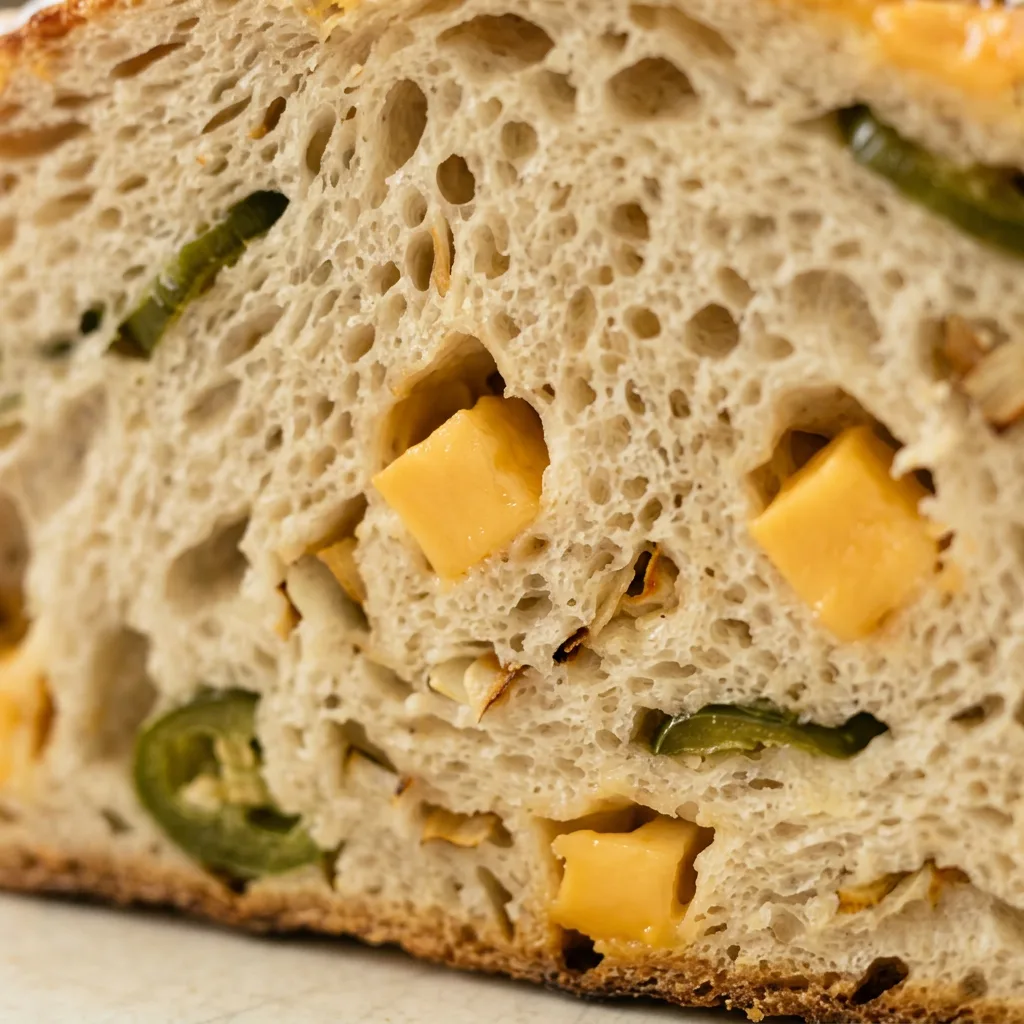
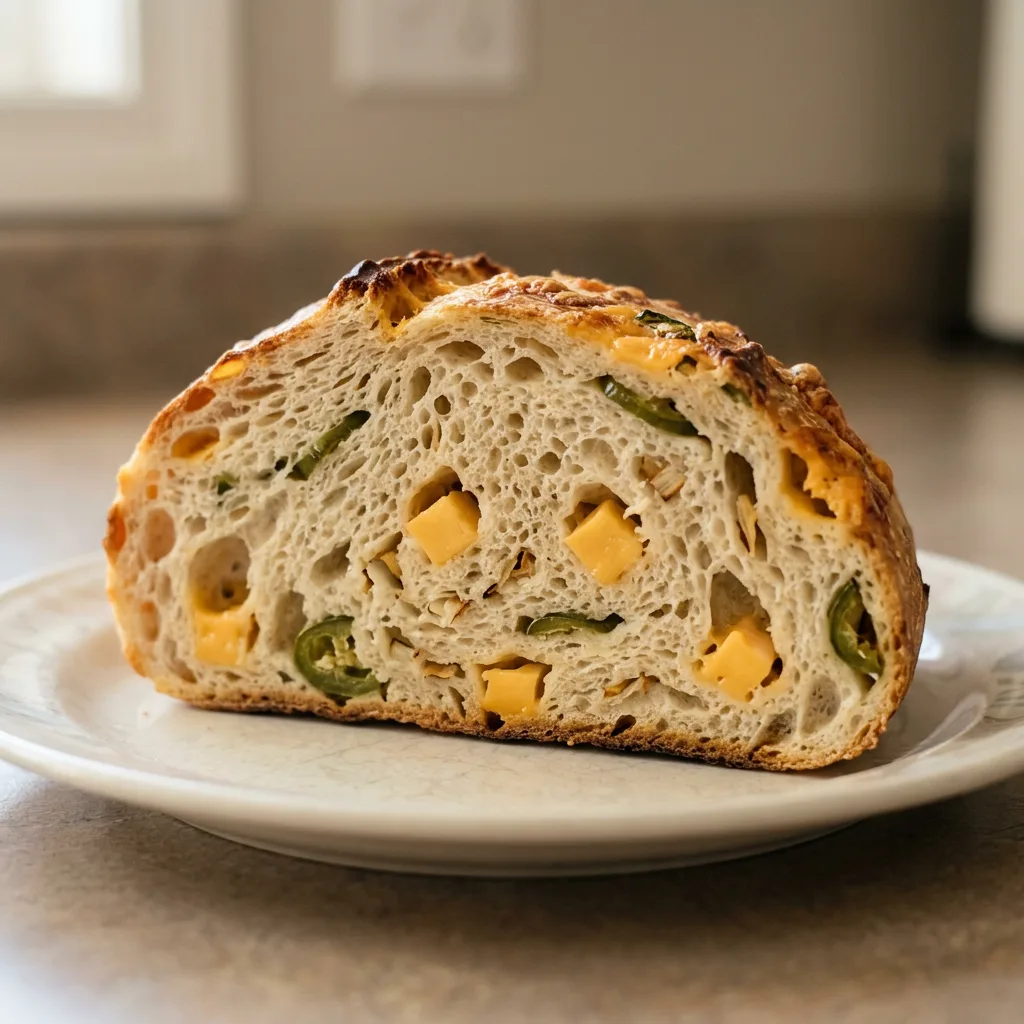
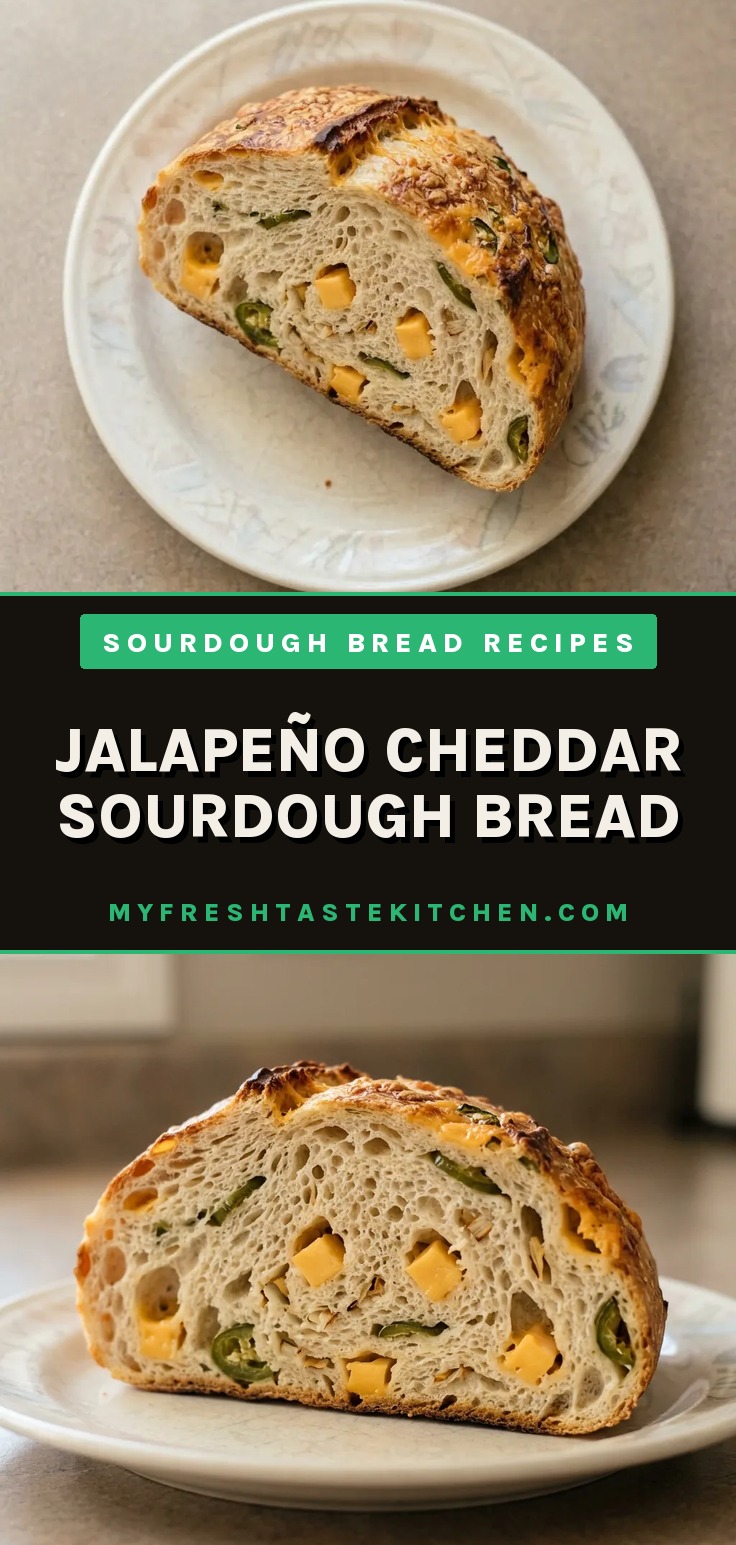
The crust shatters when you squeeze it, and inside, pockets of melted cheddar and jalapeño are suspended in a tangy, open crumb. Getting those inclusions to stay put without tearing the dough is the trick that separates a great loaf from a gummy one. This jalapeño cheddar sourdough bread handles like a high-hydration dough, sticky and slack, but the long cold ferment firms it up and deepens the sourness.
The cheese cubes and pepper slices are added late, during shaping, so they don’t deflate the airy structure you’ve built. The result is a bread that works as well for a grilled cheese as it does with a bowl of chili.
Cold fermentation builds tang and open crumb
That 12-to-24-hour rest in the fridge does more than fit your schedule. Yeast and bacteria keep working at a slow pace, producing organic acids that give the crumb a noticeable sour tang. The cold also stiffens the dough, making it easy to handle and score without sticking.
Meanwhile, the gluten network continues to strengthen, which traps gas pockets and yields an open, irregular crumb. You can see the difference: dough that goes straight to the oven bakes up denser, with a milder flavor. To get those results in your jalapeño cheddar sourdough bread recipes with inclusions, give the cold ferment the full time.
The dough will feel firmer and less tacky when you tip it out, and the final loaf will taste more complex.
Layer in the mix-ins without deflating the dough
Cheese and jalapeños add flavor, but they can also tear the dough if you’re not careful. The trick is to add them during the final shaping, after the bulk fermentation is complete. Cube the cheddar and slice the jalapeños thin, chunky pieces create weak spots.
Stretch the dough into a rectangle, scatter half the inclusions across the surface, then fold one side over. Add the rest and fold the opposite side. This lamination-like step sandwiches the add-ins into layers without aggressive handling.
You end up with pockets of cheese and jalapeño spaced throughout the loaf, not clumped in one bite. Treat these flavored sourdough bread recipes with the same gentle touch.
The dough should feel smooth and resilient, not ragged, when you shape the final boule.
Trapped steam is what gives you that crackling crust
A hot Dutch oven does two things at once: it delivers intense bottom heat and traps the steam that evaporates from the dough. That steam keeps the crust soft during the first part of baking, letting the loaf expand fully, that’s oven spring. Preheat the pot at 450°F for a full 30 minutes so the walls are scorching.
Once you lower the dough in and clamp the lid, steam builds instantly. After 40 minutes, removing the lid drops the humidity.
The crust dries and browns, turning firm and crackling when you rap it. Without that initial steam, the skin sets too early and limits rise.
For homemade sourdough bread recipes, this method reliably produces a glossy, blistered crust. You’ll hear the shell sing as it cools.
Prep: 30 min · Cook: 40 min · Total: 29 hr 10 min
Choose the right cheese and peppers for even melt and heat
cheddar cheese: Cube it instead of shredding so the pieces stay distinct and don’t melt into the dough.
fresh jalapeños: Slice them thin; thick chunks create weak spots in the crumb and uneven heat.
dried onion: Use dried, not fresh, because fresh releases moisture that makes the dough sticky.
Build flavor and structure with a long, cold proof
Mix the dough
Combine flour, starter, water, and salt until no dry bits remain. The dough will be sticky and shaggy, that’s fine. Don’t add flour; the hydration is correct.
Stretch and fold
After an hour’s rest, wet your hands and fold the dough over itself from each side. You’ll feel it tighten. Repeat three times, resting 45 minutes between sets.
The dough should become smooth and less sticky.
Laminate in the add-ins
After the last fold, let the dough rest 10 minutes, then gently stretch it into a rectangle on a clean counter. Scatter half the cheese, jalapeños, and dried onion, then fold one side over.
Add the rest and fold the opposite side. The dough should feel plump, not torn.
Shape the boule
Roll the dough into a ball and tuck the ends under. Cup your hands and drag the dough across the counter to tighten the skin. The surface should feel taut and smooth; if it tears, you’ve overworked it.
Cold ferment overnight
Place the dough seam-side up in a floured banneton, cover, and refrigerate for 12 to 24 hours. The dough will feel firmer and less tacky when you tip it out. This slow rest builds tang and open crumb.
Preheat and bake
Next day, heat the Dutch oven at 450°F for 30 minutes. Invert the dough onto parchment, score deeply, and lower it into the hot pot.
Cover and bake 40 minutes. The steam trapped inside gives you a glossy, crackling crust.
Finish and cool
Remove the lid, drop the heat to 425°F, and bake 5 to 10 minutes more until the crust is deep brown. Let the loaf cool completely on a rack for at least 2 hours before slicing, the crumb sets as it cools.
Jalapeño Cheddar Sourdough Bread
Ingredients
Method
Mix Dough Ingredients:
In a large bowl, mix the bread flour, active sourdough starter, water, and salt using your hands or a dough whisk until no dry flour remains. The dough will be sticky; avoid adding extra flour.Rest Dough 1 Hour:
Cover the bowl with a damp towel, beeswax wrap, or shower cap and let it rest in a warm spot for 1 hour.First Stretch and Fold:
Using wet hands, perform the first stretch and fold: gently lift one side of the dough and fold it over itself. Repeat on all four sides. Cover and rest for 45 minutes.Repeat Stretch and Fold:
Repeat the stretch and fold process for a total of 3 sets, resting 45 minutes between each set.Rest Dough 10 Minutes:
After the final stretch and fold, transfer the dough to a clean countertop without adding flour. Cover with a damp towel and let rest for 10 minutes.Spread Inclusions on Dough:
Gently stretch the dough into a rectangle. Evenly distribute half of the dried onion, jalapeños, and cheddar over the surface, pressing them lightly into the dough.Fold and Shape Boule:
Fold one side of the dough toward the center and add half of the remaining inclusions. Fold the opposite side over and add the rest of the jalapeños, cheddar, and dried onion. Roll the dough into a ball and tuck the ends underneath to shape a boule.Build Surface Tension:
With cupped hands, gently pull and rotate the dough across the work surface to build surface tension without tearing the bottom.Place in Banneton:
Lightly flour a 9-inch banneton basket and place the shaped boule inside seam-side up. Pinch any open seams closed, dust lightly with flour, and cover.Cold Ferment Overnight:
Let the dough rest at room temperature for 1 hour, then place the banneton in a plastic bag and refrigerate for a 12–24 hour cold ferment.Preheat Dutch Oven:
The next day, place a Dutch oven with its lid in the oven and preheat to 450°F (230°C). Once preheated, keep the Dutch oven inside for an additional 30 minutes.Score and Transfer Dough:
Remove the dough from the refrigerator and carefully invert it onto a piece of parchment paper large enough to line the Dutch oven. Score the top with one deep slash using a lame or razor blade.Bake Covered 40 Minutes:
Carefully transfer the loaf and parchment paper into the hot Dutch oven. Cover with the lid and bake for 40 minutes.Bake Uncovered for Color:
Remove the lid, reduce the oven temperature to 425°F (220°C), and bake for an additional 5–10 minutes, or until the crust reaches your desired color.Cool Completely:
Transfer the bread to a wire rack and let it cool completely for at least 2 hours before slicing.Store Leftover Bread:
Store leftovers in a bread bag once fully cooled.
Storage and Serving
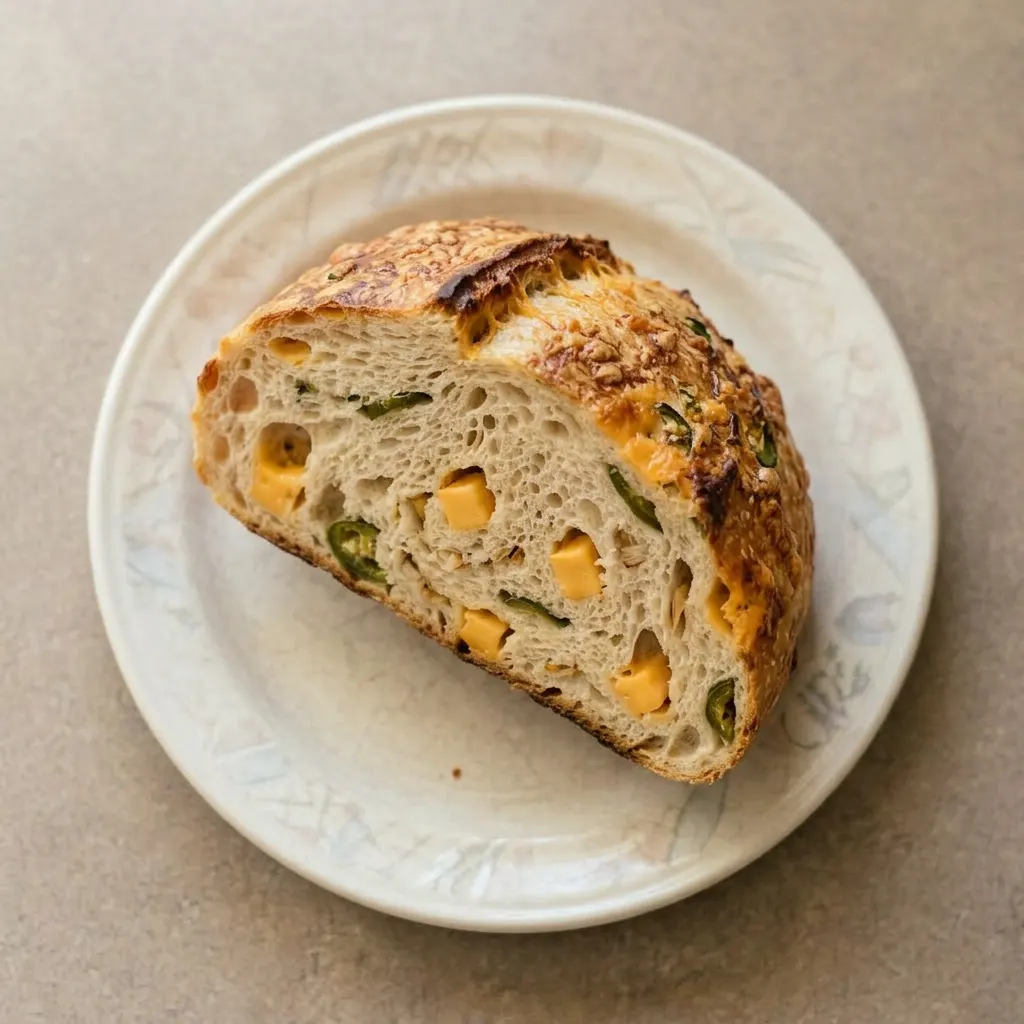
Let the loaf cool completely for at least 2 hours before slicing. The crumb sets as it cools; cutting early yields a gummy texture. Once fully cooled, store the bread in a bread bag or wrap in a clean kitchen towel at room temperature.
It stays fresh for up to 3 days. The crust gradually softens, but toasting revives its crispness and melts the cheese.
For longer storage, slice and freeze the bread in a sealed bag. It keeps for up to 3 months. Thaw slices at room temperature or toast directly from frozen.
Avoid refrigerating the whole loaf; the cold accelerates staling. Serve the bread within 4 hours of baking for the best crust and chewy crumb. If you add any finishing touch like melted butter or extra cheese, do it just before serving.
Tips
- Weigh the flour and water using a kitchen scale for consistent hydration. Even a few extra grams of flour can make the dough stiff, reducing oven spring and creating a denser crumb. The 500 g bread flour and 325 g water should be exact.
- Cube the cheddar into 1/4-inch pieces rather than 1/2-inch. Smaller cubes distribute more evenly and melt fully without leaving greasy pockets, and they are less likely to tear the dough during shaping.
Swap the cheese and peppers without wrecking the crumb
cheddar cheese: Pepper Jack or Gruyère. Pepper Jack adds a mild heat and melts just as well; Gruyère brings nuttiness and a creamier melt. Cube either the same size as the cheddar, shredded disappears into the dough.
fresh jalapeños: Pickled jalapeños, drained and patted dry. Pickled ones are softer and less spicy, so you taste more brine than fresh heat. Dry them well on paper towels; extra moisture makes the dough slack and sticky.
bread flour: All-purpose flour. The loaf will be less chewy and slightly shorter, bread flour’s higher protein gives sourdough its structure. Start with the same weight; the dough will feel a bit looser during folds.
sourdough starter: Commercial yeast (not recommended). You lose the sour tang and the long cold ferment’s benefit.
The dough won’t develop the same acidity or open crumb. If you must, use 1 tsp active dry yeast dissolved in the water, but expect a denser, milder loaf.
Frequently Asked Questions
Can I skip the cold ferment and bake the same day?
You can, but you’ll lose the tangy sourness and the open, irregular crumb that make this loaf distinctive. Without the cold rest, the dough stays softer and stickier, making it harder to score cleanly. The final loaf will be denser and milder, more like a bread roll than a true sourdough.
If you’re short on time, aim for at least a few hours in the fridge; even that helps.
Why did my cheese leak out or burn on the bottom of the loaf?
Most likely the cheese wasn’t cubed, shredded or grated pieces melt into a puddle that seeps through the dough and pools on the Dutch oven floor. Cut the cheddar into ½-inch cubes so they stay put within the crumb. Also check that your dough was thoroughly sealed during shaping; any open seam lets molten cheese escape.
If the bottom still darkens excessively, lower your oven rack one position next time.
Can I use pickled jalapeños instead of fresh?
Yes, but pat them very dry with paper towels before adding; any residual brine makes the dough sticky and slack. Pickled jalapeños are softer and less spicy, so you’ll taste more vinegar tang than fresh heat.
Slice them thin to avoid creating weak spots in the crumb. Expect a different flavor profile, still good, just tamer.