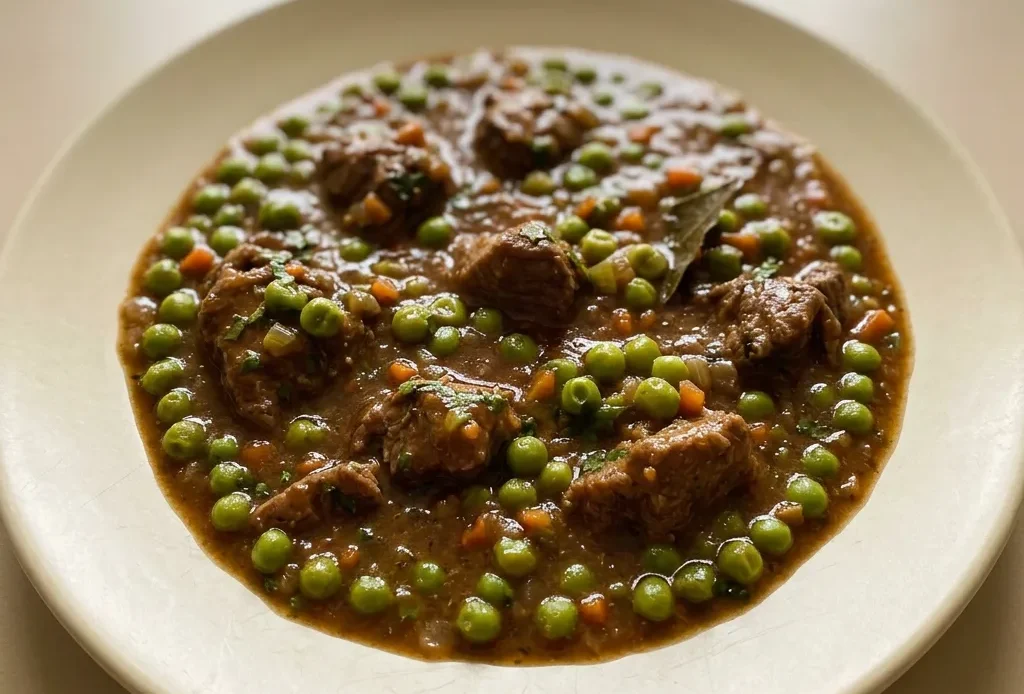
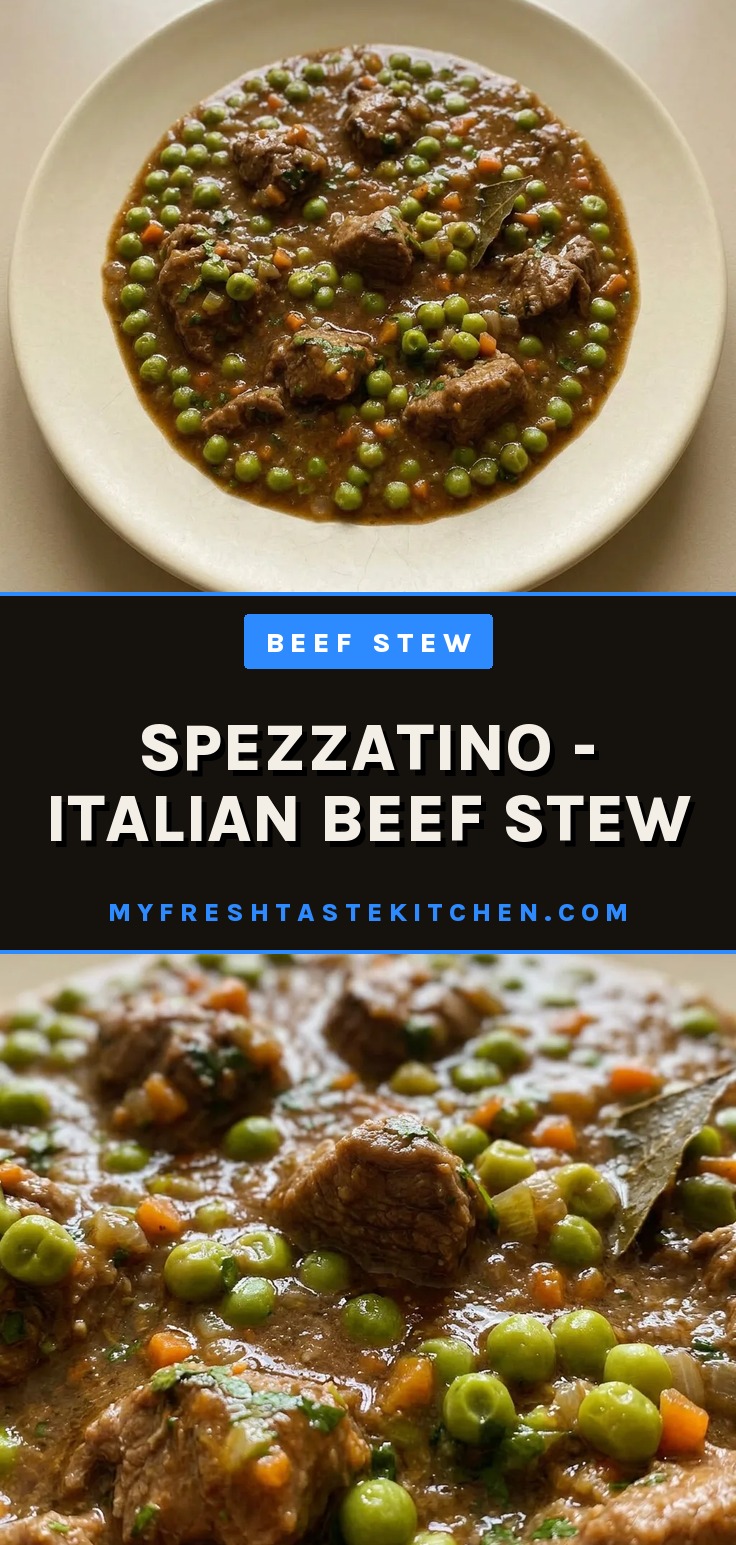
That first spoonful hits you with a deep, savory richness that seems impossible from a handful of humble vegetables and a cheap cut of beef. The broth clings to the meat, silky without being heavy, and the peas pop with a sweet contrast that keeps every bite interesting. This spezzatino – italian beef stew builds its flavor through patience, not fancy ingredients, the kind of dish where the cook’s main job is getting out of its way once the pot’s on the stove.
Why does a soffritto base matter in a hearty beef stew?
The soffritto of finely diced carrot, celery, and onion creates a sweet, aromatic foundation that underpins the whole stew. Cooking it slowly in olive oil until tender softens the vegetables and releases their natural sugars without browning them, so the flavor stays mellow and deep rather than sharp or caramelized. That gentle start sets a savory, rounded baseline that the meat and wine build on.
You can taste the difference if you skip this step, the stew comes out flat, missing that subtle sweetness that balances the rich beef and tomato.
How flour on beef helps a classic beef stew
Coating the beef cubes in flour before browning does more than just seal in juices. As the floured meat browns, that thin layer cooks into a crust that later dissolves into the simmering liquid, thickening the sauce into something silky, not watery.
Without it, you’d need extra cooking time or a cornstarch slurry to get the same body, and the sauce wouldn’t cling to the meat the same way. The browning itself also gets a boost, flour promotes deeper color on the surface, which means richer flavor in every bite.
Why deglaze red wine and cook it down in a red wine beef stew?
Pouring red wine into the hot pan after browning lifts the browned bits stuck to the bottom, those concentrated flecks of flavor that would otherwise stay behind. Letting the wine bubble until nearly evaporated concentrates its fruit and acidity while driving off the raw alcohol edge.
If you add liquid right after the wine without reducing, you dilute those browned bits and the wine tastes harsh. The goal is a mellow, wine-tinged broth, not a boozy one.
You’ll know it’s ready when the pan smells deeply savory, not sharp or sour.
What the long, gentle simmer does for the meat in this best beef stew recipe
Low heat over an extended period changes tough beef into tender, fork-friendly bites. That slow cook breaks down collagen in the meat into gelatin, which both softens the fibers and enriches the broth with a silky body you can feel on your tongue. Watch for a gentle tremble in the liquid, not a hard boil, bubbles should barely break the surface.
Boiling toughens meat and clouds the sauce. When the meat yields easily to a fork but still holds its shape, you’ve hit the sweet spot.
The reward is stew that tastes of time, not haste.
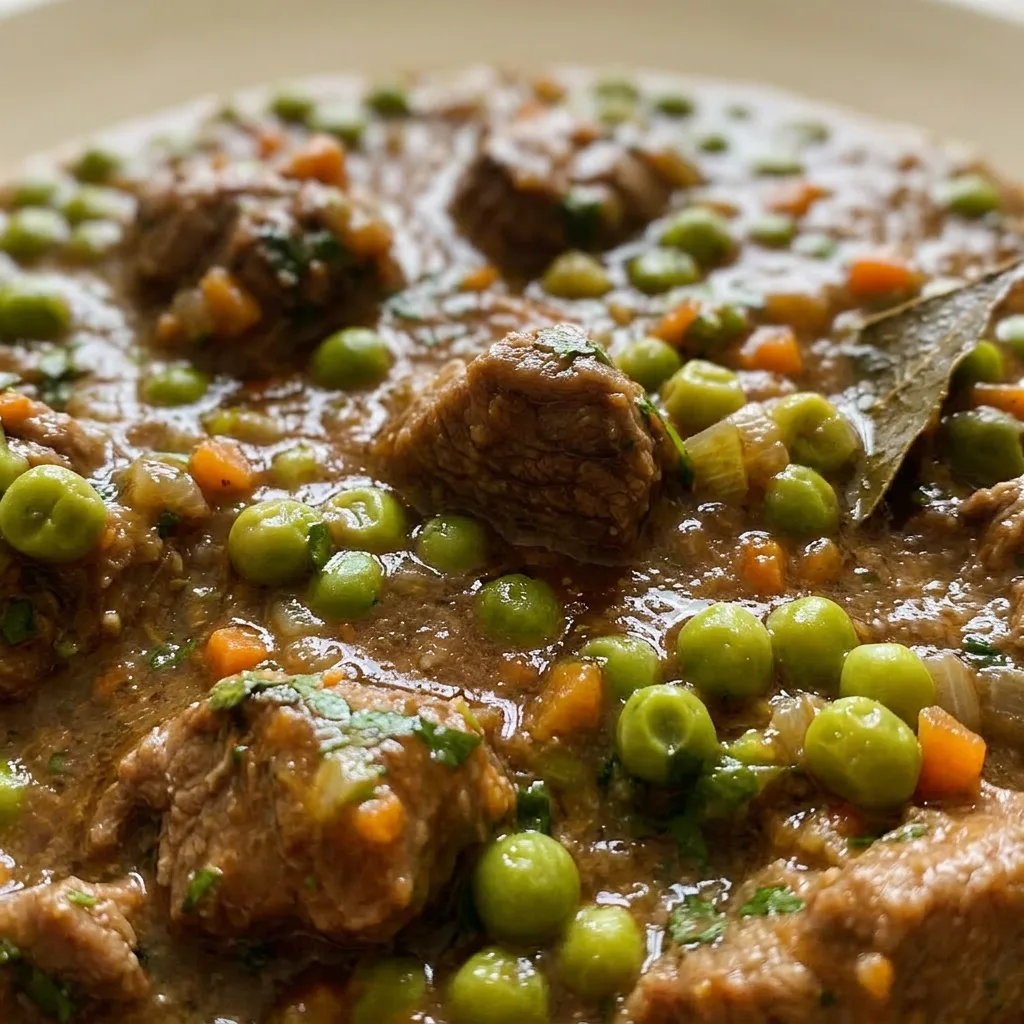
Prep: 10 min · Cook: 2 hr · Total: 2 hr 10 min · Servings: 6 · Calories: 310 kcal
What to look for in these Spezzatino ingredients
Beef or veal: Get a tough, collagen-rich cut like chuck or shoulder; it breaks down into tenderness during the long simmer.
Red wine: Use a dry, medium-bodied red you’d drink; avoid sweet or heavily oaked wines that throw off the balance.
Peas: Frozen peas work fine and hold their color and texture better than fresh in a long stew.
Fresh herbs: Fresh sage, rosemary, and parsley bring brightness; dried herbs here taste flat and dusty.
Tomato paste: Buy tomato paste in a tube so you can squeeze out just 3 tablespoons without waste.
How to build Spezzatino, step by step
Start the soffritto
Heat a generous slick of olive oil in a heavy pot over medium-low. Add the finely diced carrot, celery, and onion.
Stir occasionally until soft and translucent, about 8 to 10 minutes. They should sweat, not brown.
Brown the floured beef
Dredge beef cubes in flour, shake off excess. Remove soffritto to a bowl, then add more oil to the pot. Raise heat to medium-high and brown meat in batches, turning every few minutes.
A deep brown crust means richer flavor.
Deglaze with wine
Return soffritto to pot. Sprinkle chopped herbs over meat, then pour in wine. Let it bubble vigorously until nearly evaporated, scraping up browned bits.
The pan should smell savory, not sharp.
Add liquid and simmer
Pour in 1 cup hot water, stir in tomato paste and bay leaf. Add more water if needed to barely cover meat.
Bring to a gentle simmer, bubbles barely breaking the surface. 5 to 2 hours.
Finish with peas
Stir in peas 5 minutes before the end. Taste and adjust salt.
The meat should yield to a fork but still hold its shape. Remove from heat. The sauce will be silky, not watery.
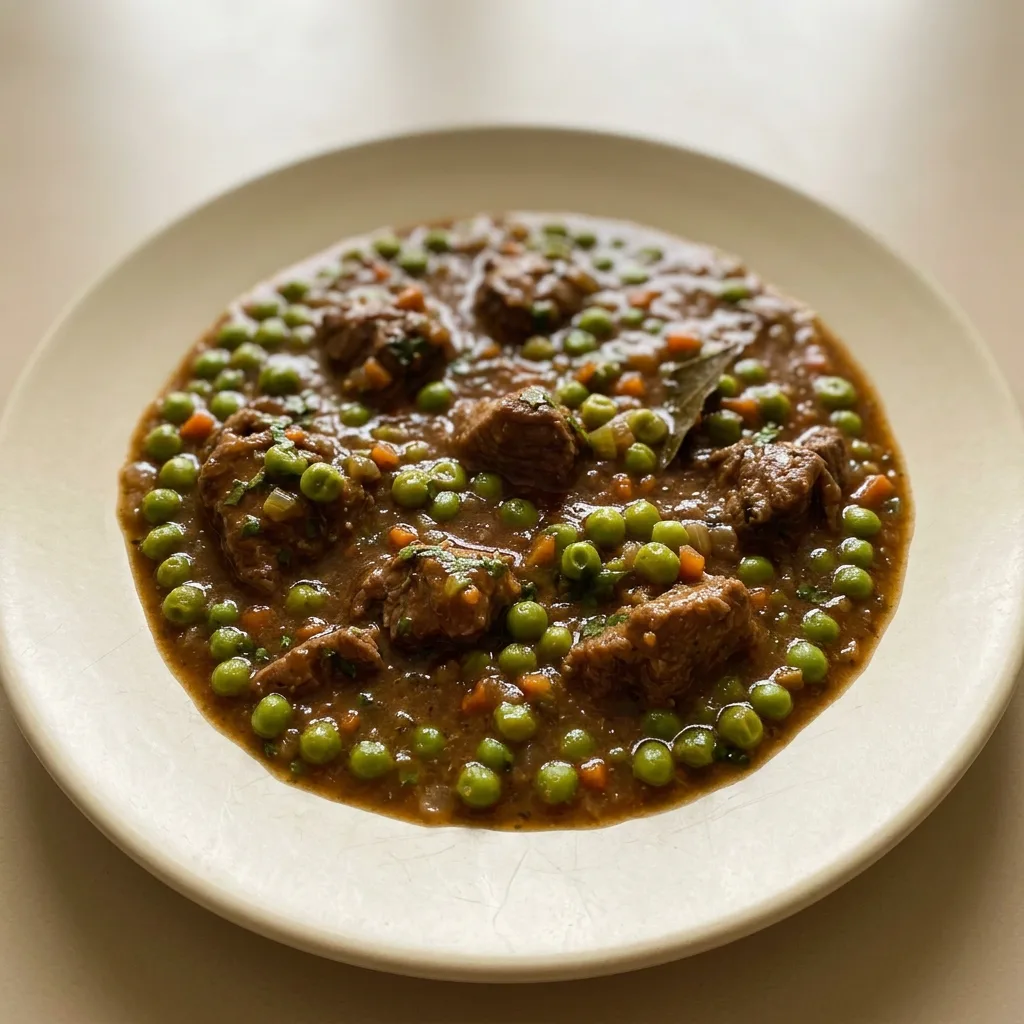
Spezzatino – Italian Beef Stew
Ingredients
Method
Dice Soffritto Vegetables:
Dice carrot, celery, and onion finely for the soffritto.Chop Fresh Herbs:
Chop sage, rosemary leaves, and parsley finely; keep bay leaf whole.Flour Meat Cubes:
Slice beef or veal into uniform medium cubes. Coat each piece in flour, shaking off excess.Cook Soffritto:
Warm a generous amount of olive oil in a pan over medium-low heat. Add diced carrot, celery, and onion. Cook, stirring now and then, until tender. Move soffritto to a bowl.Brown Floured Meat:
In the same pan, add another generous drizzle of olive oil and the floured meat. Brown each side for several minutes.Add Wine and Reduce:
Add chopped herbs and stir. Pour in red wine and cook on high heat until nearly evaporated.Combine and Simmer:
Return soffritto to the pan. Pour in hot water or broth, add bay leaf and tomato paste. Mix thoroughly.Slow Cook Covered:
Cover and simmer on low heat for 1.5–2 hours, adjusting based on meat type and cut.Add Peas and Season:
A few minutes before finishing, stir in peas. Check seasoning and adjust salt. Cook for 5 more minutes, then remove from heat.Serve or Store:
Serve hot or warm. Refrigerate for up to 2 days or freeze for up to 3 months.
Three swaps that work in this beef stew, and one that won’t
Red wine: Beef broth plus 1 tablespoon balsamic vinegar per ⅓ cup wine. The vinegar mimics the wine’s acidity and dark color; broth replaces the body. The result is a touch sharper, less fruity, but still savory.
If you skip the vinegar, the stew tastes flat.
Peas: Green beans (cut into 1-inch pieces) or frozen edamame. Both hold their texture during the short simmer. Edamame adds a nuttier note; green beans stay snappy.
The color stays green, but the sweetness shifts, peas are sweeter, so your stew will be less sweet.
Flour (for coating meat): Gluten-free all-purpose flour blend or arrowroot starch. A gluten-free flour blend that contains xanthan gum works best, it thickens the sauce similarly. Arrowroot gives a clearer, silkier sauce but slightly thinner; use the same amount.
Straight rice flour won’t brown as well and the sauce stays thin.
Tomato paste: Do not swap. Tomato paste provides concentrated umami and color that ketchup or canned tomatoes can’t match. Ketchup adds sugar and vinegar, throwing off the balance; canned tomatoes add too much liquid and won’t concentrate the same way.
Leave this alone.
Tips
- If the sauce is too thin after 2 hours, uncover and simmer on medium heat for 5 to 10 minutes to reduce and thicken, stirring occasionally to prevent sticking.
How to store and serve Spezzatino
Spezzatino tastes even better the next day. The flavors settle and deepen overnight in the fridge. Store leftovers in a covered container for up to 2 days.
Reheat gently on the stove over low heat, adding a splash of water or broth if the sauce thickened too much. Stir occasionally to keep the meat from sticking. Avoid boiling, which can toughen the beef.
For longer storage, freeze for up to 3 months in a sealed container. Thaw overnight in the fridge, then reheat as above. The peas will soften further upon reheating, so the texture shifts slightly but remains pleasant.
Serve hot or warm. If you made the stew ahead, let it cool completely before refrigerating or freezing. The serving window for best texture is within 2 days for refrigerated stew; after freezing, eat within 3 months for best quality.
The final step of adding peas is done just before serving if making ahead; if the stew is fully cooked with peas, they will lose some brightness but the flavor stays good.
Frequently Asked Questions
Can I make Spezzatino ahead of time and does it reheat well?
Yes, make it a day ahead, the flavors settle overnight. Reheat gently on low heat, stirring occasionally, adding a splash of water or broth if the sauce thickened.
Avoid boiling, which toughens the beef. If you added peas, they soften further but taste fine; for brightest color, add peas only when reheating.
Why is my Spezzatino sauce too thin or too thick?
Too thin likely means the flour coating was insufficient, next time, coat each cube thoroughly and shake off only excess, not all. Too thick often comes from too little water or over-reduction; stir in hot water a tablespoon at a time until it reaches a silky consistency. The sauce should coat the back of a spoon but still flow.
How is Spezzatino different from other Italian beef stews like Stracotto?
Spezzatino uses smaller meat cubes and includes peas, giving it a brighter, lighter finish than Stracotto, which is a large pot roast braised in wine and often tomatoes with a denser sauce. Spezzatino’s soffritto is cooked without browning for a mellow sweetness, while Stracotto may use a deeper sear. Both are slow-cooked, but Spezzatino is chunkier and quicker to serve.
Can I use frozen peas directly in the stew?
Yes, add them straight from the freezer in the last 5 minutes of cooking. They thaw quickly and hold their color and texture better than fresh peas would in a long simmer. No need to thaw first; just stir them in and cook until heated through.
