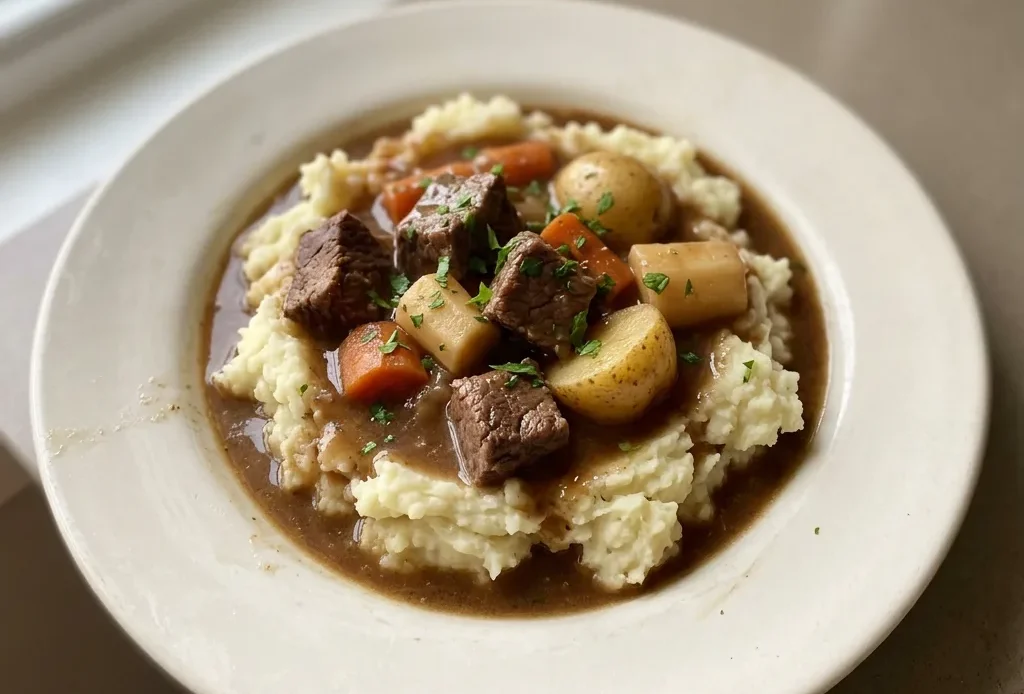
This stew lives or dies by the browning. If you rush the sear, crowding the pot, skipping the flour dusting, the broth stays thin and the meat turns gray.
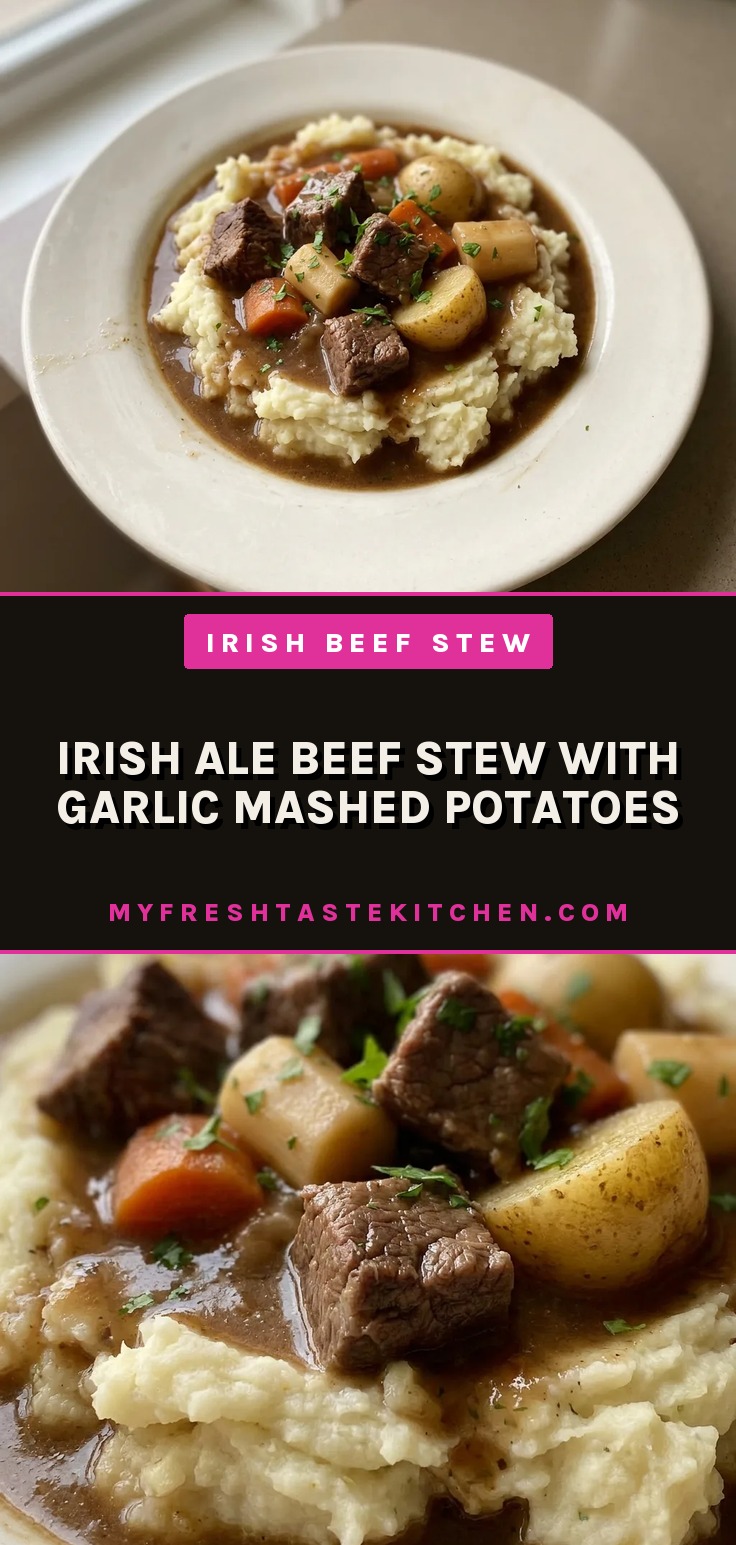
But take the time to build that dark fond, let the ale pull it off the pan, and you get a gravy that coats the back of a spoon. The garlic mashed potatoes underneath aren’t just a side; they’re the bed that catches every drop. An irish ale beef stew with garlic mashed potatoes like this doesn’t need fussing, it needs patience where it counts.
Brown in batches for deep flavor
When beef hits a hot pan, moisture sizzles away and the surface browns, creating fond, those dark, crusty bits stuck to the bottom. That fond is pure flavor, the backbone of the stew.
If you overcrowd the pot, the meat releases steam and essentially poaches instead of browning. You’ll get gray, bland meat and almost no fond. Dusting the beef with flour before searing does two things: it helps the browning happen faster, and later, as the stew simmers, that flour thickens the broth.
So take the time to brown in a single layer, in batches. The result is a rich, savory base you can taste.
Which Irish ale gives what flavor
For a guinness beef stew, the beer choice matters. A standard Irish ale like Smithwick’s or Harp is malty and slightly sweet, it adds a gentle caramel note that blends smoothly with the beef broth. Guinness stout, on the other hand, brings a roasted bitterness and a darker, more complex character.
It strikes you right away, but it softens as it cooks, settling into a savory depth that stands up to the beef. Both work, but you’ll notice the difference: the stout makes the sauce feel heartier, more assertive.
Whichever you pick, that ale does the job of deglazing the pan, pulling up all the fond so nothing goes to waste.
Why garlic mashed potatoes fit this stew
This is a hearty beef stew, and it wants a side that can hold its own without stealing the show. Creamy mashed potatoes do exactly that. They sop up the gravy like a sponge, so every forkful gives you both tender beef and rich, garlicky potato.
The garlic in the mash echoes the garlic in the stew, tying everything together. Yukon Golds are the right choice, they’re naturally buttery and waxy enough to mash into a smooth, almost silky texture without getting gluey. You get a soft, soft bed that lets the stew be the star.
That contrast, chunky, saucy meat over smooth potatoes, makes each bite interesting.
Root vegetables balance the ale
Carrots and parsnips do more than add bulk to an irish beef stew. As they simmer for two-plus hours, they release natural sugars that counter the ale’s bitterness.
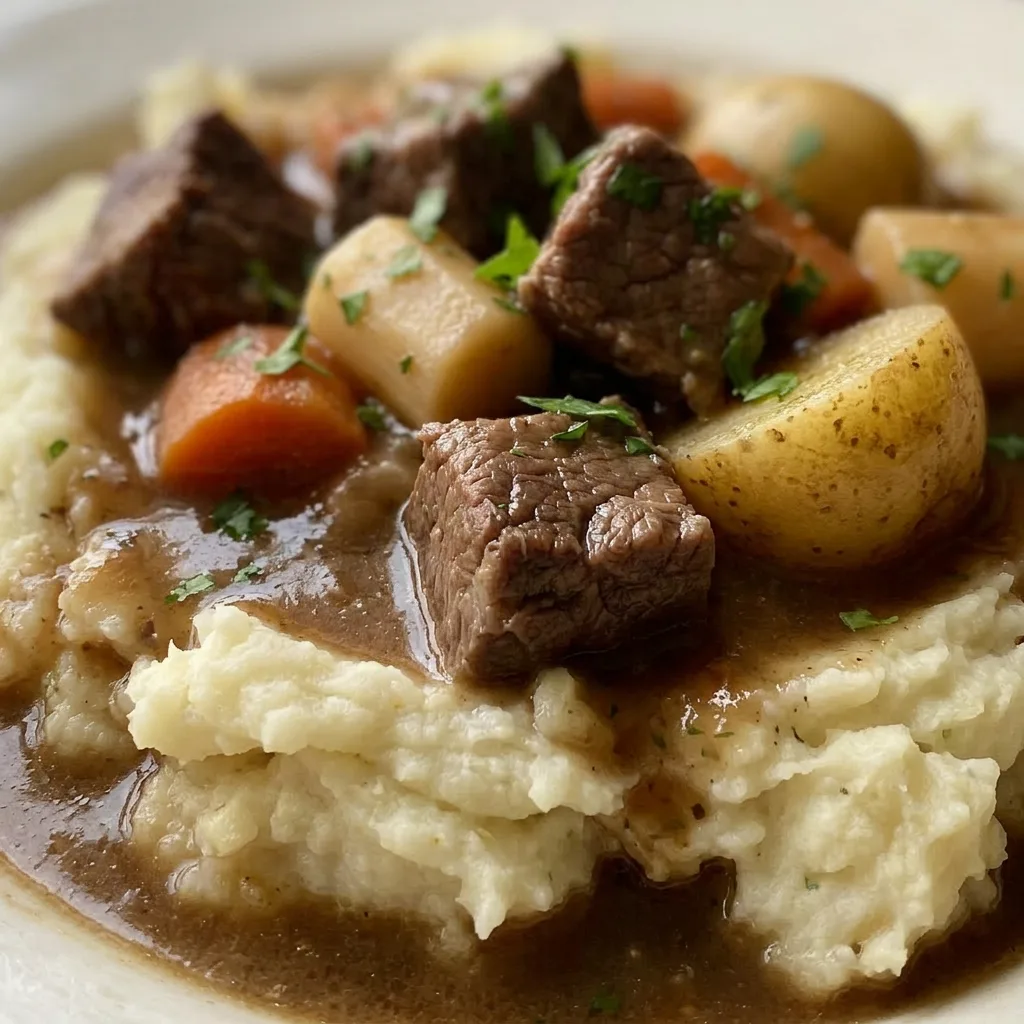
The carrots turn almost sweet, while parsnips bring a mild, earthy pepperiness that you don’t get from carrots alone. Together, they round out the flavor, making the broth taste deeper and more balanced. They also soften to the point of nearly melting into the sauce, which thickens it naturally without needing extra flour or cornstarch.
You’ll notice the texture: tender chunks that yield easily to a spoon, not mushy or falling apart. That’s the payoff of a long, gentle simmer.
Prep: 20 min · Cook: 2 hr 30 min · Total: 2 hr 50 min · Servings: 6
What to look for in the ingredients
Beef stew meat (chuck roast cut into 1½-inch cubes): Chuck roast has the right marbling and connective tissue to become tender after a long simmer.
Irish ale (like Smithwick’s or Harp; Guinness also works for a more bold flavor): Pick a malty ale for sweetness or a stout for roasted bitterness. Both work, but the flavor changes.
Yukon Gold potatoes: Yukon Golds are naturally buttery and waxy, so they mash smooth without getting gluey.
Carrots and parsnips: They release natural sugars as they cook, balancing the ale’s bitterness and thickening the broth.
Build the stew in steps for control
Brown the beef in batches
Pat the meat dry so it sears, not steams. Dust with flour, it speeds browning and later thickens the stew. Brown in a single layer; if the pot gets crowded, the meat turns gray and little fond forms.
Cook the aromatics
After setting the beef aside, soften the onion until translucent, about 5 minutes. Add garlic and tomato paste; cook until the paste darkens and smells sweet, 2 minutes. That deepens the flavor before any liquid goes in.
Deglaze and simmer
Pour in the ale and scrape up the fond, every bit adds richness. Return beef, add broth, Worcestershire, herbs, and root vegetables. Bring to a gentle simmer; bubbles should just break the surface, not boil hard, or the meat toughens.
Cook low and slow
Cover and cook on low heat for 2 to 2½ hours. The stew is done when the beef yields easily to a fork and the carrots and parsnips are tender but not falling apart. If the sauce gets too thick, add a splash of broth.
Make the garlic mashed potatoes
Boil peeled Yukon Golds and garlic cloves until fork-tender, 15 to 18 minutes. Drain, return to pot, add butter, warm milk, salt, pepper, and sour cream if using. Mash until smooth and creamy, stop before it gets gluey from overworking.
Irish Ale Beef Stew with Garlic Mashed Potatoes
Ingredients
Method
Season and Brown Beef:
Dry the beef stew meat with paper towels. Add salt and pepper to season, then coat lightly with flour. In a Dutch oven, warm the oil over medium-high heat. Brown the meat in batches, ensuring all sides are seared (about 5 minutes per batch). Avoid overcrowding the pan to develop a rich base flavor.Sauté Onion and Garlic:
After browning the beef and setting it aside, reduce the heat a bit. Cook the diced onion until softened, roughly 5 minutes. Add the garlic and sauté for another minute. Mix in the tomato paste and cook for 2 minutes to deepen its taste.Deglaze with Ale:
Pour the Irish ale into the pot to deglaze, scraping up the browned bits. Return the beef to the pot. Add the beef broth, Worcestershire sauce, thyme, bay leaves, carrots, parsnips, and baby potatoes (if using). Stir everything together.Simmer Stew Until Tender:
Bring the stew to a gentle simmer. Cover the Dutch oven and cook on low heat for 2 to 2½ hours, until the beef is tender enough to be pierced with a fork and the vegetables are soft. Stir from time to time and add a splash of water or broth if the stew becomes too thick.Mash Garlic Potatoes:
While the stew is cooking, put the Yukon Gold potatoes and garlic cloves in a large pot of salted water. Bring to a boil and cook until the potatoes are fork-tender, about 15–18 minutes. Drain and return them to the pot. Add the butter, warm milk, salt, pepper, and sour cream (if using). Mash until the mixture is smooth and creamy.
Serve Stew Over Potatoes:
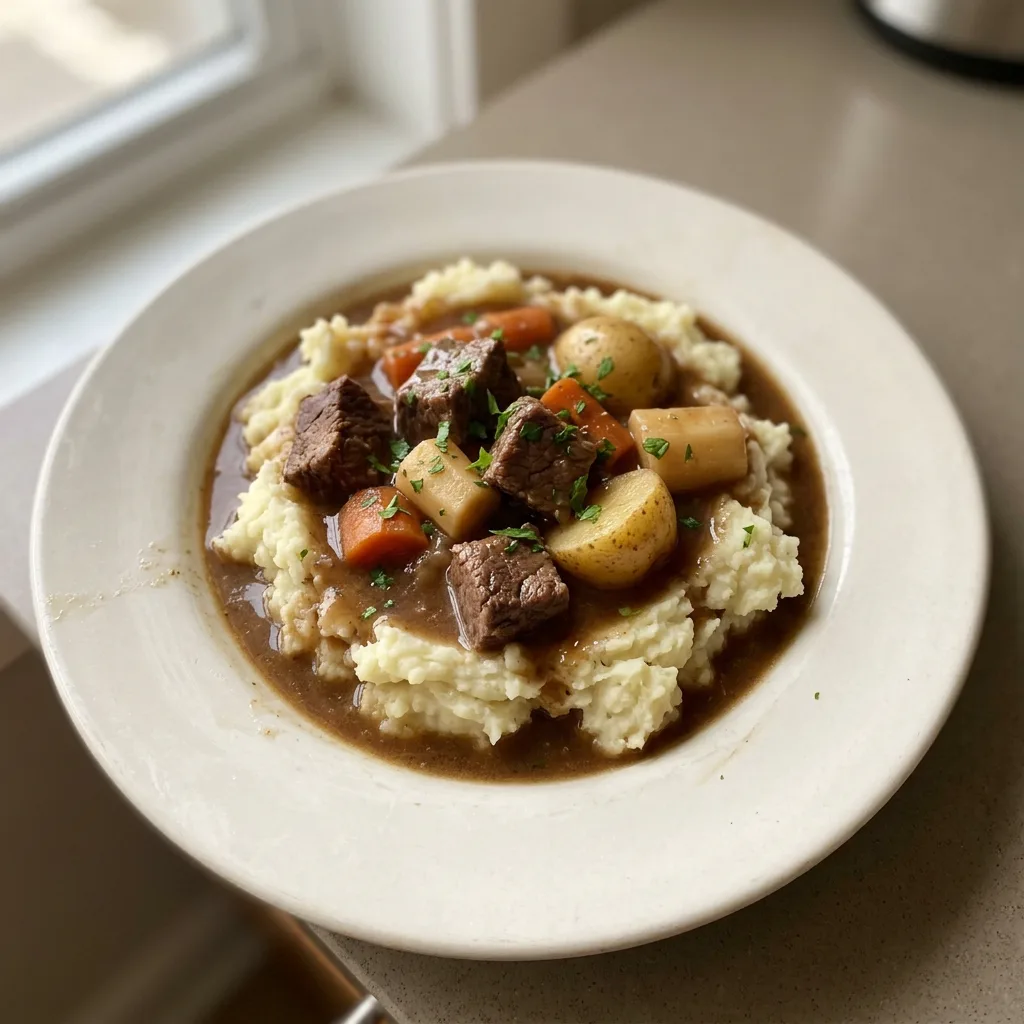
Scoop a generous portion of garlic mashed potatoes onto plates, then ladle the stew over the top. Garnish with chopped fresh parsley and freshly cracked black pepper.
Swap the ale and the meat, know what changes
Irish ale: Non-alcoholic stout or extra beef broth. The ale adds flavor beyond alcohol. Swap with a non-alcoholic stout for a similar roasted note, or use more beef broth (2 ½ cups total) for a simpler, less complex gravy, skip any extra liquid if you want a thinner stew.
Guinness adds bitterness; without it, the stew is milder.
Beef stew meat: Lamb shoulder or chuck, cut into 1½-inch cubes. Lamb gives a gamey, richer flavor that pairs well with the ale.
Use the same amount. The cooking time stays about the same, lamb chuck shoulder also becomes tender after a long simmer.
The stew will taste distinctly different but still hearty.
All-purpose flour (for dusting): Rice flour or cornstarch (for gluten-free). Dusting the beef with rice flour before browning works similarly: it helps searing and later thickens the stew. Use 3 tablespoons rice flour.
For cornstarch, skip dusting the beef; instead, mix 2 tablespoons cornstarch with 2 tablespoons cold water and stir into the stew during the last 15 minutes of simmering. The stew won’t darken as much from browning, and the thickened sauce may look glossier.
Whole milk (for mashed potatoes): Unsweetened oat milk or canned coconut milk (for dairy-free). Whole milk adds richness and helps create a creamy mash. Oat milk is the closest in body; use the same amount (½ cup).
Coconut milk works but adds a subtle coconut flavor that may clash with the garlic and butter in the mash. Expect a slightly thinner, less silky texture with either swap.
For extra richness, increase the butter (or use vegan butter) to 6 tablespoons.
Tips
- Cut the chuck roast into 1½-inch cubes; smaller pieces dry out during the long simmer.
Storage and Serving
This stew tastes even better the next day. The flavors settle and the beef gets more tender.
Store leftovers in a sealed container in the fridge for up to 4 days. The broth will thicken as it sits; thin it with a splash of beef broth or water when reheating. For longer storage, freeze the stew alone for up to 3 months.
Thaw overnight in the fridge, then reheat gently on the stove. The mashed potatoes are best made fresh.
If you have leftover mashed potatoes, store them separately and reheat with an extra splash of milk to restore creaminess. They’ll keep in the fridge for 2 days but won’t freeze well.
When serving, spoon the hot stew over freshly mashed potatoes for the best texture. Garnish with parsley right before serving so it stays bright.
Frequently Asked Questions
Can I make this stew ahead of time and reheat it?
Yes, and it tastes even better the next day. The flavors settle and the beef gets more tender. Store leftovers in a sealed container in the fridge for up to 4 days.
The broth will thicken as it sits; thin it with a splash of beef broth or water when reheating. The mashed potatoes are best made fresh, reheat them separately with extra milk.
Why is my beef tough after stewing for 2 hours?
Most likely the heat was too high. The stew needs a gentle simmer, not a rolling boil, bubbles should just break the surface. High heat tightens the meat fibers before the connective tissue has time to break down.
Also, check that you used chuck roast, which has the right marbling. If the liquid boiled hard, the meat can seize up.
What’s the difference between this Irish stew and a classic beef stew?
The key is the ale. Irish ale adds a malty sweetness or roasted bitterness that classic beef stew doesn’t have, and it deglazes the fond for deeper flavor.
This stew also uses parsnips alongside carrots, which release natural sugars that balance the ale’s bitterness. The garlic mashed potatoes underneath are a signature move, they soak up the gravy and tie the dish together.
