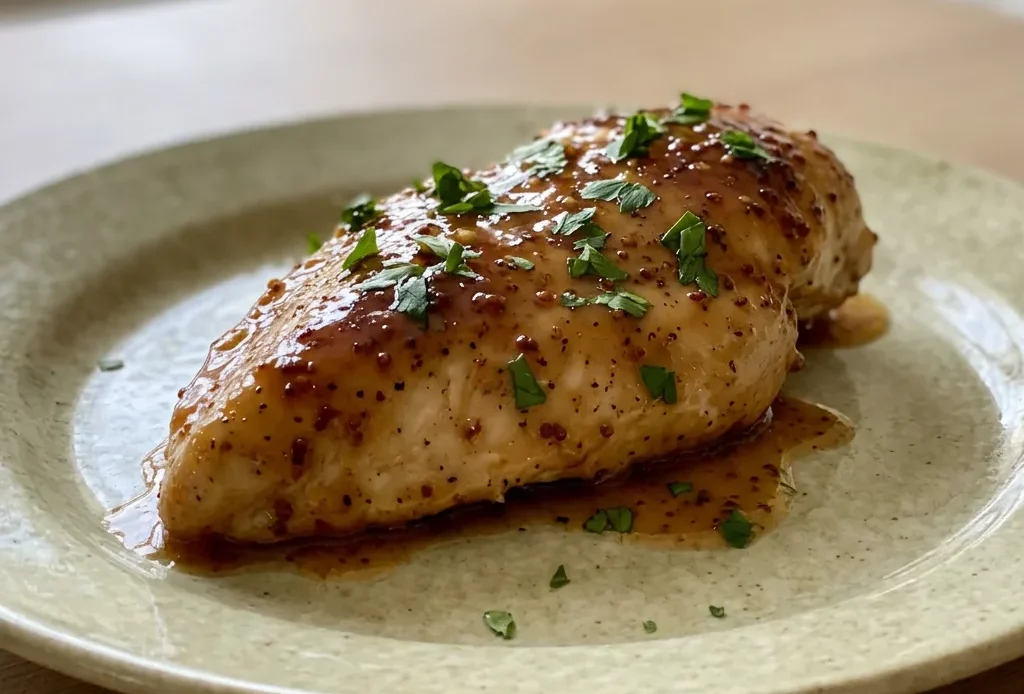
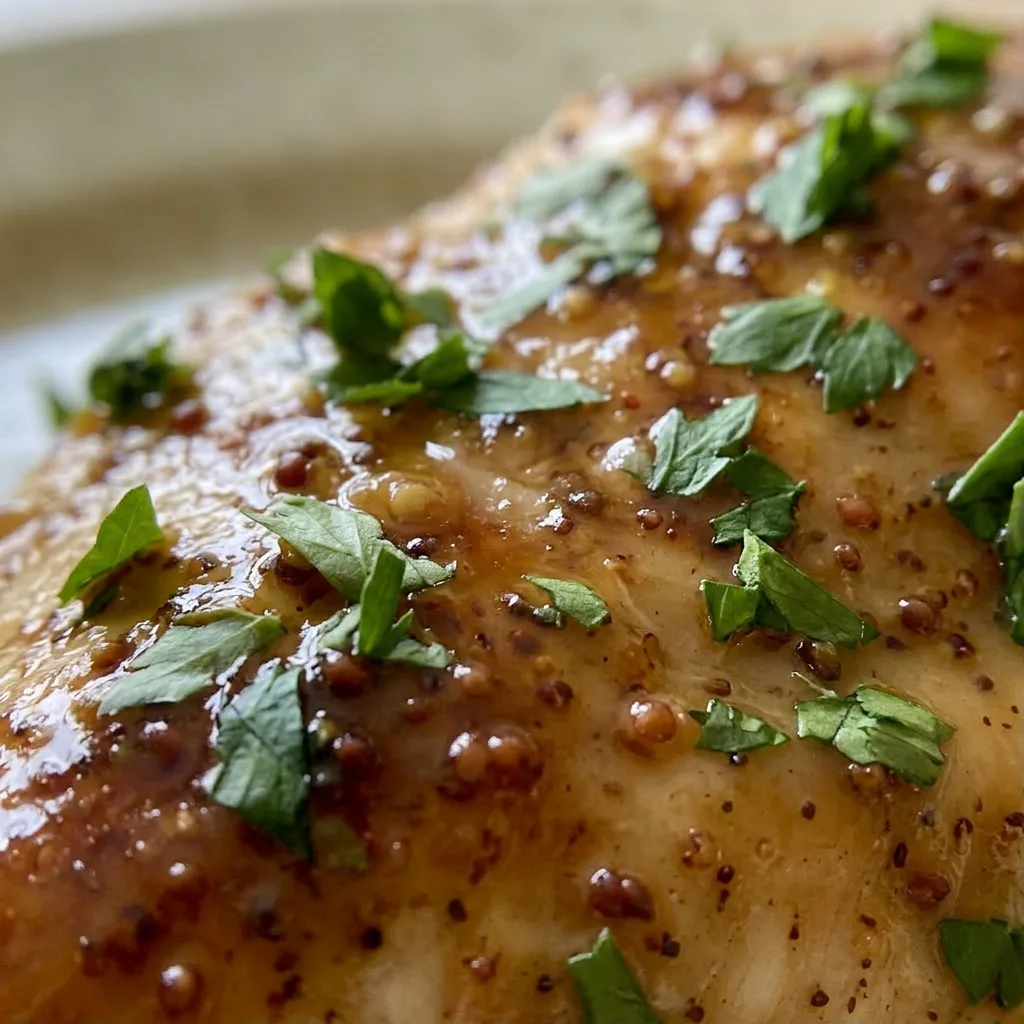
A glossy, sticky coat that catches the light, with a sharp-sweet tang that cuts through the richness of the meat. That’s what you get when honey meets mustard and the sugars caramelize just enough to set without burning. This honey mustard chicken walks a narrow line between tart and sweet, and the margin for error is wider than you’d think, the acid in the marinade buys you time, tenderizing the meat so even a few extra minutes in the oven won’t wreck it.
Marinate for tender, flavorful chicken
The acid in apple cider vinegar and the enzymes in honey work together to gently break down chicken proteins, making the meat more tender. Honey’s sugars also help the chicken retain moisture during baking, so it doesn’t dry out. A 30-minute soak lets the flavors start penetrating; go up to 4 hours for a bolder taste.
You’ll notice the chicken feels slightly firmer after marinating, that’s the acid doing its job. The result is juicy meat with honey-mustard taste all the way through, not just on the surface.
Glaze at the end for a glossy finish
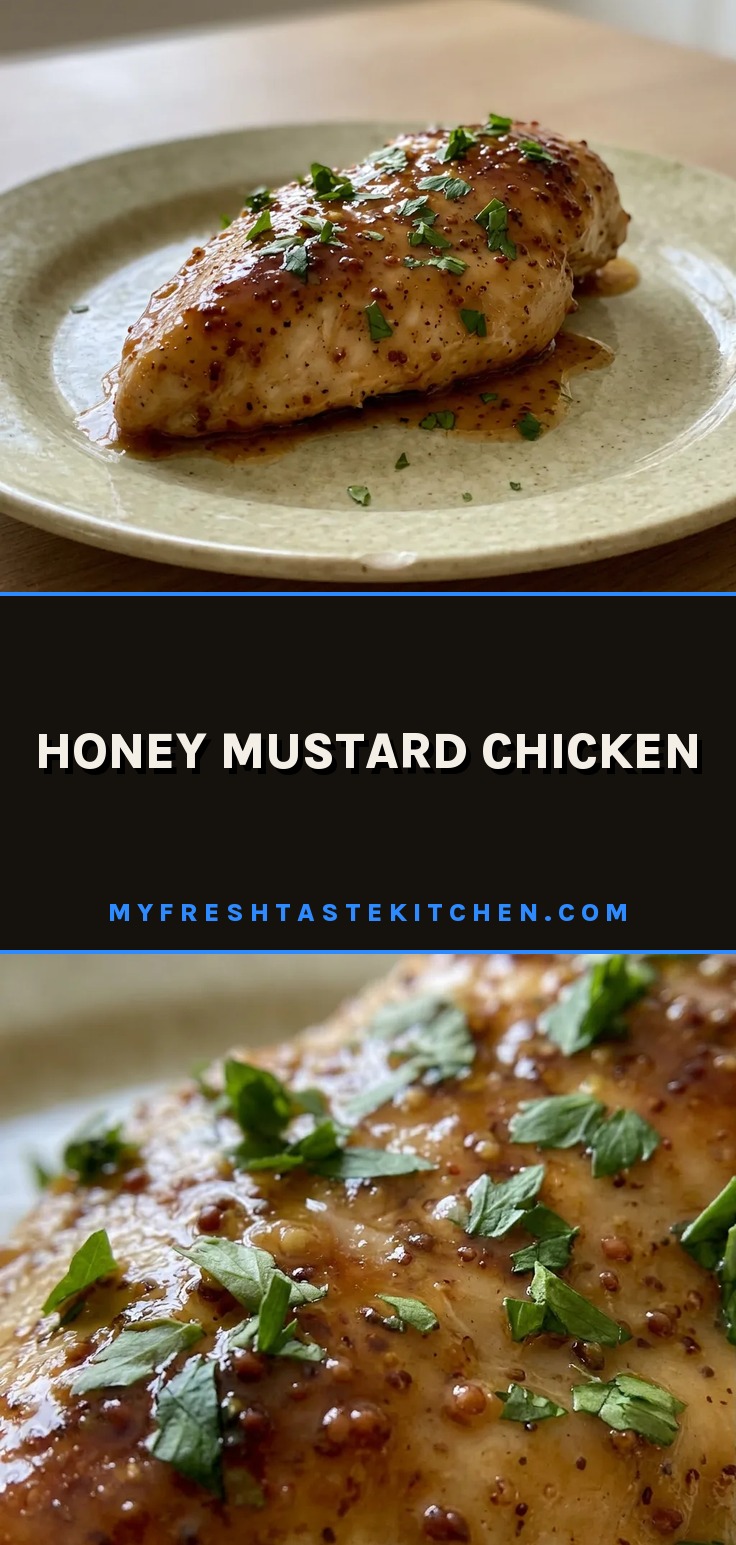
Reserve some marinade before adding raw chicken to avoid cross-contamination, set it aside in a separate bowl. Brush it on during the last 5 minutes of baking so the sugars caramelize without burning. The glaze gives the chicken a shiny, sticky coat and concentrates the honey-mustard flavor right on the surface.
You’ll see the glaze bubble and darken slightly in the oven, which means it’s setting. That final layer adds a sweet-tangy punch that makes each bite pop.
Rest the chicken before slicing
Once out of the oven, let the chicken sit for 5 minutes. This pause lets the juices redistribute evenly through the meat. If you cut too soon, those juices run out onto the plate, leaving the chicken dry.
After resting, the meat feels springy and releases juice only when you slice it. A 5-minute rest is enough for chicken breasts to stay moist.
Skipping it guarantees a drier texture, so don’t rush this step.
Prep: 15 min · Cook: 25 min · Total: 44 min · Servings: 4 · Calories: 320 kcal
Ingredient Notes for Honey Mustard Chicken
Dijon mustard: Use smooth Dijon, not whole grain, for an even emulsion that coats without seeds getting stuck.
Honey: Pick a mild honey like clover or wildflower so the floral notes don’t overpower the mustard.
Apple cider vinegar: Unfiltered apple cider vinegar adds a fruity tang; the sediment doesn’t affect the marinade.
Chicken breasts: Choose breasts of even thickness so they cook at the same rate and don’t dry out.
How to Make Honey Mustard Chicken
Whisk the marinade
Combine Dijon, honey, oil, vinegar, garlic powder, onion powder, salt, and pepper. Whisk until smooth, you should see a uniform, glossy emulsion with no streaks of mustard or honey.
Marinate the chicken
Pour the marinade over chicken in a bag or dish, seal, and refrigerate 30 minutes to 4 hours. After marinating, the chicken feels slightly firmer from the acid working, that’s a sign it’s tenderizing.
Preheat and prep
Set oven to 375°F. Grease a baking dish.
Remove chicken from marinade, letting excess drip off, and arrange in dish. Reserve remaining marinade in a separate bowl for later glazing.
Bake until done
Bake 20 to 25 minutes until internal temp hits 165°F. Chicken should feel firm to the touch and juices run clear when pierced. If not, continue baking and check every 2 minutes.
Glaze in the last 5 minutes
Brush reserved marinade over each breast. Return to oven. Watch for the glaze to bubble and darken slightly, that caramelization means it’s setting.
Don’t overdo it or the sugars will burn.
Rest before slicing
Let chicken rest 5 minutes on a cutting board. The meat feels springy and juice stays inside. Slice too soon and you’ll see a puddle on the board, that’s lost moisture.
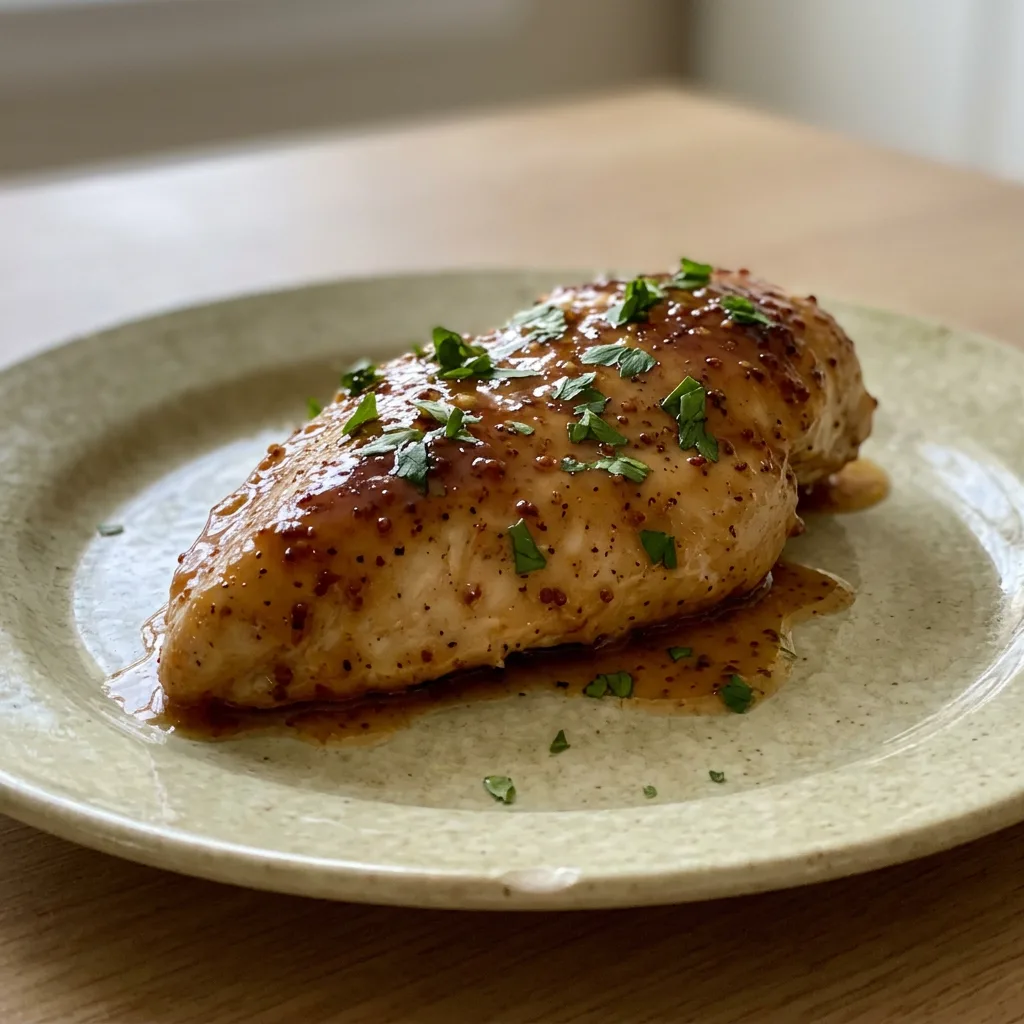
Honey Mustard Chicken
Ingredients
Method
Whisk Marinade Ingredients:
Whisk together Dijon mustard, honey, olive oil, apple cider vinegar, garlic powder, onion powder, salt, and black pepper in a bowl until the mixture is smooth.Marinate Chicken Breasts:
Put the chicken breasts into a resealable plastic bag or a shallow dish. Cover them completely with the marinade. Seal the bag or cover the dish, then refrigerate for at least 30 minutes, or up to 4 hours for a more intense taste.Preheat Oven to 375°F:
Set the oven to 375°F (190°C) and allow it to preheat.Arrange Chicken in Dish:
Take the chicken out of the marinade and arrange it in a greased baking dish. Keep the leftover marinade aside.Bake Chicken Until Done:
Cook the chicken in the oven for 20-25 minutes, until the internal temperature hits 165°F (75°C) and the meat is fully done.Glaze with Reserved Marinade:
During the final 5 minutes of baking, coat the chicken with the reserved marinade for added flavor and a shiny glaze.Rest Chicken for Juices:
After baking, take the chicken out of the oven and allow it to rest for 5 minutes so the juices can spread throughout.Garnish with Parsley:
If desired, garnish with fresh parsley before serving for a burst of color.
Substitute Without Breaking the Glaze or Tenderizing Action
Apple cider vinegar: Lemon juice or white wine vinegar, same amount by volume. Slight shift in tang: lemon is brighter, white wine vinegar milder. Both still provide enough acid to tenderize the chicken and balance the honey’s sweetness.
The glaze darkens similarly, though lemon might smell more citrusy while baking.
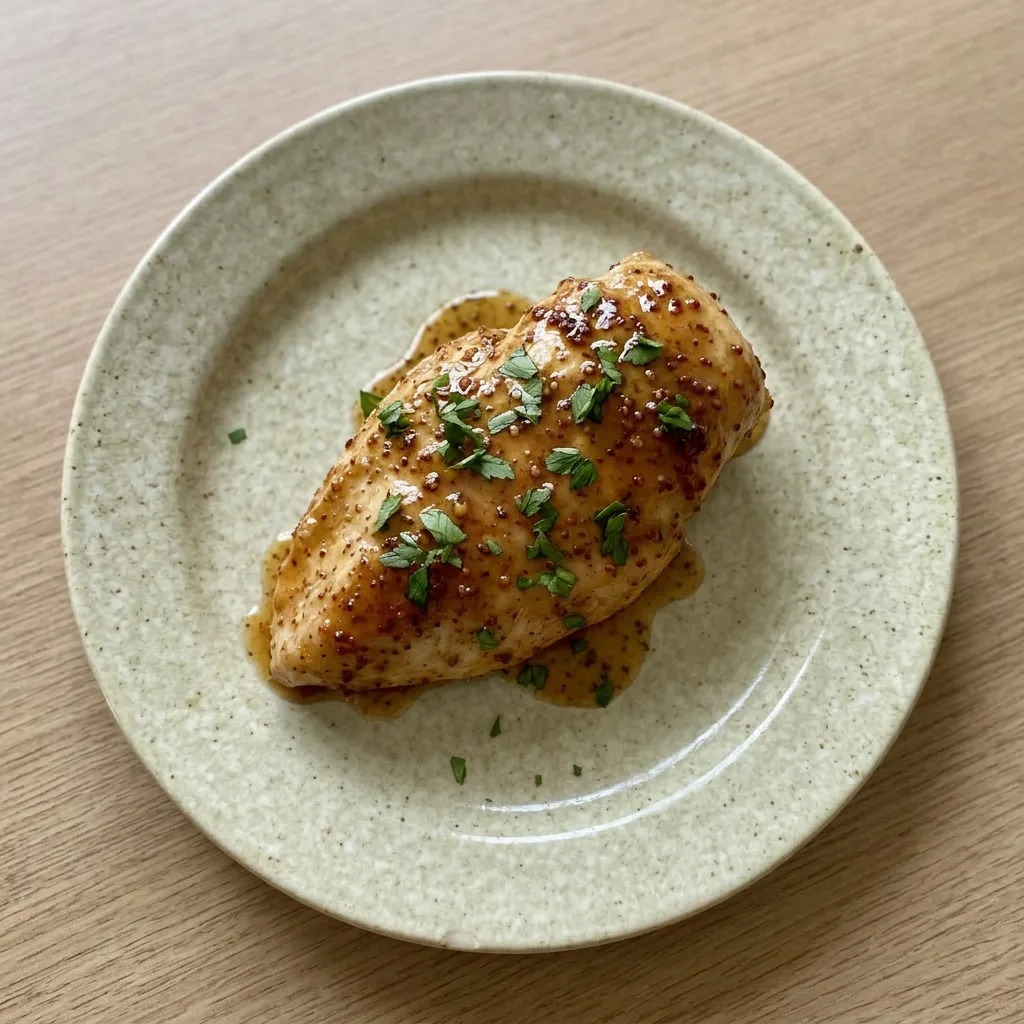
Dijon mustard: Whole-grain mustard, same amount by volume. The emulsion stays smooth, but you get tiny mustard seeds that stick to the chicken, crunchy pops of flavor. The glaze will look speckled rather than glossy; seeds can burn if over-baked, so watch the last 5 minutes closely.
Chicken breasts: Chicken thighs, boneless skinless. Dark meat is more forgiving; it stays juicy even if slightly overbaked. Cook to 175°F for best texture, thighs need a higher internal temp to break down connective tissue.
Same marinade and glaze work fine.
Honey: Maple syrup or agave nectar, same amount by volume. Maple adds woody sweetness, agave is neutral.
Both caramelize similarly, but they are thinner than honey, so the glaze may be less sticky. The marinade’s moisture retention is slightly reduced, but still works, just brush a little more glaze at the end if needed.
Storage and Serving
For the best texture, serve the chicken within 30 minutes of resting. The glaze stays glossy and the meat is at its juiciest. Store leftovers in an airtight container in the fridge for up to 4 days.
Over time, the glaze softens but the flavor deepens as the honey-mustard seeps further into the meat. To reheat, place chicken in a 350°F oven for 10 minutes, or microwave on medium power in 30-second bursts until warm.
The chicken will be a bit drier than fresh, but the moisture from the glaze helps. Freezing is not recommended; the glaze turns watery and the texture suffers. If you must freeze, freeze the baked chicken without the glaze, then add fresh glaze when reheating.
Garnish with parsley just before serving, not during storage.
Tips
- Pound chicken breasts to an even 1/2-inch thickness before marinating. This ensures they cook at the same rate, so you don’t end up with dry ends and a raw center. Place them between plastic wrap and use a rolling pin or heavy skillet.
- Line your baking dish with parchment paper for easier cleanup. The glaze can stick and burn onto the dish; parchment prevents that and lets you lift the chicken out without tearing the crust.
Frequently Asked Questions
Can I use chicken thighs instead of breasts?
Yes, boneless skinless thighs work well. They’re more forgiving and stay juicy even if you go a few minutes over.
Cook them to 175°F for best texture, higher than breasts, to break down connective tissue. The same marinade and glaze work fine; just watch the glaze in the last 5 minutes so the seeds don’t burn if using whole-grain mustard.
How do I know when the chicken is fully cooked without a thermometer?
Pierce the thickest part with a knife, if the juices run clear and the meat is no longer pink, it’s done. The chicken should feel firm to the touch, not squishy, and the surface will have a slight spring when pressed. But a thermometer is the only way to be sure; guessing risks dry meat or undercooking.
Can I make the marinade ahead of time and store it?
Yes, whisk it up to 3 days ahead and keep it covered in the fridge. The flavors will mellow and blend.
Just stir or whisk again before using, as ingredients may separate. Remember to reserve a portion for glazing before adding raw chicken.
