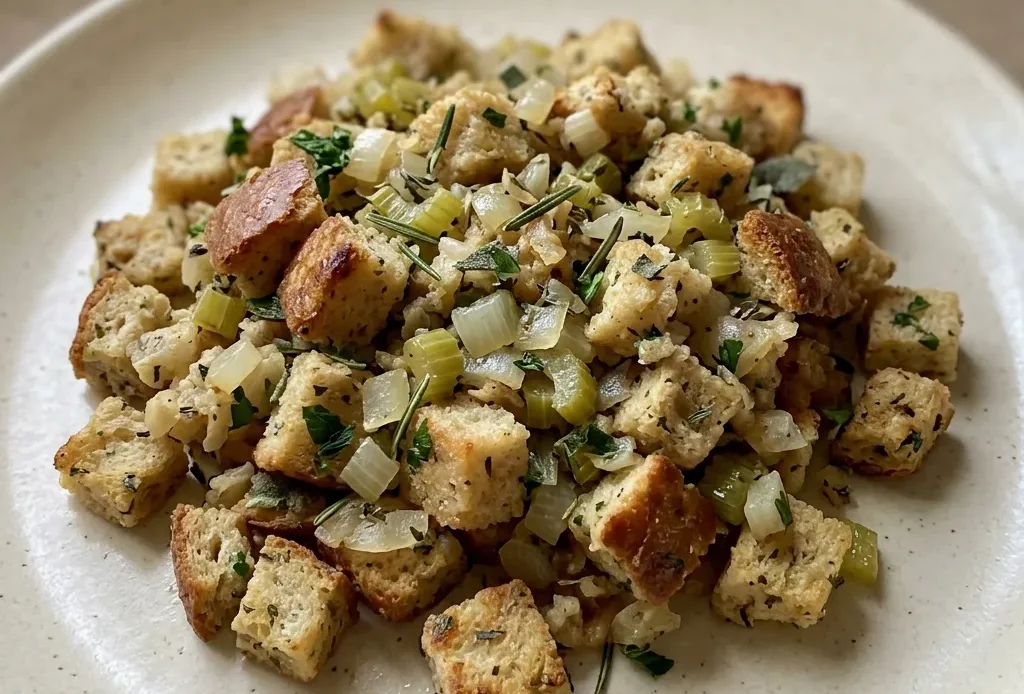
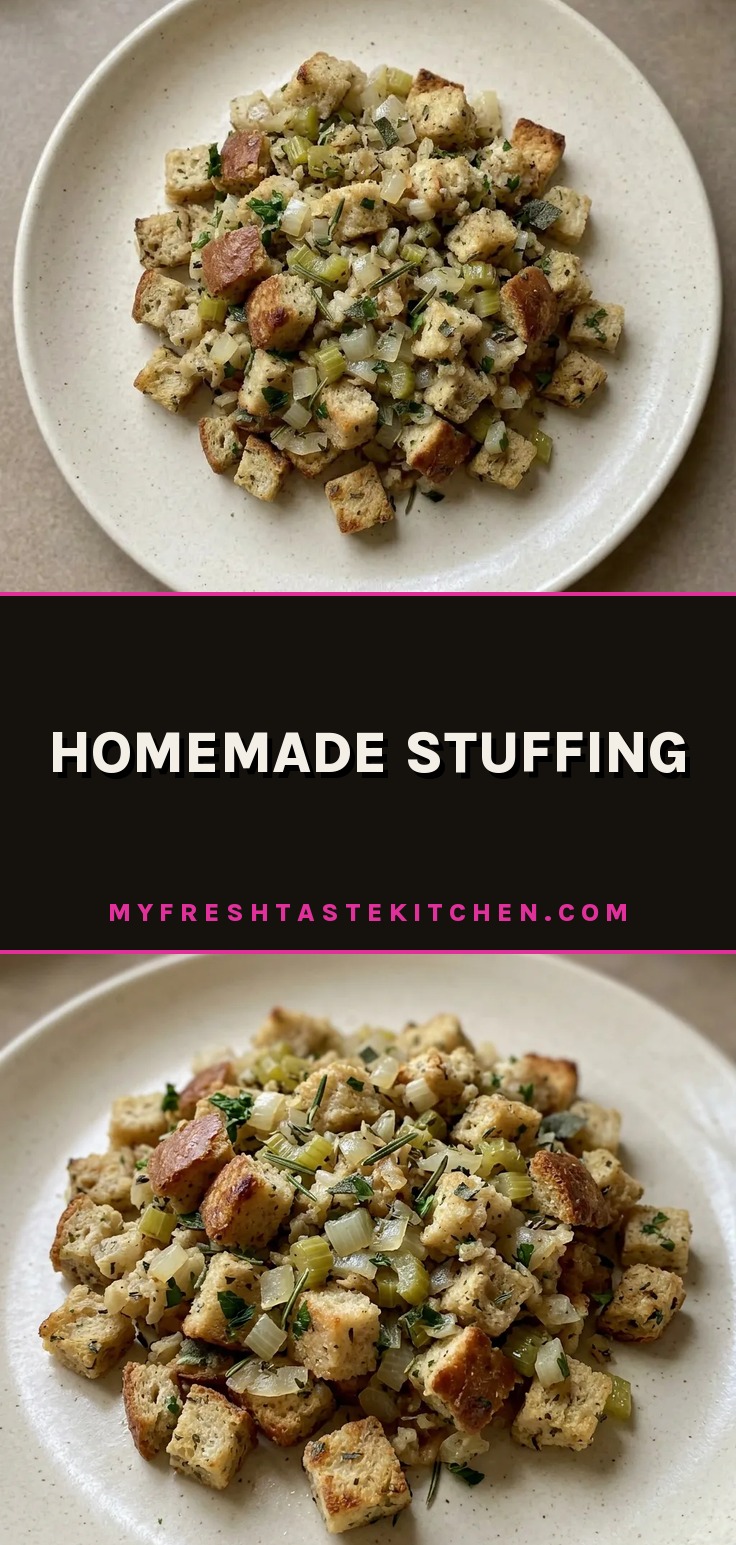
This isn’t a loose pile of soggy bread. This is homemade stuffing with a crisp golden top and a tender, herb-infused interior that holds together on your spoon. The trick is drying the bread first so it absorbs broth without collapsing, then baking covered to steam the middle and uncovered to brown the top.
That contrast, crunch and softness, savory and aromatic, is what makes this the side dish everyone reaches for.
The first time I made this, I skipped drying the bread and dumped in the full broth, ended up with a gluey mess. But one Thanksgiving, I accidentally under-broth it and got texture; now I’m paranoid about over-moistening.
Dry the bread for texture that holds up
Bread fresh from the bag soaks up broth and turns to paste. Drying removes moisture so the cubes can absorb liquid without collapsing.
Spread them on baking sheets and bake at 250°F for 15 minutes, stirring halfway. The cubes should feel dry to the touch but not toasted at all. Alternatively, leave them uncovered on the counter for 24 hours.
Either way, the goal is a crumb that stays distinct after baking. You want stuffing that’s moist but not mushy, with individual pieces you can still pick out. That texture starts before anything else hits the pan.
Sauté aromatics to build a savory base
Butter in a hot pan, then onion and celery. Cook them until they soften, about six minutes, stirring now and then. That step draws out sweetness and removes raw bite.
Add garlic, parsley, sage, rosemary, thyme, each fresh, not dried. A minute more coaxes out their oils without scorching. The kitchen will smell like the holiday you’re after.
This isn’t just seasoning; it’s the backbone of flavor that carries through every bite. When you’re looking for homemade bread stuffing recipes, this layer of aromatics is what separates decent from memorable.
Whisk egg and broth for just the right moistness
One large egg whisked into broth does two things: it binds the stuffing so it holds together when scooped, and it adds moisture without making the bread soggy. Pour it over the dried cubes and stir gently. You’re aiming for each cube to be lightly coated, not swimming.
If the mixture looks dry, add more broth a splash at a time until it feels moist but not wet. That balance is why stuffing mix recipes often turn out either dry or gluey.
Here you control it. Trust your eyes and hands, not a fixed number.
Bake covered, then uncovered, for a crisp top
Cover the dish with foil and bake for 30 minutes at 350°F. Steam trapped under the foil cooks the stuffing through, softening the interior without drying it out. Then remove the foil and bake another 15 to 25 minutes.
The top browns and crisps while the inside stays tender. Stick an instant-read thermometer into the center, 160°F means it’s done.
That two-stage method is why this is among the best thanksgiving stuffing recipes: a crunchy cap and a steamy, savory middle, all from the same pan.
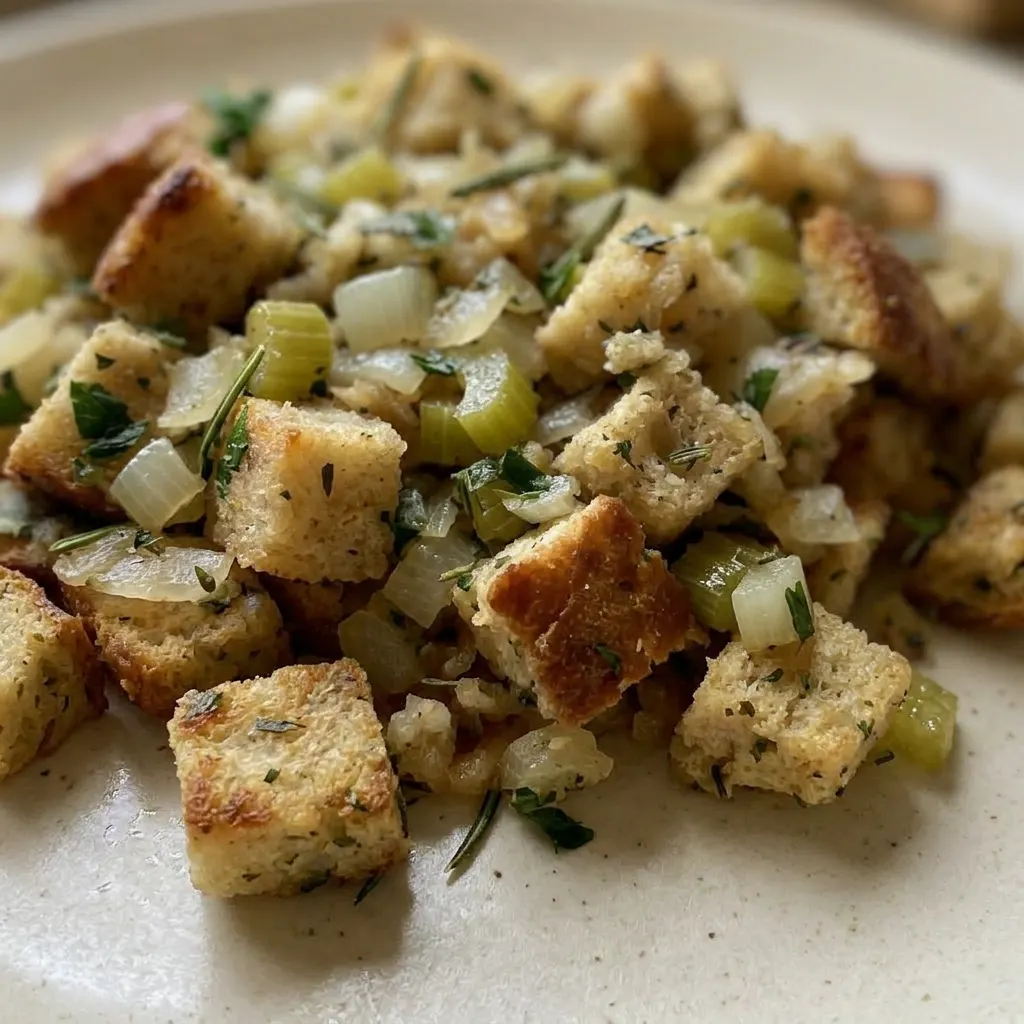
Prep: 30 min · Cook: 1 hr · Total: 1 hr 30 min · Servings: 10 · Calories: 270 kcal
What to look for in each ingredient
Day old French baguette or French bread: Buy a loaf that’s already stale, or dry fresh cubes at 250°F for 15 minutes until dry to the touch.
Unsalted butter: Use unsalted so you control the salt level; the recipe already adds 1 teaspoon salt.
Fresh herbs (parsley, sage, rosemary, thyme): Fresh herbs are a must here; dried ones are too concentrated and lack the bright, aromatic punch.
Low sodium chicken broth: Low sodium lets you season the stuffing without it turning salty, especially since the bread absorbs all the liquid.
Large egg: One egg binds the stuffing so it holds together when scooped, without making it heavy or wet.
Layer the flavors and bake for a crisp, tender finish
Dry the bread
Spread cubes on sheets, bake at 250°F for 15 minutes, stirring halfway. They should feel dry to the touch, not toasted. This keeps them from turning to paste later.
Sauté aromatics
Melt butter over medium-high heat, cook onion and celery until softened, about 6 minutes. Add garlic and herbs; cook 1 minute until fragrant. The raw edge is gone, the kitchen smells savory.
Combine and moisten
Stir bread cubes into the vegetable mixture. Whisk egg into broth and pour over; toss gently.
Each cube should look moist but not soggy. If dry, add broth a splash at a time.
Bake covered then uncovered
Spread in greased dish, cover with foil, bake 30 minutes at 350°F. Remove foil, bake 15 to 25 minutes more. The top should be browned and crisp; the center should reach 160°F.
Homemade Stuffing
Ingredients
- 1 pound day old French baguette or French bread* cut into ¾-inch cubes (about 16 cups)
- ¾ cup unsalted butter
- 1 ½ cups chopped yellow onion
- 1 ½ cups chopped celery
- 3-4 cloves garlic minced
- ¼ cup chopped fresh parsley
- 2 tablespoons chopped fresh sage
- 1 tablespoon chopped fresh rosemary
- 1 tablespoon chopped fresh thyme
- 1 teaspoon salt
- ½ teaspoon pepper
- 1 ½ cups low sodium chicken broth plus more as needed
- 1 large egg
Instructions
Dry bread cubes:
Set oven to 250°F (120°C). Arrange bread cubes on two rimmed baking sheets. Bake for 15 minutes, stirring and rotating pans halfway, until dried but not browned. As an alternative, allow bread cubes to sit loosely covered on counter for 24 hours to dry.Preheat oven and grease dish:
Raise oven temperature to 350°F (175°C). Grease a 13×9-inch baking dish lightly.Sauté onion and celery:
In a large Dutch oven or skillet over medium-high heat, melt butter. Add onion and celery; cook, stirring occasionally, until softened, about 6 minutes.Add herbs and seasonings:
Stir in garlic, parsley, sage, rosemary, thyme, salt, and pepper; cook for 1 minute, then remove from heat.Whisk broth and egg:
In a liquid measuring cup or bowl, whisk together broth and egg until combined.Combine bread and vegetables:
If the bread cubes fit in the pot with vegetables, add them and stir to combine. Otherwise, transfer bread cubes to a large bowl and add the vegetable mixture; stir.Add broth mixture:
Pour the broth-egg mixture over the bread cubes and stir. The bread should be moist but not soggy. If it seems dry, add more broth until lightly moistened. For a moister stuffing, use more than the 1½ cups listed.Bake covered then uncovered:
Transfer the mixture to the prepared dish and spread evenly. Cover with foil and bake for 30 minutes. Remove foil and bake an additional 15-25 minutes, until the top is browned and the center reaches at least 160°F (70°C) on an instant-read thermometer.
Storage and Serving
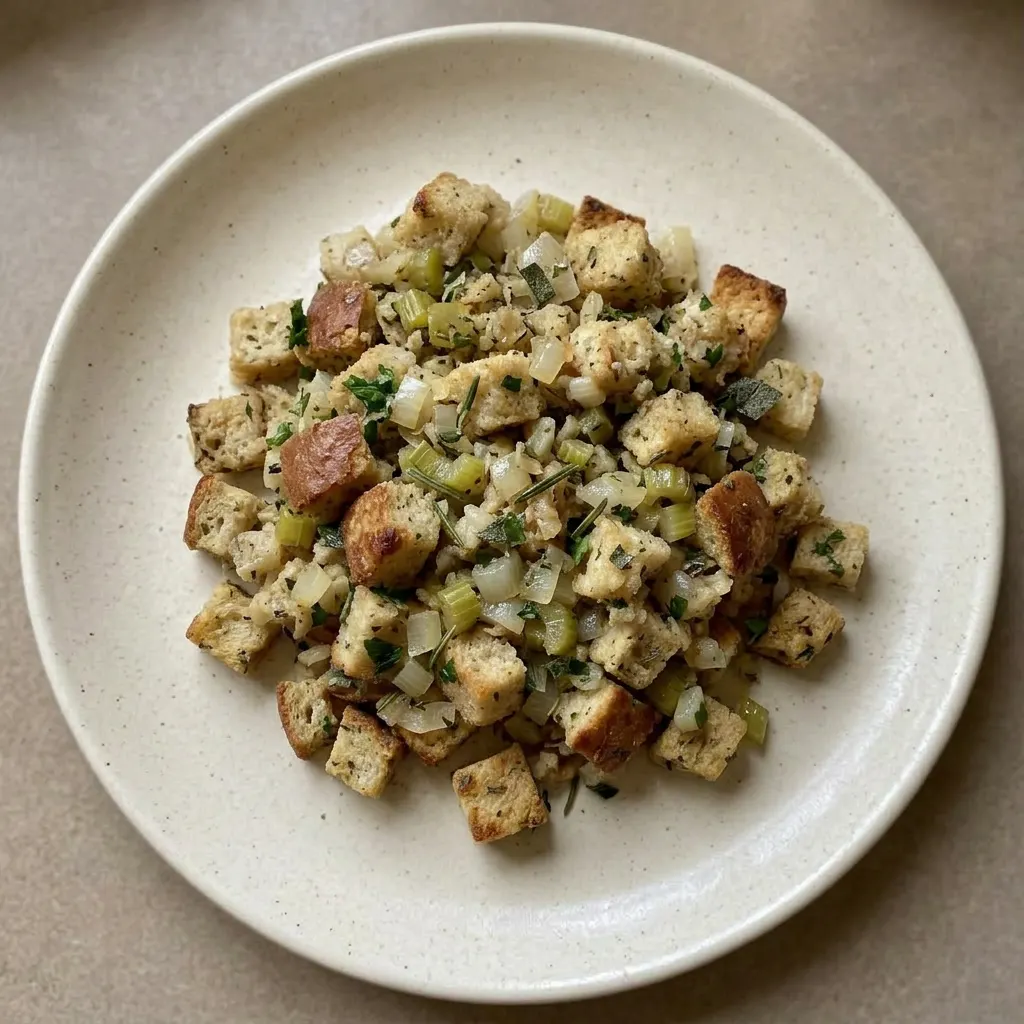
Stuffing is best served within 2 hours of baking, while the top is still crisp and the interior moist. After that, the crisp top softens as steam settles.
For leftovers, cool completely, then store in an airtight container in the fridge for up to 4 days. The texture will become more uniform and tender over time, but the flavor holds well.
To reheat, spread in a baking dish, cover with foil, and warm at 350°F for 15 to 20 minutes, then uncover for 5 minutes to recrisp the top. You can also rewarm portions in a skillet over medium heat with a splash of broth. Freezing is not recommended; the bread texture degrades significantly upon thawing.
Make ahead: you can assemble the stuffing (without the egg and broth) up to 2 days ahead, cover, and refrigerate. Whisk egg into broth just before baking, add as directed, and extend the covered baking time by 10 minutes to compensate for the cold start.
Tips
- If your bread is already stale (dry and hard), skip the oven drying step entirely. Baking it further will make it too dry and brittle, causing it to crumble when stirred.
What to swap and what to keep in this stuffing
Day old French baguette or French bread: Sourdough or gluten-free bread (dried the same way). Sourdough adds tang and holds up just as well. Gluten-free bread works if you dry it thoroughly, it’s more fragile, so stir gently, and the stuffing will be a bit less cohesive.
Unsalted butter: Vegan butter or olive oil. Vegan butter melts and browns similarly, but it’s less rich. Olive oil gives a distinctly fruity, savory note, use the same amount; the stuffing will be a touch less creamy but still very good.
Low sodium chicken broth: Vegetable broth. Swaps cleanly.
Use low sodium to keep salt in your control. The stuffing will taste slightly less savory but still full of herb and onion flavor.
Large egg: No good substitute here. The egg binds the stuffing so it holds together when scooped. Without it, the stuffing crumbles.
You could try a flax egg, but the texture will be looser and more fragile. Best to keep the egg if you want a sliceable stuffing.
Frequently Asked Questions
Can I make this stuffing ahead of time?
Yes, but not fully baked. Assemble the stuffing without the egg and broth up to 2 days ahead, cover, and refrigerate. On baking day, whisk the egg into the broth, stir into the cold mixture, and bake covered for 40 minutes instead of 30, then uncovered as directed.
The center must hit 160°F.
How do I prevent my stuffing from being too dry?
Add extra broth, a splash at a time, until the bread cubes feel moist but not wet. The recipe calls for 1½ cups, but you can use more. Also, cover the dish with foil for the first 30 minutes of baking to trap steam; that keeps the interior tender.
What if my stuffing turns out soggy?
Most likely the bread wasn’t dried enough. Next time, bake the cubes at 250°F until dry to the touch, about 15 minutes, or air-dry for 24 hours. If it’s already baked, spread the stuffing on a sheet pan and return to a 350°F oven uncovered for 10 minutes to let steam escape.
Can I use dried herbs instead of fresh?
You can, but the flavor will be less bright and more concentrated. If you swap, use one-third the amount: about 2 teaspoons dried sage, 1 teaspoon dried rosemary, and 1 teaspoon dried thyme.
Skip the parsley, as dried parsley adds little. The stuffing will taste earthier and less aromatic.
Is this stuffing gluten-free?
Not as written, but it can be. Swap the French bread for a gluten-free loaf, dried the same way at 250°F.
Gluten-free bread is more fragile, so stir gently, and the stuffing will be a bit less cohesive. All other ingredients are naturally gluten-free, but check your broth label.