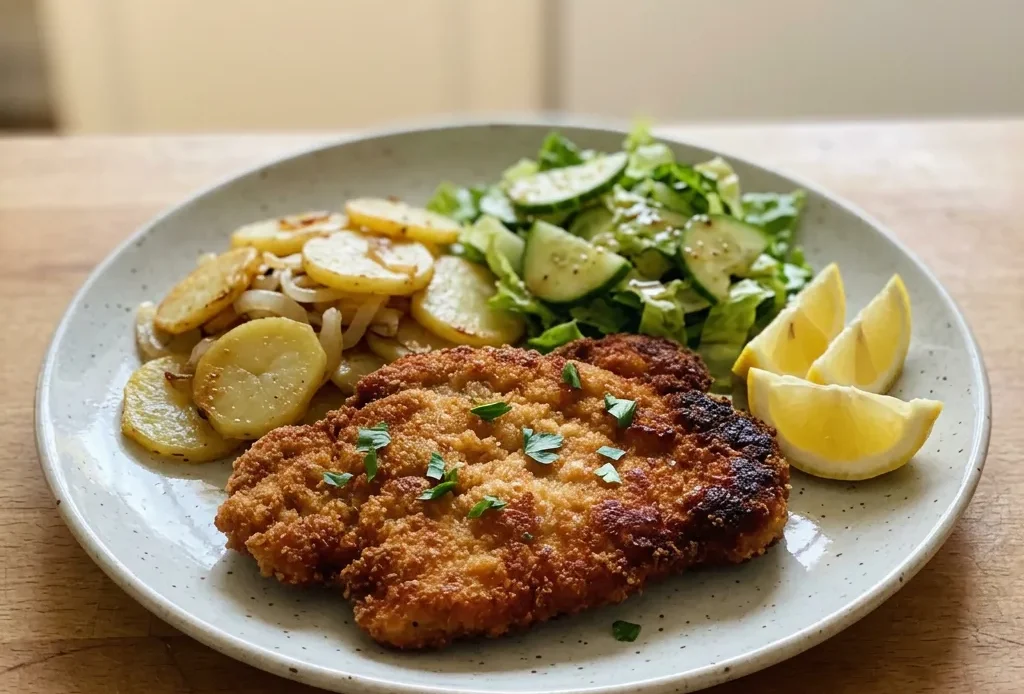
The only thing that separates a good pork schnitzel from a great one is whether that crust stays attached from plate to last bite. A floating shell of breadcrumbs that peels off in the oil means you screwed up the rest, the heat, or both.
This German pork schnitzel recipe commits to a crust that clings: you pound the meat thin, bread it in the right order, then let it sit before the pan ever gets hot. That rest, ten quiet minutes, is what locks the coating on. Skip it, and you’re gambling.
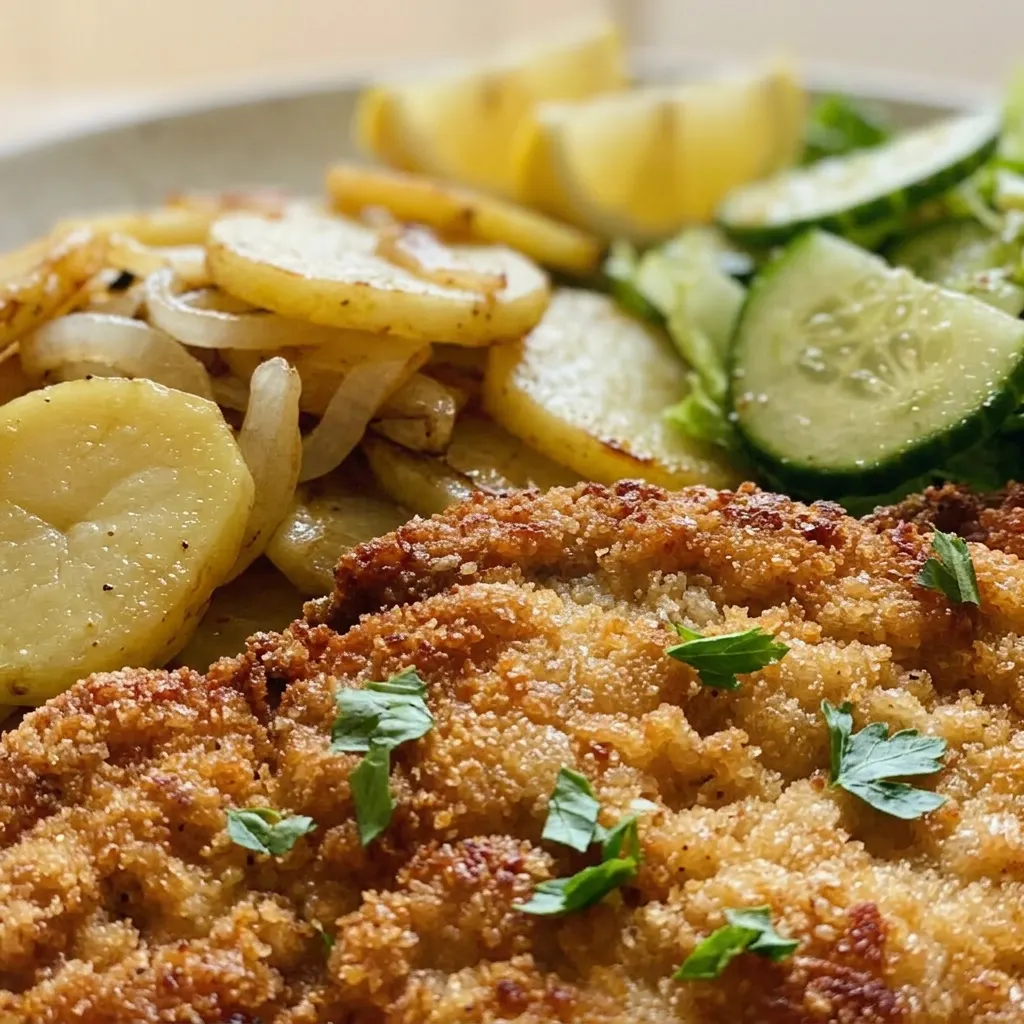
When it works, the payoff is a shatteringly crisp shell over tender, juicy pork, no sauce needed, just a squeeze of lemon.
I once crammed four cutlets into the skillet, and they came out pale and greasy instead of crispy.
Even thickness for even cooking
Pounding boneless pork chops to a uniform ½ inch does two things you can see and taste. First, it guarantees the whole cutlet cooks at the same rate.
If one end is thicker, that part stays underdone while the thin edge dries out. Second, the mallet breaks up some muscle fibers, which tenderizes the meat so it fries quickly and stays juicy. You want a schnitzel that’s golden and crisp across the entire surface, with no chewy or raw spots.
That even thickness is the foundation.
Why order and rest matter for the crust
The sequence, flour, egg, breadcrumbs, isn’t arbitrary. A dry, seasoned flour coating gives the egg something to cling to; without it, the egg slides off.
The egg wash then acts as glue for the breadcrumbs, creating a shell that puffs and browns. But the critical step is resting the breaded cutlets 10 to 15 minutes before frying.
During that rest, the flour hydrates and the coating sets, so it won’t slough off in hot oil. The result is a crust that stays intact and stays crisp.
Hot oil and breathing room
Oil temperature and pan crowding make or break schnitzel. Drop a test breadcrumb in; it should sizzle immediately.
If the oil isn’t hot enough, the crust absorbs grease and turns soggy. If you crowd the pan, the temperature drops and steam builds, again ruining the crunch.
Fry only two or three pieces at a time in a 12-inch skillet, letting the oil come back up between batches. Now I fry only two at a time and let the oil come back up to temperature between batches. Two to three minutes per side yields that deep golden brown exterior and a fully cooked, tender interior.
Prep: 15 min · Cook: 15 min · Total: 45 min · Servings: 6
Key Ingredients for a Crisp Schnitzel
Boneless pork chops: Buy chops about ½ inch thick or pound them yourself to ensure even cooking and tenderness.
Breadcrumbs: Use regular, unseasoned breadcrumbs. Panko gives a different texture, not the classic fine crust.
Eggs: Large eggs provide the right amount of wash to coat 2 pounds of cutlets without running short.
Vegetable or canola oil: Use a neutral oil with a high smoke point so the crust fries crisp without off flavors.
Fry in batches, watch the oil, and don’t rush the rest
Pound to even thickness
Pat the chops dry, then pound to ½ inch. You want the cutlet uniformly thin, no thick spots. If one side bulges, keep pounding until it matches.
Set up the breading station
Mix flour with 1 teaspoon each salt and pepper. Beat eggs in a second dish. Pour breadcrumbs into a third.
Have them in a row so you can move quickly.
Bread each cutlet
Pat dry again, then coat in flour, dip in egg (let excess drip off), then press into breadcrumbs. Shake off loose crumbs. Stack on a plate with parchment between layers.
Rest the breaded cutlets
Let them sit 10 to 15 minutes. This sets the coating so it won’t slide off in the oil. If you skip this, the crust will separate when you fry.
Heat the oil
Pour ¼ to ½ cup oil into a large skillet. Heat until a breadcrumb sizzles on contact. If it doesn’t sizzle, wait.
Too low and the crust soaks oil; too high and it burns before the pork cooks.
Fry in small batches
Add 2, 3 cutlets without touching. Fry 2 to 3 minutes per side until deep golden brown. The oil should stay hot, if it drops, the crust gets greasy.
Use a thermometer: internal temp should hit 145°F.
Drain and repeat
Transfer to paper towels. Let the oil come back up to temperature before the next batch. If the cutlets are darker on one side, your oil is too hot, lower the heat slightly.
German Pork Schnitzel
Ingredients
- 2 pounds boneless pork chops lightly pounded to ½-inch thick cutlets; you can also buy cutlets if your grocer carries them
- 2 teaspoons salt divided
- 2 teaspoons black pepper divided
- 1 cup all-purpose flour 120g
- 2 cups regular breadcrumbs 240g
- 4 large eggs
- Vegetable or canola oil for frying
- For serving: lemon wedges, fresh chopped parsley garnish
Instructions
Pound Pork Chops:
Dry the pork chops with paper towels and place them inside a resealable plastic bag, leaving about an inch open for air to escape. Using the smooth side of a meat mallet, gently pound them to about ½ inch thickness. As an alternative, use pre-thin pork cutlets if your store carries them (they need no pounding).Set Up Breading:
Prepare a breading station: in a shallow dish, mix flour with 1 teaspoon salt and 1 teaspoon pepper; in a second dish, beat the eggs; in a third dish, pour the breadcrumbs.Bread the Cutlets:
Bread the pork: pat each piece dry, then dredge in flour, dip in egg (ensuring full coverage), and coat with breadcrumbs, shaking off any excess after each step. Stack the breaded cutlets on a plate, separating layers with parchment paper. Allow them to rest for 10-15 minutes.Heat the Oil:
In a large skillet or deep pot, heat about ¼ to ½ cup of oil until it sizzles when you sprinkle a few drops of water or breadcrumbs into it.Fry Until Golden:
Place a piece of pork into the hot oil without overcrowding (2-3 pieces in a 12-inch skillet, not touching). Fry for 2-3 minutes per side until deep golden brown. Transfer to a plate lined with paper towels. Repeat with the remaining pork. Ensure the internal temperature reaches at least 145°F (65°C) on a meat thermometer.Garnish and Serve:
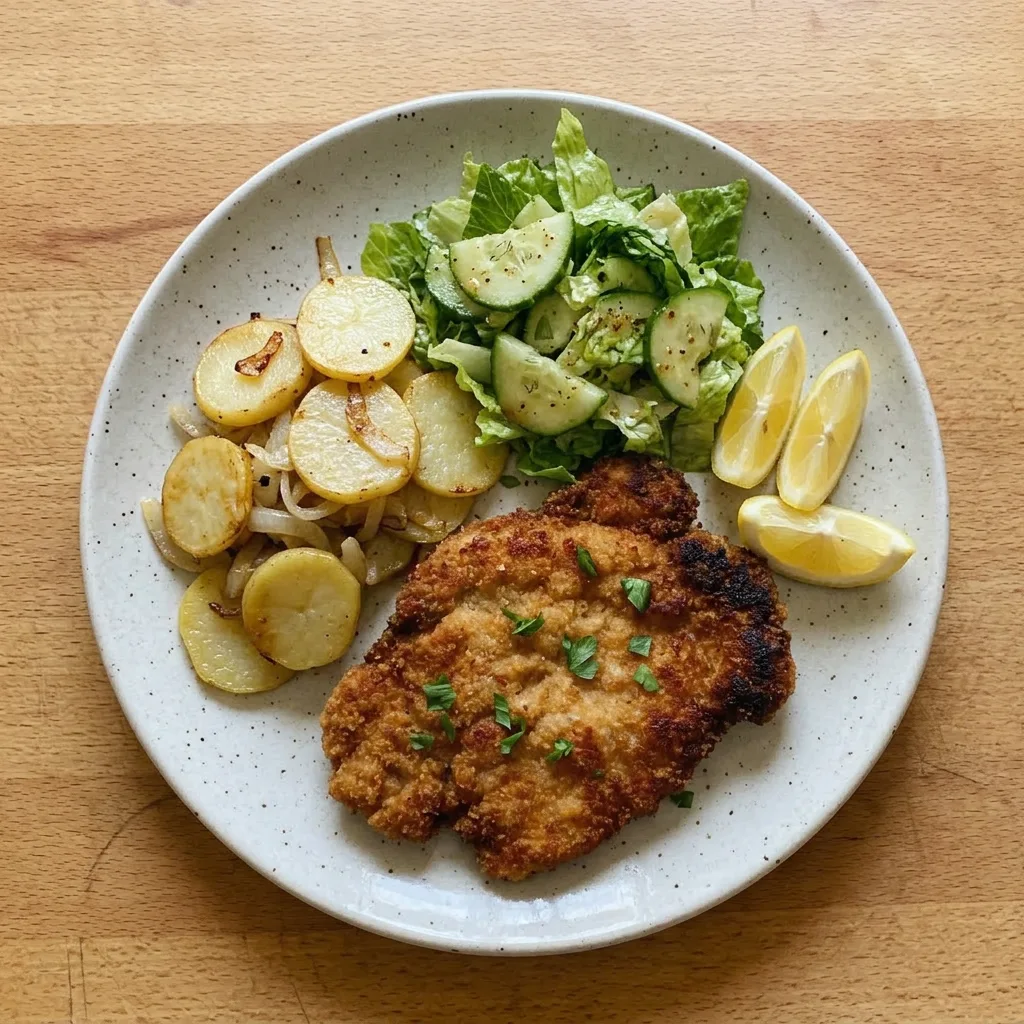
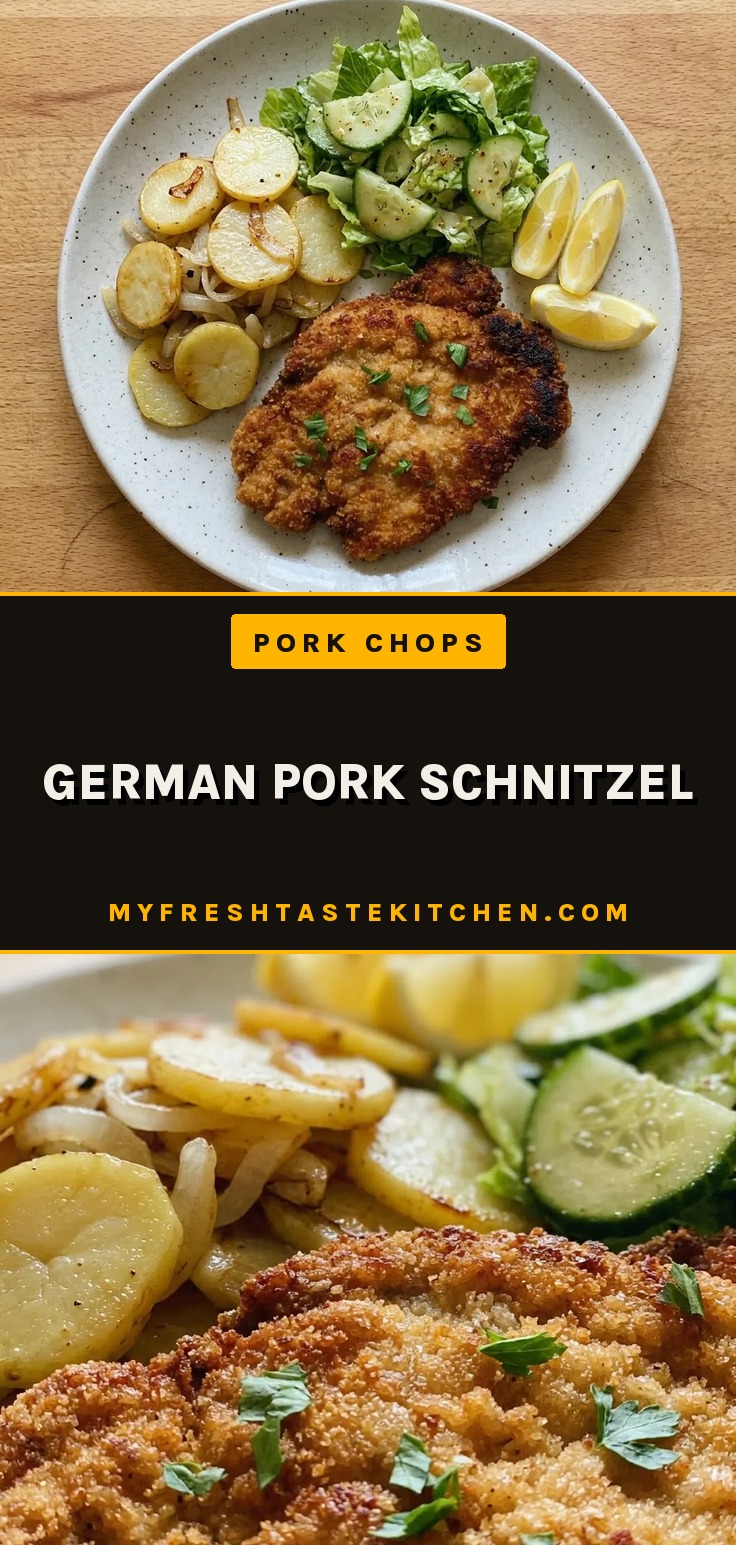
Sprinkle with fresh minced parsley and serve with lemon wedges. For a complete meal, accompany with fried potatoes and a large green salad.
Storage and Serving
Schnitzel is best eaten within 30 minutes of frying, while the crust is still shatteringly crisp. If you must hold it, keep it in a single layer on a wire rack in a 200°F oven for up to 20 minutes, but the texture will soften. For leftovers, refrigerate in an airtight container for up to 3 days.
The breading will lose its crunch and become chewy. Reheat in a 350°F oven on a wire rack for 8 to 10 minutes, flipping once, to restore some crispness. A microwave will turn it soggy.
Freezing is not recommended; the coating will separate and the pork will dry out. If you have extra breaded but uncooked cutlets, freeze them in a single layer on a tray, then transfer to a bag; fry directly from frozen, adding 2 minutes per side.
Tips
- Use a neutral oil with a high smoke point, like canola or vegetable, to avoid off flavors and ensure the crust fries crisp without burning.
Stay crunchy, swap the meat
Boneless pork chops: Chicken or turkey cutlets (pounded to ½ inch). Schnitzel texture is almost identical, just a leaner, milder flavor. Cook to 165°F for poultry.
Breadcrumbs: Panko breadcrumbs. Crunchier, flakier crust, less fine than classic. Still works, but the coating will feel lighter and more jagged.
All-purpose flour: Gluten-free all-purpose flour blend. Coating still sticks and fries crisp. The crust may be slightly more delicate; handle breaded cutlets gently before frying.
Frequently Asked Questions
Can I make schnitzel ahead of time and reheat it?
Schnitzel is best within 30 minutes of frying; reheating won’t restore the original crunch. For leftovers, refrigerate up to 3 days and reheat in a 350°F oven on a wire rack for 8 to 10 minutes, flipping once. A microwave will turn the coating soggy.
Why did my breadcrumb coating fall off during frying?
The most common cause is skipping the 10 to 15 minute rest after breading. That rest lets the flour hydrate and the coating set, so it bonds to the meat. If the oil isn’t hot enough (a breadcrumb should sizzle immediately), the crust can also slide off as it absorbs grease.
How do I know when the schnitzel is fully cooked without a thermometer?
A ½-inch cutlet fried for 2 to 3 minutes per side until deep golden brown is reliably cooked through. The pork will feel firm to the touch, and the juices run clear when you cut into it. The crust should be evenly browned with no raw-looking spots.
What’s the difference between German schnitzel and Wiener schnitzel?
Wiener schnitzel is specifically made from veal, breaded and fried in the classic Viennese style. German schnitzel usually uses pork (as in this recipe) and can vary in preparation, like Jägerschnitzel with mushroom sauce. The breading and frying technique are essentially the same.