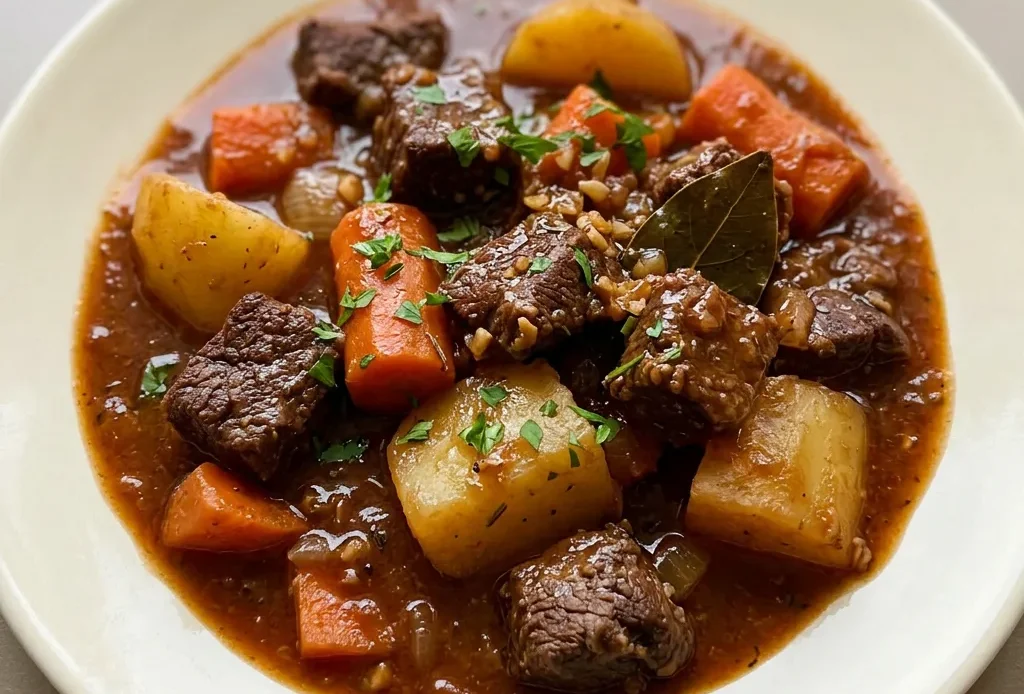
Most crockpot beef stews taste flat because cooks skip browning the meat. That gray beef turns into gray stew. A proper sear builds a deep savory base that carries through hours of slow cooking, and it’s the single step that separates this easy crockpot beef stew from a bowl of bland broth and soft vegetables.
Why does browning the beef first make such a difference?
Browning triggers the Maillard reaction, creating savory compounds that deepen the stew’s flavor. You want a deep brown crust, not gray meat. Browning in batches is key, crowding the pan steams the beef, preventing proper searing.
After the meat is browned, use the same skillet to sauté the onions. That fond stuck to the pan, those browned bits, dissolves into the onions and ends up in the slow cooker, adding complexity you can’t get any other way.
Some recipes skip this step to save time, but you’ll taste the difference: a flat, one-note broth versus a rich, layered one.
Why layer vegetables on top without stirring?
Root vegetables like carrots and potatoes cook at different rates than meat. Layering them on top means they steam rather than stew in liquid, so they stay intact and tender without turning mushy.
Not stirring lets the stew develop separate layers of flavor, beefy concentrate at the bottom, brighter vegetable notes above. The slow cooker’s even heat gently softens them over hours. If you stir everything together early, the vegetables break down into the broth, giving you more of a potage than a stew with distinct chunks.
You want that contrast of textures.
How the flour slurry thickens the stew without lumps or raw taste
Stirring flour directly into hot stew guarantees lumps. Mixing it with cold water first creates a smooth paste that disperses evenly.
Once added, the stew needs a full 30 minutes on high to cook out the raw flour flavor, otherwise you’ll taste it. This method lets you control thickness precisely: you see the stew go from thin to glossy and coating the spoon.
Unlike reducing the broth, which can concentrate saltiness, the slurry adds body without altering flavor balance. A quick whisk before pouring guarantees no clumps.
Prep: 15 min · Cook: 8 hr · Total: 8 hr 15 min · Servings: 6 · Calories: 350 kcal
Ingredients that matter
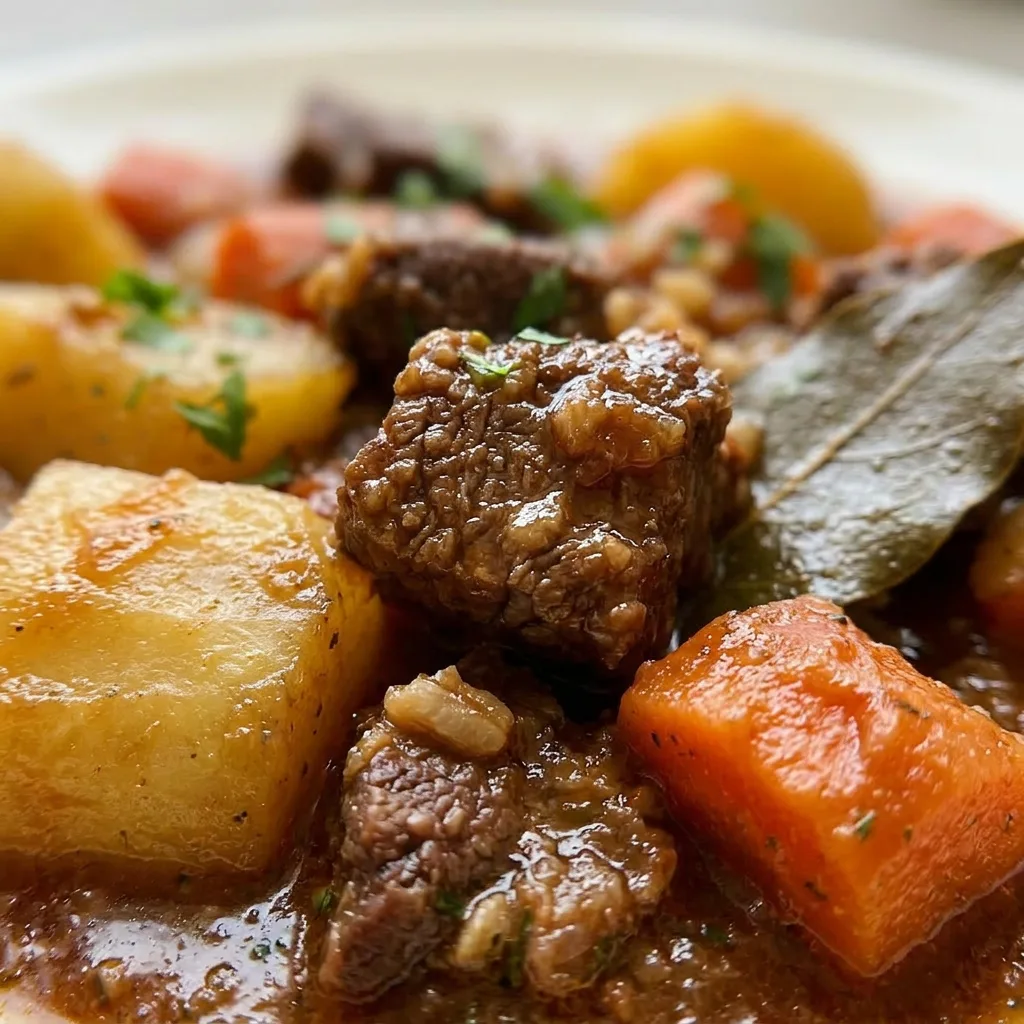
beef chuck roast: Well marbled chuck breaks down tender over long cooking; lean cuts turn dry and stringy.
Yukon gold or Russet potatoes: Yukon golds stay creamy; Russets break down more. Both work, just different textures.
carrots: Fatter carrots hold up better for 8 hours; thin ones can going soggy.
tomato paste: Adds acidity and depth. Buy it in a tube so you can use just a spoonful without waste.
dried thyme and rosemary: They hold up fine in long cooking; fresh would lose potency and turn bitter.
A few moves make the difference between gray meat and deep, rich stew.
Sear the beef in batches
Get the skillet good and hot. Drop in cubes in a single layer, crowding steams them.
Turn each piece until it’s dark brown, not just gray. That color is flavor.
Sauté onions in the same pan
After the meat’s out, the pan bottom has browned bits (fond). Cook the onions until they soften and scrape those up. If the fond looks dark but not burnt, you’re on track.
Layer vegetables on top, don’t stir
Set carrots, potatoes, and celery over the meat and liquid. Leave them undisturbed. They’ll steam tender, not dissolve into mush.
Peek after 6 hours: they should hold their shape.
Thicken with a flour slurry at the end
Whisk flour into cold water until smooth, then stir into the hot stew. The liquid will look milky at first. Cook on high 30 minutes, watch it turn glossy and coat the spoon.
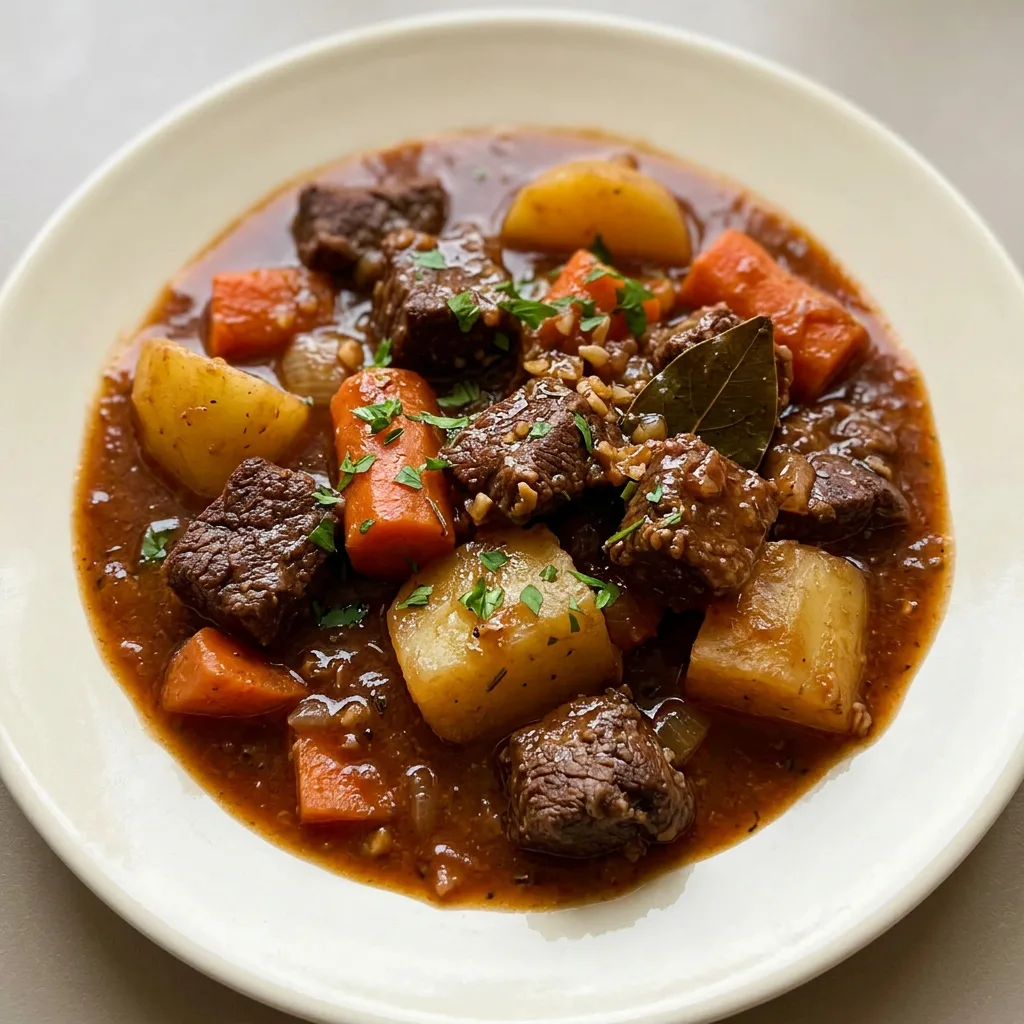
Easy Crockpot Beef Stew
Ingredients
Method
Brown Beef Cubes:
Sprinkle salt and pepper over beef cubes. In a large skillet over medium-high heat, warm vegetable oil. Brown beef in batches, turning to get all sides golden, roughly 3-4 minutes per batch. Move browned meat to slow cooker.Sauté Onion Garlic:
Using the same skillet, sauté diced onion until softened, about 5 minutes. Stir in minced garlic and cook for 1 minute until aromatic. Transfer onion mixture to slow cooker.Make Broth Mixture:
In a separate bowl, combine beef broth, tomato paste, Worcestershire sauce, dried thyme, and dried rosemary; whisk until smooth. Pour this liquid over the beef and onions in the slow cooker. Drop in bay leaves.Layer Vegetables on Top:
Arrange chopped carrots, potatoes, and celery on top of the meat and liquid; do not mix.Slow Cook Stew:
Secure lid and cook on low for 7-8 hours or on high for 4-5 hours, until beef and vegetables are fork-tender.Thicken with Slurry:
In a small bowl, blend flour with cold water until no lumps remain. Stir this slurry into the stew. Replace lid and cook on high for 30 minutes to thicken.Season and Serve:
Discard bay leaves. Fold in fresh parsley. Adjust seasoning with extra salt and pepper if desired. Serve immediately.
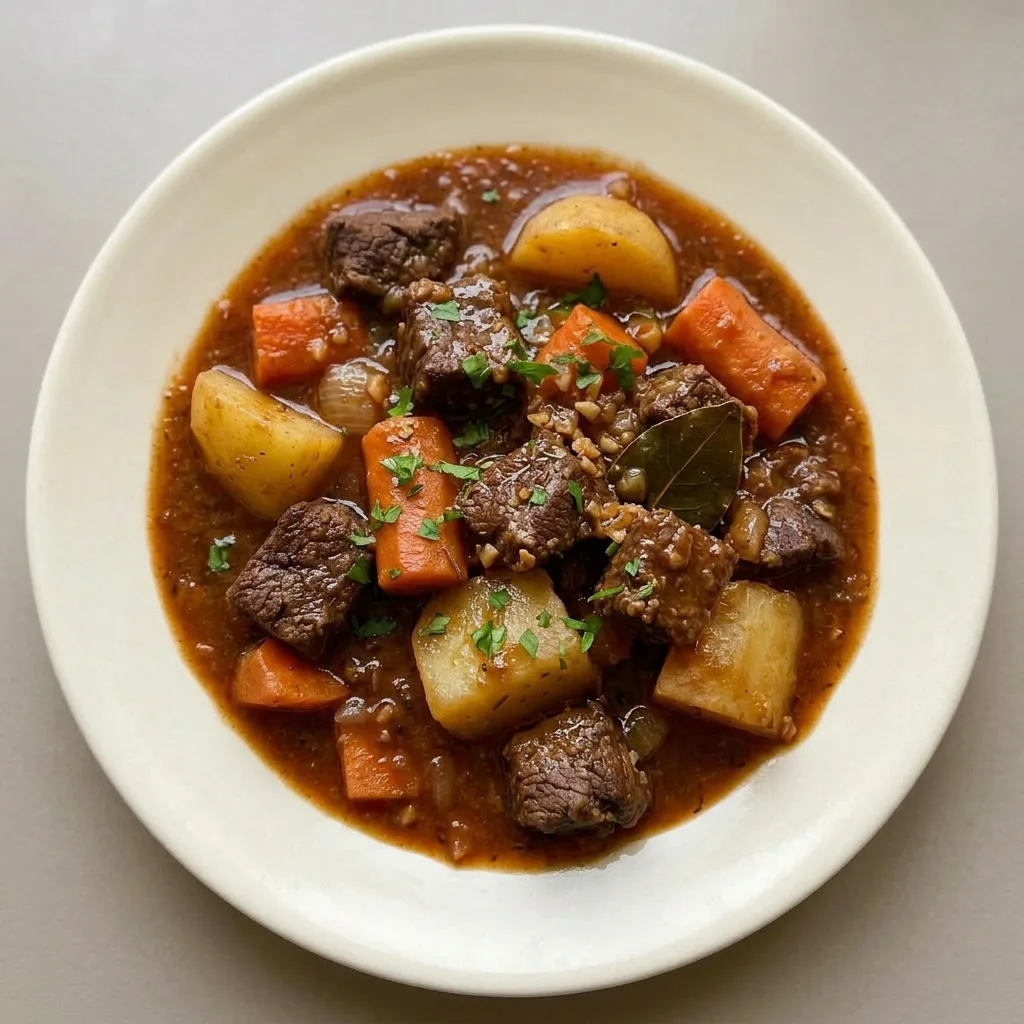
Substitutions that work (and one that doesn’t) for crockpot beef stew
beef chuck roast: Boneless short ribs or bottom round. Short ribs add richness; bottom round is leaner so can dry out if overcooked. Both benefit from the long slow cook, but expect the meat to be slightly less tender than chuck.
all-purpose flour (in slurry): Gluten-free all-purpose flour blend or cornstarch (2 tbsp cornstarch + 2 tbsp cold water). Gluten-free AP flour thickens similarly; cornstarch gives a glossier, more translucent gravy. Both need the same 30-minute cook to avoid a raw starch taste.
Worcestershire sauce: Soy sauce or coconut aminos (for gluten-free). Soy sauce adds similar umami and salt.
Coconut aminos are milder; you may need extra salt. The stew will lack Worcestershire’s tang, so add a splash of vinegar to compensate.
potatoes (Yukon gold or Russet): Sweet potatoes, parsnips, or turnips. Sweet potatoes hold up but get sweeter; parsnips and turnips stay firmer and add peppery notes.
Cubes should be same size to cook evenly. The texture won’t be identical but still pleasant.
Tips
- Cut beef into 1.5-inch cubes for even cooking; smaller pieces overcook and larger ones stay tough in the slow cooker.
- Deglaze the skillet with a splash of broth after sautéing onions to lift all the fond into the slow cooker, maximizing flavor without extra fat.
Storage and Serving
This stew tastes even better the next day. Let it cool completely, then refrigerate in an airtight container for up to 4 days. The vegetables soften slightly as the stew sits, but the flour slurry keeps the broth thick.
Reheat gently on the stovetop or in the microwave, adding a splash of beef broth if it thickens too much. Avoid boiling hard, which can turn the vegetables mushy.
The fresh parsley garnish is best added just before serving. For leftovers, stir in a pinch of fresh parsley or dried herbs to brighten the flavor.
Freezing is not recommended; the potatoes become grainy and the carrots lose texture upon thawing. If you must freeze, do so before adding the flour slurry, then thicken after thawing. Serve within 2 hours of cooking for the best texture, but leftovers hold well for several days.
Frequently Asked Questions
Can I cook this stew on high instead of low, and how does that affect the meat?
Yes, you can cook on high for 4 to 5 hours instead of low for 7 to 8 hours. The meat will be tender but slightly firmer than if cooked low and slow, since the longer low cook gives collagen more time to break down. The vegetables also hold their shape better on low, so on high they may soften a bit more.
Either way, the beef should be fork-tender when done.
Can I make this stew ahead of time and reheat it?
Absolutely: the stew tastes even better the next day. Let it cool completely, then refrigerate in an airtight container for up to 4 days. Reheat gently on the stovetop or in the microwave, adding a splash of beef broth if it thickens too much.
Avoid boiling hard, which can turn the vegetables mushy. Add fresh parsley just before serving.
Why is my stew watery even after adding the flour slurry?
Most likely the slurry wasn’t given enough time to thicken: the recipe calls for 30 minutes on high after stirring it in. If you cut that short, the flour won’t fully gelatinize and the stew will stay thin. Another possibility is the ratio was off, make sure you used 1/4 cup flour to 1/2 cup water.
If you added extra liquid during cooking, the slurry may be outmatched; you can mix another half-batch of slurry and cook another 30 minutes.
