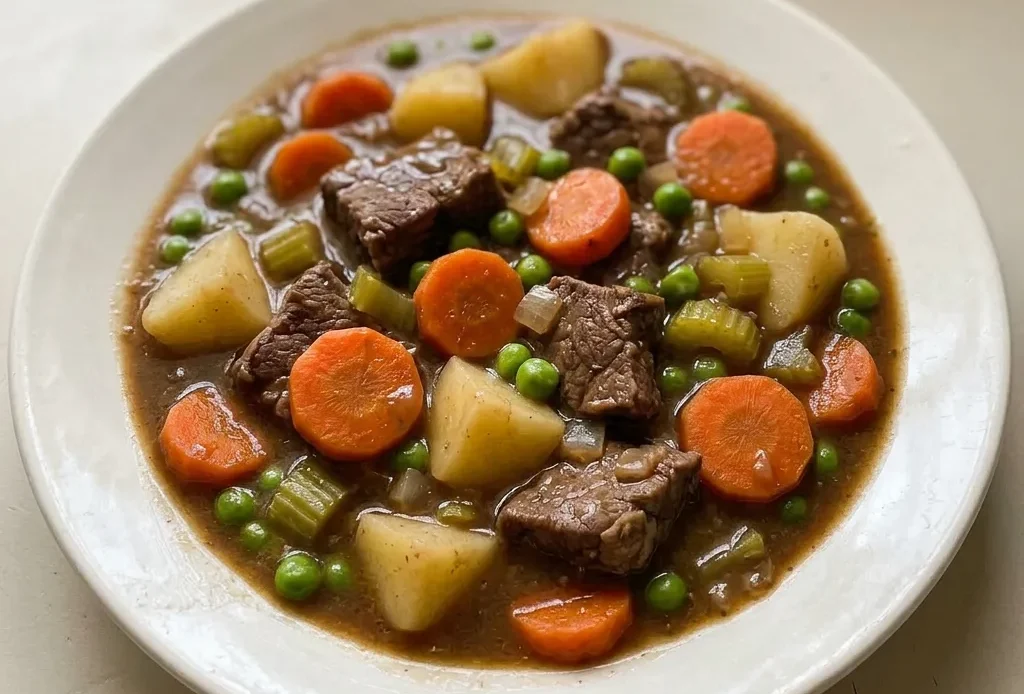
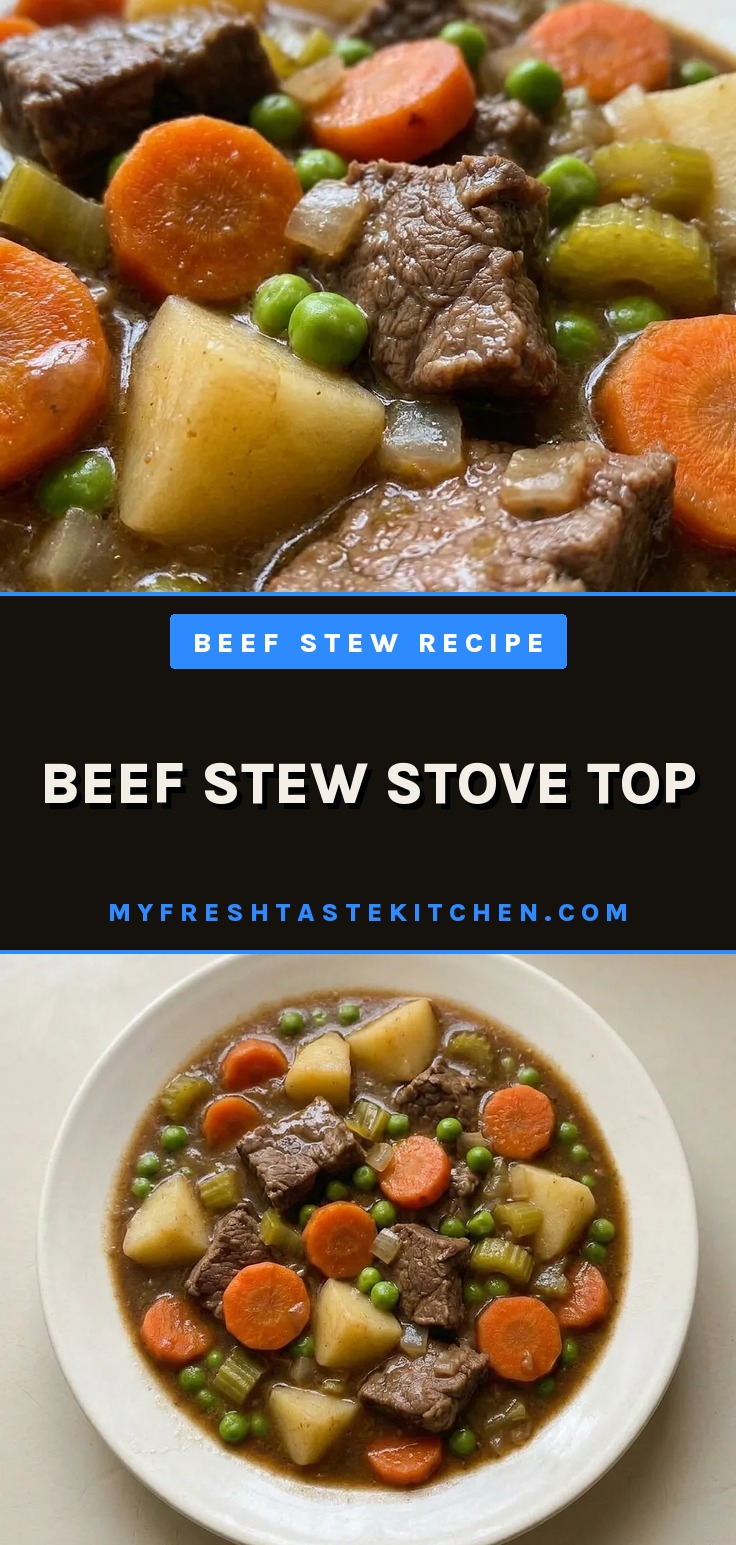
The gravy coats the back of a spoon like heavy cream, glossy and clinging to every chunk of beef and potato. That texture doesn’t come from luck, it comes from two thickening moves: a flour coating on the beef before browning, then a cornstarch slurry stirred in at the end. This easy beef stew recipe stove top builds flavor step by step, but the margin for error is real: rush the simmer or skip the sear, and you’ll end up with pale meat in thin broth.
The payoff for patience is a stew that feels substantial, each spoonful holding together without being pasty.
Why sear the beef in batches on the stovetop?
Searing beef in batches is what builds those deep, savory notes you smell when the lid comes off. The Maillard reaction, browning the meat’s surface, creates complex flavor compounds that simmering alone can’t produce.
Pack too many pieces in the pot at once, and they release moisture, steaming instead of browning. You’ll see the meat turn gray and weep liquid; that’s a sign you’re losing the crust.
Working in batches keeps the pan hot enough to get a proper sear on each chunk. The payoff: stew with a rich, layered taste, not one that tastes flat.
How does the flour coating and cornstarch slurry thicken the stew?
The flour dusted on the beef does double duty. As the stew simmers, the flour loosens from the meat and disperses, thickening the liquid from the start. That gives you a base with some body before the final step.
Later, the cornstarch slurry, whisked smooth into cold water, provides a clean, lump-free finish. Drizzle it in while stirring, and you’ll see the broth go from thin to glossy within minutes. Together, they yield a silky texture that clings to each spoonful.
The result is a stew that feels substantial without being pasty.
What’s the deal with adding peas at the very end?
Peas are delicate. Drop them in too early, say with the carrots, and they’ll turn olive-drab and mushy, losing both texture and sweetness. They need only a brief warm-through to stay bright green and tender.
Stir them in during the last 5 to 10 minutes of cooking, and you’ll see them soften just enough while keeping their pop. That contrast against the soft beef and potatoes makes each bite more interesting.
It also keeps the stew looking appetizing, with flecks of green standing out against the rich brown gravy.
Why simmer low and slow for beef chuck?
Chuck roast is tough because it’s a working muscle packed with collagen. That collagen needs gentle heat over time to break down into gelatin, which gives the stew its body and the meat its melt-apart tenderness.
Bring it to a boil first, then drop the heat to a bare simmer, you’ll see lazy bubbles, not a violent roll. Cook it that way for 60 to 90 minutes, and a fork should slide into the beef with no resistance.
Boiling would tighten the meat’s fibers, leaving it dry and stringy. Low heat delivers fork-tender pieces every time.
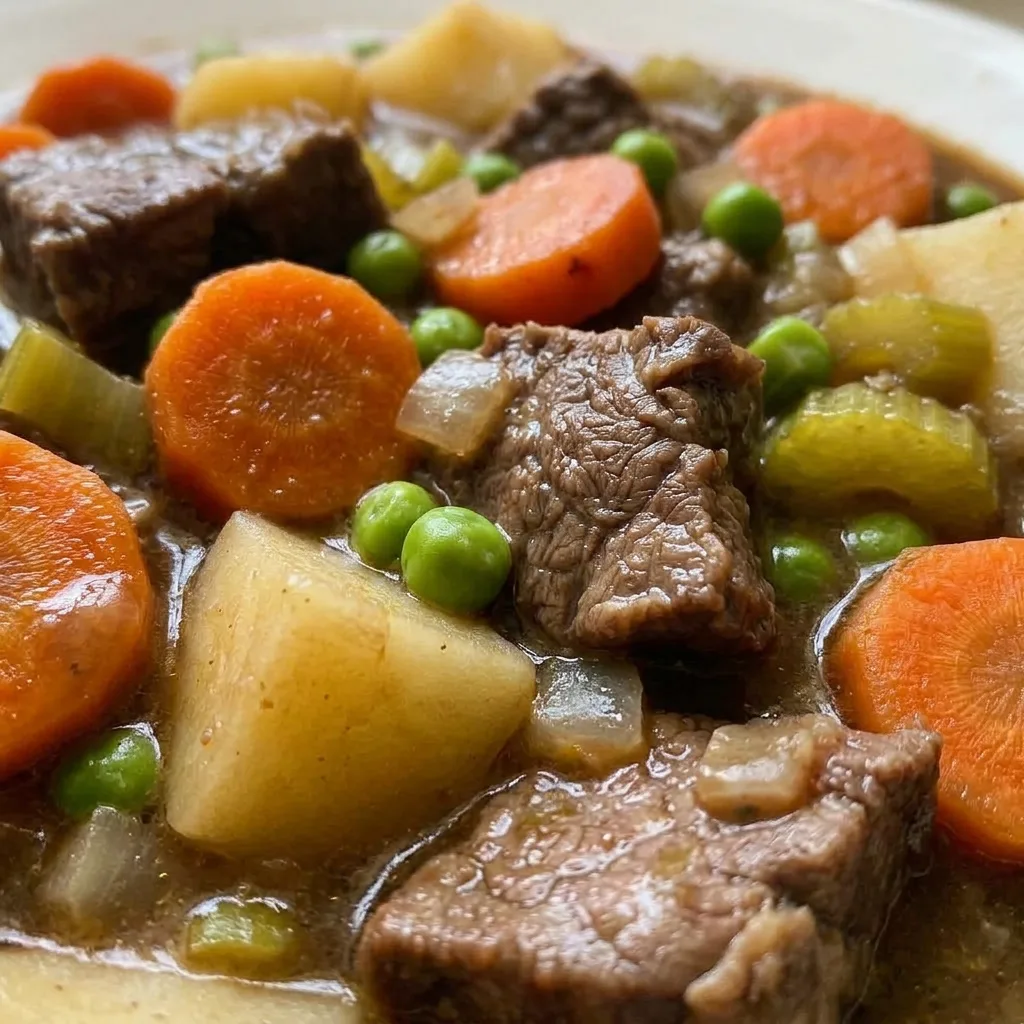
Prep: 20 min · Cook: 1 hr 30 min · Total: 1 hr 50 min · Servings: 7 · Calories: 520 kcal
What to Look For at the Store and Prep
chuck roast: Buy a whole chuck roast and cut it yourself into 1 to 2 inch chunks for even cooking and tenderness.
beef stock: Use unsalted or low sodium stock so you control the salt level as the stew simmers.
frozen peas: Frozen peas are already blanched; just thaw or add straight to the pot at the end.
How to Build a Rich Stovetop Beef Stew
Sear the beef in batches
Brown the floured chuck in hot oil and butter, working in batches. Each piece should sizzle on contact; if the pan steams, you’ve overcrowded.
Aim for a deep brown crust on all sides, about 2 minutes per side. Transfer to a plate.
Sauté the aromatics
After the beef is set aside, cook the garlic, onion, carrots, and celery until the onions turn translucent and the edges begin to caramelize, about 5 minutes. You’ll smell sweetness, don’t let them burn.
Combine and simmer
Pour in the stock, then stir in tomato paste, potatoes, Worcestershire, rosemary, and bay leaf. Return the beef and any juices. Bring to a boil, then reduce to a low simmer, you want gentle bubbles, not a rolling boil.
Cover and cook 60 to 90 minutes.
Check for tenderness
After an hour, test a piece of beef with a fork. It should slide in with little resistance.
If not, continue simmering, checking every 10 minutes. The liquid should be slightly thickened from the flour.
Thicken with slurry
Whisk cornstarch into cold water until smooth. Drizzle into the simmering stew while stirring. You’ll see the broth turn glossy and thicken within a minute.
Let it bubble uncovered for 10 to 15 minutes until it coats the back of a spoon.
Finish with peas
Stir in the frozen peas during the last 5 to 10 minutes. They should turn bright green and soften slightly.
Overcooking turns them olive and mushy, so stop as soon as they’re heated through. Remove the bay leaf before serving.
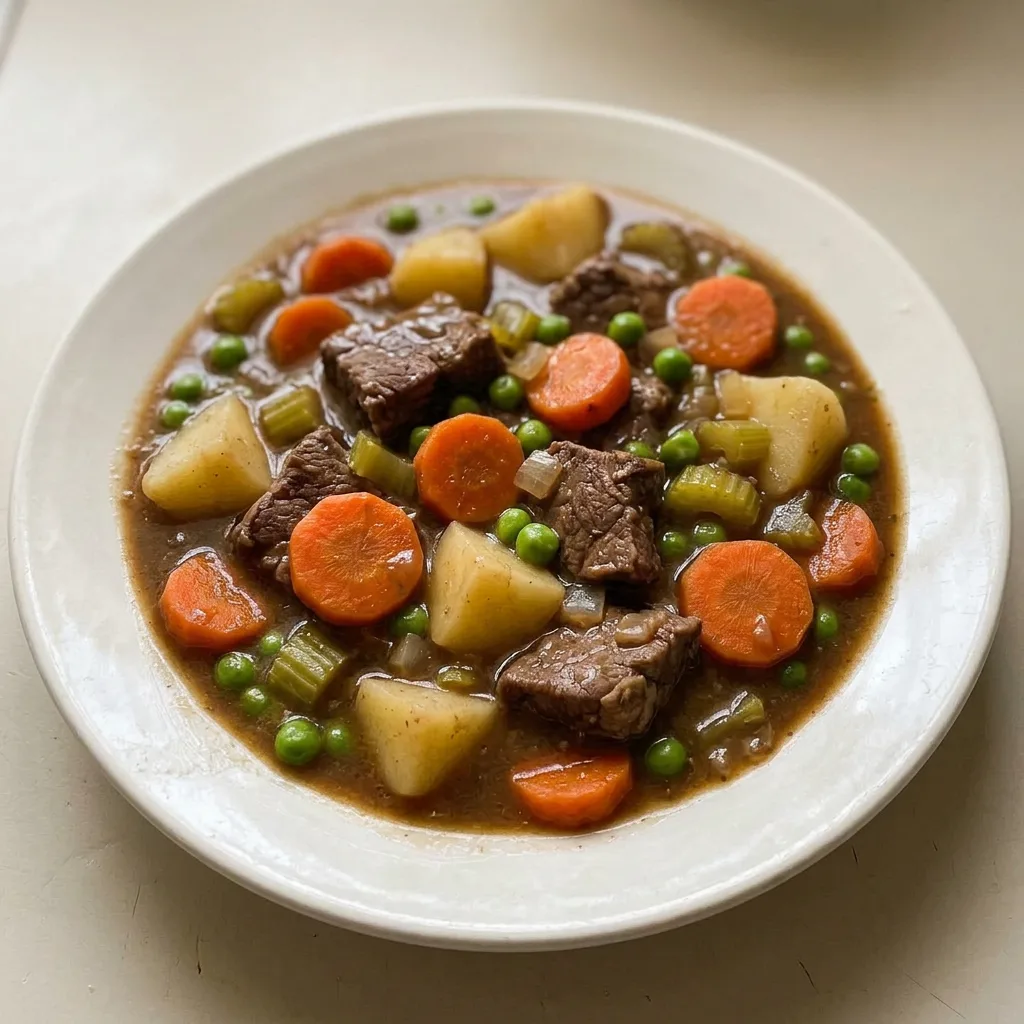
Easy Beef Stew Recipe Stove Top
Ingredients
Method
Mix flour and spices:
Combine the flour, salt, pepper, and paprika in a shallow dish, stirring to blend.Dredge beef in flour:
Dredge each piece of beef in the flour mixture, ensuring an even coating.Sear beef in batches:
In a large stockpot, warm the butter and olive oil over medium-high heat. Working in batches to avoid overcrowding, sear the beef on all sides until browned. Transfer the browned meat to a plate and set aside.Sauté vegetables:
If the pot seems dry, add a bit more butter or oil. Sauté the garlic, onion, carrots, and celery until they begin to caramelize or soften, about 5 minutes.Add broth and beef:
Pour in the beef broth, then stir in the tomato paste, potatoes, Worcestershire sauce, bay leaf, and rosemary. Return the beef to the pot.Simmer until tender:
Raise the heat to bring the stew to a boil, then reduce to low, cover, and simmer for 60 to 90 minutes, until the beef is fork-tender.Thicken with slurry:
In a small bowl, whisk together the cornstarch and water until smooth. Gradually drizzle the slurry into the stew while stirring constantly. Continue cooking uncovered for 10 to 15 minutes, stirring now and then, until the stew thickens.Remove bay leaf:
Remove and discard the bay leaf.Stir in peas:
During the final 5 to 10 minutes of thickening, stir in the peas to warm them through without turning mushy.
Storage and Reheating
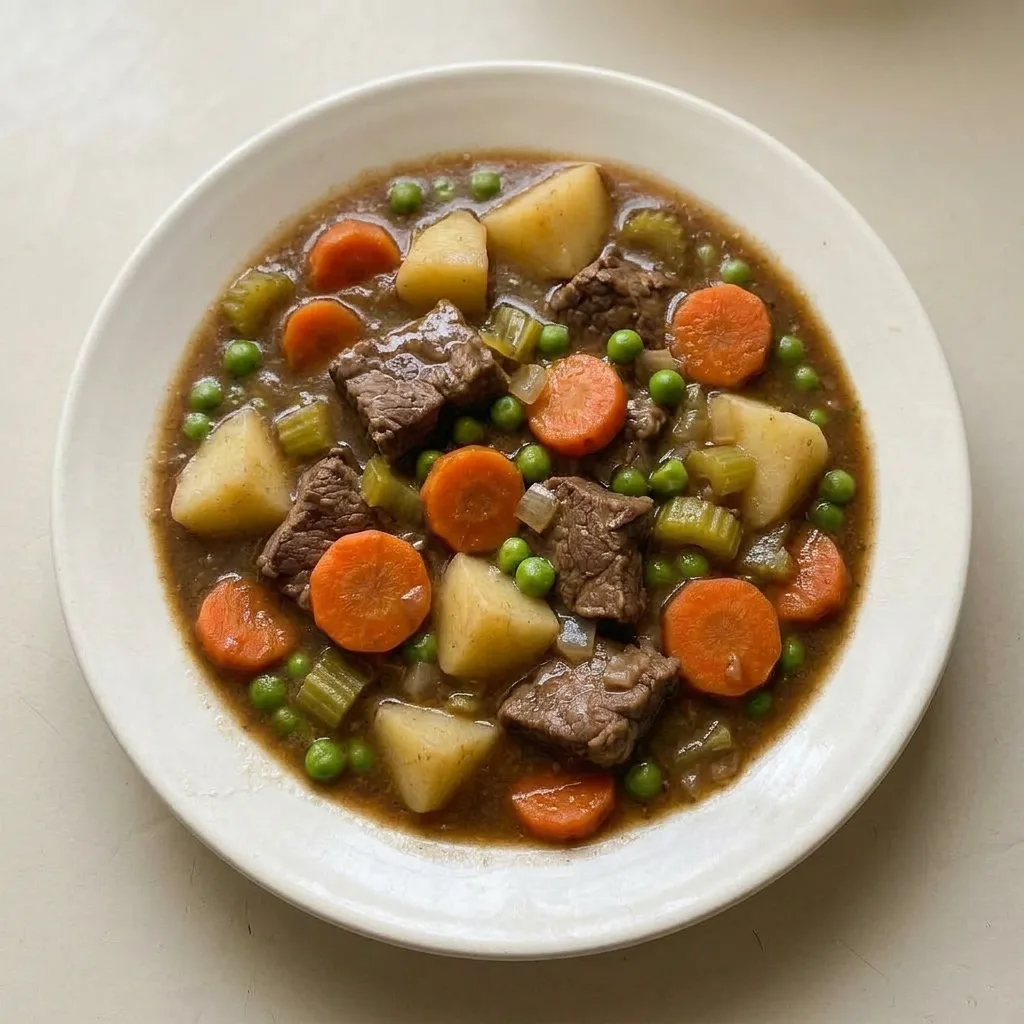
Leftover stew thickens as it cools; that’s the gelatin from the beef and the starches setting. Refrigerate in a covered container for up to 4 days. The potatoes will soften more each day, and the gravy turns almost jelly-like when cold.
To serve, reheat gently on the stovetop over low heat, adding a splash of beef stock or water if it’s too thick. Stir occasionally, and don’t let it boil hard or the meat will dry out.
The stew also freezes well for up to 3 months. Thaw in the fridge overnight, then reheat slowly. Serve within an hour of reheating for the best texture.
The peas lose their bright color and pop over time, so if you’re making ahead, stir them in only after reheating, during the last 5 minutes.
Tips
- Use a wide, heavy pot like a Dutch oven for even heat distribution during the long simmer; narrow pots can cause hot spots and uneven cooking.
- If the stew is too thin after the slurry, let it simmer uncovered for an additional 10 minutes; the longer simmer concentrates flavors and further thickens the liquid.
Substituting for chuck roast and keeping the stew thick
chuck roast: boneless short ribs or brisket. Both have similar collagen content, so they’ll turn fork-tender after a long simmer. Short ribs are fattier, giving a richer broth; brisket is leaner, so watch it doesn’t dry out, cook until tender, not beyond.
all-purpose flour: gluten-free all-purpose flour blend (with xanthan gum) or 1:1 gluten-free flour. Use the same amount. The flour here thickens both from the coating and as it simmers; a gluten-free blend will thicken similarly, though the final texture may be slightly less silky.
Avoid rice flour alone, it doesn’t bind the coating well and can turn gritty.
cornstarch: arrowroot powder or potato starch. Use the same amount.
The slurry thickens in the same way, though arrowroot gives a slightly glossier finish. Potato starch creates a similar body.
Don’t use all-purpose flour here, it needs longer cooking to thicken and won’t give the same clean glossy result.
butter: additional olive oil or a dairy-free butter alternative. Use the same amount. Butter adds richness to the sear, but olive oil works fine, you’ll lose a bit of depth.
Dairy-free butter melts and browns similarly, but check it’s unsalted to avoid over-salting.
Frequently Asked Questions
Can I make beef stew ahead of time?
Yes, make it ahead. The stew keeps in the fridge up to 4 days, and the gelatin from the beef and starches set as it cools, so the gravy turns almost jelly-like cold.
Reheat gently on the stovetop over low heat, adding a splash of stock if it’s too thick. For the best texture, stir in the peas only after reheating, during the last 5 minutes, they lose their pop if cooked twice.
Why is my beef tough after simmering?
Tough beef means you didn’t simmer it long enough or the heat was too high. Chuck roast needs 60 to 90 minutes at a bare simmer, gentle bubbles, not a boil, to break down collagen into gelatin.
If your stew boiled hard, the meat fibers tightened and dried out. Next time, check at the 60-minute mark: a fork should slide in with little resistance.
How do I fix a watery stew?
If your stew is watery, you need more thickening. Whisk 2 tablespoons cornstarch with 2 tablespoons cold water into a smooth slurry, then drizzle it into the simmering stew while stirring.
Let it bubble uncovered for 10 to 15 minutes, and you’ll see the broth turn glossy and coat the back of a spoon. If it’s still thin after that, repeat with another half batch of slurry.
What’s the difference between stovetop and slow cooker beef stew?
Stovetop lets you sear the beef in batches for deep browning before simmering, which builds rich flavor that a slow cooker can’t replicate on its own. Slow cooker stew is hands-off but often lacks that browned crust unless you sear separately.
The stovetop method takes 90 minutes total; a slow cooker needs 6 to 8 hours on low and still may produce a lighter broth. For this recipe, the stovetop gives you a silky, deeply savory stew in a fraction of the time.
