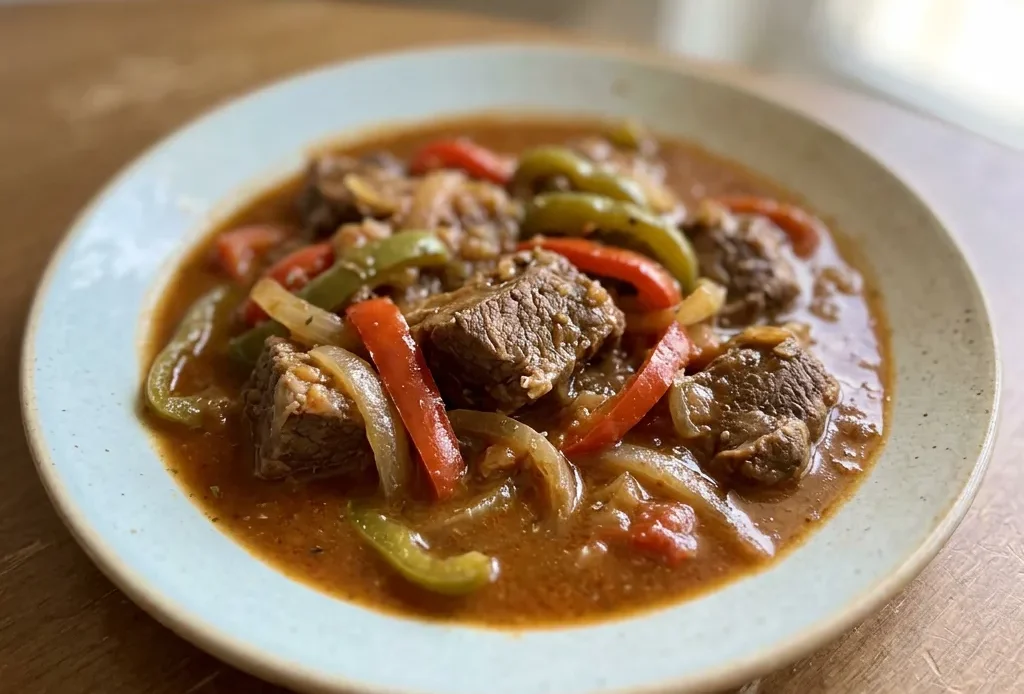
The most common mistake with this stew is skipping the caramelized sugar, and ending up with a pale, one-note broth instead of the deep, savory-sweet sauce that defines Dominican beef stew. That single step, done before the beef hits the pot, builds a complexity you can’t get from browning meat alone. It’s the kind of detail that separates a good beef stew from one that tastes like it came from an abuela’s kitchen.
The rest of the method, adding water in stages, relying on sofrito and sazón, reinforces that richness without making it heavy. If you’ve ever made a beef stew that felt flat or thin, this is where the difference lies.
The sugar turned dark brown and bitter, and the whole stew tasted scorched.
Caramelized Sugar Base
The sugar melts to a light amber, then I add the beef to stop the cooking. That caramelization builds a deeper savory-sweet flavor and a darker color you can’t get from browning meat alone. It’s a key step for authentic Dominican beef stew, done before the beef goes in so the sugar doesn’t burn.
You’ll see the sugar go from white to a golden brown, that’s when it’s ready. No need to stir much; just watch the color.
Three-Stage Water Addition
Adding water in three stages, each cooked until nearly evaporated, builds a rich, concentrated sauce without boiling the meat dry. The beef cooks slowly, tenderizing as the liquid reduces and intensifies in flavor. This method prevents a watery stew while ensuring the meat stays moist.
You’ll notice the sauce thickens naturally after each addition, coating the beef without needing a thickener.
Sofrito and Sazón: The Flavor Backbone
Sofrito and sazón are what set this stew apart from a plain beef soup. Sofrito brings a base of aromatic herbs and peppers, onion, garlic, cilantro, bell pepper, that meld into the background.
Sazón adds color and a unique spice blend, often cumin and coriander, giving the stew its characteristic orange tint and earthy warmth. Together they define the dish’identity beyond just beef and vegetables.
Balancing Salt and Acid
Adobo seasons the beef deeply with its seasoned salt blend, while soy sauce adds umami and darkens the broth. Lime juice brightens the stew and cuts through the richness, balancing the savory notes.
You’ll taste a clear acidity that lifts the dish, not a sour punch. It’s a careful balance: enough salt to make the beef taste seasoned, enough acid to keep it from feeling heavy.
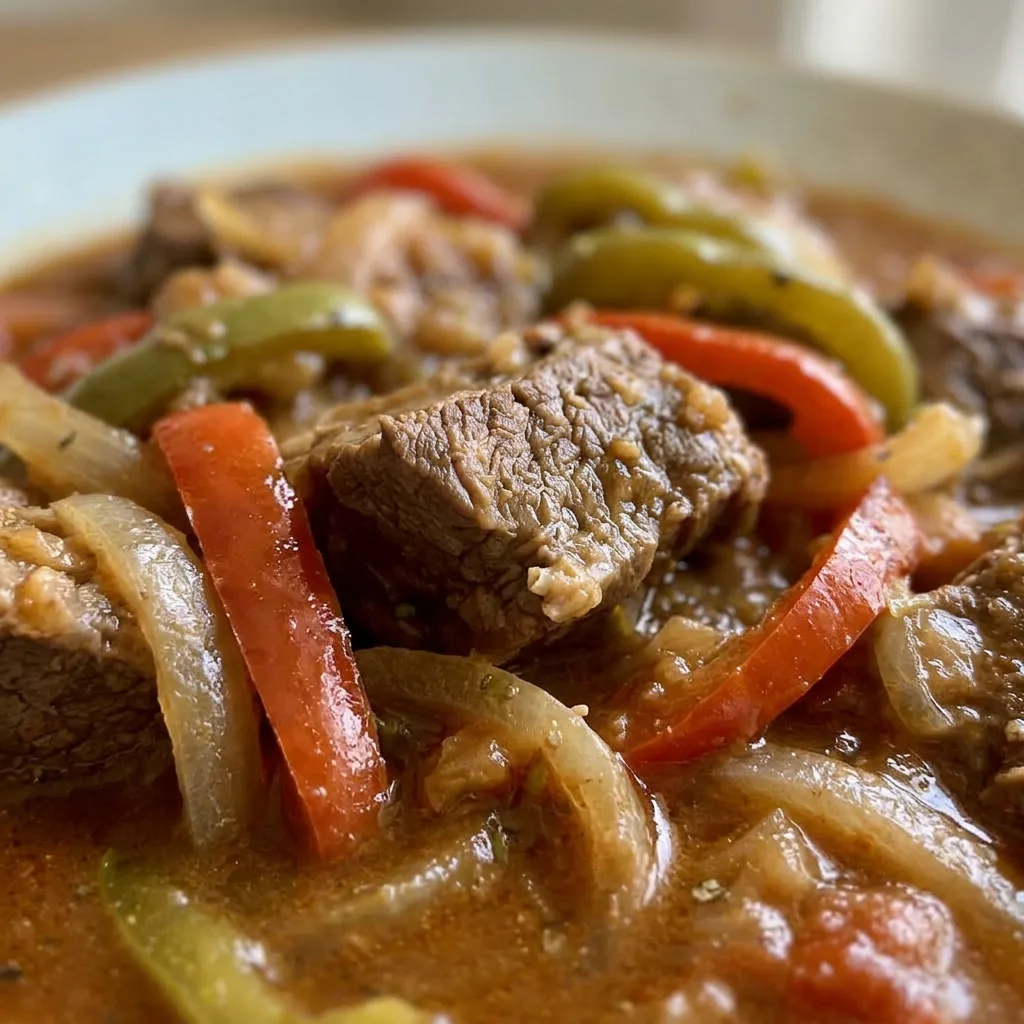
Prep: 5 min · Cook: 1 hr 15 min · Total: 1 hr 20 min · Servings: 4 · Calories: 190 kcal
Ingredient Notes for Dominican Beef Stew
Beef round chunks: Round is lean; it’ll get tender with the slow simmer but can dry out if rushed. Don’t use sirloin or tenderloin.
Sofrito: Store bought is fine; homemade is better. If using jarred, avoid ones with added sugar or too much tomato.
Sazon: Use the little packets with culantro and achiote. The powder in jars often lacks the same color and punch.
Lime juice: Fresh only. Bottled stuff tastes flat and won’t brighten the stew the same way.
Soy sauce: Use regular, not low sodium. The salt helps season the beef and deepens the color.
Make the Stew: Step by Step
Marinate the beef
Toss beef with garlic, sofrito, soy sauce, adobo, sazón, oregano, and lime juice. Let it sit while you heat the oil, the beef soaks up seasoning, and you’ll smell the lime cutting through.
Caramelize the sugar
Heat oil over medium, stir in sugar. Watch it melt from white to a light amber, then add the beef right away. If it darkens too much, it’ll turn bitter, pull it off heat if needed.
Sear the beef
Add beef, cover, cook 5 minutes. Flip pieces, cover, cook another 5. The liquid should evaporate; you’ll hear sizzling when it’s dry.
If still wet, uncover and let it cook off briefly.
First water addition
Stir in tomato paste and 1 cup water. Cover, cook 15 minutes.
By the end, most liquid should be gone, sauce clings to beef, not pools. If it’s still soupy, cook uncovered a couple minutes.
Second water addition
Add another 1 cup water, cover, cook 15 minutes. The sauce darkens and thickens.
You’ll see the beef starting to soften at the edges. No need to stir; just let it reduce.
Third water addition with vegetables
Add last 1 cup water, plus sliced onion, red and green bell pepper. Cover, cook 10 to 12 minutes.
Sauce should coat the back of a spoon; vegetables tender but not mushy. If too thin, simmer uncovered briefly.

Dominican Beef Stew
Ingredients
Method
Marinate Beef:
In a large bowl, toss beef with garlic, sofrito, soy sauce, adobo, sazon, oregano, and lime juice until evenly coated.Caramelize Sugar:
Heat oil in a pot over medium heat. Add sugar and cook until it caramelizes.Brown Beef:
Add beef to the pot, cover, and cook for 5 minutes. Flip pieces, cover, and cook another 5 minutes until liquid evaporates.Add Tomato Paste:
Mix in tomato paste and 1 cup water. Cover and cook for 15 minutes until most liquid evaporates.Simmer with Water:
Repeat adding 1 cup water and cooking covered for 15 minutes two more times (3 additions total).Add Vegetables:
Add sliced onion and bell peppers with the last cup of water. Cover and cook 10-12 minutes until sauce thickens and vegetables soften.
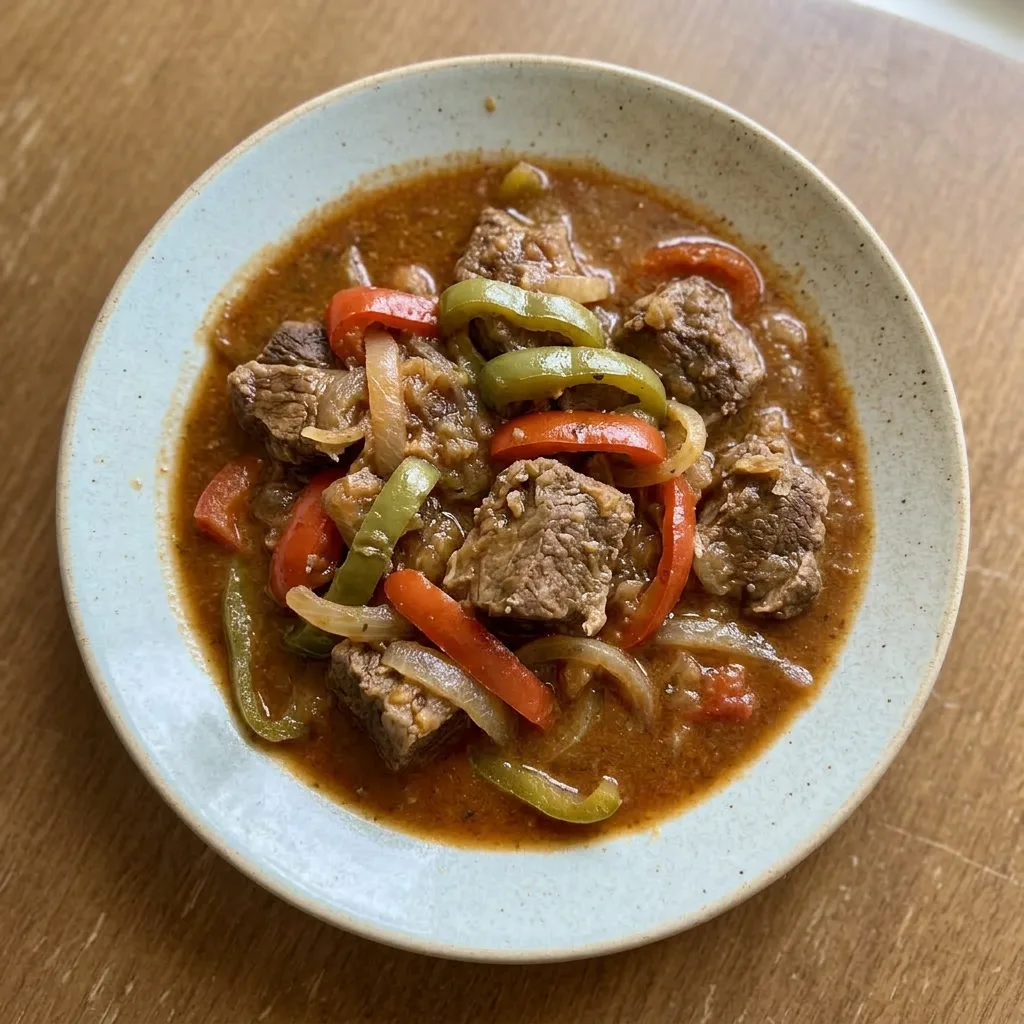
Stick With the Signature Ingredients
Beef round chunks: Chuck or brisket, cut into same size chunks. Both have more marbling, so the stew ends up richer and more tender, but you must cook until fork-tender, chuck may need 10, 15 extra minutes.
Sofrito: None, if you skip it, the stew loses its herbal backbone. Make your own with onion, garlic, bell pepper, and cilantro if you can’t find jarred. Without sofrito, the flavor flattens into plain beef and peppers; it won’t taste Dominican.
Sazon: None, it provides the orange color and earthy spice that define this stew. You can sub with 1/4 tsp annatto powder plus a pinch each of cumin and coriander, but the color won’t be as bright. The stew looks pale and lacks the warm, slightly floral note that sazón gives.
Adobo: None, it’s the main salt source and seasons the meat from inside. Use 1/2 tsp salt plus 1/4 tsp garlic powder and 1/4 tsp black pepper if you must skip the blend. You lose the even seasoning and the subtle garlic and oregano notes adobo adds.
Tips
- If the sugar starts smoking or smells burnt, immediately remove the pot from heat and add the beef, the residual heat will finish caramelization without scorching.
Storage and Serving
This stew thickens as it cools, and the flavors deepen overnight. For the best texture, serve within 30 minutes of finishing cooking while the sauce is still loose and the beef is tender. Leftovers keep in the fridge for up to 4 days in a sealed container.
Reheat gently on the stovetop over low heat, adding a splash of water or broth if the sauce is too thick. Avoid the microwave, which can toughen the beef.
The stew freezes well for up to 3 months; thaw overnight in the fridge and reheat slowly. The vegetables will soften further upon reheating, but the beef stays moist if you don’t rush it. For make ahead, prepare the stew completely, then cool and refrigerate; the flavors settle together best after a day.
Reheat just before serving, and taste for salt before serving as the sauce concentrates.
Frequently Asked Questions
Can I make Dominican beef stew ahead of time?
Yes, you can make it a day ahead. The flavors deepen overnight, and the stew thickens as it cools.
Reheat gently on the stovetop over low heat, adding a splash of water if the sauce is too thick. Avoid the microwave, it can toughen the beef.
Why is my beef tough instead of tender?
Most likely you didn’t cook it long enough. The recipe calls for 75 minutes total with three water additions; that slow simmer breaks down the lean beef round. If you rushed any stage or cut the cooking time, the meat won’t have time to tenderize.
Make sure each water addition cooks until nearly evaporated before adding the next.
How do I know when the stew is done?
The beef should be fork-tender, easily pierced with no resistance. The sauce will coat the back of a spoon, not run thin. You’ll see the vegetables softened but still intact, and the liquid reduced to a thick, glossy gravy that clings to the meat.
What is the difference between Dominican beef stew and other Latin beef stews?
The key differences are the caramelized sugar base and the three-stage water addition, which build a deep, concentrated sauce without a thickener. Sofrito and sazón give it a distinct herbal and earthy flavor, plus an orange tint, while lime juice adds brightness, a combination you won’t find in, say, a Cuban picadillo or a Mexican carne guisada.
