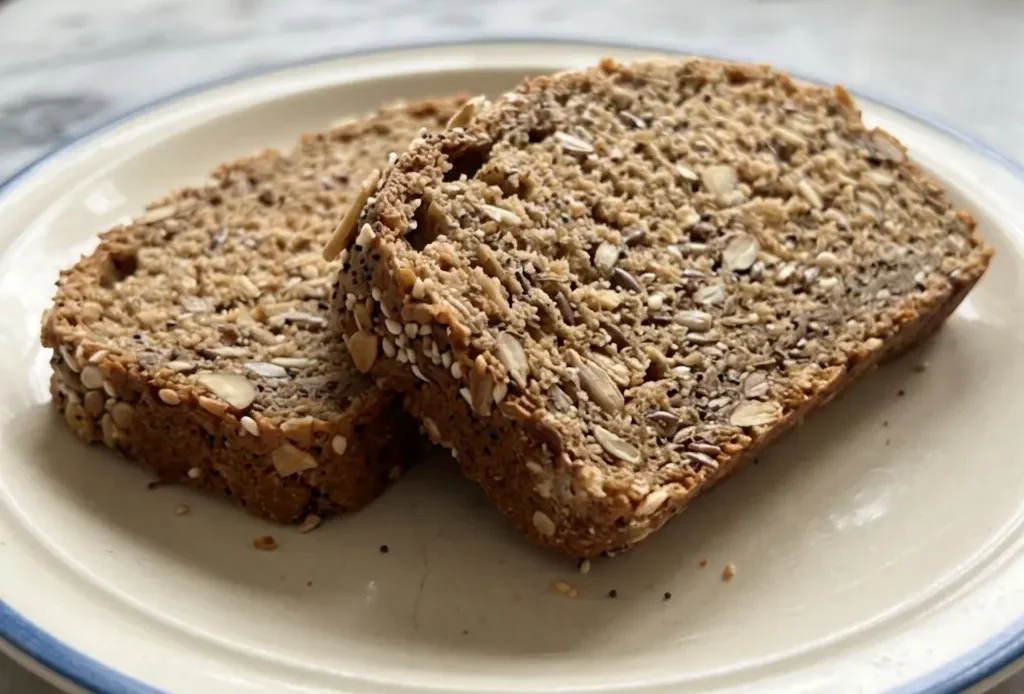
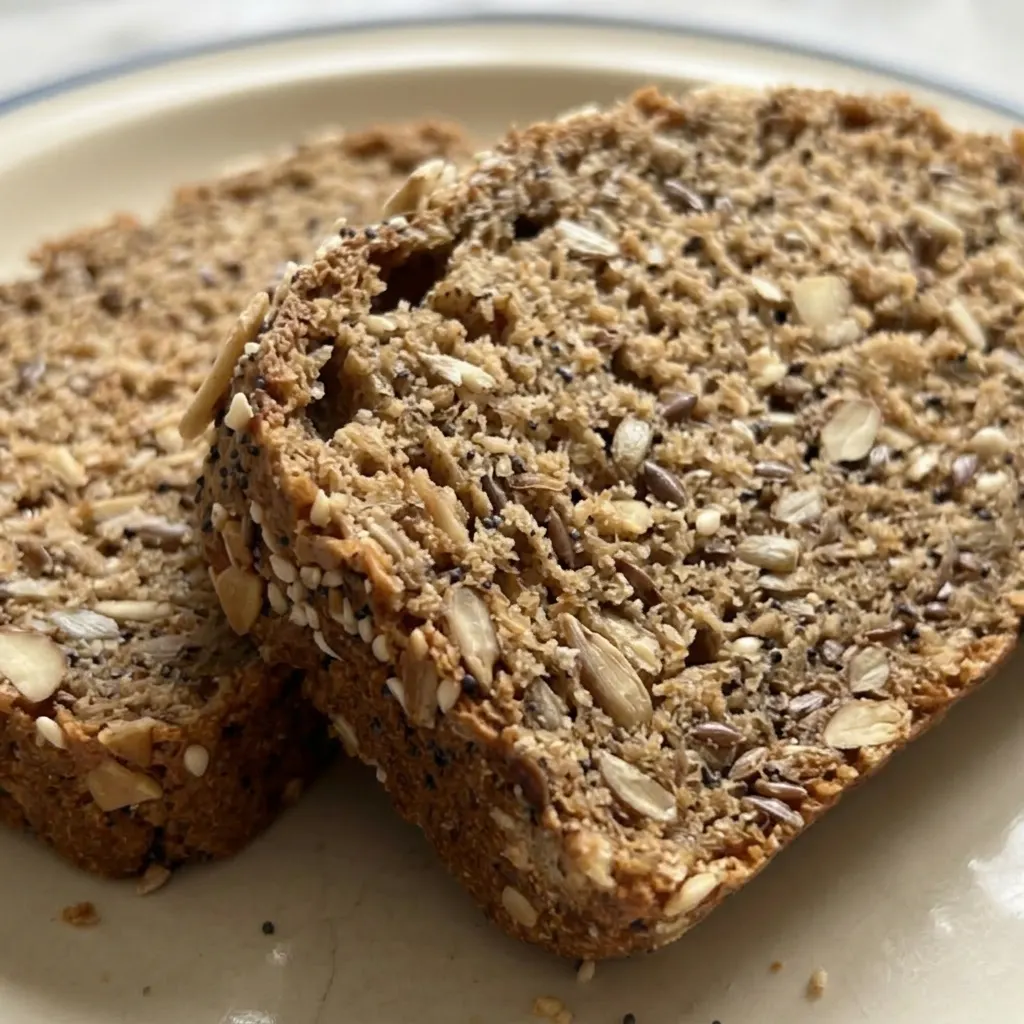
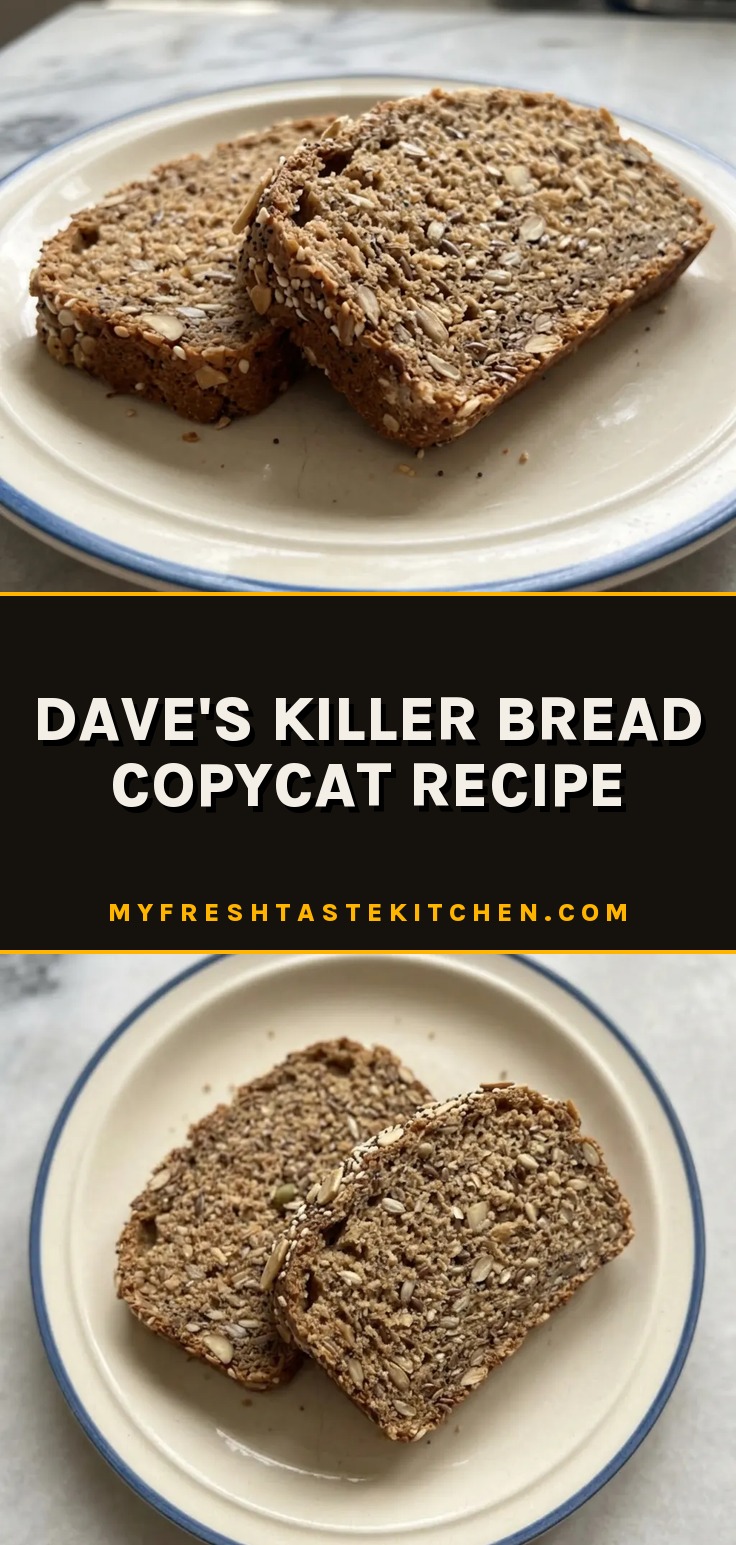
That first slice reveals a crust freckled with toasted seeds and oats, the crumb dense and tender rather than airy. This dave’s killer bread copycat recipe nails the hearty, seedy texture without the store-bought price tag.
The dough feels heavy and barely rises, which is exactly right, whole grains and seeds aren’t fighting for loft but for flavor and chew. You’ll get a loaf that slices cleanly, toasts, and holds up to a thick spread without turning to dust. The balance comes from blending whole wheat and bread flours, each doing its job so the crumb stays sturdy yet soft.
Yeast Bloom in Honey Water
Blooming the yeast in warm honey water gives you a visible check that it’s alive before it hits the heavy dough. The foam tells you the yeast is active, which matters here because whole grains and seeds slow down fermentation.
If the mixture stays flat after five minutes, your bread won’t rise, replace the yeast. This step also dissolves the honey evenly, so the yeast has immediate sugar to feed on. You’ll see a bubbly layer on top; that’s your green light.
Whole Wheat and Bread Flour Blend
Whole wheat flour brings a nutty flavor and extra fiber, but it also makes dough dense because the bran particles cut through gluten strands. Bread flour counters that with higher protein, building a strong network that traps gas and supports all those seeds. The result is a loaf that slices cleanly without crumbling.
When you knead, the dough will feel slightly tacky but holds together, that balance of flours is what keeps it from turning into a brick.
Seeded Crust Before Baking
Rolling the dough log in seeds and oats before panning creates that signature textured crust. Press them in firmly, some will fall off during handling, but enough stick to form a crunchy shell. As the bread bakes, the outer seeds toast and brown, giving each slice a contrast of soft interior and crisp coating.
You’ll smell the toasted seeds as the loaf nears done.
Dense Dough, Modest Rise
This bread doesn’t puff up like a classic sandwich loaf, and that’s by design. The whole grains and seeds weigh down the dough, so gas bubbles form slowly and stay small.
After 45 minutes, the dough may only crest above the pan rim, that’s enough. Let it go longer and the structure weakens, leading to a collapsed loaf or a sour off-taste. The final crumb is compact and hearty, not airy, which is what you want for a seeded bread that holds up to toasting.
Prep: 45 min · Cook: 45 min · Total: 1 hr 30 min · Servings: 15 · Calories: 280 kcal
Seeds and Oats: Pick the Right Mix
Flax seeds: Whole flax seeds keep their texture; ground flax would turn the dough gluey and dark.
Quinoa: Rinse quinoa in a fine sieve to remove bitter saponins before mixing into the dough.
Everything bagel seasoning: Use it in the dough or the coating, not both, or the salt overload will kill the yeast.
Olive oil: Extra virgin adds a peppery bite; use a mild olive oil if you want a neutral flavor.
Making Dave’s Killer Bread Copycat
Bloom the yeast
Stir honey into warm water until dissolved, then whisk in yeast. After 5 minutes, you should see a thick, bubbly foam on top. If the surface is flat, the yeast is dead, start over with fresh yeast.
Mix dry ingredients
Whisk whole wheat and bread flours together, then stir in salt, oats, and your chosen seeds until evenly distributed. The mixture should look uniform, with no clumps of flour or pockets of seeds.
Combine and knead
Pour the dry mix into the bloomed yeast, add olive oil, and knead with a dough hook on low for 2 to 3 minutes. The dough will come together into a ball that clears the bowl sides and feels slightly tacky but not sticky.
Coat the dough log
Turn the dough onto a lightly floured surface and shape it into a log. Roll it in the coating seeds, pressing gently so they adhere. Some seeds will fall off, but enough stick to form a crust.
First rise
Place the dough in a greased loaf pan, cover with a tea towel, and let rise in a warm spot for 45 minutes. The dough will barely crest above the pan rim, don’t expect it to double. Stop exactly at 45 minutes; overproofing weakens the structure.
Bake until golden
Bake at 375°F for 45 to 50 minutes. The top should be deep golden brown and the loaf will sound hollow when tapped. If browning too fast, tent loosely with foil after 30 minutes.
Cool completely
Let the pan rest on a wire rack for 10 minutes, then turn out the loaf and cool fully before slicing. The interior sets as it cools; slicing warm will compress the crumb.
Dave’s Killer Bread Copycat Recipe
Ingredients
- 1 1/2 cups warm water
- 2 tablespoons honey
- 1 packet rapid rise yeast (2 1/4 teaspoons)
- 1 1/2 cups whole wheat flour (180g)
- 1 1/2 cups bread flour (180g)
- 1 1/2 teaspoons salt
- 1/2 cup uncooked old-fashioned oats (45g)
- 1 cup seeds and/or nuts (choose from the following)
- 2 tablespoons sunflower seeds
- 2 tablespoons flax seeds
- 2 tablespoons sesame seeds
- 2 tablespoons poppy seeds
- 2 tablespoons chopped pistachios
- 2 tablespoons pumpkin seeds or sliced almonds
- 2 tablespoons Everything bagel seasoning
- 2 tablespoons quinoa, rinsed
- 1/4 cup olive oil
- 1/2 cup seeds and oats for coating
Instructions
Grease loaf pan:
Coat a loaf pan with baking spray (e.g., Baker’s Joy).Bloom yeast mixture:
In a large bowl or stand mixer bowl, stir together warm water and honey. Sprinkle in yeast and whisk until dissolved. Allow to sit for 5 minutes until the yeast becomes foamy.Mix dry ingredients:
In another bowl, whisk whole wheat flour with bread flour. Mix in salt, oats, and your chosen seeds/nuts (all except olive oil and coating mixture). Stir until uniform.Knead dough:
After the yeast mixture has bloomed, pour the dry ingredients into the liquid. Add olive oil. Use a dough hook on low speed to combine, then increase speed and knead for 2-3 minutes until the dough clears the bowl sides.Coat dough log:
Transfer dough to a lightly floured surface and form into a log. Spread coating seeds on a plate and roll the log in them, pressing gently so they stick (some will fall off).Let dough rise:
Put the dough into the greased loaf pan. Drape a tea towel over it and let it rise in a warm spot for about 45 minutes (this bread does not rise significantly).Preheat oven:
While the dough is rising, heat the oven to 375°F (190°C).Bake and cool bread:
Bake for 45-50 minutes until the top is golden brown. If it browns too fast, cover loosely with foil. Take the pan out and set it on a wire rack for 10 minutes, then remove the loaf from the pan and let it cool fully on the rack.Store bread properly:
Once cool, cut slices using a bread knife. Keep in an airtight container at room temperature for 2-3 days, refrigerate for up to 5 days, or freeze for up to 2 months.
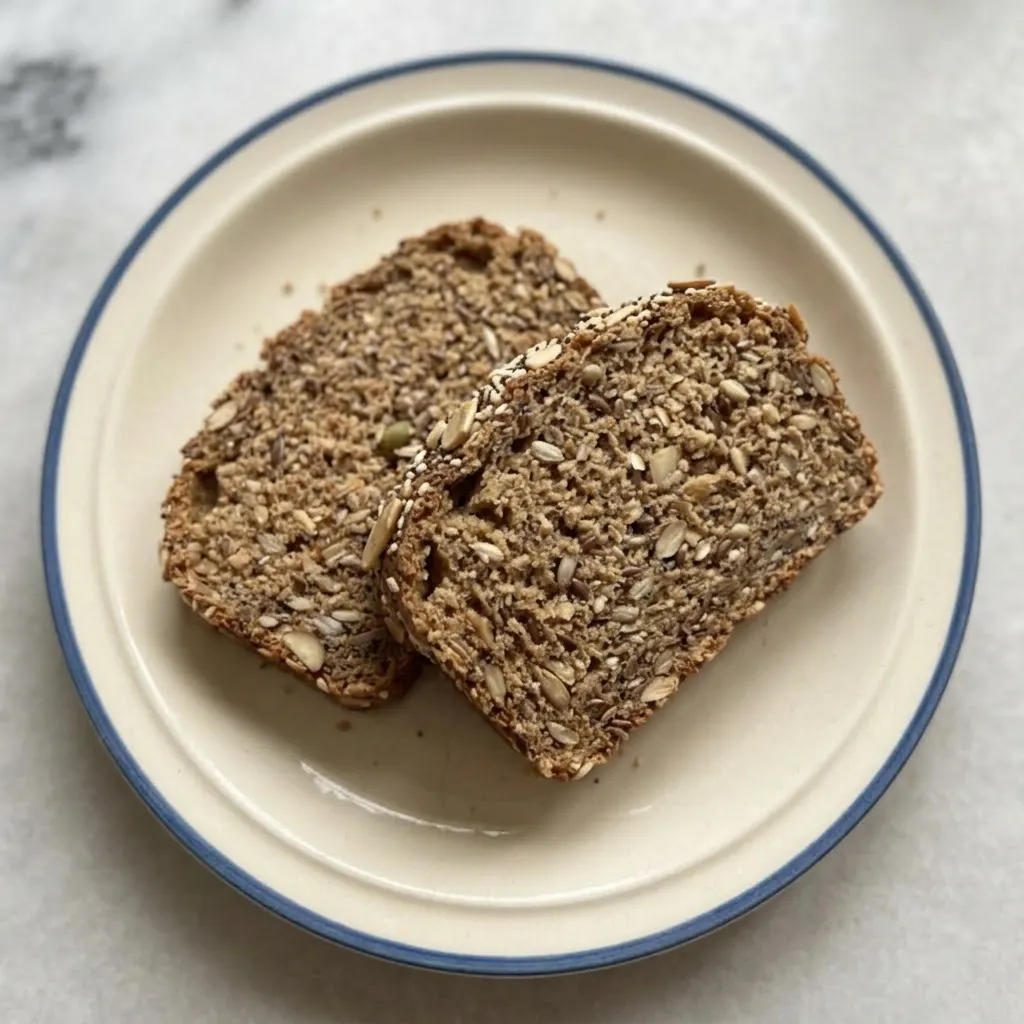
Swapping Seeds Without Breaking the Dough
1 cup seeds and/or nuts mix: Any combination of seeds, nuts, or grains totaling 1 cup. Avoid anything with added salt (like salted peanuts) or large pieces that don’t distribute evenly (like whole almonds).
Chopped pistachios work; whole almonds don’t. The mix adds texture and flavor, but swapping the total volume changes the dough’s hydration and structure. Keep it at 1 cup and the bread bakes up with the same crumb.
Too many large nuts create air pockets; too many small seeds make it dry.
Whole wheat flour: White whole wheat flour or all-purpose flour can replace whole wheat by weight (180g). Do not swap with oat flour or almond flour, they lack gluten and the loaf won’t hold together. White whole wheat gives a milder flavor; all-purpose makes a lighter, less earthy bread.
The crumb will be slightly less dense but still sliceable. Oat or almond flour would turn the dough into a wet paste that collapses.
Rapid rise yeast: Active dry yeast can be used, but bloom it in the honey water for 10 minutes instead of 5 until foamy. Do not swap with baking soda or omit the yeast, this is a yeast-risen bread, not a quick bread. Active dry yeast granules are larger; they need more time to hydrate.
The dough will rise the same if you extend the bloom. Without yeast, the bread bakes as a dense, uncooked-feeling brick.
Honey: Maple syrup or agave nectar can replace honey 1:1 by volume (2 tablespoons). Do not use stevia or sugar substitutes, yeast needs real sugar to feed on.
Maple syrup adds a subtle woody sweetness; agave is sweeter but neutral. Both ferment the same as honey, so the rise is unchanged. Artificial sweeteners starve the yeast, leading to a flat, dense loaf.
Tips
- Use rapid rise yeast directly mixed with the dry ingredients without blooming in honey water first; this cuts 5 minutes of inactive time and still produces a good rise because the honey hydrates the yeast during kneading.
Storage and Serving
Cool the loaf completely before storing; trapped steam softens the crust. Keep slices in an airtight container at room temperature for 2 to 3 days. The crumb stays firm but gradually dries out.
For longer storage, refrigerate up to 5 days (the seeds and whole grains keep better chilled). Toast refrigerated slices to restore the crust’s crunch.
Freeze the whole loaf or individual slices in a zip-top bag for up to 2 months. Thaw at room temperature or toast directly from frozen. This bread is best eaten within the first 2 days; after that, toasting brings back the best texture.
I once let it rise an extra 20 minutes thinking it needed more, came out flat and sour. Now I babysit the clock.
Frequently Asked Questions
Can I make this bread ahead of time and freeze it?
Yes. Cool the loaf completely, then freeze whole or sliced in a zip-top bag for up to 2 months. Toast frozen slices directly to restore the crust’s crunch.
Why is my bread not rising as much as regular sandwich bread?
This dough is dense by design, whole grains and seeds weigh it down, so the rise is modest. After 45 minutes, it should barely crest the pan rim. If it hasn’t moved at all, the yeast might be dead; check that your honey water was foamy before mixing.
How do I know when the bread is fully baked?
The top should be deep golden brown, and the loaf will sound hollow when tapped on the bottom. If it browns too fast, tent with foil after 30 minutes, the interior needs the full 45 to 50 minutes to set.
What’s the difference between this copycat and the original Dave’s Killer Bread?
The copycat uses a whole wheat and bread flour blend instead of sprouted grains, so the crumb is slightly more uniform. You control the seed mix and salt level, and the crust gets a seeded coating that toasts up crunchier than the original’s softer crust.