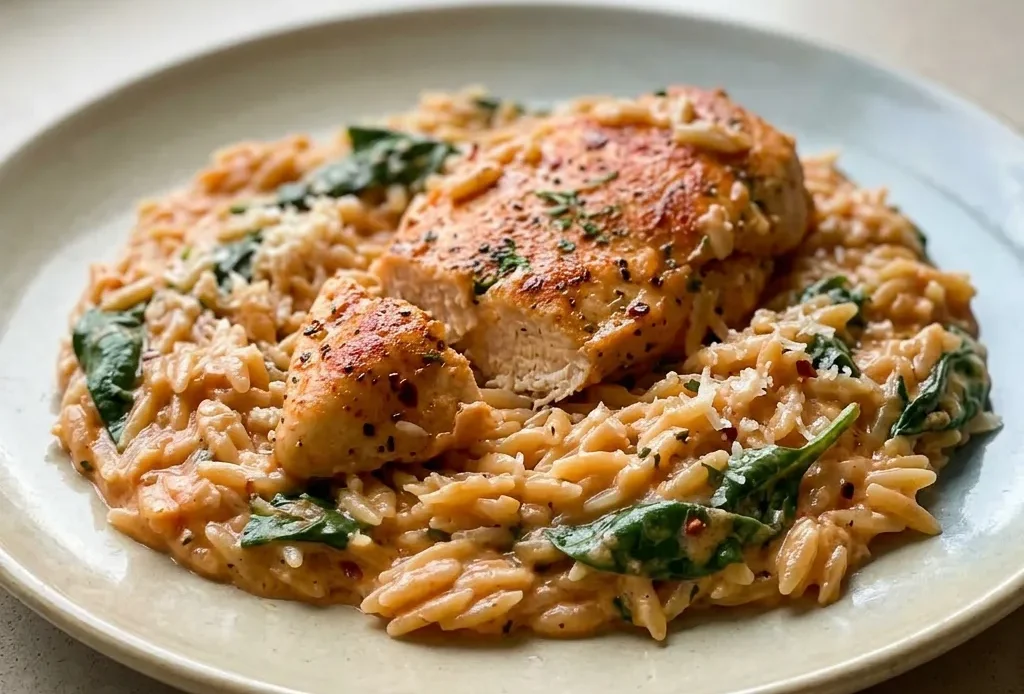
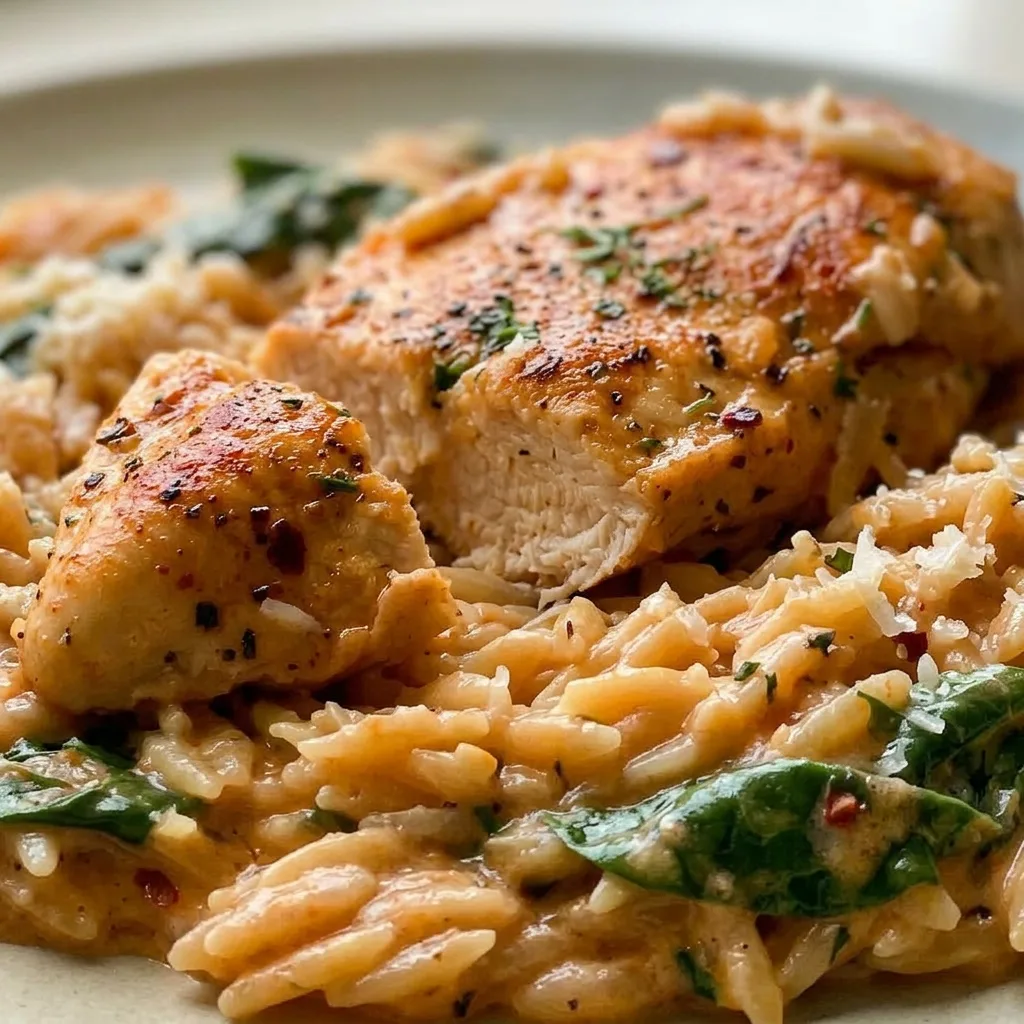
The trick to this creamy lemon orzo with chicken isn’t the cream, it’s getting a hard sear on the chicken first. Without that golden crust and the browned bits it leaves behind, the sauce stays thin and one-note, no matter how much cheese you stir in. The fond is where the savory depth lives, and it takes maybe two extra minutes to build.
I still pull the chicken out and drop the heat to low before stirring in the cream, even though it feels fussy, it keeps the sauce silky instead of grainy.
Sear the chicken first for a deep savory base
That golden crust on the chicken isn’t just for looks. It leaves a fond, those browned bits stuck to the pan, that carries concentrated meaty flavor. When you deglaze with wine, that fond dissolves into the liquid and gets absorbed by the orzo as it simmers.
The sauce ends up tasting richer and more complex than if you had just poached the chicken. By searing the chicken separately, you also ensure a crisp exterior without steaming it in the broth. The same skillet does double duty: first for browning, then for building the sauce.
That one pan holds everything together.
Let the orzo simmer like risotto, no constant stirring needed
Orzo releases starch as it cooks directly in the broth, thickening the liquid around it. This creates a creamy, clinging sauce similar to risotto but without the arm workout, just stir occasionally. The pasta absorbs most of the broth, leaving behind a silky base.
Heavy cream and parmesan are stirred in at the end, when the heat is low, so the dairy doesn’t curdle. The result is a one-pot dish where every grain is coated in a rich, smooth sauce.
You taste the starch, the cream, and the cheese in each bite, all unified.
Tomato paste and lemon balance the cream’s richness
A dish this creamy can feel heavy if nothing cuts through it. Tomato paste adds a concentrated savory note and acidity that lifts the sauce.
The lemon juice (from the lemon in the name) brightens everything, making the cream taste rich rather than cloying. Together they keep the flavors in check: the tomato deepens, the lemon sharpens.
Without them, the sauce would taste flat and one-note. With them, each spoonful is round and lively.
The balance is what makes you want another bite.
Prep: 10 min · Cook: 20 min · Total: 30 min · Servings: 6 · Calories: 490 kcal
What to know about the ingredients before you start
Thin chicken breasts: Pound or slice to 1/2-inch even thickness so they cook through before the orzo is done.
White wine: Use a dry wine you’d drink; broth works too, but skip sweet or cooking wine.
Orzo: Uncooked, regular orzo; it releases starch as it simmers, thickening the sauce naturally.
Heavy cream: Full fat only; lower fat creams can curdle when stirred into the hot acidic sauce.
Tomato paste: Comes in a tube or can; use the full 3 T (half a small can) for balanced acidity.
Sear the chicken, then simmer orzo in the same pan
Pound and season the chicken
Pound or slice the chicken to a half-inch even thickness. Dry the pieces well. Season both sides with the salt, pepper, garlic powder, and paprika, enough to see a light coating, but not caked on.
Sear the chicken hot and fast
Heat your skillet on medium-high until a drop of water sizzles instantly. Add 1 T oil and lay in the chicken. You should hear a steady sizzle, if it fades, the pan isn’t hot enough.
Cook 1 to 2 minutes per side until deep golden brown. Transfer to a plate.
Sauté garlic and deglaze
Drop the heat to medium. Add a drizzle of oil and the garlic.
Stir for 1 minute until fragrant, not brown. Pour in the wine and scrape the pan bottom, the browned bits should dissolve into the liquid, turning it a rich brown. This is the fond that gives the sauce depth.
Add broth and orzo, return chicken
Stir in broth, Italian seasoning, and orzo. Bring to a gentle boil, bubbles should break the surface but not spatter. Tuck the chicken back in.
Cover and adjust heat to a quiet simmer. Cook 10 to 15 minutes, stirring once or twice to prevent sticking.
Check doneness and sauce consistency
After 10 minutes, check the chicken’s internal temp, it should hit 165°F. The orzo should be al dente and most of the liquid absorbed, leaving a thick, starchy sauce that coats the spoon. If it’s still soupy, simmer uncovered a minute or two.
Stir in cream, tomato paste, and parmesan
Turn the heat to low. Briefly remove the chicken.
Whisk in heavy cream, tomato paste, and parmesan until smooth and evenly rose-colored. The sauce will tighten as the cheese melts. If it seems too thick, splash in a tablespoon of broth.
Wilt the spinach and finish
Add the spinach in handfuls, stirring until just wilted, about 30 seconds. Return the chicken to the pan, spoon sauce over it, then take the skillet off the heat. The residual warmth will finish the dish without overcooking the chicken.
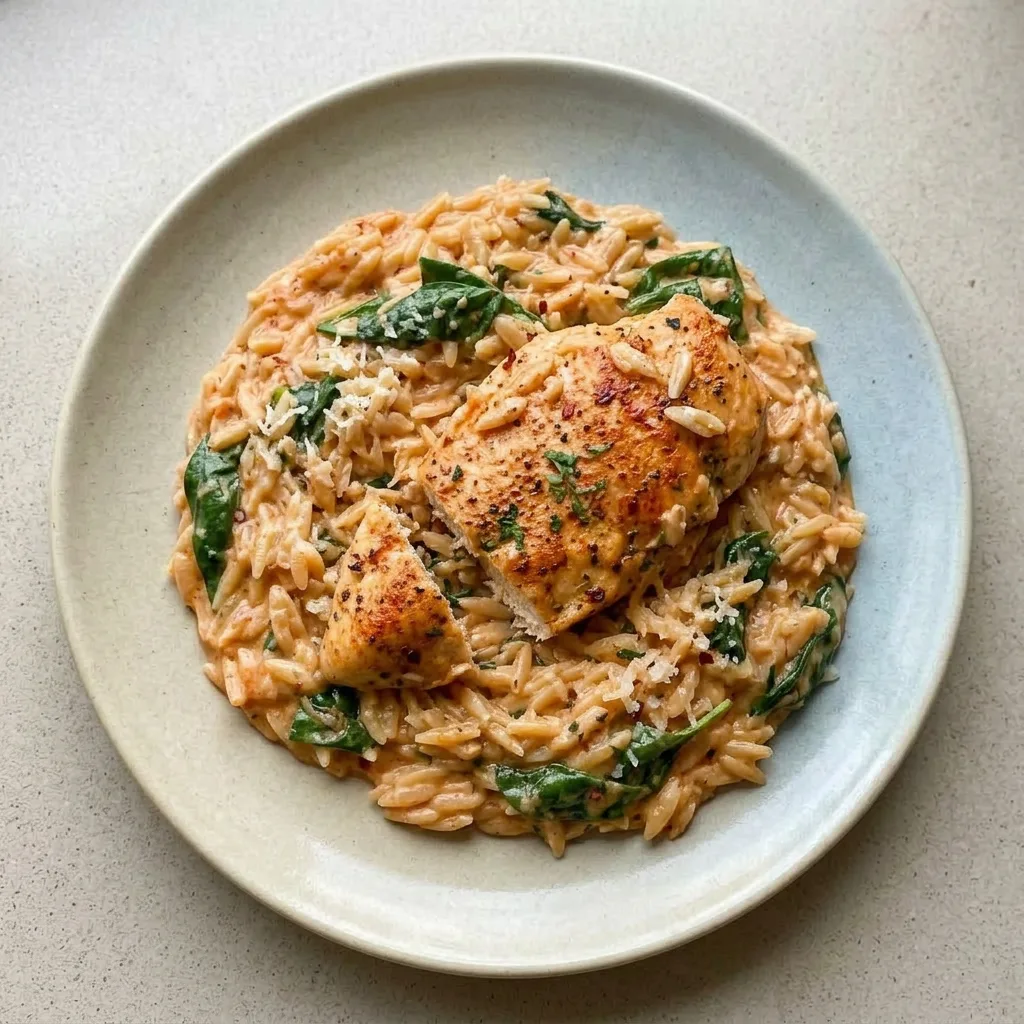
Creamy Lemon Orzo with Chicken
Ingredients
- 1½ lb thin chicken breasts
- ½ tsp sea salt, cracked pepper, garlic powder and paprika (more or less to preference)
- 1½ T olive oil
- 3-4 garlic cloves (minced)
- ⅓ c white wine (use broth in place of wine if desired)
- 3 c low sodium chicken broth
- 2 tsp Italian seasoning
- ¼ tsp crushed red pepper (optional)
- 1½ c orzo (uncooked)
- 1 c heavy cream
- ⅔ c parmesan cheese (grated)
- 3 T tomato paste
- 2 handfuls baby spinach
Instructions
Season and Pound Chicken:
Pound chicken to ½-inch thickness or slice in half lengthwise. Dry thoroughly. Coat evenly with sea salt, pepper, garlic powder, and paprika (adjust to taste).Sear Chicken Until Golden:
Set a large deep skillet over medium-high heat until very hot. Add 1 T olive oil; once it shimmers, lay chicken in a single layer. Cook 1-2 minutes per side until golden and crisp. Transfer to a plate.Sauté Garlic in Oil:
Lower heat to medium. Add a drizzle of olive oil and the minced garlic; cook for 1 minute, stirring, until aromatic.Deglaze and Add Orzo:
Pour in white wine and scrape the pan to release browned bits. Add chicken broth, Italian seasoning, and orzo; stir. Bring to a gentle boil.Simmer Chicken with Orzo:
Place chicken back in the skillet, cover, and simmer 10-15 minutes until chicken hits 165°F (75°C) and orzo is al dente with most liquid gone. Stir occasionally; turn down heat if boiling too hard.Stir in Cream and Spinach:
Reduce heat to low. Mix in heavy cream, tomato paste, and parmesan (remove chicken briefly if needed). Stir until smooth. Add spinach and stir until wilted.Serve Immediately:
Take off heat and serve.
When swapping cream or cheese, watch how the sauce thickens
White wine: Additional chicken broth. Use the same amount of broth.
The sauce will be slightly less bright and complex, but still savory from the fond. No need to adjust anything else.
Heavy cream: Half-and-half. The sauce will be thinner and less rich, and it may curdle if you boil it after adding.
Stir in off heat. Start with 3/4 cup, then add more if needed.
Baby spinach: Chopped kale (stems removed). Kale needs longer to soften.
Add it with the broth and orzo, not at the end. It will stay chewier than spinach, which some prefer for heartiness.
Parmesan cheese: Pecorino Romano or nutritional yeast (for dairy-free). Pecorino is saltier and sharper; reduce added salt. Nutritional yeast gives a cheesy flavor but won’t thicken the sauce; the result will be looser and less creamy.
Storage and Serving
This dish is best served right after cooking, when the orzo is tender and the sauce is creamy. If you have leftovers, store them in an airtight container in the fridge for up to 3 days. The orzo will absorb liquid over time, making the dish thicker.
When reheating, add a splash of chicken broth or water to restore the creamy consistency. Reheat gently on the stovetop or in the microwave, stirring occasionally. The chicken may dry out slightly, so keep reheating brief.
Freezing is not recommended because the cream sauce can separate and the orzo turns soft and pasty when thawed. The spinach also loses its texture. For make ahead, you can sear the chicken and prep the orzo mixture up to the point of adding cream, then refrigerate separately.
Finish with cream, cheese, and spinach just before serving.
Tips
- Toast the orzo in the skillet for 1 to 2 minutes after removing the chicken, stirring constantly, until it smells nutty and turns a shade darker. This deepens the pasta’s flavor and helps each grain stay separate in the creamy sauce.
- If using half-and-half instead of heavy cream, stir it in off the heat after removing the skillet from the burner. The residual heat will warm it through without curdling, and the sauce will still be creamy enough.

Frequently Asked Questions
Can I make this dish ahead of time?
Not fully, the orzo absorbs liquid as it sits, turning the sauce thick and the pasta soft. You can sear the chicken and simmer the orzo in broth up to the point before adding cream, then refrigerate. Finish with cream, cheese, and spinach just before serving.
Why did my orzo turn out mushy?
Most likely you simmered it too long or at too high a boil. Check the orzo at 10 minutes, it should be al dente with most liquid absorbed. If the heat was too high, the liquid evaporated before the orzo finished cooking, forcing you to cook longer and overshoot.
How do I prevent the cream sauce from curdling?
Reduce the heat to low before stirring in the cream. High heat or a vigorous boil will cause the dairy to separate. Also use full-fat heavy cream, lower fat creams are more prone to curdle from the acid in the tomato paste and lemon.
Can I use chicken thighs instead of breasts?
Yes, but they need longer to cook through, about 5 to 8 minutes more. Thighs stay juicier than breasts, so the trade-off is richer meat but a slightly longer simmer. Check internal temp at 165°F just like breasts.
Is this dish similar to a lemon chicken orzo soup?
No, this is a creamy one-pot skillet dish, not a soup. The orzo absorbs nearly all the broth as it simmers, leaving a thick sauce that coats the pasta. The texture is closer to risotto than soup, with a concentrated lemony creaminess.