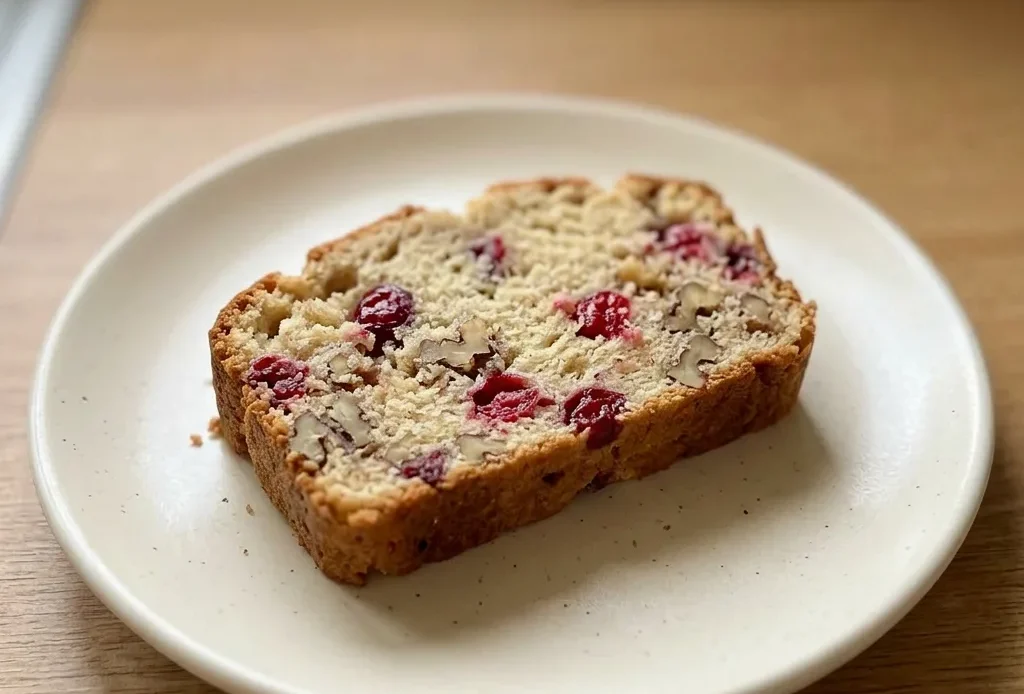
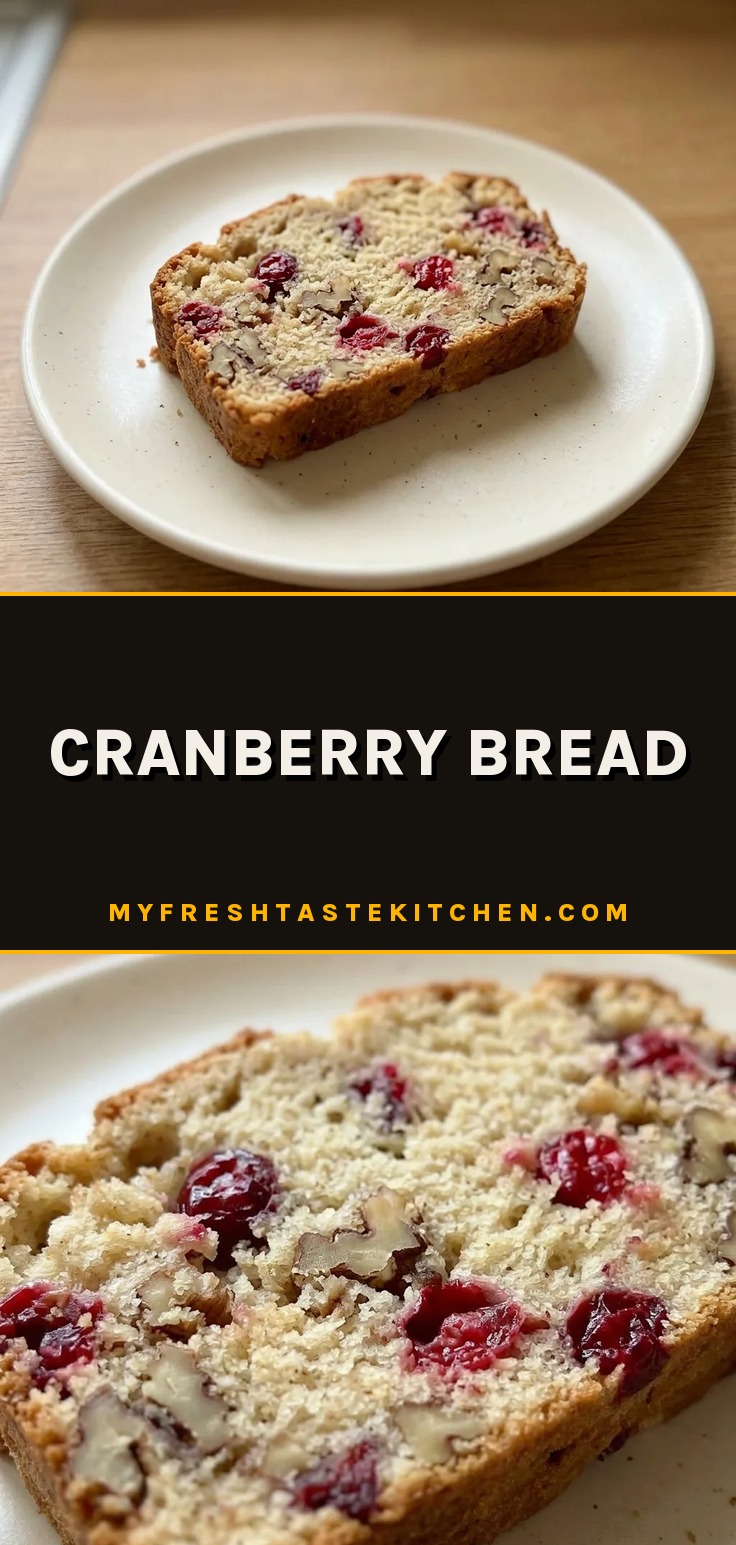
This isn’t a dense, dry quick bread that needs a swimming pool of butter to be edible. It’s a tender, cake-like loaf where tart cranberries pop against a sweet, soft crumb, each slice balanced enough to eat plain. The trick is treating the berries gently and mixing lightly so the crumb stays open and moist, not tough.
That’s the kind of cranberry bread worth baking again.
Fresh cranberries matter here
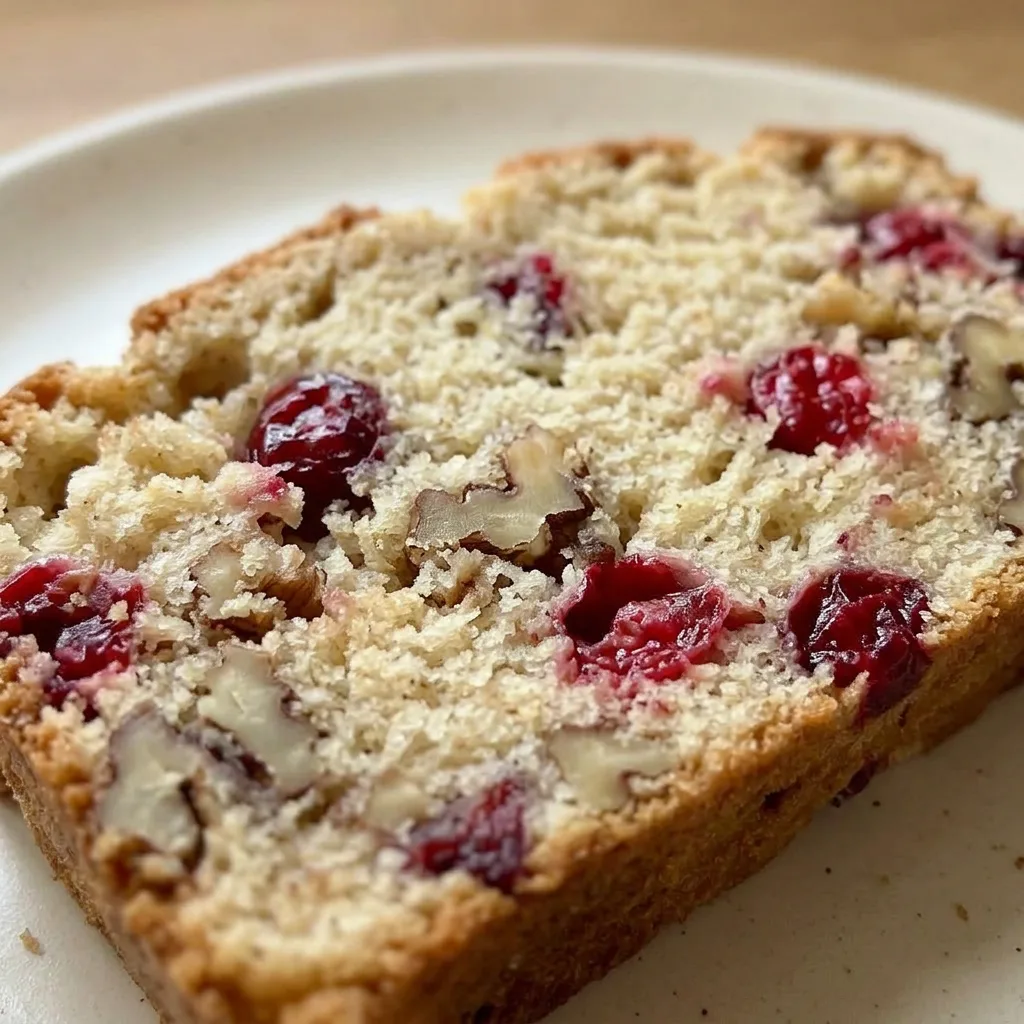
Fresh cranberries are key for this bread’s texture and tartness. Their firm structure holds up during baking, so you get distinct bursts of tart fruit against the sweet crumb, not a uniform mush.
Dried cranberries would rehydrate and turn gummy, while frozen ones bleed too much moisture and stain the batter. To keep them suspended evenly, toss them in a tablespoon of flour before folding in, they won’t sink to the bottom.
The result is a loaf with bright pockets of tartness that balance the sugar.
Mixing wet and dry separately builds tenderness
This quick bread gets its tender crumb from how you combine the ingredients. Mixing the wet and dry separately first ensures the baking powder and salt are evenly distributed before any liquid hits them, so leavening works uniformly.
Then you stir just until the flour disappears, no more. Overmixing develops gluten, which would make the loaf dense and tough.
With a light hand, the crumb stays soft and cake-like, exactly what a fruit bread should be.
Baking powder gives it a single quick rise
Unlike yeast breads that need hours to proof, this cranberry loaf relies on baking powder for its lift. The acid and base in the powder react as soon as they get wet, producing carbon dioxide bubbles that expand in the oven’s heat. That’s why you must bake the batter promptly after mixing, if it sits, the bubbles escape and the bread won’t rise properly.
No waiting, just mix, pour, and bake. The result is a light, open crumb in about an hour.
Prep: 15 min · Cook: 1 hr · Total: 1 hr 15 min · Servings: 10 · Calories: 200 kcal
Fresh cranberries, not dried or frozen
fresh cranberries: Use 1½ cups whole fresh berries; dried will rehydrate gummy and frozen bleed moisture.
orange zest: Optional, but brightens the tart cranberries without extra liquid.
vegetable oil or melted butter: Oil keeps it moist; butter adds flavor. Either works, measure ⅓ cup.
chopped nuts: Walnuts or pecans add crunch; fold in ½ cup if using.
all-purpose flour: Standard 2 cups; no need for bread or cake flour here.
Fold cranberries in gently to keep them whole
Prep the pan
Grease the loaf pan well; if the bread sticks, it’ll tear when you try to remove it. Don’t skip this.
Mix dry ingredients
Whisk flour, sugar, baking powder, and salt together. Even distribution of the baking powder is what you’re after; no clumps.
Mix wet ingredients
Beat the egg first, then whisk in milk, oil, and vanilla until smooth. The mixture should look homogenous, not separated.
Combine wet and dry
Pour the wet into the dry and stir just until no streaks of flour remain. Stop as soon as it comes together; overmixing will make it tough.
Add cranberries
Fold in the cranberries (and nuts or zest if using) with a spatula. If they sink to the bottom, you stirred too much; next time toss them in flour first.
Fill the pan
Scrape the batter into the prepared pan and spread it even. The batter is thick, so level it gently; don’t press it down.
Bake until done
Bake at 350°F for 50 to 60 minutes. The loaf is done when a toothpick inserted in the center comes out clean; if it’s wet, give it a few more minutes.
Cool completely
Let the bread cool in the pan on a wire rack. If you try to slice it warm, it’ll crumble; wait until the pan feels cool to the touch.
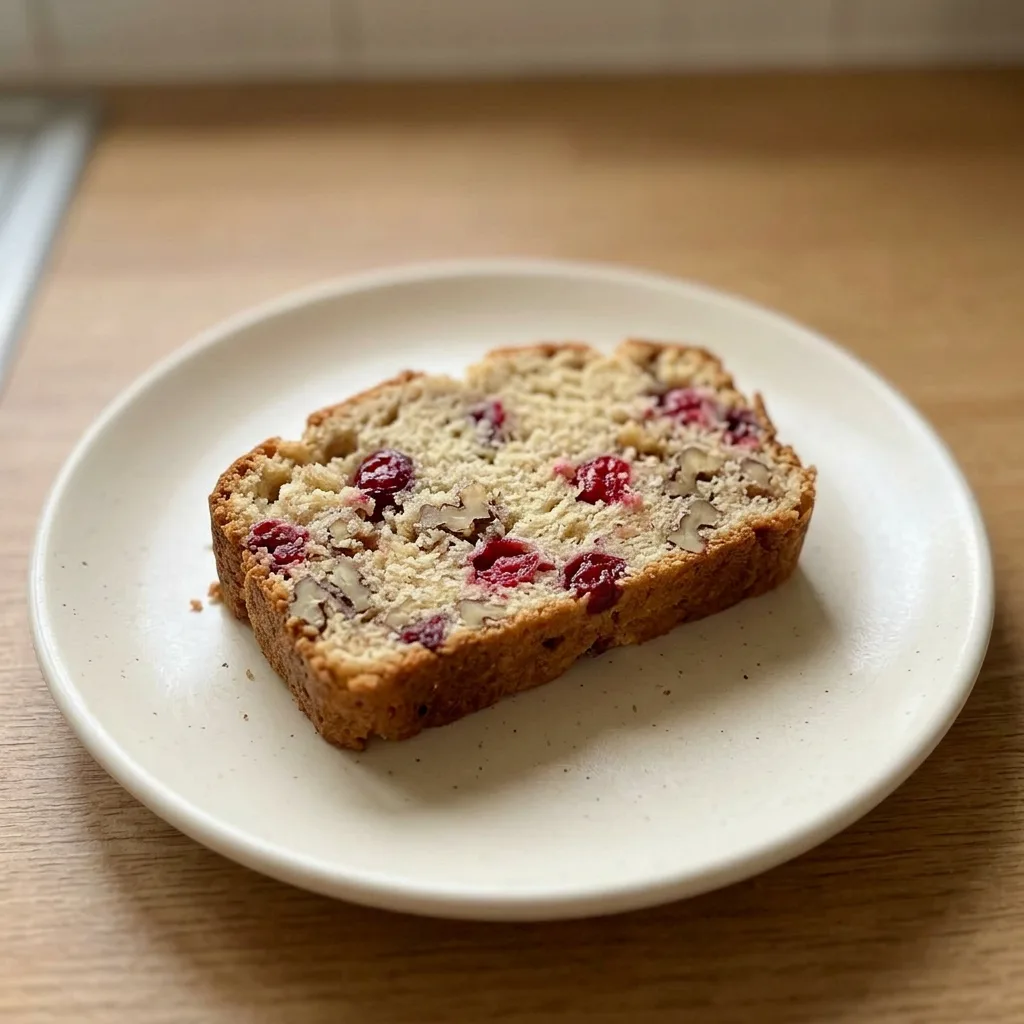
Cranberry Bread
Ingredients
Method
Preheat Oven and Grease Pan:
Heat oven to 350°F (175°C). Coat a 9×5-inch loaf pan with grease.Mix Dry Ingredients:
In a bowl, stir together flour, sugar, baking powder, and salt.Whisk Wet Ingredients:
In a separate bowl, beat egg, then whisk in milk, oil, and vanilla.Combine Wet and Dry:
Add wet mixture to dry mixture and stir just until combined; do not overmix.Fold in Cranberries and Nuts:
Gently incorporate cranberries, plus nuts and orange zest if desired.Pour Batter into Pan:
Transfer batter to the prepared pan and level the surface.Bake Until Toothpick Clean:
Bake for 50–60 minutes, or until a toothpick inserted in the center emerges clean.Cool Bread in Pan:
Let the bread cool fully in the pan set on a wire rack before cutting.Serve with Butter or Glaze:
Present warm with butter, honey, or a thin glaze.
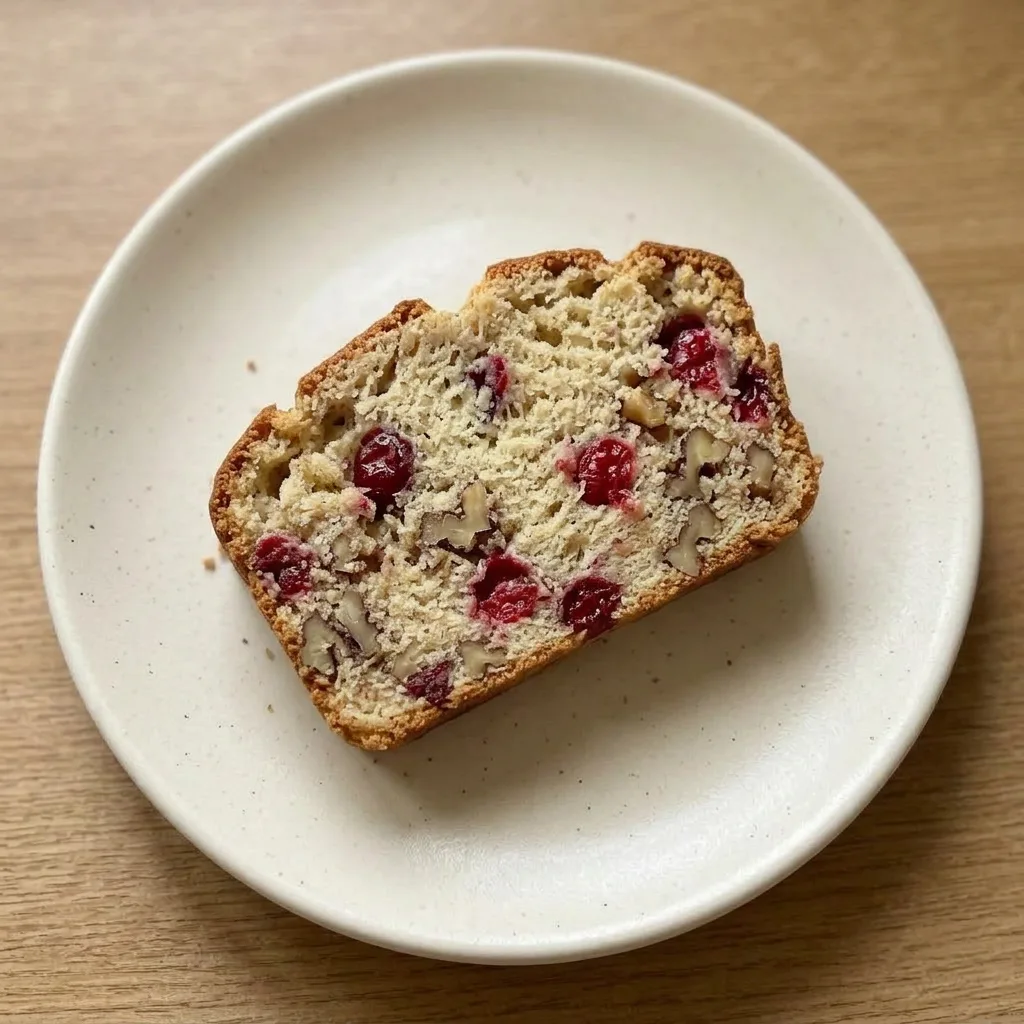
Storage and Serving
Store cooled cranberry bread tightly wrapped in plastic wrap at room temperature for up to 3 days. After that, the crumb starts to dry out. For longer storage, wrap the cooled loaf in plastic then foil and freeze for up to 3 months.
Thaw overnight in the fridge or at room temperature for a few hours. To revive the texture, warm slices in a 300°F oven for 5 to 7 minutes, or microwave briefly.
Serve within 15 minutes of warming for the best moist crumb. If you added a glaze, apply it only after the bread has cooled completely; glazed bread should be eaten within a day, as the glaze softens the top crust.
Leftover slices can be toasted for a firmer texture. Always let the bread cool fully before wrapping to avoid condensation and sogginess.
Tips
- Use a serrated knife to slice the cooled bread; the cranberries can make the crumb delicate and a serrated blade cuts cleanly without crushing the fruit.
- If your oven runs hot, tent the loaf with foil after 40 minutes to prevent the top from overbrowning before the center is done.
Three swaps that work in this bread, one that doesn’t
fresh cranberries: Frozen cranberries (no thawing) or dried cranberries (reduce sugar to ¾ cup). Frozen berries bleed purple streaks into the batter and soften more than fresh, so you lose distinct tart bursts. Dried cranberries rehydrate gummy and taste sweeter; cutting the sugar helps, but the texture stays chewier, not juicy.
vegetable oil or melted butter: Any neutral oil (canola, grapeseed) or melted coconut oil for a subtle coconut note. Applesauce (½ cup) works, but the crumb turns denser and less tender.
Oil keeps moisture; butter adds flavor. Substituting applesauce reduces fat, so the bread is heavier, still edible, but not as soft.
Measure the same ⅓ cup for oil swaps.
all-purpose flour: Gluten-free 1-to-1 baking blend (same amount) for a gluten-free version. Do not use almond or coconut flour alone, they change the structure entirely.
Gluten-free blends mimic AP flour well; the crumb will be slightly more tender and maybe a touch grittier. Let the batter rest 10 minutes before baking so the starches hydrate.
The loaf may brown faster, so check at 50 minutes.
Frequently Asked Questions
Can I use frozen cranberries instead of fresh?
You can, but expect purple streaks in the crumb and softer berries that won’t pop as distinctly. The article explains why fresh hold up better. If you do swap, don’t thaw them first, add them frozen and expect a slightly longer bake time (check at 60 minutes).
Why did my cranberry bread sink in the middle?
Most likely the batter sat too long after mixing, letting the baking powder’s bubbles escape before the oven set the structure. Next time, get it in the oven right after stirring. Another possibility: you opened the oven door too early, wait until at least 50 minutes to check.
Can I make this bread ahead of time?
Yes, make it a day ahead, it actually tastes better the next day as the tartness mellows. Store it tightly wrapped at room temperature for up to three days, as the Storage section details. For longer, freeze the cooled loaf for up to three months; thaw and warm slices before serving.
How is cranberry bread different from cranberry muffins?
Same basic batter, but the loaf bakes longer (50 to 60 minutes vs. 18 to 22 minutes for muffins), so the crust gets thicker and the crumb more even. Muffins have more surface area relative to volume, so they brown faster and develop a crisper top.
The bread’s shape also means fewer crunchy edges per bite.
