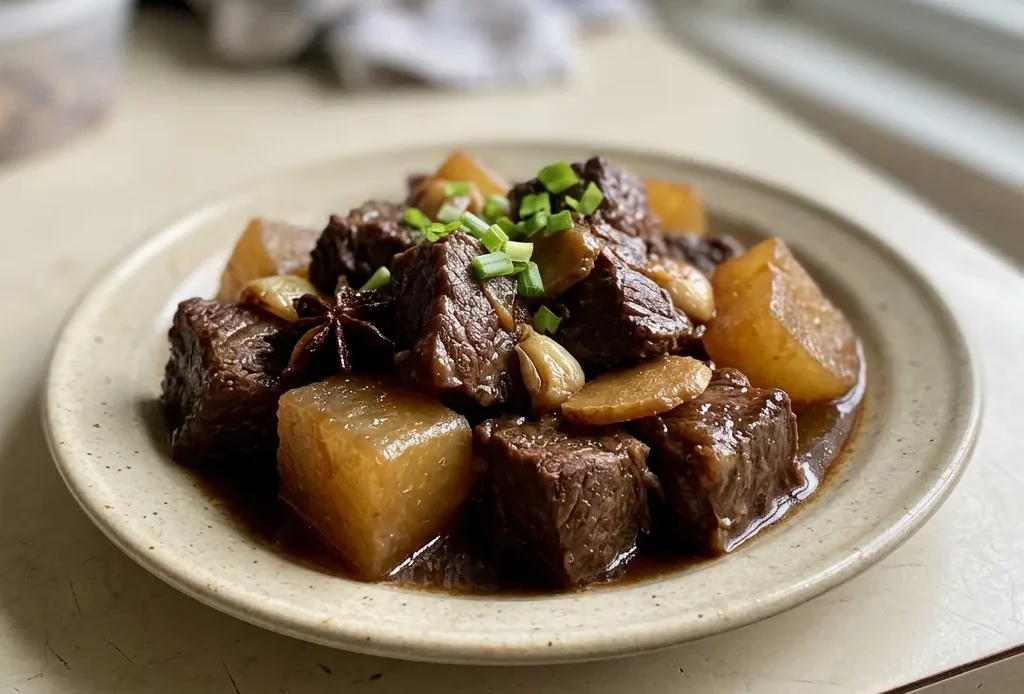
The sauce clings, glossy and dark, each spoonful a deep savory hit that builds with a subtle sweetness and a faint, funky edge. That complexity comes not from a long ingredient list but from one surprising jar: red fermented bean curd.
It’s the kind of stew that tastes like you simmered it all day, but the real work is just a single hour on the stove after a proper sear. This chinese beef stew is forgiving, beef chuck stays tender even if you let it go a few extra minutes, but one misstep, like skipping the daikon’s extra peel, can introduce a bitterness that throws the whole bowl off. The rest is patience and a hot pan.
Why does browning the beef matter so much?
Searing beef chuck before braising might seem like an extra step, but it’s the foundation of flavor in this stew. When meat hits a hot pan, the Maillard reaction creates hundreds of savory compounds that deepen the overall taste. A dry surface is crucial, pat the beef dry and salt it lightly.
Salt draws moisture to the surface, which then evaporates, letting browning happen instead of steaming. If you crowd the pan, the temperature drops and the beef releases liquid; it will stew rather than brown. Work in batches.
The crust you build on each cube translates into a richer, more complex broth. Without it, the stew tastes flat, no matter how long you simmer.
What do red fermented bean curd and hoisin add to the sauce?
Red fermented bean curd and hoisin sauce are the backbone of this stew’s savory-sweet balance. The bean curd is intense, salty, funky, and deeply umami. It brings a layered savor that soy alone can’t match.
Hoisin contributes sweetness and body, thickening the braising liquid just enough to cling to the beef. Together, they create a sauce that’s both bold and rounded, balancing the saltiness of oyster and soy sauces.
You can taste the complexity: not just salty or sweet, but a rich, cohesive backdrop. The bean curd cubes need to be crushed well before adding, they soften but won’t dissolve fully if left whole, leaving salty pockets in the stew.
Why add daikon later, and how do you prep it right?
Daikon cooks faster than beef, so adding it at the start would turn it to mush. The recipe calls for adding it after 60 minutes of braising the beef alone.
At that point, the meat is tenderizing but still has structure; daikon only needs 30 minutes to become tender and absorb the sauce. To avoid bitterness, peel it aggressively.
The outer layer near the skin holds bitter compounds. Slice off the peel a few times until you hit a beige layer underneath. Then cut the daikon into 1½-inch chunks for even cooking.
If you skip the extra peeling, the stew can develop an unpleasant edge. The cooked daikon should be translucent and easily pierced but not falling apart.
How deglazing builds the braising liquid
After searing the beef, a brown crust, called fond, sticks to the pot. That fond is pure flavor.
To capture it, pour in half the braising liquid first. Use a wooden spoon to scrape the bottom until the fond lifts and dissolves. Then add the remaining liquid.
This two-step trick prevents splashing and ensures every bit of browned goodness ends up in the stew. The base itself is simple: water or no-sodium broth keeps you in control of saltiness. Oyster sauce, soy sauce, and the bean curd mix bring their own salt, so you don’t need salted broth.
The result is a rich, glossy sauce that coats the beef and daikon without being muddy or overseasoned.
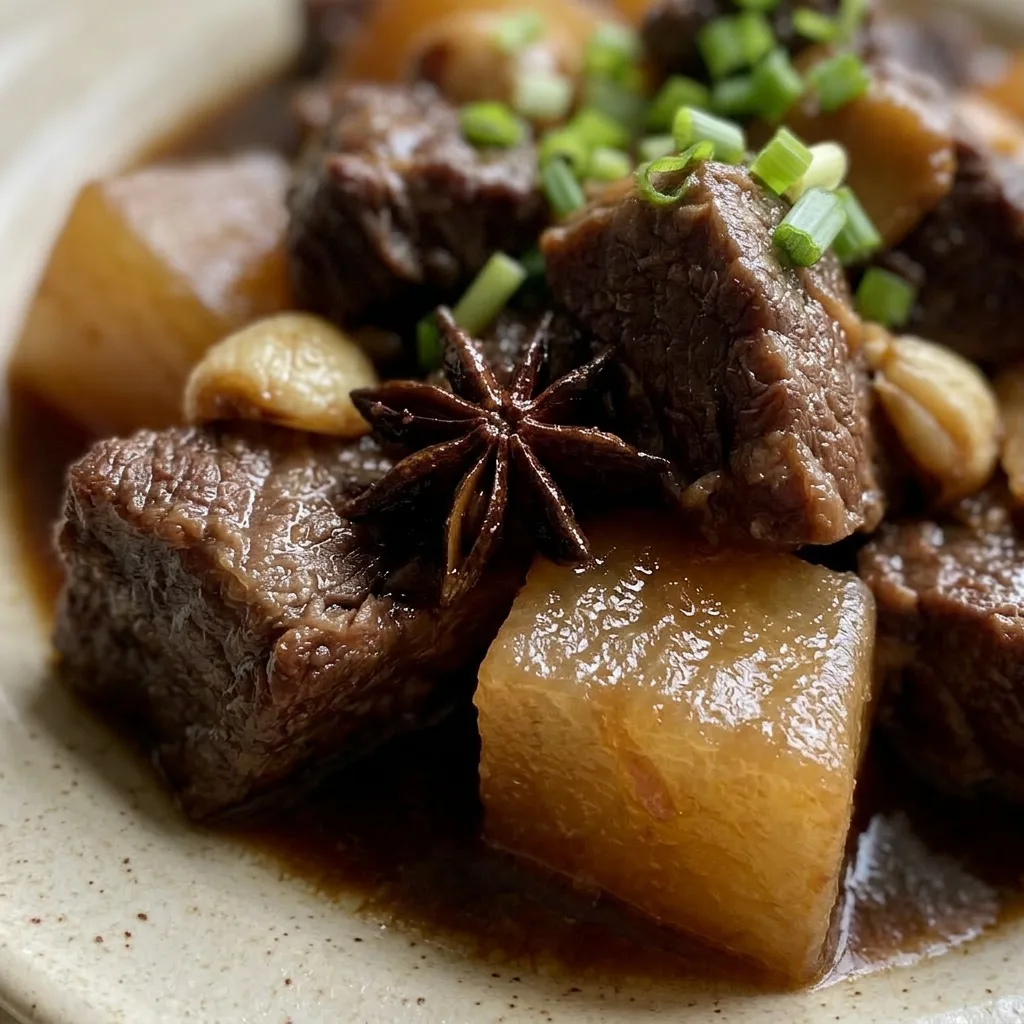
Prep: 30 min · Cook: 1 hr 30 min · Total: 2 hr · Servings: 4 · Calories: 500 kcal
Key ingredients that shape this stew’s flavor and texture
Beef chuck: Look for well-marbled chuck or blade roast; the fat renders during braising, keeping the meat moist.
Red fermented bean curd: Sold in jars; crush the cube into a paste before adding, or it won’t dissolve evenly into the sauce.
Daikon radish: Peel off the outer layer until you reach the beige inner flesh; the white skin is bitter.
Garlic: Use whole crushed cloves, not minced; they melt into the sauce during the long simmer.
Building the stew: browning, deglazing, and braising
Prep the aromatics
Cut ginger into thick coins; they infuse without burning. Crush garlic cloves with the knife flat, whole cloves melt into the sauce over long braising, so don’t chop them.
Prep the daikon
Peel daikon until you hit the beige layer, about 3, 4 passes. The white outer ring is bitter; if you see green near the skin, slice deeper. Cut into 1½-inch chunks, any smaller and they’ll dissolve.
Sear the beef in batches
Pat beef very dry; moisture is the enemy of browning. Salt lightly, then lay pieces in a single hot layer. Let them sit 30 seconds, when they release easily, flip.
If they stick, wait. Crowding the pan drops heat and steams the meat.
Sauté the aromatics
After removing beef, add ginger, onion, bay leaves, and star anise. Stir until onion edges brown and you smell the spices bloom, about 2 to 3 minutes. Do not add garlic yet, browned garlic hardens and won’t dissolve.
Deglaze to capture fond
Pour in half the braising liquid first. Scrape the pan bottom with a wooden spoon until the brown bits lift completely. Then add the rest of the liquid, this prevents splashing and ensures all flavor transfers to the stew.
Simmer the beef
Return beef and crushed garlic to the pot. Bring to a gentle simmer, bubbles should barely break the surface. Cover and cook 60 minutes.
Check liquid level at 30 minutes; beef should be half-submerged. Add water if it’s too low.
Add daikon and finish
After 60 minutes, add daikon (and tendon if using). Simmer 30 minutes more.
Test daikon with a skewer, it should slide in easily but not fall apart. If still firm, cook a few more minutes.
Stir in green onions off heat.

Chinese Beef Stew
Ingredients
Method
Cook Tendon Optional:
(Optional) If using tendon, cook it in a pressure cooker for 40-45 minutes first to make it tender. After that, trim away any extra fat.Slice Ginger and Onion:
Cut 2 slices of ginger and reserve. Peel and cut 1 onion into slices and set aside.Crush Garlic Cloves:
Peel 1/2 bulb garlic (about 5 cloves), then crush with the flat side of a knife. Leave whole (they will dissolve into the sauce during braising).Chop Green Onions:
Finely chop 2 stalks of green onion and set aside for garnish at the end.Crush Fermented Bean Curd:
In a small bowl, crush 1 cube of red fermented bean curd into small bits (they may not fully dissolve unless broken up by hand).Mix Braising Sauce:
Combine with 4 tbsp hoisin sauce, 2 tbsp oyster sauce, 2 tbsp soy sauce, 2 tbsp Shaoxing wine, and 1 tsp dark soy sauce (or regular soy sauce).Add Water to Sauce:
After the sauce is blended, stir in 2 1/2 cups of water.Peel Daikon Radish:
Peel 1 small daikon radish. To minimize bitterness, peel multiple times until you reach the beige layer (the outer skin contains bitter compounds).Cut Daikon into Chunks:
Chop off the leafy tip and discard. Cut the daikon into 1 1/2-inch chunks.Cube Beef Chuck:
Cut 2 lbs of beef chuck into 1 to 1 1/2-inch cubes.Dry and Season Beef:
Dry the beef with paper towels and lightly season with salt to encourage browning (Maillard reaction) for deeper flavor.Sear Beef in Batches:
Set the burner to medium-high heat. When the pan is hot, add oil (enough to coat the bottom). Arrange beef in a single layer and sear for about 30 seconds per side. Avoid flipping too early; let a crust develop. Gently nudge beef from the bottom to release. Work in batches if necessary.Remove Beef from Pot:
Take the beef out of the pot and set aside.Sauté Aromatics:
Put sliced ginger, sliced onion, 2 bay leaves, and 3 star anise into the pot; sauté for 2-3 minutes until browned. Do not add garlic (browning garlic creates a hard shell that prevents it from melting into the stew).Reduce Heat to Low:
Turn the heat down to medium-low.Deglaze with Braising Liquid:
Pour half of the braising liquid into the pot and use a wooden spoon to deglaze the brown bits (fond) from the bottom. Once most of the fond is lifted, add the remaining braising liquid.Return Beef and Garlic:
Return the browned beef and crushed garlic to the pot; stir to combine.Simmer for 60 Minutes:
Cover and simmer for 60 minutes. After 30 minutes, check the liquid level; if it’s too low, add about 1/2 cup of water (the beef should be half-submerged).Add Daikon and Tendon:
Add the daikon (and pressure-cooked tendon if using) and cook for 30 minutes.Test Daikon Tenderness:
After 30 minutes, test the daikon with a skewer or knife; it should be tender and easy to pierce. If it’s still firm, braise for a few more minutes.Stir in Green Onions:
Stir in the green onions and let the residual heat wilt them. Taste and adjust salt if needed.Serve with Rice or Noodles:
Serve with rice or noodles.
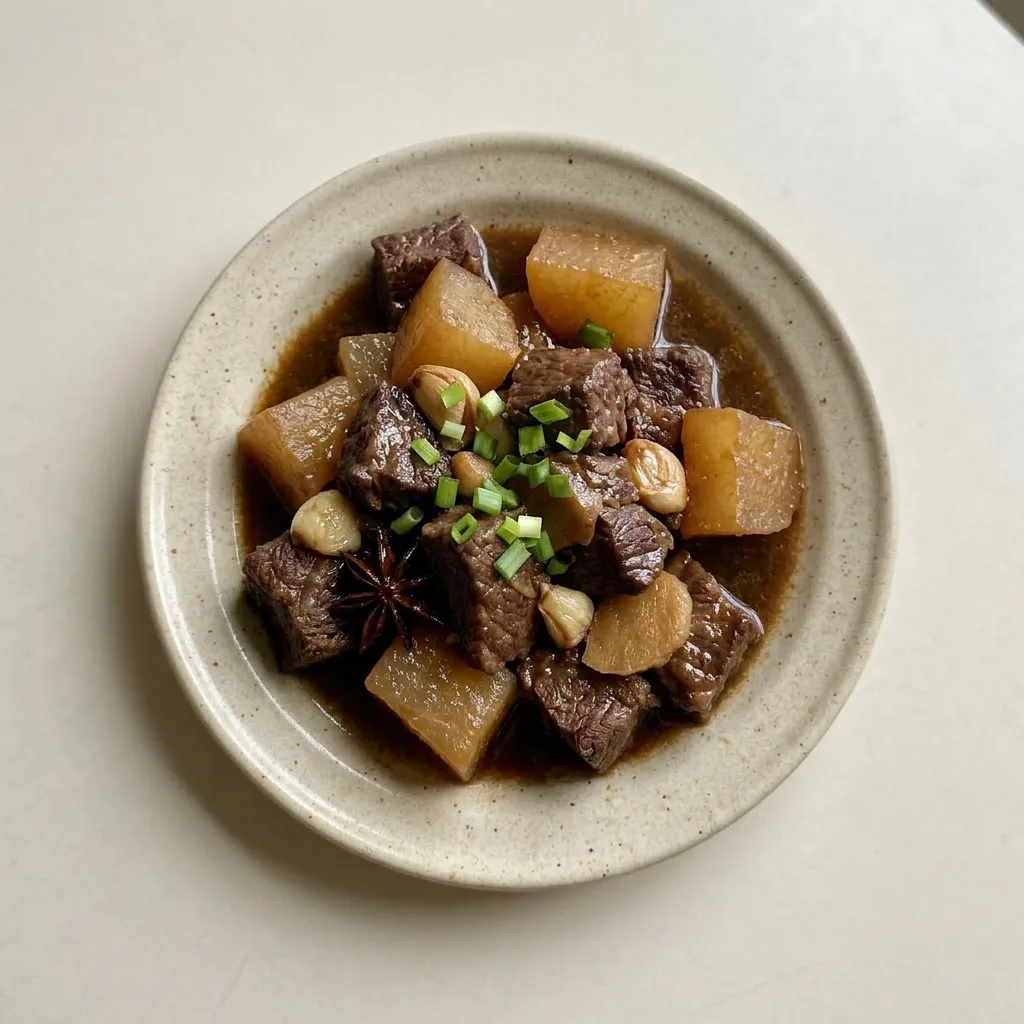
Storage and Reheating
This stew tastes even better the next day, as the flavors deepen overnight. Refrigerate leftovers in a sealed container for up to 4 days. The sauce thickens as it sits; add a splash of water when reheating to restore the original consistency.
Reheat gently on the stovetop over medium-low heat, stirring occasionally, until warmed through. Avoid boiling, which can toughen the beef. The daikon will soften further but should still hold its shape for 2 to 3 days.
For longer storage, freeze the stew in a freezer-safe container for up to 3 months. Thaw overnight in the fridge before reheating. Serve the stew as soon as it’s hot; the green onion garnish should be added just before serving to keep its fresh color and texture.
For the best texture, eat within 2 days of cooking, when the beef is most tender and the daikon is just soft.
Tips
- Check star anise freshness: if you don’t smell strong licorice when you open the jar, the pods are old and will add little flavor. Replace them.
Swap daikon for carrots, but don’t skip the bean curd
Daikon radish: Carrots, cut into similar 1½-inch chunks. Add them at the same point, after the beef has braised 60 minutes. Carrots are sweeter and less bitter than daikon.
They won’t absorb the sauce as readily; the stew will taste slightly brighter and less savory. The texture stays firmer, so cook them until easily pierced with a skewer.
Red fermented bean curd: None. If you must omit it, increase hoisin sauce to 5 tbsp and add 1 extra tablespoon of soy sauce. The bean curd provides a funky, deep umami that hoisin and soy alone can’t mimic.
Without it, the stew loses its layered savoriness and tastes one-dimensional, just sweet and salty. The extra hoisin and soy won’t fully compensate, but they prevent the sauce from feeling thin.
Shaoxing wine: Dry sherry or a splash of sake. Use the same amount: 2 tbsp. Shaoxing wine adds a subtle floral note and complexity.
Sherry gives a nuttier, slightly sweeter character; sake is cleaner and less aromatic. The stew will still be good, but the background flavor shifts.
Don’t substitute with cooking wine, it’s too salty.
Oyster sauce: For a vegetarian version, use 2 tbsp mushroom stir-fry sauce (like Lee Kum Kee’s Vegetarian Stir-Fry Sauce) plus 1 tsp soy sauce. For gluten-free, ensure your oyster sauce is labeled GF (many are not). Oyster sauce contributes a mild briny sweetness and body.
Mushroom sauce mimics the savory note but is less briny; adding soy helps balance. The stew will be slightly less rich. Gluten-free oyster sauce works seamlessly, no textural change.
Frequently Asked Questions
Can I make Chinese beef stew ahead of time? Does it reheat well?
Yes, and it actually tastes better the next day as the flavors deepen. Refrigerate in a sealed container for up to 4 days.
When reheating, add a splash of water to restore the sauce’s consistency and warm gently on the stovetop over medium-low heat, don’t boil or the beef can toughen. For longer storage, freeze for up to 3 months, thaw overnight in the fridge, and reheat the same way.
Why is my beef tough instead of tender? How can I fix it?
The most likely cause is undercooking, beef chuck needs a full 60-minute simmer after searing to break down collagen. If you cut the braising short, the meat stays chewy.
To fix it, return the stew to a gentle simmer, covered, and cook another 20 to 30 minutes, then test a piece. A secondary cause could be cutting the beef too large (stick to 1 to 1½-inch cubes) or searing too aggressively, which dries the exterior before the interior cooks.
What’s the difference between this stew and a classic red-braised beef?
Classic red-braised beef (hong shao niu rou) typically relies on soy sauce, sugar, and spices like star anise and cinnamon, with a lighter sauce. This stew adds red fermented bean curd and hoisin for a funkier, sweeter, and thicker braising liquid. The result is a deeper umami and a glossy sauce that clings to the beef and daikon, whereas red-braised beef is usually more soy-forward and less viscous.
