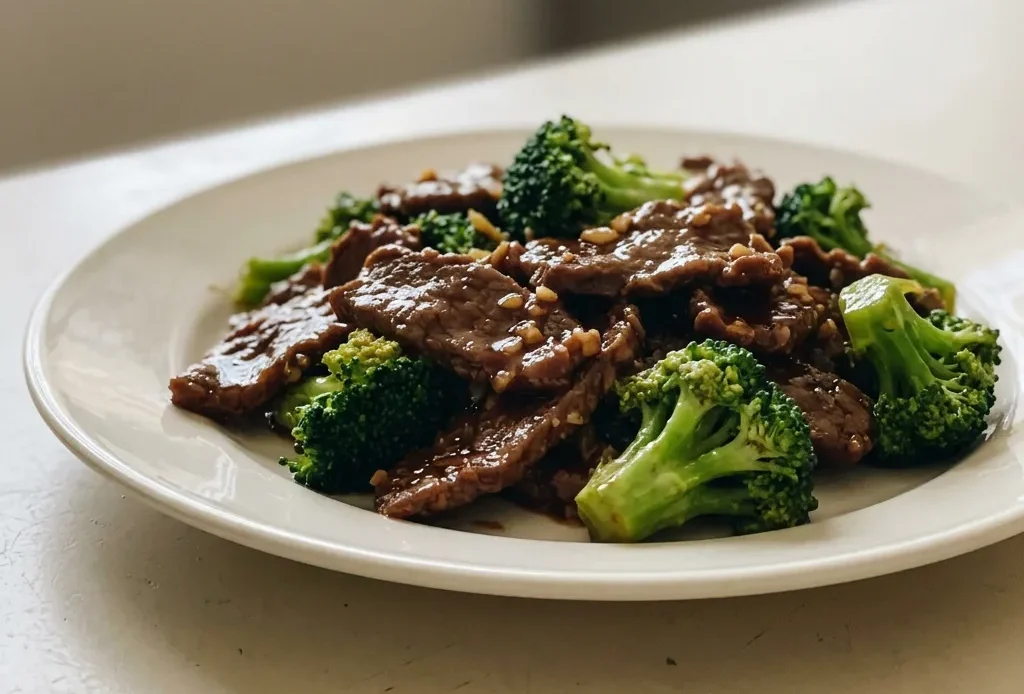
The difference between decent beef and broccoli and the kind you actually crave comes down to one thing: velveting. A pinch of baking soda in the marinade is what makes the beef slide apart like restaurant meat, not chew like shoe leather. The rest, steaming the broccoli separately, building the sauce in a bowl, is just giving yourself control over each element.
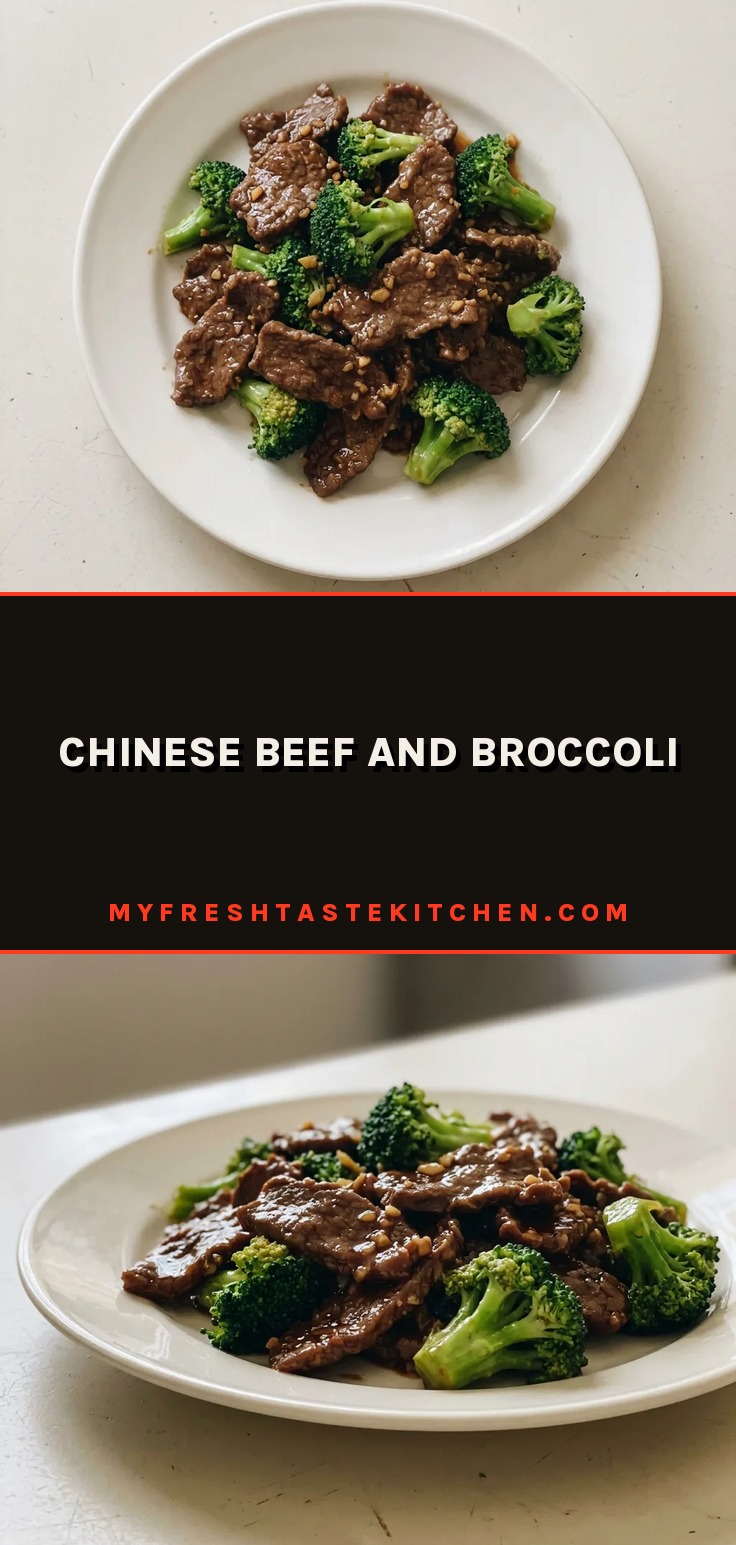
This chinese beef and broccoli skips the deep-fry and the sugar bomb, but the payoff is a savory-sweet sauce that clings, broccoli that snaps, and beef that’s actually tender. It’s a 30-minute meal that doesn’t cut corners where it counts.
Why velveting creates tender beef
Velveting is the reason restaurant stir-fry beef stays silky. Baking soda raises the meat’s pH, which keeps proteins from squeezing out liquid as they cook. You feel the difference in the bite: no chewiness, just tender pieces.
Cornstarch does a separate job, it seals a thin coating around each slice, trapping moisture inside during the high-heat sear. Soy sauce and oil in the marinade add flavor and help the coating adhere.
The 10-minute rest is enough for these effects to work; you don’t need longer. This combination is what makes the beef feel almost slippery, never dry or tough.
Try it with flank or skirt steak and you’ll see.
Steam broccoli first for control
Broccoli goes into a hot skillet with a splash of water, covered, for about a minute. That steam cooks it through to tender-crisp, while the water evaporates. You pull it before any brown appears, so it stays bright green and firm.
Taking it out of the pan before stir-frying is key: it won’t sit in the sauce and go limp. You also wipe the pan clean; any leftover moisture would thin the sauce and keep the beef from browning. This step gives you broccoli that snaps when bitten, not mushy, and it keeps the final dish from turning watery.
A quick steam is all it takes for the right texture.
The sauce is made and added last
Mixing the sauce separately, stock, wine, soy sauces, sugar, and cornstarch, serves one purpose: you control exactly when it thickens. If you added the liquid early, it would boil off or thin out before the beef and broccoli were ready. Cornstarch needs to be re-stirred just before pouring, because it settles fast.
Once in the pan, it thickens in under a minute, coating everything evenly without turning gluey. The sauce gets its flavor from the combination of light and dark soy, plus a hint of sweetness from the sugar.
You see the color deepen and the texture become glossy right when you toss it all together. Serve it hot, right away.
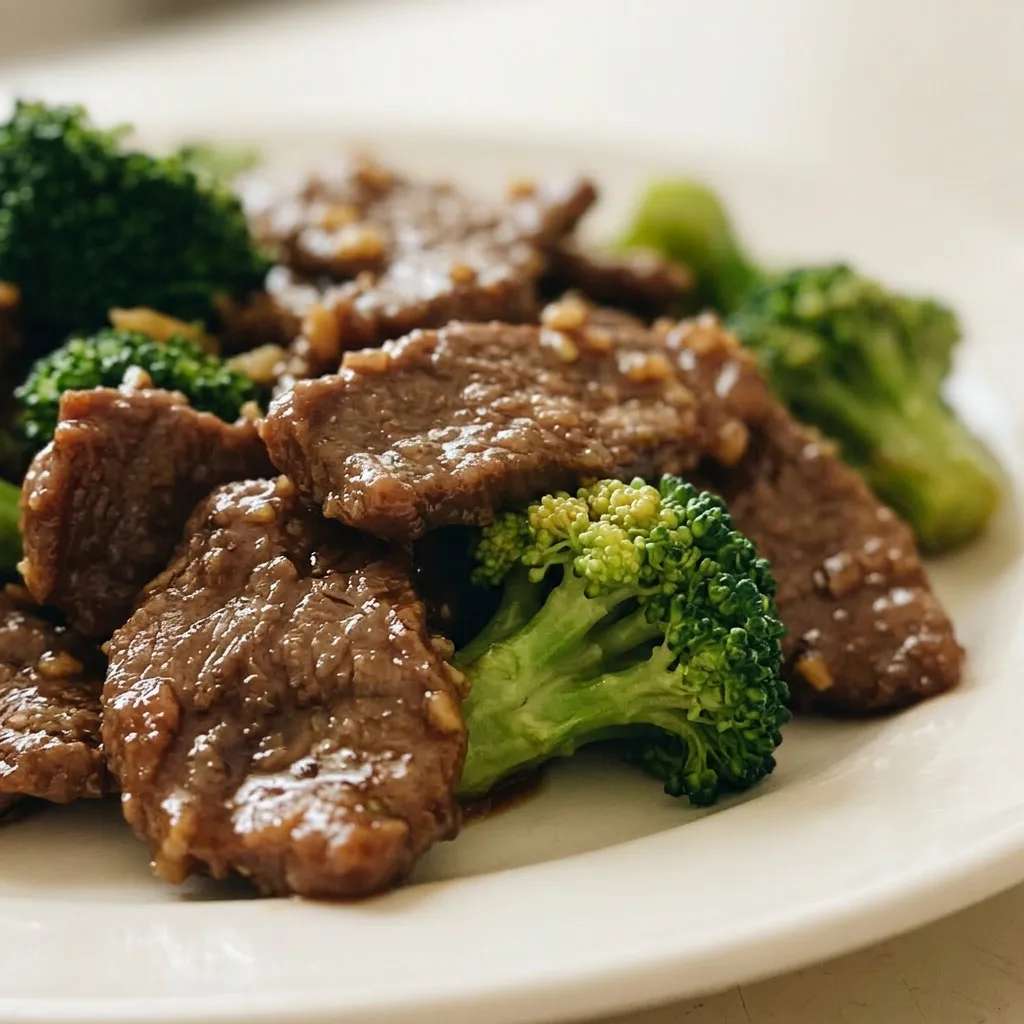
Prep: 15 min · Cook: 15 min · Total: 30 min · Servings: 2 · Calories: 290 kcal
A few ingredients need your attention
Flank steak: Buy a whole piece, not pre-cut strips; you want control over the slice direction and thickness.
Baking soda: Optional but makes a real difference in tenderness; skip it only if you must avoid sodium.
Shaoxing wine: Use the real stuff from an Asian market; dry sherry works but changes the flavor slightly.
Dark soy sauce: Thicker and slightly sweet; it adds color, not just salt. Regular soy won’t give the same dark gloss.
Broccoli: One head, cut into bite-size florets with short stems so they steam evenly in one minute.
Peanut oil: High smoke point and neutral flavor; vegetable oil is fine but peanut oil adds a subtle nuttiness.
Build the dish in stages for control
Marinate the beef
Toss sliced flank steak with soy, oil, cornstarch, and optional baking soda until each piece looks glossy. Let it sit 10 minutes; you’ll see the coating cling evenly, no dry patches.
Steam the broccoli
Pour 1/4 cup water into a cold skillet, add broccoli, cover, and bring to a boil. Steam until the water evaporates and florets turn bright green, about 1 minute. Remove to a plate; any remaining moisture wipes out easily.
Sear the beef
Heat 1 tablespoon oil in the same skillet until it shimmers. Lay beef in a single layer, don’t crowd, and let it brown undisturbed for 30 seconds. The underside should look caramelized before you flip.
Add aromatics and sauce
Stir in garlic and ginger for about 15 seconds until fragrant, then return broccoli. Re-stir the sauce, pour it in, and toss until the liquid turns glossy and clings to everything, roughly 1 minute. Serve at once.
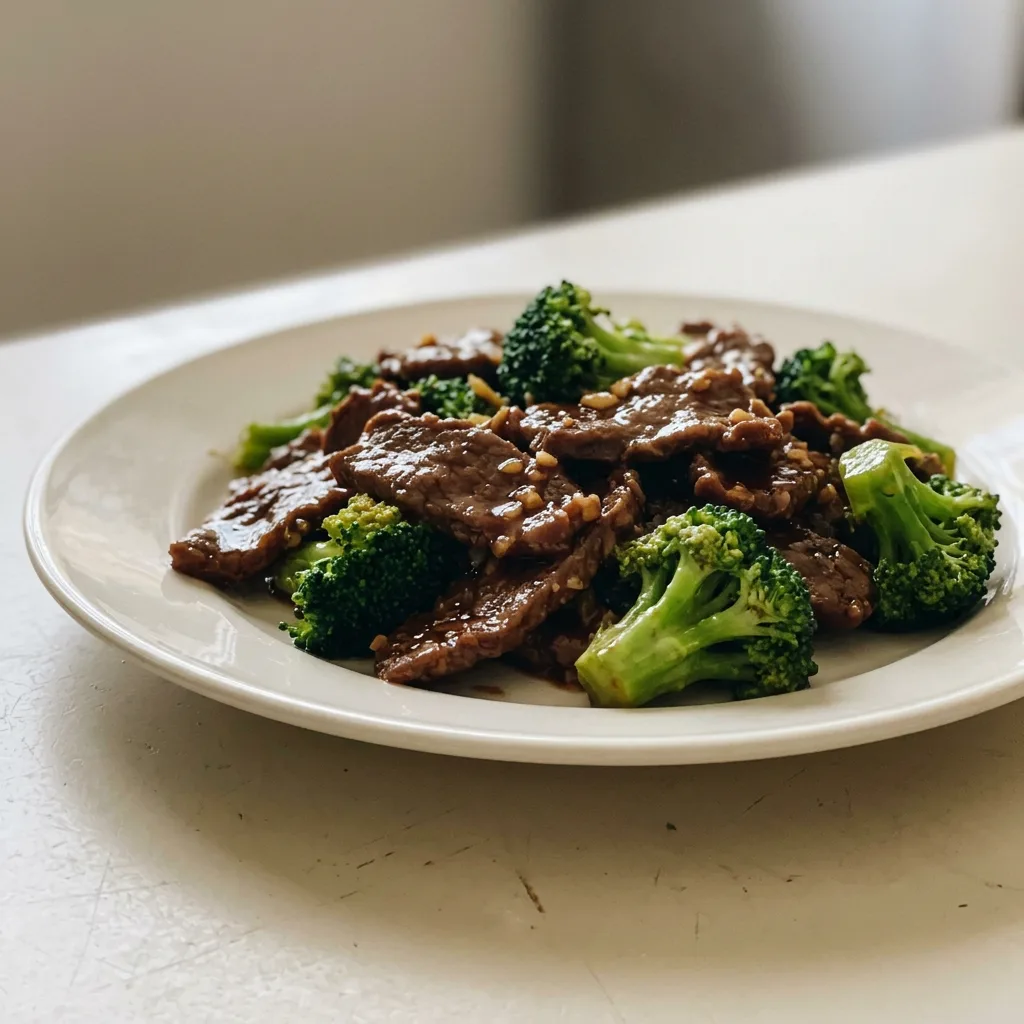
Chinese Beef and Broccoli
Ingredients
Method
Marinate beef strips:
Cut the beef across the grain into slices 1/4-inch (0.5 cm) thick or sticks 1/2-inch (1 cm) wide. Place in a small bowl. Add soy sauce, peanut oil, and cornstarch (plus baking soda if using). Mix gently with your hands until each piece has a thin coating. Let it marinate for 10 minutes while you prep the rest.Whisk sauce ingredients:
In a medium bowl, whisk together all sauce ingredients: chicken stock, Shaoxing wine, soy sauce, dark soy sauce, brown sugar, and cornstarch. Set aside.Steam broccoli:
Pour 1/4 cup water into a large nonstick skillet and bring to a boil over medium-high heat. Add broccoli and cover. Steam until tender-crisp and the water is gone, roughly 1 minute. Remove broccoli to a plate. If any moisture remains, wipe the pan clean with a paper towel held in tongs.Sear steak:
Add 1 tablespoon oil and swirl to coat the bottom. Heat over medium-high until shimmering. Arrange steak in a single layer. Cook untouched for 30 seconds until the underside browns. Flip and cook the other side for a few seconds. Stir-fry until the exterior is lightly charred but the interior remains pink.Sauté aromatics:
Toss in garlic and ginger. Stir briefly to release their aroma.Combine and thicken:
Return broccoli to the skillet. Give the sauce a final stir to re-dissolve the cornstarch, then pour it in. Cook and stir until the sauce thickens, about 1 minute. Immediately transfer everything to a plate. Serve hot as a main dish.
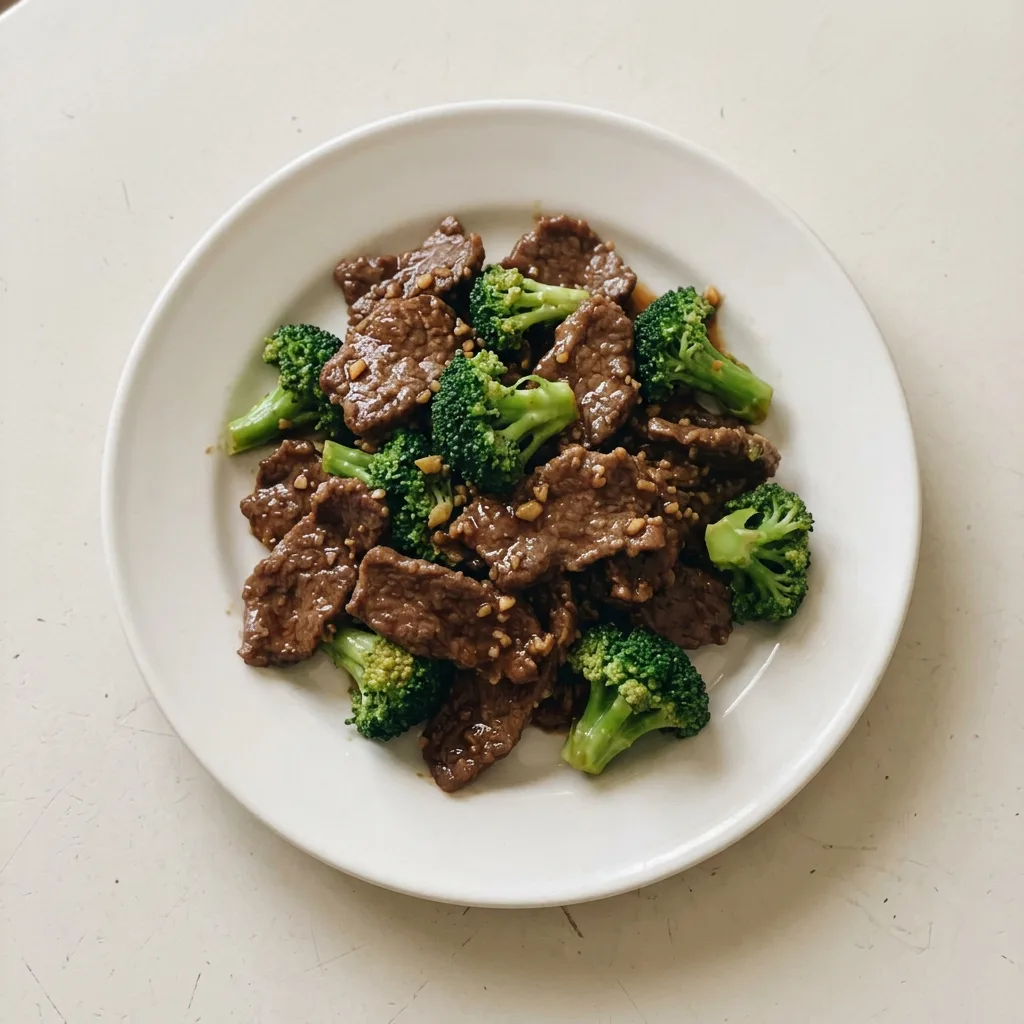
Three swaps that work here, one that doesn’t
Flank steak: Skirt steak or sirloin, cut across the grain. Skirt steak has more marbling, so it stays juicy with the same velveting time. Sirloin is leaner; it’ll be a touch firmer, but still tender if you don’t overcook.
Shaoxing wine: Dry sherry or mirin. Dry sherry is the closest substitute; it adds similar acidity and depth. Mirin is sweeter and less alcoholic, which throws the sauce’s balance slightly sweeter, cut the brown sugar by 1 teaspoon.
Dark soy sauce: Omit it or use 1 tablespoon light soy + 1/2 teaspoon molasses. Dark soy is for color and a faint sweetness, not salt. Skip it and the sauce will be lighter brown, not a deep chestnut.
The molasses trick brings back the color without changing the salt level.
Storage and Serving
This dish is at its peak right off the heat: the beef is tender, the broccoli is crisp, and the sauce is glossy. Serve immediately. Leftovers keep in an airtight container in the fridge for up to 3 days.
The broccoli softens noticeably as it sits, losing its snap, and the sauce may thicken further. To reheat, use a skillet over medium heat with a splash of water or stock, stirring until hot.
The microwave works, but it will soften the broccoli more. Freezing is not recommended; the broccoli turns limp and the sauce can separate when thawed.
If you want to prep ahead, velvet the beef and steam the broccoli separately, then stir-fry just before serving. That way each component stays at its best.
Tips
- Slice the beef against the grain into 1/4-inch thick slices; cutting against the grain shortens the muscle fibers, making the meat noticeably more tender when chewed.
- Make sure the skillet is hot enough that the oil shimmers before adding the beef; a hot pan ensures a quick sear that browns the exterior without overcooking the interior.
Frequently Asked Questions
Can I make beef and broccoli ahead of time?
Yes, but it’s best to prep components separately. Velvet the beef and steam the broccoli, then stir-fry just before serving. The dish peaks immediately; leftovers soften in the fridge for up to 3 days, but the broccoli loses its snap.
Why is my beef tough in stir-fry?
Most likely you skipped the baking soda in the marinade or didn’t let it rest the full 10 minutes. The optional baking soda is what keeps the beef tender by preventing proteins from tightening. Also check you cut across the grain, cutting with the grain makes any cut chewy.
How do I get the sauce to thicken properly?
Whisk the cornstarch into the cold sauce ingredients before cooking, and stir it again right before pouring. Once in the hot pan, it should thicken in about 1 minute. If it stays thin, the pan might be too cool, make sure it’s at medium-high and the sauce bubbles as you stir.
Can I use frozen broccoli instead of fresh?
You can, but it will be softer and release more water, which thins the sauce. If using frozen, thaw and pat it dry first, then steam for only 30 seconds. The fresh broccoli in the recipe stays brighter and crisper.
What’s the difference between this and takeout beef and broccoli?
This version uses velveting (baking soda and cornstarch) to make the beef tender without deep-frying, and steams the broccoli separately for control. The sauce is less sweet and more balanced than typical takeout, which often loads up on sugar and MSG.