
The trick to this chicken and leek risotto isn’t the stirring, it’s keeping the chicken skin crispy. Most versions simmer the meat in the rice, which turns the skin rubbery and the meat dry. Here, you sear bone-in thighs hard, then finish them in the oven while the risotto builds in the rendered fat.
That fat carries deep chicken flavor into the leeks and rice, and the contrast between the creamy, lemon-bright risotto and a piece of crackling-crisp skin is what makes it feel like a restaurant dish you can pull off on a Tuesday.
Bone-in, skin-on chicken thighs
Searing the thighs skin-side down renders fat that becomes the cooking base for the aromatics. That fat carries deep chicken flavor into the shallots and leeks. Roasting the thighs separately, rather than simmering them in the risotto, keeps the meat juicy and the skin crispy.
If cooked too long in liquid, the skin softens and the meat dries out. The contrast between crispy skin and creamy risotto is what makes this dish work.
Toasting the rice
Stirring arborio rice in the hot fat until the grains turn translucent at the edges takes about a minute. That brief toast releases a nutty aroma and firms the outer starch layer so the grains absorb broth gradually, not all at once.
Rice that isn’t toasted tends to release starch too fast, turning mushy before it’s tender. The constant stirring during toasting prevents scorching and ensures every grain gets the same heat.
Lemon juice early
Adding lemon juice with the first ladle of broth serves two purposes. It deglazes the pan, lifting the browned bits left from searing the chicken, which deepens the overall flavor.
That early acidity also cuts through the richness of the chicken fat and cheese without making the dish taste sour. By the time the risotto is finished, the tartness has mellowed into a subtle brightness that complements the leeks.

Prep: 10 min · Cook: 45 min · Total: 55 min · Servings: 6 · Calories: 550 kcal
Choosing and prepping the leeks
Leeks: Only the white and light green parts; the dark green is tough and bitter.
Chicken thighs: Bone-in, skin-on gives richer flavor and crispier skin than boneless.
Arborio rice: The high starch content is what gives risotto its signature creaminess.
Parmesan: Freshly grated melts smoothly; pre-shredded has anti-caking agents that turn grainy.
Build the risotto in the rendered chicken fat
Sear and roast the chicken
Heat the oil over medium-high until it shimmers. Lay the seasoned thighs skin-side down; you should hear a steady sizzle. After 7 minutes the skin should be deep golden and release easily, if it sticks, it needs more time.
Cook the aromatics
Pour off all but about 2 tablespoons of fat from the pan. Add the shallot and stir; it should sizzle gently.
When it looks translucent and the pan bottom is clean, the leeks go in. They should soften without browning.
Toast the rice
Add the rice and salt, and stir until every grain is coated in fat. In about a minute the grains will turn opaque at the edges and smell nutty. Stop here, over-toasting makes the rice brittle.
Deglaze with lemon and broth
Pour in a ladle of warm broth and the lemon juice. Scrape the pan bottom with a wooden spoon; the browned bits should dissolve into the liquid. Stir until the liquid is almost gone.
Add broth gradually
Keep adding broth one ladle at a time, stirring constantly. The rice should always be just barely covered. After about 20 minutes, taste a grain: it should be tender but still have a tiny white core.
Stop adding broth.
Finish the risotto
Pull the pan off the heat. Stir in the butter and Parmesan until they melt into a creamy sheen. The risotto should flow slowly when you tilt the pan, not stiff, not soupy.
Adjust salt and pepper.
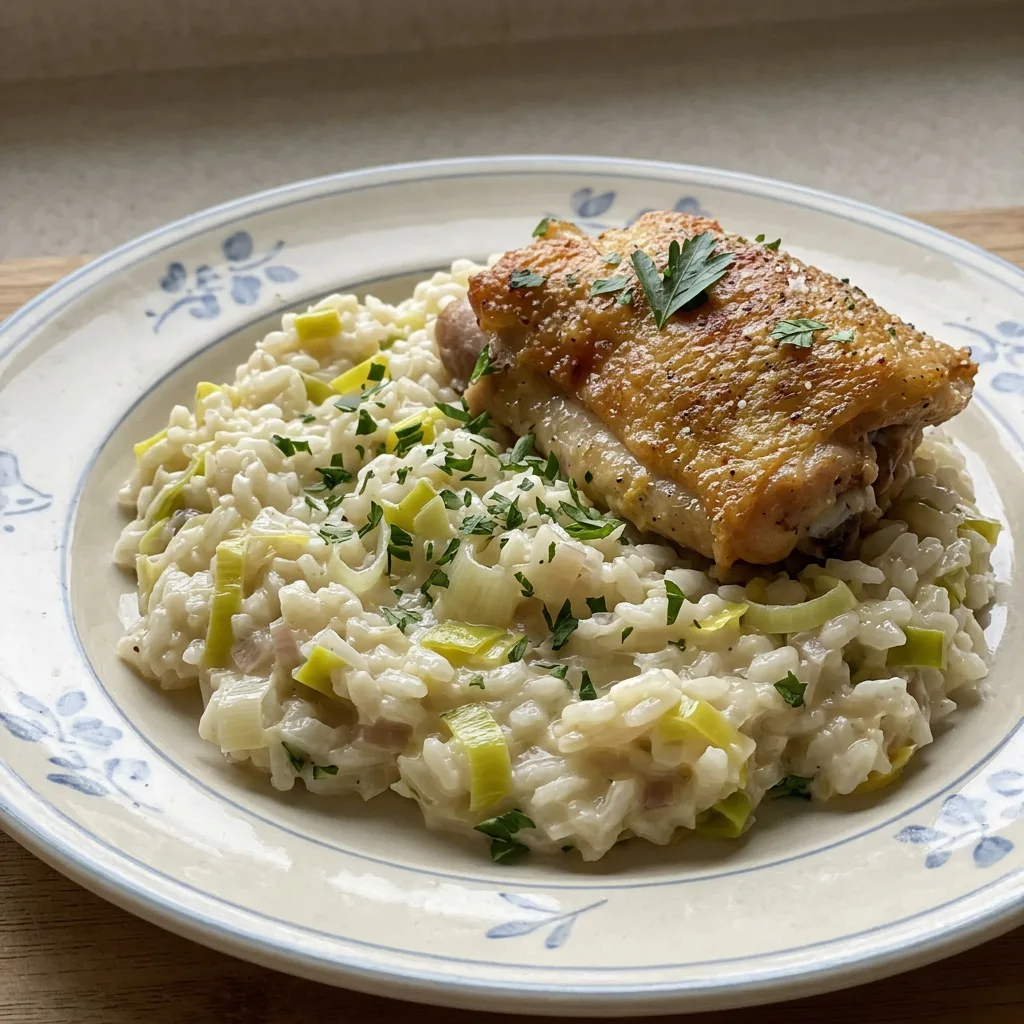
Chicken and Leek Risotto
Ingredients
Method
Preheat Oven and Prep:
Set oven to 400°F (205°C) and cover a baking sheet with foil or parchment.Simmer Chicken Broth:
In a large pot over medium-low, heat the chicken broth and hold at a low simmer.Season Chicken Thighs:
Dry chicken thighs with paper towels and season both sides well with salt and pepper.Sear Chicken Skin-Side:
In a large pot or cast-iron skillet, warm the olive oil over medium-high. Place chicken skin-side down and sear until skin is crispy, about 7-8 minutes. Turn and sear the other side for 2-3 minutes.Roast Chicken Thighs:
Move chicken skin-side up to the prepared sheet and roast until internal temp hits 165°F (75°C), about 20-25 minutes. Take out and let rest on a cutting board while you finish the risotto.Sauté Shallot:
Lower heat to medium in the same pan. Add shallot and cook, stirring often, until soft, about 3-4 minutes.Cook Leeks and Garlic:
Add leeks and cook, stirring constantly, until tender and slightly see-through, about 3-4 minutes. Stir in garlic and cook 30 seconds more.Toast Rice:
Add rice and a pinch of salt. Cook, stirring constantly, until rice is lightly toasted, about 1 minute.Deglaze with Broth:
Pour in one full ladle of warm broth and the lemon juice to deglaze. Stir until liquid is absorbed.Add Broth Gradually:
Keep adding broth one ladle at a time, stirring continuously and letting most liquid absorb before the next addition. This takes about 20-25 minutes; rice should be al dente and creamy.Finish Risotto:
When risotto is done, mix in butter and Parmesan until combined. Taste and adjust salt and pepper if needed.Combine and Serve:
Place cooked chicken thighs back into the pan, nestling them into the risotto. Sprinkle with parsley and serve right away.Store Leftovers:
Cool leftovers, then store in an airtight container in the fridge up to 4 days or freezer up to 3 months.
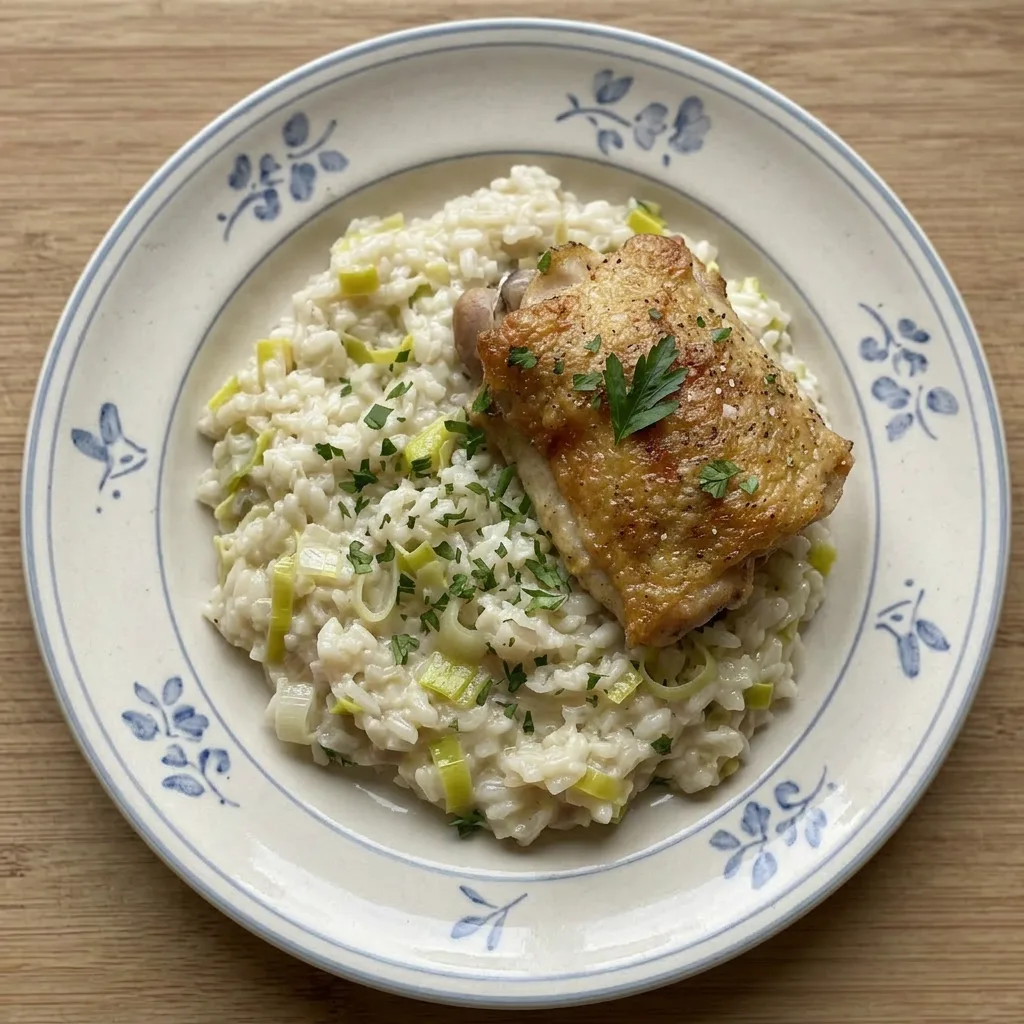
Three swaps that change this risotto, and one that shouldn’t
Leeks: Shallots or yellow onion. Leeks bring a mild, sweet onion flavor that blends into the creamy rice. Swap in equal volume of minced shallots or finely diced onion, but expect a sharper, more assertive onion taste that won’t soften into the background as much.
Arborio rice: Carnaroli or vialone nano. Both hold their shape better and absorb broth more evenly than arborio.
Use the same amount; you might need a splash more broth and an extra minute or two of stirring to reach the same creaminess. The texture will be slightly firmer, more distinct grains.
Chicken thighs (bone-in, skin-on): Boneless skinless chicken thighs or breasts. You lose the rendered fat that builds the risotto base and the crispy skin contrast. Sear boneless thighs or breasts in oil until browned, then finish roasting.
They cook faster, thighs about 15 minutes, breasts about 12, 15. The meat will be less flavorful and the risotto will need a pat of extra butter or splash of cream to compensate for the missing fat.
Lemon juice: Do not omit. The lemon juice does double duty: it deglazes the pan and brightens the dish.
Without it, the risotto tastes flat and overly rich. If you must substitute, use an equal amount of white wine vinegar or dry white wine, but the result will be more acidic and less fruity.
Storage and Reheating
Risotto thickens as it cools, so leftovers will be stiff. Store in an airtight container in the fridge for up to 4 days, or freeze for up to 3 months. For best texture, reheat only the portion you plan to eat.
Add a splash of broth or water before reheating to loosen the rice. Reheat gently on the stovetop over medium low, stirring often, until hot and creamy again.
Alternatively, microwave in 30 second bursts, stirring between each. The chicken skin will soften after storage, so if you want it crispy, reheat the chicken separately in a hot oven or skillet. Serve immediately after reheating; the risotto will thicken again as it sits.
Tips
- After slicing the leeks, place them in a bowl of cold water and swish them around, then lift them out with a slotted spoon, leaving the grit behind at the bottom. Repeat if the water looks sandy.

Frequently Asked Questions
Can I make this risotto ahead of time and reheat it?
Yes, but expect the texture to stiffen as it cools. Reheat only the portion you’ll eat, adding a splash of broth or water to loosen it. Gently warm on the stovetop over medium-low, stirring often, until hot and creamy again.
The chicken skin will soften; reheat that separately in a hot oven or skillet if you want it crispy.
How do I prevent the risotto from becoming too thick or sticky?
Stickiness usually means the rice was over-stirred or cooked too long after it was al dente. Stop adding broth when you taste a grain that’s tender but still has a tiny white core. If it’s already too thick, stir in a splash of warm broth just before serving to loosen it.
What’s the difference between this risotto and a classic chicken risotto?
This one uses bone-in, skin-on chicken thighs seared and roasted separately, so the skin stays crispy and the meat juicy. The rendered fat from searing becomes the base for cooking the leeks and toasting the rice. The leeks add a mild, sweet onion flavor, and lemon juice is added early to brighten the dish without making it sour.