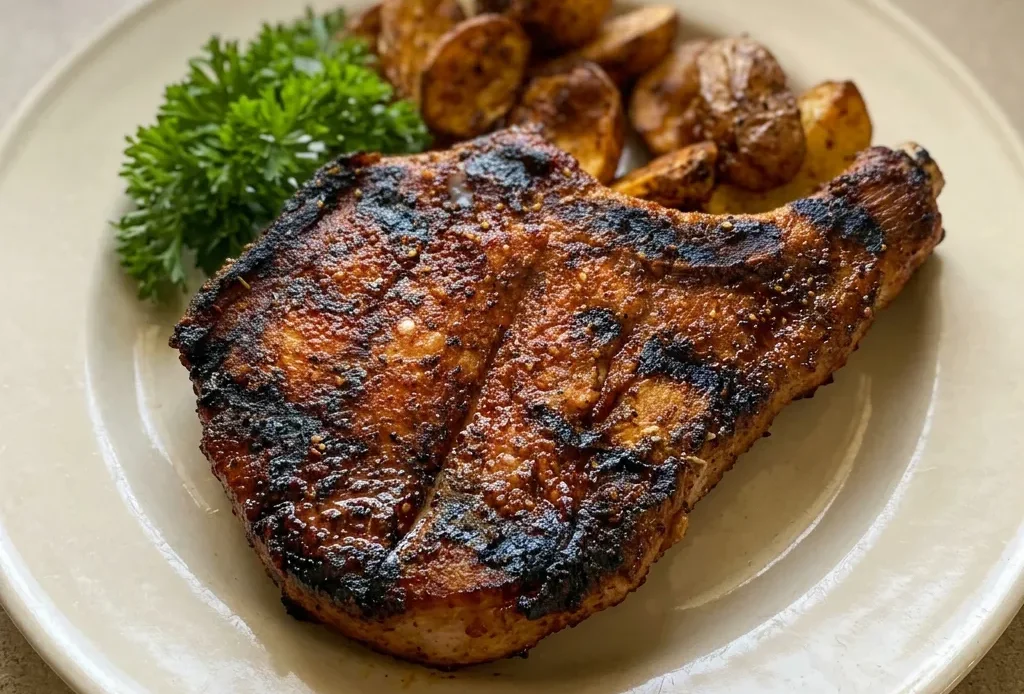
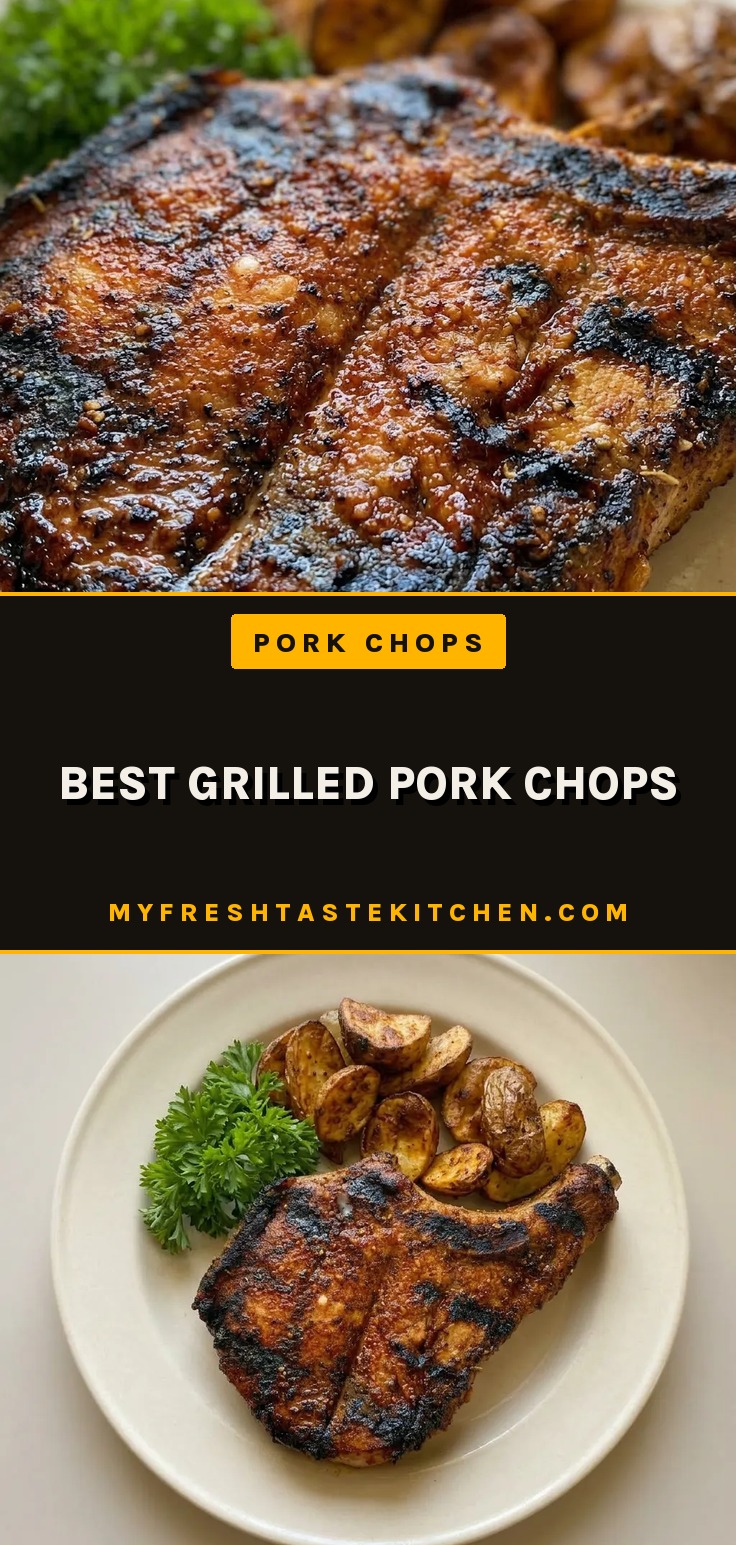
These aren’t sad, dry pork chops from a weeknight panic. These are the best grilled pork chops you’ll cook at home: a sugar-spiced bark that shatters when you bite, with meat that’s actually juicy from edge to bone. The margin between crust and burnt sugar is narrow, get the heat right and don’t crowd the grill, but the payoff is a chop that doesn’t need sauce.
I once threw cold chops straight from the fridge onto a hot grill; the outside charred before the inside even warmed up, and they came out dry.
Room-Temp Rest
Grilling cold pork chops guarantees a burnt exterior before the center warms up. The 30-minute rest on the counter lets the meat lose its chill evenly. For thick-cut chops this step is important.
A cold chop straight from the fridge will tighten the muscle fibers as soon as it hits the hot grates, squeezing out moisture and leaving a dry, tough band just under the crust. By starting closer to room temperature, the interior has a head start to cook through before the outside chars.
The result: a juicy, evenly cooked chop with a clean sear, not a bullseye of raw center and overdone edges. You can feel the difference when you press the chop, it gives more evenly across the surface after that rest.
Caramelized Crust
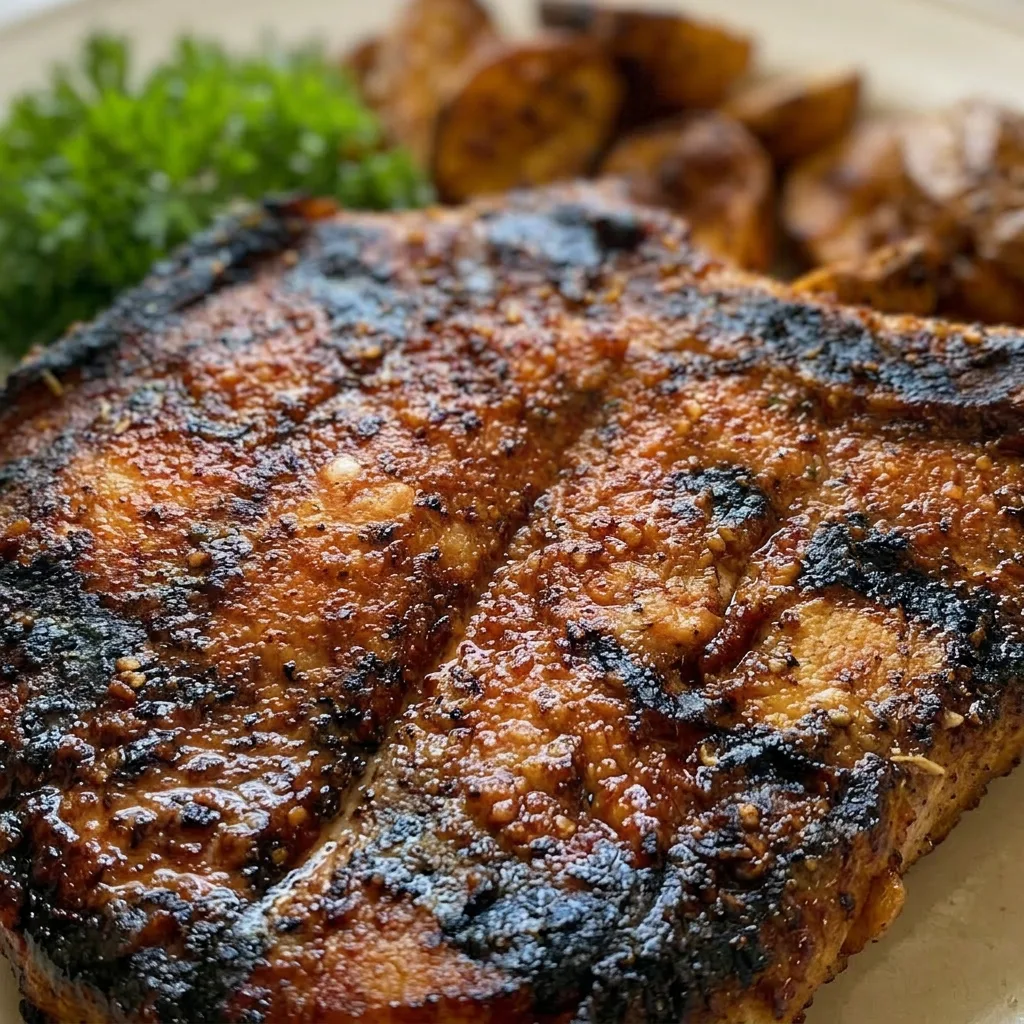
Brown sugar doesn’t just sweeten the rub, it melts on the grill into a lacquered, crackly crust that locks in the pork’s natural juices. As the sugar hits the heat, it bubbles and darkens, forming a savory-sweet shell that contrasts with the meat’s richness. Paprika adds a smoky depth, while mustard gives a subtle tang that cuts through the fat.
To get that crust to stick, you pat the chops dry first, then press the rub into every side and edge firmly. You’ll see the granules dissolve into a glossy sheen as they hit the grates.
The result is a bark that shatters when you bite, not a dusty coating that falls off. This is what makes grilled pork chops memorable.
Thermometer, Not Guesswork
You can’t tell if a thick pork chop is done by pressing it or looking at the juice. Carryover cooking means the temperature rises another 5°F after you pull the meat off the heat.
So you pull at 140°F, and by the time it rests, it hits the safe zone of 145°F without going a degree over. An instant-read thermometer takes the risk out of the equation. Slide the probe into the thickest part, avoiding bone, and you’ll know exactly when to pull.
No more slicing into a dry, chalky chop or serving one that’s still pink at the bone. That short rest also lets the juices redistribute, so every bite is moist.
For doneness every time, trust the numbers, not your eyes.
Prep: 5 min · Cook: 10 min · Total: 15 min · Servings: 4
Choosing and Prepping Pork Chops
bone-in pork chops, thick cut (1, 2″ thick): Buy chops at least 1 inch thick. Thin chops dry out before a crust forms.
brown sugar: Light or dark both work. Dark gives a deeper molasses note in the crust.
paprika: Standard sweet paprika is fine. Smoked paprika adds a campfire note if you want.
ground mustard: Use dry mustard powder, not prepared mustard. It sticks to the dry rub.
Grill Like a Pro
Rest the Chops
Set the chops out 30 minutes before grilling. Press a finger into the meat, it should give evenly, not feel cold and tight in the center. That’s your cue they’re ready.
Preheat the Grill
Close the lid and heat to medium-high, about 400°F, for a full 10 minutes. Hold your hand 6 inches above the grates, you should only last 2 seconds. Oil the grates just before adding the chops.
Dry and Oil the Chops
Pat the chops dry with paper towels until the surface feels tacky, not wet. Brush with vegetable oil, the sheen should be even but not pooling. This helps the rub stick and the crust form.
Apply the Rub
Mix the brown sugar, paprika, salt, pepper, mustard, onion powder, and garlic powder. Coat every side and edge generously, pressing firmly so the granules embed. You want a thick, even layer with no bare spots.
First Sear
Place the chops on the hot grill and leave them untouched for 5 to 7 minutes. When they lift easily without sticking, the crust has set. For crosshatch marks, give a quarter turn after 3 minutes and continue.
Flip and Finish
Flip the chops and sear the second side for 2 to 3 minutes. The crust should be deep mahogany, not burnt black. If sugar is smoking excessively, your heat is too high, adjust down next time.
Check Temperature
Insert an instant-read thermometer into the thickest part, away from bone. Pull the chops at exactly 140°F, they’ll carry over to 145°F during rest. If you wait until 145°F on the grill, they’ll overcook.
Rest Before Serving
Transfer the chops to a plate and let them rest 5 minutes. You’ll see juices pooling on the surface, that’s them reabsorbing. Slice too early and those juices run out, leaving dry meat.
Best Grilled Pork Chops
Ingredients
- 4 bone-in pork chops, thick cut (1–2″ thick)
- 1 tbsp vegetable oil
- ¼ cup brown sugar
- 2 tbsp paprika
- 2 tsp kosher salt
- 2 tsp ground black pepper
- 2 tsp ground mustard
- 1 tsp onion powder
- ½ tsp garlic powder
Instructions
Rest pork chops:
Take the pork chops out of the fridge and allow them to rest at room temperature for 30 minutes prior to grilling.Preheat and oil grill:
Close the grill lid and preheat to medium-high heat (roughly 400°F (205°C)) for at least 10 minutes. Then clean and oil the grates.Dry and oil chops:
Use paper towels to dry the pork chops, then brush them evenly with vegetable oil.Apply dry rub:
Combine all dry ingredients in a small bowl. Generously coat every side and edge of the chops with the rub, pressing it in firmly.Grill first side:
Put the chops onto the hot grill. Let them cook without moving for 5–7 minutes until they easily lift off the grates. Give them a quarter turn and grill another 2–3 minutes for crosshatch marks.Flip and sear:
Turn the chops over and sear the other side for 2–3 minutes.Check temperature:
Use an instant-read thermometer to check the internal temperature. Once it hits 140°F (60°C), take the chops off the grill.Rest and serve:
Transfer the chops to a plate and let them rest for 5 minutes. During this time, the temperature will climb to 145°F (65°C). Serve and enjoy.
Storage and Serving
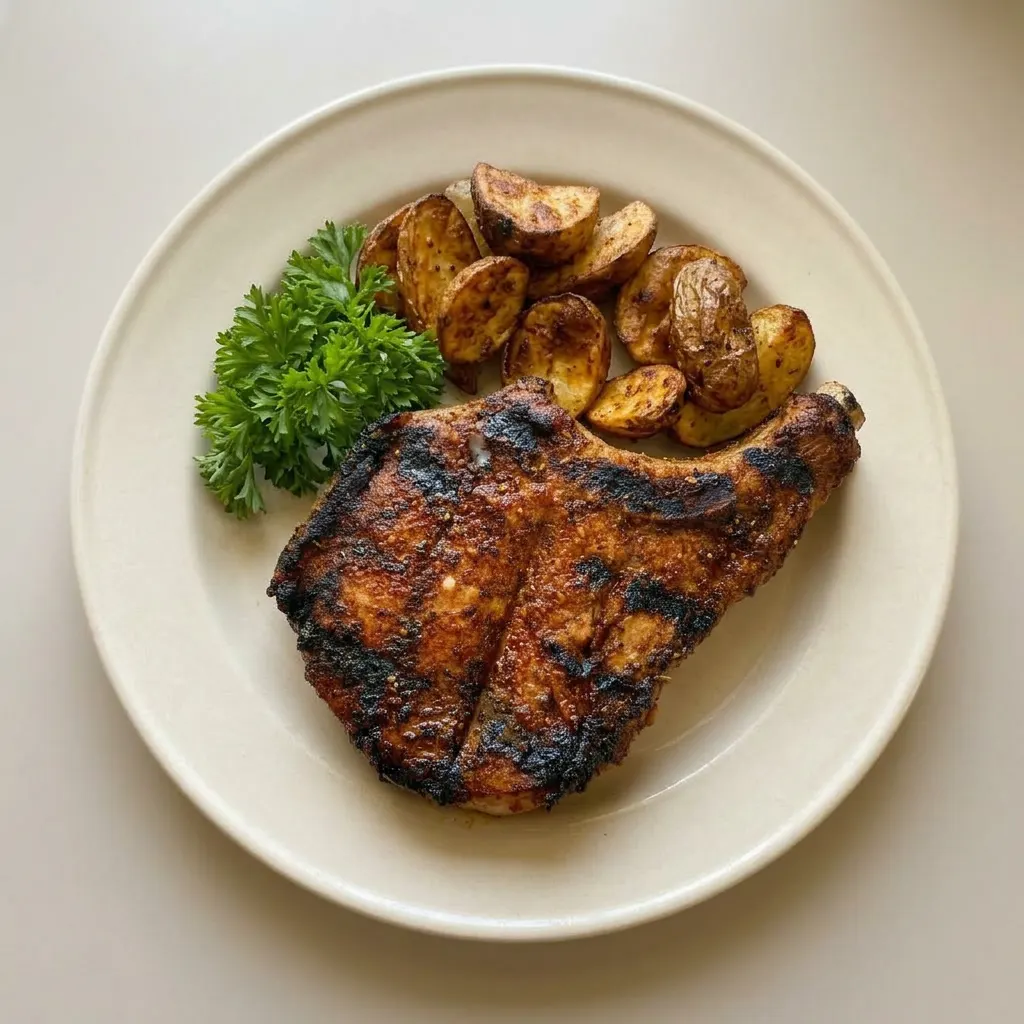
For best texture, serve the pork chops within 15 minutes of resting. The crust stays crackly and the interior remains juicy.
Any longer, the sugar-based crust softens from steam trapped under a cover. If you must hold them, set the chops on a wire rack in a low oven (200°F) for up to 30 minutes.
Leftover chops keep in an airtight container in the fridge for up to 3 days. The crust softens and the meat loses some moisture.
To revive, reheat gently: wrap in foil and warm in a 300°F oven for 8 to 10 minutes, or pan-sear over medium heat for 2 minutes per side. Avoid the microwave, which turns the crust rubbery and dries the meat.
Freezing is not recommended. Thawed pork chops release water as they defrost, turning the cooked crust soggy and the meat mealy.
If you must freeze, vacuum-seal the cooled chops and use within 1 month. Thaw in the fridge overnight, then reheat as above.
Expect a softer crust and slightly drier meat.
Swapping the Sweet in Your Pork Chop Crust
brown sugar: Coconut sugar (same amount) or simply omit the sugar for a savory-only crust. Coconut sugar melts and caramelizes similarly, though the crust will be a shade darker and taste less sweet, with a faint toffee note.
Omitting the sugar loses the lacquered, crackly shell that shatters when you bite, what you get instead is a drier, more uniform bark where the paprika and mustard dominate. The pork will still be juicy, but the texture contrast between crust and meat is less dramatic.
paprika: Smoked paprika for a campfire undertone; same amount. The rub’s color stays deep red, but the flavor shifts from mild and fruity to assertive and smoky. If you use smoked, the mustard’s sharpness will seem brighter against the smoke.
Standard paprika is neutral enough to let the brown sugar shine, smoked steals the show.
ground mustard: Start with the same amount as the recipe calls for, then adjust to taste after testing. Mustard powder adds a mild heat and tang that cuts through the pork fat.
If you skip it, the rub is flatter and sweeter, and the crust lacks that subtle bite that makes you want another bite. There’s no direct substitute that gives the same dry heat, prepared mustard would make the rub gooey and prevent that crust from forming.
bone-in pork chops, thick cut (1, 2″ thick): Boneless pork chops of the same thickness work, but the cook time shortens by a minute or two. Without the bone, the chop cooks faster and more evenly, but you lose the bone’s insulating effect that keeps the meat around it juicy and tender. The center will be a hair less moist.
If you use boneless, check temperature a minute earlier than you would for bone-in. The rest time stays the same.
Tips
- After patting dry, let the chops sit uncovered for 5 minutes so any residual moisture evaporates, then apply the rub immediately to keep the surface tacky for better adhesion.
Frequently Asked Questions
Can I grill pork chops without a thermometer?
You can, but you risk dry or undercooked meat. Without a thermometer, you’re guessing when the center hits 140°F, the pull temp for carryover to 145°F.
Use the touch test: a done chop feels firm with slight spring, like the base of your thumb when you touch pinky to thumb. But for thick chops, that test is unreliable; a thermometer is the only way to nail the window between safe and juicy.
How do I prevent pork chops from drying out on the grill?
Start with thick bone-in chops, at least 1 inch, and let them rest at room temp for 30 minutes before grilling. That gives the interior a head start so you’re not incinerating the outside to cook the middle. Pull the chops at exactly 140°F; carryover cooking will bring them to 145°F during the 5-minute rest.
The sugar in the rub also helps: it forms a crust that locks in moisture, but don’t let it burn, smoke means the sugar is scorching and the meat’s drying out.
Can I prepare the dry rub ahead of time?
Yes, mix the rub up to a week ahead and store it in an airtight container at room temperature. The brown sugar may clump if exposed to humidity, so keep it sealed. For the best crust, apply the rub just before grilling, if you apply it too early, the salt will draw moisture out of the meat, making the surface wet and preventing that crackly shell from forming.
What’s the difference between bone-in and boneless pork chops for grilling?
Bone-in chops cook more slowly and stay juicier because the bone insulates the meat around it. For this recipe, bone-in thick cuts (1, 2 inches) are ideal, they give you time to develop a deep crust without overcooking the center.
Boneless chops of the same thickness work but cook a minute or two faster, and the meat around where the bone was will be slightly less tender. If you use boneless, start checking temperature a minute earlier.