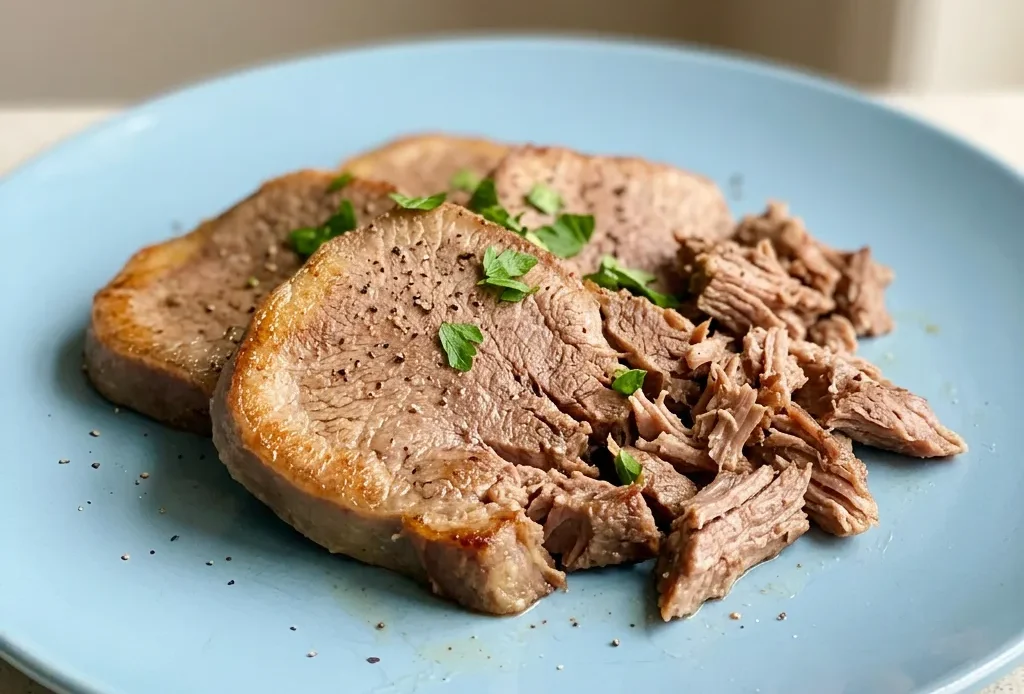
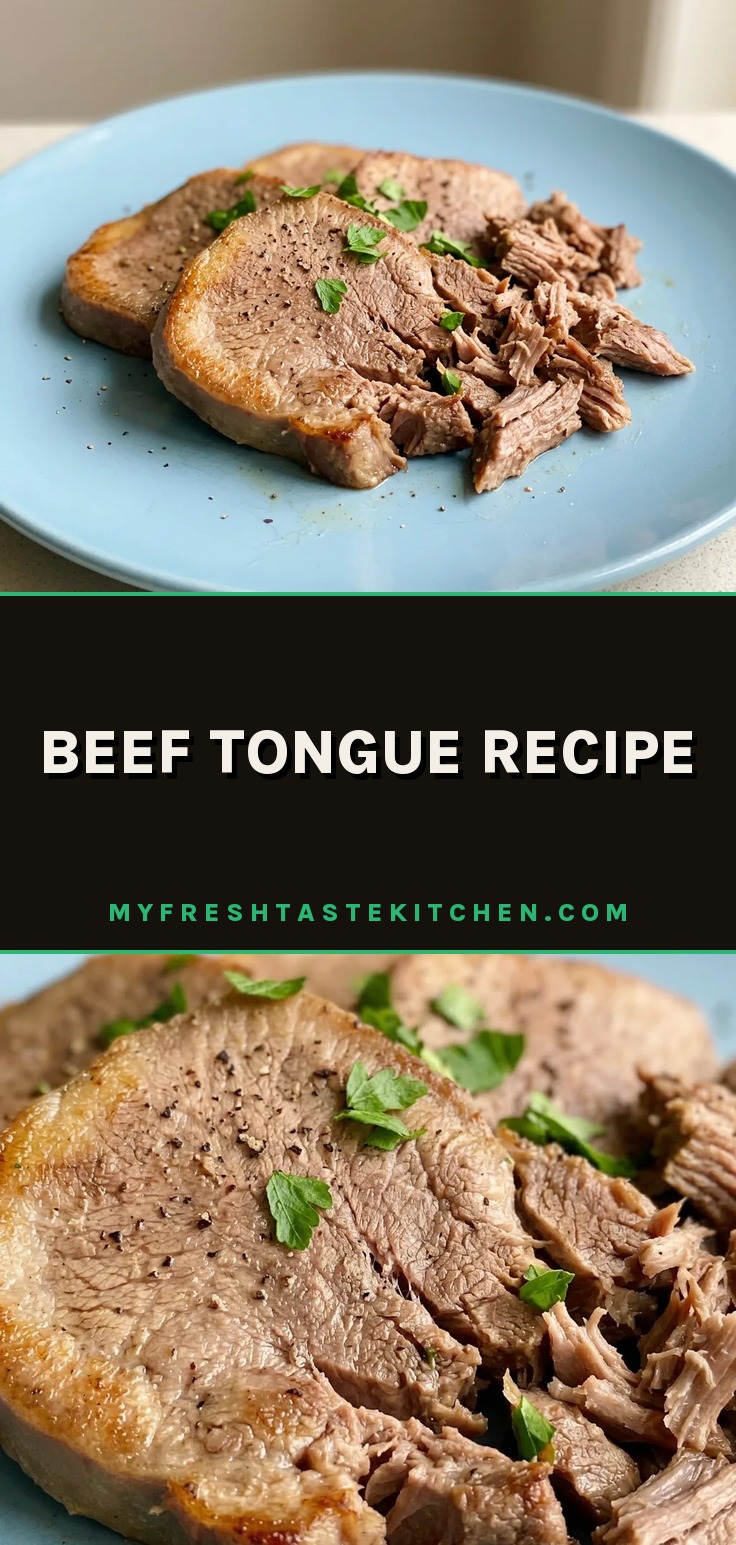
A slice of pan-fried beef tongue should crackle when you bite it, crisp on the outside, silky within. That contrast is the whole point, and it’s what separates a good beef tongue recipe from a forgettable one.
Most guides stop after boiling, leaving you with a bland, rubbery slab. The real work happens in the skillet, and it takes just minutes.
Get the sear right, and you’ve got a dish that makes you wonder why beef tongue isn’t on every table.
Cook low and slow for tender meat
Beef tongue is a tough muscle packed with collagen. That collagen needs long, moist heat to break down into gelatin, turning the meat fork-tender.
Whether you choose a pressure cooker or a stovetop simmer, the principle is the same: fully submerge the tongue in water with aromatics like onion, celery, bay leaf, and peppercorns. The surrounding liquid ensures even heat transfer and infuses mild flavor. You’ll know it’s done when a fork slides in with little resistance.
This step changes a chewy cut into something silky and sliceable. Don’t rush it.
Peel the skin after cooking for proper texture
Once the tongue is tender, let it cool to room temperature before peeling. The outer skin is tough, rubbery, and completely inedible. Cooling firms the meat just enough so the skin releases easily without tearing the tender flesh beneath.
Peel it off in one piece if you can; sometimes it helps to start at the tip. What remains is smooth, delicate meat.
Now slice against the grain into 1/4-inch pieces. Cutting this way shortens the muscle fibers, ensuring each bite is tender, not chewy.
Pan-fry in butter for a crispy, golden crust
After slicing, the cooked tongue is tender but pale. Pan-frying in butter over medium heat creates browning and a crisp edge, adding richness and texture.
Two to three minutes per side is enough to turn the slices golden. The butter browns slightly, deepening the flavor. Season with salt, pepper, and fresh herbs like parsley right after cooking.
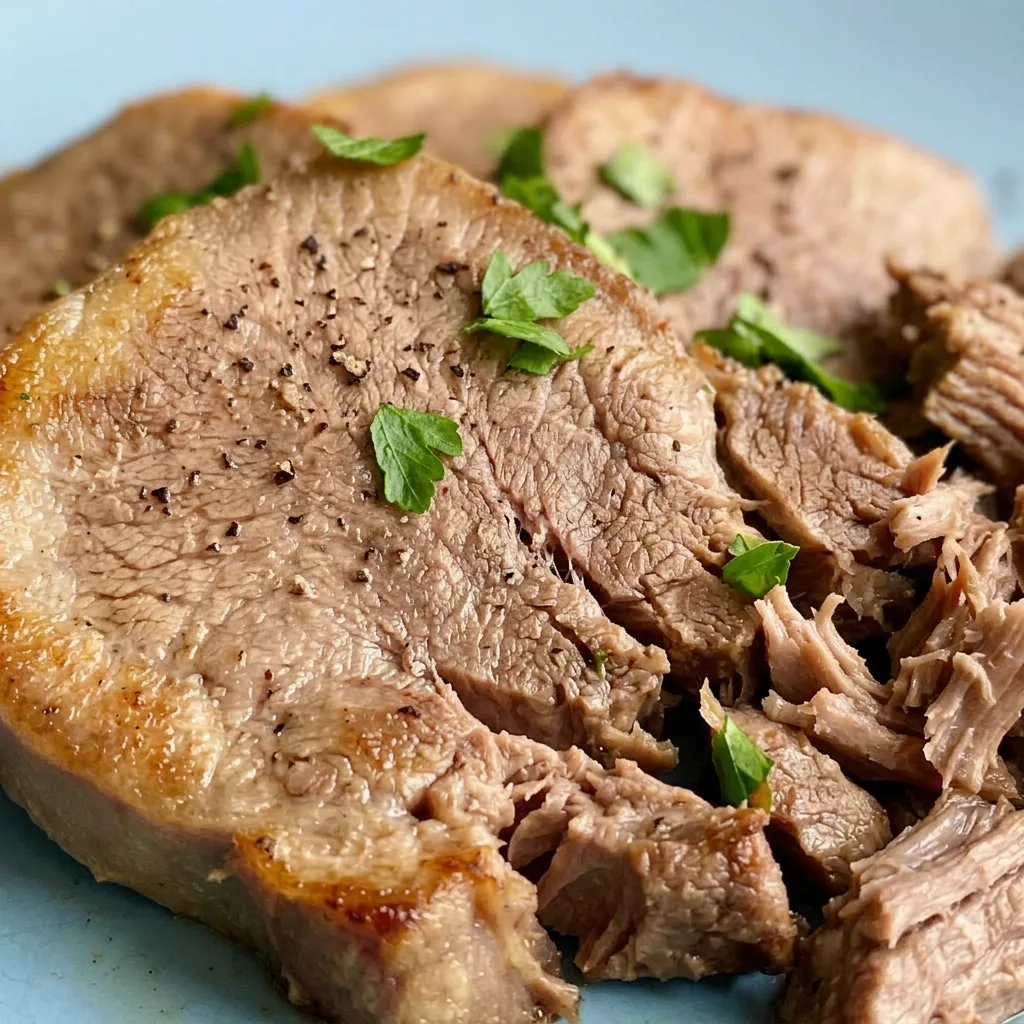
The result: a savory, crispy exterior contrasting the soft interior. This last step is what makes tongue feel like a treat, not just a boiled meat.
Prep: 1 hr 10 min · Cook: 1 hr 15 min · Total: 2 hr 25 min · Servings: 4 · Calories: 90 kcal
Picking and prepping the tongue
Beef tongue: Buy a whole tongue, 2 to 3 pounds, with the outer skin still on.
Butter or ghee: Use unsalted butter or ghee for the final sear so you control the salt.
Fresh herbs: Flat-leaf parsley is standard; chives or tarragon work too. Chop just before serving.
Clean and prep the tongue before cooking
Remove glands and fat
Rinse the tongue under cold water. Use a sharp knife to cut off any visible glands, fat globs, or connective tissue. You’ll feel a firm, bumpy patch near the base, that’s a gland; remove it cleanly.
Cook until fork-tender
Place tongue in the Instant Pot with aromatics and water to cover. Pressure cook on High for 60 minutes, then let pressure release naturally. When you poke the thickest part with a fork, it should slide in like butter, no resistance.
Cool and peel the skin
Let the tongue cool to room temperature, warm but not hot. The skin will feel looser.
Start at the tip and pull; it should come off in one sheet. If it tears, the meat is still too hot; let it cool further.
Slice against the grain
Lay the peeled tongue on a cutting board. Look for the direction of muscle fibers, they run lengthwise. Slice crosswise into ¼-inch pieces.
The slices should hold together without shredding; if they crumble, your knife is dull.
Pan-fry in butter until golden
Melt butter in a skillet over medium heat. Add slices in a single layer, don’t crowd. Cook 2 to 3 minutes per side.
The edges will turn deep brown and crisp. Listen for a steady sizzle; if it fades, the pan is too cool.
Season and serve
Sprinkle with salt and pepper right after frying, while the surface is still hot, so the seasoning sticks. Toss with chopped fresh parsley or herbs. The slices should taste savory with a crisp exterior and tender, juicy center.
Beef Tongue Recipe
Ingredients
- 2-3 lb beef tongue
- 1 onion peeled
- 1 celery stalk cut in half
- 1 bay leaf
- 1/2 tsp salt
- 10 black peppercorns
- 3 tbsp butter or ghee
- Salt and pepper to taste
- Chopped fresh herbs
Instructions
Rinse and Trim Tongue:
Rinse the beef tongue under cold water. Using a sharp blade, remove any fat, glands, or connective tissue.Pressure Cook with Aromatics:
Put the beef tongue into an Instant Pot. Add the onion, celery, salt, peppercorns, and bay leaf. Add water until the tongue is fully submerged.Cook Until Fork-Tender:
Seal the lid and cook on Manual High for 60 minutes, then allow natural pressure release. Alternatively, place all ingredients in a pot, bring to a boil, then reduce heat and simmer for 2.5 to 3 hours until fork-tender.Cool and Slice Tongue:
Allow the meat to cool down to room temperature, then remove the outer skin. Slice into 1/4-inch thick pieces with a sharp knife.Fry Slices in Butter:
Melt the butter in a skillet over medium heat. Fry the tongue slices for 2-3 minutes per side until golden brown and edges are crispy.Season and Garnish:
Add salt and pepper to taste. Sprinkle with fresh parsley or other herbs before serving.
Storage and Serving
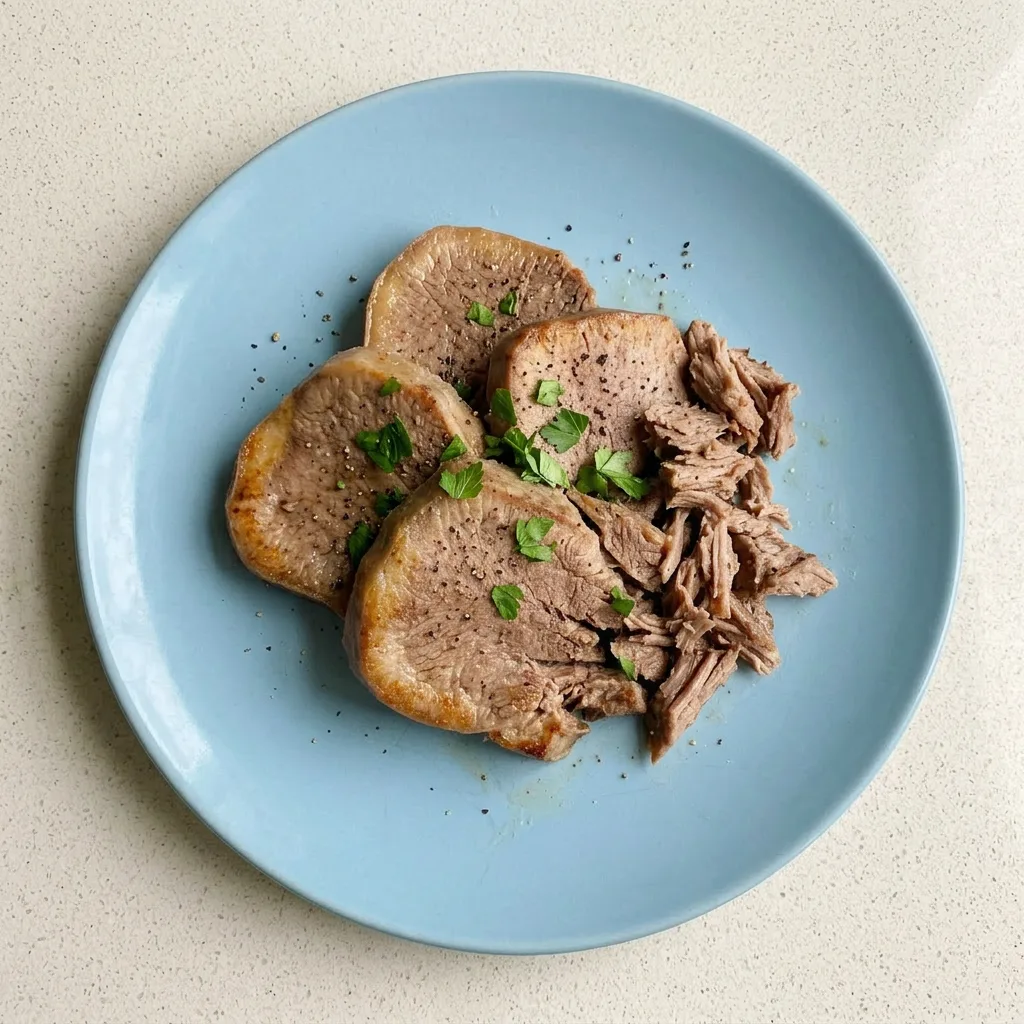
Pan-fried tongue slices are best served immediately while the exterior stays crisp. The butter-browned crust fades within 30 minutes, so eat right after cooking. For leftovers, cool slices completely, then store in an airtight container in the fridge for up to 4 days.
The texture softens over time as moisture redistributes; the meat remains tender but loses its crunchy edge. To reheat, place slices in a single layer in a hot skillet with a little butter over medium heat, 1 to 2 minutes per side, to restore some crispness.
Avoid microwaving, which steams the crust and makes the texture chewy. Freezing is not recommended: thawed tongue turns mushy and the crispiness cannot be recovered. If you must freeze, do so before pan-frying: wrap peeled, sliced cooked tongue tightly, then thaw overnight in the fridge and pan-fry just before serving.
Swapping tongue? Adjust cooking time and method.
Beef tongue: Oxtail. Oxtail has more bone and less meat per pound, so you need about 4 lbs to feed 4.
It takes 2 to 3 hours simmering or 70 minutes pressure cooking. The meat pulls apart rather than slicing, and the broth becomes much richer.
Beef tongue: Beef brisket. Brisket is leaner but still tough. Sub in a flat cut, same weight.
It needs similar simmering or pressure cooking time. Slice against the grain after cooking; it won’t have the same silky texture as tongue, but pan-frying works the same.
Butter or ghee: Neutral oil like avocado or grapeseed. Oil has a higher smoke point, so you can get a crispier crust with less risk of burning. You lose the nutty, dairy flavor from browning butter.
Use the same amount, about 3 tbsp.
Tips
- If the skin resists peeling after cooling, the tongue is undercooked. Return it to the pot and simmer for another 30 minutes (or pressure cook 10 more minutes) until a fork slides in easily. The skin should slip off with gentle tugging, not require scraping or cutting.
- Use the broth left from cooking as a rich base for soup or sauce. Strain it, discard solids, and refrigerate. The fat will solidify on top for easy removal. The gelatin-rich stock adds body to stews or can be reduced for a glaze.
One time I sliced it too thick and tried to fry it hot, came out like rubber bands. Then I accidentally let it cool completely and sliced thin.
Frequently Asked Questions
Can I cook beef tongue in a slow cooker instead of a pressure cooker or stovetop?
Yes, you can. A slow cooker works on the same principle of low, moist heat. Submerge the tongue with the same aromatics and water, then cook on low for 6 to 8 hours or on high for 4 to 5 hours.
You’ll know it’s done when a fork slides in with little resistance, just like with the stovetop method.
How do I know when the tongue is fully cooked and ready to peel?
Test the thickest part with a fork, it should slide in like butter, no resistance. That signals the collagen has broken down. Let it cool to room temperature before peeling; the skin will feel looser and come off in one sheet.
If the skin tears, the meat is still too hot; let it cool further.
Can I prepare beef tongue a day ahead and reheat it?
Yes, but with a catch. Cook and peel the tongue, then slice it, but don’t pan-fry until just before serving. Store the peeled, sliced tongue in an airtight container in the fridge for up to 4 days.
When ready, pan-fry the slices in butter for 2 to 3 minutes per side to restore crispness. Avoid microwaving, it steams the crust and turns the texture chewy.
What is the best way to slice beef tongue to avoid it being chewy?
Slice against the grain. Look for the direction of the muscle fibers, they run lengthwise along the tongue, and cut crosswise into ¼-inch pieces.
This shortens the fibers so each bite is tender, not chewy. A sharp knife is key; a dull blade will shred the meat instead of slicing cleanly.