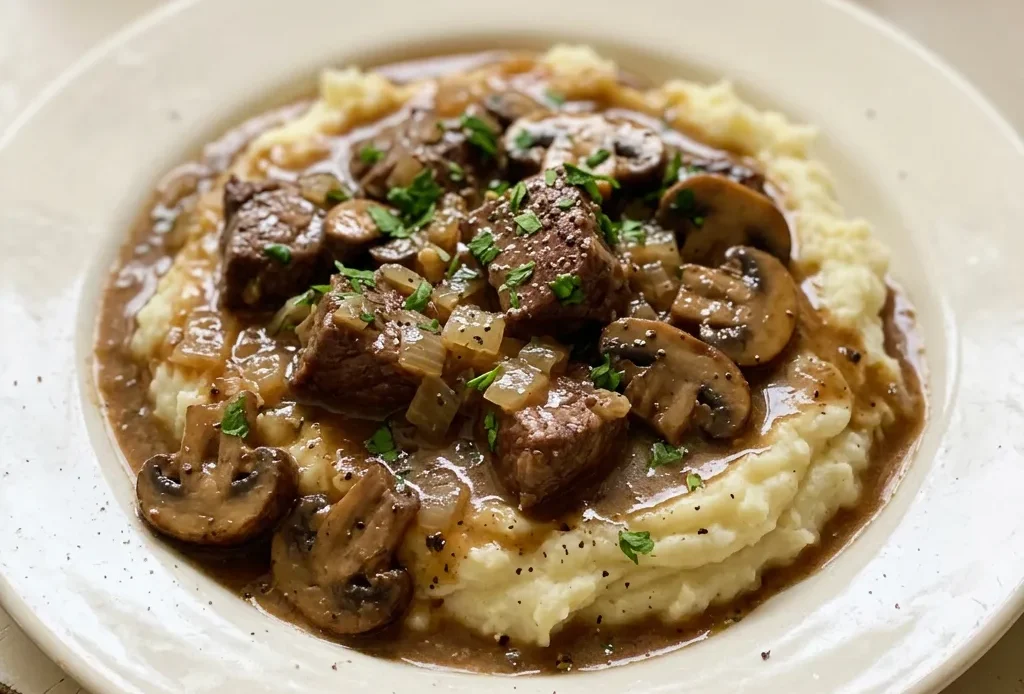
The hardest part of beef tips and gravy isn’t the simmer, it’s not crowding the pan during the sear. Skip that, and you lose the deep brown fond that turns a thin broth into a rich, beefy gravy.
This recipe builds that flavor step by step, then lets the collagen in the meat do the rest, turning tough sirloin tips fork-tender without any fuss. It’s a one-pot meal that delivers beef tips and gravy worth sopping up with biscuits.
Why does browning beef in batches matter?
Crowding the pan drops the temperature fast. The meat releases steam instead of browning, so it turns gray and tough.
Working in batches keeps the pan hot, so each chunk develops a deep brown crust. That crust is concentrated flavor, and it sticks to the pan as fond, the dark bits that later dissolve into the gravy. That fond is what makes a beef gravy taste rich and beefy, not flat.
You also get better texture: the seared surface locks in juices, so the meat stays moist during the long simmer. It’s a simple step that separates a good gravy from a great one.
How does the flour and simmer create a silky gravy?
Flour dusted over the sautéed vegetables and cooked for 30 seconds loses its raw taste. When you add broth and stir, the flour swells and disperses, thickening the liquid without lumps.
But a gravy made with flour alone needs time to smooth out. That’s where the 1-hour-plus simmer comes in: it breaks down the starches fully, giving a silky, not pasty, finish.
If after simmering you want it thicker, a cornstarch slurry tightens it in minutes without altering the taste. The key is letting the flour work slowly, then deciding on extra body.
Why does a tough cut like sirloin tips turn tender?
tough beef stew meat recipes rely on a long, gentle simmer. Cuts like sirloin tips or stew meat have lots of collagen, a connective tissue that’s hard when raw. When you hold them at a bare simmer, never a boil, the collagen slowly breaks down into gelatin.
That gelatin coats the meat fibers, making each bite silky and moist, not dry or stringy. You can test doneness with a fork: if it slides in easily, the collagen has done its job. The same gelatin also thickens the gravy naturally, adding body without extra starch.
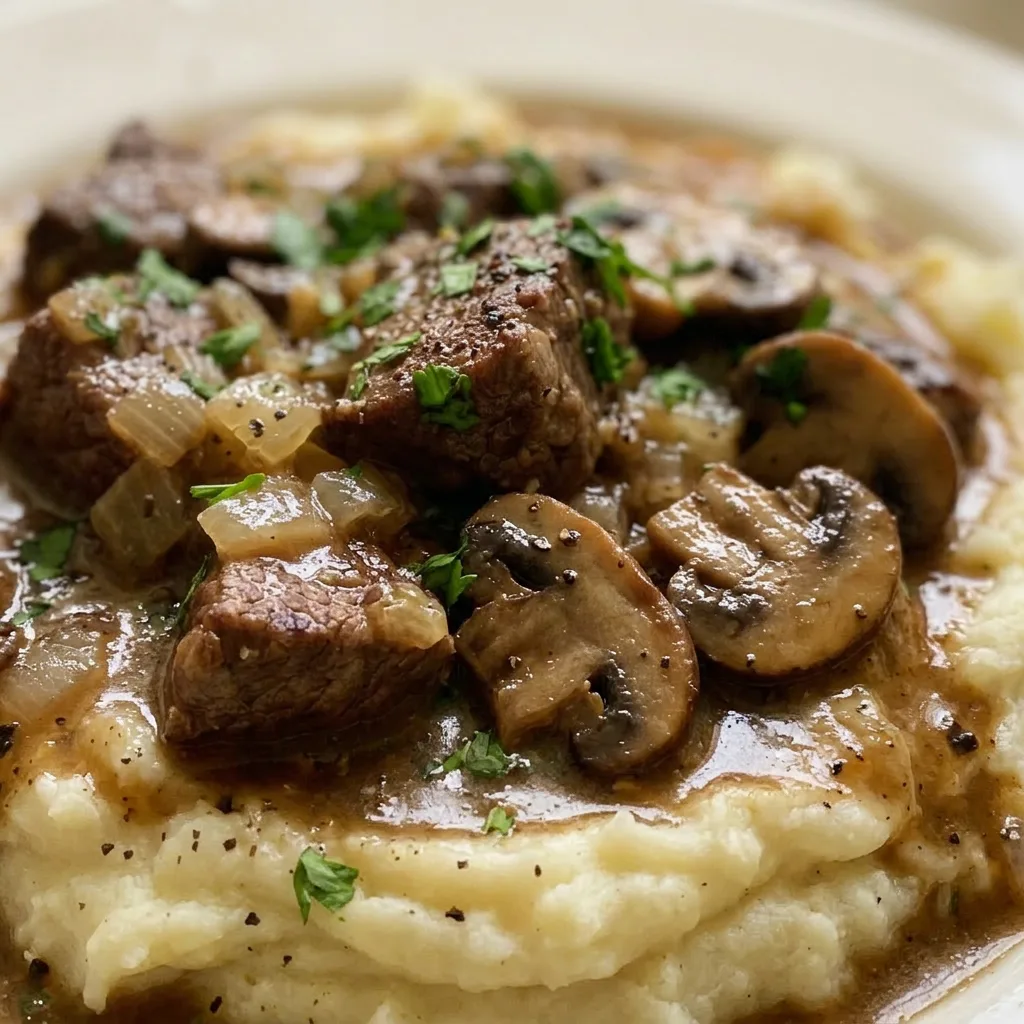
Prep: 15 min · Cook: 1 hr 15 min · Total: 1 hr 30 min · Servings: 6
What to look for in the beef and mushrooms
beef sirloin tips: Buy whole sirloin tips and cut them yourself for even chunks; pre-cut stew meat varies in size and tenderness.
mushrooms: Cremini or button work fine; slice them 1/4-inch thick so they cook through but don’t disappear.
beef broth: Use low sodium broth so you control the salt level; regular broth can make the gravy too salty after simmering.
smoked paprika: Regular paprika is a pale substitute; smoked paprika gives the gravy a subtle smokiness that mimics a long braise.
Sear the beef in batches for deep color, then build the gravy from the fond.
Sear the beef
Heat the oil over medium-high until it shimmers. Add beef without crowding, if the pan gets crowded, the meat steams and turns gray. Each batch should sizzle; after 5 to 7 minutes the pieces should be deep brown, not pale.
Cook the aromatics
In the same pot, the onions should sizzle and soften, scraping up the brown fond. After about 3 minutes they turn translucent. Add garlic and mushrooms; cook until the mushrooms release their liquid and it mostly evaporates, 2 to 3 minutes.
Make the roux
Sprinkle flour over the vegetables and stir constantly for 30 seconds, the paste should bubble and smell toasty, not raw. If it smells raw, cook another 15 seconds.
Add broth and seasonings
Pour in broth while stirring vigorously to prevent lumps. The sauce should look thin at first.
Stir in Worcestershire, powders, paprika, salt, pepper, and bay leaf. Return beef and any juices.
Simmer until tender
Bring to a gentle simmer, bubbles should barely break the surface. Cover and cook for 1 hour to 1 hour 20 minutes.
The beef is done when a fork slides in with little resistance. If the gravy is too thin after that time, proceed to the next step.
Thicken if needed
Mix cornstarch and water into a slurry; pour into the simmering gravy while stirring. Within 3 to 5 minutes the gravy should visibly thicken and coat the back of a spoon. Stop when it reaches your preferred thickness, it will thicken slightly more as it cools.
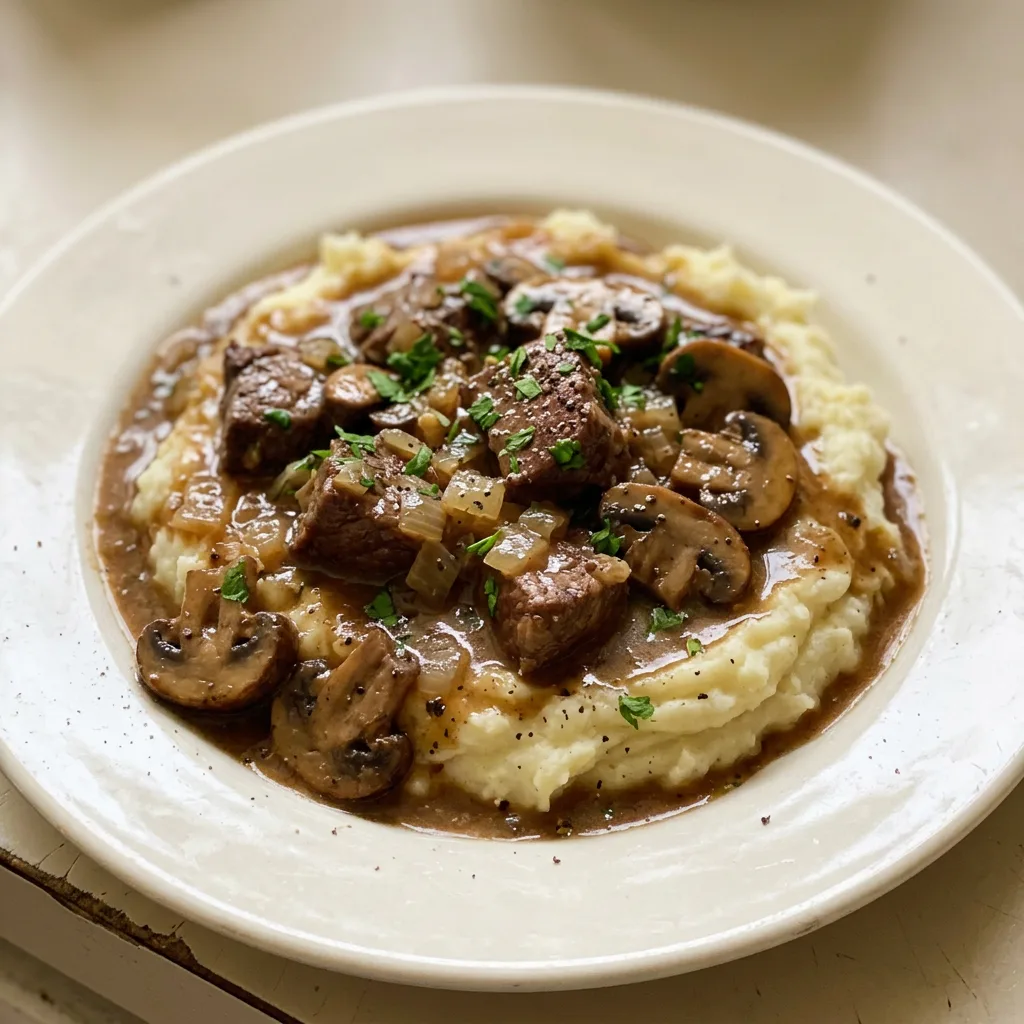
Beef Tips and Gravy
Ingredients
Method
Sear beef chunks:
Warm olive oil in a large skillet or Dutch oven set to medium-high heat. Working in batches to avoid crowding, sear the beef chunks until browned on all sides, roughly 5-7 minutes. Transfer the seared beef to a plate and set aside.Sauté aromatics:
In the same pot, sauté the onion until translucent, about 3 minutes. Then add the minced garlic and sliced mushrooms; continue cooking for another 2-3 minutes.Make flour roux:
Dust the vegetables with flour and stir continuously for 30 seconds to eliminate the raw flour taste. Gradually pour in the beef broth while stirring to prevent lumps from forming.Simmer beef stew:
Stir in Worcestershire sauce, onion powder, garlic powder, smoked paprika, salt, black pepper, and the bay leaf. Return the browned beef along with any accumulated juices to the pot. Lower the heat to a simmer, cover, and cook for 1 hour to 1 hour 20 minutes, until the beef is fork-tender.Thicken gravy:
For a thicker gravy, whisk together cornstarch and water to create a slurry. Pour the slurry into the pot and simmer for 3-5 minutes until the gravy thickens.Serve stew:
Discard the bay leaf and adjust seasoning to taste. Serve hot over mashed potatoes, rice, egg noodles, or biscuits.
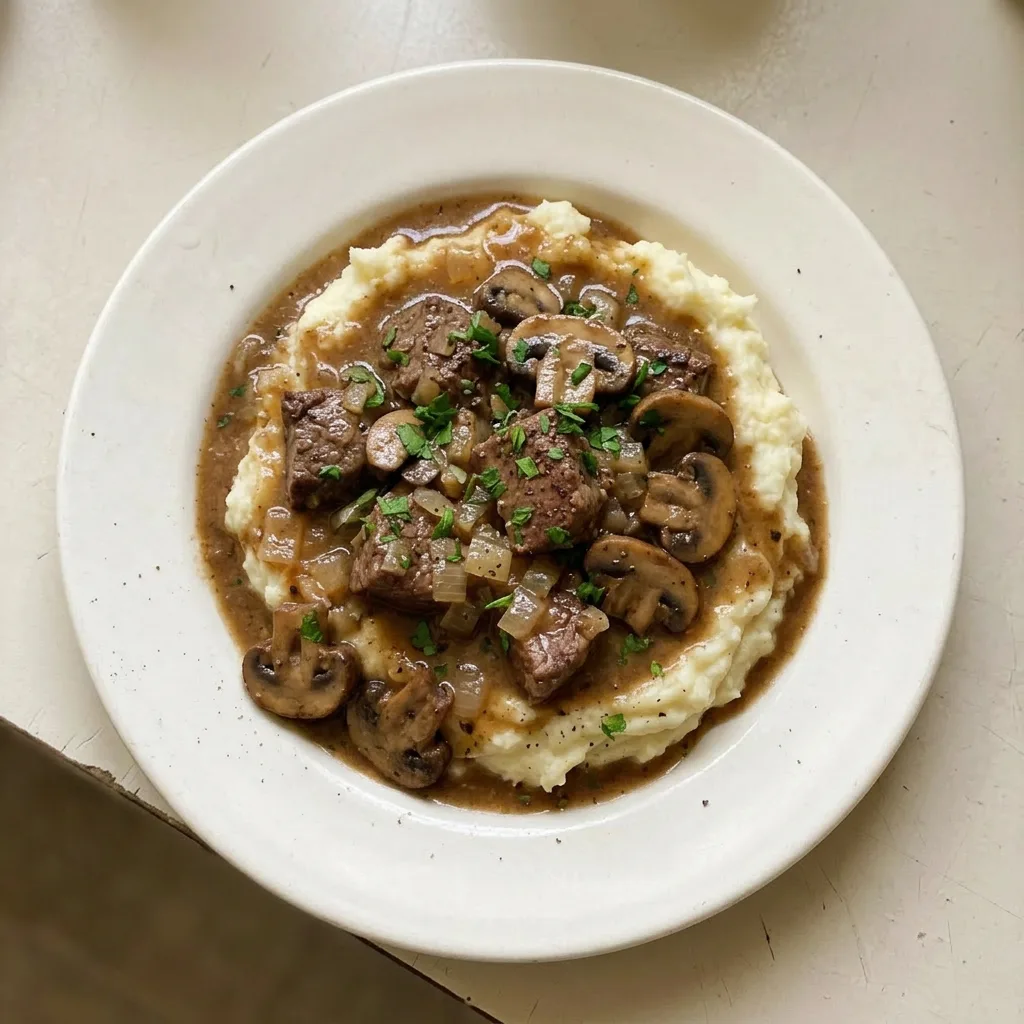
Storage and Serving
Leftovers keep in an airtight container in the fridge for up to 4 days. The gravy thickens as it chills, but that’s normal: when you reheat it, the sauce loosens back up and the beef stays tender. For the best texture, reheat gently on the stovetop over medium-low, stirring occasionally, or in the microwave in 30-second bursts.
If the gravy seems too thick after reheating, splash in a little broth or water. The beef tips are at their peak right after cooking, when the meat is most tender and the gravy is silky. You can make the dish a day ahead; the flavors deepen overnight.
Freezing is not recommended because the gravy’s starch can separate and the texture of the beef may become grainy upon thawing. Serve hot over mashed potatoes, rice, egg noodles, or biscuits.
Tips
- Pat the beef dry with paper towels before searing. Any moisture on the surface turns to steam and prevents browning, so the meat stays gray instead of developing a deep crust.
- Let the seared beef rest on a plate, not in a bowl. If you pile it in a bowl, the juices pool and the bottom pieces steam, losing the crust you just built.
Three ingredients you can swap and one you shouldn’t
Beef sirloin tips: Chuck roast or top round, cut into 1 to 2 inch chunks. Chuck is marbled and becomes very tender; top round is leaner so it can be slightly drier if simmered too long. Both work, but check doneness with a fork.
Mushrooms: Omit or replace with 1 cup diced bell peppers or carrots. Mushrooms add earthy depth; leaving them out means a simpler beef flavor. Peppers add sweetness, carrots add subtle sweetness and color, both change the profile but don’t break the gravy.
Worcestershire sauce: Soy sauce or balsamic vinegar (use same amount). Soy sauce gives savory umami but less tang; balsamic adds acidity and sweetness. Either works, but the gravy’s complexity shifts, taste and adjust salt if using soy.
5 tablespoons cornstarch mixed with 2 tablespoons cold water, added at the end. GF blend works as a direct swap for the initial roux.
Cornstarch slurry thickens quickly but only at the end; it can’t be used for the roux step. The gravy might be less silky and more glossy with cornstarch.

Frequently Asked Questions
Can I make beef tips and gravy ahead of time?
Yes. The dish keeps in the fridge for up to 4 days, and the flavors deepen overnight.
Reheat gently on the stovetop over medium-low, adding a splash of broth if the gravy thickened too much in the fridge. Freezing is not recommended, the starch can separate and the beef may turn grainy.
Why is my gravy lumpy and how can I fix it?
Lumpy gravy usually means the flour wasn’t stirred into the broth fast enough, or the broth was added too quickly. If you see lumps forming, whisk vigorously to break them up, they should dissolve as the gravy simmers. If lumps persist after the full simmer, strain the gravy through a fine-mesh sieve to remove them.
What’s the difference between beef tips and stew meat?
Beef tips come from whole sirloin tips, so you cut them into even 1, 2 inch chunks yourself. Stew meat is pre-cut from various cuts, often scraps, so pieces vary in size and tenderness. For this recipe, either works, if using stew meat, check doneness with a fork earlier since smaller bits may cook faster.
