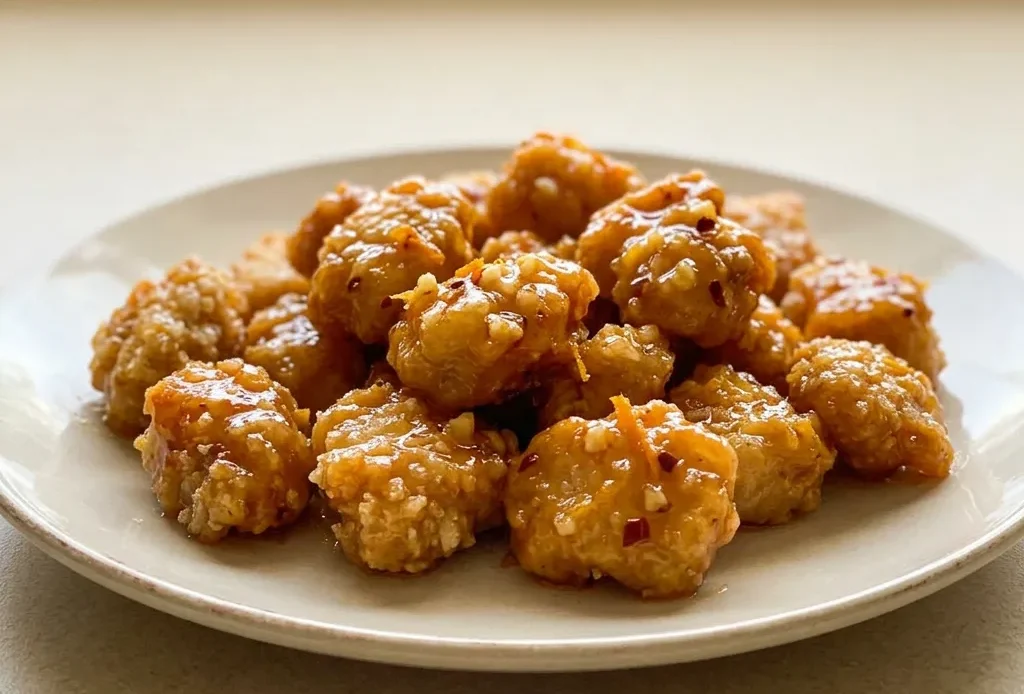
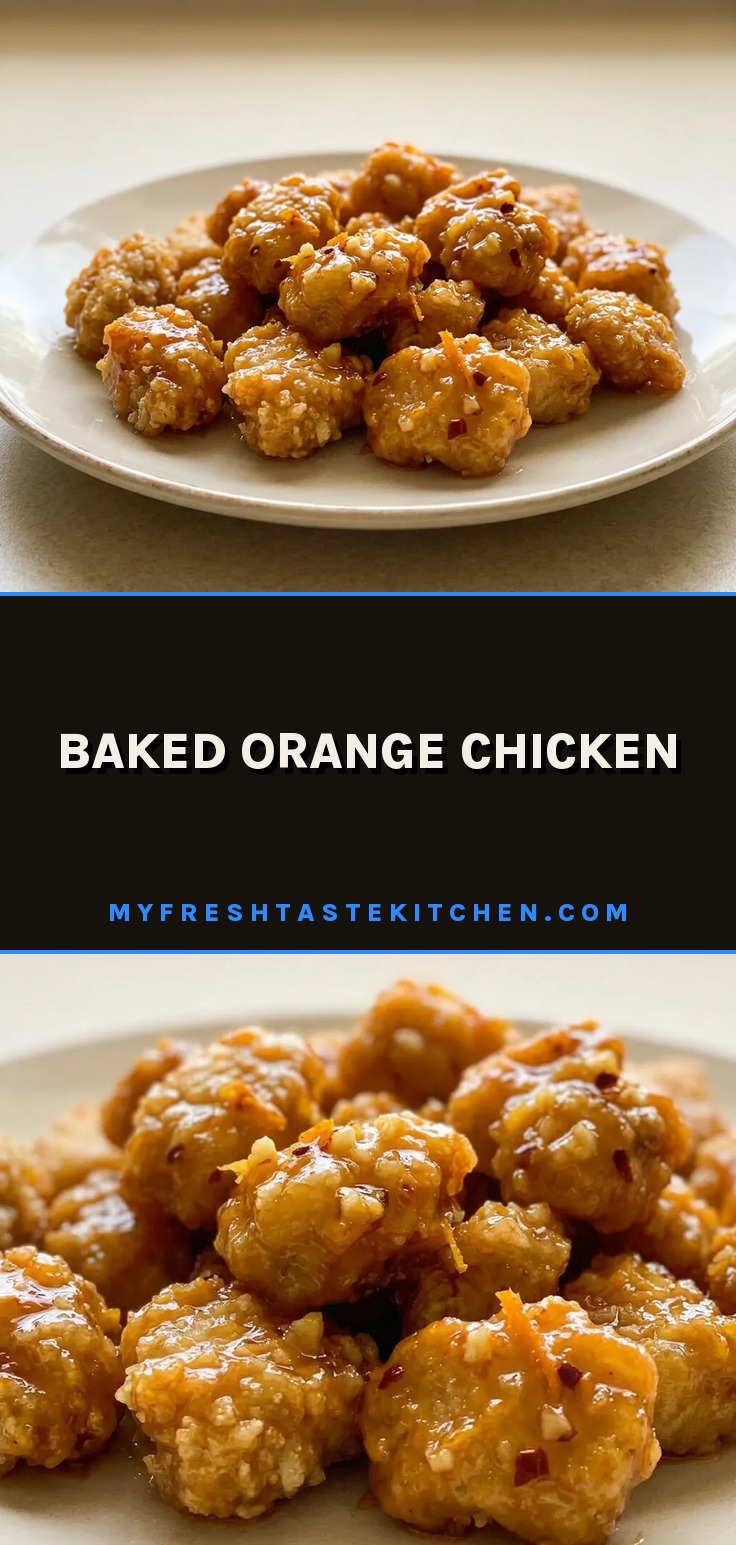
The trick to baked orange chicken isn’t the sauce, it’s the crust staying crunchy after you toss it. Most oven versions go soft within minutes, but grinding panko fine and baking the chicken separate from the glaze buys you that first crisp bite.
This baked orange chicken gives you the sweet-tangy punch of the takeout version, just with less oil and a clearer view of what’s in the pan. The real surprise? How little margin there is between a glossy coating and a soggy one, and that’s exactly where the technique matters.
Ground Panko for Even Crispness
Standard panko flakes are large and uneven, which means some burn while others stay pale. Processing them into fine crumbs solves that. The ground panko coats each piece uniformly, so the entire surface browns together in the oven.
You get a crisp, golden shell without the risk of scorched edges. This also helps the crumbs adhere better through the egg wash, no bare spots.
The result is a coating that mimics traditional breadcrumbs but stays lighter and crunchier. Chinese food recipes chicken often rely on deep-frying for texture, but here the fine panko delivers that same bite from the oven.
Balancing Sweet, Sour, and Savory
Classic orange chicken hits three notes at once. Sugar and vinegar set the sweet-sour baseline, bright and sharp. Soy sauce and sesame oil bring savory depth, rounding out the acidity.
Orange juice and zest add fresh citrus that lifts everything. You taste the tang first, then the sweetness, then the salty backbone. It’s a straightforward balance, easy to adjust to your preference.
Easy Asian chicken recipes often lean too sweet or too sour; this sauce keeps both in check. The flavors cling to the chicken without overwhelming it.
Baked, Not Fried, But Still Crisp
Deep-frying gives you crunch, but it’s messy and heavy. Baking simplifies the process and cuts the oil.
The trick is the panko coating plus a light spray of oil before baking. That oil helps the crumbs crisp up in the dry heat. Since the chicken bakes on a sheet pan, you get even browning on all sides.
Chicken Asian recipes often turn out soggy when baked, but separating the cooking from the sauce keeps the crust intact. You toss it at the end, just before serving, so every bite stays crunchy.
Cornstarch and Rice Wine in the Sauce
Cornstarch gives the sauce a glossy, clingy texture that coats each piece of chicken. Without it, the liquid would run off and pool on the plate. Rice wine adds a subtle acidity and depth that complements the vinegar and orange.
It rounds the flavor without standing out. When you boil the sauce, the cornstarch activates, thickening it to just the right consistency, not gluey, but enough to stick.
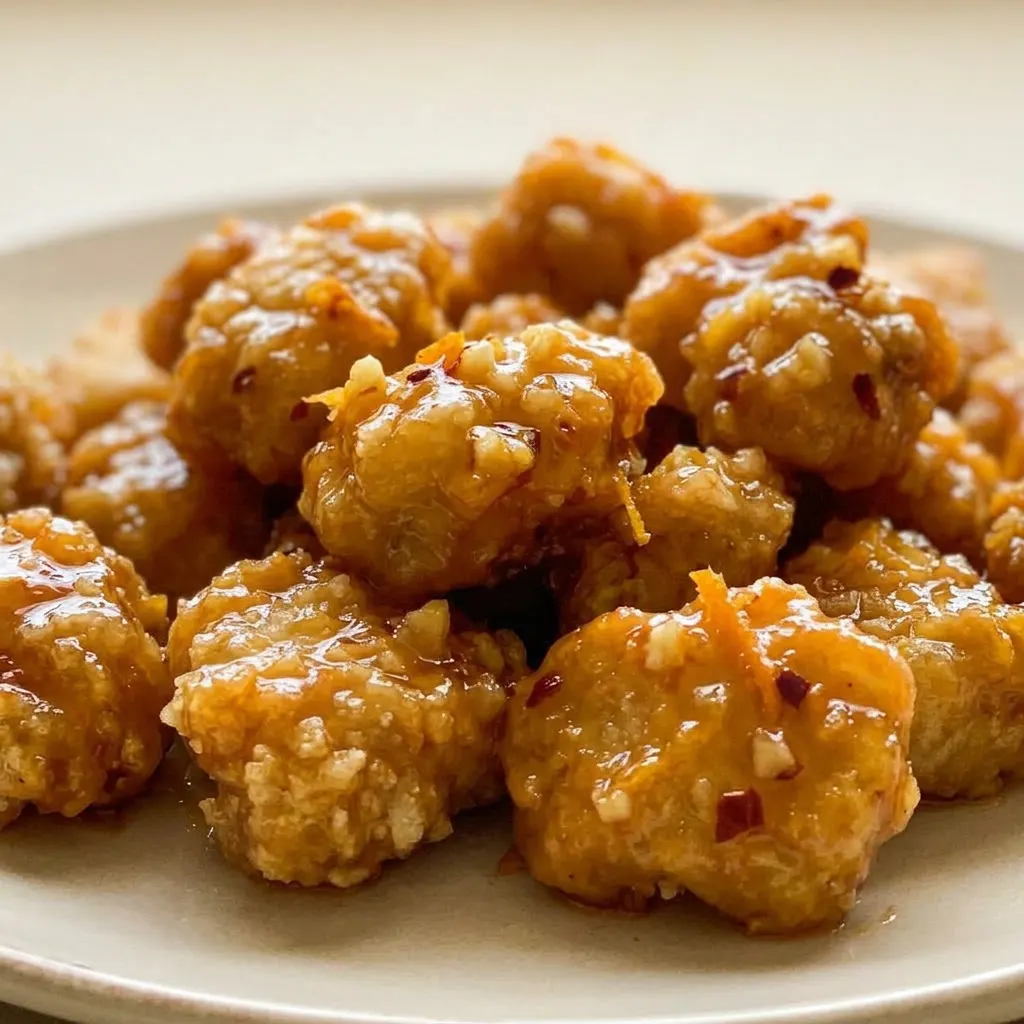
Chinese dinner recipes often rely on this combo for a silky finish. The sauce stays translucent, so you see the orange zest and pepper flakes suspended in it.
Prep: 10 min · Cook: 20 min · Total: 30 min · Servings: 6 · Calories: 420 kcal
What to Know About the Ingredients
Panko breadcrumbs: Grind them finely so they brown evenly and stick to the chicken without burning.
Chicken thighs: Boneless, skinless thighs stay moist during baking and hold up to the sauce.
Orange juice and zest: Use fresh orange juice and grate the zest before juicing for the brightest flavor.
Rice wine: Substitute dry white wine if needed; it adds acidity without overpowering the sauce.
Cornstarch: Dissolves easily in the sauce; whisk constantly as it boils to avoid lumps.
Baking the Chicken While Making the Sauce
Grind the Panko
Pulse panko in a food processor until it looks like fine sand. Stop when no large flakes remain, uneven crumbs lead to patchy browning.
Set Up the Breading Station
Place flour, beaten eggs, and ground panko in separate bowls. Cut chicken into bite-sized pieces so they cook evenly in 20 minutes.
Bread the Chicken
Coat each piece in flour (shake off excess), then egg, then panko. Press gently so crumbs stick. Bare spots will brown differently.
Oil and Bake
Arrange breaded chicken on a baking sheet in a single layer. Spray lightly with oil, this is what makes it crisp instead of dry. Bake at 400°F for 20 to 25 minutes.
Start the Sauce
While chicken bakes, heat 1 tablespoon oil in a saucepan. Add ginger, garlic, and red pepper flakes. Stir for 30 seconds until you smell them, don’t let the garlic brown.
Finish the Sauce
Add cornstarch, rice wine, orange juice, sesame oil, soy sauce, sugar, vinegar, and zest. Bring to a boil, stirring constantly. The sauce will thicken and turn glossy, pull it off the heat as soon as it coats a spoon.
Combine and Serve
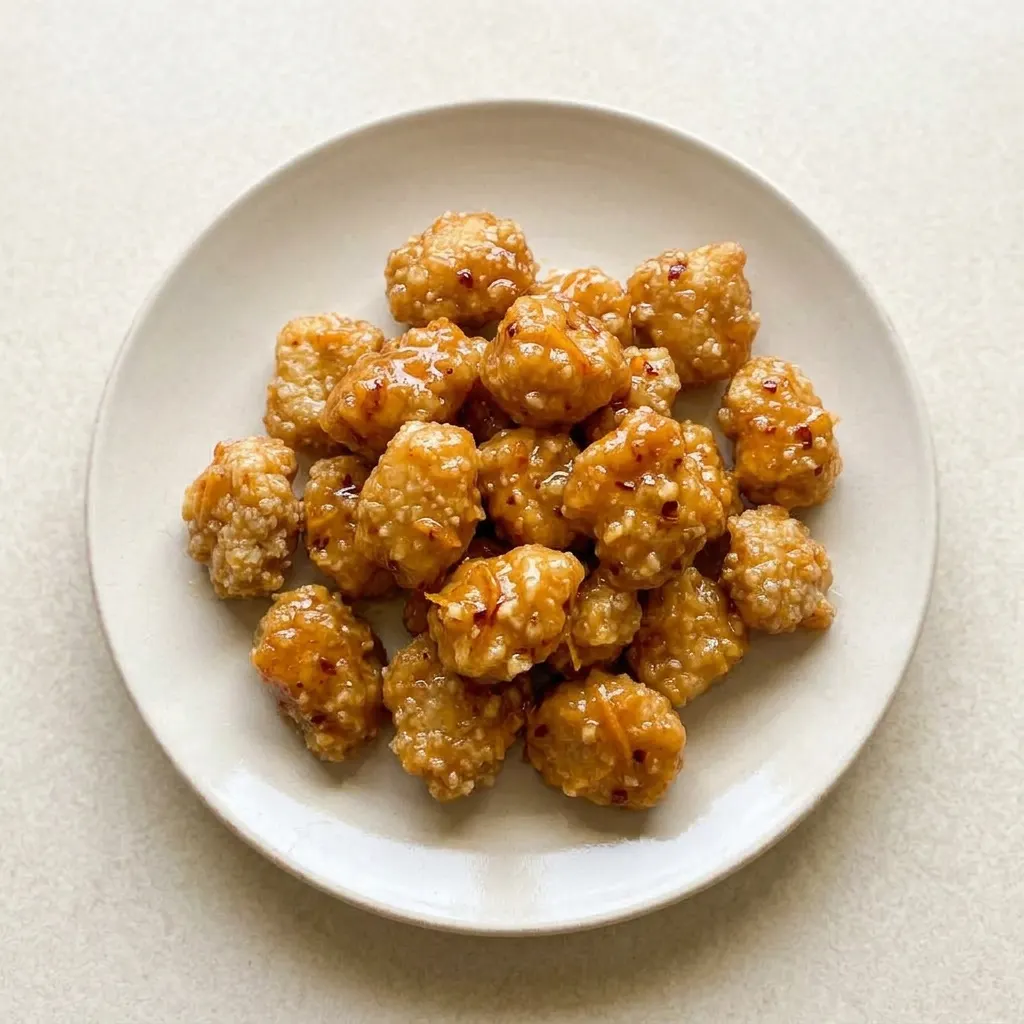
Pour the hot sauce over the baked chicken and toss gently. The crust stays crunchy this way. Serve immediately.
Baked Orange Chicken
Ingredients
Chicken
- 1 cup panko breadcrumbs
- 2 pounds boneless, skinless chicken thighs
- 2 large eggs, beaten
- 1/2 cup all-purpose flour
- 1 tablespoon vegetable oil, divided
Sauce
- 1 tablespoon vegetable oil, divided
- 1 1/2 tablespoons freshly minced ginger
- 2 teaspoons minced garlic
- 1/2 teaspoon crushed red pepper flakes
- 1 tablespoon cornstarch
- 2 tablespoons rice wine (or substitute white wine)
- 1/4 cup fresh orange juice (reserve zest from orange)
- 1 teaspoon sesame oil
- 3 tablespoons low sodium soy sauce
- 10 tablespoons granulated sugar
- 10 tablespoons distilled white vinegar
- Zest of 1 orange
Instructions
Chicken
Preheat Oven and Grind Panko:
Set oven to 400°F (205°C). Process panko in a food processor until finely ground, resembling standard breadcrumbs.Set Up Breading Station:
Arrange four bowls: one containing ground panko, one with flour, one with beaten eggs, and one with chicken cut into bite-sized pieces.Bread Chicken Pieces:
Coat each chicken piece first in flour, then egg, then panko; transfer to a baking sheet. Lightly spray with cooking oil or brush with vegetable oil.Bake Chicken:
Bake for 20–25 minutes. While chicken cooks, prepare the sauce.
Sauce
Sauté Aromatics:
In a saucepan over medium heat, add the remaining 1 tablespoon vegetable oil, ginger, garlic, and crushed red pepper; sauté for 30 seconds until aromatic.Finish Sauce and Combine:
Add the rest of the sauce components (cornstarch, rice wine, orange juice, sesame oil, soy sauce, sugar, vinegar, orange zest). Bring to a boil and cook until sauce thickens, then remove from heat. Once chicken is baked, combine with sauce and serve immediately.
What You Can Swap and What to Leave Alone
Chicken thighs: Boneless, skinless chicken breasts. Breasts cook faster and dry out more easily; check for doneness at 15 minutes and pull them earlier. The leaner meat won’t stay as juicy under the sauce.
Rice wine: Dry sherry or white wine. Both add the same mild acidity. Dry sherry is closest; white wine works but may shift the flavor slightly toward wine rather than the neutral backdrop rice wine provides.
Distilled white vinegar: Apple cider vinegar. Milder tang with a fruity note. Start with the same 10 tablespoons, then taste, the sauce will be less sharp, but the sweet-sour balance tilts differently.
Panko breadcrumbs: Gluten-free breadcrumbs or almond flour. Gluten-free breadcrumbs work if ground fine; they brown similarly but may be less crisp. Almond flour won’t replicate the crunch, it browns faster and turns oily.
For a gluten-free version, use crushed cornflakes or gluten-free panko for the closest texture.
Storage and Serving
For the best texture, serve baked orange chicken immediately after tossing with the sauce. The coating stays crisp for about 10 minutes, then begins to soften. If you need to hold it, keep the chicken and sauce separate until serving.
Leftover chicken and sauce should be stored separately in airtight containers. The chicken will keep in the fridge for up to 2 days; the sauce keeps for 4 days. After a day in the fridge, the crust loses its crunch.
Reheat the chicken on a baking sheet at 350°F for 5 to 7 minutes until hot and crisp. Warm the sauce in a saucepan or microwave, then toss together. Do not reheat the chicken in the microwave, or the coating turns rubbery.
Freezing is not recommended: the panko crust becomes soggy upon thawing, and the sauce’s texture may separate.
Tips
- Flip the chicken pieces halfway through baking to ensure both sides brown evenly. The bottom side pressed against the sheet pan can steam and stay pale if left untouched.
People drown the chicken in sauce and then wonder why it’s a soggy mess instead of crispy like takeout.
Frequently Asked Questions
Can I make the sauce ahead of time and reheat it?
Yes, the sauce keeps in the fridge for up to 4 days. Reheat it in a saucepan or microwave until bubbling, then toss with freshly baked chicken. The sauce stays glossy and thick; just whisk briefly if it separates.
How do I keep the chicken crispy after adding the sauce?
Toss the baked chicken with hot sauce just before serving, the crust stays crisp for about 10 minutes. For leftovers, reheat chicken separately on a baking sheet at 350°F for 5 to 7 minutes, then add warm sauce. Never microwave the chicken; the coating turns rubbery.
Is this dish supposed to be as sweet as takeout orange chicken?
It’s close but a bit less sweet and more balanced. The sauce uses 10 tablespoons each of sugar and vinegar, so the sweet-sour tang is pronounced, but the soy sauce and sesame oil add savory depth that takeout versions often skip. Taste and adjust sugar or vinegar to your preference.
Can I use chicken breasts instead of thighs?
Yes, but breasts cook faster and dry out more easily. Check for doneness at 15 minutes and pull them earlier. The leaner meat won’t stay as juicy under the sauce, so thighs are preferred for moisture.