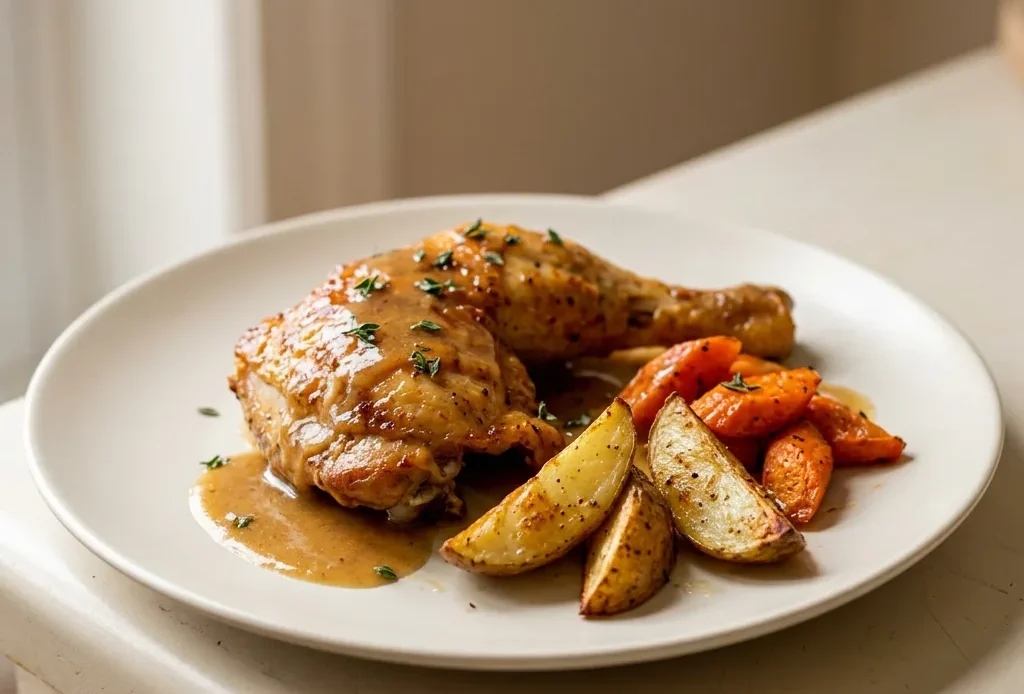
Most people dry out chicken legs by roasting them uncovered the whole time. The dark meat ends up tough because the connective tissue never fully breaks down, and the skin burns before the interior is done. This recipe works because it separates the cooking into two distinct jobs: first, gentle steam tenderizes the meat and cooks the vegetables, then high heat crisps the skin.
The butter-based marinade gets stuffed under the skin, so the flavor penetrates directly into the meat instead of just sitting on top. It’s a weeknight meal that looks like you fussed, but the real work happens in the oven.
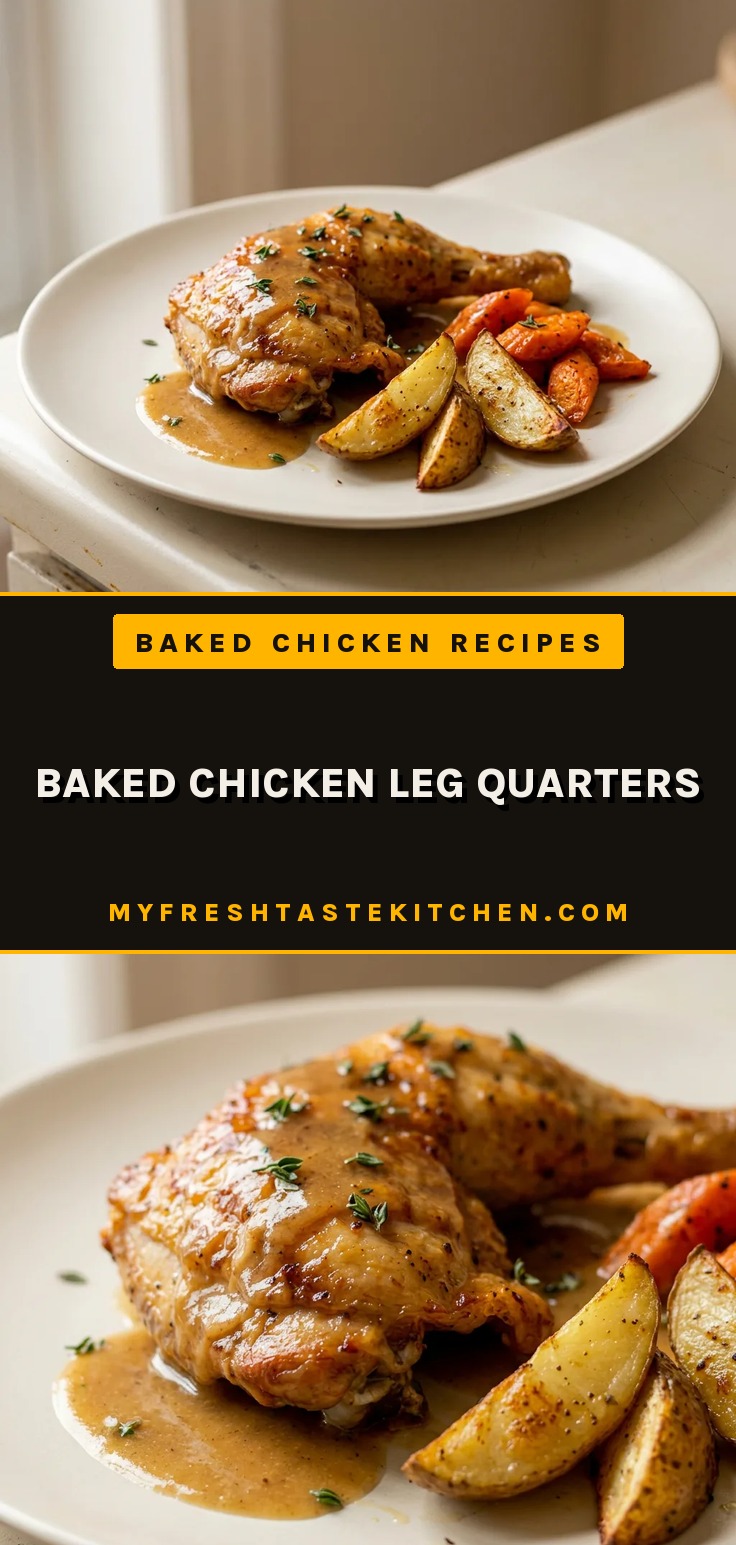
These baked chicken leg quarters come out juicy, with crackling skin and a built-in vegetable side that tastes like the chicken itself.
Marinade under the skin
Stuffing the marinade directly under the skin is the key to flavorful, moist meat. The skin acts as a barrier, trapping the butter and seasonings against the flesh.
As it melts, the butter bastes the meat from within, while the skin stays dry enough to crisp later. You get seasoned, juicy meat without a soggy exterior.
This technique bypasses the skin’s natural insulation, putting flavor exactly where it’s needed.
Vegetable bed for steam and flavor
Placing potatoes and carrots under the rack serves two purposes: they soak up the chicken drippings, becoming rich and savory, and the boiling water added to the pan creates steam that gently cooks the vegetables and keeps the chicken moist. After the chicken rests, you toss the vegetables with some marinade and roast them separately to finish. The result is a built-in side dish that tastes of the chicken itself, no extra effort.
Two-temperature roasting logic
Start low and covered to cook the leg quarters gently without drying them out. The foil traps steam, keeping the meat tender as it comes up to temperature. Then uncover and crank the heat to crisp the skin.
Dark meat needs to reach 180 to 185°F to break down connective tissue fully, anything less and the meat will be chewy. This two-step method gives you both moist meat and crackling skin.
Pan juices become quick gravy
After roasting, the pan holds concentrated juices from the chicken and the wine that deglazed the pan. Those juices, thickened with a cornstarch slurry, become a simple gravy that ties the dish together.
Spoon it over the chicken and vegetables at the table. The wine adds acidity that balances the rich butter and maple syrup, making the gravy more than just salty fat, it brightens every bite.
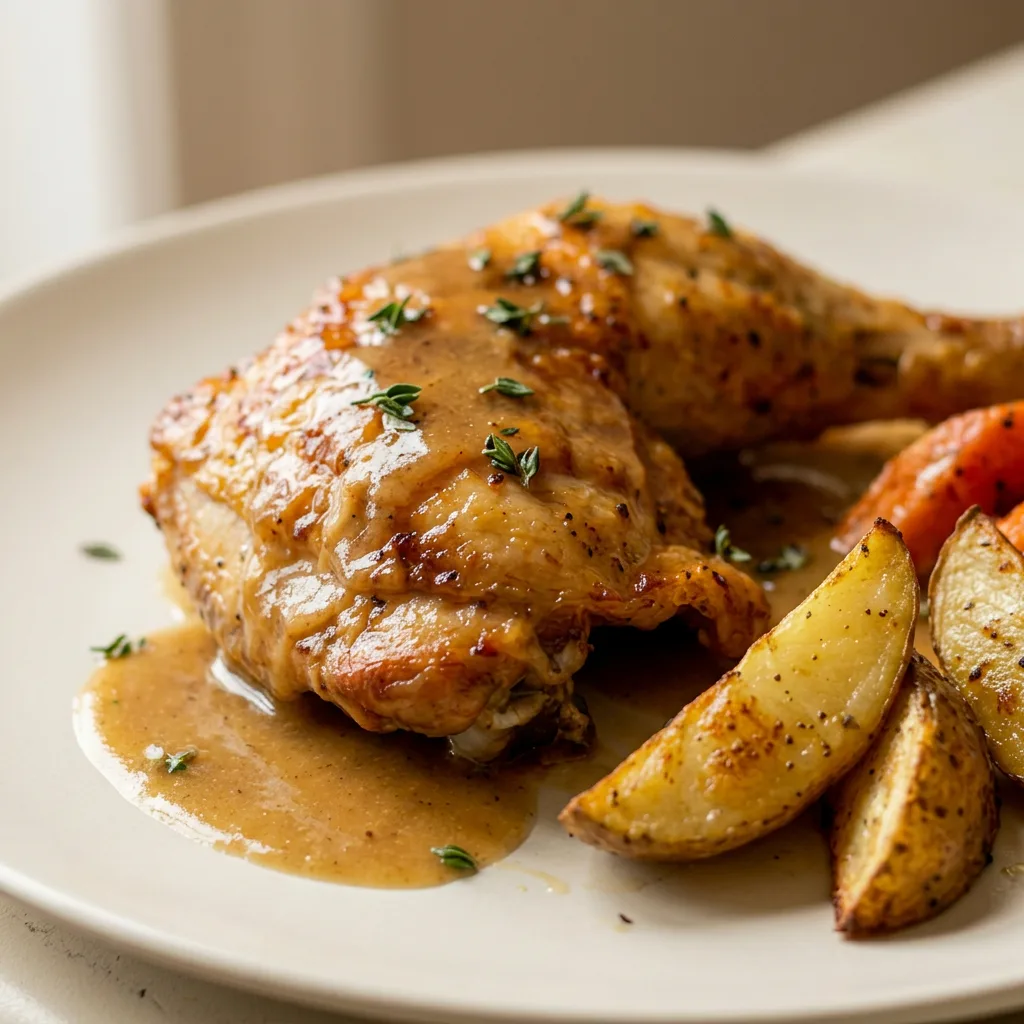
Prep: 20 min · Cook: 1 hr · Total: 1 hr 50 min · Servings: 6 · Calories: 470 kcal
Key ingredients for this recipe
Chicken leg quarters: Look for leg quarters with skin intact; separating it from the meat is key to stuffing the marinade under.
Shallots: Use 6 large shallots or 1 large onion; slice thin so they soften completely during the 15-minute sweat.
Smoked paprika: Sweet smoked paprika gives deep color and a mild smoky flavor; avoid hot or bitter paprika.
White wine: Use a dry white wine like Sauvignon Blanc; it deglazes the pan and adds acidity to balance the butter.
The method: gentle steam, then high heat to finish
Marinade the chicken
Stuff a generous amount of the chilled marinade under the skin, working it evenly over the leg and thigh. You’ll see the skin puff slightly. Brush the rest on top.
Let it sit at least 30 minutes, overnight is better.
Arrange and cover
Set the chicken on a rack over the vegetable bed. Pour in boiling water until it just reaches the vegetables’ tops, you’ll see steam rise. Cover the pan tightly with foil, crimping edges so no steam escapes.
First roast: gentle cooking
Bake at 350°F for 40 minutes. The foil traps steam, keeping the meat tender. When you lift the foil, the chicken should look pale and moist, not browned.
Reserve the pan juices for gravy.
Second roast: crisp the skin
Increase oven to 425°F. Return uncovered chicken and continue roasting until the skin is golden and crisp, about 15 to 20 minutes. The thickest part of the thigh should register 180, 185°F, anything less and the meat will be chewy.
Rest and finish vegetables
Transfer chicken to a plate and rest 15 minutes. Meanwhile, toss the steamed vegetables with some reserved marinade and roast at 400°F for 15 minutes. They’ll brown and caramelize around the edges.
Make the gravy
Pour the reserved pan juices into a saucepan, bring to a simmer, and whisk in the cornstarch slurry. Cook until the gravy thickens and turns glossy, about 1 minute. Taste, the wine should brighten the buttery base.
Baked Chicken Leg Quarters
Ingredients
Marinade
- Scant 1/2 cup unsalted butter 100g
- 6 large shallots (or 1 large onion), sliced thinly
- 6 cloves garlic, peeled
- 2 tbsp maple syrup (or honey / brown sugar)
- 2 tbsp lemon juice
- 2 tsp Italian seasoning
- 2 tsp mustard powder (or 1 tsp Dijon mustard)
- 2 tsp garlic powder
- 2 tsp sweet smoked paprika
- 1 1/2 tsp salt
- Pinch red pepper flakes (or cayenne, optional)
- 1/2 cup chicken stock (or broth) 125ml
Chicken
- 6 medium chicken leg quarters (chicken Marylands)
- Salt and black pepper
- 1/3 cup white wine (or Marsala / chicken stock) 80ml
- 2 tsp cornstarch (cornflour), diluted in 1-2 tbsp cold water
- Fresh thyme, to garnish
Vegetables
- 6 medium potatoes, cut into wedges
- 6 medium carrots, peeled, cut into quarters
- 2 cups boiling water (or as needed) 500ml
Instructions
Marinade
Melt butter with shallots:
In a saucepan, melt butter over low heat. Add shallots and garlic; stir to coat.Cook shallots covered:
Cook covered with a tight lid or parchment paper over low heat for 15 minutes, stirring once or twice, until shallots soften.Puree marinade mixture:
When shallots are translucent, mix in seasonings, herbs, maple syrup, lemon juice, and chicken stock. Puree with an immersion blender or food processor; transfer to a bowl. Refrigerate (or freeze briefly) until needed.
Chicken
Stuff marinade under skin:
Trim extra skin and fat from chicken; pat dry. Gently separate skin from leg and thigh with a spoon. Stuff a generous amount of marinade under the skin and brush remaining on top. Marinate for at least 30 minutes or overnight. Reserve leftover marinade.Prepare vegetables and rack:
Preheat oven to 400°F (205°C) or 350°F (175°C) if fan-forced. Spread potato wedges and carrots across the bottom of a roasting pan. Place a rack on top; pour in enough hot water to just cover the vegetables.Bake chicken covered:
Arrange chicken legs on the rack in a single layer; season with salt and pepper. Cover chicken tightly with foil (not the whole pan). Bake for 40 minutes; remove foil and baste with reserved marinade.Increase heat to crisp:
Increase oven to 425°F (220°C) / 400°F (205°C) fan. Return chicken and bake 15-20 minutes until internal temperature in thickest part of thigh reaches 180-185°F (82-85°C). Transfer chicken to a plate; cover loosely with foil and rest for 15 minutes.Roast vegetables separately:
Pour cooking juices from the pan into a container; set aside. Toss vegetables with some marinade and roast for 15 minutes while chicken rests.Thicken pan juices:
Add cornstarch slurry to the reserved pan juices; bring to a simmer until thickened. Spoon over chicken and vegetables when serving.
Vegetables
Roast chicken on sheet:
Place marinated chicken on a rimmed baking sheet; add wine or chicken stock. Cover tightly with foil; roast for 40 minutes.Crisp skin and serve:
Uncover, baste with marinade, and increase heat to crisp the skin—another 10-15 minutes until golden. Spoon pan juices over chicken; garnish with thyme and serve.
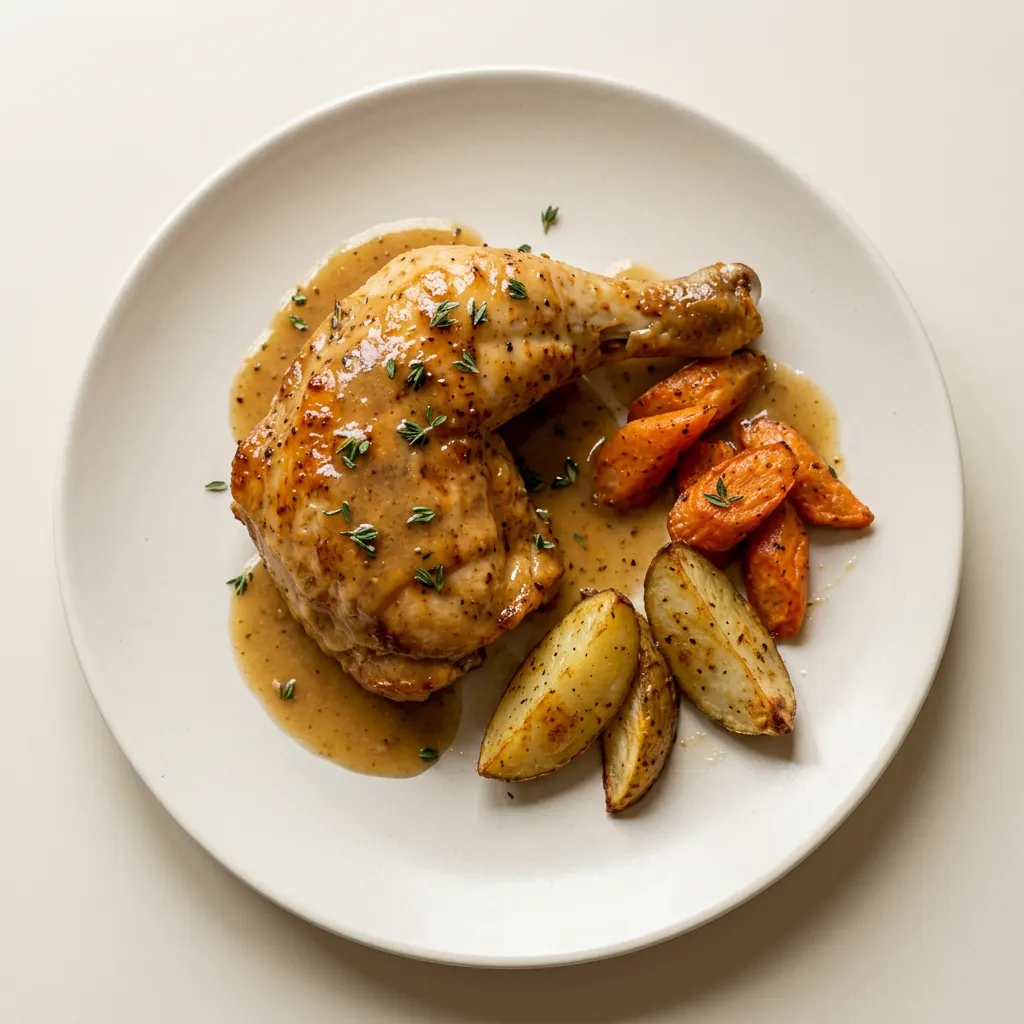
The ingredient swaps that keep the skin crisp and the meat moist
Maple syrup: Honey or brown sugar. Both add sweetness and help with browning. Honey is a direct liquid swap; brown sugar may darken the skin faster, so watch it during the second roast.
Mustard powder: 1 tsp Dijon mustard (not a full 2 tsp). Dijon adds the same tang but with extra moisture. Use half the amount to avoid thinning the marinade.
The flavor will be slightly sharper.
White wine: Marsala or chicken stock. Marsala adds sweetness; skip the maple syrup if you go that route. Stock gives a milder, less acidic gravy.
The wine’s acidity normally balances the butter, stock won’t, so add a splash of lemon juice or vinegar to the pan juices before thickening.
Butter: Plant-based butter (for dairy-free). Use a block-style vegan butter with at least 80% fat, spreads won’t work.
The marinade will be slightly less rich, but the skin should still crisp. Check the label for salt and adjust the added salt.
Tips
- Place the chicken legs skin side up on the rack, making sure they don’t touch each other. Overcrowding traps steam and prevents the skin from crisping during the second roast.
- For the gravy, after whisking in the cornstarch slurry, simmer for at least 1 minute to cook out the raw starch taste. If it’s too thick, thin with a splash of chicken stock.
Storage and Serving
For the best texture, serve the chicken within 30 minutes of the final roast. The skin stays crisp, and the gravy is at its glossy best. Leftovers keep in an airtight container in the fridge for up to 3 days.
The skin will soften, but the meat stays moist. Reheat in a 350°F oven, uncovered, for 10 to 15 minutes to restore some crispness. The gravy thickens when chilled; thin it with a splash of stock or water when reheating.
The vegetables also reheat well, though they soften further. Freezing isn’t recommended for the whole dish: the skin turns rubbery, and the vegetables become waterlogged. You can freeze the marinade (without the chicken) for up to 3 months.
Thaw in the fridge before using. If you plan to make ahead, marinate the chicken and prep the vegetables a day ahead, then assemble and roast just before serving.
I still use a spoon to gently separate the skin from the thigh and leg, even though it feels fussy, it’s the only way the butter gets under and the skin turns crisp.
Frequently Asked Questions
Can I prepare the marinade and marinate the chicken a day ahead?
Yes. Make the marinade up to 3 days ahead and refrigerate.
Marinate the chicken for up to 24 hours, the butter and seasonings will penetrate deeper under the skin. If you go overnight, pull the chicken from the fridge 30 minutes before roasting to take the chill off.
How do I know when the chicken is fully cooked without a thermometer?
Pierce the thickest part of the thigh with a skewer; the juices should run clear, not pink. The leg will also feel loose in the joint when wiggled. But dark meat needs to hit 180, 185°F to break down connective tissue, without a thermometer you risk chewy meat.
Can I use chicken thighs or drumsticks instead of leg quarters?
Yes, but cooking times change. Thighs and drumsticks are smaller, so check for doneness 10 to 15 minutes earlier. The skin-on, bone-in pieces still work with the under-skin stuffing technique.
Why does the recipe call for boiling water under the vegetables?
The boiling water creates steam that gently cooks the vegetables and keeps the chicken moist during the first covered roast. Without it, the vegetables would dry out and the chicken would lose moisture to the hot pan.