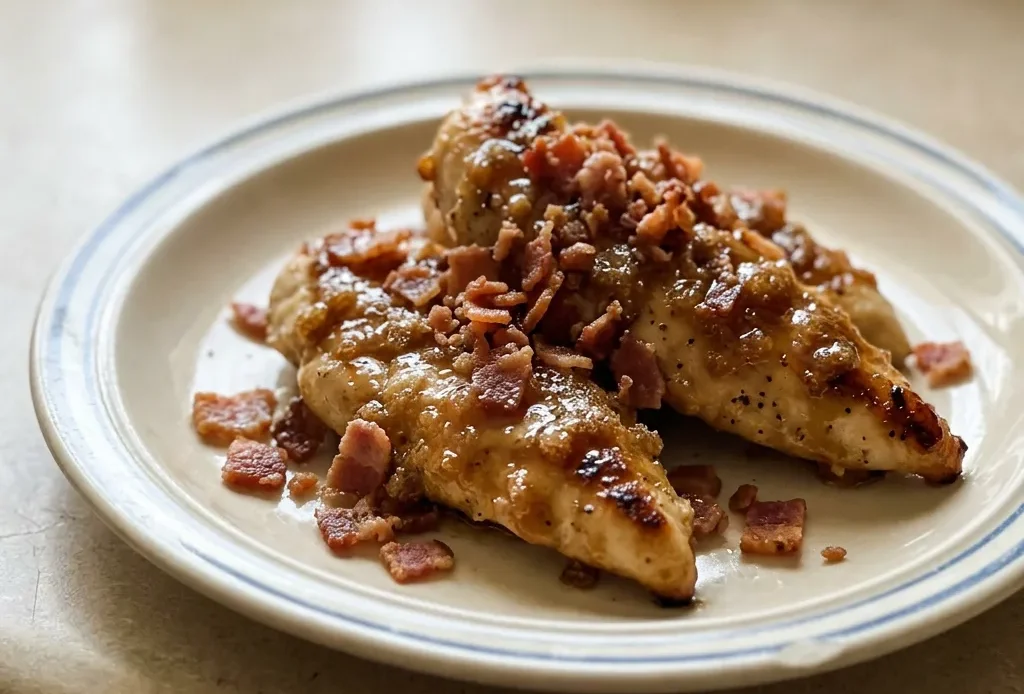
The trick to bacon brown sugar chicken tenders that don’t burn or turn greasy is all in the coating order. When brown sugar sits directly on raw chicken, it draws out moisture and pools into a sticky mess that scorches before the meat cooks through.
But here, the sugar clings to pre-cooked bacon bits first, which absorb the moisture and spread the fat evenly across every tender. That fat buffers the sugar from direct heat, letting it caramelize slowly into a glossy, tacky crust without any bitter char.
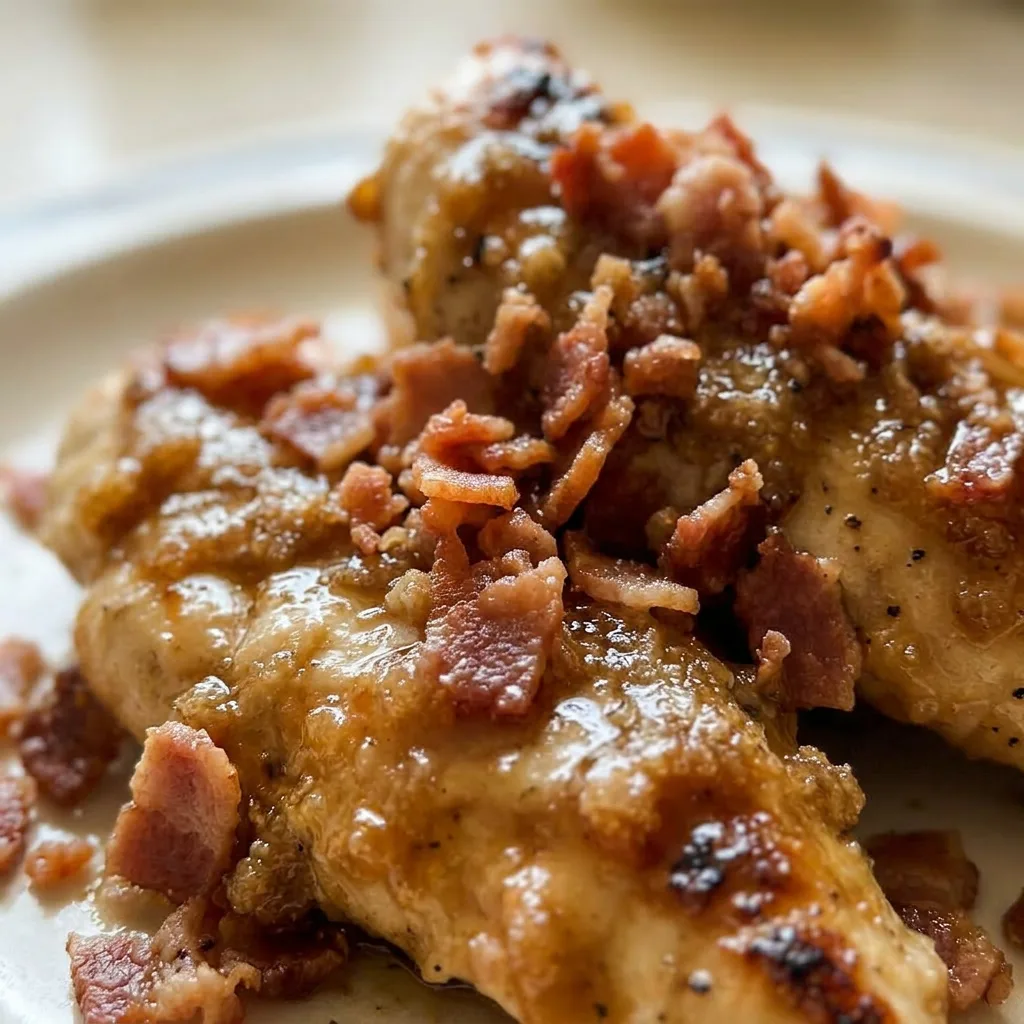
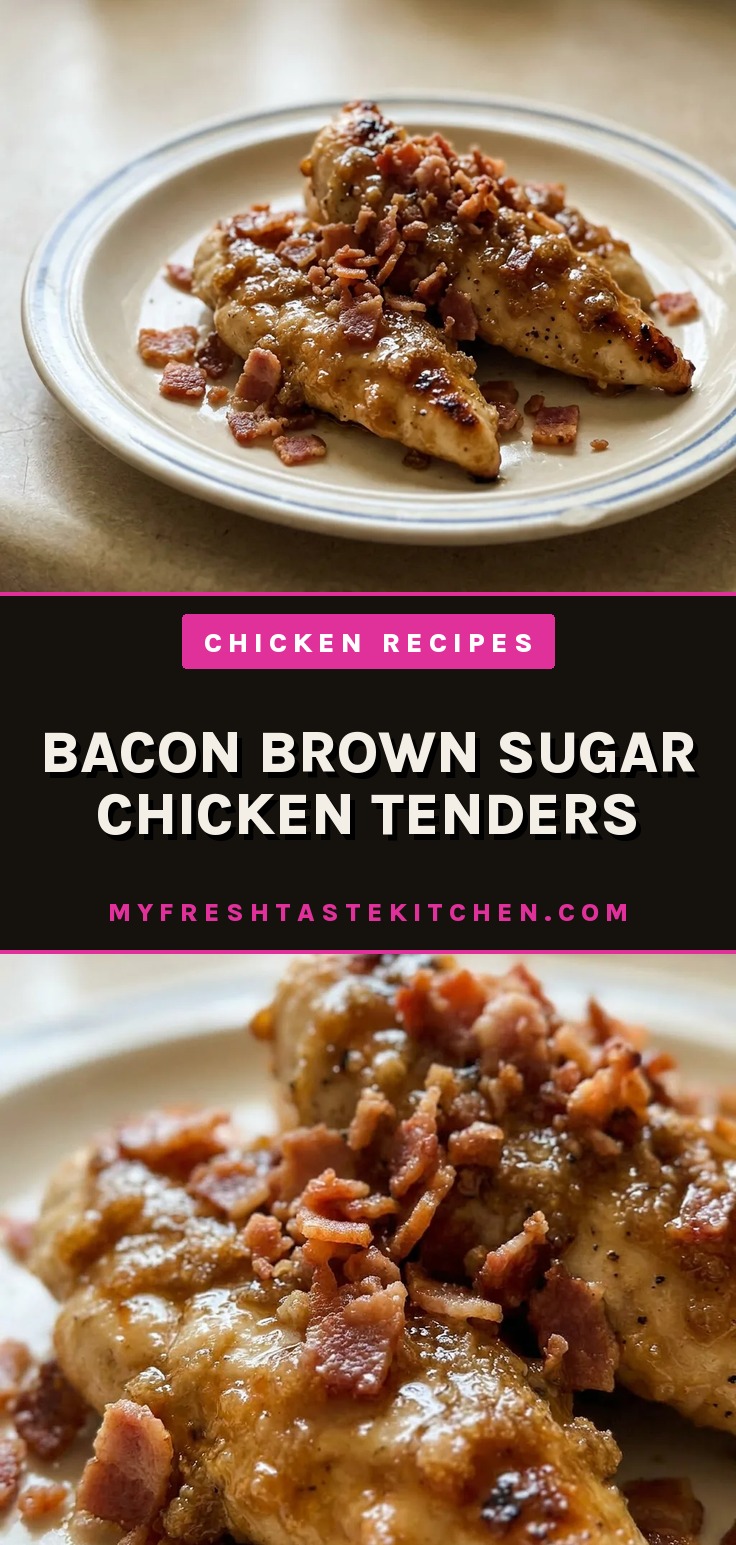
You’ll see the coating shift from sandy to amber as it bakes, and the bacon stays crisp because it’s already rendered. No sugar burns, no soggy bits, just a sweet-salty crunch that clings to each bite.
And yes, these bacon brown sugar chicken tenders work with pantry staples, no special ingredients needed.
Why doesn’t the brown sugar burn before the chicken is done?
Bacon bits bring fat and a chewy texture that help the brown sugar caramelize evenly across the chicken’s surface. The sugar-to-bacon ratio is heavy enough on the meat side to keep the sugar from pooling or scorching. As the chicken bakes, the sugar melts into the fat from the bacon, forming a sticky glaze that bubbles and darkens without turning bitter.
You’ll see the coating go from sandy to glossy to a deep amber. Because the tenders are relatively thin, they cook through in the same time the sugar needs to caramelize. The bacon bits stay visible throughout, adding crunch and smoky flavor that balances the sweetness.
The result is a tacky, burnished crust, not a charred one.
Why pre-cooked bacon bits instead of raw bacon?
Raw bacon strips would render fat and steam as the chicken bakes, turning the coating soggy instead of crisp. The released grease would also pool on the sheet, braising the tenders rather than letting them develop a dry, caramelized surface. Using pre-cooked bits means the bacon is already crisp and fat-rendered.
During baking, those bits stay crunchy because they aren’t giving off moisture. The chicken itself stays tender because it’s not being cooked in extra liquid. You end up with a coating that snaps when you bite, and the meat remains moist.
Look for bacon bits that are crumbly, not chewy, and you’ll get the right texture every time.
What’s the point of tossing everything in a bowl before baking?
Tossing the chicken in a bowl gets every tender evenly coated in the sugar-bacon mixture. If you just sprinkle the coating onto the chicken on the baking sheet, you’ll get clumps of sugar and bare patches. The bowl method also lets the brown sugar stick better because the chicken’s natural moisture and the bacon fat help the coating adhere.
You can see the sugar clinging evenly after a few tosses. This even distribution means each bite has the same balance of sweet, smoky, and savory.
No piece ends up bland or overloaded. Just dump everything in, give it a few turns, and you’re set.
Prep: 15 min · Cook: 25 min · Total: 39 min · Servings: 4 · Calories: 320 kcal
Ingredient choices that matter here
Chicken tenders: Buy fresh, not frozen; frozen tenders release too much water and the coating won’t caramelize.
Bacon bits: Use pre-cooked, crisp crumbles from a jar or homemade; chewy bits will soften during baking.
Brown sugar: Light or dark brown both work; dark gives deeper molasses flavor, light keeps it mild.
How to get a sticky, caramelized crust every time
Preheat and prep
Set oven to 400°F. Line a baking sheet with parchment, this keeps the sticky sugar from bonding to the pan. No parchment means scraping later.
Toss to coat
In a large bowl, combine chicken, bacon bits, brown sugar, garlic powder, and pepper. Toss until every tender is speckled with coating, no dry patches.
Arrange on sheet
Place tenders in a single layer with space between each. Crowding traps steam and the coating won’t caramelize; you want air to move around each piece.
Bake until glossy and done
Bake 20 to 25 minutes. Check at 20: the coating should look glossy and amber, not burnt. Chicken should reach 165°F inside.
If still pale, give it a few more minutes.
Rest before serving
Let the tenders rest on the sheet for a few minutes. The glaze sets as it cools, turning tacky instead of runny. Serve when the coating is firm to the touch.
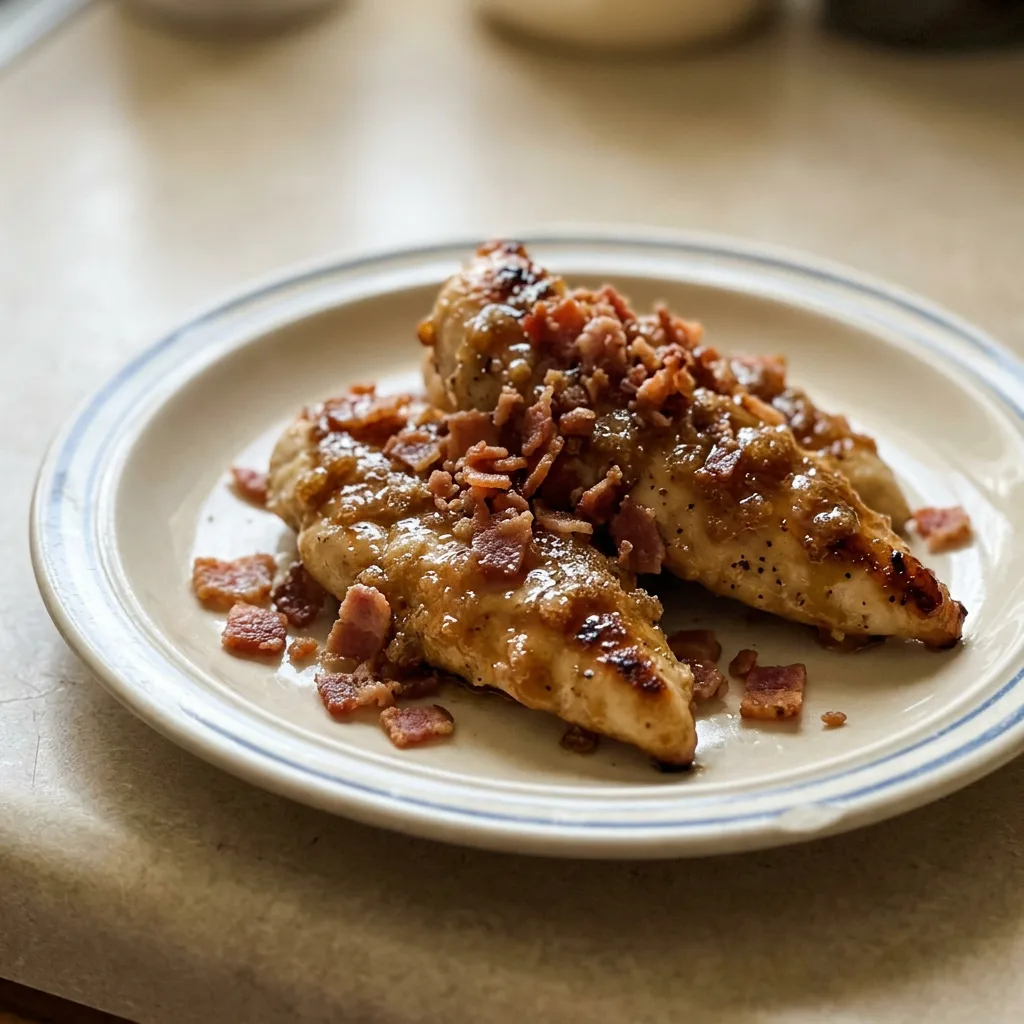
Bacon Brown Sugar Chicken Tenders
Ingredients
Method
Preheat oven:
Set oven to 400°F (205°C).Coat chicken mixture:
In a large bowl, toss chicken tenders with bacon bits, brown sugar, garlic powder, and black pepper until evenly coated.Arrange on sheet:
Cover a baking sheet with parchment. Place chicken in a single layer, leaving space between pieces.Bake until done:
Bake 20-25 minutes, until chicken is fully cooked (internal temp at least 165°F/75°C) and bacon is crisp.Rest before serving:
Take out of oven and allow to rest a few minutes before serving.
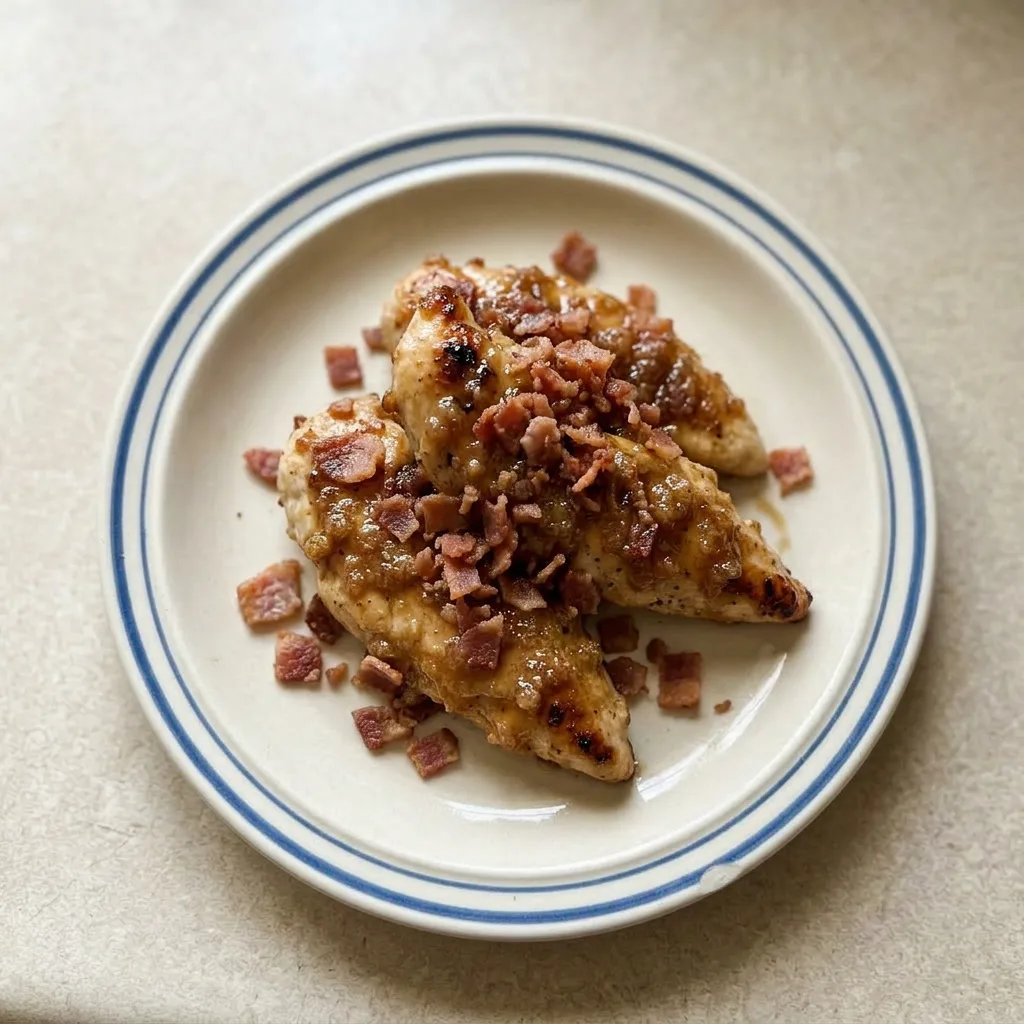
What you can swap in these bacon brown sugar chicken tenders
Chicken tenders: Boneless skinless chicken thighs, cut into strips. Thighs need a few extra minutes in the oven; check at 25 minutes. They stay juicier than tenders, but the coating may not get as sticky because thighs release more moisture.
Pat the thighs dry before coating to help the sugar adhere.
Bacon bits: Leave as is, no substitute. Bacon bits are the backbone of the crust.
They provide the fat that lets the sugar caramelize without burning, and their crunch contrasts the tender chicken. Any swap, like turkey bacon bits or vegan bacon, will change the texture and flavor significantly.
If you must swap, use finely chopped cooked turkey bacon, but expect a less crisp coating and a milder smoky taste.
Brown sugar: Coconut sugar or maple sugar. Coconut sugar yields a less sticky, more sandy coating because it doesn’t melt as readily as brown sugar.
The caramelization will be lighter and less glossy. Maple sugar is closer but pricier. Both work if you reduce the oven temp by 25°F to prevent burning, since they scorch easier than brown sugar.
Tips
- Line the baking sheet with foil under the parchment to catch any drips that leak through; cleanup is faster and you avoid burnt-on sugar on the pan.
- If your bacon bits are large, pulse them in a food processor a few times to get a more even crumb that coats the chicken better and crisps more uniformly.
Storage and Serving
These tenders are best eaten within 30 minutes of resting, while the glaze is still tacky and the coating crisp. Leftovers keep in an airtight container in the fridge for up to 3 days.
The sugar coating will soften as it sits, absorbing moisture from the chicken. Reheat in a 350°F oven on a wire rack over a sheet pan for 8 to 10 minutes to restore some crunch.
A microwave will turn the coating gummy. If making ahead, bake the tenders, let them cool completely, then refrigerate uncovered for an hour before sealing to minimize condensation. Do not freeze assembled tenders; the sugar glaze will weep and the bacon bits turn leathery.
Freeze only the cooked bacon bits separately for up to 2 months.
Frequently Asked Questions
Can I make these ahead of time and reheat them?
Yes, but the glaze softens as it sits. Bake, cool completely, then refrigerate uncovered for an hour to minimize condensation before sealing.
Reheat in a 350°F oven on a wire rack over a sheet pan for 8 to 10 minutes to restore some crunch. Microwaving turns the coating gummy, so avoid it.
Why did my brown sugar burn and turn bitter?
Most likely your oven runs hot or the tenders were too close together. Crowding traps steam that can cause sugar to pool and scorch.
Check your oven temperature with an oven thermometer, if it’s accurate, next time leave more space between pieces on the sheet. Also, dark brown sugar burns faster than light; try light brown if you’re having trouble.
Can I use chicken breasts instead of tenders?
Yes, but breast pieces are thicker and need more time to cook through. Cut them into strips about the size of tenders so they bake evenly in the same 20 to 25 minute window. If you leave them thick, the sugar will darken too much before the chicken reaches 165°F inside.
Pat the strips dry before coating to help the sugar adhere.
