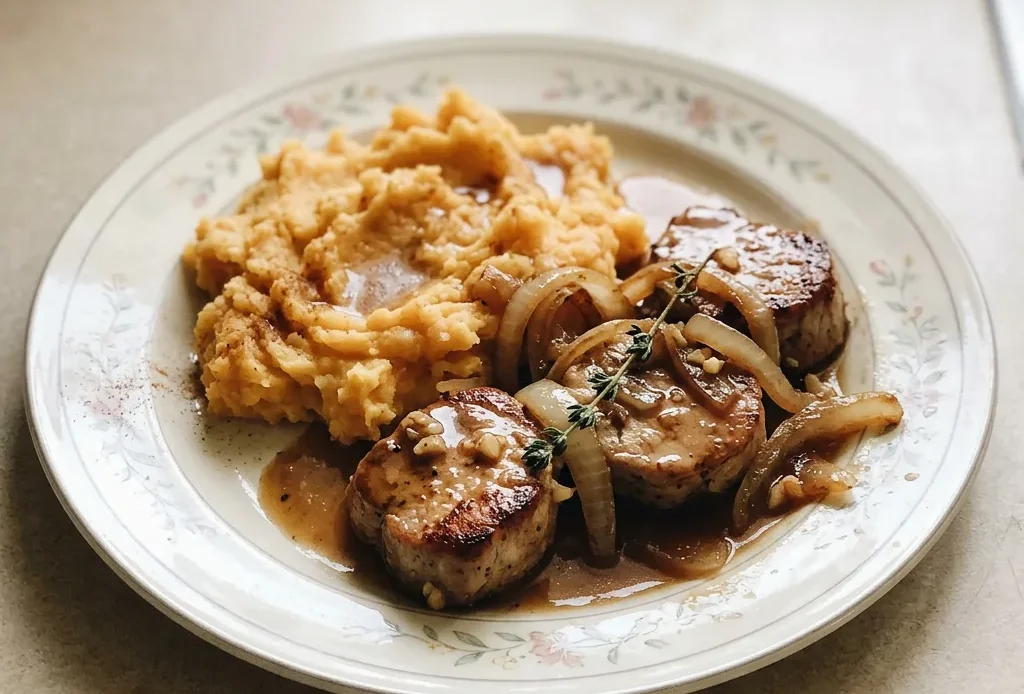
Pork tenderloin dries out fast. The marinade here, half the cider, garlic, thyme, salt, pepper, is insurance.
It tenderizes and infuses, and you reuse it in the sauce. That means the apple cider pork with mashed sweet potatoes comes together in one skillet, with a pan sauce that tastes like you simmered it for hours. You get supple medallions and a silky, tangy sauce without fussing over the meat.
The sweet potatoes are simple: boil, mash with butter and cream. They counter the sauce’s acidity and soak it up. This is weeknight cooking that doesn’t taste like it.
The Marinating Advantage
Marinating the pork medallions in apple cider does two things you can taste. The acidity in the cider gently tenderizes the meat, making each bite more supple.
At the same time, a subtle sweetness and fruity note seep in without dominating the pork’s own flavor. Because you reuse that marinade in the sauce, nothing gets wasted, the garlic and thyme that clung to the meat become part of the final pan sauce, concentrating the flavor.
You’ll notice the pork stays moist during cooking, and the sauce carries a balanced tang that comes from that initial soak.
Building Sauce from Fond
That browned crust on the pork after searing isn’t just color, it’s the foundation for a savory sauce. Those caramelized bits stuck to the pan, called fond, are packed with concentrated meaty flavor.
When you add the reserved marinade and extra cider, the liquid lifts that fond off the pan in a process called deglazing. It dissolves into the sauce, giving it a deep, savory backbone that plain cider alone couldn’t provide.
Simmering then melds the sweetness of the cider with the savory notes from the fond and the sautéed onion, creating a balanced sauce that coats the pork without being cloying.
Sweet Potatoes as a Counterpoint
Sweet potatoes aren’t just a filler here, their natural sugars create a deliberate contrast with the tangy apple cider sauce. The creamy mash, thanks to butter and heavy cream, provides a smooth, rich bed that soaks up the sauce without turning soggy.
That slight sweetness plays off the savory pork, making each forkful more interesting. And the cinnamon? Just a whisper, enough to echo the apple notes in the cider without shouting.
It’s a side that pulls the whole plate together, not just sits next to it.
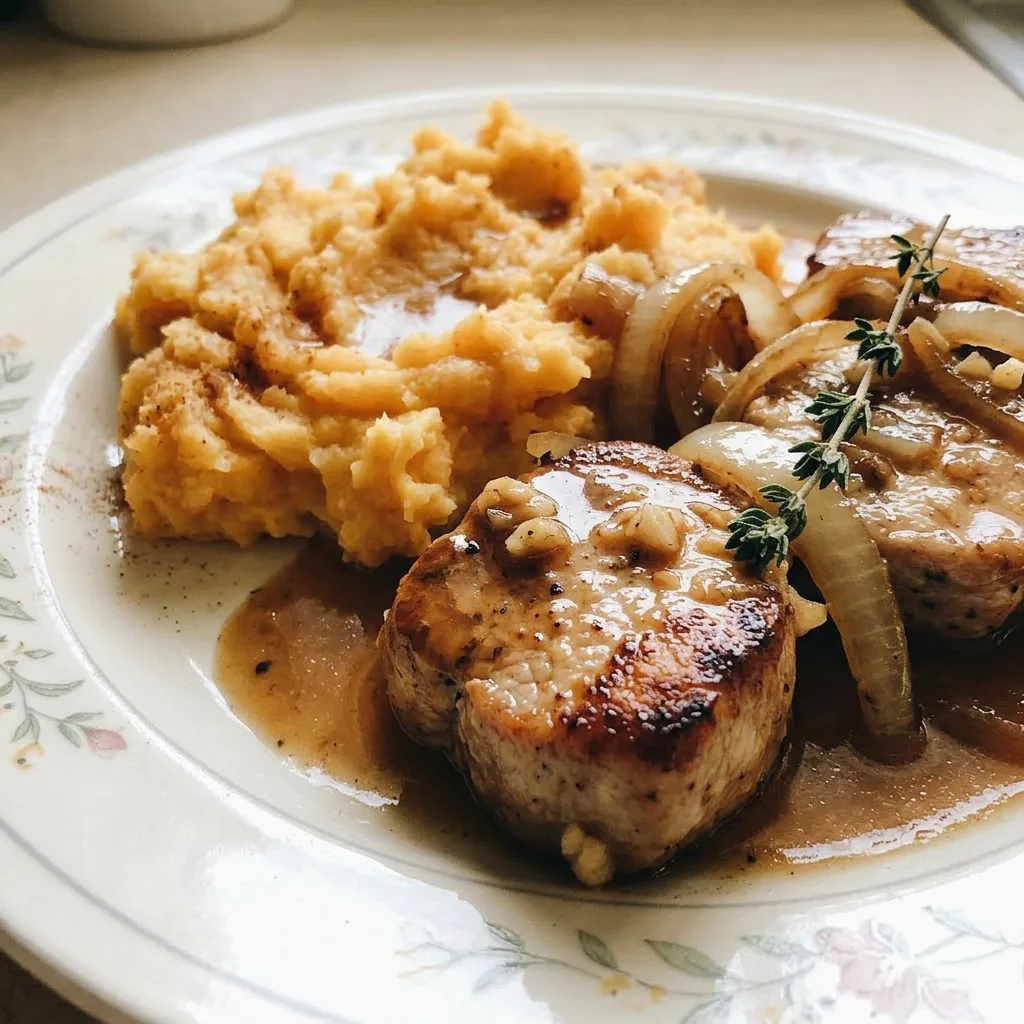
Prep: 30 min · Cook: 45 min · Total: 1 hr 15 min · Servings: 4 · Calories: 450 kcal
Key Ingredients for This Dish
Pork Tenderloin: Buy a whole tenderloin and cut your own medallions. Pre-cut pieces often vary in thickness and cook unevenly.
Apple Cider: Use fresh, unfiltered apple cider. The cloudy kind has more apple flavor than clear, filtered juice.
Sweet Potatoes: Choose firm, evenly shaped sweet potatoes. Avoid ones with green patches or soft spots, which taste bitter.
Heavy Cream: Heavy cream makes the mash richer, but whole milk works too. Just skip anything lower fat or the texture thins.
Watch the Sauce, Not the Clock
Marinate the Medallions
Toss the pork with half the cider, garlic, thyme, salt, and pepper. Let it sit 15 to 30 minutes. You’ll see the meat drink up the liquid, turning slightly rosy from the cider.
Sear Until Browned
Heat oil over medium-high until it shimmers. Pat pork dry (discard garlic bits if they burn), then sear medallions 3 to 4 minutes per side. Listen for a steady sizzle; if it sputters, the pan’s too cool.
Build the Sauce from Fond
After removing pork, sauté onions 3 to 4 minutes until translucent. Pour in reserved marinade and remaining cider; scrape up browned bits with a wooden spoon. The liquid should bubble and darken as it lifts the fond.
Simmer Pork to Finish
Return pork to skillet, cover, and simmer 10 to 15 minutes. Check with a thermometer: 145°F is done. The sauce will reduce slightly and cling to the meat.
If you want thicker sauce, stir in cornstarch slurry and cook 2 to 3 minutes until it coats a spoon.
Mash Sweet Potatoes Smooth
Boil cubed sweet potatoes in salted water 15 to 20 minutes until a fork slides in easily. Drain well, then add butter, cream, salt, and cinnamon. Mash until creamy, stop when no lumps remain but don’t overwork or they’ll turn gluey.
Apple Cider Pork with Mashed Sweet Potatoes
Ingredients
Apple Cider Pork
- 1.5 lb pork tenderloin trimmed and cut into medallions
- 1 cup apple cider
- 1 medium onion sliced
- 3 cloves garlic minced
- 2 tbsp olive oil
- 1 tsp thyme fresh or dried
- salt to taste
- pepper to taste
- 1 tbsp butter
- 1 tbsp cornstarch optional
Mashed Sweet Potatoes
- 2 large sweet potatoes peeled and cubed
- 2 tbsp butter
- 1/4 cup heavy cream or milk
- salt to taste
- 1/4 tsp cinnamon optional
Instructions
Apple Cider Pork
Marinate pork medallions:
Combine pork medallions with 1/2 cup apple cider, minced garlic, thyme, salt, and pepper in a bowl. Let marinate for 15-30 minutes (or up to 2 hours refrigerated).Cook sweet potatoes:
Bring salted water to a boil in a large pot. Add cubed sweet potatoes and cook 15-20 minutes until tender. Drain and return to pot.Sear pork medallions:
Heat olive oil in a large skillet over medium-high heat. Remove pork from marinade, reserving marinade. Sear medallions 3-4 minutes per side until browned. Transfer to a plate and set aside.
Mashed Sweet Potatoes
Simmer pork in sauce:
In the same skillet, sauté sliced onion for 3-4 minutes until softened. Pour in reserved marinade and remaining 1/2 cup apple cider. Bring to a simmer. Return pork to skillet, cover, and cook 10-15 minutes until pork reaches 145°F (65°C). Optionally, mix cornstarch with 1 tbsp water to make a slurry, stir into sauce, and cook 2-3 minutes until thickened. Stir in 1 tbsp butter.Mash sweet potatoes:
Add 2 tbsp butter, heavy cream, salt, and cinnamon to drained sweet potatoes. Mash until smooth and creamy. Adjust seasoning as needed.Plate and garnish:
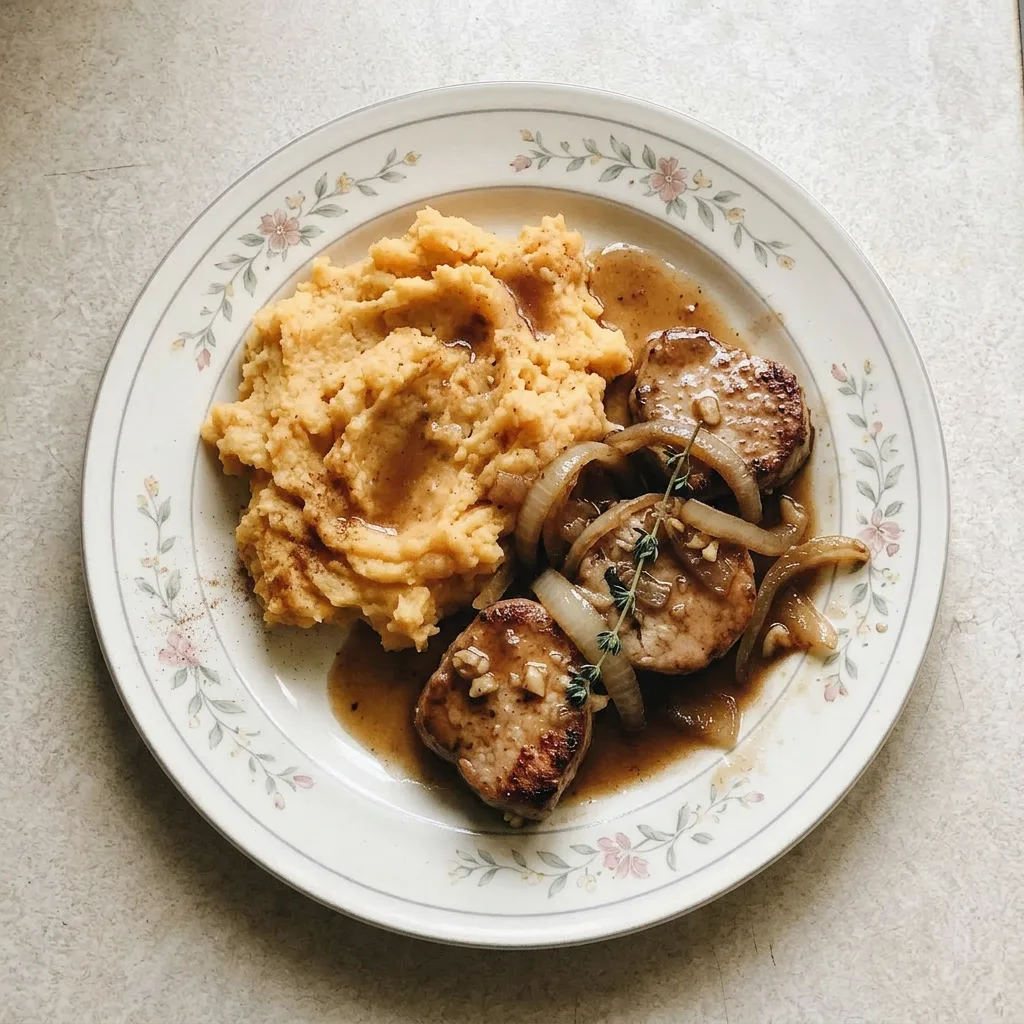
Plate mashed sweet potatoes, top with pork and sauce. Garnish with fresh thyme if desired.
What to Swap and What to Keep
Pork tenderloin: Boneless pork chops or chicken breast. Pork chops cook faster and may dry out if simmered too long; check temperature earlier. Chicken breast will be leaner and less rich; the sauce still works but the dish leans more savory.
Apple cider: Apple juice or dry white wine. Apple juice makes a sweeter, thinner sauce. Dry white wine cuts sweetness and adds acidity; the sauce will be less fruity and more savory.
Either way, the fond still deglazes, but the balance shifts.
Heavy cream: Coconut milk (full-fat, canned). Coconut milk adds a light coconut flavor that pairs well with cinnamon and sweet potato. The mash will be slightly less rich and may taste distinctly of coconut.
For a dairy-free version, start with the same amount and adjust if it tastes too thin.
Tips
- Cut the pork tenderloin into medallions of even thickness, about 1 inch each. This ensures they cook at the same rate so you don’t end up with some dry and some underdone.
- After searing, let the medallions rest on a plate for 5 minutes before returning them to the skillet to simmer. This allows the juices to redistribute, keeping the pork moist when you finish cooking.
Storage and Serving
Serve this dish within 30 minutes of finishing the sauce. The mashed sweet potatoes are creamiest right after mashing, and the pork is most tender hot off the pan.
If you’re making ahead, cook the sweet potatoes and pork separately, then reheat just before serving. For leftovers, store pork and sauce in an airtight container for up to 3 days.
The mashed sweet potatoes will thicken as they sit; add a splash of milk or cream when reheating to restore their smooth texture. Freeze the pork and sauce for up to 2 months, but note that the sweet potatoes do not freeze well, they become watery and grainy upon thawing.
Reheat the pork gently in a covered skillet over low heat, adding a splash of apple cider or broth if the sauce has thickened too much. The mashed sweet potatoes reheat best in a saucepan with a little milk, stirred over medium-low heat until hot and creamy.
I still set a timer for 3 minutes per side when searing, even though it feels fussy, to stop myself from over-browning and then over-simmering.

Frequently Asked Questions
Can I make the apple cider pork ahead of time?
Yes, but cook the pork and sweet potatoes separately, then reheat just before serving. The pork and sauce keep up to 3 days in the fridge; reheat gently in a covered skillet over low heat, adding a splash of cider or broth if the sauce thickened. The sweet potatoes don’t freeze well, but you can cook them a day ahead, they’ll need a splash of milk when reheated to restore their creamy texture.
How do I prevent the pork from drying out?
Don’t skip the marinade, the cider’s acidity helps keep the meat tender. When searing, get the pan hot enough for a steady sizzle, and cook each side just 3 to 4 minutes until browned. Then simmer covered for 10 to 15 minutes, pulling the pork when it hits 145°F; going beyond that risks drying it out.
Can I use boneless pork chops instead of tenderloin?
Yes, but pork chops cook faster and can dry out sooner. Check their temperature earlier than the recipe’s 10 to 15 minute simmer window, they may be done in 5 to 8 minutes. The sauce and method still work; just watch the internal temp closely.
What’s the best way to reheat the mashed sweet potatoes without them getting watery?
Reheat them in a saucepan over medium-low heat, stirring frequently and adding a splash of milk or cream to loosen them. Avoid the microwave, which can make them release water and turn grainy. Low, gentle heat with a little liquid keeps them creamy.