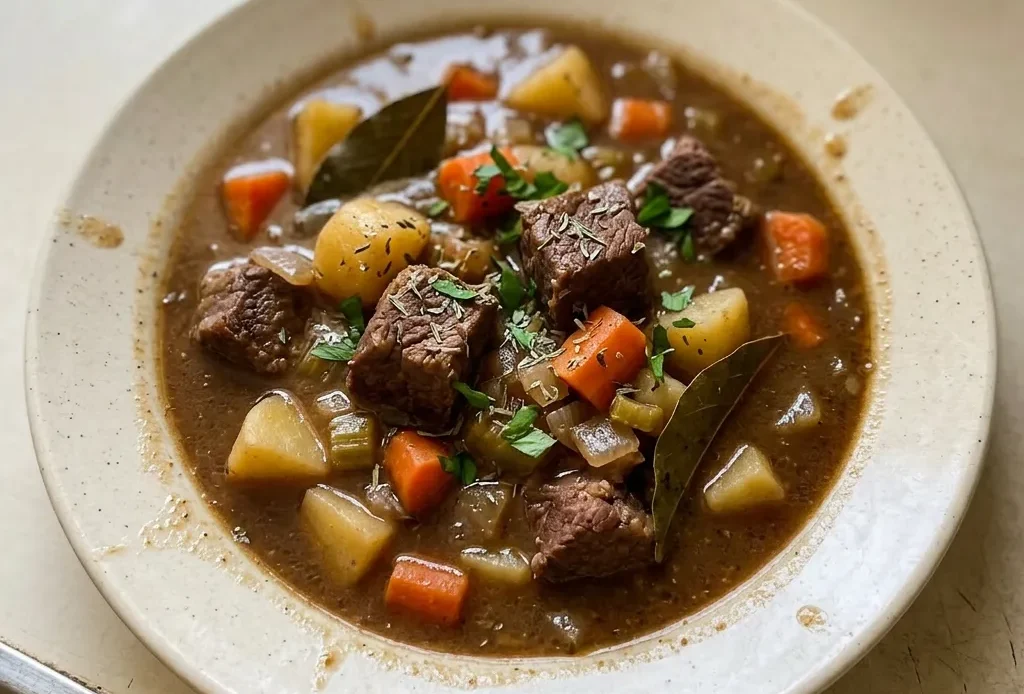
The sear, that’s the moment that decides whether your stew tastes deep or just beefy. If you crowd the pot, the meat steams gray and you lose the browned bits that make the broth rich.
Anthony Bourdain’s beef stew leans hard on that foundation, then builds with tomato paste cooked until it darkens and wine reduced until it smells fruity, not boozy. The payoff is a pot of beef that breaks apart with a fork and potatoes that stay intact, because you add them at the right moment. This is a stew that actually tastes better the next day, and the reason isn’t some secret ingredient, it’s the head start the flavors get overnight.
Sear the beef in batches for deep flavor
If you crowd the pot, the meat steams instead of browning. That means less fond, those browned bits stuck to the bottom, and a weaker beef flavor in the stew. Working in batches gives each cube direct contact with the hot oil, so the surface caramelizes properly.
That browning is where the savory depth comes from; the fond you build now will later dissolve into the broth and enrich every spoonful. Take the time to do it right, and the difference shows in the pot.
Cook tomato paste and wine into a savory base
Tomato paste straight from the can tastes raw and tinny. Let it cook in the hot pot for a couple of minutes until it darkens and smells richer, that’s the flavor deepening. Then pour in the red wine and scrape up the fond.
The wine’s acidity brightens the stew and lifts all those browned bits into the liquid. Let it simmer and reduce by about half; the wine concentrates, losing its harsh alcohol edge and leaving a balanced, savory backbone. Together, the paste and wine build a base that tastes slow-cooked, not rushed.
Add potatoes only after the beef is tender
Beef chuck needs time, a good long simmer, to break down its collagen and become fork-tender. Potatoes cook much faster. Drop them in too soon and they’ll dissolve into mush before the meat is ready.
By waiting until the beef yields easily, you give the potatoes just enough time to cook through while keeping their shape and a creamy interior. The result: tender chunks of beef and intact potatoes in a rich broth, each at its best.
Timing matters here, and the payoff is a stew where every component is done.
Layer umami with Worcestershire and bay leaves
Worcestershire sauce brings a savory depth that’s hard to pin down, a mix of tang, salt, and subtle funk from its fermented ingredients. ” Bay leaves work quietly over the long simmer, releasing a gentle herbal note that rounds out the broth.
By the end, their flavor has mellowed into the background, not dominant but noticeable if you left them out. Remove the leaves before serving; they’ve done their job. The stew tastes fuller and more complex with both in the pot.
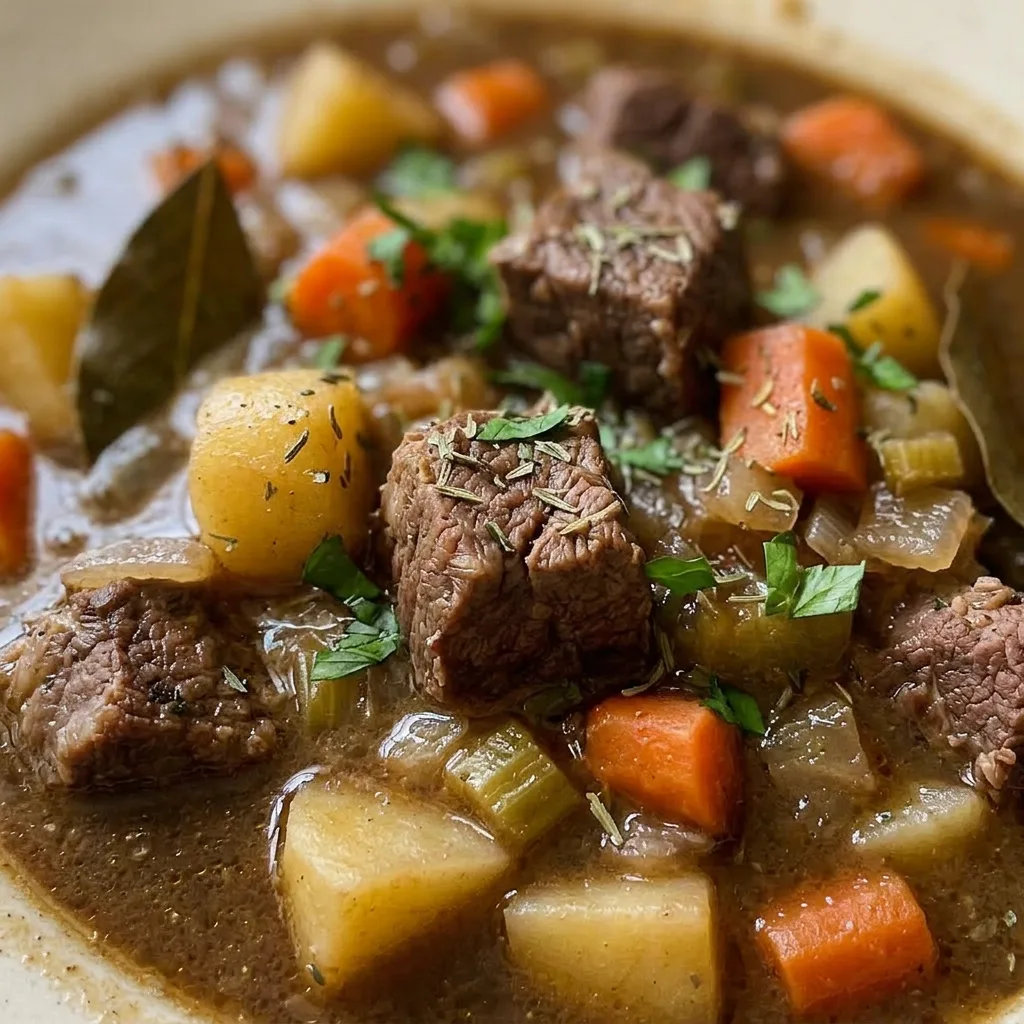
Servings: 6 · Calories: 450 kcal
What to look for at the store
Beef chuck: Ask the butcher to cube it or buy a chuck roast and cut it yourself. Marbling equals tenderness.
Red wine: Use a dry red you’d drink, like Cabernet or Merlot. Nothing sweet or cooking wine.
Tomato paste: Buy a small tube instead of a can. You only need 2 tablespoons, and the tube keeps in the fridge.
Worcestershire sauce: Lea & Perrins is standard. Check the label for anchovies and tamarind; that’s the real stuff.
Build the stew in stages for the deepest flavor
Sear the beef in batches
Heat oil in a large Dutch oven over medium-high. Add beef in a single layer, crowding drops the pan’s temperature, and the meat steams, turning gray. You want a deep brown crust.
Once each batch is browned, transfer to a plate.
Sauté the aromatics
Add onion, carrots, celery, and garlic to the pot. Stir and scrape up any stuck bits.
After about 5 minutes, the vegetables should soften and the onions turn translucent. If they brown too fast, lower the heat.
Cook the tomato paste
Stir in tomato paste and let it fry for 2 minutes. It will darken from bright red to a rusty brick color and smell richer, that’s the raw tinny edge cooking off. Don’t skip this; it’s a short step that deepens the whole stew.
Deglaze with red wine
Pour in the wine and scrape the bottom with a wooden spoon to release the fond. Let it bubble for 5 minutes until reduced by about half. The alcohol smell should fade, leaving a fruity, savory aroma.
The liquid will thicken slightly.
Simmer the stew base
Return beef to the pot. Add broth, Worcestershire, thyme, bay leaves, salt, and pepper. Bring to a boil, then reduce to a gentle simmer, small bubbles, not a rolling boil.
5 to 2 hours, until the beef is fork-tender.
Add potatoes at the right time
Once the beef is tender, stir in diced potatoes. Re-cover and simmer another 30 minutes.
The potatoes should be tender but still hold their shape. If they’re starting to break apart, they’re done, stop cooking. Check seasoning and remove bay leaves.
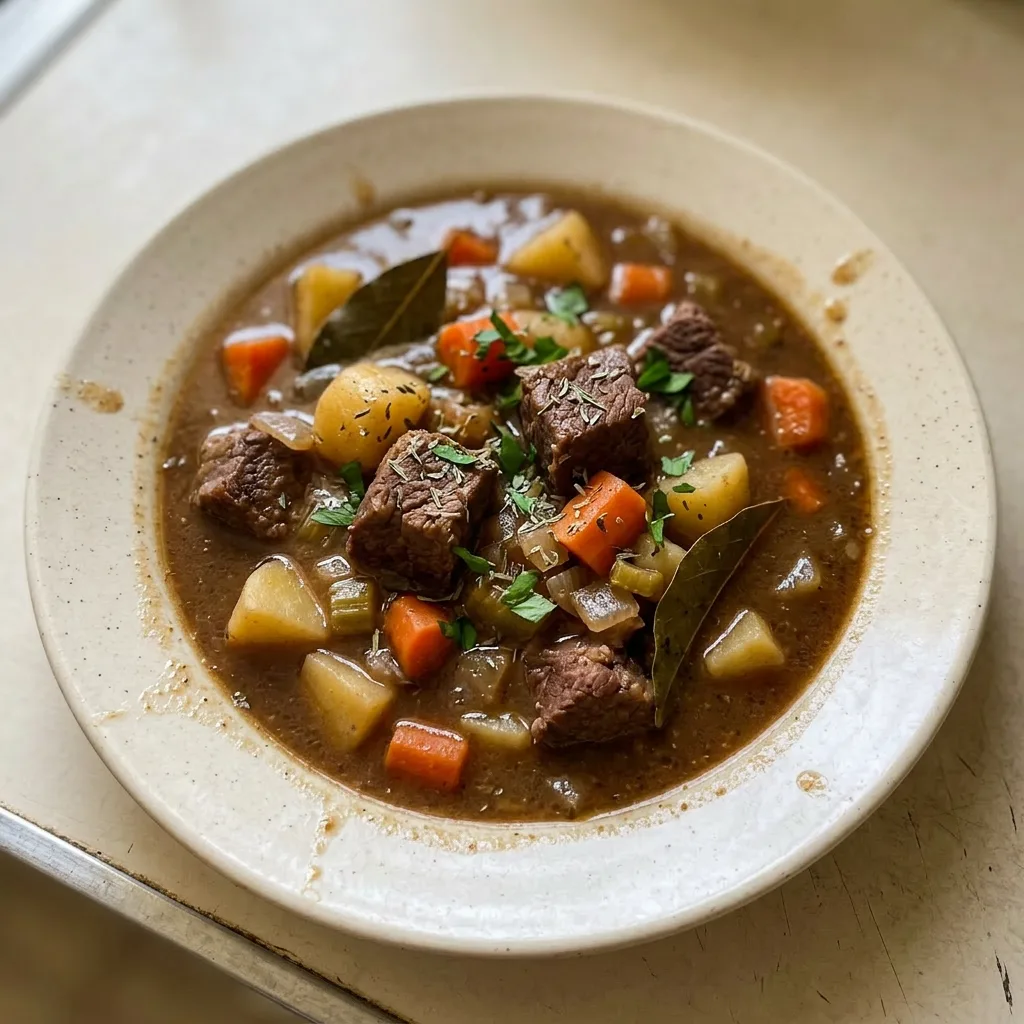
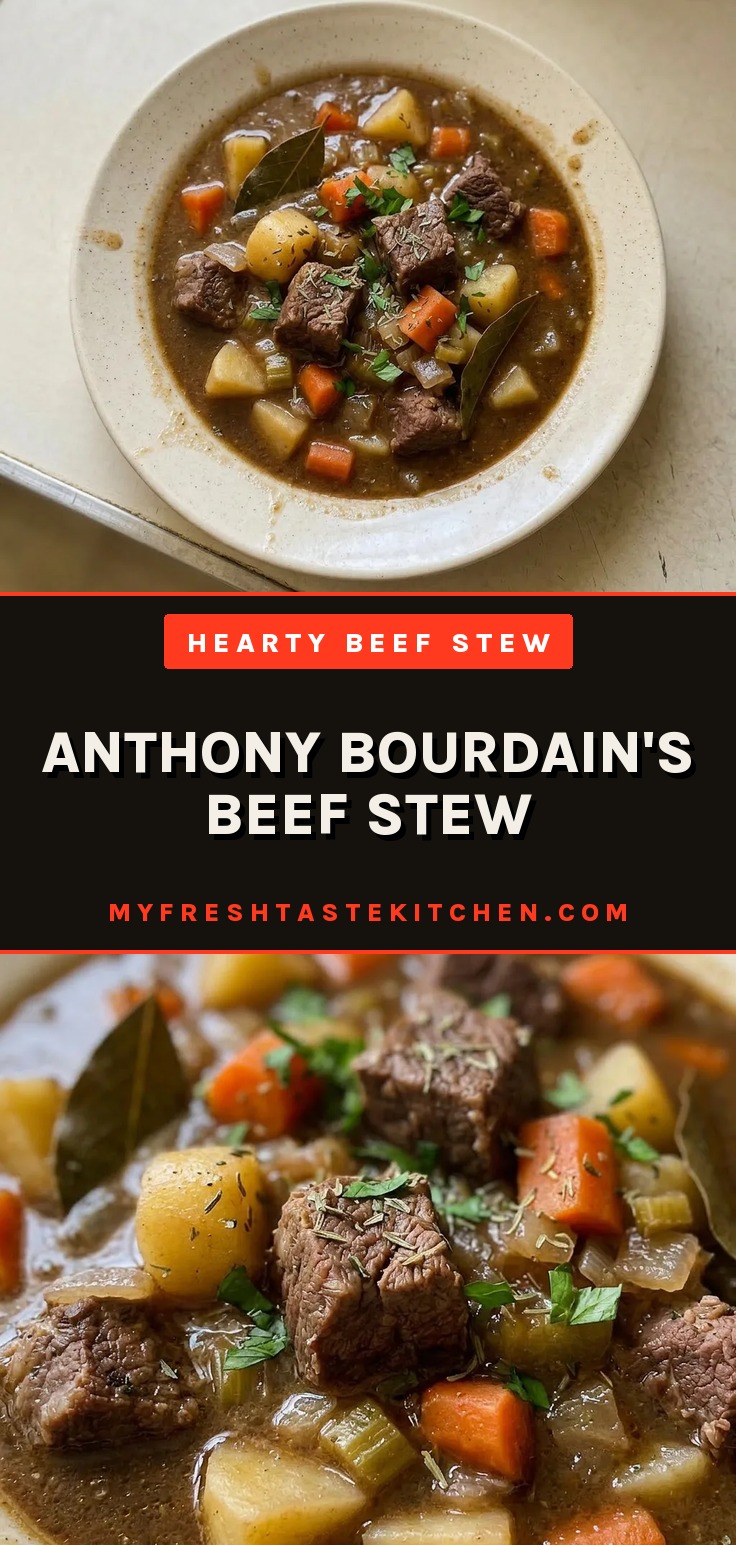
Anthony Bourdain’s Beef Stew
Ingredients
Method
Sear Beef Cubes:
In a large Dutch oven over medium-high heat, warm the vegetable oil. Working in batches, sear the beef cubes until browned on all sides. Transfer the meat to a plate and set aside.Sauté Vegetables:
Into the same pot, put the diced onion, carrots, celery, and garlic. Cook for roughly 5 minutes, stirring occasionally, until the vegetables become tender.Brown Tomato Paste:
Add the tomato paste and cook for an additional 2 minutes, letting it brown slightly to deepen the flavor.Deglaze with Wine:
Deglaze the pot by pouring in the red wine, using a wooden spoon to scrape up any browned bits from the bottom. Let the wine simmer for 5 minutes to reduce.Return Beef and Broth:
Put the browned beef back into the pot. Add the beef broth, Worcestershire sauce, thyme, bay leaves, salt, and pepper.Simmer Until Tender:
Raise the heat to bring the stew to a boil, then lower it to a gentle simmer. Cover and cook for 1.5 to 2 hours, until the beef is fork-tender.Add Potatoes:
Once the beef is tender, stir in the diced potatoes. Re-cover and continue to simmer for another 30 minutes, until the potatoes are cooked through.Season and Remove Bay Leaves:
Check the seasoning and adjust with additional salt and pepper if necessary. Remove the bay leaves before serving.Serve with Parsley:
Serve the stew in bowls, topped with freshly chopped parsley for a pop of color.
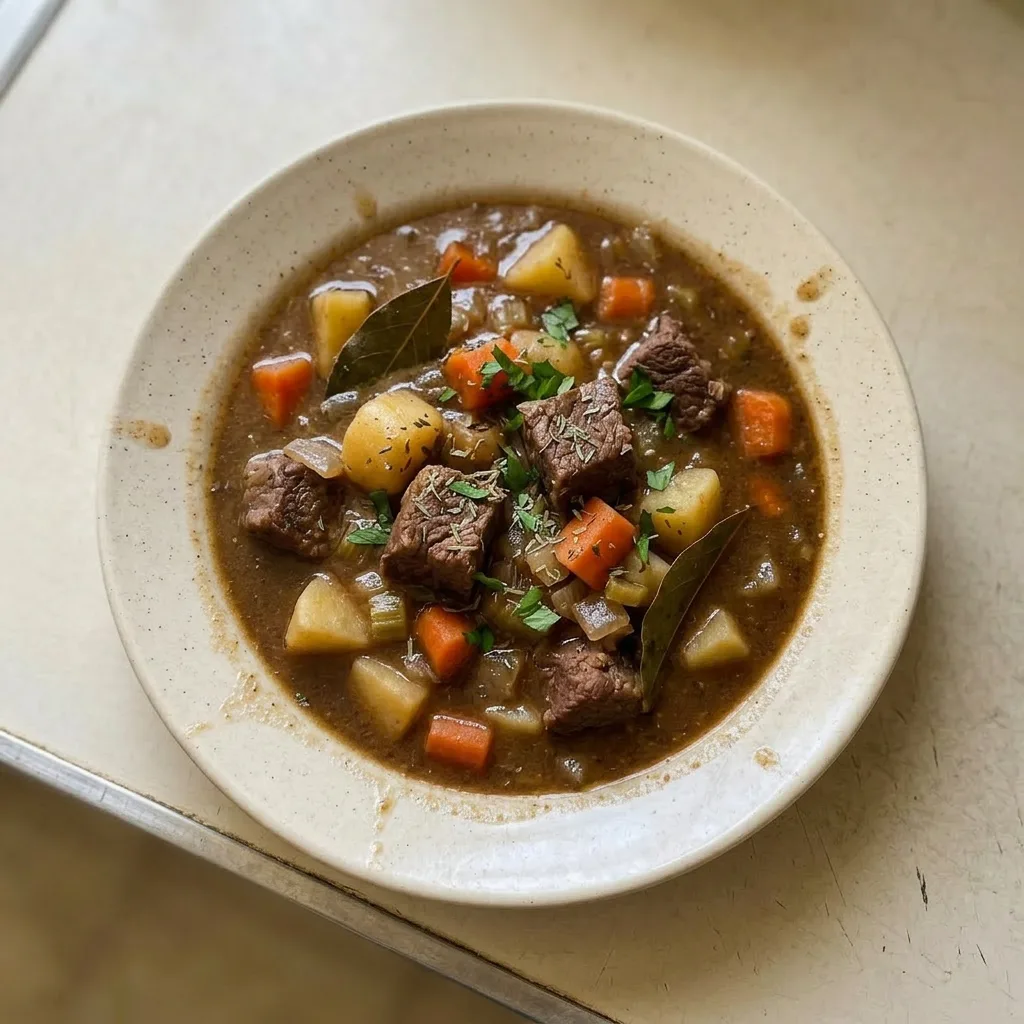
Storage and Reheating
This stew improves overnight. The flavors deepen as the beef and vegetables rest in the broth. Store leftovers in an airtight container in the fridge for 4 to 5 days.
The potatoes will absorb some liquid and soften further, but they’ll still hold their shape. To reheat, warm the stew gently in a pot over medium-low heat, stirring occasionally.
Add a splash of beef broth or water if it’s too thick. Avoid boiling, which can toughen the beef and break the potatoes apart.
The stew freezes well for up to 3 months. Cool it completely before transferring to freezer-safe containers.
Thaw overnight in the fridge before reheating. For the best texture, serve the stew within the first 30 minutes after adding the potatoes.
The parsley garnish goes on right before serving; it adds freshness and color, but wilts quickly if the stew sits. Leftover stew without garnish keeps longer.
If reheating from frozen, use the stovetop over low heat, stirring occasionally, and add a little broth to restore the consistency.
Swap wine and Worcestershire without losing the stew’s backbone
Red wine: Extra beef broth (same volume) or non-alcoholic red wine. Without wine, you lose the acidity and fruity depth that cuts through the beef’s richness.
Broth alone makes the stew taste flat and one-note, still beefy but missing brightness. Non-alcoholic red wine keeps that acidity, though it may be slightly sweeter; reduce any other sugar in the recipe if needed.
The fond still deglazes fine with liquid, but the flavor won’t have the same layered complexity.
Worcestershire sauce: Soy sauce or balsamic vinegar (start with 1 tablespoon, then adjust). Worcestershire adds a fermented tang and subtle anchovy savor. Soy sauce brings salt and umami but none of the tang, the stew will taste more straightforwardly salty and less complex.
Balsamic vinegar adds sweetness and acidity but misses the savory funk; the stew will taste fruitier. Neither mimics the original exactly, but both work. Taste after 30 minutes of simmering and adjust: if it needs more depth, add a splash more; if it’s too salty (soy sauce), dilute with water.
Beef broth: Chicken or vegetable broth, or water plus soy sauce or miso for umami. Swapping broth changes the beefiness. Chicken broth is lighter and less savory; the stew will taste less meaty.
Vegetable broth is even milder. Water alone strips the stew of its savory foundation, use it only if you boost umami elsewhere: add a tablespoon of soy sauce or a teaspoon of miso paste dissolved in a little hot water. The texture stays the same, but the flavor depth drops noticeably without that beefy base.
Tips
- Test the beef by piercing a cube with a fork; it should slide in with little resistance. If it still feels tough, let it simmer 15 more minutes before adding potatoes. Potatoes cook in about 30 minutes, so adding them too early means they’ll going soggy while the beef finishes.
- If the stew seems thin after the beef is tender but before adding potatoes, remove the lid and let it simmer uncovered for 10 to 15 minutes. This concentrates the broth and ensures the final stew isn’t watery once the potatoes release their starch.
Frequently Asked Questions
Can I make this stew a day ahead and does it taste better the next day?
Yes, make it a day ahead. The flavors deepen overnight as the beef and vegetables rest in the broth. Store it in an airtight container in the fridge for up to 4 to 5 days.
Reheat gently over medium-low heat, adding a splash of broth if needed, and avoid boiling to keep the beef tender and potatoes intact.
How do I prevent the beef from turning out tough or dry?
Sear the beef in batches over medium-high heat, crowding the pot makes it steam instead of brown, and that browning is where tenderness starts. 5 to 2 hours, covered, until the beef is fork-tender.
If it’s still tough, it needs more time; the collagen breaks down slowly at a gentle bubble. Don’t rush the simmer or boil hard, which tightens the meat.
What’s the difference between this stew and a classic French boeuf bourguignon?
Boeuf bourguignon uses a full bottle of red Burgundy wine and often includes pearl onions, mushrooms, and a bouquet garni, finished with a beurre manié for thickening. This stew uses a cup of dry red wine and relies on the potatoes to naturally thicken the broth. The technique is simpler, no separate sauté for mushrooms or onions, and the flavor is beefier with Worcestershire sauce and thyme standing in for the classic herb bundle.
Can I freeze this stew and how should I reheat it?
Yes, freeze it for up to 3 months. Cool the stew completely before transferring to freezer-safe containers.
Thaw overnight in the fridge, then reheat gently on the stovetop over low heat, stirring occasionally. Add a splash of beef broth or water if it’s too thick. Avoid boiling, which can toughen the beef and break the potatoes apart.
