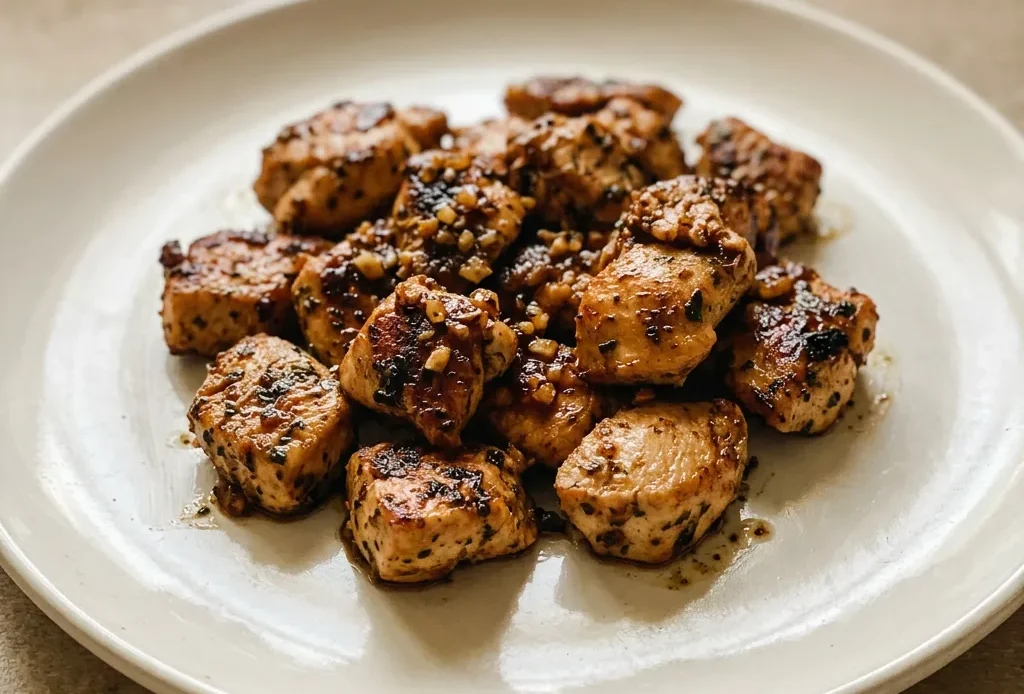
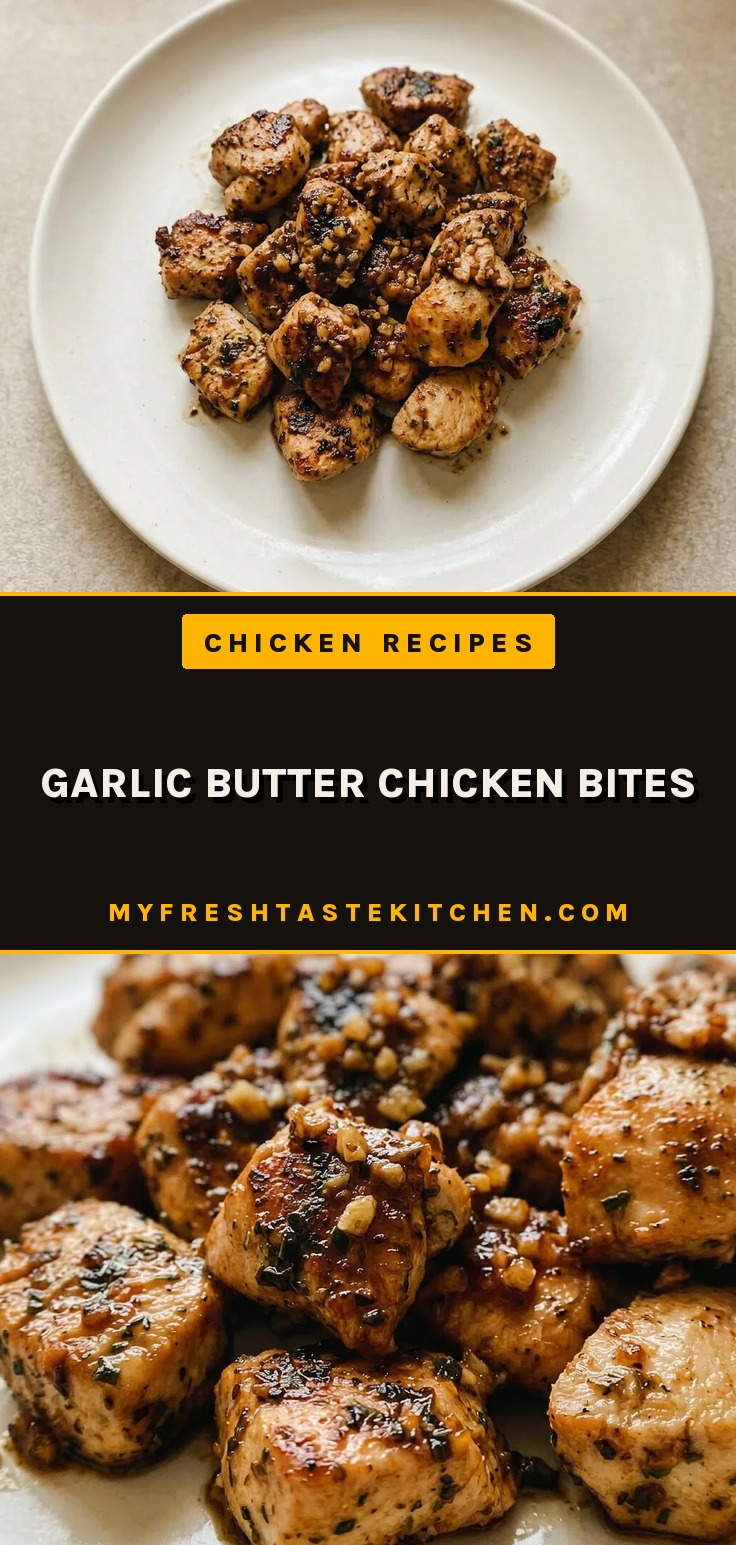
A crispy sear in under three minutes per side, a quick garlic butter finish, and you’re done, these are the kind of weeknight bites that punch above their weight. The trick is trusting the heat: crowd the pan and you’ll steam instead of brown, so cook in a single layer even if it means two batches.
Smoked paprika and herb de Provence give a deeper, more interesting flavor than plain garlic chicken, and the split-butter method builds a sauce that tastes like you fussed. If you’ve ever ended up with pale, chewy cubes, this is the fix.
These garlic butter chicken bites come together fast, but the window for texture is tight, serve within 30 minutes or the butter sets and the sear fades.
Uniform cubes, even sear
Cubing chicken breast into uniform bite-size pieces does more than make it easy to eat. Visible fat left on will render into greasy pockets, and moisture on the surface steams rather than browns. Patting dry with paper towels removes that surface moisture.
Dice into pieces that are roughly the same size so each side makes full contact with the hot skillet. That even contact produces a consistent brown crust across every cube.
If you rinse the chicken, you add back the moisture you just blotted off, so only do it if you must, then dry it thoroughly before seasoning.
Smoked paprika and herbs build depth
Smoked paprika and herb de Provence work together without shouting over the garlic butter. The paprika brings a mellow, woody smokiness that tastes like the chicken spent time over a fire, and the herb de Provence adds a subtle lavender-tinged herbal note that keeps the dish bright. Mixing the seasoning thoroughly ensures every cube is coated evenly.
When they hit the heat, the spices bloom on the surface rather than clumping in spots, so each bite carries the full flavor profile.
Searing in batches, splitting the butter
Crowding the pan drops the temperature and turns the chicken into steamed, pale cubes. Searing in a single layer with space between each piece lets the surface brown deeply. The oil and the first half of the butter handle that high heat without burning; the butter adds richness, and the oil raises the smoke point.
Once the crust is set, you lower the heat and add the remaining butter. That second portion melts gently, picking up the fond from the pan without scorching, so you get browned butter flavor without acrid bitterness.
Garlic and parsley go in last for a reason
Minced garlic burns fast, high heat turns it acrid in seconds. After the sear, dial the heat down before adding the garlic with the last butter. The residual warmth cooks it just enough to take off the raw edge, releasing its pungent aroma without turning bitter.
A brief stir, about a minute, is all it needs. Fresh parsley goes in off the heat, where the residual heat wilts it slightly but keeps its color bright and its flavor clean. The result is garlic that still tastes sweet and parsley that tastes green, not muddy.
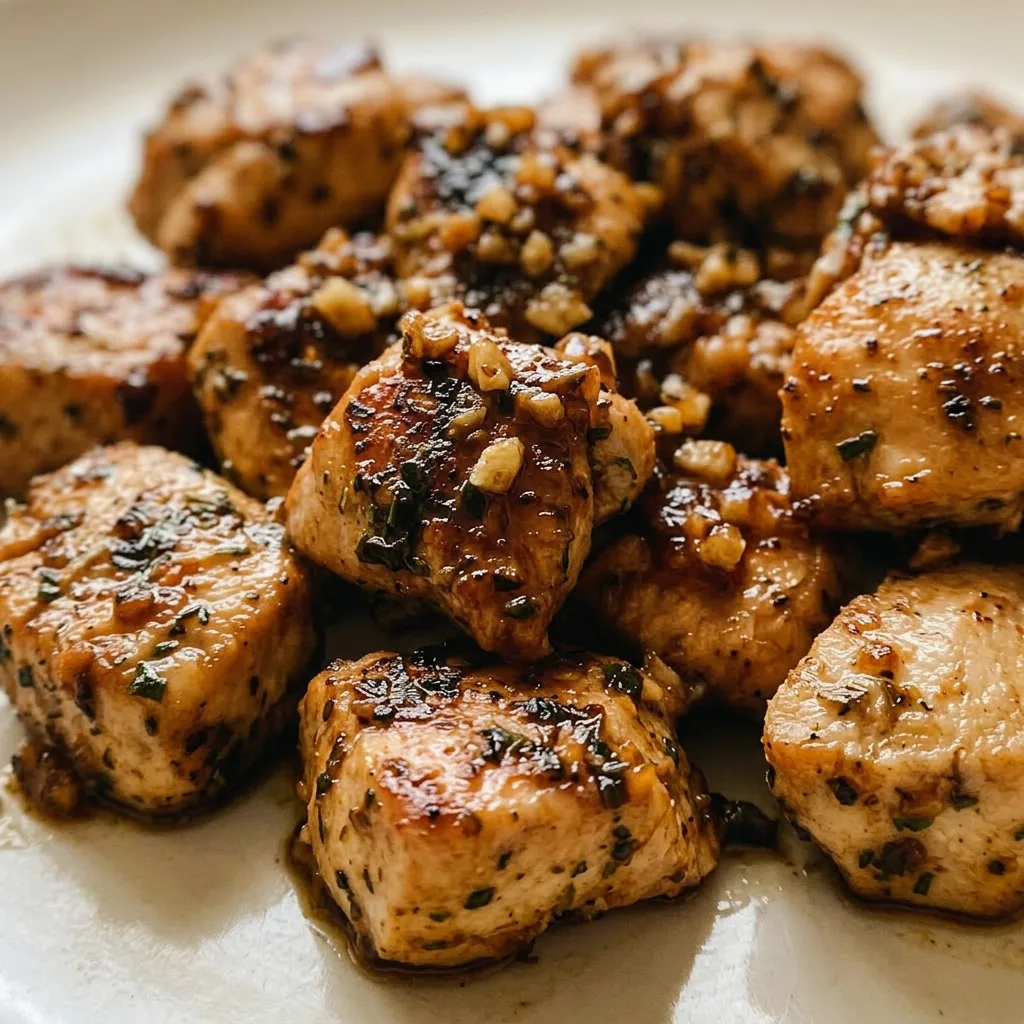
Prep: 5 min · Cook: 15 min · Total: 20 min · Servings: 4 · Calories: 260 kcal
What to look for in each ingredient
Boneless chicken breast: Buy from a single whole breast, not pre-cut strips, so you can cube uniformly and control fat trim.
Smoked paprika: Use the sweet smoked kind, not hot or bitter; the color should be deep red, not brown.
Herb de Provence: Look for a blend with lavender listed; some omit it, and that changes the floral note.
Garlic cloves: Fresh whole cloves only. Pre-minced garlic in oil will burn faster and taste harsh.
Most people think they need to cook chicken forever to be safe, but that’s how you end up with dry, sad bites.
Sear hot, finish low: the garlic butter method
Cube and dry
Cut the chicken into 1-inch cubes, trimming any fat. Pat them dry with paper towels. Wet or fatty pieces steam instead of brown, and you want a deep sear.
Season evenly
Toss the cubes with smoked paprika, herb de Provence, salt, and pepper until every piece looks coated. Uneven seasoning means some bites taste flat.
First sear, first butter
Heat oil and half the butter in a skillet over medium-high until the butter stops foaming. Add chicken in a single layer, crowding drops the heat and you’ll get gray, not brown. Sear 2 to 3 minutes per side until the underside is deep golden.
Second butter, low heat garlic
Turn the heat to low. Push chicken to one side, add remaining butter. When melted, stir in garlic.
Cook 1 minute, stirring constantly, until garlic is fragrant but not browned. Burnt garlic turns bitter.
Finish with parsley
Sprinkle fresh parsley over the chicken, toss once, and remove from heat. The residual warmth wilts the parsley slightly without cooking its color dull.
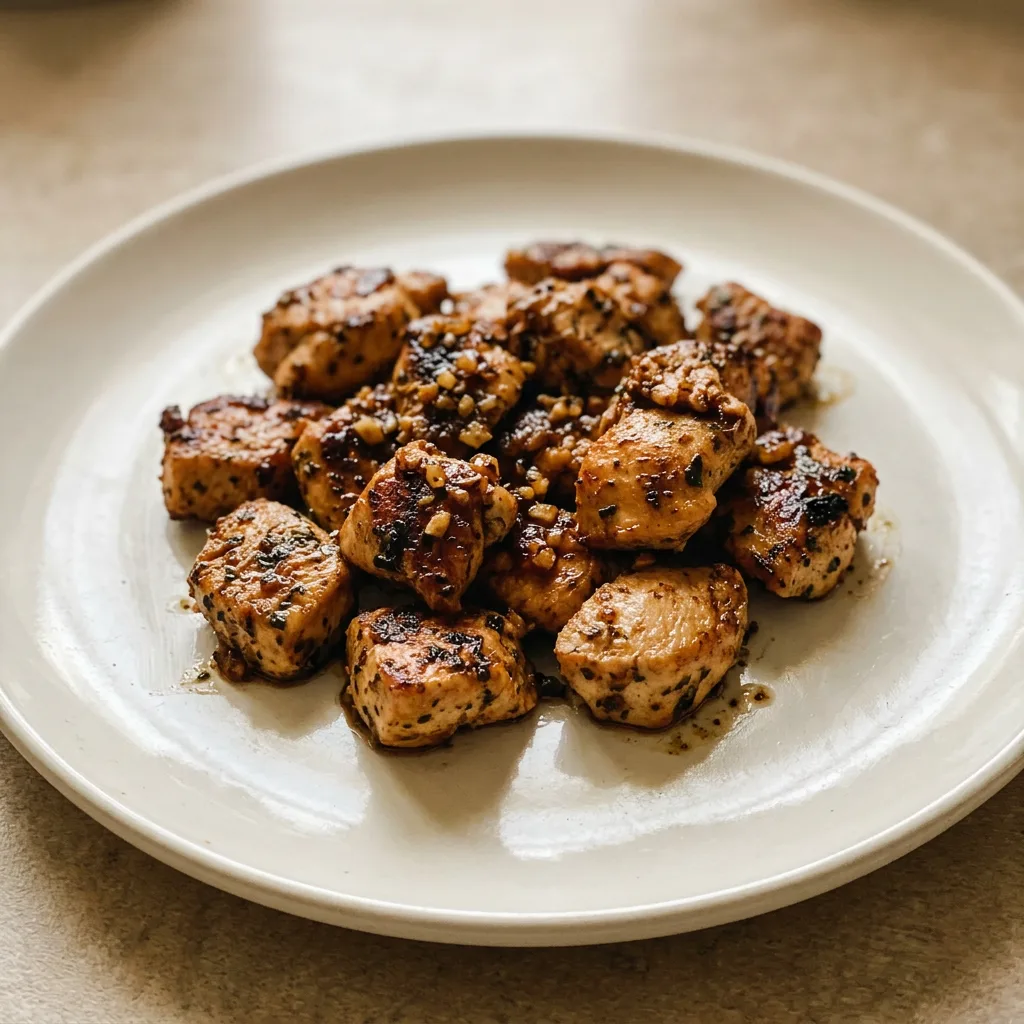
Garlic Butter Chicken Bites
Ingredients
Method
Cube the chicken:
Cube the chicken: remove any visible fat, blot dry with paper towels, and dice into uniform bite-size pieces. Place in a bowl. Do not rinse the chicken; if you do, ensure you do it safely and pat dry before proceeding.Season the chicken:
Season: combine smoked paprika, herb de Provence, salt, and black pepper with the chicken. Mix thoroughly until evenly coated.Sear the chicken:
Sear: warm oil and half the butter in a skillet over medium-high heat until sizzling. Add the seasoned chicken in one layer without crowding (cook in batches if necessary) to achieve a good sear and maintain pan temperature. Cook for 2-3 minutes per side.Add garlic and parsley:
Lower the heat, move chicken to one side of the pan. Add the remaining butter, let it melt, then mix in the minced garlic. Combine garlic with the chicken and cook for roughly 1 minute. Sprinkle chopped parsley, stir once more, remove from heat, and serve right away.
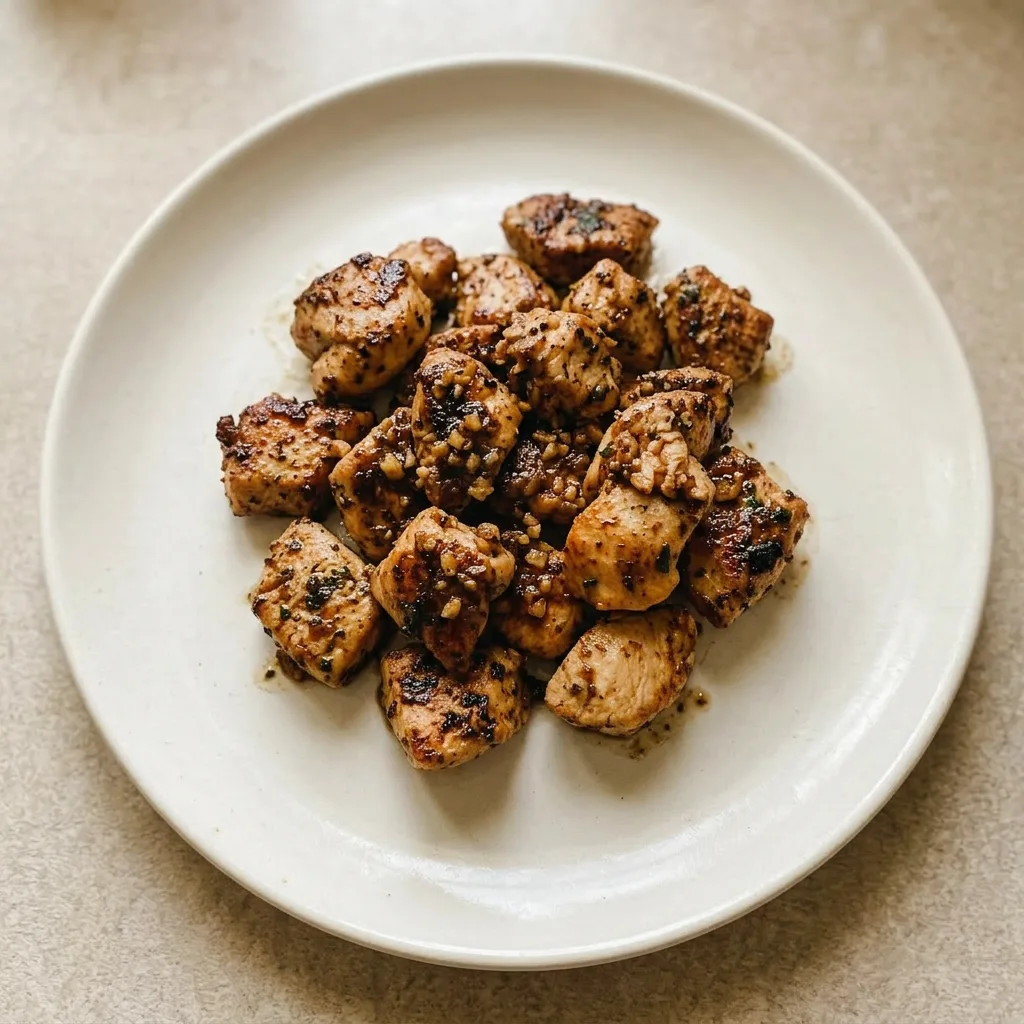
Storing and Reheating Garlic Butter Chicken Bites
These chicken bites are best served right after cooking, while the garlic butter is still glossy and the parsley is bright. The window for peak texture is within 30 minutes off the heat. After that, the butter begins to congeal and the chicken loses its just-seared tenderness.
For leftovers, transfer to an airtight container and refrigerate for up to 3 days. The garlic butter will solidify, and the chicken will firm up slightly as it sits. Reheat gently in a skillet over medium low heat with a splash of water or broth to restore moisture, stirring until just warmed through.
Microwaving can toughen the chicken, so avoid it. These do not freeze well; the dairy based sauce breaks on thawing and the chicken turns spongy.
Make ahead isn’t ideal either, as the sear fades. If you must prep, cube and season the raw chicken a day ahead, but sear and finish fresh.
What you can swap in these garlic butter chicken bites, and what you shouldn’t
Herb de Provence: Italian seasoning, or dried oregano plus a pinch of dried thyme and marjoram. The lavender note disappears, but the herbaceous backbone remains. Use the same volume the recipe calls for.
Smoked paprika: Regular paprika plus a tiny drop of liquid smoke. The color stays similar but the flavor loses the wood-smoke depth unless you add liquid smoke. Start with 1 drop per teaspoon of paprika, taste, and adjust.
Butter: No swap. Butter is essential for the method: the first portion browns with the oil, the second melts low to carry garlic without burning. Margarine or oil-based substitutes lack the milk solids that create that nutty finish and will taste flat or burn.
Garlic cloves: Granulated garlic or garlic powder, but use half and add at seasoning step. Pre-minced garlic in oil scorches faster. If using dried, mix into the spice rub before cooking so it blooms in the pan; skip the low-heat garlic step.
You lose the sweet, barely-cooked garlic punch, but the flavor still reads as garlicky.
Tips
- Use a paper towel to pat the chicken dry after cubing, not before, because cut surfaces release more moisture and drying them directly improves browning.
- Let the seared chicken rest on a plate while you prepare the garlic butter; resting redistributes juices so the bites stay tender when tossed back in.
Frequently Asked Questions
Can I make garlic butter chicken bites ahead of time?
No, these are best served right after cooking. The garlic butter stays glossy and the chicken is most tender within 30 minutes off the heat.
Leftovers can be refrigerated up to 3 days, but reheating gently in a skillet with a splash of water or broth is the only way to avoid toughening. Freezing is not recommended because the dairy sauce breaks and the chicken turns spongy.
How do I prevent the chicken from becoming dry?
Pat the cubes dry before seasoning so they sear, not steam. Cook in a single layer over medium-high heat for just 2 to 3 minutes per side, overcooking is the main cause of dryness. The second butter addition at low heat adds moisture and richness without further cooking the meat.
What’s the difference between this and regular garlic chicken?
Smoked paprika and herb de Provence give a smoky, floral depth that plain garlic chicken lacks. The method uses two butter additions: one for searing, one for gently cooking the garlic at low heat so it stays sweet, not bitter. The result is a browned butter sauce with distinct spice notes, not just garlic and butter.
Can I use chicken thighs instead of breast for this recipe?
Yes, boneless skinless thighs work well. They have more fat, so they stay moist even if slightly overcooked.
Cube them to the same 1-inch size and adjust cook time only if needed, thighs may take an extra minute per side to reach 165°F. The sear and garlic butter method remains the same.