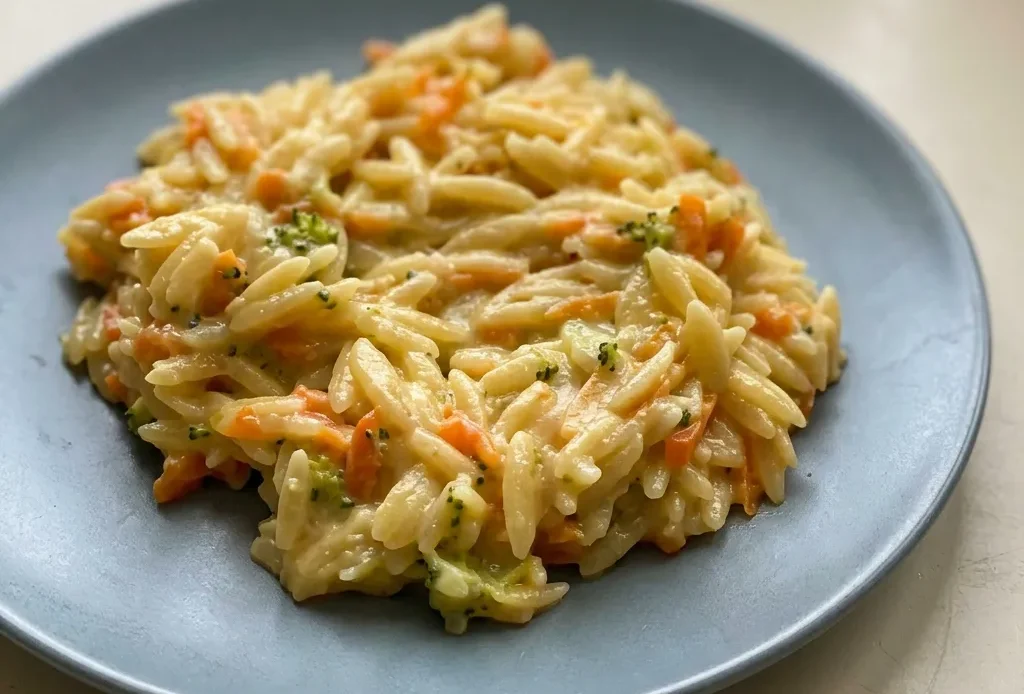
Creamy orzo without a roux? That’s the trick here, cream cheese and parmesan melt into a sauce that clings without getting gummy. The margin for error is forgiving: as long as you don’t overcook the pasta, the rest comes together in minutes.
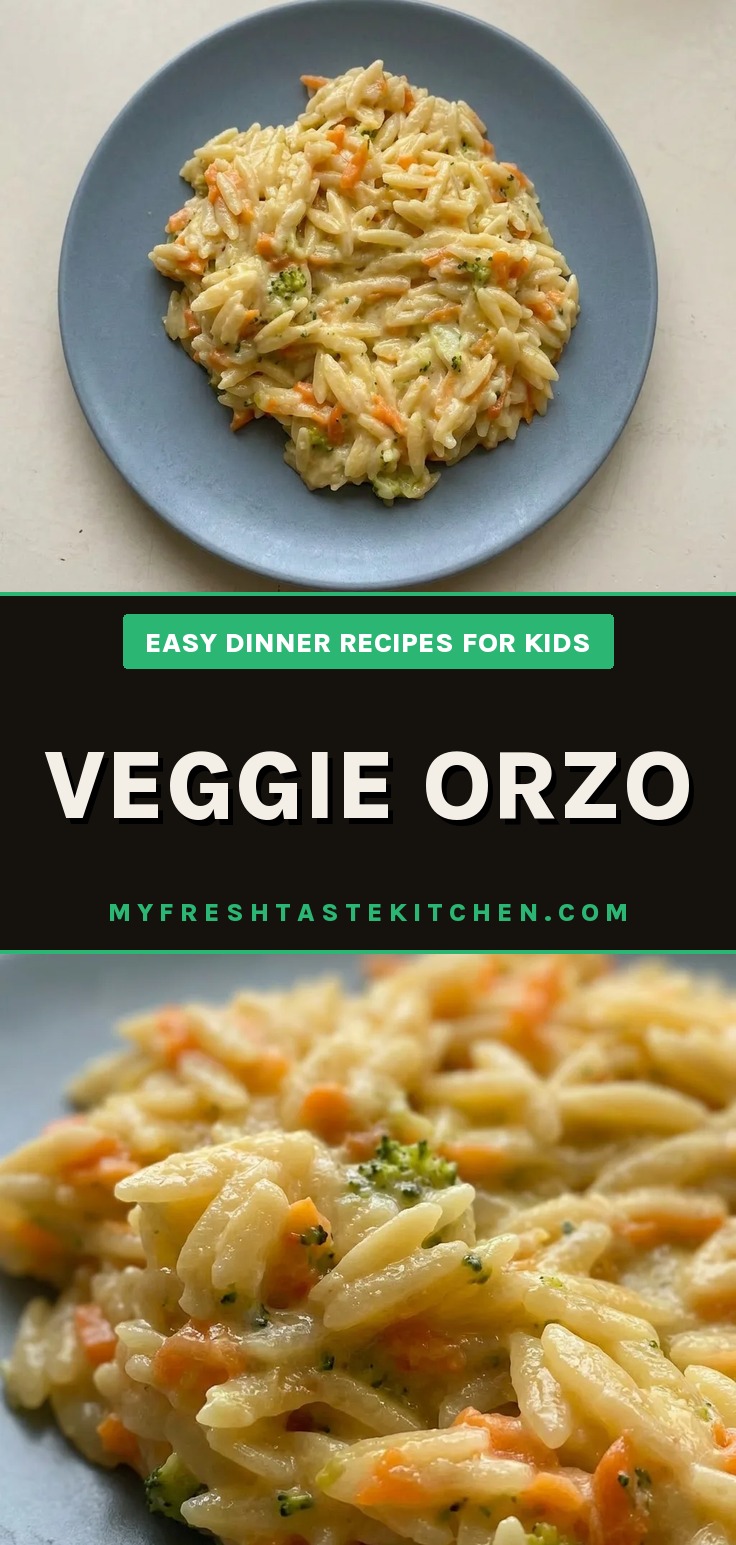
This veggie orzo gets its body from the cheese, not from flour or cream, so it stays silky even after a reheat. Broccoli and carrots soften in the same pot, soaking up the broth as the orzo swells. It’s a one-pot meal that feels richer than its short ingredient list suggests.
Creamy Sauce Without Cream or Flour
Cream cheese melts into a smooth, rich base as it warms through the orzo. Unlike heavy cream, it adds body without thinning the sauce.
Parmesan follows with salty umami and helps thicken the sauce naturally as it melts. Together they create a silky finish that clings to every grain. No roux needed, no extra cream to buy.
The result is a simple, satisfying creaminess that feels rich but comes together in seconds. For easy toddler friendly dinners, this sauce is a winner, rich but not heavy, quick to pull off.
Sautéing Vegetables First
Sweating broccoli and carrots in oil before adding liquid deepens their flavor. The heat releases natural sugars and coaxes out aromatics, so the vegetables taste sweeter and more savory. It also firms them up just enough that they stay tender but never mushy after the orzo simmers.
The 5-minute sauté leaves a fond on the pot bottom that infuses the broth, carrying that vegetable goodness into every bite. For dinner ideas toddler friendly, this step means the veggies are soft enough for little ones but still have character. The technique makes the dish taste like it cooked for longer than it did.
Absorptive Orzo Method
Cooking orzo in a measured amount of broth rather than a big pot of water lets the pasta drink up the liquid, concentrating flavor inside each grain. As the orzo swells, it releases starch that thickens the surrounding sauce, giving the dish a creamy consistency without extra dairy.
Stirring occasionally keeps the grains from sticking and ensures even hydration, no draining, no lost flavor. The result is a cohesive, saucy orzo where every spoonful tastes seasoned through. For a quick toddler dinner, this method saves steps and delivers a texture that holds up well to little hands.
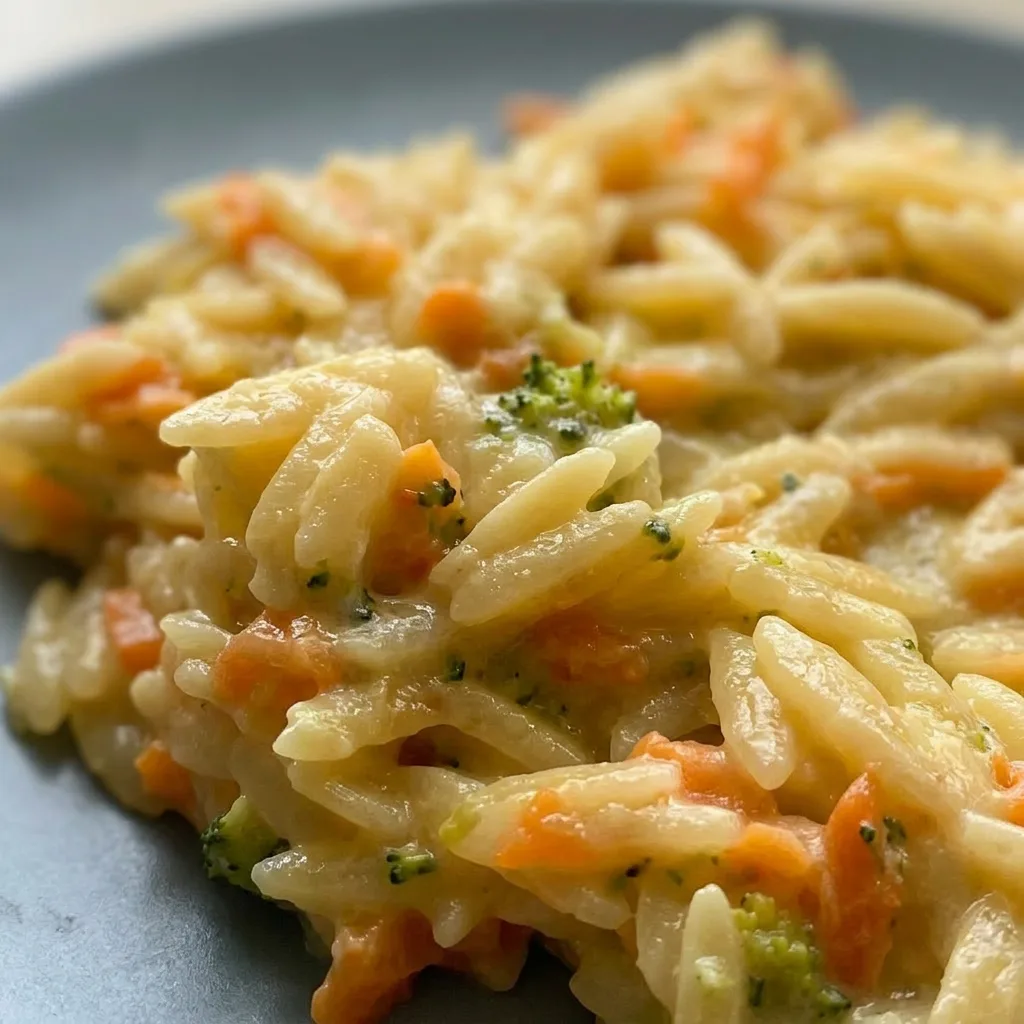
Prep: 15 min · Cook: 15 min · Total: 30 min · Servings: 3 · Calories: 410 kcal
Ingredients That Make This Dish Work
broccoli: Cut florets into small, bite size pieces so they cook evenly with the orzo.
carrots: Finely shred them so they soften in the sauté and blend into the sauce.
orzo: Use standard dried orzo; the absorptive method works best with this size pasta.
cream cheese: Full fat block cream cheese melts smoothest; let it sit out a few minutes before stirring in.
parmesan: Grate a block yourself; pre shredded versions contain anti caking agents that can turn grainy.
Building the Orzo Step by Step
Sauté the aromatics
Heat oil in a medium pot over medium. Add broccoli and carrots; cook 5 minutes. The broccoli turns bright green and the carrots soften slightly.
The garlic should smell fragrant but not brown, if it starts to color, lower the heat.
Simmer the orzo
Stir in orzo and broth, bring to a boil, then reduce to medium-high. Cook 10 to 15 minutes, stirring occasionally.
The orzo swells and the liquid reduces; you should see a thick, saucy consistency. If it looks dry before the pasta is tender, add a splash more broth.
Finish with cheese
When the orzo is tender and most liquid is gone, remove from heat. Stir in cream cheese until melted and smooth, then fold in parmesan. The sauce turns creamy and coats each grain, no lumps should remain.
Let rest a minute before serving.
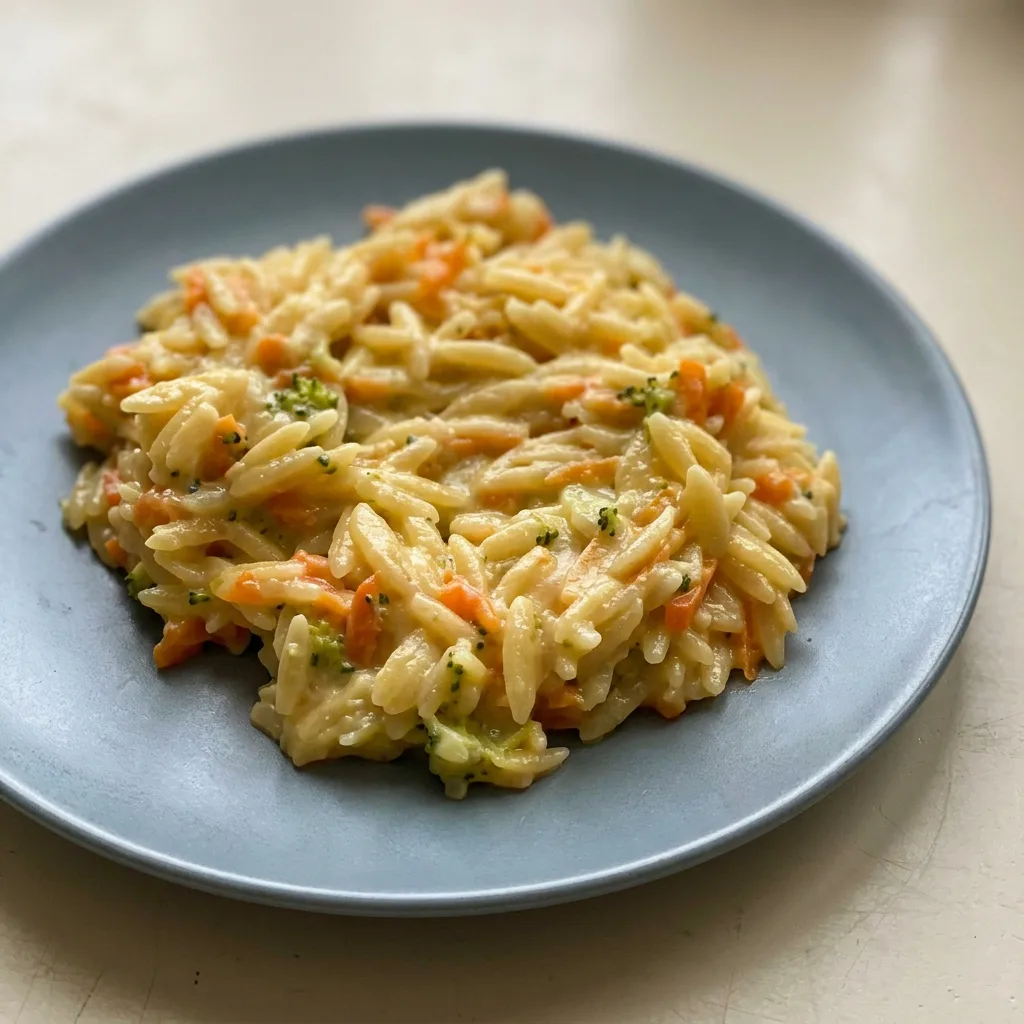
Veggie Orzo
Ingredients
Method
Prep Vegetables:
Cut broccoli florets into small pieces and grate carrots finely.Sauté Aromatics:
Heat olive oil in a medium pot over medium heat. Sauté the broccoli, carrots, and garlic for about 5 minutes until the vegetables are fragrant and slightly tender.Cook Orzo:
Pour in orzo and chicken broth. Bring to a boil, then reduce to medium-high and cook for 10-15 minutes, stirring now and then to avoid sticking. Most of the broth should be absorbed; add extra broth if necessary to complete cooking.Incorporate Cheeses:
When the orzo is tender and the liquid is nearly gone, mix in cream cheese and parmesan until fully incorporated and creamy.Cool and Serve:
Let the Veggie Orzo cool a bit before serving. Enjoy on its own or alongside grilled chicken or fish for extra protein.
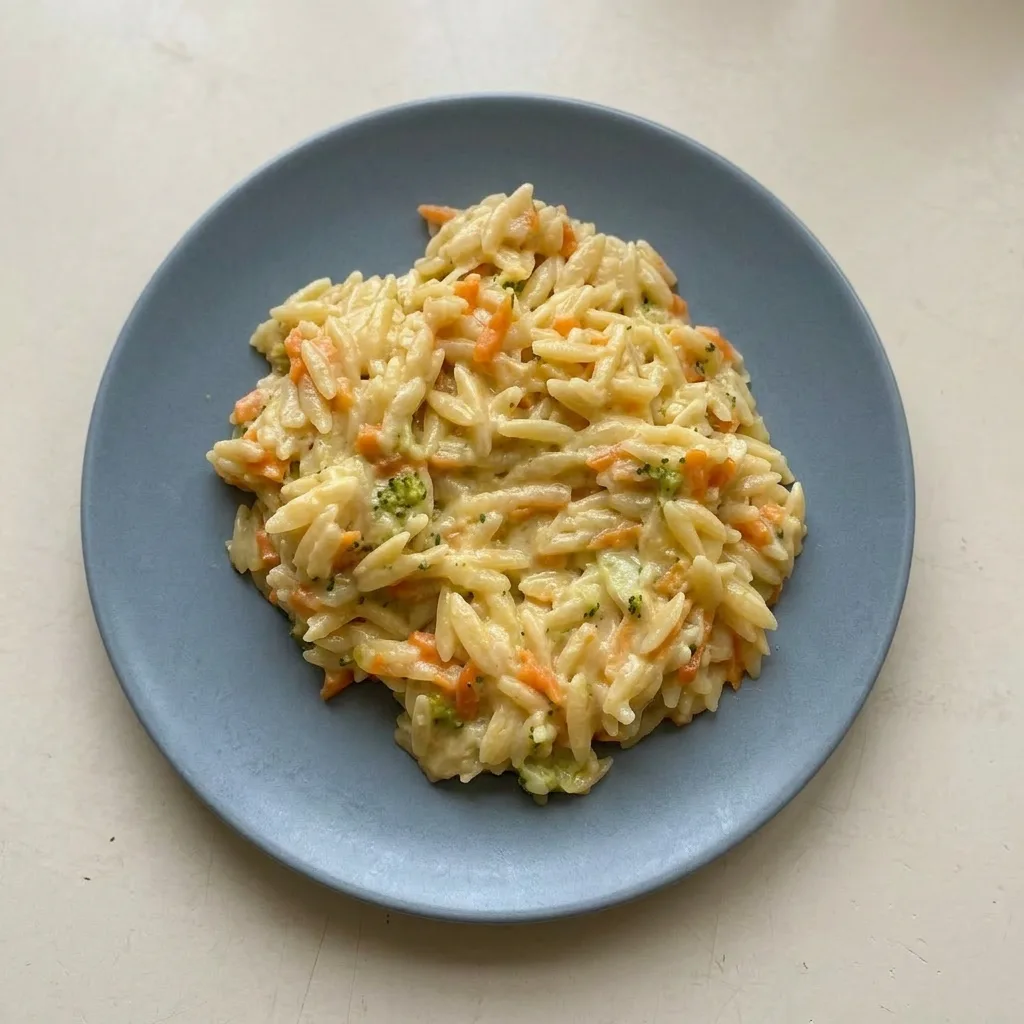
Storage and Serving
Serve the Veggie Orzo within 30 minutes of finishing for the creamiest texture. As it sits, the orzo continues to absorb liquid, thickening the sauce. Refrigerate leftovers in an airtight container for up to 3 days.
The pasta will soak up more broth over time, so the dish becomes denser and less saucy. To restore its original creaminess, add a splash of broth or water when reheating and stir well. Freezing is not recommended because the cream cheese sauce can separate and the orzo turns grainy upon thawing.
For make ahead, cook the vegetables and orzo up to the point before adding the cream cheese and parmesan. Cool, cover, and refrigerate for up to 2 days.
When ready to serve, reheat gently with a splash of broth, then stir in the cheeses off heat.
What to Swap and What to Keep in Veggie Orzo
broccoli: Zucchini or asparagus. Both hold up well to the sauté and simmer.
Zucchini softens faster, so cut it a bit larger. Asparagus should be trimmed and cut into 1-inch pieces. The overall texture stays tender, and the flavor shifts mildly, zucchini is more neutral, asparagus adds a grassy note.
carrots: Bell peppers, finely diced. Bell peppers are less sweet than carrots and won’t soften as much. They add crunch and a different color.
If you want a sweeter swap, try finely diced sweet potato, but you’ll need to sauté it a few minutes longer to soften.
chicken broth: Vegetable broth. Straight swap keeps the dish vegetarian.
Vegetable broth is often less savory, so you might want to add a pinch more salt or a splash of soy sauce at the end to boost umami. The absorptive method means the broth’s flavor concentrates, so choose a broth you enjoy sipping.
cream cheese: Full-fat sour cream or mascarpone. Sour cream adds tang and thins the sauce a bit; stir it in off heat and don’t let it boil or it may curdle.
Mascarpone is richer and slightly sweeter, giving a silkier finish. Reduced-fat cream cheese can turn grainy, avoid it. For dairy-free, a thick oat cream with a splash of lemon juice mimics the tang, but the sauce won’t be as thick.
parmesan: Pecorino Romano or nutritional yeast (for dairy-free). Pecorino is saltier and sharper; use a bit less and taste as you go. Nutritional yeast gives a cheesy, savory flavor without dairy, but it won’t thicken the sauce, the cream cheese will still do that.
Grate the pecorino yourself; pre-grated stuff has anti-caking agents that can turn the sauce gritty.
Tips
- Use a box grater or food processor to shred the carrots; hand chopping yields uneven pieces that may not soften in time.
- Cut broccoli florets no larger than the orzo grains so they finish cooking at the same time as the pasta.
Frequently Asked Questions
Can I make veggie orzo ahead of time and reheat it?
Yes, but with a caveat: the orzo keeps absorbing liquid as it sits, so the sauce thickens. Refrigerate leftovers for up to 3 days, then add a splash of broth or water when reheating to restore creaminess.
For make-ahead, cook the vegetables and orzo up to the cheese step, refrigerate for up to 2 days, then reheat with extra broth and stir in the cheeses off heat. Freezing is not recommended, the cream cheese sauce can separate and the orzo turns grainy.
Why did my orzo turn out mushy or too sticky?
Most likely you cooked it too long or with too much liquid. The recipe uses 2 cups broth for 1 cup orzo; if you added extra broth or simmered beyond 15 minutes, the orzo overcooks and releases excess starch, turning sticky.
Stirring too vigorously can also break the grains. Next time, check doneness at 10 minutes, the orzo should be tender but still hold its shape, with the liquid mostly absorbed.
Can I serve veggie orzo cold as a pasta salad?
Absolutely. The creamy sauce sets up into a thick, almost spreadable consistency when chilled, so it works well cold. Just know the texture will be denser and less saucy than when warm, taste and adjust salt or acid with a squeeze of lemon before serving.
It keeps for up to 3 days refrigerated, making it a convenient cold lunch.
What’s the difference between veggie orzo and a classic orzo pilaf?
A classic orzo pilaf is typically toasted in butter or oil before adding broth, then cooked until fluffy and separate; it’s dry and grain-like. This veggie orzo skips the toasting, simmers the pasta in a measured amount of broth with vegetables, and finishes with cream cheese and parmesan for a creamy, saucy dish. The method concentrates flavor inside each grain and yields a cohesive, one-pot meal rather than a side dish.