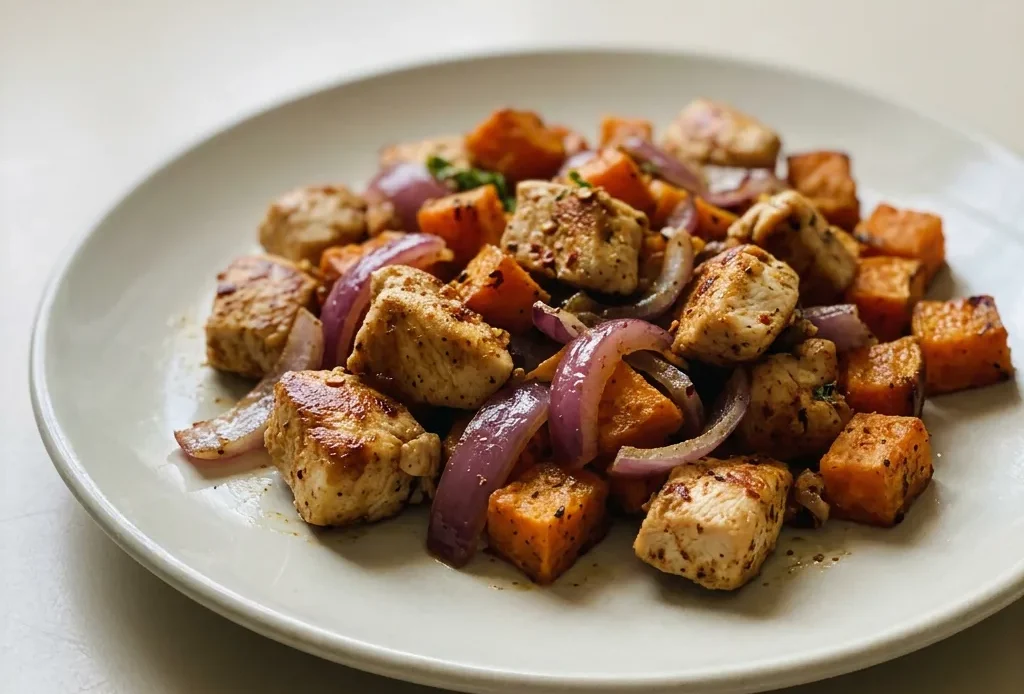
You might wonder why you’d bother searing the chicken and removing it before the sweet potatoes hit the pan, especially when you’re after a quick one-pan meal. But that extra step is what makes this chicken and sweet potato skillet sing. The chicken develops a deeply browned crust that sticks to the pan as fond, and then the sweet potatoes and onions caramelize in those same bits, absorbing all that savory intensity.
Skip the sear, and you’ll notice the difference, the dish tastes flat, the potatoes stay pale, and the chicken releases moisture that steams everything. A single skillet does the work, but you have to let it.
The first time I made this, I dumped everything in the skillet at once. The chicken came out dry and the sweet potatoes were a mushy mess.
Why pan-sear the chicken before the sweet potatoes?
Searing chicken first builds a deep, savory crust from the Maillard reaction that simply doesn’t happen if you dump everything in together. That browned surface adds layers of flavor you can taste.
Once the chicken is golden, you remove it so it doesn’t overcook while the sweet potatoes soften. Meanwhile, the browned bits left in the skillet, the fond, carry all that concentrated chicken goodness. When you add the sweet potatoes and onions, they pick up those flavors directly.
Now I always sear the chicken first, then remove it before cooking the sweet potatoes. The result is chicken that stays juicy, potatoes that soak up the pan’s character, and a dish with noticeably more depth.
Why does piece size matter so much?
When you cut the chicken and sweet potatoes into similar-sized pieces, everything cooks at the same pace. If some chunks are bigger than others, you end up with dry chicken waiting for large potato cubes to soften, or mushy potatoes while thicker chicken pieces are still pink inside. Uniform pieces also brown evenly, the surface area is consistent, so each side gets the same contact with the pan.
That means no patchy caramelization on the sweet potatoes or uneven browning on the chicken. You can see it in the pan: all the pieces reach that tender, golden stage together. So for easy chicken dinner recipes, that simple step makes the difference between a skillet where every forkful is cooked and one where you pick around the overdone bits.
What do smoked paprika and cumin actually do here?
Smoked paprika brings a woody, campfire-like aroma that pairs directly with the caramelized edges of the sweet potatoes. You smell it before you taste it, that smoky note signals something hearty. Cumin adds an earthy, slightly bitter warmth that cuts through the potato’s sweetness, keeping the dish savory.
When these spices hit the hot oil in the skillet, they toast for just a few seconds, releasing volatile oils that make their flavors bloom. You can tell they’ve done their job when the kitchen smells rich and layered, not just sweet. Together, they define the dish much more than salt and pepper alone could, making a straightforward chicken recipe taste like it simmered for hours.
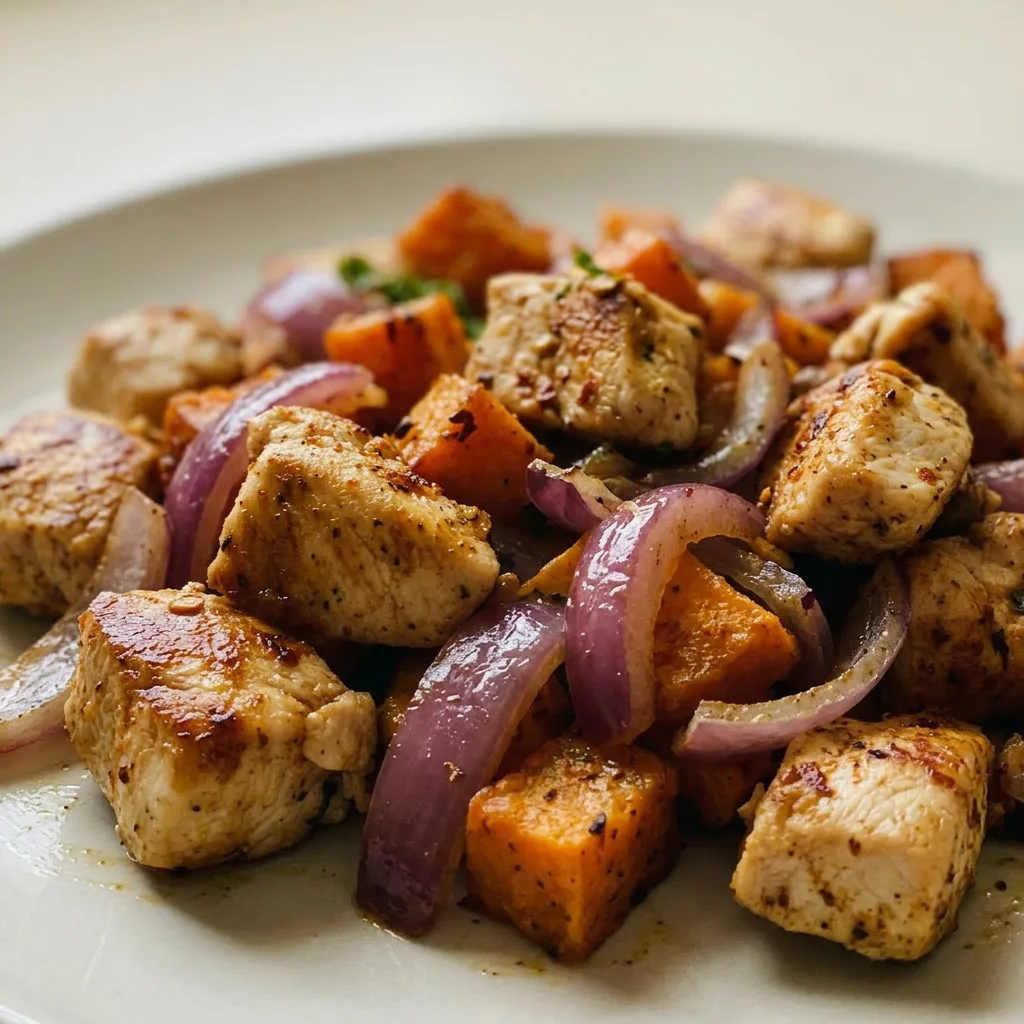
Prep: 15 min · Cook: 20 min · Total: 35 min · Servings: 4 · Calories: 390 kcal
Ingredient catches in this skillet
Boneless Chicken Breasts or Thighs: Thighs stay juicier than breasts here because the longer cook time can dry out lean breast meat.
Sweet Potatoes: Peel them and dice into ½-inch cubes; any larger and they won’t soften in time.
Smoked Paprika: Regular paprika won’t give the same smoky depth, so buy the smoked kind specifically.
Cumin: Ground cumin works; whole seeds would be too crunchy and unevenly distributed.
Lemon Juice: Fresh lemon juice brightens the dish; bottled juice tastes flat and metallic.
How to make this chicken and sweet potato skillet
Cut the chicken and sweet potatoes
Dice both into ½-inch cubes. If the pieces are uneven, you’ll see some burn while others stay raw, stop and re-cut any big chunks.
Season everything in a bowl
Toss the chicken, sweet potatoes, olive oil, paprika, cumin, salt, and pepper until each piece is coated. The spices should look evenly distributed, not clumped.
Sear the chicken
Heat a large skillet over medium-high until a drop of water sizzles instantly. Add the chicken in a single layer, crowding steams it. Cook until deep golden, about 5 to 6 minutes total, turning once.
Remove the chicken and start the potatoes
Transfer the seared chicken to a plate. In the same skillet, add the sweet potatoes and sliced onion. You should hear a steady sizzle; if not, raise the heat slightly.
Cook the sweet potatoes until caramelized
Stir occasionally for 8 to 10 minutes. The potatoes should develop brown spots and yield slightly when pressed with a spatula. If they stick, they need more time, don’t force them.
Return the chicken and add garlic
When the potatoes are nearly tender, add the chicken back along with the minced garlic. Cook 3 to 4 minutes, stirring, until the garlic is fragrant and the chicken is just cooked through.
Finish with lemon or herbs
Remove the skillet from heat. Squeeze a lemon wedge over the top or scatter fresh herbs. The acidity brightens the richness, taste and decide if you want more.
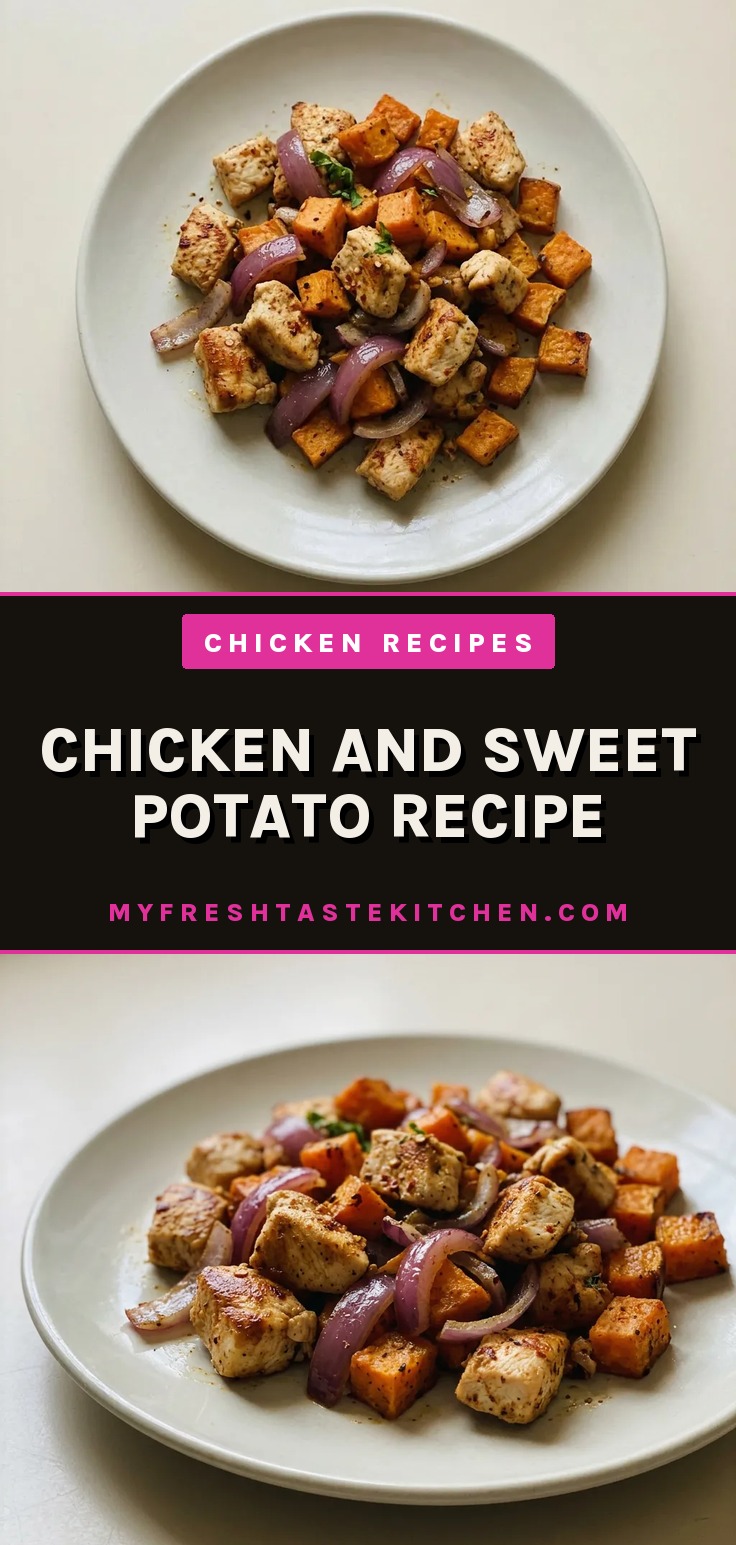
Chicken and Sweet Potato Skillet
Ingredients
- 1 lb Boneless Chicken Breasts or Thighs
- 2 Medium Sweet Potatoes peeled and diced
- 2 tbsp Olive Oil
- 1 Small Red Onion
- 2 Garlic Cloves minced
- 1 tsp Smoked Paprika
- ½ tsp Cumin
- Salt and Pepper to taste
- Chili Flakes optional
- Squeeze of Lemon Juice optional
Instructions
Cut Ingredients Uniformly:
Cut the chicken and sweet potatoes into uniform sizes to ensure even cooking.Mix Chicken and Seasonings:
Combine the chicken, sweet potatoes, olive oil, paprika, cumin, salt, and pepper in a bowl and mix thoroughly.Heat Skillet for Searing:
Heat a large skillet over medium-high heat until it’s hot enough to properly sear the chicken.Sear Chicken Until Golden:
Sear the chicken until both sides are golden brown, roughly 5–6 minutes, then remove and reserve.Cook Sweet Potatoes and Onions:
In the same skillet, put in the sweet potatoes and sliced onions to absorb the residual flavors.Caramelize Potatoes and Onions:
Cook for 8–10 minutes, stirring from time to time, until they begin to caramelize and become tender.Return Chicken with Garlic:
When the potatoes are nearly done, return the chicken and add the minced garlic to the skillet; cook everything together for another 3–4 minutes.Rest and Add Lemon Juice:
Remove from heat, allow to rest for a moment, then finish with a squeeze of lemon juice or fresh herbs before serving.
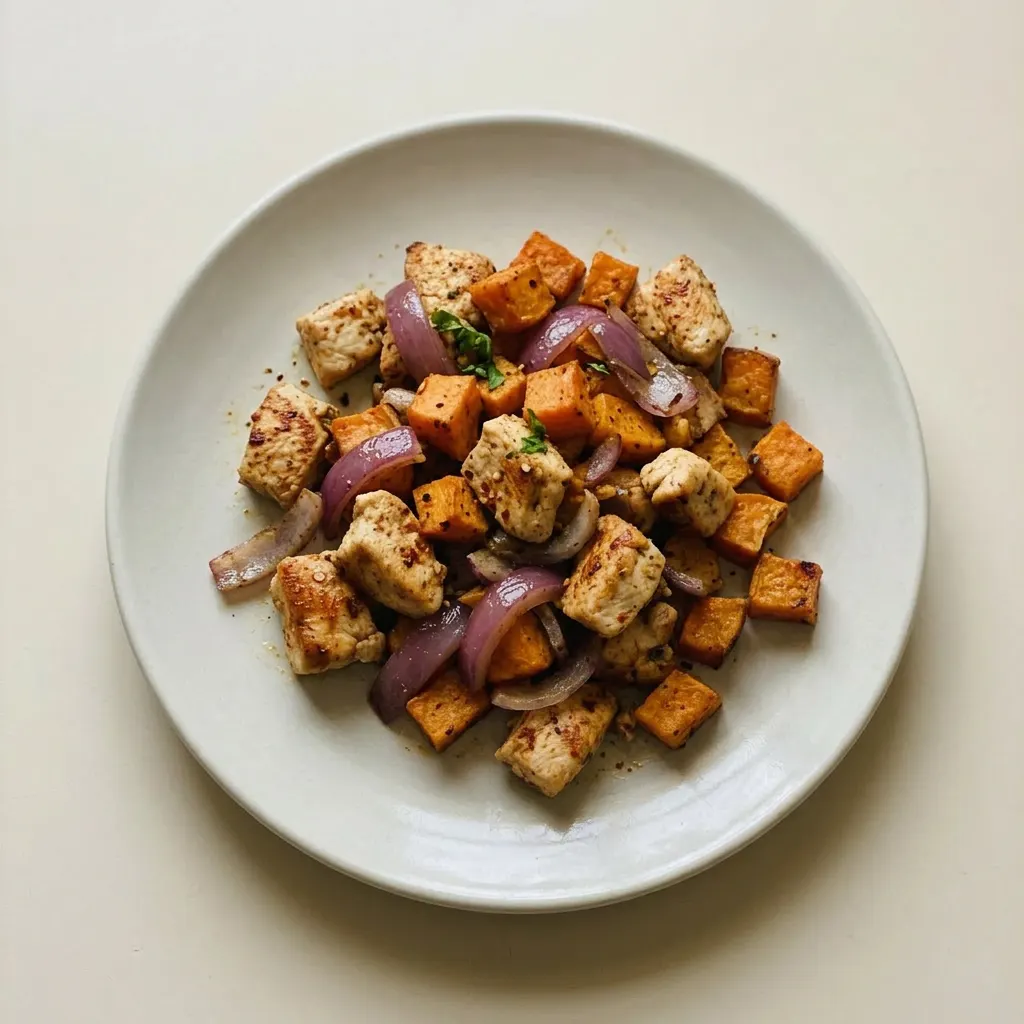
What to swap and what to keep in this skillet
Boneless Chicken Breasts or Thighs: Use chicken thighs instead of breasts for juicier results. If swapping thighs for breasts, expect drier meat unless you reduce the initial sear time. Thighs stay tender and moist after the longer total cook time; breasts can dry out, especially if overcooked even slightly.
Sweet Potatoes: Butternut squash can replace sweet potatoes for a less sweet, slightly nuttier result. Dice it the same size, ½ inch, and watch cook time: it may soften a minute or two faster. Squash caramelizes less intensely, so the dish will be less sweet and the texture slightly firmer if not cooked beyond tender.
Olive Oil: Any neutral oil with a smoke point above 375°F, avocado or grapeseed, works the same. Extra-virgin olive oil is fine here; just don’t use butter alone, it burns before the pan gets hot enough to sear. The oil’s primary role is heat transfer and browning; flavor differences are subtle.
Butter can be mixed with oil for flavor, but not substituted entirely.
Smoked Paprika: Sweet paprika plus a drop of liquid smoke (start with ¼ teaspoon) can mimic the smoky flavor, but it won’t be identical. Skip this swap if you want the exact profile. Liquid smoke adds smokiness without the paprika’s sweetness, so the balance shifts, add a pinch of sugar if needed.
Regular paprika alone gives no smoky depth.
Tips
- If your skillet isn’t large enough to hold the chicken and sweet potatoes in a single layer without crowding, cook the chicken in batches. Crowding lowers the pan temperature and causes steaming instead of browning.
- After adding garlic in the final step, stir constantly for 30 seconds before adding the chicken back. Garlic burns quickly and bitterness can ruin the dish.
Storage and Serving
This chicken and sweet potato skillet eats best right after it rests, when the chicken is juicy and the sweet potatoes are tender but not mushy. For leftovers, refrigerate in a shallow airtight container within two hours. The chicken stays moist for up to three days, but sweet potatoes lose their firmness after day one.
They’ll still taste good, just softer. To reheat, use a covered skillet over medium-low with a splash of water or broth, stirring gently until warm. Avoid microwaving, which makes the potatoes gummy.
Freezing is not recommended; the sweet potatoes turn watery and the chicken dries out. If you must freeze, freeze only the cooked chicken and add fresh sweet potatoes when reheating. The lemon juice finish is best added just before serving.
If you’re storing leftovers, skip the lemon and add a fresh squeeze after reheating.
Frequently Asked Questions
Can I make this chicken and sweet potato skillet ahead of time?
You can, but the sweet potatoes will soften further. The skillet is best eaten right after it rests, the chicken stays juicy and the potatoes are tender but not mushy. If you make it ahead, refrigerate within two hours and reheat gently in a covered skillet with a splash of water or broth.
The chicken stays moist for up to three days, but expect the sweet potatoes to lose firmness after day one.
How do I prevent the sweet potatoes from becoming mushy?
Cut them into ½-inch cubes and don’t cook them beyond the point where they yield slightly when pressed with a spatula, about 8 to 10 minutes. Overcooking breaks down the cell structure, turning them mushy. Also, avoid overcrowding the skillet: if you pile too many in, they steam instead of caramelize, which makes them soft without the browning that holds their shape.
What’s the best way to reheat leftovers without drying out the chicken?
Reheat in a covered skillet over medium-low with a splash of water or broth, stirring gently until warm. This adds moisture back and prevents the chicken from drying out.
Avoid the microwave, it heats unevenly and can turn the chicken rubbery and the potatoes gummy. The lemon squeeze should be added fresh after reheating, not before storing.