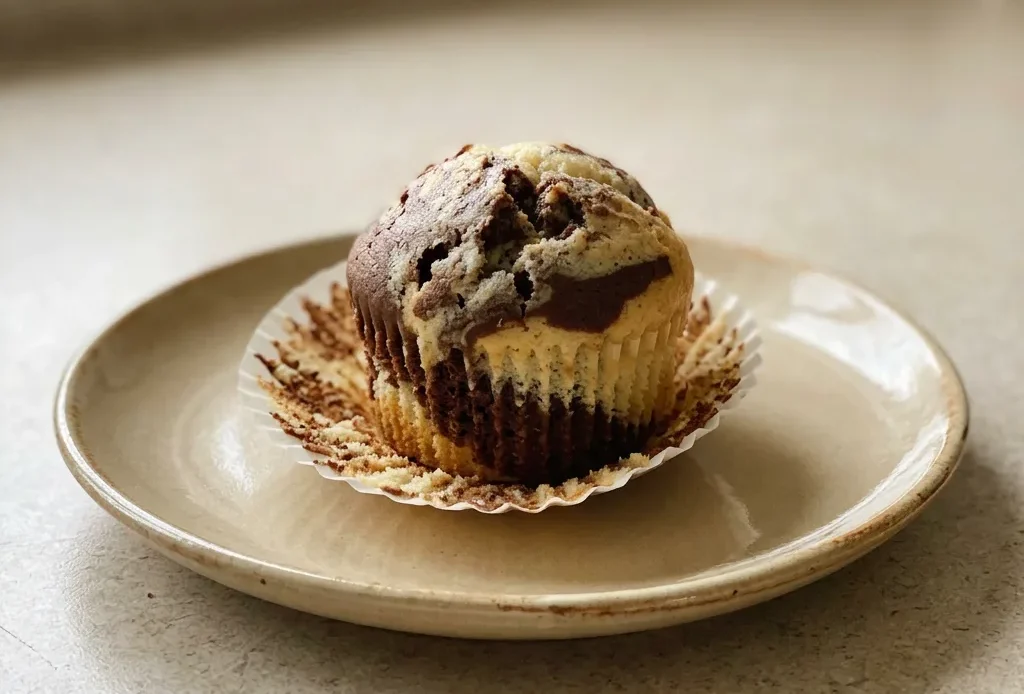
A marble muffin looks impressive, but the real trick is keeping the two batters distinct without turning them into a single muddy crumb. The chocolate half needs just enough extra milk to stay fluid, while the plain half stays thick enough to hold its shape, that contrast is what gives you clean ribbons instead of a uniform brown. These marble muffins walk that line, and once you see the difference a few tablespoons of milk makes, you’ll stop worrying about over-swirling.
Butter and Sugar
Creaming softened butter with granulated and vanilla sugar does more than sweeten. You’re forcing air into the butter, which later helps the muffins rise and stay tender.
The mixture should turn pale and look aerated before you add eggs. Vanilla sugar isn’t just extra sweetness, it adds a floral note that plain sugar can’t match.
When you beat eggs in one at a time, the batter becomes creamy and voluminous. That volume is your reward: it means you’ve trapped enough air for a light crumb.
Dividing the Batter
Splitting the plain batter in half gives you control over the marble pattern. Stir cocoa powder into one half along with extra milk; that extra liquid keeps the chocolate batter from stiffening and making the swirls muddy.
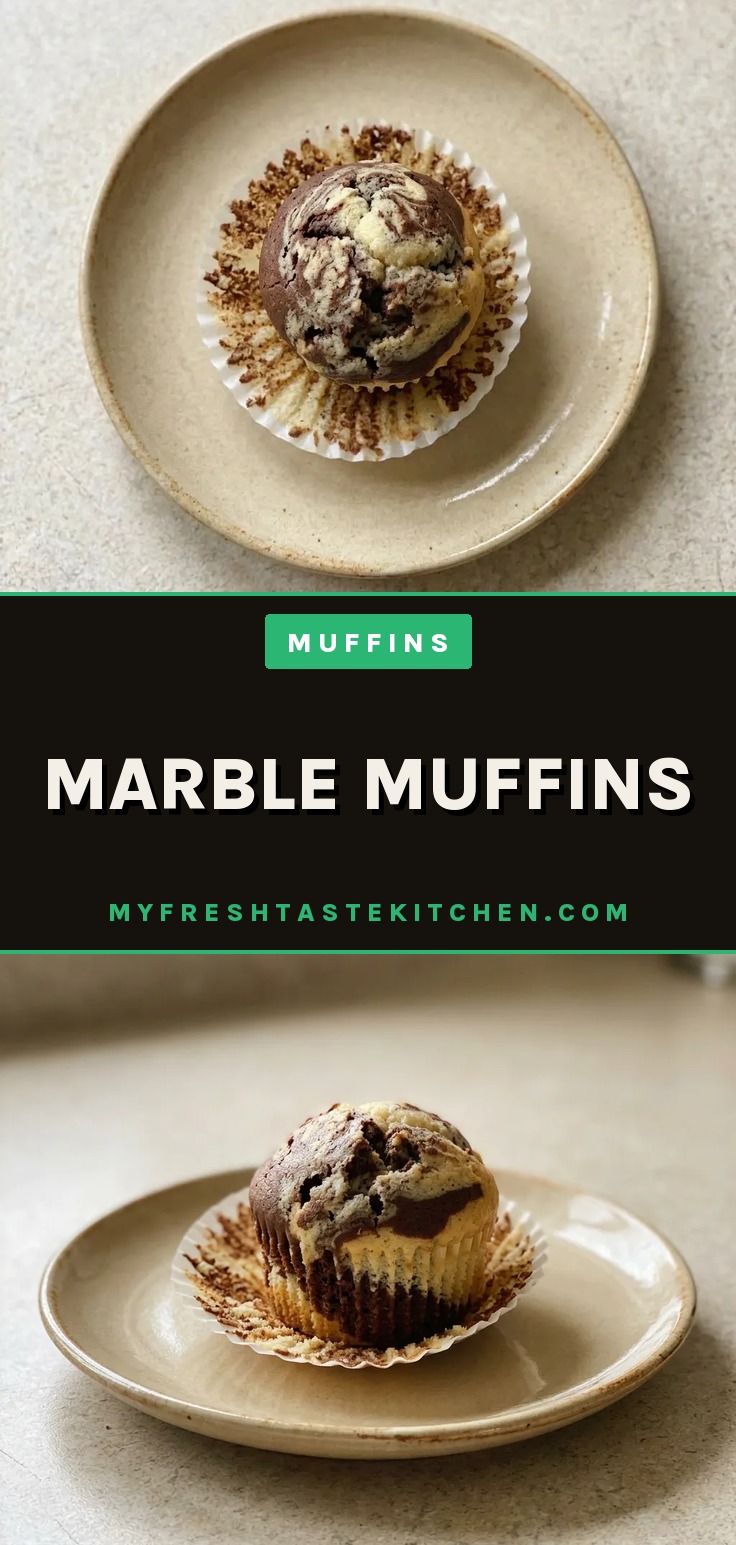
The marbling itself is a gentle push, not a full mix. Drop spoonfuls of each batter into the same liner, then drag a skewer through a few times.
You want distinct ribbons, not a uniform brown. The result is a clean swirl of chocolate and vanilla, each bite different.
Convection Heat
Convection ovens push hot air around the chamber, so every muffin bakes at the same rate. A lower temperature, 325°F, keeps the edges from setting too fast while the center cooks through. That steady heat preserves moisture; the crumb stays soft instead of drying out.
Because the air moves, baking time is shorter than in a still oven. Check with a toothpick: when it comes out clean, the muffins are done.
The tops will be evenly golden, no hot spots.
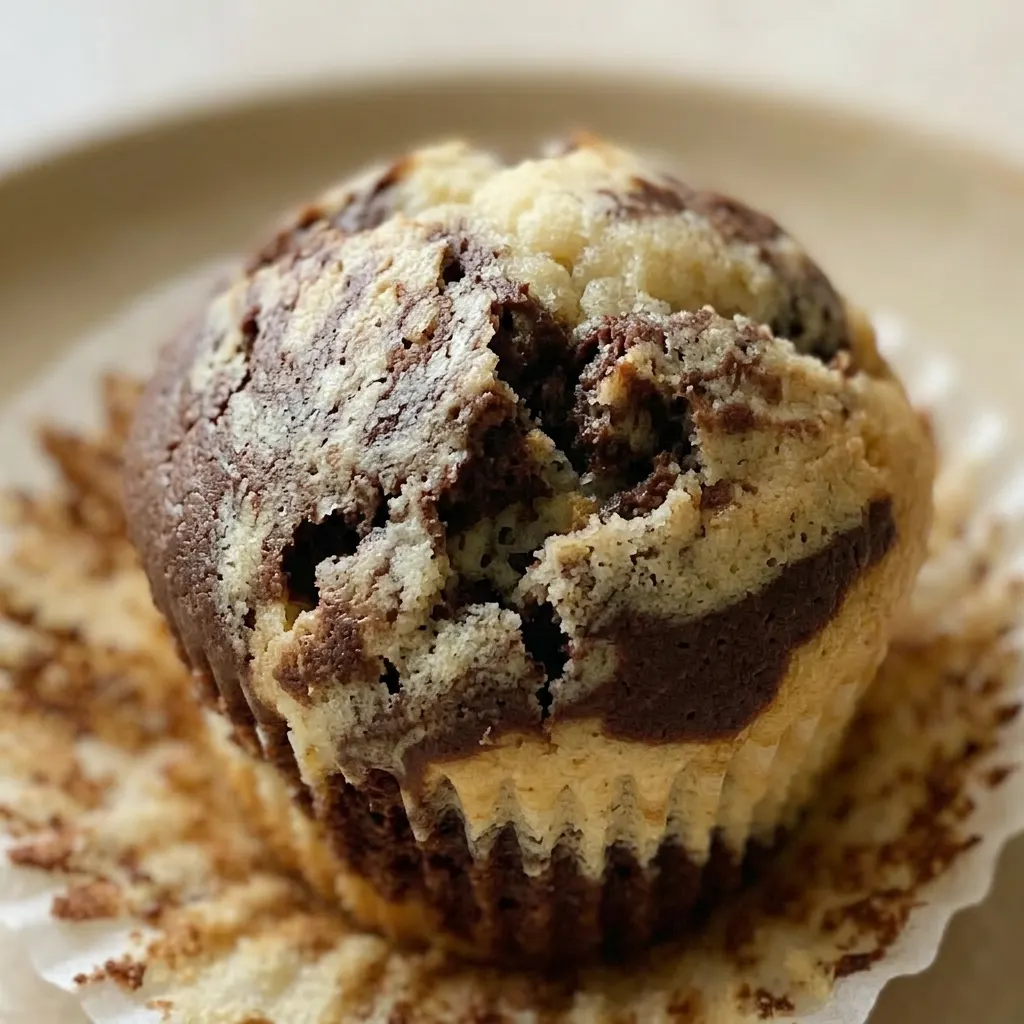
Prep: 10 min · Cook: 20 min · Total: 30 min · Servings: 12 · Calories: 220 kcal
Key Ingredients for Clean Marbling
Unsalted butter: Use unsalted to control the salt level; salted can throw off the balance.
Vanilla sugar: It’s a European staple with real vanilla; homemade or store-bought works fine.
Cocoa powder: Dutch-process gives deeper color; natural works but may react differently with the milk.
Milk: Whole milk adds richness; 2% works but the crumb may be slightly less tender.
Marbling Without Muddying
Cream butter and sugars
Beat the softened butter with both sugars until pale and fluffy. The mixture should look light and feel airy when you lift the beater, that’s your signal that enough air is trapped.
Add eggs one at a time
Crack in the first egg and beat until fully incorporated before adding the next. The batter will become creamy and increase in volume; if it looks curdled, you added the egg too fast.
Fold in dry ingredients and milk
Stir in flour, baking powder, salt, and 170 ml milk just until no streaks remain. Overmixing at this stage will toughen the crumb, so stop as soon as the batter is homogeneous.
Split and add cocoa
Divide the batter in half. Stir cocoa powder and 2 tbsp milk into one portion until just combined, the extra milk keeps it fluid enough to swirl without sinking.
Layer batters in liners
Drop alternating spoonfuls of plain and chocolate batter into each liner. Don’t layer systematically; random blobs create better marbling. Fill each about two-thirds full.
Swirl with a skewer
Insert a wooden skewer into the batter and drag it through in a figure-eight pattern. Two or three passes are enough, too many mixes the colors into a muddy brown.
Bake until toothpick comes out clean
Bake at 325°F convection for 20 to 25 minutes. The tops should be evenly golden and spring back when touched. A toothpick inserted in the center should emerge with no wet batter.
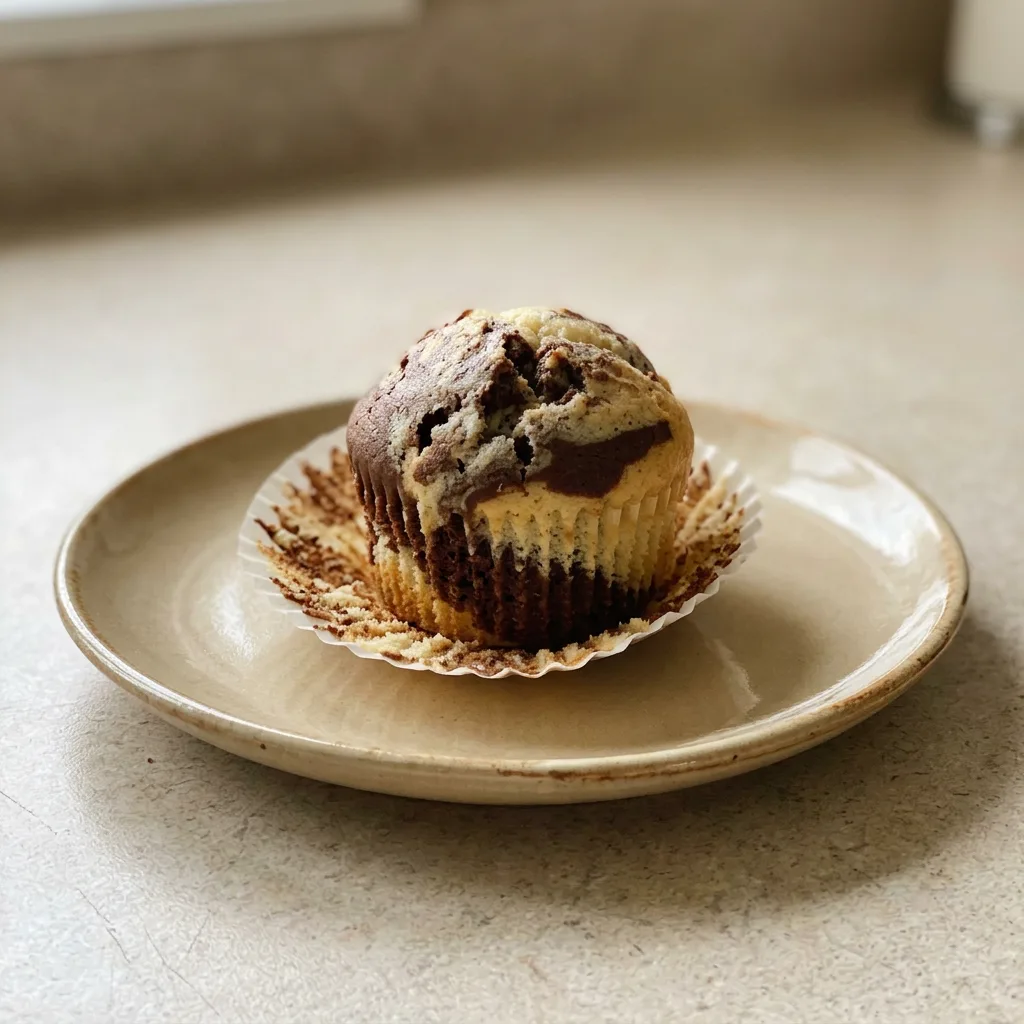
Marble Muffins
Ingredients
Method
Preheat oven and prep:
Heat oven to 325°F (165°C) using convection. Collect all components.Cream butter and sugars:
Cream softened butter with granulated sugar and vanilla sugar until pale and aerated.Add eggs gradually:
Add eggs one by one, incorporating thoroughly after each addition, until mixture is creamy and voluminous.Mix dry ingredients with milk:
Incorporate flour, baking powder, salt, and 170 ml milk; stir briefly until a homogeneous batter emerges.Divide and cocoa one half:
Split batter into two equal parts. Into one portion, stir in cocoa powder and 2 tbsp milk until just combined.Layer batters in liners:
Drop alternating spoonfuls of plain and chocolate batter into muffin liners.Swirl for marbled effect:
Draw a wooden skewer through the batter to produce a marbled effect.Bake and cool optionally glaze:
Bake in convection oven at 325°F (165°C) for 20-25 minutes. Transfer from pan to wire rack. Optionally, finish with powdered sugar or chocolate glaze.
Storage and Serving
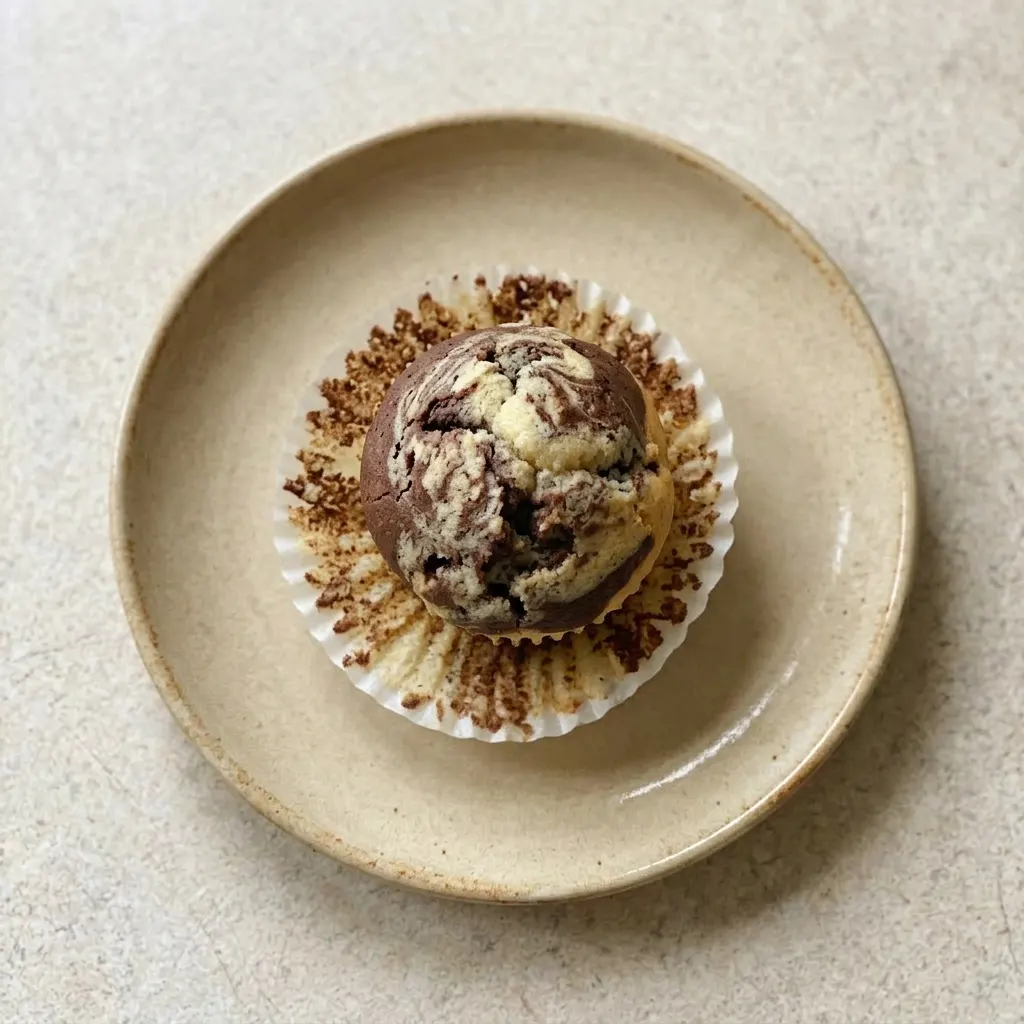
Marble muffins stay moist in an airtight container at room temperature for up to 2 days. Beyond that, the crumb starts to dry out, especially the chocolate portion.
For longer storage, wrap each muffin individually in plastic wrap and freeze in a zip-top bag for up to 3 months. To serve, thaw at room temperature for about an hour or reheat in a 300°F oven for 5 to 7 minutes to restore some softness.
If you add powdered sugar or chocolate glaze, do it just before serving; the sugar will dissolve and the glaze will lose its shine if left on too long. These muffins are best eaten within a few hours of baking, when the marbled contrast between tender vanilla and rich chocolate is most distinct. Leftover texture: after day one, they’re still good; by day three, they’re noticeably firmer but still edible.
Tips
- After stirring cocoa into one batter half, let it rest for 5 minutes in the fridge. The slight chill thickens the chocolate batter just enough that when you spoon it over the plain batter, it stays on top rather than sinking and creating a muddy bottom layer.
- When layering, drop a spoonful of chocolate batter directly into the center of each liner first, then surround it with plain batter and top with a final dab of chocolate. This creates a clear vertical marble that persists through baking, rather than a horizontal swirl that gets lost.
Swapping Without Losing the Swirl
Butter: Margarine or neutral oil. Margarine (stick, not tub) works measure-for-measure, but the creaming won’t aerate as well; expect a slightly denser crumb. Oil (1/2 cup) yields a moist, tender muffin but you lose the airy structure from creaming, skip the aeration step and just whisk wet into dry.
Milk: Buttermilk or plain plant-based milk. Buttermilk (same amount) adds tang and a softer crumb; skip the vanilla sugar if using buttermilk to avoid clashing flavors. Unsweetened almond or oat milk (same amount) works fine, but the crumb may be less tender, add 1/2 tsp vinegar to mimic buttermilk’s lift if you wish.
Cocoa powder: Carob powder or melted dark chocolate. Carob is sweeter and less bitter; use the same amount but reduce sugar by 1, 2 tbsp.
Melted chocolate (2 oz, cooled) replaces cocoa + the extra milk, omit the 2 tbsp milk in the chocolate half, stir in chocolate after splitting the batter. The marble will be darker and richer, not dusty.
Granulated sugar: Brown sugar or coconut sugar. Brown sugar (same amount) adds moisture and a slight caramel note; the crumb will be a touch denser. Coconut sugar (same amount) makes the batter darker, so the marble contrast weakens, use it only if you don’t mind a subtler swirl.
In both cases, beat until fully dissolved; coconut sugar may leave flecks.
Frequently Asked Questions
Can I make marble muffins ahead of time and freeze them?
Yes, wrap each muffin individually in plastic wrap and freeze in a zip-top bag for up to 3 months. Thaw at room temperature for about an hour or reheat in a 300°F oven for 5 to 7 minutes. Don’t add powdered sugar or glaze before freezing; do that just before serving.
Why did my marble muffins turn out dry or dense?
The most likely cause is overmixing the batter after adding the flour, stop as soon as no streaks remain. Overmixing develops gluten, which toughens the crumb. Another check: your oven might run hot, so verify temperature with an oven thermometer, or the muffins were baked too long, use the toothpick test at 20 minutes.
What’s the difference between marble muffins and regular chocolate chip muffins?
Marble muffins have two distinct batters, plain and chocolate, swirled together, so each bite alternates between vanilla and rich cocoa flavor. Chocolate chip muffins are a single vanilla batter studded with chips. The marbling technique requires splitting the batter and adding cocoa powder plus extra milk to keep the chocolate half fluid enough to swirl without muddying.
