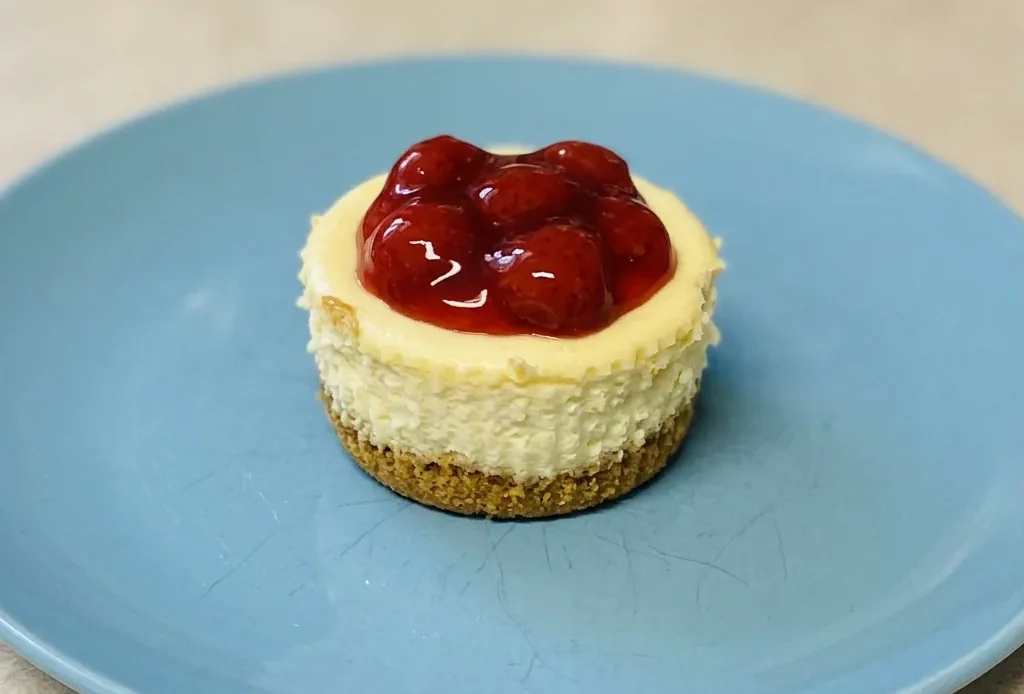
A full cheesecake demands patience, a water bath, slow cooling, hours of chill. These cheesecake cupcakes skip the bath and cut the oven time to minutes, but the real shortcut is the crust: you press it into the liners raw and let the filling set it during baking. No pre-bake, no crumble.
The trade-off? You have to trust a wobble when you pull them from the oven, then wait the full chill. Rush either and the texture goes from creamy to curdled.
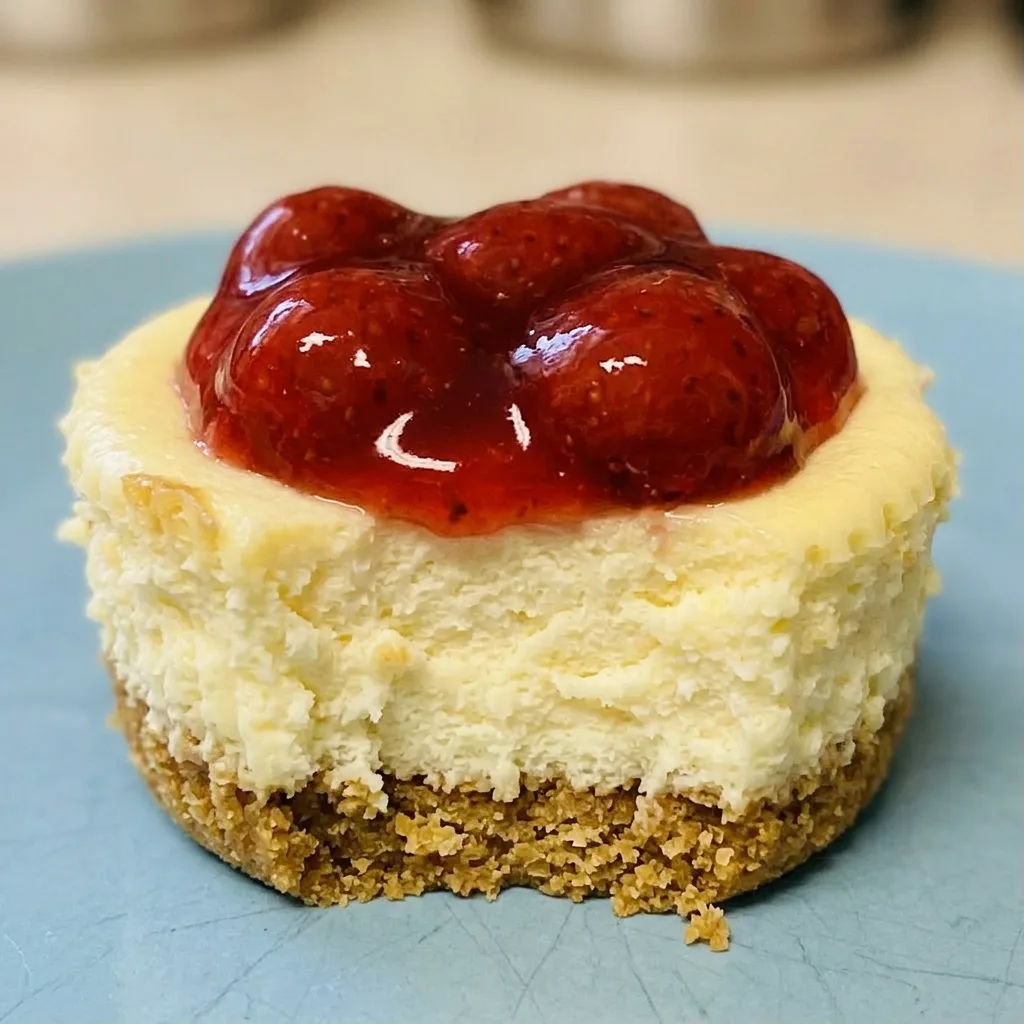
But get it right, and each liner holds a dense, silky bite of cheesecake that peels clean from the paper.
Why press the crust firmly into the liners?
Unlike a pie crust that gets pre-baked, here you press the mixture straight into the liners. The butter-to-crumb ratio is just enough to bind without turning greasy.
Pressing firmly compacts the crumbs so they hold together when you bite. During baking, the cheesecake filling sets the crust further, locking it in place. No separate bake time needed, the crumbs toast slightly from the oven heat while the cheesecake bakes.
The result is a stable base that doesn’t crumble when you peel off the liner.
Why mix the cheesecake batter on low and add eggs one at a time?
Overmixing whips air into the cream cheese batter. That air expands in the oven, puffing the cheesecake up, and then it collapses, leaving cracks. Running the mixer on low speed after adding eggs keeps the batter dense and smooth.
Adding each egg individually lets it incorporate evenly without extra beating. You’ll see a uniform, creamy batter with no streaks.
The cupcakes bake up level, with a silky texture rather than a spongy one.
Why pull the cheesecakes when they still wobble?
A gentle wobble in the center is exactly what you want. The residual heat will finish setting that soft spot as the cupcakes cool. If you bake until the center looks fully firm, you’ve gone too far, the cheesecake will turn dry and likely crack.
A toothpick test would deflate the delicate structure, leaving a dent. So skip any probe and trust the wobble.
The texture comes out creamy, not custardy or dense.
Why the long chill in the fridge?
Three hours in the refrigerator is the secret to a sliceable, creamy cheesecake. Straight from the oven, the filling is too soft to hold its shape.
Chilling firms it up so you can lift a cupcake without it collapsing. The wait also lets the tangy cream cheese and vanilla come forward, the flavor tastes more rounded, less one-note. Rush it and you’ll get a runny center and a flat-tasting dessert.
Prep: 10 min · Cook: 20 min · Total: 3 hr 30 min · Servings: 12 · Calories: 270 kcal
What to buy and how to handle the ingredients
Graham cracker crumbs: Buy plain crumbs, not cinnamon or honey flavored; they affect the crust’s sweetness.
Salted butter: Use salted butter as written; unsalted leaves the crust flat without enough salt.
Cream cheese: Two 8 oz blocks, full fat. Low fat or spreadable tubs make the filling too loose.
Large eggs: Use large eggs; smaller or larger ones change the batter’s structure and bake time.
Strawberry pie filling: Canned pie filling works best. Fresh strawberries won’t hold up without a thickener.
Build the crust tight, then fill to the brim
Press the crust firmly
Drop about 3 teaspoons of crumb mixture into each liner. Press down hard with your fingers or a spoon, you want a solid, compact layer that won’t shift when you bite. If it feels loose, press again.
Mix the cheesecake batter gently
Beat cream cheese, sugar, and vanilla on medium until smooth, then drop to low. Add eggs one at a time, mixing just until each disappears. The batter should look thick and creamy, not frothy.
Stop as soon as streaks vanish.
Fill the liners nearly full
Spoon batter over the crusts, filling almost to the top, a little overflow is fine. These cupcakes won’t puff much, so a full liner gives a nice tall cheesecake. If they look low, add more batter.
Bake until the centers wobble
After 20 minutes, the edges will be set but the center should jiggle when you nudge the pan. That wobble is your cue to pull them.
Don’t insert a toothpick, it will leave a crater. Let the residual heat finish the set.
Cool briefly, then chill long
Let the pan sit on a rack for 10 minutes, the cheesecakes will firm up slightly. Then move to the fridge for at least 3 hours. You’ll know they’re ready when the tops feel cool and the cupcake lifts cleanly from the liner.
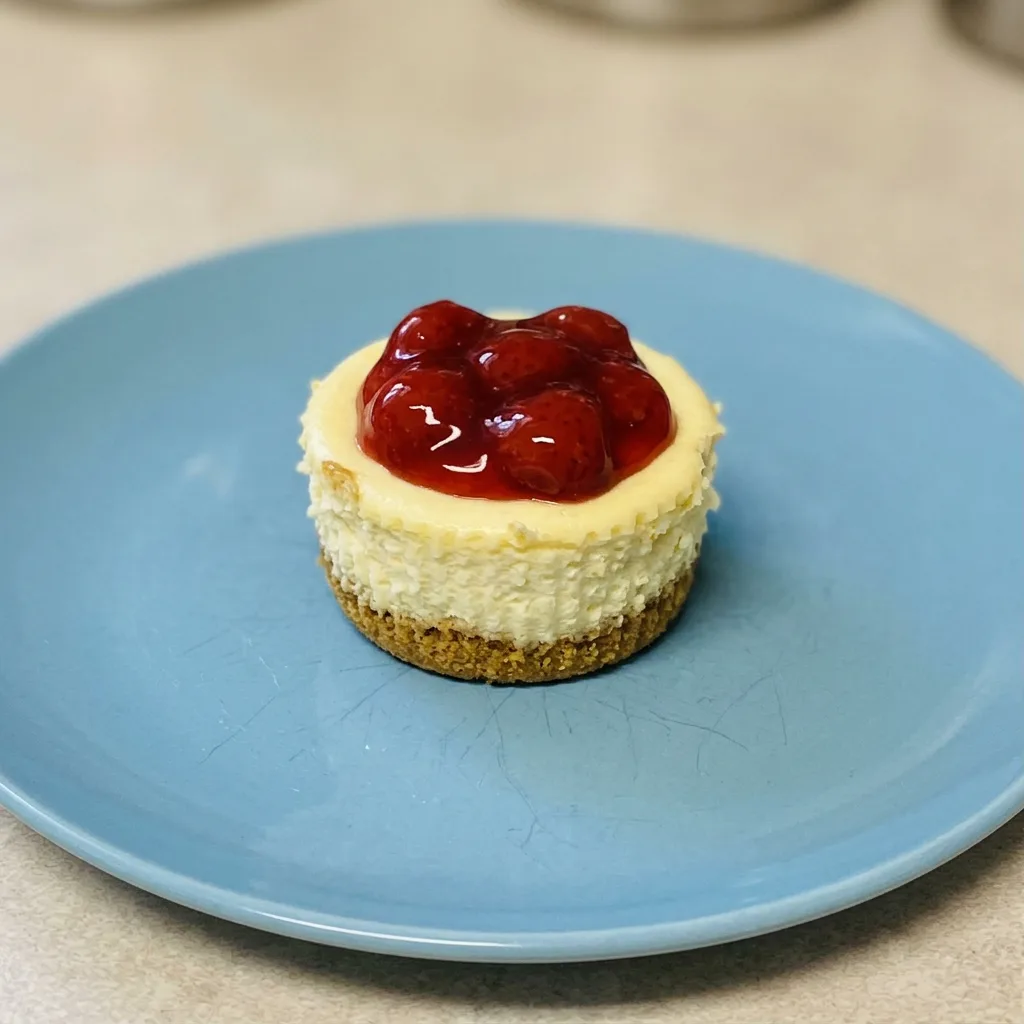
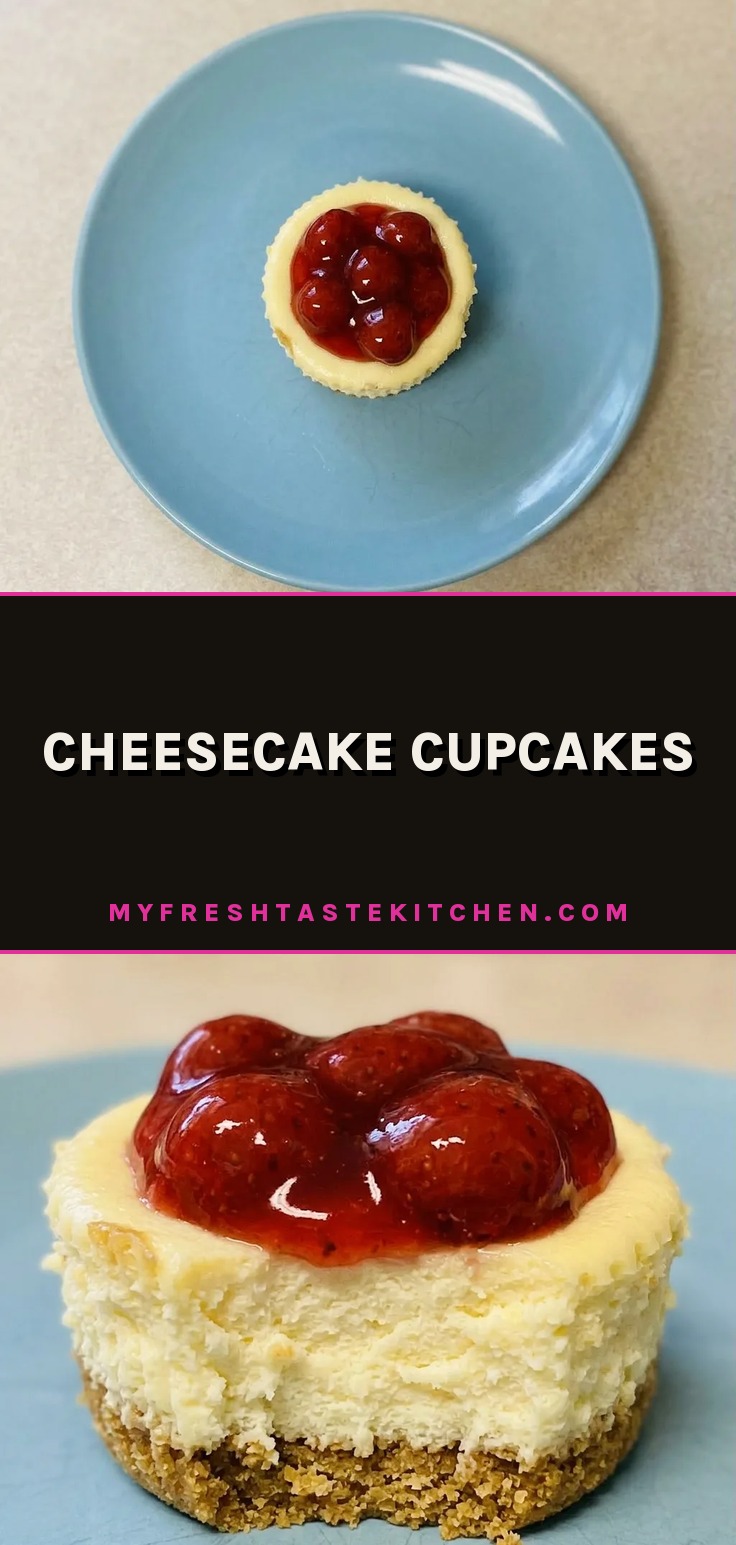
Simple & Creamy Cheesecake Cupcakes
Ingredients
Method
Preheat oven and liners:
Heat oven to 325°F (165°C). Place 12 cupcake liners in a standard muffin tin.Mix graham cracker crust:
Combine graham cracker crumbs, brown sugar, and melted salted butter in a small bowl until mixture looks like wet sand. A fork works well.
Press crust into liners:
Portion about 3 teaspoons of crust into each liner. Press down firmly with a spoon or your fingers.Beat cream cheese mixture:
In a large bowl, beat cream cheese, granulated sugar, and vanilla extract on medium speed until smooth, scraping down the sides as needed.Add eggs on low speed:
Lower speed to low. Add eggs one at a time, mixing only until each is incorporated. Avoid overmixing; the batter should be smooth, not airy.Fill liners with batter:
Divide cheesecake batter over the crusts, filling liners nearly full. A little overflow is fine; cupcakes won’t puff much.Bake until slightly jiggly:
Bake for 20 minutes. Do not insert a tester; a gentle wobble signals doneness.
Cool then refrigerate:
Let cupcakes cool in the pan for 10 minutes, then refrigerate for at least 3 hours to firm up and enhance flavor.Top with strawberry filling:
Once fully cold, top each cupcake with strawberry pie filling.
Storage and Serving
These cheesecake cupcakes taste best after a full 24 hour chill. The texture turns creamier and the flavor deepens.
Store them in the fridge for up to 5 days. Keep them covered so they don’t pick up fridge smells.
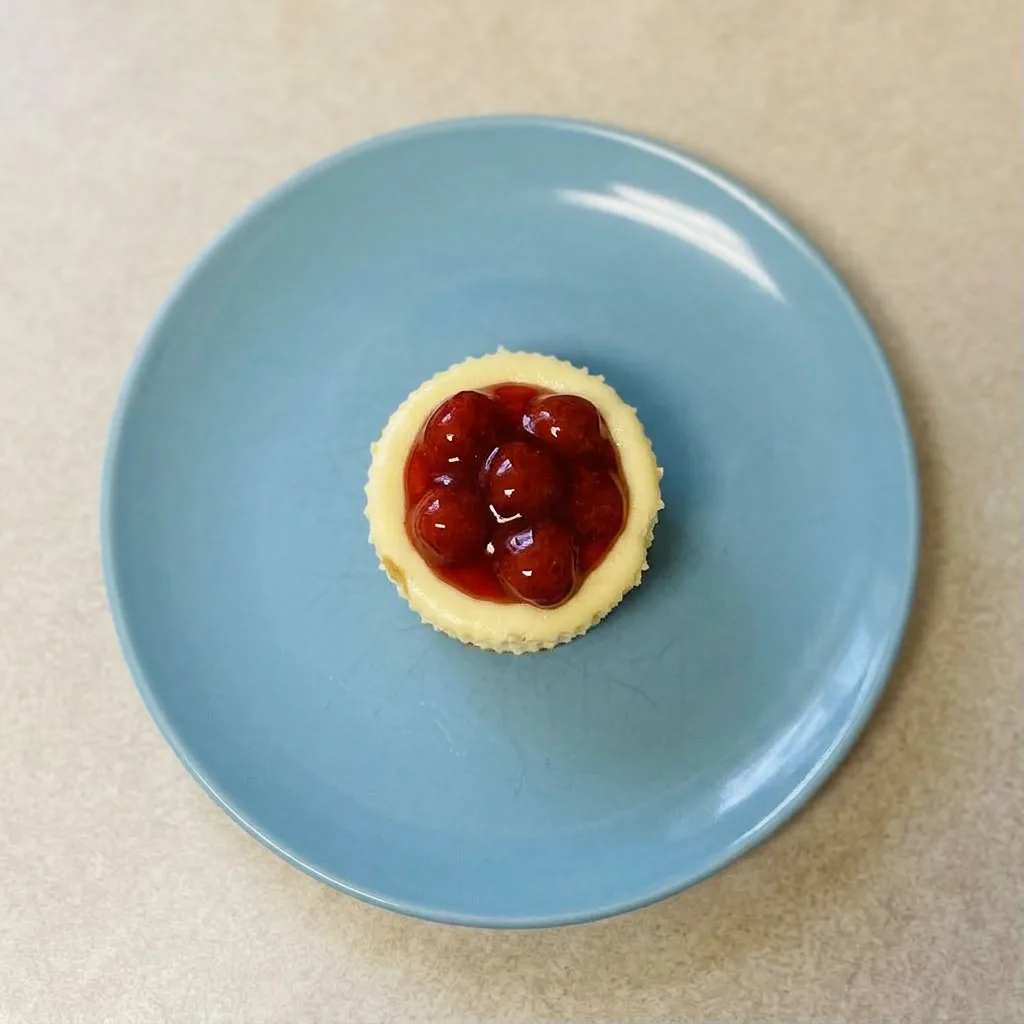
Add the strawberry pie topping just before serving. If you add it ahead, the fruit syrup soaks into the cheesecake top, making it soggy.
Leftovers without topping hold well; once topped, eat within a day. You can freeze the plain cheesecake cupcakes (no topping) for up to 2 months. Wrap each tightly in plastic, then foil.
Thaw in the fridge overnight. The texture stays smooth, though it’s slightly less creamy than fresh.
Don’t freeze topped cupcakes; the fruit releases liquid and turns icy. To serve, let them sit at room temperature for 10 minutes to take off the chill, then add topping.
Three swaps that work for cheesecake cupcakes, and one that doesn’t
Graham cracker crumbs: Vanilla wafer crumbs or shortbread cookie crumbs, same amount by volume. Vanilla wafers give a sweeter, finer crust that holds together just as well. Shortbread adds a buttery richness, your crust will taste more like a cookie base.
Either works 1:1 by volume; no need to adjust butter or sugar.
). Canned pie filling is already sweetened and thickened, so it sits neatly on top.
A fresh sauce will be less sweet and more tart; you may want to add sugar to taste. Using a different fruit pie filling changes the flavor but not the texture.
Cream cheese: Neufchâtel cheese (⅓ less fat) or dairy-free cream cheese alternative. Neufchâtel works but makes the filling slightly softer and less tangy; you’ll need to chill the cupcakes a bit longer, 4 hours minimum, for a clean slice. Dairy-free cream cheese tends to be looser; the filling may not set as firmly, and the texture turns more pudding-like.
For best results, stick with full-fat blocks.
Salted butter: Unsalted butter plus a pinch of salt. This is fine.
Just add ¼ teaspoon salt to the crust mixture. Without the salt, the crust tastes flat, the salt in the original balances the sweetness and boosts the graham flavor.
Tips
- Use a 1/4 cup measure to portion the crust evenly: each liner gets about 3 level teaspoons, which keeps the base thickness consistent and prevents some cupcakes from having too much or too little crust.
- Wipe the beaters clean after mixing the batter: any cream cheese stuck to them will bake into tough bits if dropped into the liners, so scrape them off before portioning.
Frequently Asked Questions
Can I make these cheesecake cupcakes a day ahead?
Yes, and they actually taste better after a full 24-hour chill. The texture turns creamier and the flavor deepens. Just hold off on the strawberry pie topping until serving, add it ahead and the fruit syrup soaks into the cheesecake, making the top soggy.
Why did my cheesecake cupcakes crack on top?
Most likely from overmixing the batter. If you beat on high or overmix after adding eggs, you whip in air that expands in the oven and then collapses, leaving cracks. Next time, mix on low until each egg just disappears and the batter looks smooth, not frothy.
How is this different from a full-size cheesecake?
These cupcakes bake in just 20 minutes versus an hour or more, and they don’t need a water bath. The crust is pressed in without pre-baking, and the smaller size means a faster chill, three hours in the fridge firms them up enough to serve.
