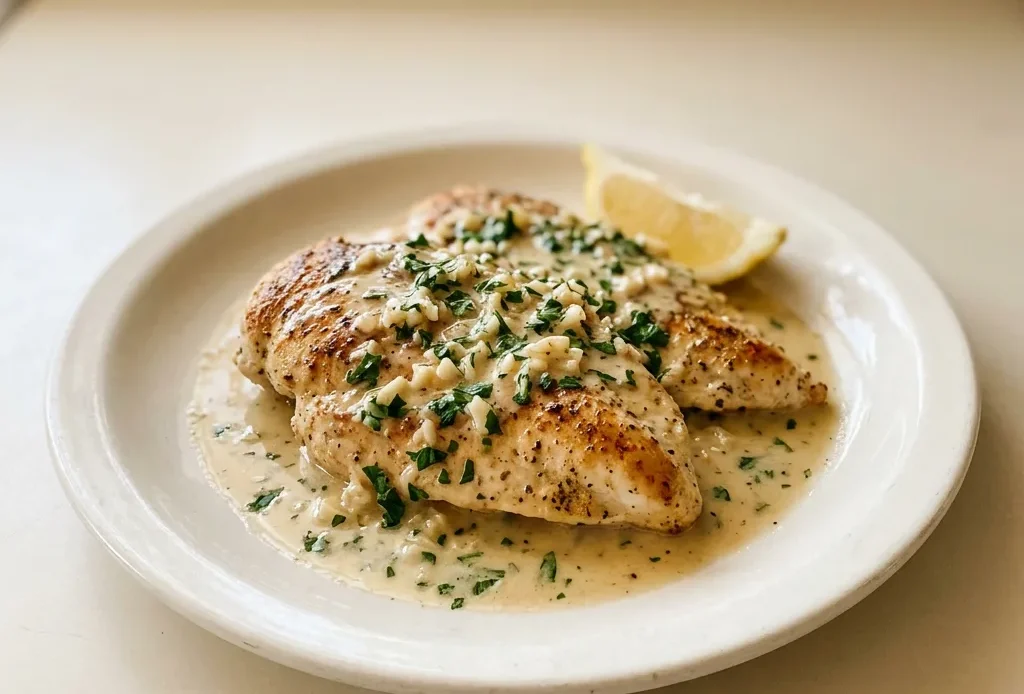
The make-or-break moment in this creamy garlic chicken is the sear. If the flour coating isn’t thin and even, the crust turns gummy instead of crisp, and the sauce ends up pasty instead of glossy. The rest, the aromatic garlic, the splash of white wine, the cream that stays smooth because you keep the heat low, builds on that first crust.
It’s a one-skillet dinner that hinges on details you can see and feel: the sizzle when the chicken hits the pan, the color of the browned bits, the way the sauce coats the back of a spoon. For any cook who wants a creamy garlic chicken that looks and tastes like it came from a restaurant kitchen, nailing that sear is where it starts.
Why even thickness matters
A chicken breast that’s ½ inch thick from end to end cooks at the same rate. The thinner parts of an uneven breast dry out while you wait for the thick part to reach temperature.
Pounding guarantees that the center hits 165°F at the same moment as the edges. Patting the surface dry with paper towels before dredging gives the flour something to grip. A dry surface also sears harder, browning faster before the interior overcooks.
You get a moist, evenly cooked piece of chicken that’s ready for the sauce.
Flour does double duty
That light flour coating on the chicken isn’t just for looks. It creates a thin, golden crust when you sear, trapping juices inside. But the real payoff comes when you add the cream later.
As the sauce simmers, the flour left in the pan, some from the chicken, some that fell off, acts as a thickener. It gives the sauce body without needing a separate slurry.
The result is a creamy sauce that clings to the chicken rather than pooling on the plate. For a gourmet dinner idea, this one-step crust-and-thicken trick saves you an extra pot.
Deglazing unlocks the pan’s flavor
The browned bits stuck to the pan after searing the chicken are pure roasted flavor. White wine dissolves them because the alcohol grabs both water-soluble and fat-soluble compounds. The wine also adds acidity, cutting through the richness of the butter and cream.
Chicken stock rounds out the savory side. Together they lift everything off the pan and into the sauce. You get a sauce base that’s layered and balanced, not just creamy and flat.
For unique dinner recipes, this step makes your sauce taste like it took hours.
Why the cream sauce stays smooth
Heavy cream has enough fat to resist curdling when heated. As you simmer the sauce gently, the fat molecules surround the proteins and keep them from clumping. That’s why the sauce turns glossy and silky rather than grainy.
You’ll see it thicken slightly as the water evaporates, but it never looks separated or greasy. Keep the heat low, a lazy bubble, not a rolling boil, and the sauce holds its texture.
for dinner party mains, this sauce coats the chicken without breaking.
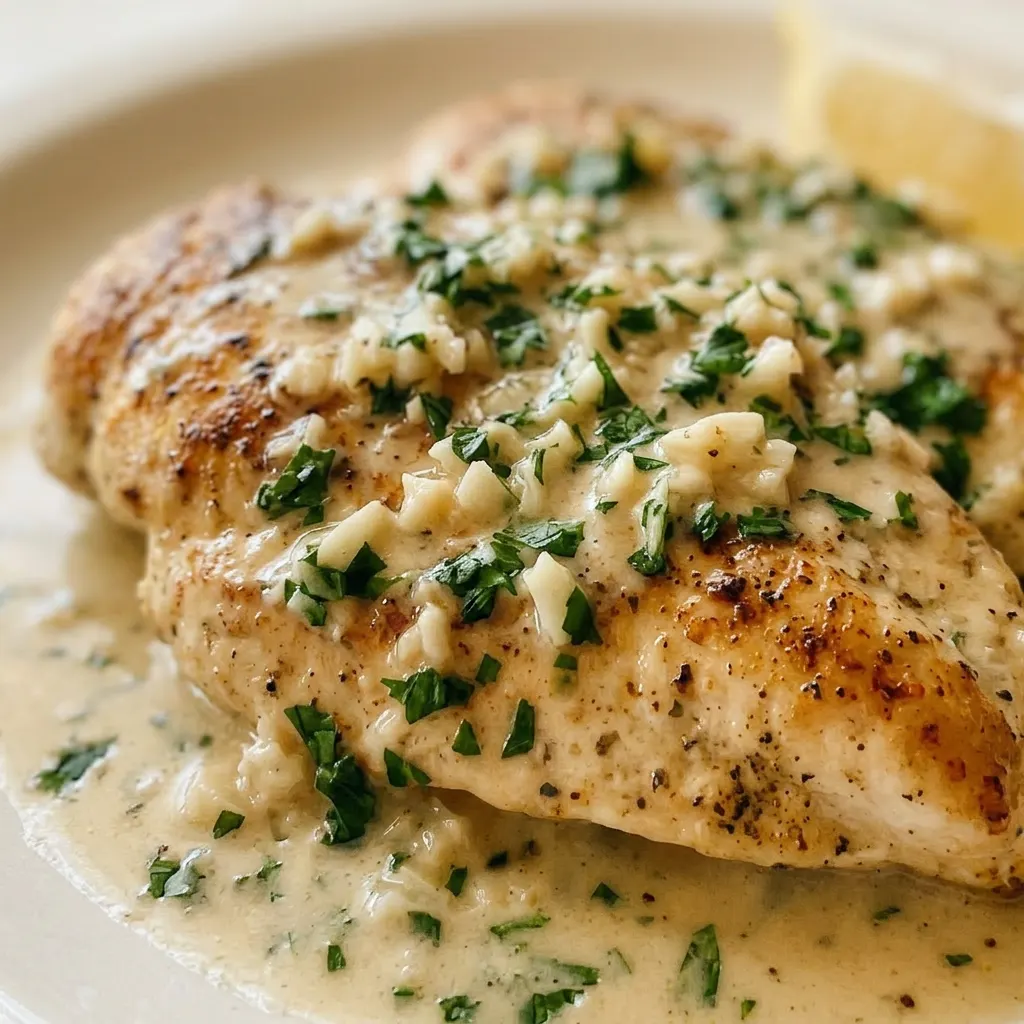
Prep: 15 min · Cook: 20 min · Total: 35 min · Servings: 4
What to look for in the creamy garlic chicken pantry
Chicken: Buy breasts of similar size so they pound to the same thickness and cook evenly.
Flour: Plain all-purpose flour is fine; avoid self-rising, which adds unwanted leavening and salt.
Garlic: Use fresh cloves, not pre-minced jarred stuff, which tastes muted and can turn bitter.
Heavy cream: Heavy cream, not half and half. Lower fat cream may curdle or thin out the sauce.
Build the sauce right in the pan, no extra pot needed
Pound and dry the chicken
Pound each breast to ½ inch even thickness. Pat dry, you want a tacky surface so the flour adheres and sears dark, not pale and patchy.
Dredge in seasoned flour
Coat each breast lightly in the flour mix, then shake off excess. A thin, even layer browns crisp; clumps of raw flour will turn pasty in the sauce.
Sear in butter and oil
Heat 3 tablespoons butter with the oil until shimmering. Lay in the chicken without crowding, you should hear a steady sizzle. If the sizzle dies down, the pan is too cold.
Cook through, then rest
Sear 4 to 5 minutes per side until golden and cooked through. The thickest part should feel firm to the touch, not squishy. Move to a plate and tent loosely.
Sauté garlic in butter
Melt the remaining 3 tablespoons butter in the same pan over medium heat. Add garlic and stir until fragrant, about 30 to 60 seconds. If it browns fast, the pan is too hot, pull it off the heat briefly.
Deglaze with wine and stock
Pour in the wine and stock, scraping up the browned bits with a wooden spoon. Let it simmer and reduce by about half; you’ll see the bubbles get larger and the liquid turn syrupy.
Add cream and parsley
Stir in the heavy cream and parsley. Keep the heat low, just a lazy bubble. The sauce will thicken and turn glossy after a few minutes.
If it boils hard, it may separate.
Return chicken and warm through
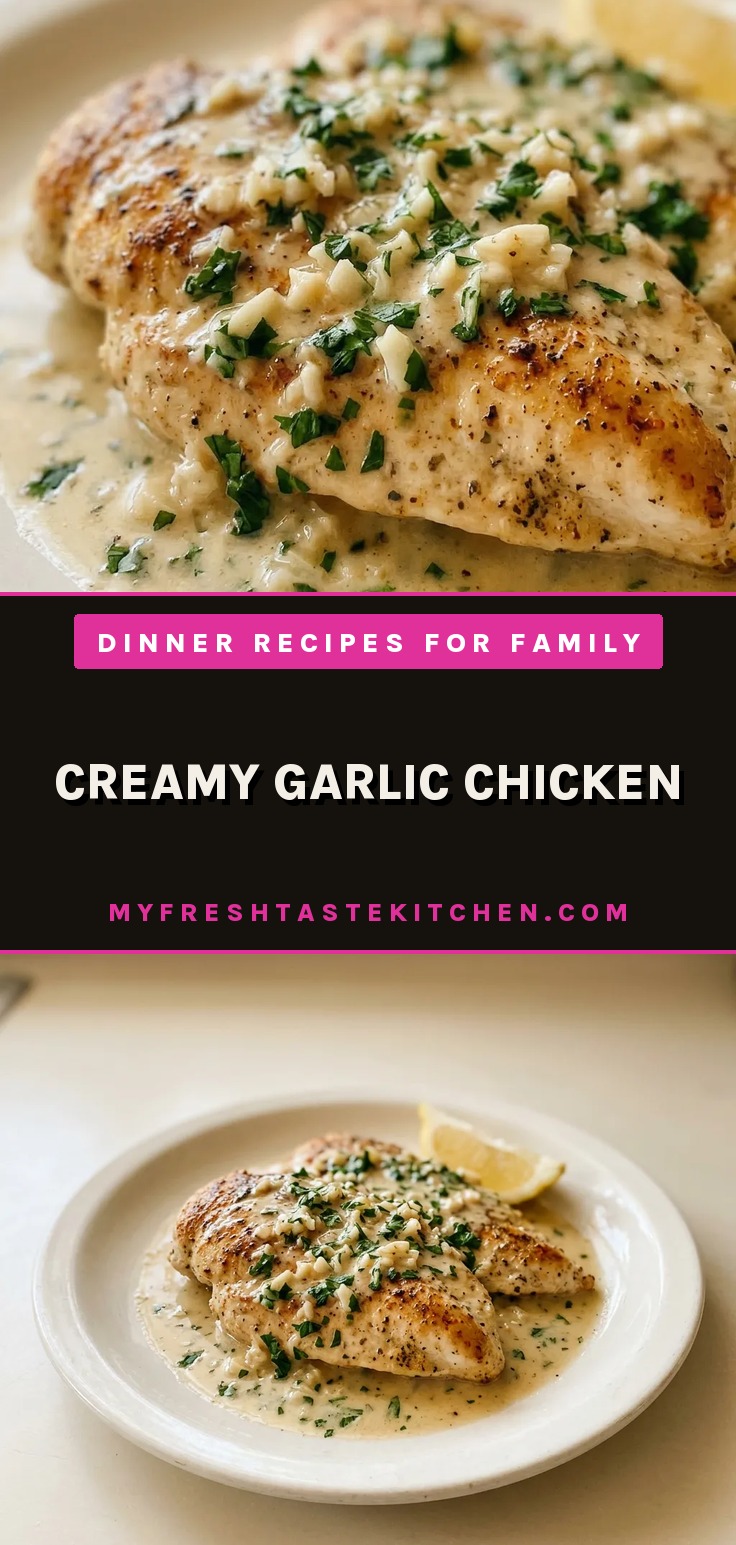
Tuck the chicken back into the pan, spooning sauce over each piece. Warm for 1 to 2 minutes, just until the chicken is hot again. The sauce should coat the back of a spoon.
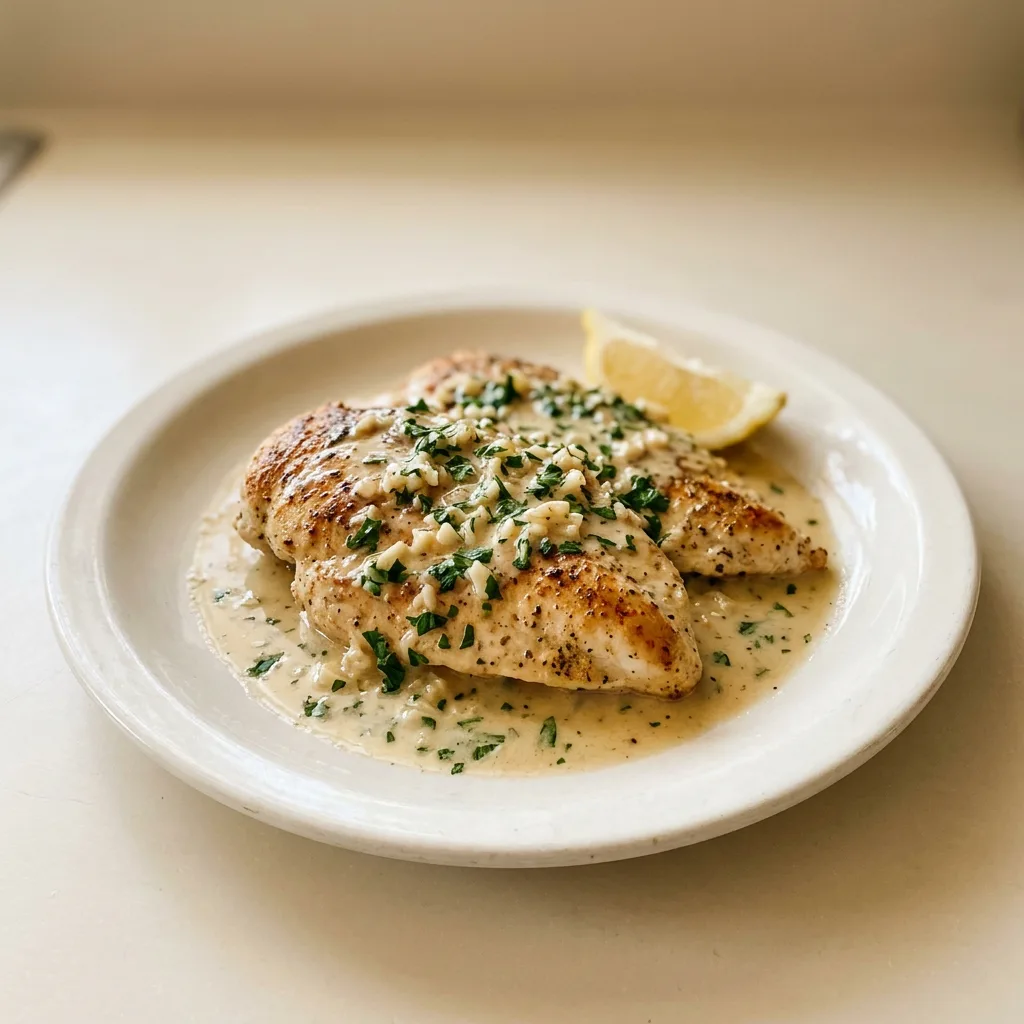
Creamy Garlic Chicken
Ingredients
Method
Pound Chicken to Even Thickness:
Using a meat mallet or rolling pin, pound each chicken breast to a uniform thickness of about ½ inch. Pat the meat dry with paper towels.Dredge in Seasoned Flour:
On a plate, mix together the flour, salt, and pepper. Dredge each breast lightly in the seasoned flour, shaking off any excess.Sear Chicken Until Cooked:
In a large frying pan over medium-high heat, warm 3 tablespoons of butter and the olive oil until shimmering. Add the chicken and sear on both sides, roughly 4–5 minutes per side, until fully cooked. Move the cooked breasts to a plate and tent loosely with foil to keep warm.Sauté Garlic in Butter:
Lower the heat to medium. Melt the remaining 3 tablespoons of butter in the same pan. Add the minced garlic and sauté just until aromatic, about 30–60 seconds.Deglaze with Wine and Stock:
Pour in the white wine and chicken stock, using a wooden spoon to deglaze the pan by scraping up any browned bits. Allow the liquid to simmer and reduce for a few minutes.Add Cream and Parsley:
Add the heavy cream and chopped parsley, stirring to combine. Let the sauce simmer gently until it thickens slightly and turns glossy. Adjust seasoning to taste if necessary.Return Chicken to Sauce:
Return the chicken to the pan, spooning the sauce over each piece. Warm the breasts for 1–2 minutes to let them absorb the sauce.Serve with Lemon Wedges:
Serve the chicken on plates, drizzle with additional sauce, and accompany with lemon wedges.
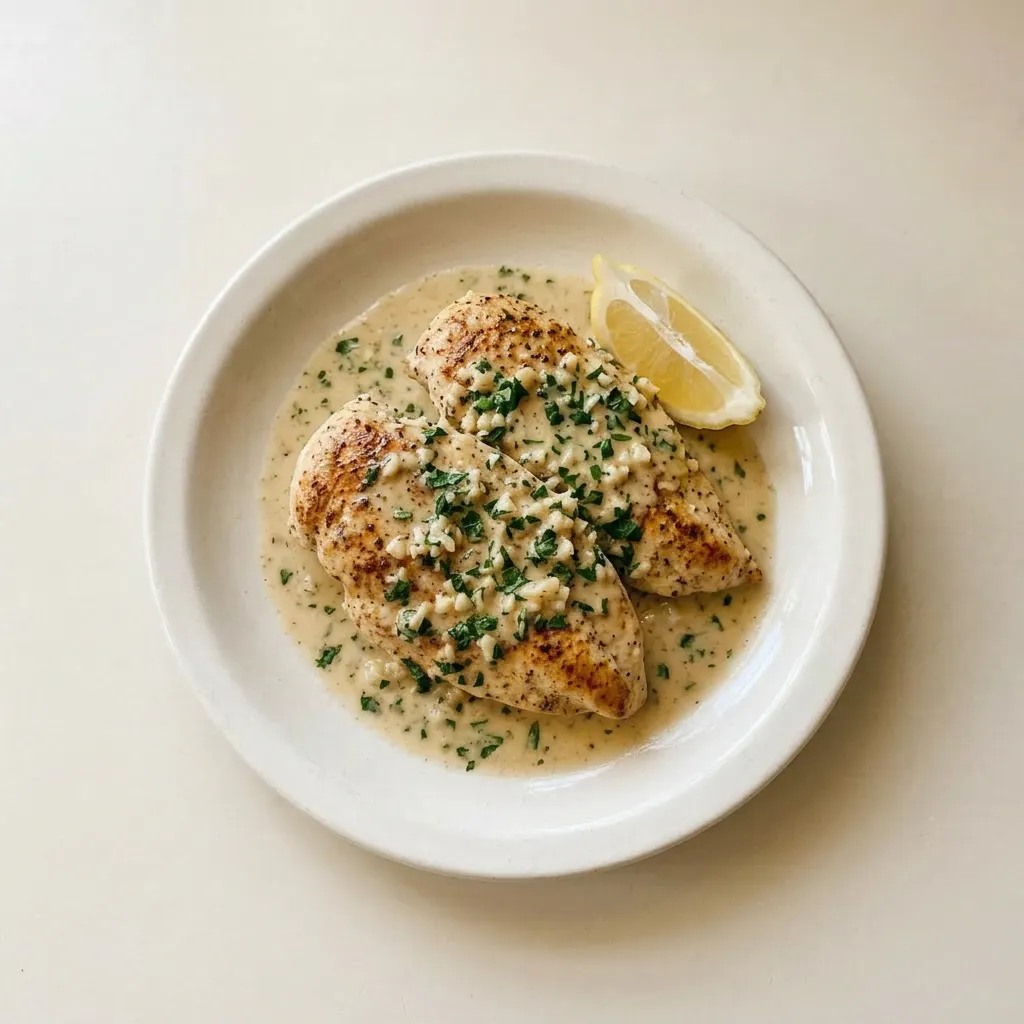
Three swaps that actually work in creamy garlic chicken
Dry white wine: Chicken broth plus a splash of lemon juice. The lemon juice mimics the wine’s acidity to cut the richness, but the sauce will be less complex, missing the wine’s fruit and subtle tannins. Use same volume of broth, then add 1, 2 teaspoons lemon juice to taste.
Heavy whipping cream: Full-fat coconut milk (canned, not boxed). The sauce will be thinner and carry a coconut flavor that competes with the garlic. It won’t thicken as much because coconut milk lacks the protein that helps cream emulsify.
Use the same amount, and simmer a minute or two longer to reduce.
Boneless, skinless chicken breasts: Boneless, skinless chicken thighs. Thighs stay juicier because they have more fat and connective tissue.
They’ll need an extra minute per side to reach 175°F, and the meat will be darker, but the sauce clings the same way. Pound to the same ½-inch thickness for even cooking.
Storage and Serving
Serve the chicken as soon as the sauce coats the back of a spoon, within 5 minutes of warming it through. The sauce is at its glossiest and the chicken stays tender right off the heat. For leftovers, transfer the chicken and sauce to an airtight container.
Refrigerate for up to 3 days. The sauce thickens as it cools because the fat solidifies and the flour continues to absorb liquid.
To reheat, place the chicken and sauce in a skillet over medium-low heat. Add a splash of chicken stock or water to thin the sauce back to a creamy consistency.
Stir gently until the chicken is hot, about 5 minutes. Freezing is not recommended.
The cream sauce will separate upon thawing, turning grainy, and the chicken’s texture becomes dry and stringy. If you must freeze, freeze only the cooked chicken without the sauce. Thaw overnight in the fridge, then make a fresh cream sauce.
Tips
- Let the flour-coated chicken rest 5 minutes before searing. The flour absorbs surface moisture, forming a paste that clings better and won’t fall off in the pan, giving a thicker, crunchier crust.
- Use a stainless steel or cast iron skillet, not nonstick. The higher heat tolerance creates a deeper sear and more browned bits for deglazing, which translates into a richer, darker sauce.
Frequently Asked Questions
Can I use chicken thighs instead of breasts?
Yes, thighs stay juicier because they have more fat. Pound to the same ½-inch thickness so they cook evenly. Sear an extra minute per side to reach 175°F, and the sauce will cling the same way.
How do I prevent the sauce from breaking or becoming grainy?
Keep the heat low when you add the cream, just a lazy bubble, not a rolling boil. Heavy cream has enough fat to resist curdling, but aggressive heat will separate the fat from the liquid. If it starts to look greasy, pull the pan off the burner and stir in a tablespoon of cold cream.
Can I make this dish ahead of time and reheat?
You can refrigerate it for up to 3 days, but the sauce thickens as it cools. To reheat, warm it in a skillet over medium-low heat with a splash of chicken stock or water to thin it back to a creamy consistency. Freezing is not recommended, the sauce separates and the chicken turns dry.
What’s the best way to serve creamy garlic chicken?
Serve it right after the sauce coats the back of a spoon, within 5 minutes of warming the chicken through. Lemon wedges on the side brighten the richness, squeeze them over the dish at the table. A simple side like rice or crusty bread soaks up the sauce.
How is this different from chicken marsala or piccata?
The base is similar, seared, floured chicken with a pan sauce, but the cream here makes it richer and thicker. Marsala uses sweet wine and mushrooms; piccata uses lemon and capers. This recipe relies on garlic, white wine, and cream for a silky, mild sauce that clings to the chicken.
