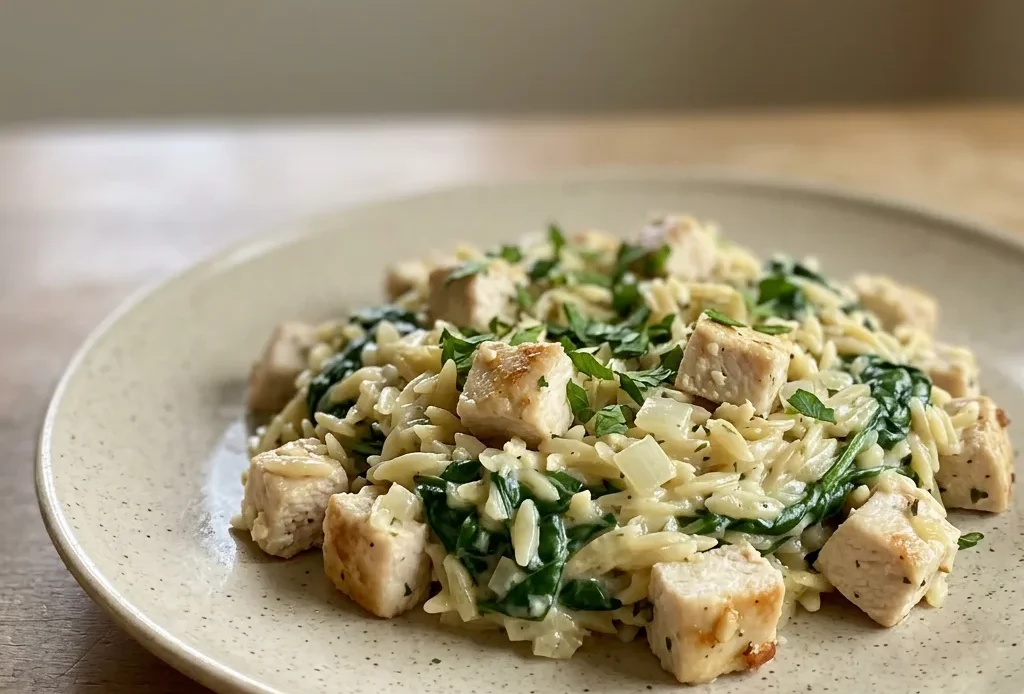
A 30-minute skillet dinner that tastes like it simmered all afternoon? That’s the promise of Boursin chicken orzo, and the secret is in the cheese. Most one-pan pastas rely on heavy cream or a roux, both of which can break or turn gluey if the heat’s off.
Boursin melts into a silky sauce without any of that fuss, but only if you add it off the heat. The margin for error is small: stir it in while the pan’s still on the burner, and the emulsion splits into a greasy, grainy mess.
This recipe gets that one move right, so the rest is just seared chicken, toasted orzo, and wilted spinach.
Why does Boursin cheese make a creamy sauce without cream or roux?
Boursin is a soft, spreadable cheese that melts readily into the hot orzo. Because it’s an emulsified cheese blend, it dissolves smoothly without breaking, giving the sauce a silky body, no heavy cream or roux needed. The garlic and herb flavors are built right into the cheese, so you don’t have to season separately.
Adding it after removing the pan from the heat prevents the emulsion from splitting; if added over high heat, the cheese can seize or turn grainy. You’ll see the sauce go from thin and brothy to thick and rich as you stir.
Does toasting orzo before adding liquid really matter?
Yes. Dry orzo straight from the box can turn starchy and mushy when simmered. Toasting it briefly in the pan with the garlic and onion coats the grains in fat and starts toasting their starches.
You’ll smell a nutty aroma, that’s the flavor you’re after. The browning also firms up the pasta’s exterior, so it holds its shape better during the simmer. It’s the same logic used in risotto.
The result is orzo that’s tender but still chewy, not a pasty mass.
Why cook the chicken first and add it back later?
Searing the chicken first creates a brown crust that adds savory flavor to the dish. If you left the chicken in the pan while the orzo simmered, it would overcook and turn dry, those 10 to 12 minutes are plenty to turn breast meat tough. Pulling it out lets the orzo cook undisturbed in the seasoned broth.
Returning the chicken at the end lets it warm through gently without losing moisture. The pieces stay juicy, and the spinach wilts just enough. For easy chicken dinner recipes, this sequence keeps each component at its best.
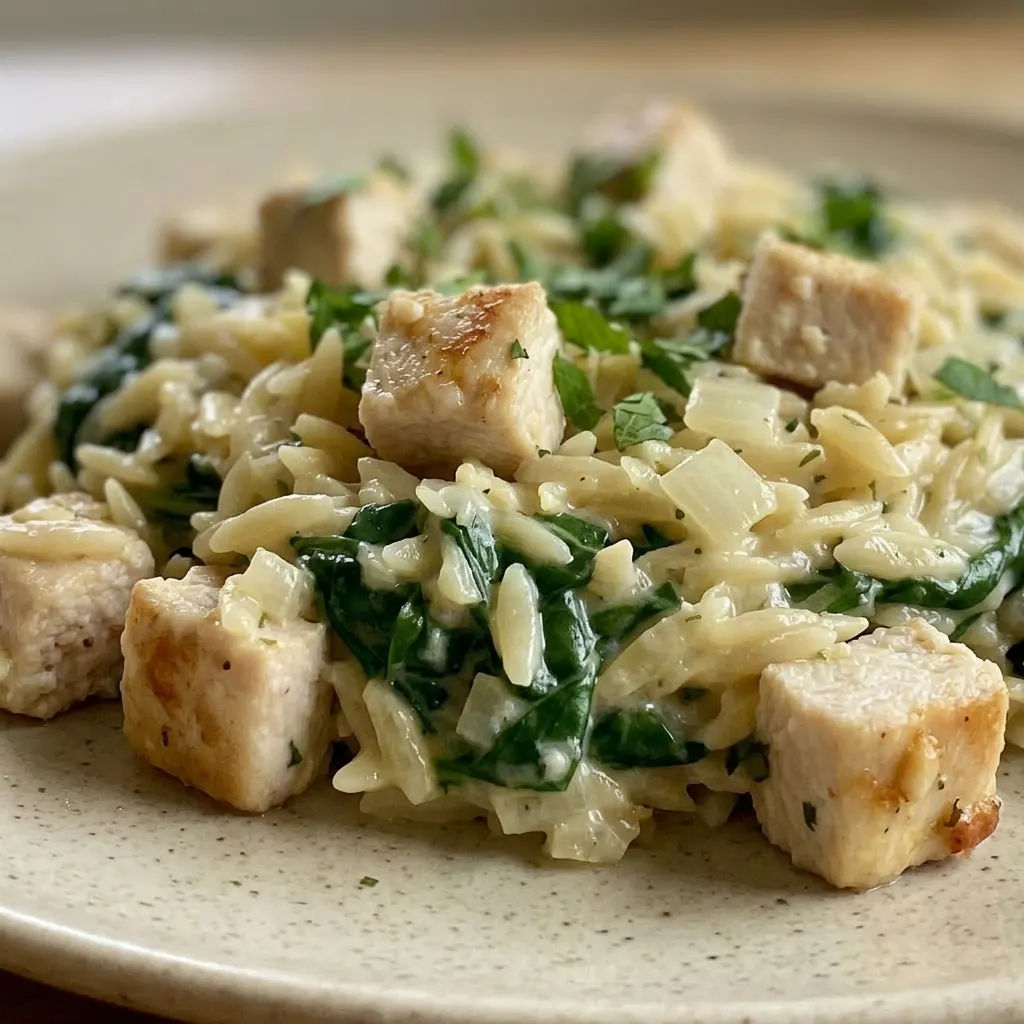
Prep: 10 min · Cook: 20 min · Total: 30 min · Servings: 4 · Calories: 680 kcal
What to Look for at the Store
Boursin cheese: Buy the Garlic & Fine Herbs flavor. Soften it at room temperature before using so it melts smoothly.
Chicken breast: Cut into 1-inch cubes for even cooking. Boneless, skinless is standard for this quick skillet meal.
Orzo pasta: Use uncooked, regular orzo. Don’t swap for a larger pasta shape; the toasting and simmer times won’t work.
Fresh spinach: Buy a 5-ounce bag or bunch. Pack it loosely into the measuring cup; 3 cups is about 3 generous handfuls.
Chicken broth: Low-sodium gives you control over salt. If using full-sodium, cut the added salt by half.
Cubes, not strips, here’s why the chicken stays tender
Season and sear the chicken
Cut the chicken into 1-inch cubes so the surface area to volume ratio gives a quick sear without drying. Sizzle in oil and butter over medium-high heat until golden on the outside but still juicy inside, about 5 to 7 minutes. You’ll see a brown crust; that’s flavor.
Transfer to a plate immediately.
Toast the orzo with onion and garlic
Keep the pan on medium heat. Sauté the diced onion until it’s translucent, 3 to 4 minutes.
Add garlic and the dry orzo, stirring constantly for exactly 1 minute. When you smell a nutty aroma and see the orzo grains turn pale gold, stop. That toasting prevents a starchy, mushy texture later.
Simmer the orzo in broth
Pour in all the chicken broth and scrape up any browned bits from the bottom. Bring to a simmer, then cover and lower the heat. Cook for 10 to 12 minutes.
Check at 10: the orzo should be al dente, tender but with a slight chew, and most liquid absorbed. If it’s still soupy, cook uncovered for a minute or two.
Melt in the Boursin off the heat
Remove the pan from the burner before adding the softened Boursin. Stir gently until the cheese disappears into a smooth, creamy sauce. If you see any graininess or the sauce looks broken, you added it over too-high heat, the emulsion split.
Off the heat, it stays silky and thickens as you stir.
Finish with the chicken and spinach
Return the seared chicken to the pan along with all the spinach. Stir just until the spinach wilts, about 30 seconds. The chicken warms through without further cooking, so it stays juicy.
Stop stirring as soon as the leaves collapse; overcooking the spinach turns it slimy.
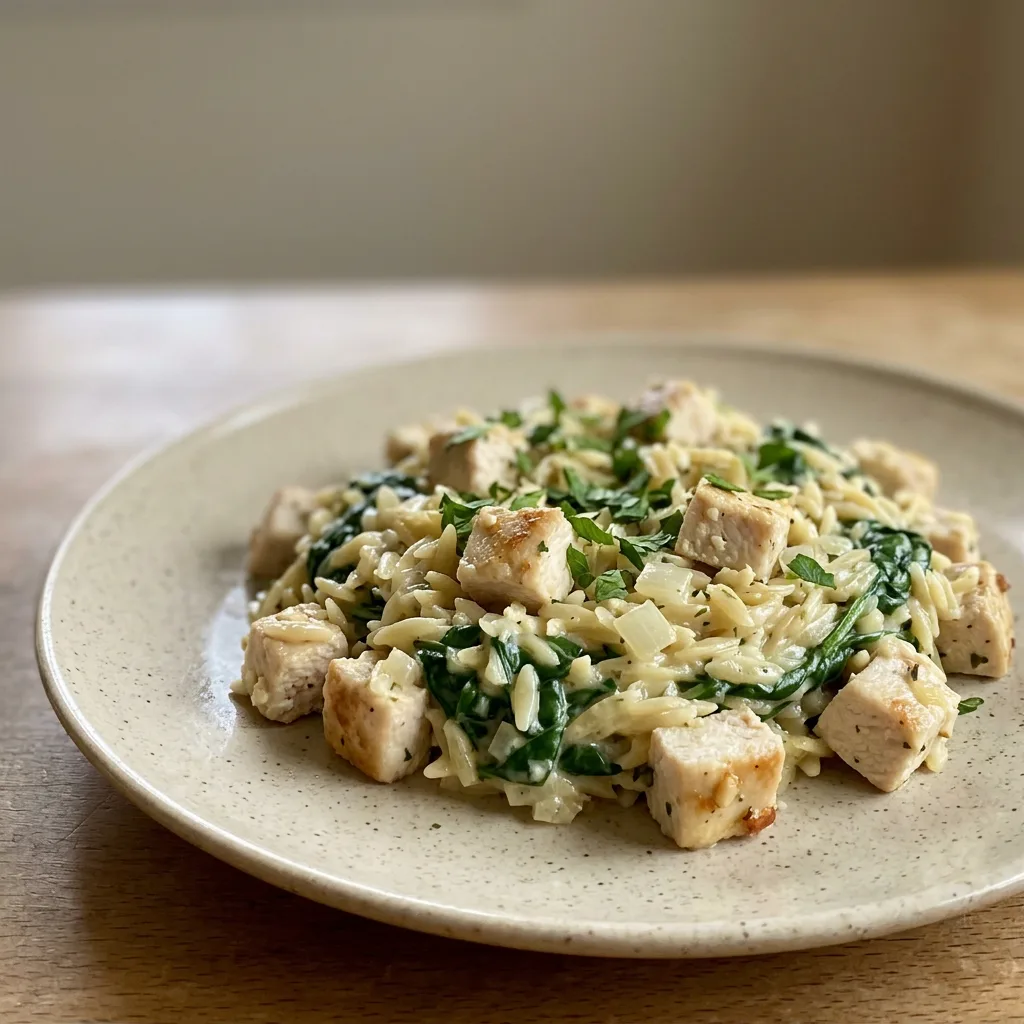
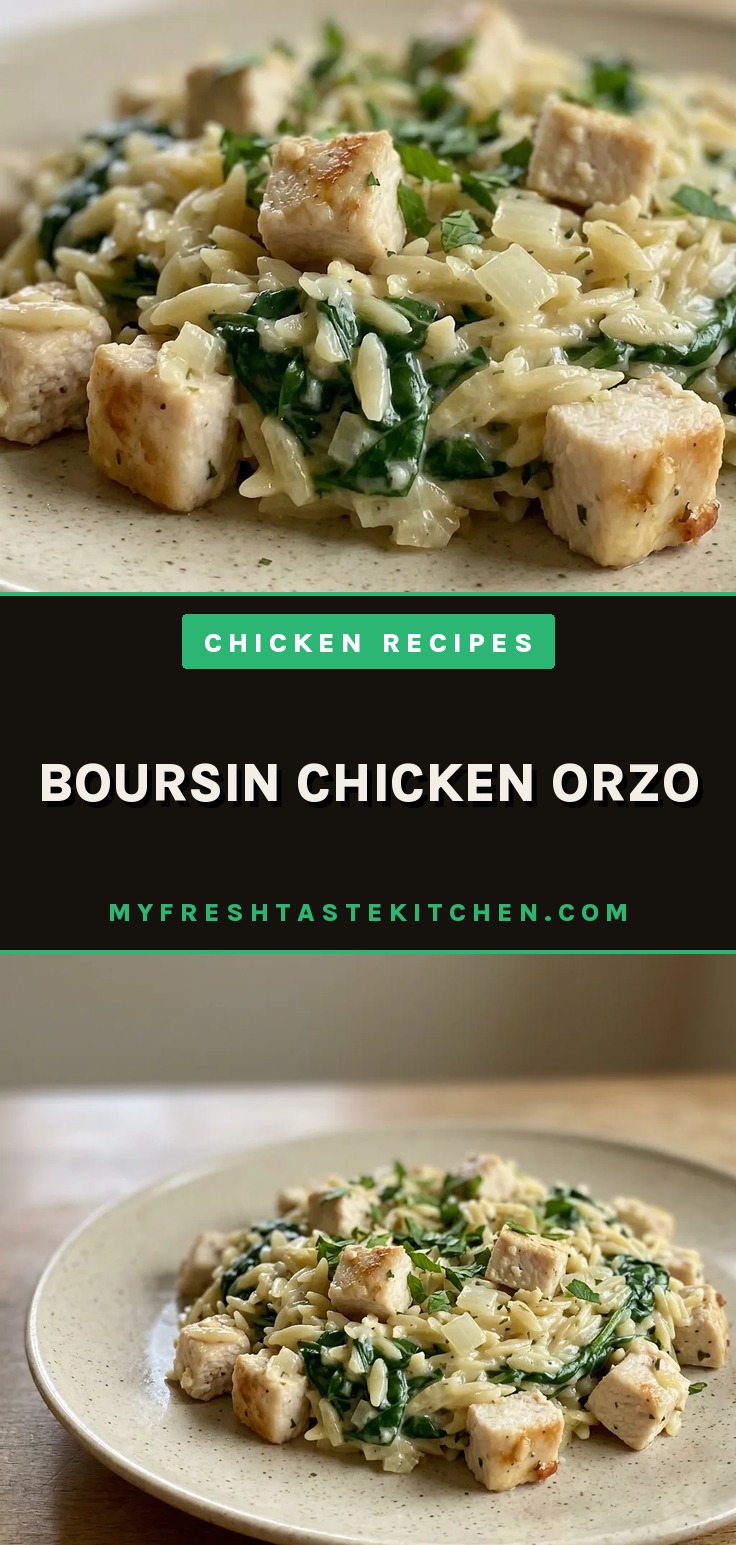
Boursin Chicken Orzo (Creamy One-Pan Recipe)
Ingredients
Method
Cook seasoned chicken:
Season the chicken cubes with salt and pepper. In a large skillet over medium-high heat, warm the olive oil and butter. Add the chicken and cook for 5-7 minutes until golden and fully cooked. Transfer the chicken to a plate and set aside.Sauté onion and orzo:
In the same skillet, sauté the diced onion until softened, about 3-4 minutes. Add the minced garlic and dry orzo; stir constantly for 1 minute until the orzo is lightly toasted and aromatic.Simmer orzo in broth:
Pour in the chicken broth, deglazing the pan by scraping up any browned bits. Bring to a simmer, then lower the heat, cover, and cook for 10-12 minutes until the orzo is al dente and most liquid is absorbed.Stir in Boursin cheese:
Remove from heat. Add the softened Boursin cheese wheel to the skillet. Stir gently until fully melted and a creamy sauce coats the orzo.Combine chicken and spinach:
Return the cooked chicken to the skillet. Add the fresh spinach and stir until just wilted. Serve at once, topped with chopped parsley if desired.
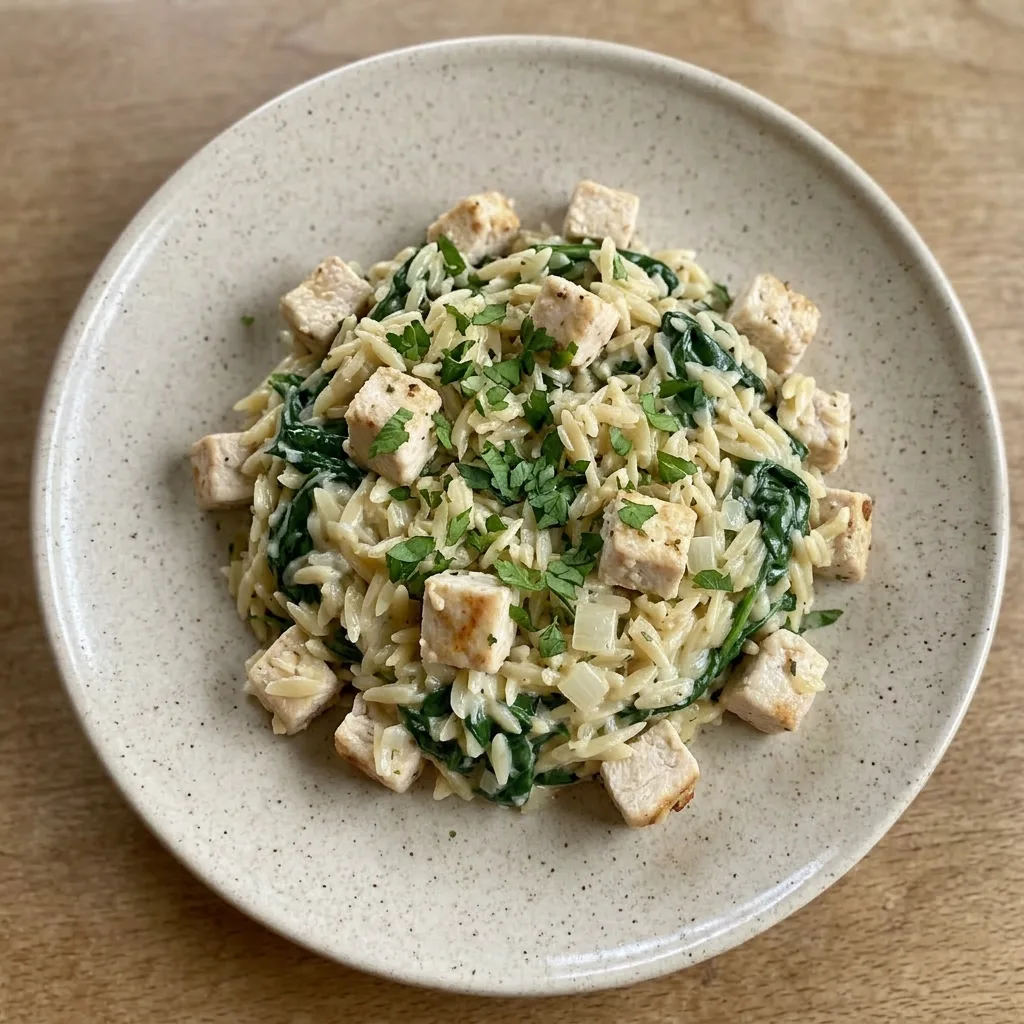
Storage and Serving
Serve Boursin Chicken Orzo right after stirring in the spinach and chicken. The sauce is creamiest and the orzo has the best bite within 15 minutes. Let leftovers cool completely, then transfer to an airtight container.
Refrigerate for up to 3 days. The orzo will absorb liquid and the sauce thickens as it sits. To reheat, add a splash of chicken broth or water and warm gently on the stovetop or microwave, stirring occasionally, to restore a creamy consistency.
Freezing is not recommended; the sauce may separate upon thawing and the orzo turns soft. If you must freeze, freeze the cooked chicken and orzo separately without the Boursin sauce, then add fresh cheese when reheating.
The Three Ingredient Swaps That Actually Work Here
Boursin cheese: Alouette Garlic & Herbs or herbed goat cheese (softened). Alouette melts identically, same texture, same creaminess. Herbed goat cheese works but turns the sauce slightly tangier and less rich.
Avoid cream cheese; it’s too thick and lacks the herbs, so you’d need to add garlic and herbs separately.
Orzo pasta: Ditalini, risoni, or stelline pasta (same volume). These small pastas cook in the same time and absorb broth similarly.
Do not use long pasta or large shapes, the toasting step won’t work the same, and the liquid ratio will be off. Risotto rice (arborio) also works but needs more liquid and stirring; treat it like risotto.
Chicken breast: Boneless skinless chicken thighs (same weight, cut into cubes). Thighs stay juicier than breasts even if cooked a minute too long.
Turkey breast or tofu (extra-firm, cubed and seared) works too. Avoid pre-cooked or rotisserie chicken; it turns dry when reheated in the skillet.
Tips
- Let the Boursin sit at room temperature for at least 15 minutes before using. Cold cheese won’t melt smoothly into the hot orzo and may form small clumps.
Frequently Asked Questions
Can I make Boursin chicken orzo ahead of time?
You can, but the orzo will keep absorbing liquid as it sits, so the texture won’t be as lively as fresh. The article’s storage section says to serve it within 15 minutes of finishing for the best creamy consistency.
If you do make it ahead, cool it completely, refrigerate, and add a splash of broth when reheating to loosen the sauce. Freezing isn’t recommended because the sauce may separate and the orzo turns soft.
How do I keep the orzo from getting mushy when reheating?
Add a tablespoon or two of chicken broth or water before reheating, and warm gently on the stovetop or microwave while stirring occasionally. The extra liquid rehydrates the orzo without turning it pasty. Avoid high heat, which can make the sauce grainy and the orzo blow out.
If you’re meal prepping, you can stop before adding the spinach and Boursin, then finish those steps fresh when reheating.
What’s the difference between Boursin chicken orzo and a classic chicken and rice casserole?
This dish is a 30-minute skillet meal, not a baked casserole. The orzo is toasted first for a nutty flavor and firmer bite, then simmered in broth, no condensed soup or long oven time. The sauce comes from melting Boursin cheese off the heat, giving a silky, herb-infused finish without cream or a roux.
The chicken is seared separately and added back at the end, so it stays juicy instead of shredding into a casserole.
