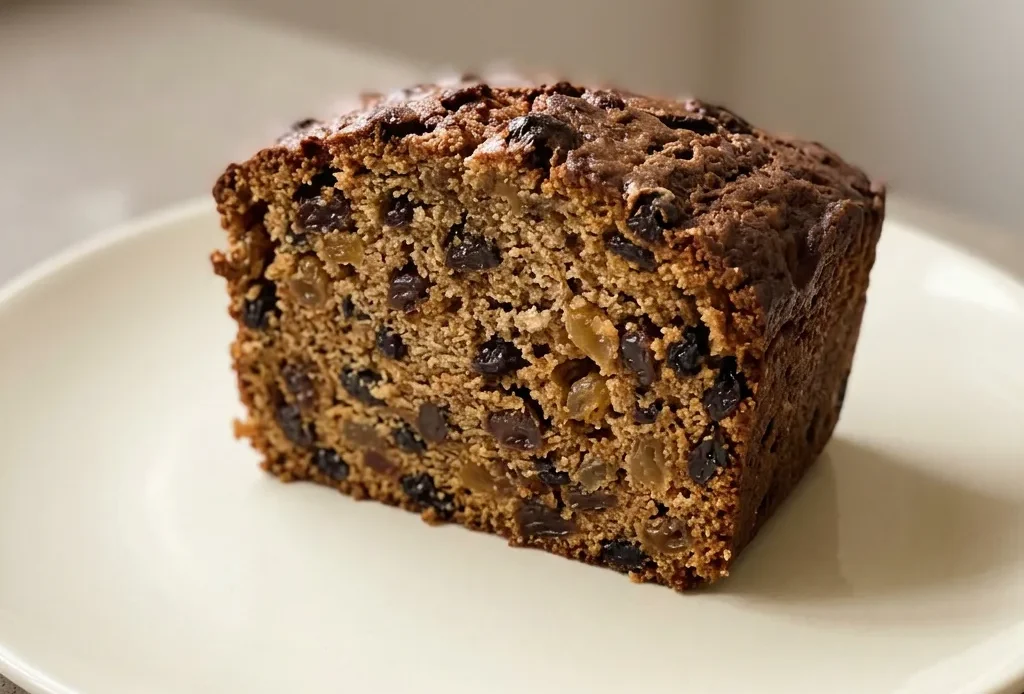
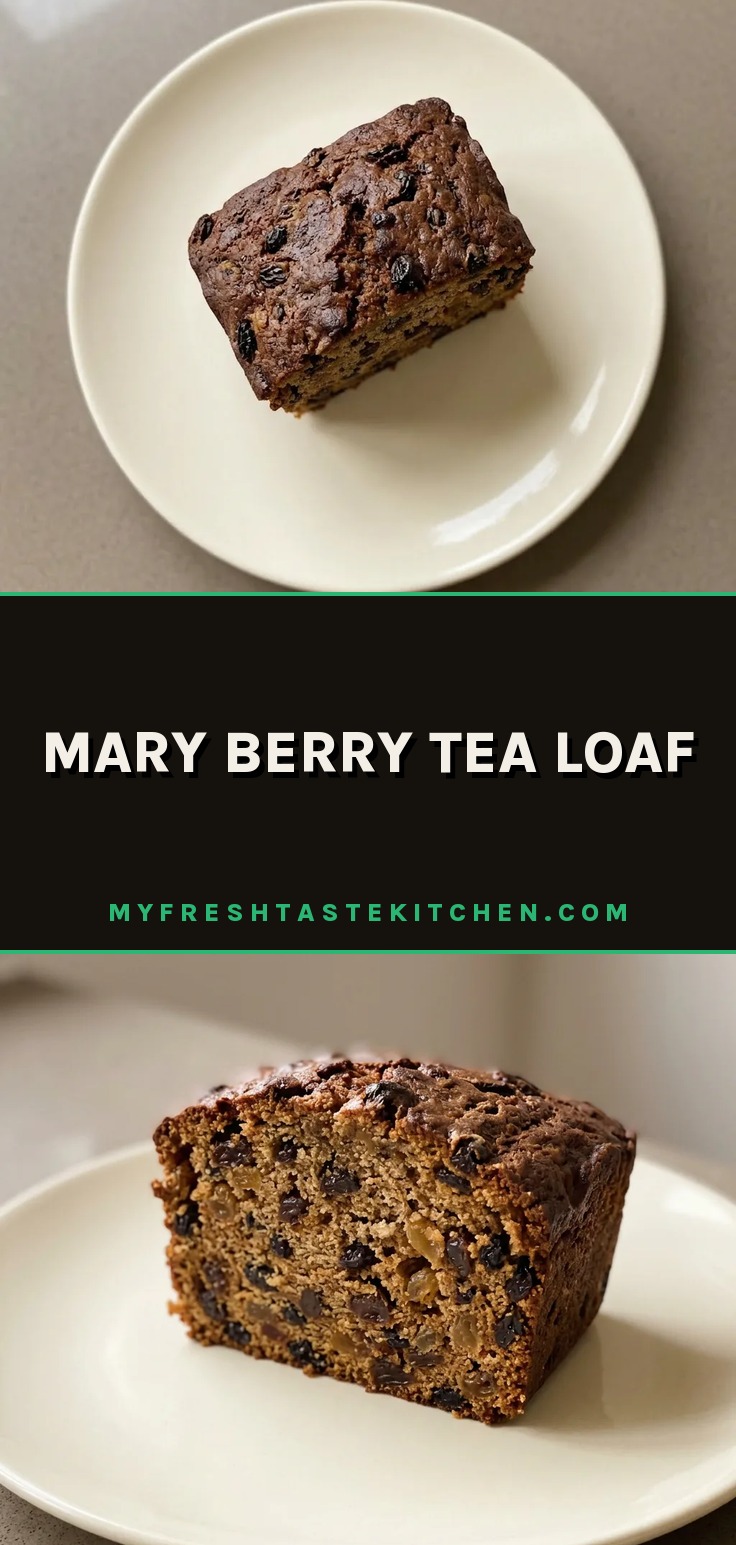
The trick to Mary Berry tea loaf isn’t in the mix, it’s in the wait. That six-hour cold soak in strong black tea is the one step most people rush, and it’s exactly where the loaf gets its deep, malty flavor and that impossibly moist crumb that doesn’t need a smear of butter to be good.
Without it, you’d have a dry, crumbly cake where the fruit sinks to the bottom. Let the tea do the work while you sleep.
Soaking fruit in hot tea changes texture
Six hours of soaking isn’t arbitrary, it’s the difference between a dry, crumbly loaf and a moist, tender one. The hot tea softens the dried fruit, plumping each piece until it’s juicy and yielding.
As the fruit absorbs the liquid, it also picks up the tea’s tannins and subtle bitterness, which balance the sugar. By the time you’re ready to bake, nearly all the tea is gone, but the fruit has become heavy and soft.
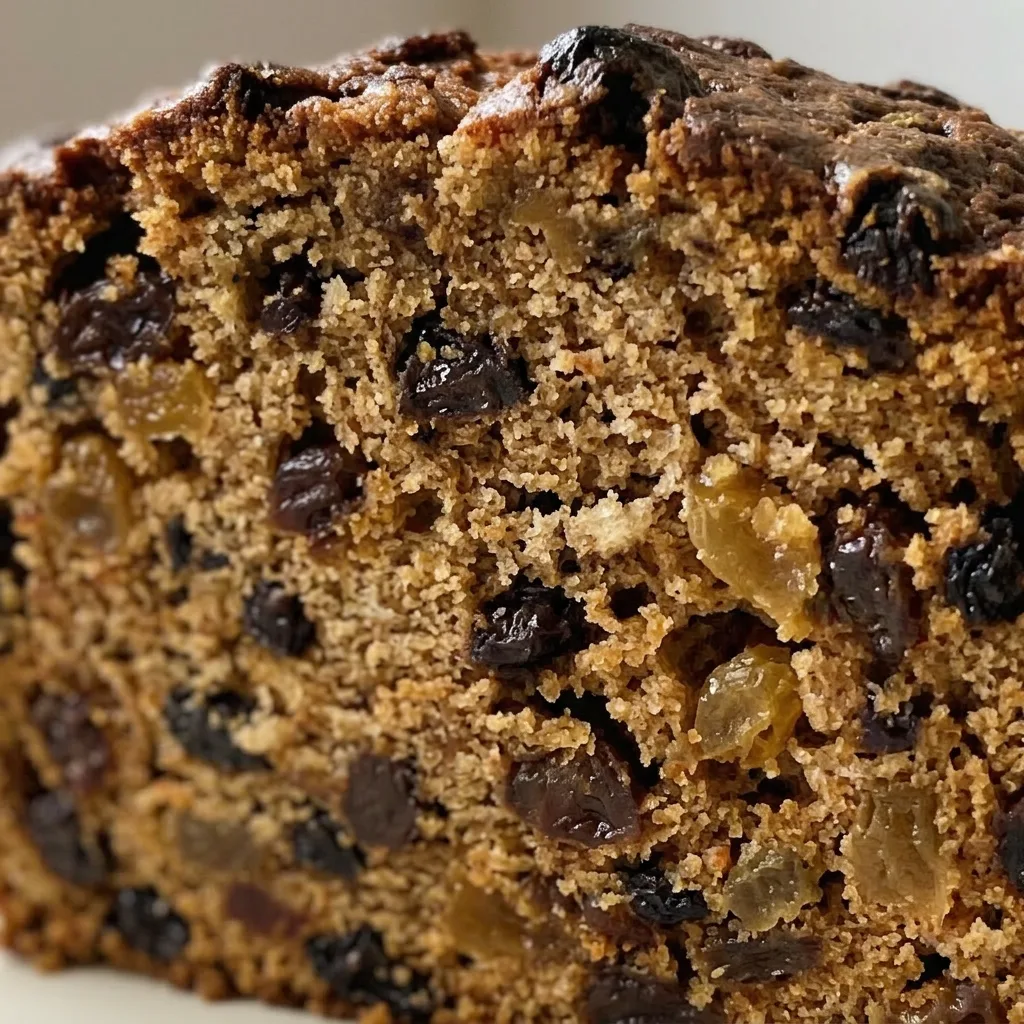
That moisture carries through the oven, keeping the crumb from drying out. The long soak also makes the fruit dense enough to stay suspended in the batter; short-soaked fruit tends to sink. When you slice the finished loaf, you want every bite to have an even scattering of fruit, not a layer at the bottom.
That even distribution is only possible when the fruit has been given time to fully hydrate.
Self-raising flour and mixed spice build a balanced crumb
Self-raising flour contains the right amount of baking powder for a loaf this dense with fruit. Use plain flour and you’d need to guess the leavening, risking a heavy or uneven rise. The flour’s lift keeps the texture light but substantial enough to support the soaked fruit without collapsing.
Mixed spice, typically cinnamon, nutmeg, and allspice, adds warmth that doesn’t fight the tea’s flavor. You taste it as a background note, never sharp or dominant.
The spice lingers after each bite, making the loaf more interesting than a plain fruit cake. The flour and spice are simply folded in; overworking would toughen the crumb, so stop as soon as the streaks disappear. The result is a tender slice that holds together without being dense.
Cooling completely before slicing prevents a gummy mess
A hot loaf is fragile. The crumb hasn’t fully set, and the residual steam inside makes it tacky.
If you cut into it, the knife drags, squashing the soft interior and leaving a ragged surface. The slice often sticks to the blade, tearing chunks off. Waiting until the loaf is completely cool lets the structure firm up.
The starches have time to retrograde slightly, giving the crumb a clean, dry bite. You also get cleaner edges, important if you’re serving this tea bread recipes-style for guests. The flavors also settle: the fruit’s sweetness and the spice read more distinctly at room temperature than when warm.
One hour on a wire rack is usually enough, but if the center still feels warm, wait longer. Patience here pays off in neat slices and a better texture.
Prep: 10 min · Cook: 1 hr 15 min · Total: 7 hr 25 min · Servings: 12 · Calories: 190 kcal
Ingredient choices for a tender, evenly fruited loaf
Mixed dried fruit: Use a mix of raisins, currants, and sultanas. Chop any large pieces so they plump evenly.
Hot, strong black tea: Brew with 2 tea bags for 5 minutes. English Breakfast or Assam works best for depth.
Self-raising flour: Don’t substitute plain flour without adding baking powder. The leavening is already balanced for this batter.
Mixed spice: A standard blend of cinnamon, nutmeg, and allspice. Avoid pumpkin pie spice, which has ginger and cloves.
Soak the fruit overnight for a moist, evenly distributed loaf
Combine and soak
Pour hot tea over dried fruit and sugar, stir until sugar dissolves. The liquid should be nearly absorbed after 6 hours; if it looks soupy, let it sit longer.
Preheat and prep pan
Fold in dry ingredients
Add flour and spice to the soaked fruit, fold gently until no streaks remain. Overmixing toughens the crumb; stop as soon as the batter looks uniform.
Add egg and mix
Stir in beaten egg until batter is glossy and smooth. The batter should drop from the spoon in a thick ribbon; if it’s stiff, don’t add liquid.
Bake until done
Bake 1 hour to 1 hour 15 minutes. The top should be dark golden and spring back when pressed; a skewer inserted in the center comes out clean.
Cool before slicing
Cool in pan 10 minutes, then lift onto a wire rack. Let cool completely, the loaf firms up as it cools; cutting while warm yields a gummy, ragged slice.
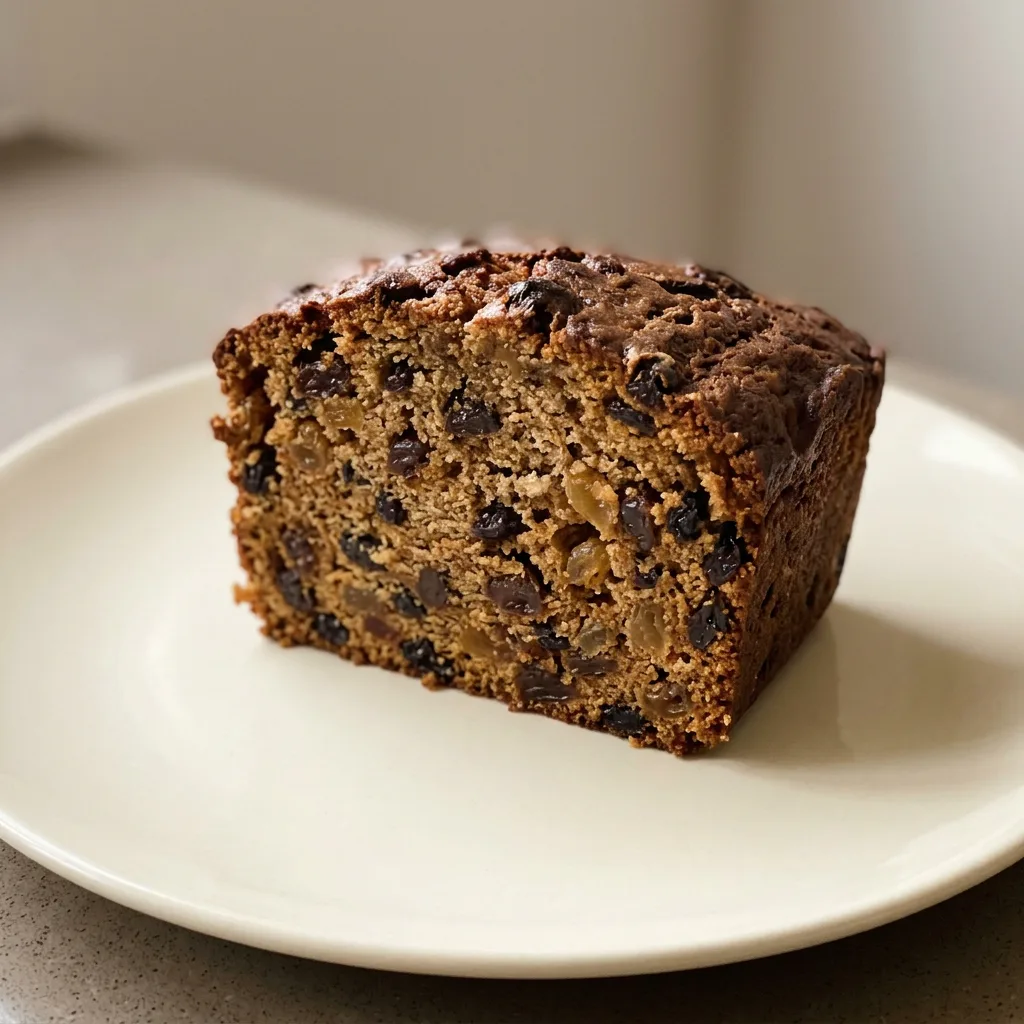
Mary Berry Tea Loaf
Ingredients
Method
Soak fruit in tea:
In a large glass bowl, combine the mixed dried fruit and caster sugar. Pour the hot, strong black tea over the mixture and stir with a wooden spoon until the sugar is fully dissolved and the fruit is evenly coated. Cover the bowl tightly with plastic wrap or a clean tea towel and allow it to soak at room temperature for at least 6 hours, ideally overnight, until the fruit has plumped and absorbed nearly all the liquid.Preheat oven and prep pan:
Preheat the oven to 325°F (165°C) and position a rack in the center. Lightly grease a 2 lb (900g) loaf pan with oil and line the bottom and sides with a long strip of parchment paper, leaving an overhang on the long edges to facilitate lifting the cake out later.Mix batter with flour and egg:
To the bowl containing the soaked fruit and any residual tea, add the self-raising flour and mixed spice. Fold the mixture using a large metal spoon until no streaks of flour remain. Add the beaten egg and stir until the batter is smooth and glossy, being careful not to overmix.Bake loaf until done:
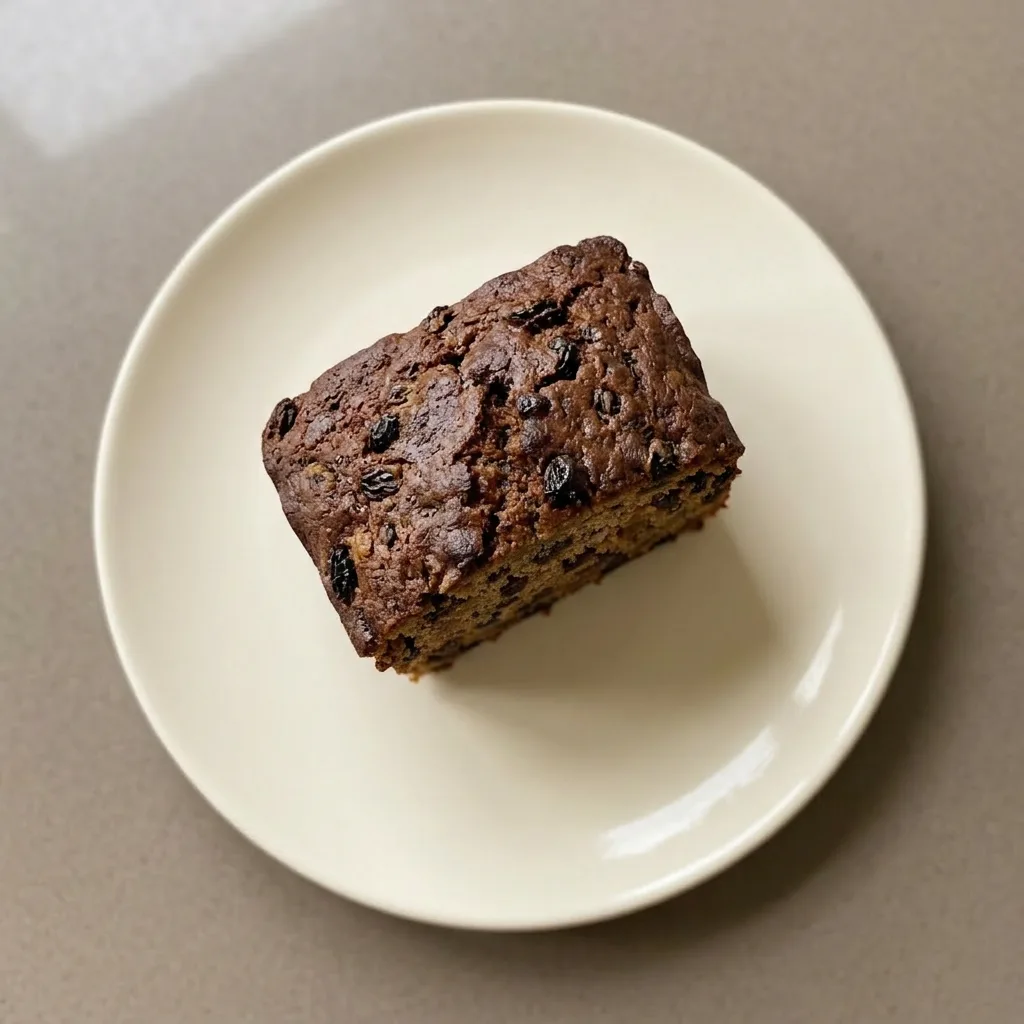
Transfer the batter into the prepared loaf pan, spreading it evenly. Bake for 1 to 1 1/4 hours, until the top is dark golden brown and firm to the touch, and a wooden skewer inserted in the center comes out clean.Cool loaf completely:
Allow the loaf to cool in the pan for 10 minutes, then lift it out using the parchment paper and place it on a wire rack. Remove the paper and let it cool completely before slicing.
What to swap in this tea loaf, and what to leave alone
Mixed dried fruit: Use 1 1/4 cups of a single dried fruit, like raisins, currants, or chopped dried apricots. The loaf will have a more uniform fruit flavor rather than a medley. Apricots add a slight tang and softer texture, but the soak time remains the same.
The fruit still plumps and distributes evenly.
Self-raising flour: Use 1 3/4 cups gluten-free self-raising flour blend (with xanthan gum). The crumb will be slightly more tender and a bit more fragile, handle gently when slicing.
The loaf may not rise as high, but it will still hold together. Do not use plain gluten-free flour without added leavening; the batter needs that lift.
Caster sugar: Use an equal amount (1 cup) of light brown sugar or coconut sugar. Brown sugar adds a deeper, molasses-like flavor and slightly more moisture, making the loaf denser. Coconut sugar gives a caramel note but may leave a slightly coarser texture.
The sweetness level stays similar, but the color darkens a shade.
Mixed spice: Use 1 teaspoon of cinnamon alone, or a blend of 1/2 tsp cinnamon plus 1/4 tsp each nutmeg and allspice. Cinnamon alone gives a straightforward warmth; the blend with nutmeg and allspice comes closer to the original. Pumpkin pie spice adds ginger and cloves, which can dominate, use only if you want a spicier loaf.
Storing and Serving Mary Berry Tea Loaf
This tea loaf stays moist for up to a week at room temperature if stored properly. Once the loaf is completely cool, wrap it tightly in two layers of plastic wrap or place it in an airtight container. Keep it in a cool, dark spot; the tea and dried fruit preserve the crumb, so refrigeration isn’t needed and can dry it out.
The texture actually improves after a day: the residual moisture distributes more evenly, making slices softer and more cohesive. For leftovers, slice only what you’ll eat, as cut surfaces stale faster.
To revive a slice that’s been out, microwave it for 10 seconds; it brings back the just-baked tenderness. You can freeze the whole loaf, well-wrapped, for up to three months. Thaw overnight at room temperature in the wrapping to prevent condensation.
Slice at room temperature for clean edges, and serve plain or with butter. The loaf is best eaten within the first week; after that, it dries gradually but remains edible if tightly wrapped.
Tips
- Test self-raising flour by stirring a teaspoon into a small bowl of water. If it fizzes vigorously, the baking powder is active and the loaf will rise properly; if not, the flour is stale and you need a fresh bag.
- Use a digital scale to weigh the flour instead of scooping. Scooping can compact the flour by up to 20%, leading to too much flour and a dry, dense loaf. Weighing ensures the correct ratio of flour to liquid.
Frequently Asked Questions
Can I use a different type of tea, like Earl Grey or green tea?
Yes, but expect a different flavor. Earl Grey adds bergamot that can clash with the mixed spice; green tea is more delicate and may get lost. Stick with a strong black tea like English Breakfast for the intended depth, the fruit and spice need that boldness.
Why did my tea loaf turn out dense and heavy?
Most likely the fruit wasn’t soaked long enough, it needs at least 6 hours to plump fully. If the fruit is still firm, it sinks and weighs down the crumb. Another possibility is overmixing the batter after adding flour; fold just until streaks disappear.
Can I make this tea loaf ahead of time and freeze it?
Yes, freeze the whole loaf well-wrapped for up to three months. Thaw overnight in the wrapping at room temperature to avoid condensation. The texture actually improves after a day at room temp, so consider making it a day ahead.
How is Mary Berry’s tea loaf different from a traditional fruitcake?
It’s much lighter, no butter or eggs in the batter (just one egg) and relies on self-raising flour for lift. Traditional fruitcake is dense with fat and alcohol; this one gets moisture solely from the tea-soaked fruit and has a tender, open crumb.
