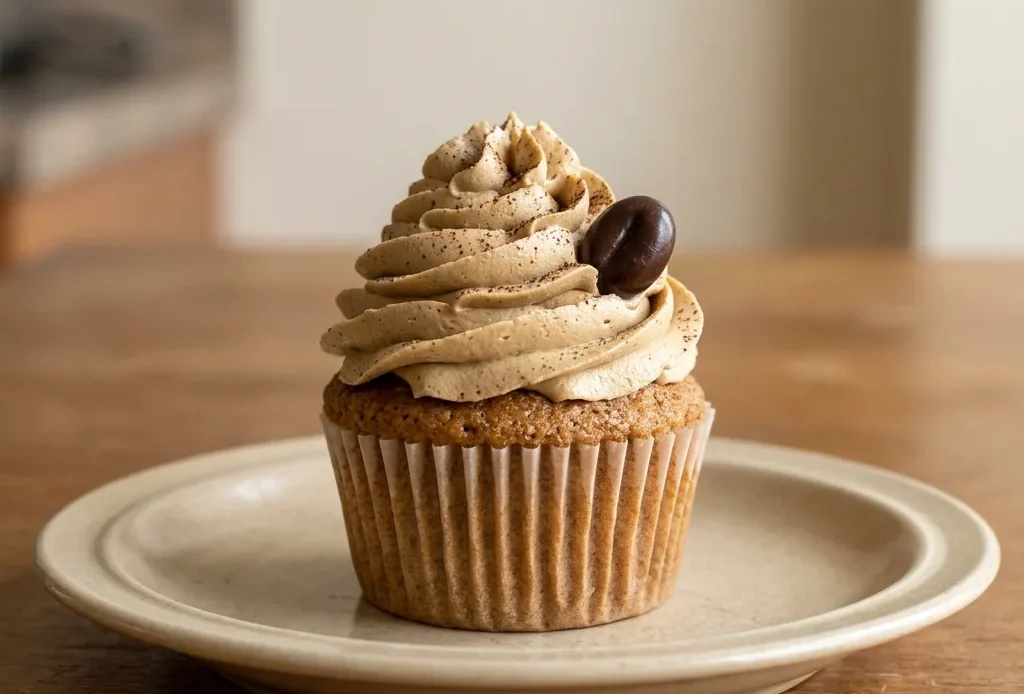
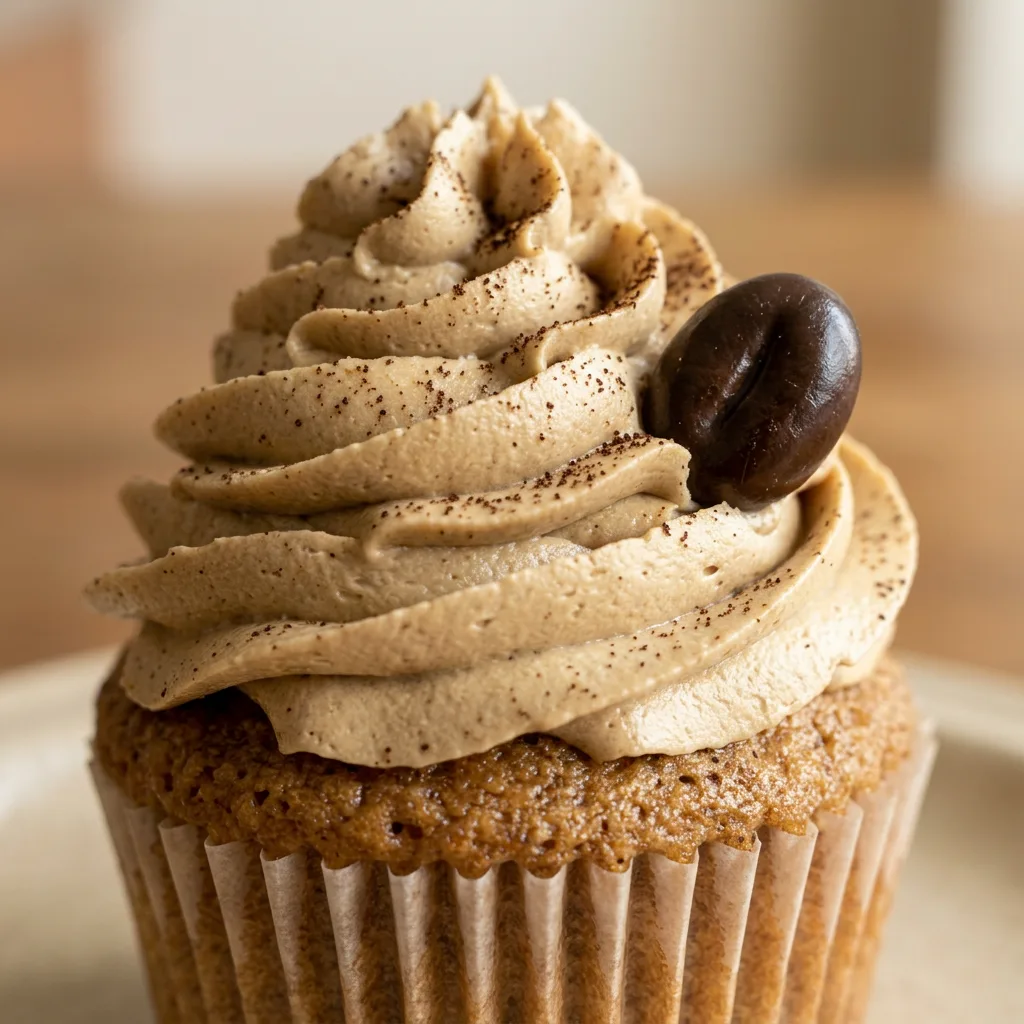
The crumb is tender, almost fluffy, with a deep coffee kick that lingers. A double dose of espresso powder, in both the batter and the buttercream, makes these espresso cupcakes taste like a real coffeehouse treat, not a weak imitation. The brown sugar keeps them moist, and the cake flour keeps them light.
It’s a straightforward bake, but the margin for error is small: overmix the batter and you lose the softness, skimp on the espresso powder and the flavor falls flat. Done right, they’re worth the attention.
Espresso powder packs concentrated coffee punch
Using espresso powder in both the batter and the buttercream delivers deep coffee flavor without throwing off the liquid balance. A tablespoon in the dry mix and two teaspoons in the frosting are enough to register as real espresso, not just a hint.
Brewed coffee alone would need far more volume to match that intensity, thinning the batter or making the frosting runny. The powder dissolves completely into the fat and sugar, so you get even distribution with no grittiness.
This is why professional bakeries rely on it for coffee-flavored desserts: it gives you the taste without compromising structure.
Brown and white sugars shape texture together
Brown sugar brings molasses, which holds onto moisture and gives the crumb a faint chewiness. Granulated sugar, on the other hand, promotes browning and adds structural support during baking. The two together create a cupcake that is tender but not fragile, moist but not dense.
Taste the difference if you try all one type: all brown can feel heavy, all white can turn dry. This balance is what makes the crumb feel soft and rich, exactly what you want with a coffee-flavored base.
Cake flour makes a lighter, softer crumb
Cake flour has less protein than all-purpose, so it forms less gluten when you stir the batter. Less gluten means a more tender cupcake, almost delicate.
The recipe notes all-purpose can work, but the texture shifts: denser, slightly tougher, more like a standard muffin. If you want that bakery-style lift and softness, cake flour is the way to go.
You can feel the difference when you bite into one: it practically dissolves.
Brewed espresso wakes up the batter
The brewed coffee adds moisture and reinforces the espresso powder’s flavor, but the order matters. You stir in half the dry mix first, then the coffee, then the rest of the flour.
Why that sequence? The liquid dissolves the sugar and activates the baking powder evenly, while the flour added afterward prevents overworking the gluten.
Stop mixing as soon as the last streaks disappear. If you added all the liquid at the start, the batter would be soupy and the dry ingredients harder to incorporate without overmixing.
The result is a smooth, thick batter that bakes into an even crumb.
Prep: 20 min · Cook: 20 min · Total: 40 min · Servings: 12 · Calories: 470 kcal
What to look for in each ingredient
cake flour: Cake flour has less protein than all-purpose, so it forms less gluten and gives a more tender crumb.
espresso powder: Use a good quality instant espresso powder, not ground coffee beans, or it won’t dissolve properly.
brewed espresso or coffee: Use strong brewed coffee or espresso at room temperature; hot liquid will melt the butter in the batter.
light brown sugar: Fresh brown sugar should be soft and clump-free; hard lumps won’t dissolve evenly into the batter.
People always overmix thinking they need a smooth batter, but that just guarantees a tough, dense crumb.
Mix the batter in thirds for a tender crumb
Whisk the dry ingredients
Whisk cake flour, espresso powder, baking powder, and salt in a bowl until uniform. Lumps in the powder will leave bitter pockets, so break them up with the whisk tines.
Combine the wet ingredients
Whisk melted butter, both sugars, eggs, and vanilla until smooth and slightly thickened, about 30 seconds. The mixture should look like a thin caramel, with no streaks of egg white.
Add half the dry mix
Stir half the flour mixture into the wet ingredients until just a few floury streaks remain. A few lumps are fine; overmixing now toughens the crumb.
Pour in the brewed coffee
Add the brewed espresso and stir slowly until the batter loosens and becomes a milky tan. The liquid will thin it noticeably, so scrape the bowl well.
Fold in the remaining flour
Add the rest of the dry ingredients and fold with a spatula until no dry spots remain. Stop as soon as the batter is smooth and thick; it should drop from the spatula in a slow ribbon.
Fill the liners
Divide the batter among 12 liners, about 1/4 cup each. The cups should be just over half full; too much batter will dome and crack, too little yields flat tops.
Bake until springy
Bake at 350°F for 18 to 22 minutes. The tops should spring back when pressed, and a toothpick inserted in the center should come out clean. Cool in the pan for 5 minutes, then transfer to a rack.
Make the buttercream
Beat softened butter, powdered sugar, and espresso powder on low until combined, then whip on high for 4 to 5 minutes. The frosting should be pale, fluffy, and hold a stiff peak when you lift the paddle.
Adjust consistency
If the buttercream looks dry or crumbly, add heavy cream 1 tablespoon at a time while whipping. You want it smooth enough to pipe without breaking, but firm enough to hold its shape.
Pipe and garnish
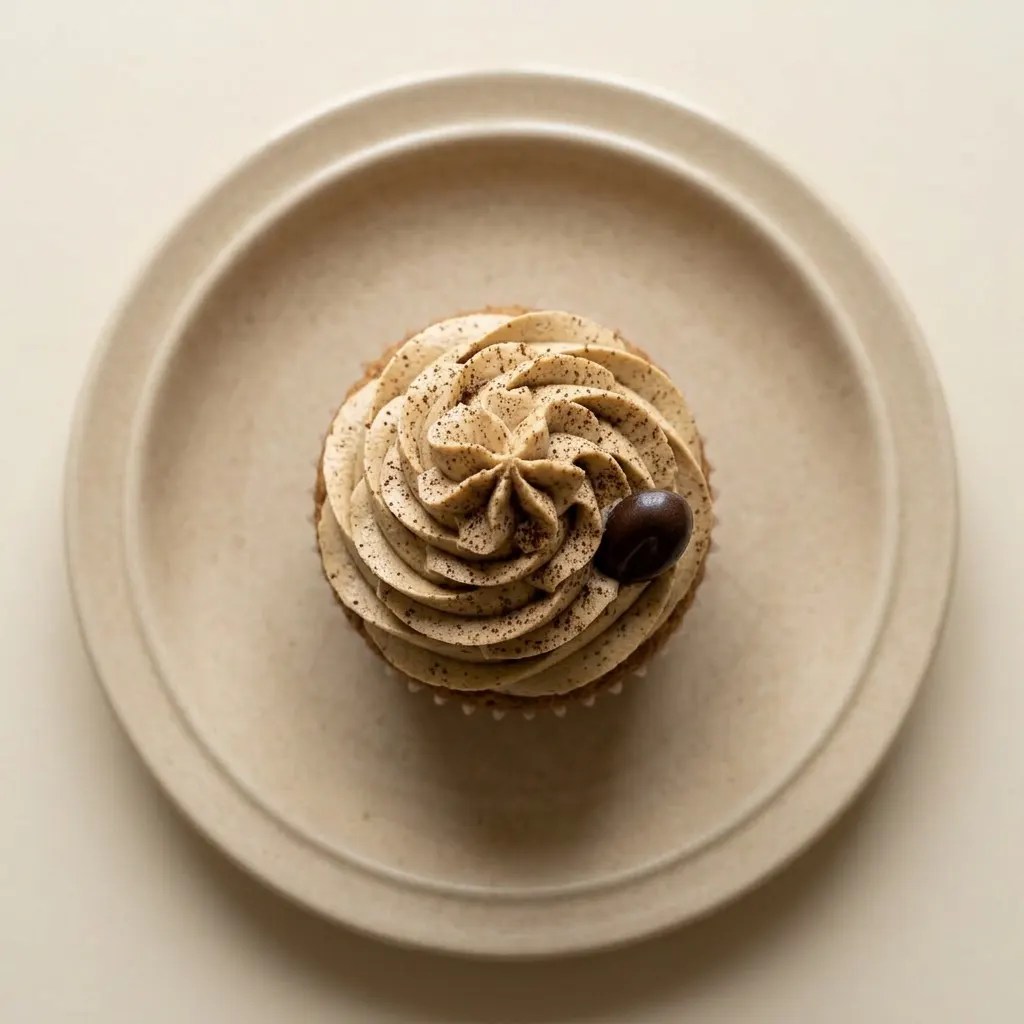
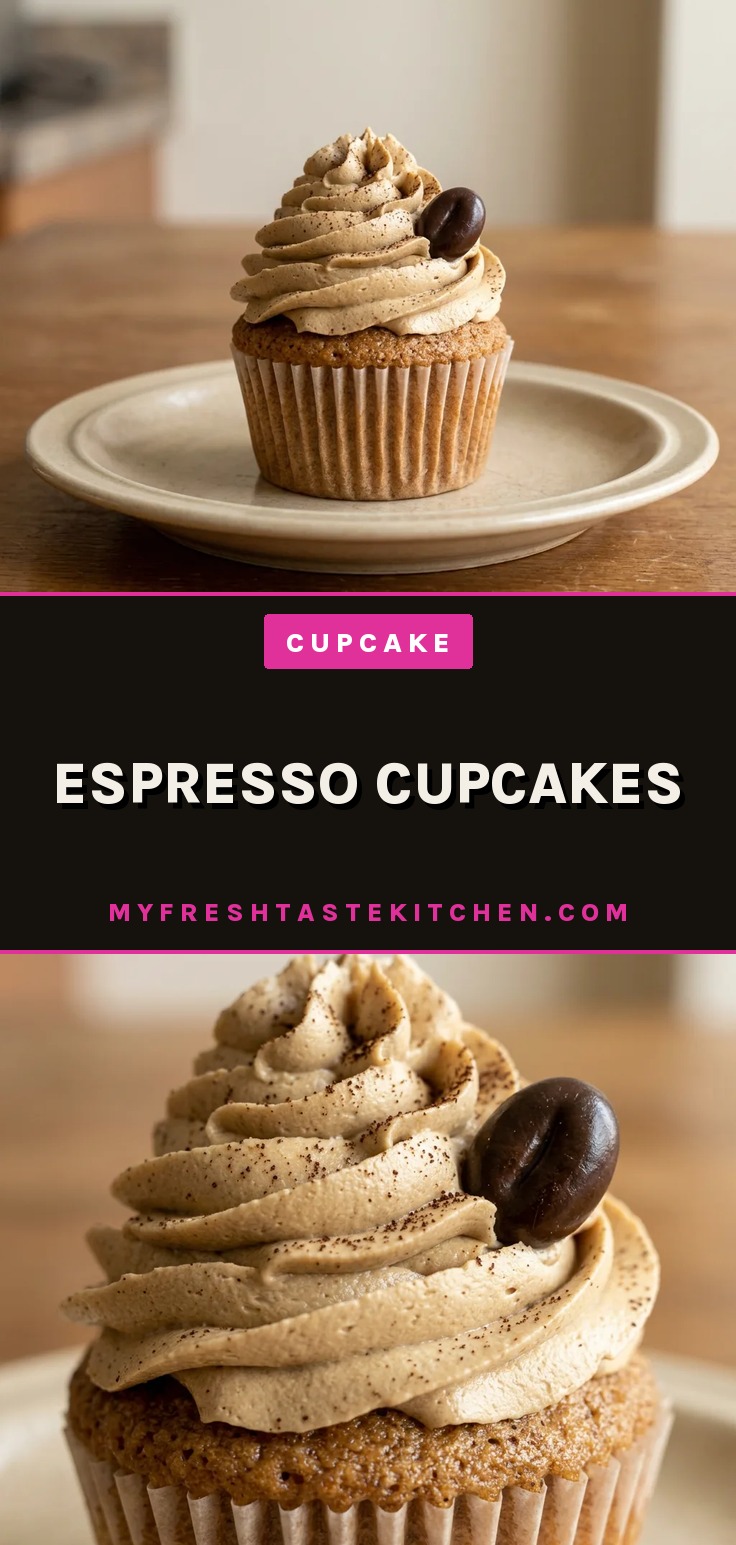
Pipe the frosting onto completely cooled cupcakes using a large star tip. Top with chocolate-covered espresso beans and a light dusting of espresso powder if desired.
Espresso Cupcakes
Ingredients
Espresso Cupcakes
- 1/2 cup unsalted butter, melted 113 g
- 1/2 cup light brown sugar 100 g
- 1/2 cup granulated sugar 100 g
- 2 large eggs, room temperature
- 1 teaspoon vanilla extract
- 1 1/2 cups cake flour 180 g (substitute all-purpose flour)
- 1 tablespoon espresso powder 6 g
- 1 1/2 teaspoons baking powder 6 g
- 1/4 teaspoon kosher salt
- 1/2 cup brewed espresso or coffee 120 ml (substitute whole milk)
Espresso Buttercream
- 1 cup unsalted butter, room temperature 226 g
- 3 cups powdered sugar 340 g
- 2 teaspoons espresso powder 4 g
- 2 tablespoons heavy cream 30 ml, as needed
- Chocolate-covered espresso beans optional
Instructions
Espresso Cupcakes
Preheat Oven and Prep Pan:
Set oven to 350°F (175°C). Place liners in a 12-cup muffin tin.Mix Dry Ingredients:
In a large bowl, combine cake flour, baking powder, espresso powder, and salt with a whisk.Whisk Wet Ingredients:
In another bowl, whisk together melted butter, granulated sugar, brown sugar, eggs, and vanilla until uniform.Combine Batter:
Add roughly half the flour mixture to the wet ingredients and stir, then pour in the brewed coffee and the rest of the flour mixture, mixing until just combined.Fill Cupcake Liners:
Fill each liner with about 1/4 cup (60 ml) batter (roughly half full).Bake Cupcakes:
Bake at 350°F (175°C) for 18-22 minutes, or until a toothpick inserted in the center emerges clean.Cool Cupcakes:
Take the pan out and transfer cupcakes to a wire rack. Let cool entirely before adding frosting.
Espresso Buttercream
Make Espresso Buttercream:
Using a stand mixer fitted with a paddle, beat the softened butter, powdered sugar, and espresso powder until smooth and creamy.Adjust and Whip Buttercream:
If the buttercream is too thick, add 1-2 tablespoons heavy cream as needed, then whip on high speed for 4-5 minutes until light and airy.Frost Cupcakes:
Pipe frosting onto cooled cupcakes (e.g., using a Wilton 1M tip).Garnish Cupcakes:
If desired, garnish with chocolate-covered espresso beans and an extra dusting of espresso powder.
Storage and Serving
Store frosted cupcakes in an airtight container at room temperature for up to 2 days. The buttercream stays soft and the cake stays moist.
Refrigerate for up to 5 days, but the cake will firm up and the frosting may stiffen. Bring refrigerated cupcakes to room temperature for at least 30 minutes before serving. The espresso buttercream can be made up to 3 days ahead and refrigerated in an airtight container; let it soften at room temperature, then rewhip briefly before piping.
Unfrosted cupcakes freeze well for up to 1 month in a sealed container. Thaw at room temperature, then frost and serve the same day. Chocolate-covered espresso beans are best added just before serving; they soften and lose crunch within a day.
For the best texture, eat frosted cupcakes within 24 hours of assembly.
Swap cake flour for all-purpose, or coffee for milk
cake flour: all-purpose flour. The protein in all-purpose forms more gluten, so the crumb turns denser and slightly tougher, closer to a muffin. You’ll lose some of the delicate, bakery-style softness.
Use the same weight (180 g). Sift it twice to lighten the texture a bit.
brewed espresso or coffee: whole milk. Milk adds moisture but zero coffee flavor. The cupcake will be mild, not espresso-forward.
Reduce the milk to 90 ml (3/4 cup) because milk is thinner than coffee? No, coffee is water-thin; milk is thicker, so use 120 ml as written. The batter will be slightly richer.
Expect a sweeter, less intense coffee taste.
unsalted butter: salted butter. If you must, omit the 1/4 teaspoon kosher salt in the batter. The frosting will taste saltier; not ideal but workable.
The texture stays identical.
large eggs: flax eggs (for vegan). 2 flax eggs (2 tbsp ground flax + 6 tbsp water) will bind the batter but the crumb turns more dense and slightly gummy, less tender.
The cupcakes won’t rise as high. Acceptable if you need egg-free, but don’t expect the same lift.
Tips
- Bloom the espresso powder in the hot brewed espresso before adding to the batter. Dissolve the 1 tablespoon espresso powder into the 1/2 cup hot brewed espresso, let it cool to room temperature, then add as directed. This fully activates the coffee flavor, making the cupcakes taste bolder and more complex without extra powder.
Frequently Asked Questions
Can I make these cupcakes ahead of time?
Yes. Unfrosted cupcakes freeze for up to 1 month in a sealed container. Thaw at room temperature, then frost and serve the same day.
The frosting can be made 3 days ahead, refrigerated, then softened and rewhipped before piping.
Why did my cupcakes turn out dense instead of light and fluffy?
Most likely you overmixed the batter once the flour was added. That develops too much gluten, making the crumb tough. Stop folding as soon as no dry streaks remain, a few lumps are fine.
Using all-purpose flour instead of cake flour also yields a denser texture.
How is this espresso cupcake different from a regular coffee-flavored cupcake?
This one uses espresso powder in both the batter and the buttercream for a concentrated coffee punch that doesn’t thin the batter like brewed coffee alone would. The combination of brown and white sugars gives a tender, moist crumb with a faint chewiness, not the dry, one-note sweetness of many coffee cupcakes.
Can I freeze the frosted cupcakes?
The article doesn’t recommend freezing frosted cupcakes. The buttercream’s texture can suffer, and the cake may become dry. Instead, freeze unfrosted cupcakes for up to 1 month, then thaw and frost fresh.