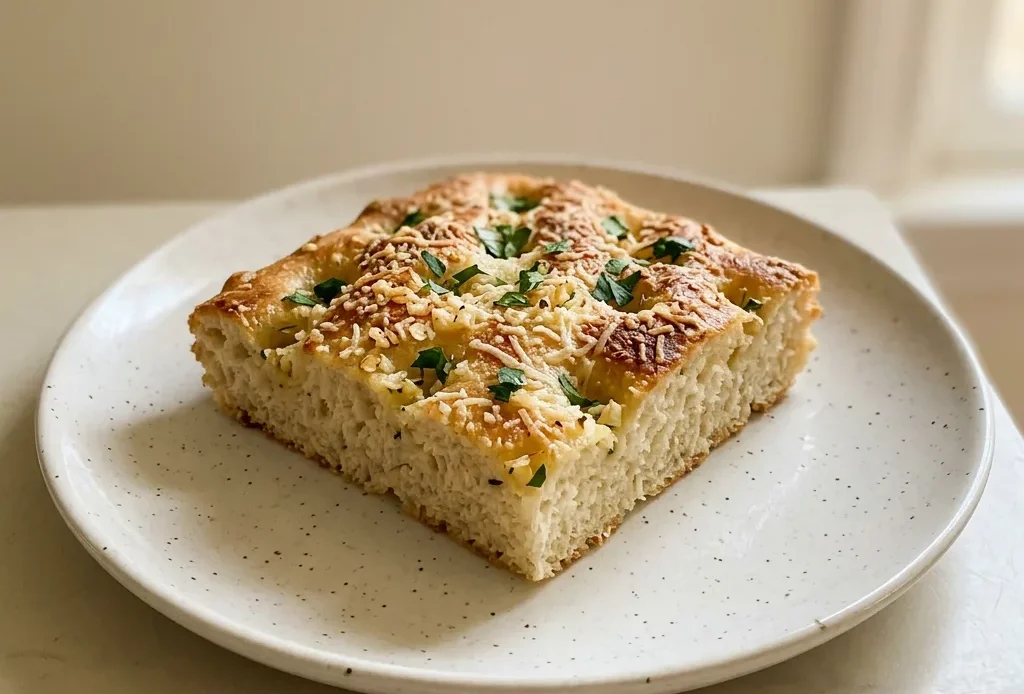
Most focaccia ends up tough or pale because people skip the second rest after topping. Letting the dimpled dough sit for 20 to 30 minutes before baking lets the gluten relax and the yeast rebuild air pockets, so the crumb stays light and open, not dense.
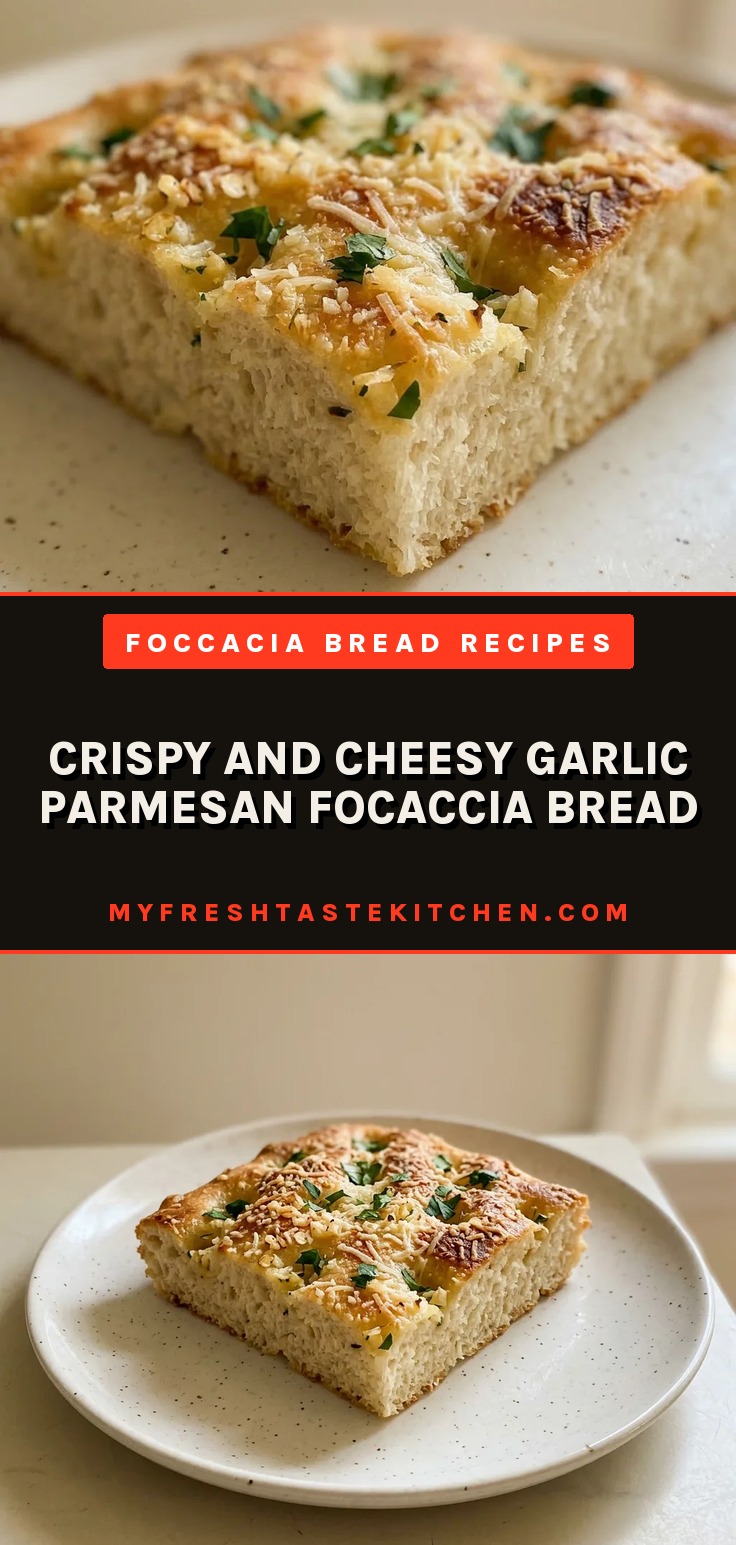
The garlic and Parmesan also start to meld into the surface, so you get a cohesive topping instead of loose bits that burn. That pause, plus a hot oven, is what gives this crispy and cheesy garlic parmesan focaccia bread its crackling crust and tender interior, without the bread turning dry or the cheese sliding off.
Dimple the dough for texture and topping adhesion
Deep indentations do more than look rustic. They create pockets that trap olive oil and toppings directly against the dough, so garlic and cheese stay put rather than sliding off during the bake. Dimpling also lets air escape from the crumb; skip it and you get a dense, flat bread with toppings perched on the surface, not fused into it.
Those little wells channel oil into the bread, crisping the bottom and edges as it bakes. You’ll see the indentations fill with bubbling oil and melted Parmesan, and the final crumb will be open and airy, not compact. It’s a quick step that directly controls how the focaccia eats.
A second rest after topping develops flavor and structure
Once you’ve pressed the dimples and scattered garlic and cheese, the dough needs time to relax and rise again. Handling deflates it; that second proof rebuilds the airy structure and lets the yeast continue working, deepening the yeasty, fermented flavor.
The dough also softens, so when it bakes the crumb stays light, not tough. Meanwhile, the garlic and Parmesan begin to meld with the surface, the cheese softening slightly, the garlic releasing its aroma. You can watch the dough puff up again in the pan, a sign the gluten is relaxing and the bubbles are reforming.
This short rest is what lifts the focaccia from dense bread to something with real chew and character. Skipping it shortcuts that flavor and texture development.
Why high heat is critical for a crisp crust and melted cheese
A 425°F oven does two things at once. It shocks the dough into rapid oven spring, that last big rise before the structure sets, which gives you an open, airy crumb. The intense heat also drives moisture from the surface fast, creating a crisp bottom and edges while the interior stays soft.
The Parmesan melts into a golden, bubbly layer that browns in spots, not a pale, greasy smear. You’ll see the cheese turn lacy and crisp at the edges. Lower the temperature and the bread dries out before it browns, leaving a pale, chewy crust.
That high heat is what makes the outside crackle and the inside stay tender, exactly what defines focaccia, especially when topped with cheese.
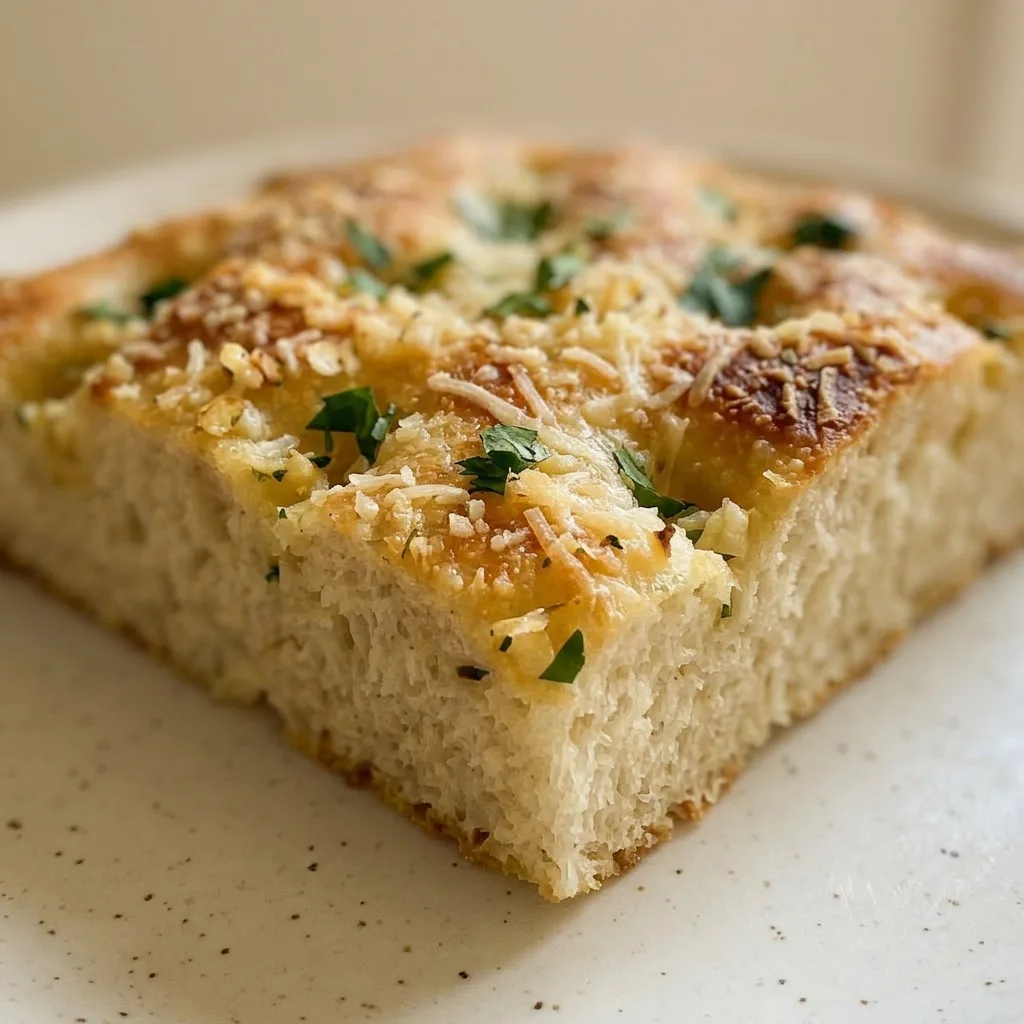
Prep: 1 hr 10 min · Cook: 25 min · Total: 2 hr 5 min · Servings: 8 · Calories: 250 kcal
Ingredient Notes for the Best Crust and Cheese Melt
Active dry yeast: Check that it’s not expired; the foam after 5 to 10 minutes tells you it’s alive.
All-purpose flour: Start with 3½ cups (440 g) and add the extra ½ cup only if the dough feels too sticky.
Parmesan cheese: Buy a wedge and grate it yourself; pre-shredded won’t melt as smoothly or brown as well.
Olive oil: Use a good extra virgin one for coating the pan; it adds flavor and helps crisp the bottom.
First time I made this, half the garlic slid onto the pan. Next batch I accidentally poked too hard and everything stuck.
Your step-by-step to focaccia that crackles and chews
Activate the yeast
Whisk warm water and sugar, then sprinkle yeast on top. In 5 to 10 minutes you’ll see a thick foam; if nothing happens, the yeast is dead, start over.
Mix and first rise
Stir in 3½ cups flour, salt, and oil until a tacky dough forms. Cover and set in a warm spot; after 1-1½ hours it should double in size and feel soft.
Pan and dimple
Oil your pan, turn the dough in, and press deep dimples with your fingertips. You want the indentations to reach the pan, they’ll fill with garlic, cheese, and oil.
Top and rest again
Scatter minced garlic and grated Parmesan evenly over the dimpled dough. Let it rest 20 to 30 minutes; you’ll see the dough puff back up and the cheese soften slightly.
Bake at high heat
Bake at 425°F for 20 to 25 minutes. The top should be deep golden, the cheese bubbly and browning at edges, and the bottom crisp when you lift a corner. If it’s pale, give it more time.
Crispy and Cheesy Garlic Parmesan Focaccia Bread
Ingredients
- 1 cup warm water
- 1 teaspoon sugar
- 2 ¼ teaspoons active dry yeast 1 packet
- 3 ½ to 4 cups all-purpose flour 440 to 500 g
- 1 tablespoon kosher salt
- 2 tablespoons olive oil plus extra for pan
- 3 cloves garlic minced
- ½ cup Parmesan cheese grated (50 g)
- optional: fresh herbs like rosemary or thyme
Instructions
Activate Yeast Mixture:
In a bowl, whisk together 1 cup warm water and 1 teaspoon sugar. Scatter 2 ¼ teaspoons active dry yeast on the surface; allow to stand for 5-10 minutes until foamy and bubbly.Mix and Proof Dough:
To the yeast mixture, incorporate 3 ½ to 4 cups all-purpose flour (440-500 g), 1 tablespoon kosher salt, and 2 tablespoons olive oil. Mix until a tacky dough forms, then cover and let proof in a warm spot for 1 to 1½ hours, or until doubled.Prepare Garlic and Cheese:
Finely chop 3 cloves garlic and finely grate ½ cup Parmesan cheese (50 g). After the dough has risen, coat your baking pan with a bit of olive oil and turn the dough into it.Press and Top Dough:
Using your fingertips, press deep indentations all over the dough. Distribute the minced garlic and grated Parmesan evenly over the surface. If desired, scatter fresh herbs such as rosemary or thyme.Rest Dough and Preheat Oven:
Allow the dough to rest for 20-30 minutes while the oven heats to 425°F (220°C).Bake Until Golden:
Bake for 20-25 minutes, until the top is golden and the edges are crisp.
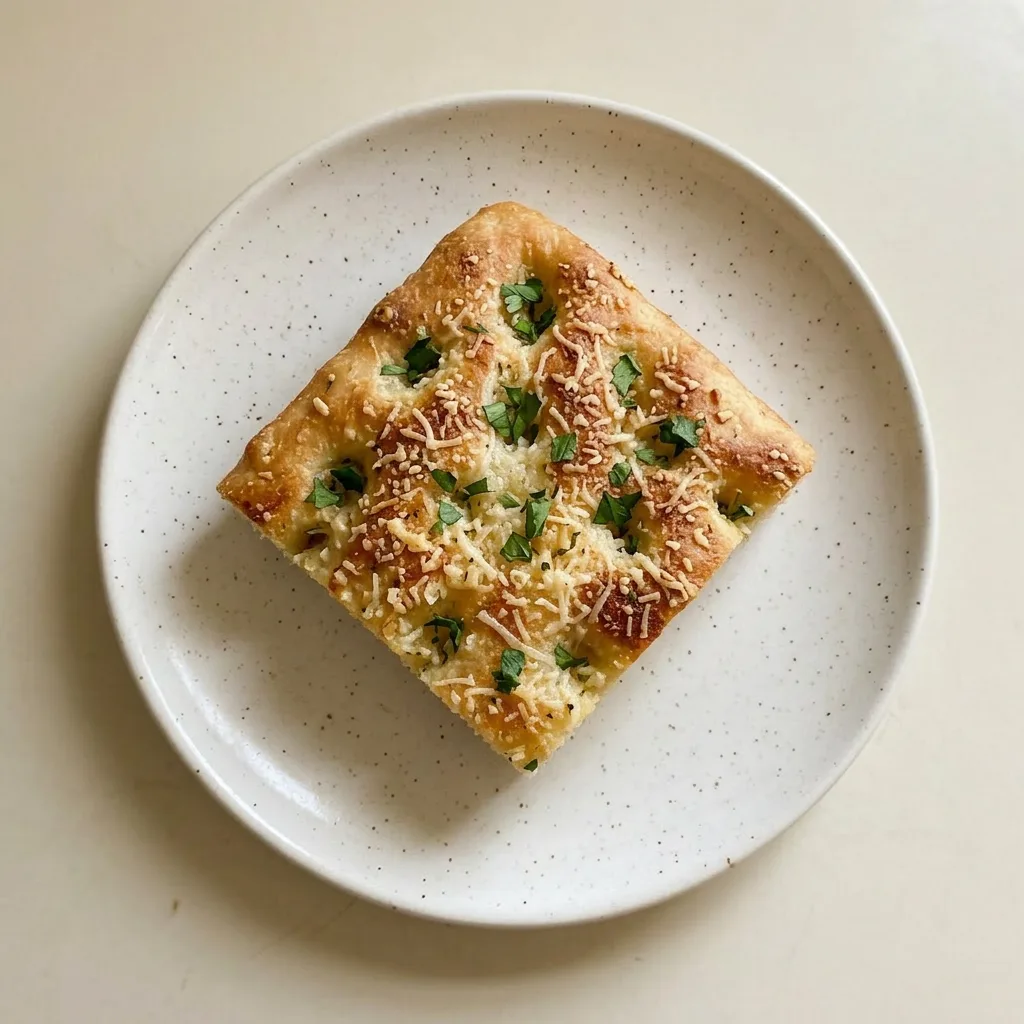
Three swaps that change how this focaccia bakes and tastes
Active dry yeast: Instant yeast. Use the same amount (2¼ teaspoons) but skip the proofing step. Mix instant yeast directly with the flour.
The rise may happen a little faster, so check the dough at 45 minutes instead of an hour.
All-purpose flour: Up to 1 cup whole wheat flour. Replace up to 1 cup of the all-purpose flour with whole wheat.
The dough will be stiffer and may need an extra tablespoon of water. The crumb will be denser and nuttier, and the crust less crisp.
Don’t swap more than that or the bread turns heavy.
Parmesan cheese: Pecorino Romano or Asiago. Both grate similarly and melt into a browned, bubbly layer.
Pecorino is saltier, reduce the added kosher salt by half a teaspoon. Asiago is milder and less salty; no salt adjustment needed.
Tips
- Let the minced garlic sit in olive oil for 10 minutes before topping to mellow its raw bite.
Storage and Serving
Eat this focaccia as soon as it’s cool enough to handle, within an hour of baking, for the crispiest crust and melty cheese. Store leftovers in an airtight container at room temperature for up to 2 days.
Refrigeration makes the crust stale and the cheese rubbery, so avoid it. To restore crispness, reheat slices in a 350°F oven for 5 minutes.
The crumb will soften again, and the cheese will re-crisp. Freezing is an option: wrap the cooled, unsliced focaccia tightly in foil, then a freezer bag, for up to 1 month.
Thaw at room temperature, then reheat as above. The garlic and Parmesan lose some punch after freezing, but the texture holds well. Do not freeze the topped focaccia after baking; the cheese turns soggy on thaw.
Instead, freeze the plain baked bread and add fresh garlic and cheese after reheating.
Frequently Asked Questions
Can I make the dough the night before and bake it the next day?
Yes, you can. After the first rise, punch the dough down, cover tightly, and refrigerate overnight. The next day, proceed with dimpling, topping, and the second rest, expect the second rise to take a little longer since the dough is cold.
The flavor will be more developed, but the crust won’t be quite as crisp as same-day baked. Do not refrigerate after topping; the cheese and garlic go soggy.
Why did my focaccia turn out dense instead of airy?
Most likely the yeast wasn’t active, did you see a foamy layer after 5 to 10 minutes? If not, the yeast was dead and the dough couldn’t rise. Another common cause is under-proofing: the dough needs to double in bulk during the first rise, which takes 1 to 1½ hours in a warm spot.
A third possibility is that you pressed the dimples too aggressively or handled the dough too much after the second rest, deflating the air pockets.
Is this focaccia supposed to be eaten warm or at room temperature?
Both are great, but within an hour of baking you get the crispiest crust and melty cheese. At room temperature, the crust softens a bit but the crumb stays tender, it’s still excellent.
If you’re serving later, reheat slices in a 350°F oven for 5 minutes to restore crunch. Avoid refrigerating leftovers; it turns the crust stale and the cheese rubbery.