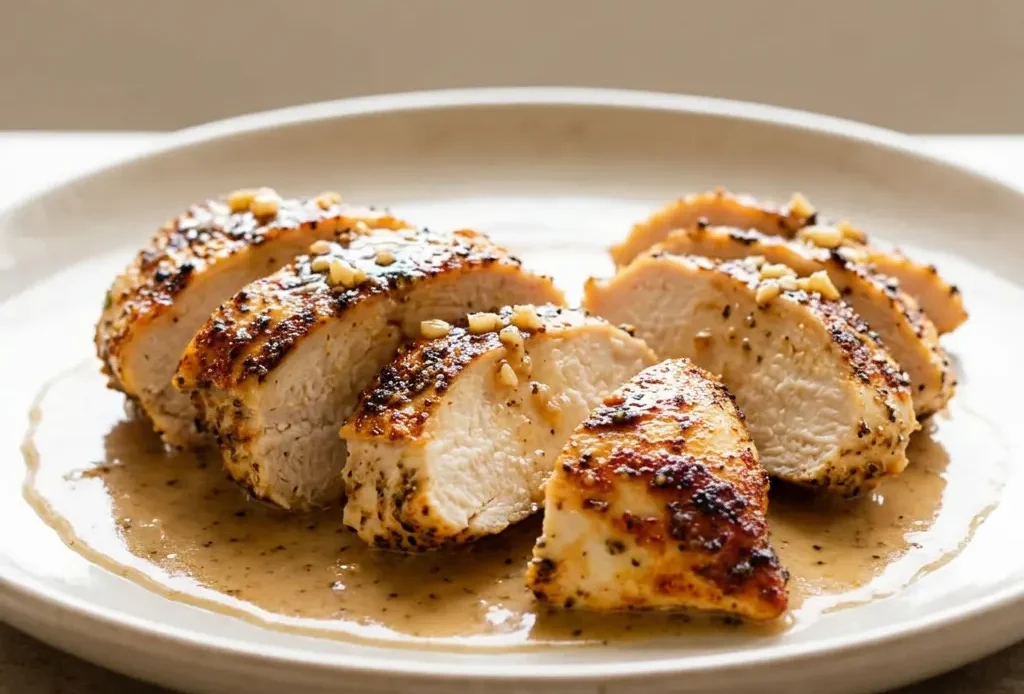
Pan-seared chicken breasts have a reputation for drying out, but the opposite is true when you use high heat and don’t crowd the pan. The crust that forms seals in the juices, and a quick pan sauce made from the browned bits ties everything together.
This juicy stove top chicken breasts recipe is straightforward, the margin for error is generous as long as you resist the urge to flip or poke too often. The hardest part is waiting the full 5 to 6 minutes per side without checking.
Dry the chicken thoroughly before seasoning
Moisture on the surface of the chicken is the enemy of browning. When water hits a hot pan it turns to steam, which keeps the meat’s surface below the temperature needed for the Maillard reaction.
That reaction is what creates the deep golden-brown crust and savory flavor. Paper towels are the tool: press them onto the chicken and soak up every visible droplet.
If you skip this, the chicken will steam and turn gray rather than brown. It’s a simple step that makes a clear difference in color and texture.
##
##
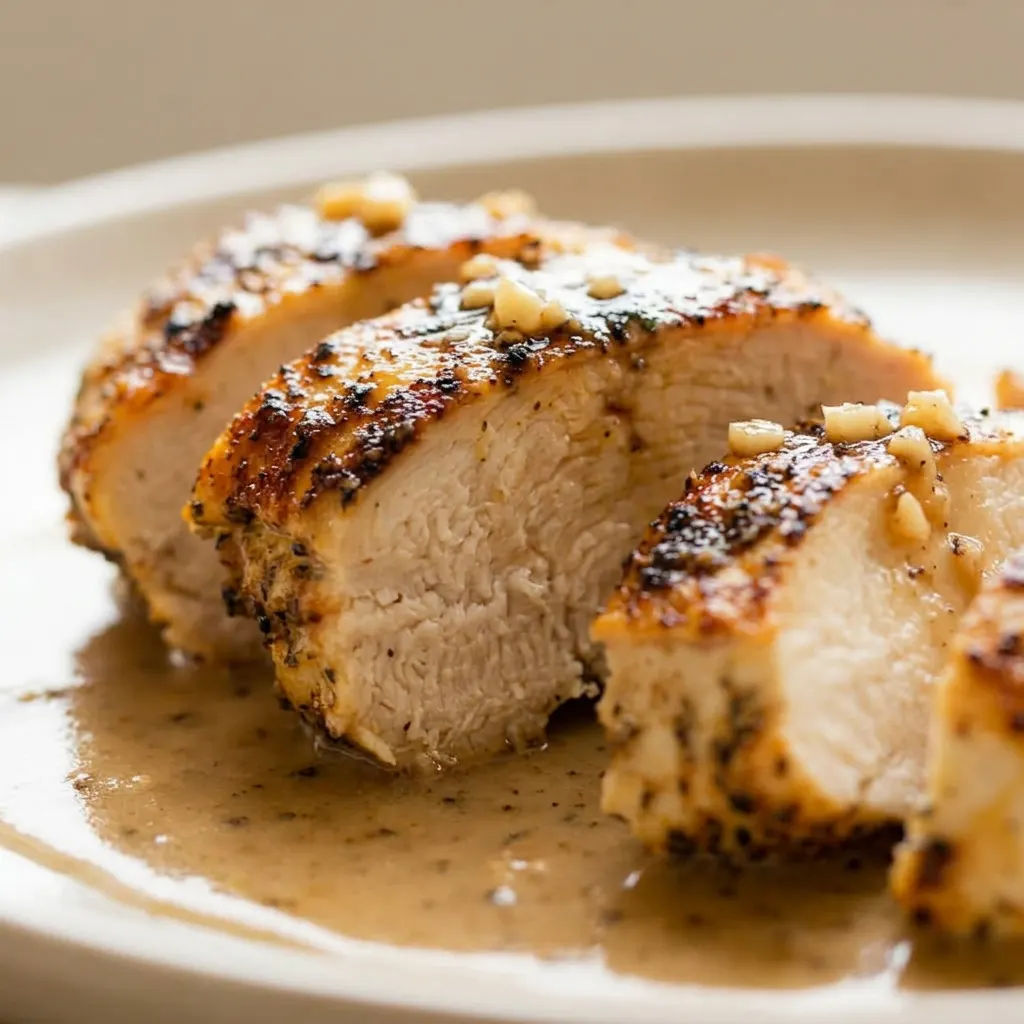
Prep: 10 min · Cook: 15 min · Total: 25 min · Servings: 4 · Calories: 290 kcal
Ingredient Notes for Stovetop Chicken Breasts
Chicken breasts: Buy uniform thickness so they cook evenly; if one side is thicker, pound it flat.
Olive oil: Use regular olive oil, not extra virgin, which has a lower smoke point and can turn bitter.
Butter: Unsalted butter lets you control the salt from the seasoning already on the chicken.
Chicken broth: Low sodium broth lets you adjust saltiness; full sodium can make the sauce too salty.
How to get a golden crust and tender meat every time
Pat the chicken dry
Press paper towels onto each breast until no visible moisture remains. If the chicken feels slick or damp, keep blotting, wet spots will steam and turn the surface gray instead of brown.
Season evenly
Sprinkle salt, pepper, garlic powder, paprika, and thyme over all sides. Rub the spices in so they stick. You should see a uniform coating; bare patches mean uneven flavor and less browning.
Heat the oil until it shimmers
Warm olive oil in a skillet over medium-high heat. When the oil looks wavy and thin, it’s ready. A drop of water flicked in should sizzle instantly, if it just sits, the pan isn’t hot enough.
Sear without crowding
Lay the chicken in the skillet in a single layer. Listen for a steady sizzle. If the sizzle fades or the pan cools, the chicken will steam, remove some breasts and cook in batches if needed.
Cook until golden on each side
Let the chicken cook 5 to 6 minutes per side. The bottom should be deep golden brown when you lift a corner, pale means it needs more time. Flip only once to keep the crust intact.
Check doneness by feel and temperature
Press the thickest part of a breast: it should feel firm but still give slightly, like the base of your thumb when you make a fist. An instant-read thermometer should read 165°F.
Rest the chicken while making the sauce
Transfer the chicken to a plate and let it rest uncovered. You’ll see juices pool on the plate, if you cut immediately, those juices would run out and leave the meat dry.
Deglaze the pan with broth
After melting butter and cooking garlic briefly, pour in chicken broth and scrape up the brown bits. The liquid should bubble and loosen the fond, if it’s not bubbling, raise the heat.
Simmer the sauce until slightly thickened
Let the broth simmer 2 to 3 minutes, stirring occasionally. The sauce will reduce and coat the back of a spoon. If it looks watery, let it bubble a bit longer; if too thick, add a splash more broth.
Return the chicken and baste
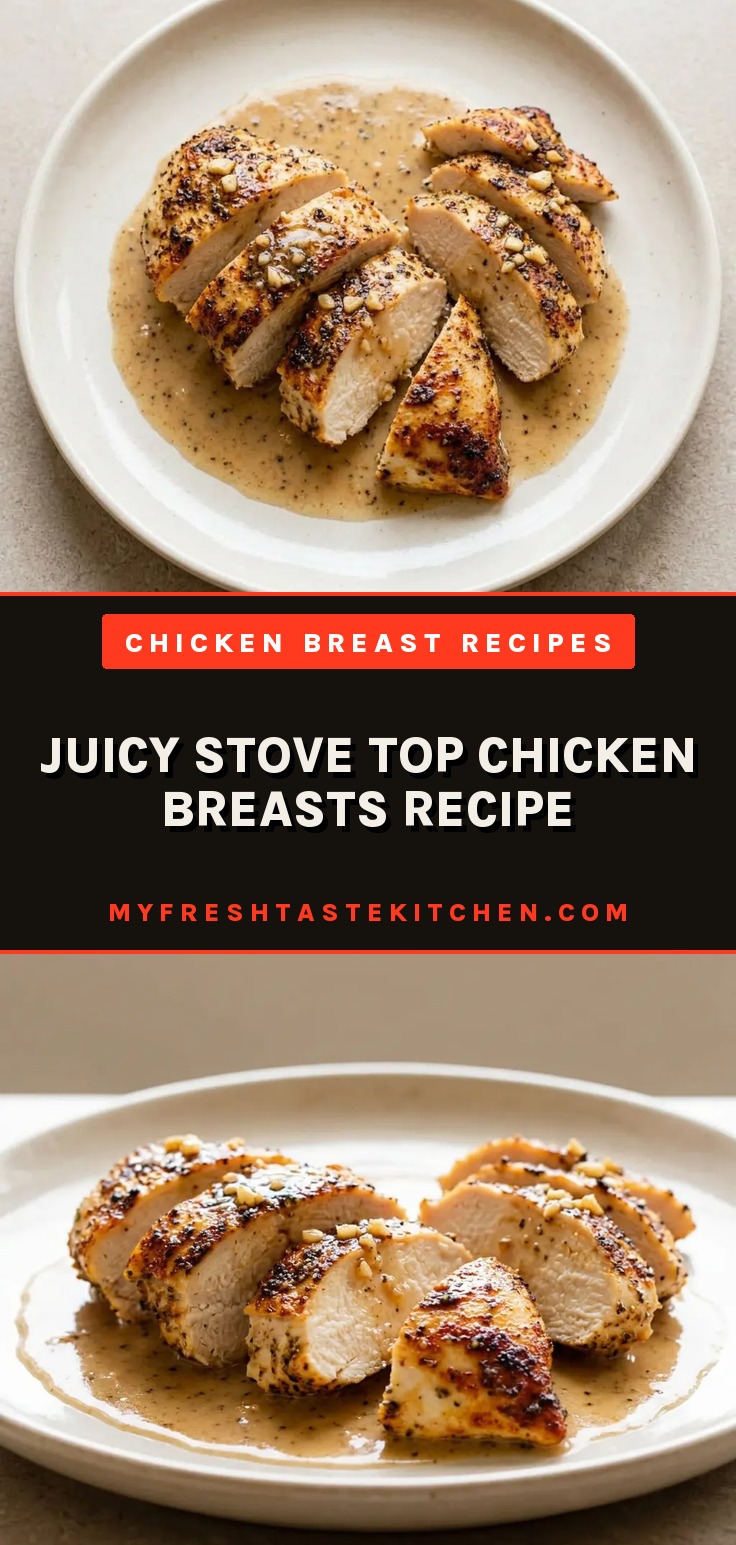
Place the chicken back into the skillet and spoon the sauce over the tops. Let it simmer 1 to 2 minutes. The sauce should cling to each breast and look glossy, serve right away.
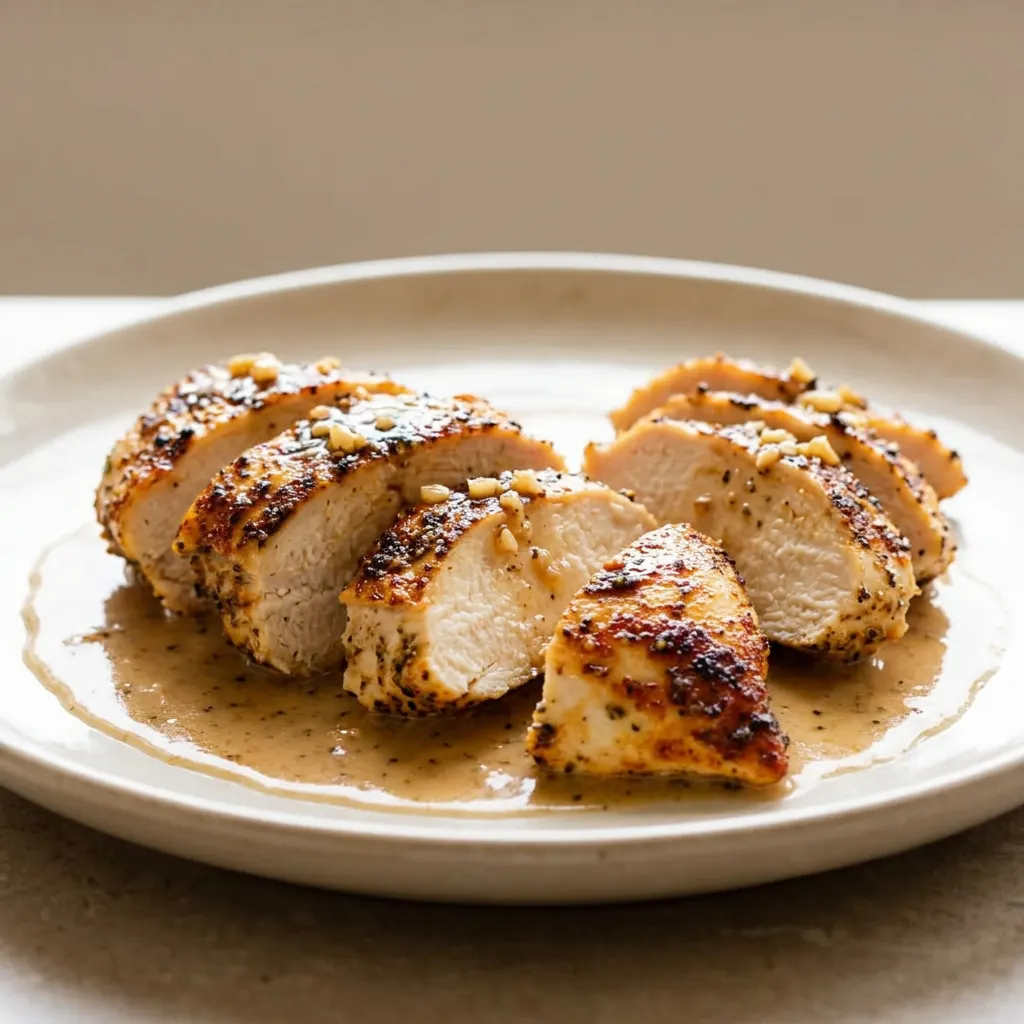
Juicy Stove Top Chicken Breasts Recipe
Ingredients
Method
Season Chicken Breasts:
Use paper towels to dry the chicken breasts thoroughly. Coat both sides uniformly with salt, black pepper, garlic powder, paprika, and dried thyme.Sear Chicken in Oil:
Warm olive oil in a big skillet over medium-high heat. When hot, place the chicken breasts in one layer.Cook and Set Aside:
Cook each side for 5-6 minutes until golden and fully cooked. Take the chicken out of the skillet and set aside.Sauté Garlic in Butter:
In the same skillet, melt butter. Add minced garlic and cook for 1 minute until aromatic.Deglaze with Broth:
Add chicken broth and deglaze the pan by scraping up browned bits. Let simmer for 2-3 minutes to thicken slightly.Baste and Serve:
Put the chicken back in the skillet. Baste with the sauce and let it simmer for 1-2 minutes. Serve immediately.
Storage and Serving
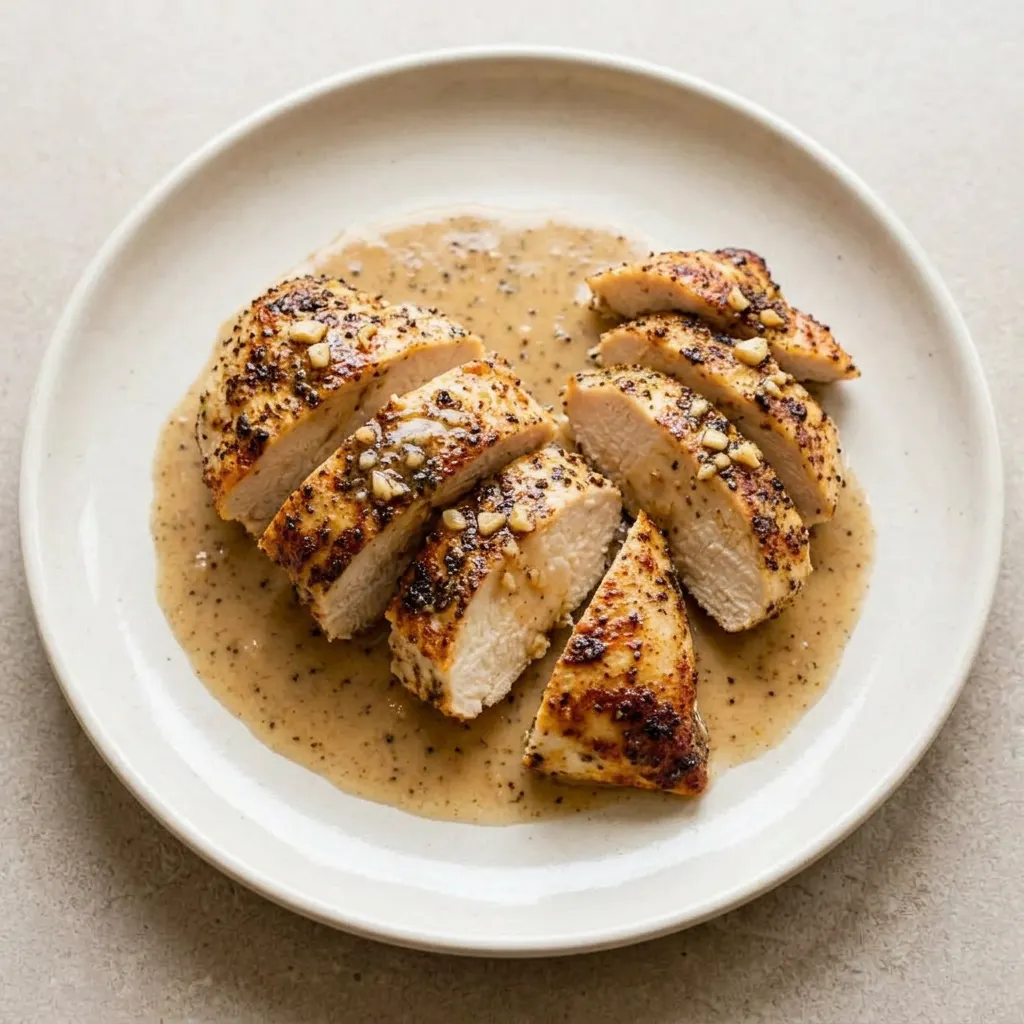
Serve the chicken right away after basting. The texture is best within 15 minutes of coming off the heat; the crust stays crisp and the meat is juiciest then.
If you hold it longer, the sauce softens the exterior and the meat starts to dry out. For leftovers, store the chicken and sauce together in an airtight container in the fridge.
The meat will stay tender for up to 3 days. After that, the texture degrades noticeably: the chicken becomes drier and the sauce loses its gloss. To reheat, return the chicken and sauce to a skillet over medium-low heat.
Add a splash of chicken broth if the sauce has thickened too much. Cover and warm gently, 3 to 5 minutes, turning once.
Avoid the microwave, which makes the meat tough and rubbery. Freezing is not recommended. The chicken breast, especially boneless and skinless, loses moisture during thawing and reheating, leaving it dry and stringy.
If you must freeze, do so only with the cooked chicken alone (no sauce), wrapped tightly in plastic and foil, for up to 1 month. The sauce does not freeze well. Thaw overnight in the fridge and reheat gently in a covered skillet with a little broth.
Tips
- Let the seasoned chicken rest at room temperature for 15 minutes before cooking; this allows the salt to penetrate deeper and the meat to cook more evenly from edge to center.
Swap chicken broth for wine, butter for ghee
Chicken broth: Dry white wine or dry vermouth. The wine adds acidity and complexity to the pan sauce, but it needs to simmer a minute longer to cook off the alcohol. If you use wine, reduce the salt in the seasoning slightly, because the sauce will be tangier on its own.
Butter: Ghee. Ghee has a higher smoke point than butter, so it won’t brown as quickly when you cook the garlic.
The sauce will be less rich and nutty, but still glossy. Use the same amount by volume.
Olive oil: Avocado oil or grapeseed oil. These neutral oils have higher smoke points, so they’re less likely to burn during searing.
The chicken won’t pick up any olive oil flavor, which is fine if you want a cleaner taste. Use the same amount.
Frequently Asked Questions
Can I use chicken thighs instead of breasts?
Yes, but expect a different texture and fat content. Thighs are darker, juicier, and more forgiving if you overcook them by a minute. They’ll need about 7 to 8 minutes per side instead of 5, 6, and an internal temp of 175, 185°F is fine; thighs don’t dry out like breasts do.
How do I know when the chicken is fully cooked without a thermometer?
Cut into the thickest part of a breast with a sharp knife. The center should be opaque white with no pink or translucent spots.
The juices should run clear, not pink or red. If you see any pinkness, return the chicken to the skillet and cook another minute, then check again.
Can I make this recipe ahead of time and reheat it?
This dish is best served within 15 minutes of cooking. If you need to prep ahead, cook the chicken, store it with the sauce in the fridge for up to 3 days, then reheat gently in a covered skillet over medium-low with a splash of broth. Avoid the microwave, it turns the meat tough.
