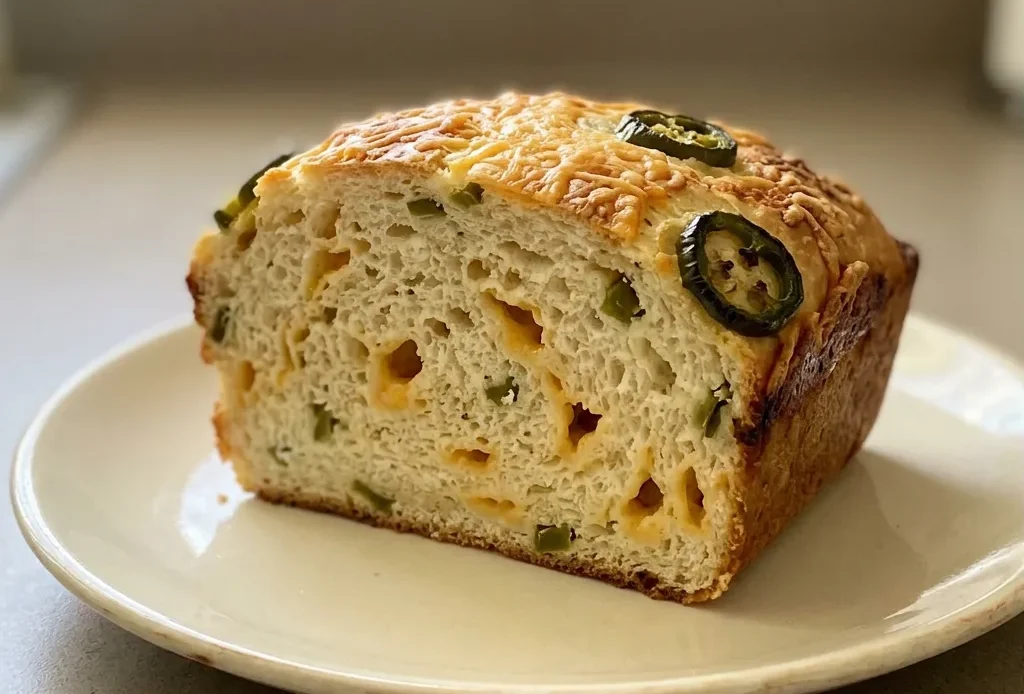
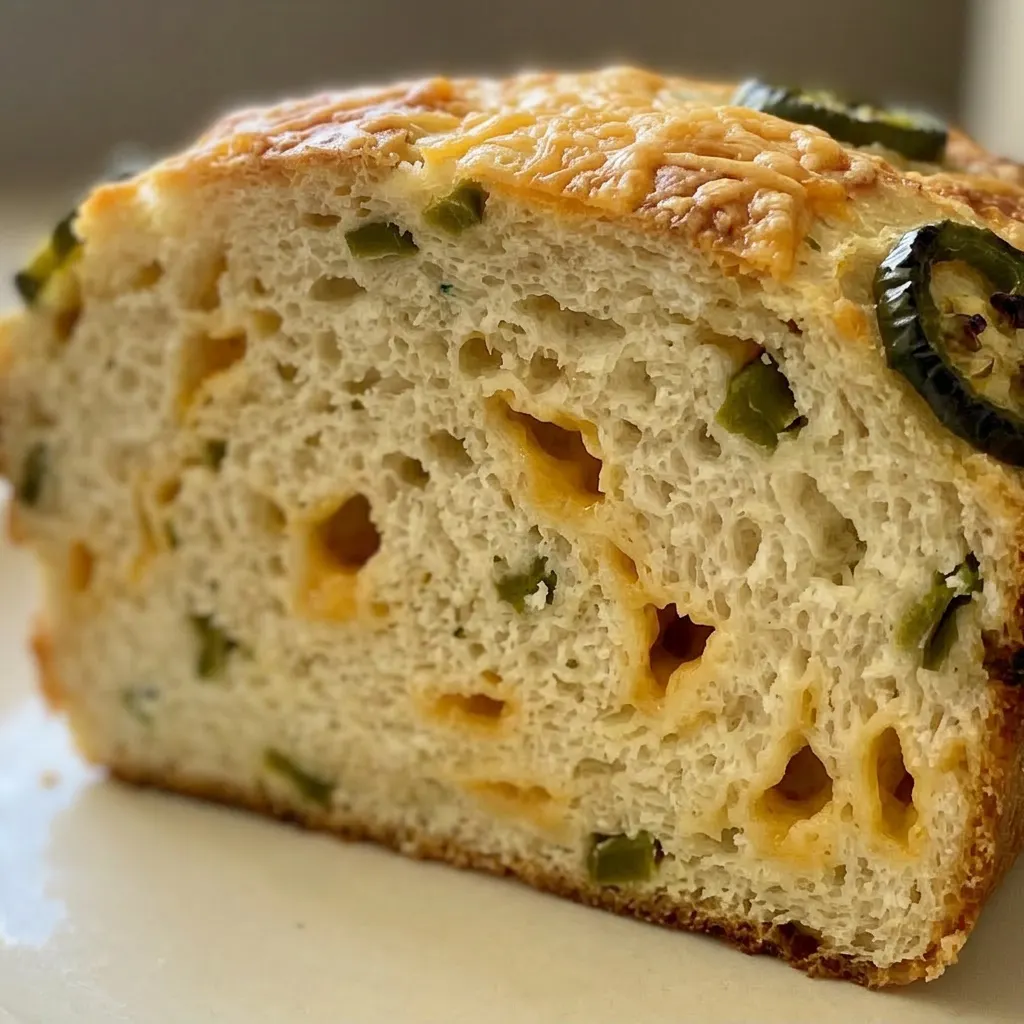
This isn’t a kneaded, shaped-on-the-counter artisan loaf. It’s a wet, shaggy dough that you fold in a bowl with a spatula, then dump into a screaming-hot Dutch oven. The high hydration, more water than typical bread dough, turns to steam inside the pot, puffing the crumb into open pockets while the cheddar and jalapeño melt and blister into the crust.
That’s the trade-off: you lose the neat boule you can score with a clean slash, but you get a loaf with a shattery crust and a tender, cheesy interior that’s exactly what you want from a jalapeno cheddar dutch oven bread. The dough feels loose and looks rough, and that’s fine, it’s designed to behave this way.
Work with a wet dough for open crumb and crisp crust
This dough contains a lot of water relative to flour, high hydration. That extra water turns to steam inside the oven, and steam is what puffs the dough into big air pockets.
The wet dough is too loose to knead on a counter; instead, you fold it in the bowl with a spatula. Folding builds gluten structure without knocking out the gas bubbles that kneading would.
When that wet dough hits the hot Dutch oven, the trapped steam keeps the crust from setting too fast, letting the loaf spring high. The same steam then condenses on the crust, giving it that shattery crispness.
A Dutch oven gives you a steam-injected oven at home
Preheat the covered pot empty. That heavy iron holds intense heat, so the moment dough lands on it, the bottom crust sears. The lid traps the moisture that steams off the dough, creating a humid microclimate.
Professional steam ovens do the same thing: the wet air keeps the dough’s surface flexible during the first minutes of baking, so the loaf can expand fully, that’s your oven spring. After 30 minutes, pulling the lid lets the remaining steam escape and the dry heat browns the crust. The cheese topping browns without burning because the exposed environment dries it out gradually.
Add cheese and jalapeño in two stages for layered effect
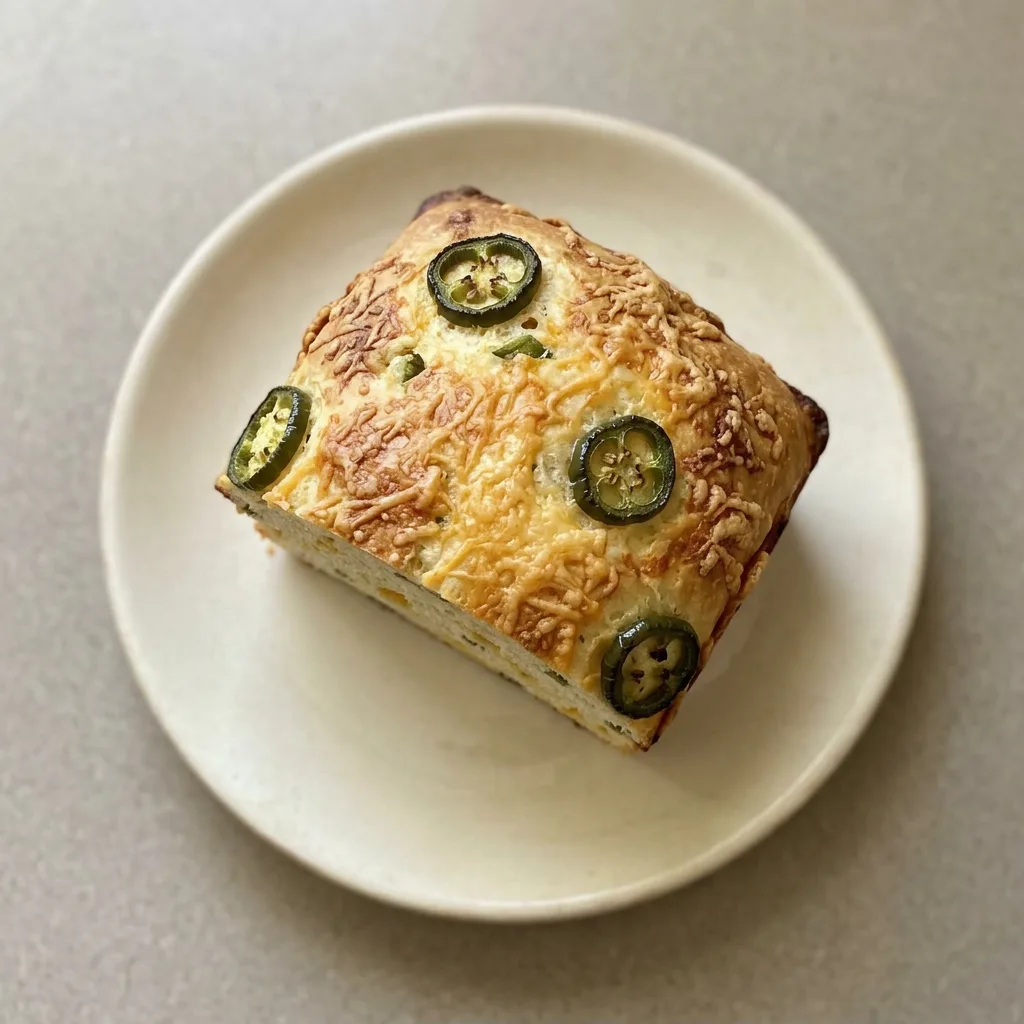
Mixing two cups of cheddar directly into the dough spreads tiny pockets of cheese throughout the crumb. When baked, those pockets melt into the bread, so every bite carries cheesy flavor. The topping, extra cheese and jalapeño slices, goes on right before baking.
That exposed cheese melts and browns during the uncovered phase, forming a crisp, salty crust that contrasts with the soft interior. The jalapeño slices on top dry out slightly and concentrate their heat, while the diced jalapeño inside stays moist and mild. The two stages mean you get cheese in two textures and jalapeño in two intensities.
Prep: 10 min · Cook: 50 min · Total: 3 hr · Servings: 8 · Calories: 370 kcal
Ingredient Notes: Get the right cheese and peppers for this bread
Bread flour: Its higher protein builds the gluten network needed to trap steam from the wet dough.
Cheddar cheese: Buy a block and shred it yourself. Pre-shredded cheese has anti caking agents that prevent smooth melting.
Jalapeno: Use fresh jalapenos. Pickled ones add moisture and vinegar flavor that changes the dough’s texture.
Instant yeast: No need to proof it. Just stir it into the warm water with the flour mixture.
Let the wet dough tell you when it’s ready to bake
Mix until no dry flour remains
Stir the flour, salt, cheese, and jalapeño into the yeast water. The dough looks shaggy and wet, that’s right. Scrape the bowl sides clean with the spatula.
Fold in the bowl, not on the counter
Use the spatula to fold the dough from the edges toward the center, rotating the bowl each time. After 8, 10 folds, the dough tightens slightly. It still sticks to the bowl; don’t add flour.
First rise: look for bubbles and a domed top
Cover and let it sit for 1 hour. When you see small bubbles on the surface and the dough has domed up, it’s ready. If it looks flat, give it 15 minutes more.
Second fold: deflate gently, then let it rise again
Fold the dough another 8 to 10 times. It will resist less than the first time. Cover and let it rise another hour.
The dough should double and look airy, with large bubbles visible.
Preheat the Dutch oven for a full 30 minutes
Place the empty pot with lid in the cold oven, then heat to 450°F. The pot must be screaming hot, 30 minutes ensures it. While it heats, prepare your parchment and toppings.
Shape on a floured surface with a light touch
Turn the dough out onto a floured counter. Flip it so the sticky side faces up. Fold the corners toward the center 6 to 8 times to form a rough ball.
Don’t overwork; it should feel soft and puffy.
Score and top before the dough hits the pot
Slash the top with a sharp knife, cut about 1/2 inch deep. Spray or brush with oil, then sprinkle the reserved cheese and press jalapeño slices gently into the dough. They’ll stick better if you do it now.
Transfer to the hot pot using parchment as a sling
Lift the dough by the parchment corners and lower it into the preheated Dutch oven. The dough will hiss and steam immediately, that’s the sear. Cover and bake for 30 minutes.
Uncover and bake until the crust is deep golden
Remove the lid and bake 20 minutes more. The cheese topping should be bubbling and browning in spots. If the loaf looks pale, give it 5 extra minutes.
The internal temperature should hit 200°F if you check.
Cool completely on a wire rack for best texture
Slide the bread out using the parchment and set it on a rack. The crust will audibly crackle as it cools. Wait at least 1 hour before slicing, cutting warm compresses the crumb and makes it gummy.
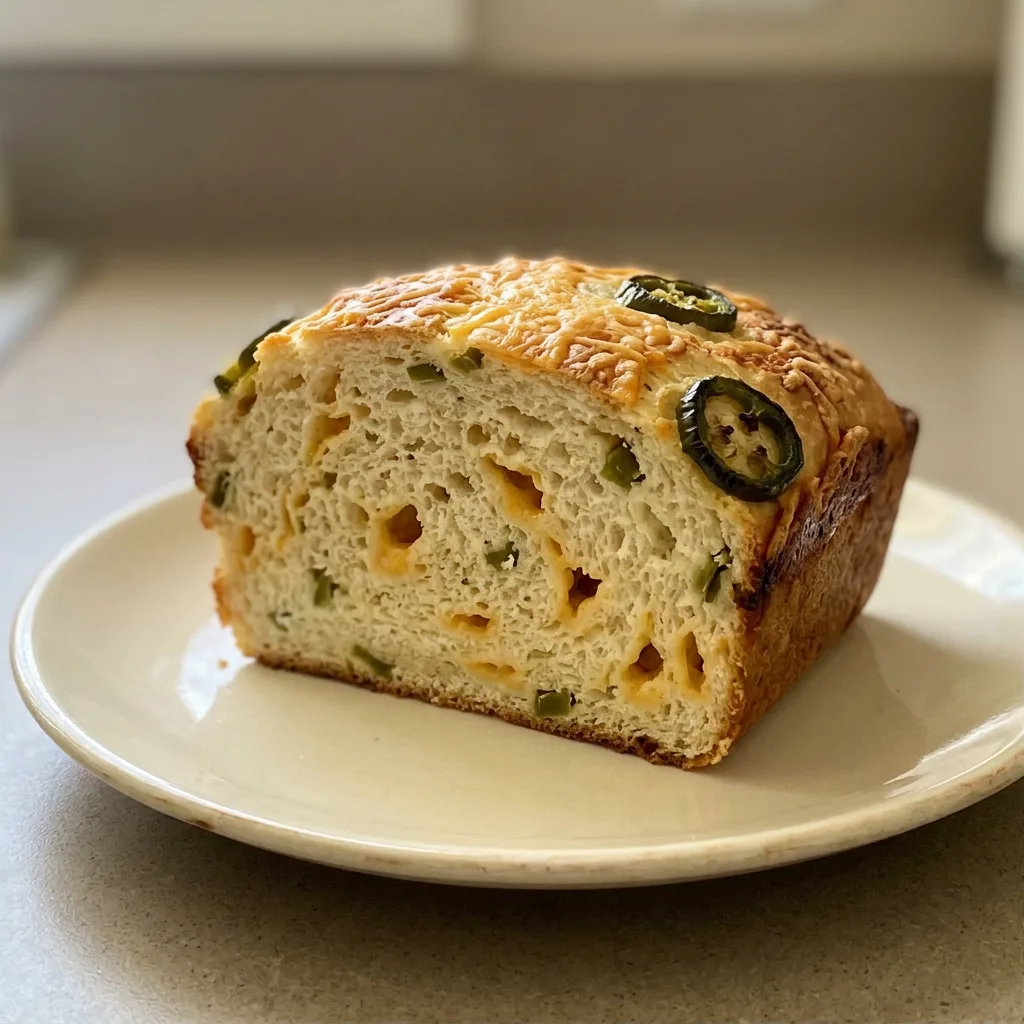
Jalapeno Cheddar Dutch Oven Bread
Ingredients
Method
Mix dry ingredients:
In a medium bowl, stir together bread flour, salt, 2 cups cheddar cheese, and diced jalapeno. Set aside.Combine water and yeast:
Pour warm water (like a baby’s bath water) and yeast into a large mixing bowl. Add the flour mixture and stir with a rubber spatula until no dry flour remains.Fold dough 8-10 times:
Fold the dough toward the center from the bowl’s edges, rotating the bowl each time, 8-10 folds.First rise 1 hour:
Cover with a towel and let it rise in a warm spot for 1 hour.Second fold and rise:
After 1 hour, fold the dough again 8-10 times with the spatula. Cover and let rise another hour.Preheat Dutch oven:
Midway through the second rise, place a Dutch oven with its lid inside the oven and preheat to 450°F (230°C) for a full 30 minutes. Prepare a piece of parchment paper large enough to extend over the edges of the Dutch oven.Turn out dough:
Lightly dust a counter or cutting board with flour and flour your hands. Turn the dough out onto the floured surface, flip it over, and brush off excess flour.Shape into ball:
Fold the dough’s corners toward the center 6-8 times until a rough ball forms. Flip the dough onto the parchment paper.Score and top bread:
Score the dough with a sharp knife (e.g., an X). Spray with cooking spray or brush with oil, then sprinkle with the reserved 1/3-1/2 cup cheese and arrange jalapeno slices on top.Transfer to Dutch oven:
Using oven mitts, take the hot Dutch oven out of the oven and remove the lid. Carefully transfer the dough using the parchment into the Dutch oven. Replace the lid and return to the oven.Bake covered then uncovered:
Bake covered for 30 minutes, then remove the lid and bake for another 20 minutes.Cool bread completely:
Take the Dutch oven out of the oven. Tilt it slightly and use the parchment to slide the bread out. Remove the parchment and let the bread cool on a wire rack for 1-2 hours before slicing. Texture is best when completely cooled.
Notes
Bread flour keeps the moisture, but all-purpose can work with less water
Bread flour: All-purpose flour. Cut the water by 2 to 3 tablespoons (start with 1 3/4 cups plus 1 tablespoon). The dough will feel less slack and the crumb will be slightly tighter, but the loaf still bakes up with a good chew.
Cheddar cheese: Monterey Jack, pepper Jack, or Gouda. Monterey Jack melts creamier and milder; pepper Jack adds heat from the peppers.
Gouda gives a buttery, smoky note. Shred from a block, pre-shredded still clumps and won’t melt into the dough as evenly.
Jalapeno (fresh): Pickled jalapeños. Drain and pat very dry, then chop.
They add a sharp vinegar tang and softer texture. The extra moisture can make the dough stickier, so reduce water by 1 tablespoon if the dough feels too loose.
Storage and Serving
For the best texture, let the bread cool completely on a wire rack, at least 1 hour. Slicing warm compresses the crumb and makes it gummy. Once cooled, store the bread in a paper bag at room temperature for up to 2 days.
Plastic bags trap moisture and soften the crust. After that, the crust loses its snap and the crumb starts to stale. To restore crispness, reheat slices in a 350°F oven for 5 to 10 minutes.
The bread freezes well: wrap the whole loaf or individual slices tightly in plastic wrap, then foil, for up to 3 months. Thaw at room temperature, then reheat as above. The cheese topping may soften during reheating, but the crust will crisp.
Don’t refrigerate the bread; it accelerates staling. Serve the bread within 2 days for the best contrast between crust and crumb.
Tips
- If the dough feels soupy after mixing, wait 10 minutes for the flour to hydrate before adding more flour; the gluten absorbs water slowly and the dough may stiffen on its own.

Frequently Asked Questions
Can I make this dough ahead of time and bake it later?
You can refrigerate the dough after the first rise. After the 1-hour rise, fold it, cover tightly, and refrigerate for up to 24 hours.
When ready to bake, let it sit at room temperature for 30 minutes, then continue with the second rise and baking. The cold dough will be slightly stiffer to shape, but the flavor deepens.
Why is my bread dense and not airy?
Most likely the dough didn’t rise enough. Look for the dough to double and show large bubbles on the surface after each 1-hour rise.
If your kitchen is cool, it may need an extra 15 to 20 minutes. Another cause: overworking the dough during shaping can deflate the gas.
Handle it gently, just enough to form a ball.
Can I bake this bread without a Dutch oven?
Yes, but you need to create steam another way. Place a shallow metal pan on the bottom oven rack and preheat it.
After putting the dough on a baking sheet or in a cast iron skillet, pour 1 cup of hot water into the pan and quickly close the oven door. Bake the same times, but the crust may be less crackly and the oven spring slightly smaller.