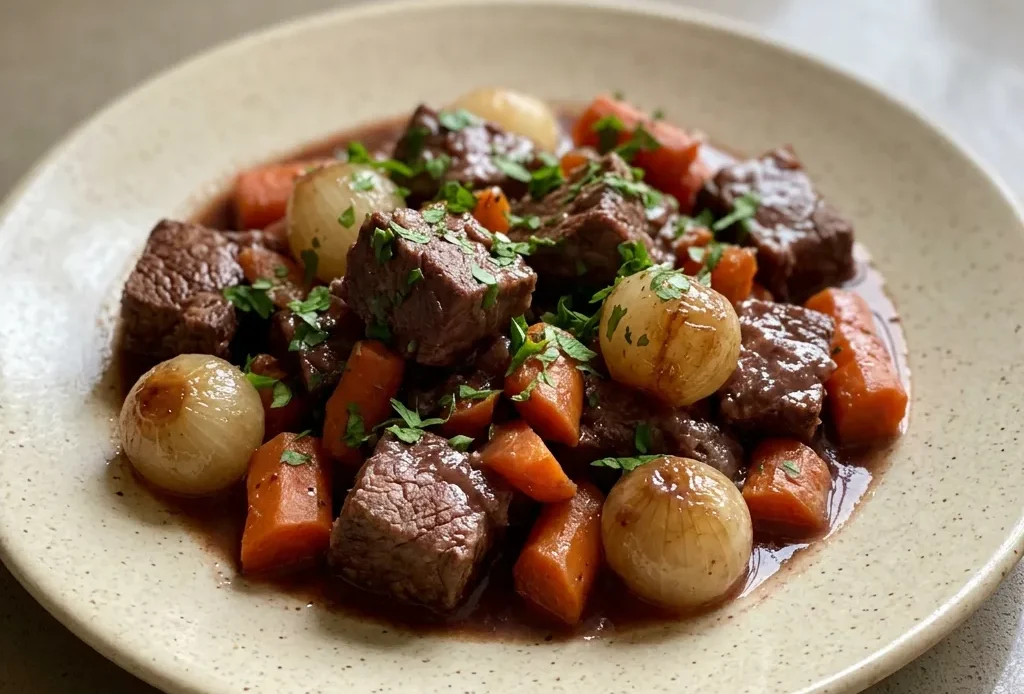
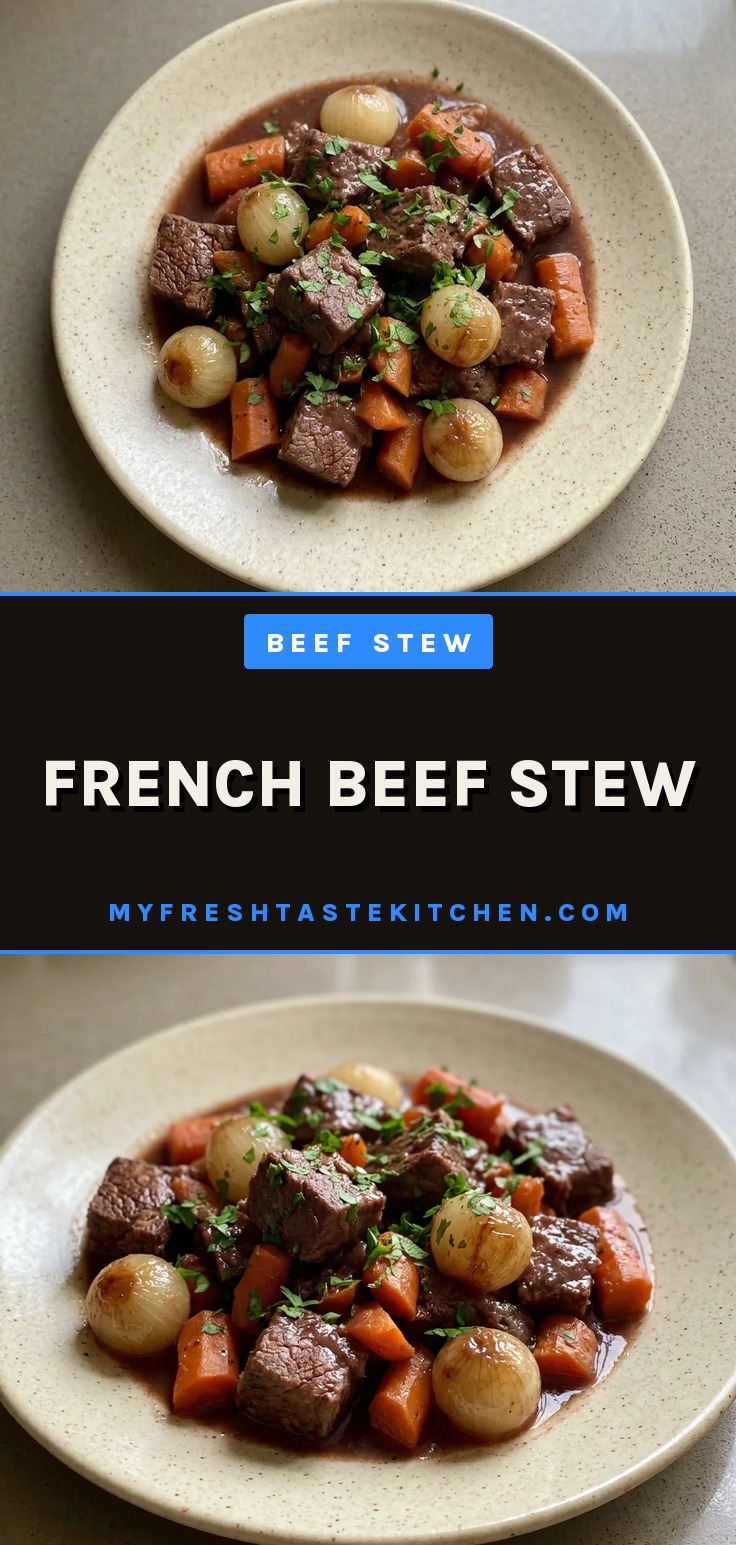
A deep brown sear on beef chuck is the difference between a good stew and a great one. This classic French beef stew relies on that dark crust, the fond it leaves behind builds the wine sauce’s backbone. The margin for error is small: sear until mahogany, not just brown, and take the time to let the wine simmer after deglazing.
That three minutes of alcohol reduction concentrates the fruity, tannic notes that define french beef stew. Patient braising handles the rest, turning tough chuck into fork-tender bites.
The payoff is a sauce that coats without flour, and beef that holds its shape but yields.
Deep Brown Sear
A deep brown crust on beef isn’t just color, it’s concentrated flavor. When you sear each side until it’s dark mahogany, you’re building the savory backbone of the dutch oven beef stew. That browned surface will later dissolve into the braising liquid, adding richness you can’t get from browning lightly.
Crowding the pan steams the meat instead, so you sear in batches, transferring each to a plate. The pot stays hot, and each piece gets direct contact. You’ll see the fond, those browned bits, sticking to the bottom.
That’s flavor waiting to be released.
Wine as a Builder
Red wine does more than add liquid, it builds the sauce’s foundation. When you pour it into the hot pot after searing, the wine bubbles up and loosens the browned bits from the bottom. Those bits are pure flavor, and the red wine beef stew relies on them.
Let the wine simmer for three minutes; you’ll smell the alcohol cook off, leaving behind fruity, tannic notes that will deepen as the stew cooks. The sauce will taste flat without that step.
You’re not just deglazing, you’re creating a base that carries through the whole dish.
Low and Slow Magic
Returning the seared beef to the pot with broth starts the transformation. Cover it and let it simmer gently, not boil. You’ll know it’s working when the liquid barely shimmers.
After two hours, poke a piece with a fork, it should slide in with little resistance. That’s collagen breaking down into gelatin, making the meat tender and the sauce silky.
This hearty beef stew doesn’t rush. The low heat gives connective tissue time to soften without toughening the meat.
Patience here is everything; the result is fork-tender beef that almost falls apart.
Fresh Finish
Once the pot comes off the heat, stir in a handful of chopped fresh parsley. The heat wilts it just enough to release its bright, grassy flavor, cutting through the richness of the stew. That contrast is what makes a simple beef stew taste lively rather than heavy.
Taste and adjust salt and pepper, the long simmer may have concentrated the broth, so a pinch of salt can wake it up. A final grind of pepper adds a subtle kick. The parsley isn’t garnish; it’s a finishing step that balances the deep, winey flavors and brings the whole dish into focus.
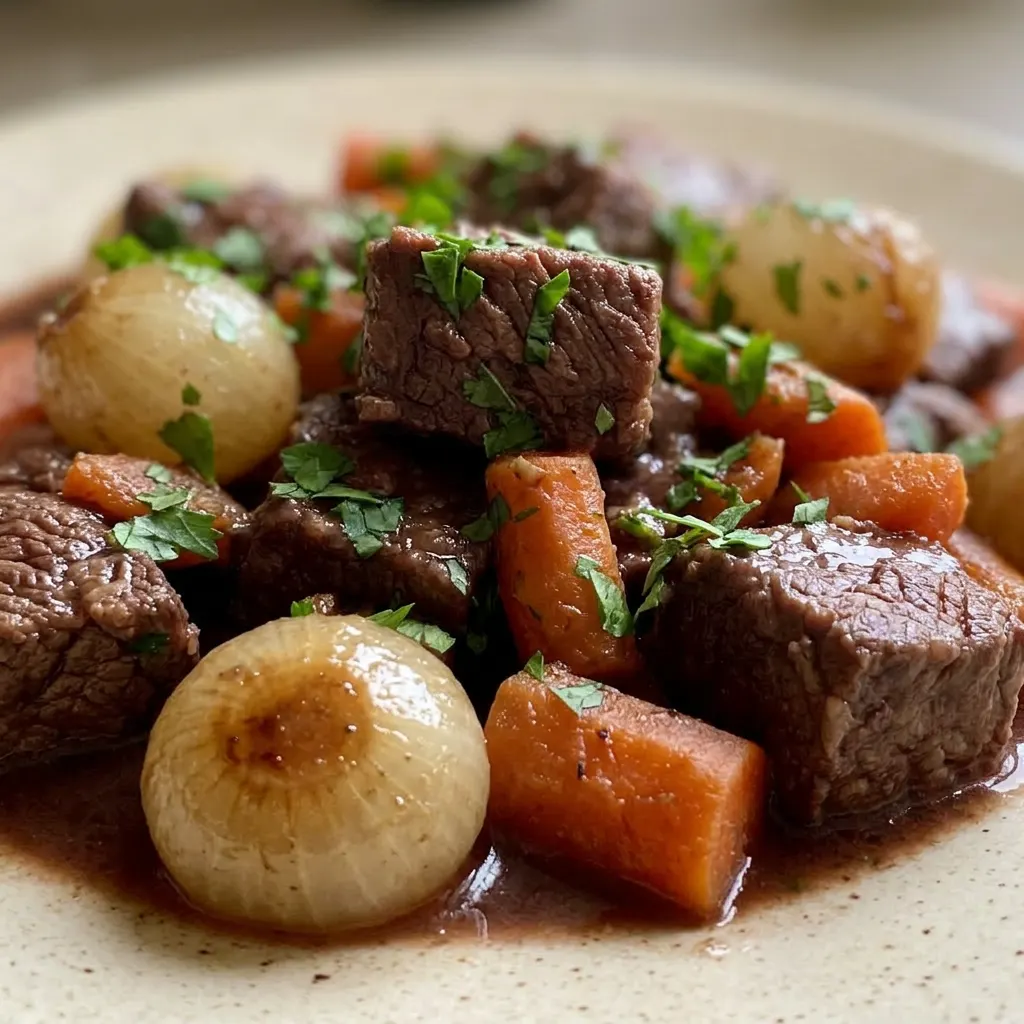
Prep: 30 min · Cook: 2 hr 30 min · Total: 3 hr · Servings: 6 · Calories: 490 kcal
Choosing Your Ingredients
Beef chuck roast: Look for well-marbled chuck; the fat renders during braising, keeping the meat moist and tender.
Red wine: Use a dry red like Burgundy or Pinot Noir; avoid anything labeled “cooking wine.”
Pearl onions: Buy frozen peeled ones to save time; fresh need blanching to slip off skins.
Tomato paste: Buy it in a tube, not a can; you only need a tablespoon, and the tube keeps.
Fresh parsley: Flat-leaf Italian parsley has more flavor than curly; rinse and dry well before chopping.
Sear Deep, Don’t Rush
Sear the beef
Pat the beef cubes dry, then season with salt and pepper. Heat oil in a large Dutch oven over medium-high until it shimmers. Add beef in a single layer, crowding steams it, so work in batches.
Sear each side until dark mahogany, about 2 minutes per side. You’ll see a deep brown crust and hear a steady sizzle; if it fades, the pot’s too cool. Transfer to a plate.
Sauté the vegetables
Reduce heat to medium. Add pearl onions and carrots to the same pot. Stir occasionally for 5 minutes, until they start to soften and edges turn translucent.
Then add garlic and tomato paste, cook 1 minute until fragrant, you’ll smell the garlic bloom and the paste darken a shade.
Deglaze with wine
Pour in the red wine, scraping the bottom with a wooden spoon to release the fond, those browned bits dissolve into the liquid. Let it simmer for 3 minutes. You’ll see the bubbling become energetic and smell the alcohol cook off, leaving fruity notes behind.
Braise low and slow
Return beef to the pot along with beef broth. Raise heat to bring to a boil, then reduce to a gentle simmer, the surface should barely shimmer, not roll. 5 hours.
After 2 hours, poke a piece with a fork; it should slide in with little resistance. If not, continue checking every 15 minutes.
Finish with parsley
Remove pot from heat. Stir in chopped fresh parsley until just wilted, the heat releases its bright, grassy flavor. Taste and adjust salt and pepper.
A final grind of black pepper adds a subtle kick. The stew is ready; serve with crusty bread.
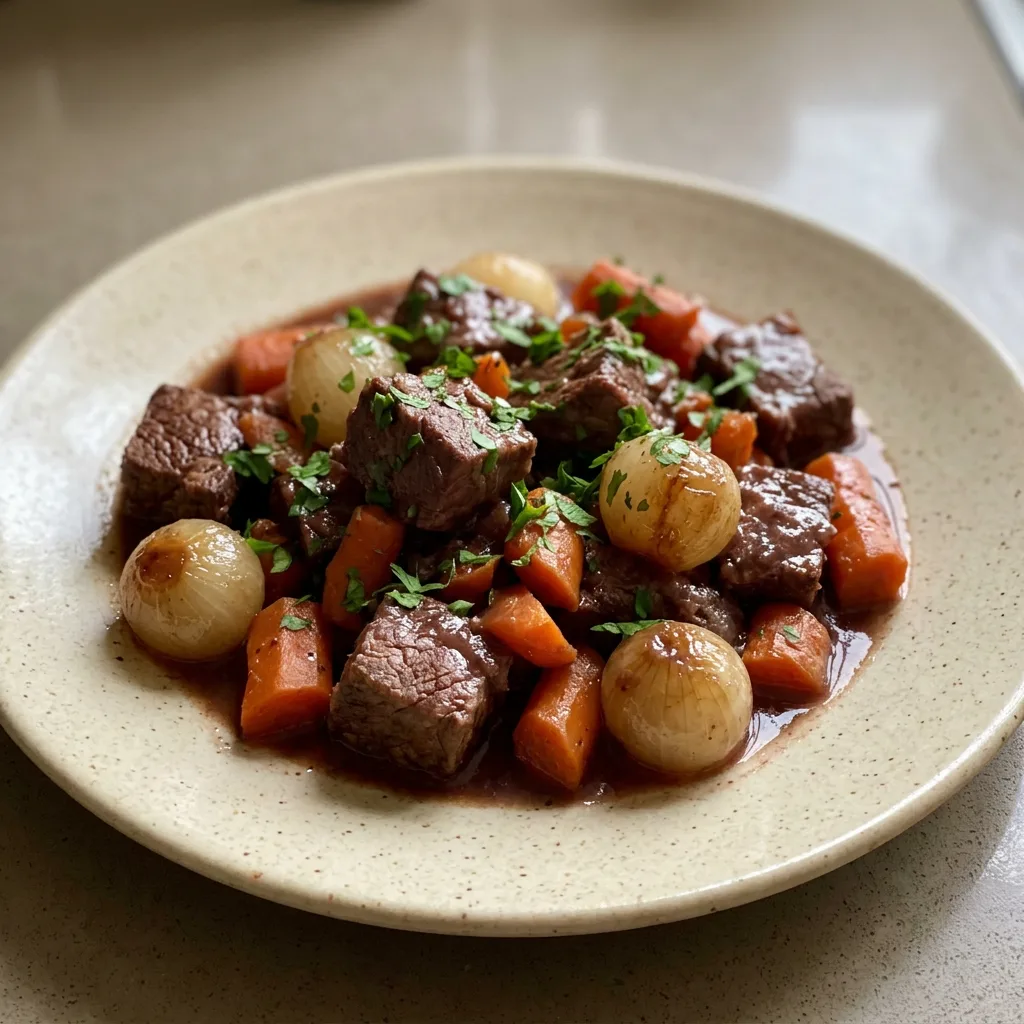
French Beef Stew
Ingredients
Method
Sear Beef Cubes:
Warm oil in a large Dutch oven set over medium-high heat. Coat beef cubes with salt and pepper, then sear each side until deep brown. Transfer beef to a plate and reserve.Sauté Onions and Carrots:
Into the same pot, toss pearl onions and carrots. Sauté for 5 minutes until they begin to soften. Stir in garlic and tomato paste and cook an additional minute until aromatic.Deglaze with Wine:
Add red wine to deglaze the pan, using a wooden spoon to release any browned bits from the bottom. Allow the wine to simmer for 3 minutes to reduce alcohol.Simmer Beef Until Tender:
Put the beef back into the pot along with beef broth. Raise heat to bring to a boil, then lower to a gentle simmer. Cover and cook for 2 to 2.5 hours, until the meat is fork-tender.Add Parsley and Serve:
Take the pot off the heat and fold in fresh parsley. Adjust salt and pepper to taste. Ladle into bowls and accompany with crusty bread.
Swapping Without Breaking the Braise
Beef chuck roast: Brisket or boneless short ribs. Both have similar marbling and collagen, so they’ll turn fork-tender in the same time. Trim excess fat from brisket; short ribs may leave a richer sauce.
Red wine: Dry white wine plus extra beef broth. The stew will be paler and milder, less complex.
Use the same volume of white wine, then add 1/2 cup more broth. Expect a thinner sauce that’s still savory.
Pearl onions: Cipollini or shallots (halved if large). Cipollini keep a similar sweetness and shape; shallots break down more, thickening the sauce slightly. Use the same weight.
Carrots: Parsnips. Parsnips are starchier and slightly sweeter; they soften at the same rate.
Peel and cut into similar chunks. The sauce will be a touch silkier.
Tips
- After searing, deglaze with the wine before adding the broth, the alcohol helps dissolve the fond more effectively than water-based liquid, creating a deeper, more cohesive sauce base.
Storage and Serving
This stew tastes even better the next day. Store leftovers in an airtight container in the fridge for up to 4 days.
The flavors deepen overnight as the sauce thickens, but reheat gently over low heat, stirring occasionally, to keep the meat tender. High heat can toughen the beef. For longer storage, freeze the stew in a sealed container for up to 3 months.
Thaw overnight in the fridge before reheating. The pearl onions soften further on reheating, but the carrots hold their texture well.
Serve with crusty bread to soak up the sauce. For the best texture, eat within 2 hours of finishing.
The fresh parsley should be added just before serving; leftovers will lose its bright flavor, so stir in a pinch of dried parsley or fresh if reheating a portion.
Frequently Asked Questions
Can I make this stew a day ahead and reheat it?
Yes, make it a day ahead. The flavors deepen overnight as the sauce thickens. Reheat gently over low heat, stirring occasionally, to keep the meat tender, high heat can toughen it.
The pearl onions soften further, but carrots hold their texture well.
Why is my beef still tough after braising?
Most likely it didn’t cook long enough. After 2 hours, poke a piece with a fork; it should slide in with little resistance.
If not, continue simmering, checking every 15 minutes. Another possibility: the pot simmered too vigorously, which can toughen meat, keep the surface barely shimmering.
What’s the difference between this French beef stew and classic beef bourguignon?
This recipe is modeled after beef bourguignon but uses beef chuck instead of the traditional cut, and skips the bacon lardons and mushrooms. The technique, searing, deglazing with red wine, low braise, is the same. It’s a streamlined version that still delivers deep, winey flavor.
Should I serve this stew with anything besides crusty bread?
Crusty bread is ideal for soaking up the sauce, but egg noodles, mashed potatoes, or polenta also work well. Each pairs with the rich, winey sauce and fork-tender beef. Keep sides simple so the stew stays the star.
