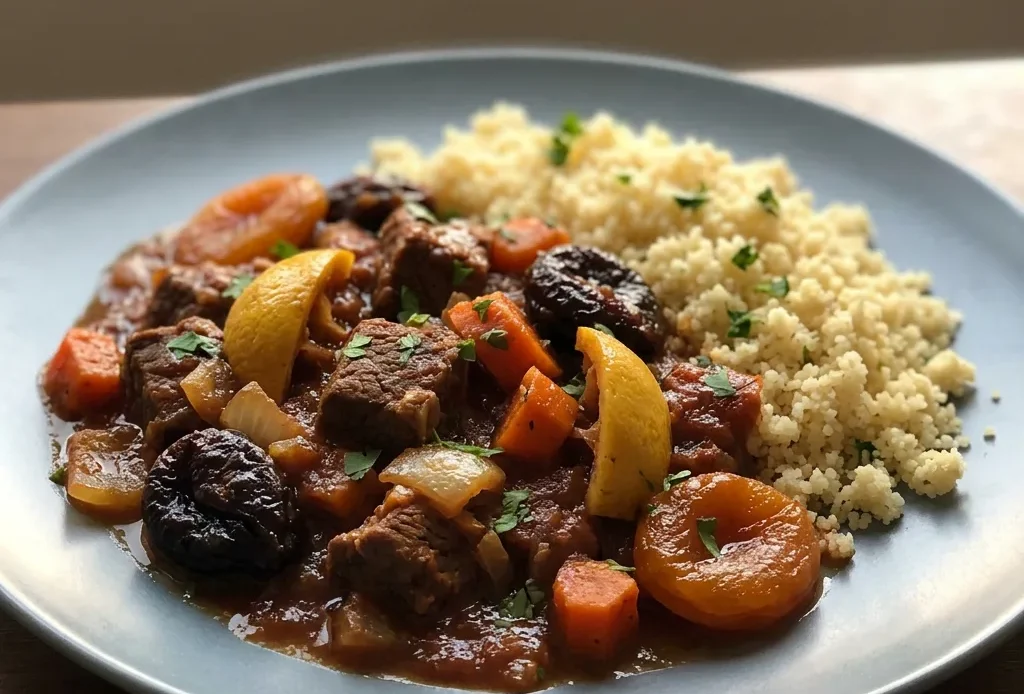
This isn’t a quick weeknight stew. It’s a slow-braised Moroccan beef tagine that rewards patience with deep, layered flavor. The key is balance, how the warm spices, sweet dried fruit, and sharp preserved lemon weave together without any one dominating.
The margin for error lies in the simmer: get it too fast and the beef tightens up; get it right and it falls apart. That gentle, lazy bubble is what changes tough chuck into something worth the hours.
Why does searing in batches matter for this beef stew?
Crowding the pan drops the surface temperature instantly. When that happens, the beef releases liquid and steams rather than browns. You lose the crust that carries deep roasted flavor.
Searing in batches keeps the heat high enough to develop that crust and build fond, the browned bits stuck to the pot bottom. Those bits are what give the sauce its savory backbone once you deglaze with tomatoes and stock.
If you skip the browning, the stew tastes flat, no matter what spices you add later.
Toast the spices for a minute, here’s why
Ground spices straight from the jar smell dusty. Hit them with hot oil for about 60 seconds, and they bloom. The heat releases volatile oils in cumin, coriander, paprika, cinnamon, and cayenne, making each one distinct and aromatic.
You’ll smell it instantly, that warm, heady fragrance that says Moroccan food traditional to its core. Skip this step, and the spices taste muted and raw, like they were stirred in at the end. The toasting is brief but it’s what changes a spice blend into something that defines the dish.
What does a long, gentle simmer actually do?
Beef chuck is full of connective tissue. Cook it hard, and it tightens up and turns chewy. Keep it at a low, lazy bubble, just barely moving, for a couple of hours, and that collagen slowly breaks down into gelatin.
The meat becomes fork-tender, almost falling apart. Now I religiously keep the lid on at a barely perceptible bubble, no more than a lazy simmer, and the beef falls apart every time.
The dried fruits and preserved lemon also need time to release their sweetness and salt-sour punch into the broth. Rush this, and the flavors sit separate instead of woven together. That gentle simmer is what makes this beef stew recipe taste like it cooked all day.
Dried fruits and preserved lemon: the sweet-sour key
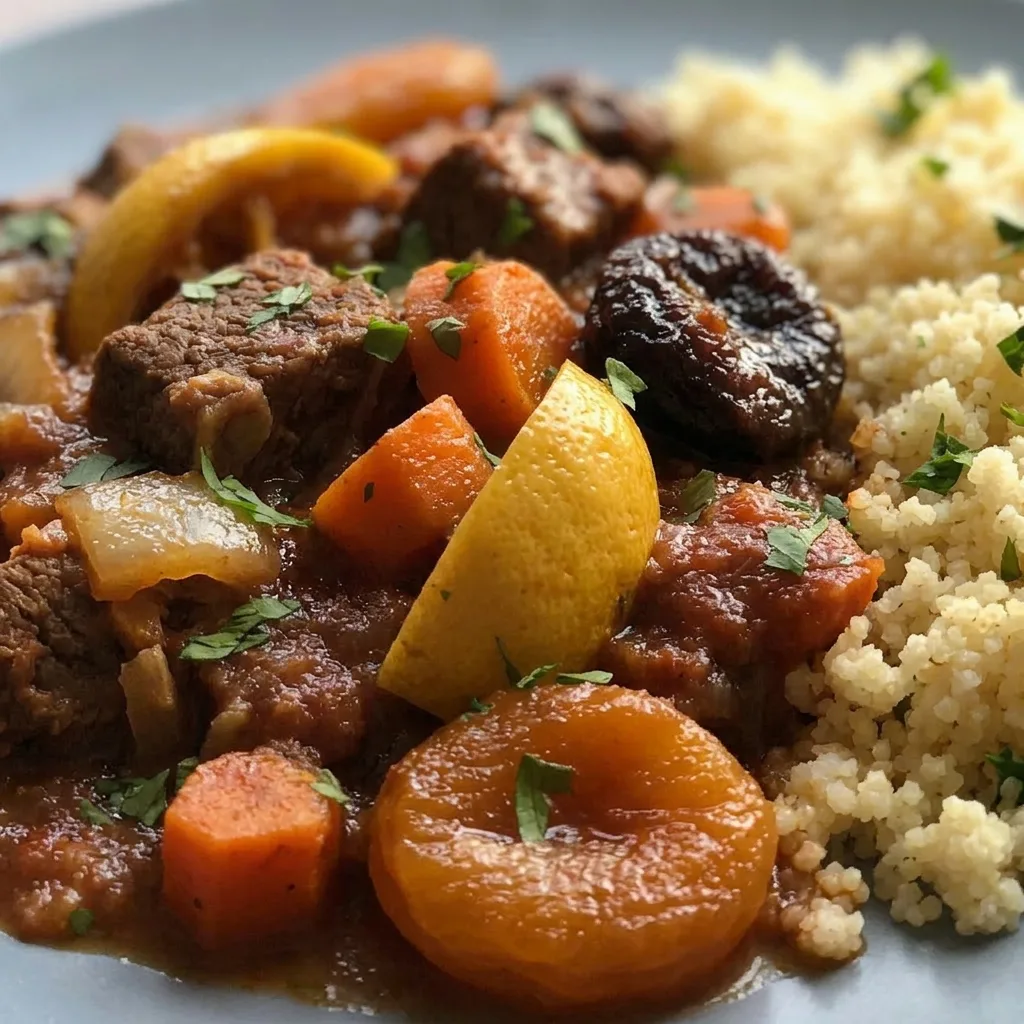
Prunes and apricots aren’t just for sweetness. They soften into tender, almost jammy pockets that contrast with the beef’s savory richness. The honey reinforces that sweetness without making it cloying.
Preserved lemon does the opposite: it adds a salty, sour brightness that cuts through the meat’s fat and wakes up every other flavor. That push-pull between sweet and sour is what gives a tagine its complexity.
Without the preserved lemon, the dish leans too sweet; without the fruit, it’s one-dimensional. Together they create a balance that’s unmistakably Moroccan.
Prep: 20 min · Cook: 2 hr 45 min · Total: 3 hr 5 min · Servings: 6
Ingredient notes for this tagine
Beef chuck or stewing beef: Buy whole pieces and cube them yourself for consistent size and better browning.
Preserved lemon: Use only the peel; scoop out and discard the pulp. Rinse if very salty.
Dried apricots: Choose unsulfured apricots; they have a deeper, more natural flavor.
Prunes (pitted): Pitted prunes save time. If you buy whole, pit them yourself to avoid bitter bites.
Fresh ginger: Grate on a microplane for a fine paste that dissolves into the sauce.
Ground spices (cumin, coriander, paprika, cinnamon, cayenne): Replace spices if they are older than 6 months for the brightest flavor.
Brown the beef in batches, don’t rush it
Sear the beef
Pat the beef dry, moisture is the enemy of browning. Season well, then add to hot oil in a single layer. Listen for a steady sizzle; if it fades, you’ve overcrowded.
Turn pieces when they release easily, about 3 to 4 minutes per side.
Cook the aromatics
After removing the beef, lower the heat. The onion should soften without browning further, 8 minutes until translucent and sweet. Add garlic and ginger; cook just until fragrant, about 1 minute.
If they smell scorched, the pan’s too hot.
Toast the spices
Stir the spice mixture into the onion base. Within 60 seconds, the aroma shifts from dusty to warm and pungent. If you don’t smell that bloom, you didn’t give them enough heat or time.
Stop before they darken too much.
Deglaze and simmer
Pour in tomatoes and stock, scraping up the fond, those browned bits dissolve into the sauce. Return the beef and any juices.
Bring to a gentle simmer, then cover and lower heat. The bubbles should be lazy, not vigorous.
Add the fruits and lemon
After 1½ hours, stir in carrots, prunes, apricots, preserved lemon, and honey. The liquid should barely move. Cover and cook until the beef yields easily to a fork, 45 to 60 minutes more.
If the meat resists, give it more time.
Finish the sauce
Uncover and check consistency. If it’s thin, simmer uncovered for 10 to 15 minutes until it coats a spoon.
Taste and adjust salt and pepper, the preserved lemon adds salt, so go easy. Stir in most of the coriander.

Moroccan Beef Tagine
Ingredients
Method
Sear Beef Cubes:
Dry beef cubes with paper towels, then season generously with salt and pepper. Heat olive oil in a large pot over medium-high heat. Working in batches, sear the beef, turning occasionally, until browned on all sides, 3–4 minutes per batch. Set aside on a plate.Cook Onion and Aromatics:
Lower heat to medium. Add chopped onion to the same pot; cook, stirring now and then, until softened and lightly golden, 6–8 minutes. Add minced garlic and grated ginger; cook for 1 minute until aromatic.Toast Spices:
Add cumin, coriander, paprika, cinnamon, and cayenne (if using). Stir continuously for about 60 seconds to toast the spices.Add Tomatoes and Stock:
Pour in chopped tomatoes and beef stock, scraping up any browned bits from the pot bottom. Return the seared beef and any accumulated juices. Bring to a gentle simmer.Simmer Beef:
Cover, reduce heat to low, and simmer for 1 hour 30 minutes, maintaining a very gentle bubble.Add Fruits and Carrots:
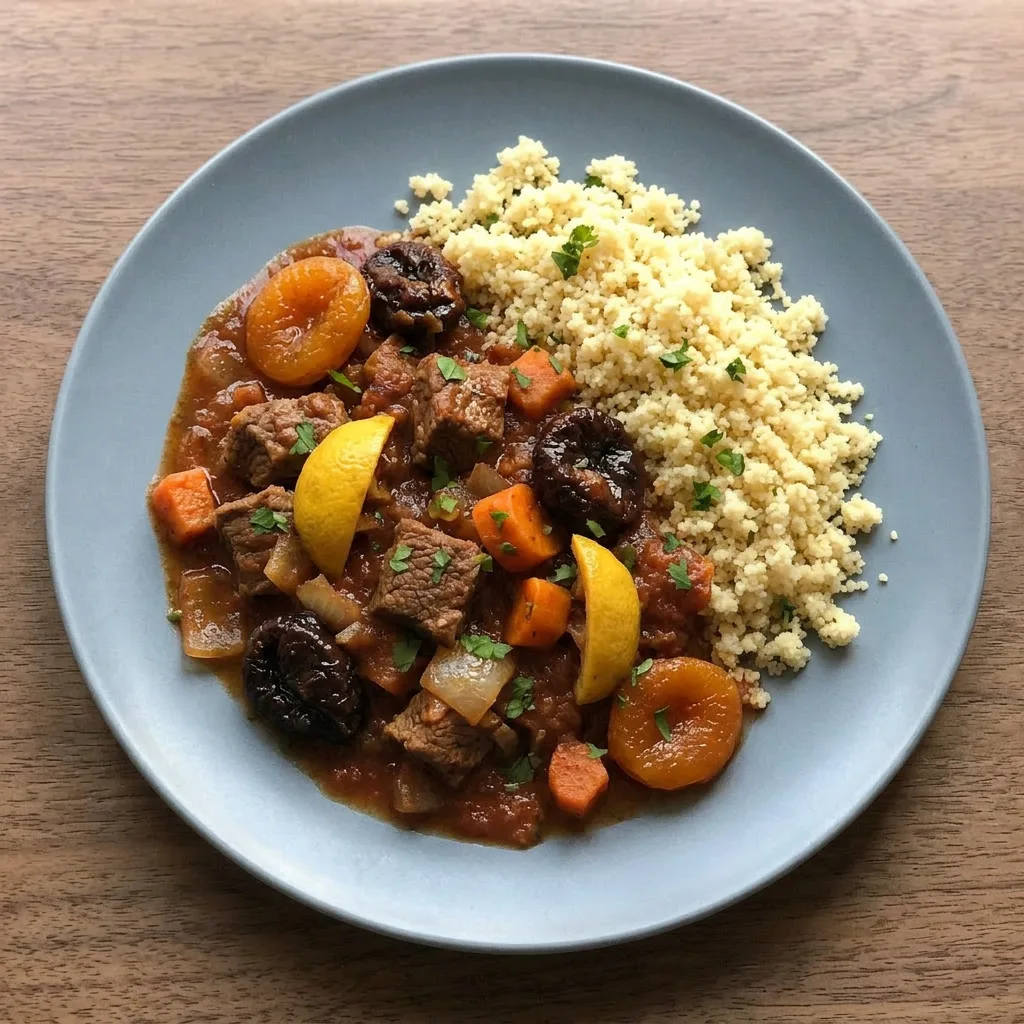
Stir in carrots, prunes, dried apricots, preserved lemon, and honey. Cover and cook for another 45–60 minutes, until beef is fork-tender and carrots are just tender.Thicken Sauce:
Uncover; if the sauce is too thin, simmer for 10–15 minutes to reduce and thicken. Adjust seasoning with salt and pepper.Finish with Coriander:
Stir in most of the chopped fresh coriander, reserving some for garnish. Serve hot, topped with remaining coriander.
Swapping the signature ingredients in this tagine
Beef chuck: Lamb shoulder, cut into 1-inch cubes. Lamb has a stronger, gamier flavor that stands up to the sweet spices and dried fruit.
It cooks the same way, low and slow until fork-tender. Use the same weight and follow the same searing and simmering times.
Look for well-marbled shoulder; lean leg meat will dry out.
Preserved lemon: Zest of 1 lemon plus 1/2 teaspoon salt. No preserved lemon?
You lose the fermented, salty-sour depth. The zest gives bright lemon aroma and the salt adds some of the brine, but the result is cleaner and less complex.
Add the zest and salt with the dried fruit; taste after cooking and add more salt if needed. Don’t use lemon juice, it adds acidity but not the right kind of funk.
Prunes: Dried figs, stemmed and halved. Figs bring a similar sweetness with a slightly seedy texture.
They soften at the same rate as prunes. Swap 1:1 by weight.
The final dish will be a touch more floral and less darkly sweet. If you’re hunting beef stew meat recipes online, this swap works well because figs are common in North African cooking too.
Tips
- Cut the beef across the grain into 1-inch cubes. This shortens the muscle fibers, so when the collagen breaks down during the long simmer, the meat shreds easily instead of staying stringy.
- Let the stew rest uncovered for 10 minutes after cooking. This allows the sauce to settle and thicken slightly from residual heat, and the beef fibers relax, making each bite more tender.
Storage and Serving
Cool the tagine completely before refrigerating. Transfer to an airtight container; it keeps for up to 4 days. The flavors deepen overnight as the spices settle and the dried fruits continue to soften.
Reheat gently on the stovetop over low heat, adding a splash of water or stock if the sauce has thickened too much. For longer storage, freeze the tagine without the fresh coriander garnish for up to 3 months.
Thaw overnight in the fridge before reheating. The preserved lemon and dried fruits hold their texture well after freezing; the beef remains tender.
Serve hot, topped with fresh coriander added just before eating. The dish is best within the first 2 days when the beef is most tender and the sauce is at its fullest. After that, the carrots soften further, but the stew is still excellent.
Do not leave at room temperature longer than 2 hours.
Frequently Asked Questions
Can I make this tagine in a slow cooker or Instant Pot?
Yes, but the textures shift. In a slow cooker, sear the beef and toast spices on the stove first, then transfer everything to the slow cooker.
Cook on low for 6 to 8 hours, but the sauce won’t reduce the same way, you’ll need to thicken it on the stove after. For an Instant Pot, use the sauté function for searing and toasting, then pressure cook on high for 35 to 40 minutes with a natural release.
The beef will be tender, but the dried fruits may break down more and the sauce stays thinner. Either way, you lose some of the concentrated flavor from a long uncovered simmer.
Why is my beef tough after cooking?
Most likely the simmer was too vigorous or too short. Beef chuck needs a lazy bubble, barely moving, for the full 2 hours 15 minutes of simmering. If the liquid was boiling hard, the meat tightened up.
Check that you covered the pot and kept the heat low; if you lifted the lid often, heat escaped and the cooking slowed. Also, the beef must be fork-tender before you pull it off the heat, if it resists, give it another 15 to 20 minutes. Searing too long can also dry out the surface, but that’s less common.
Can I prepare this dish a day ahead?
Absolutely, the flavors deepen overnight. Cool the tagine completely, then refrigerate in an airtight container for up to 4 days.
Reheat gently on the stovetop over low heat, adding a splash of stock if the sauce has thickened. The beef stays tender, and the dried fruits and spices settle into a more cohesive taste. Add the fresh coriander garnish just before serving, not before storing.
What is the difference between this tagine and a classic Moroccan version?
A classic Moroccan tagine is cooked in a conical clay pot with very little liquid, relying on steam and the pot’s shape to condense flavors. This recipe uses a regular pot with more stock, so the sauce is looser and requires a final reduction. The spice mix is similar, but classic versions often include saffron and use lamb or chicken.
The preserved lemon and dried fruit pairing is authentic, though the quantities here are adjusted for Western palates. The long, gentle simmer achieves the same fork-tender meat and sweet-sour balance, just in a stovetop pot instead of a tagine.
