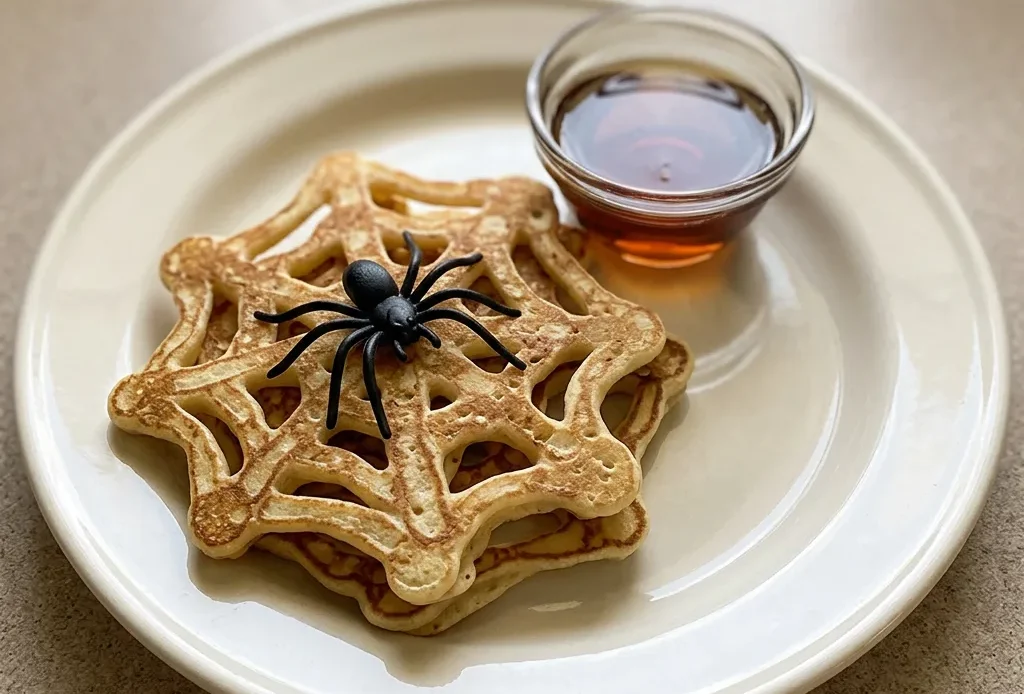
The single most common mistake people make with these pancakes is drawing the spiderweb lines too thick, which turns a lacy dipper into a dense, bready disc. You need a steady hand, a squeezable bottle, and a batter that’s just barely mixed, lumps are fine, overmixing is not.
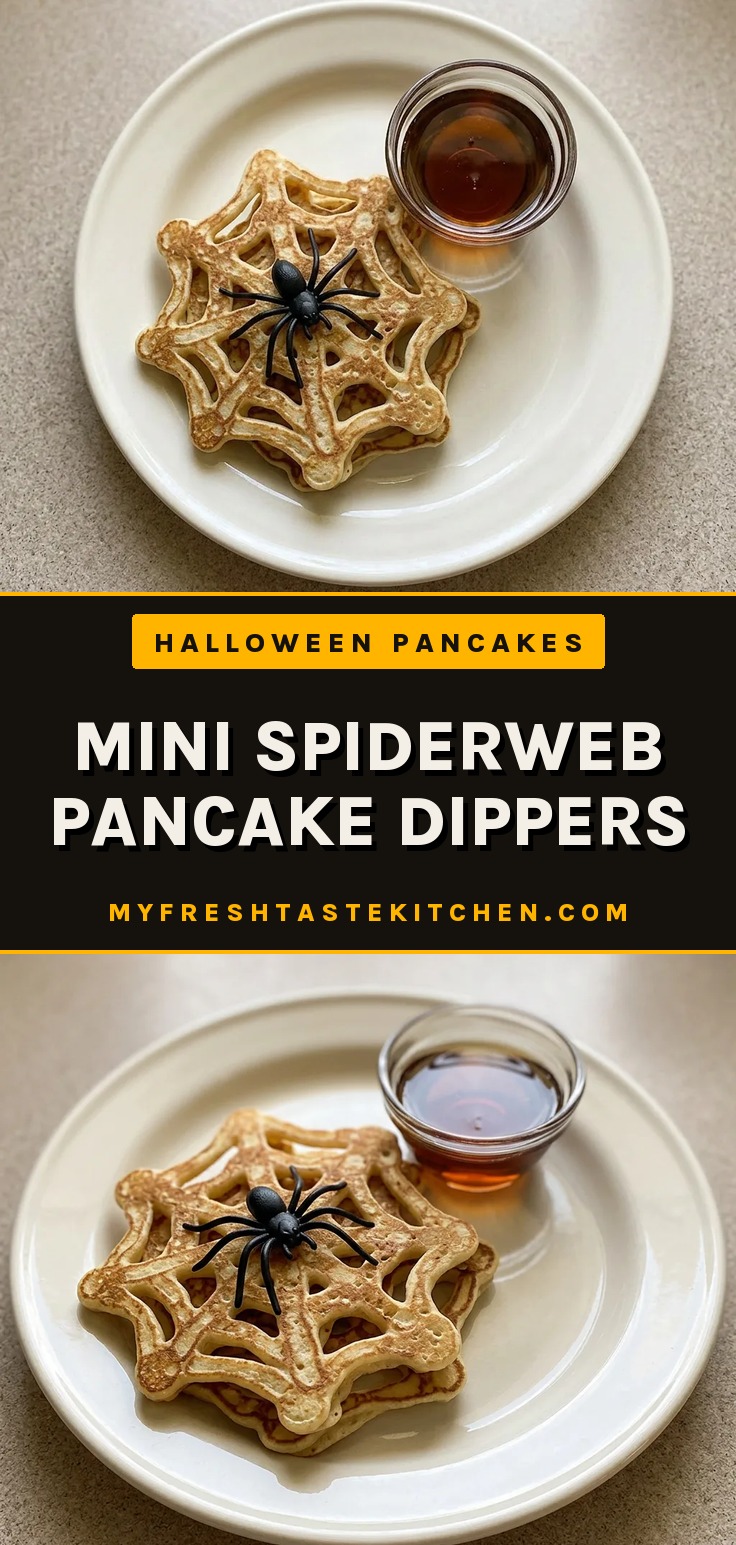
The result is a delicate web that stays crisp at the edges and tender inside, for dunking in warm syrup. These mini spiderweb pancake dippers are as much about the process as the payoff: tracing the pattern forces you to pay attention to batter consistency and heat control, making breakfast a small art project that rewards precision.
Why a squeezable bottle for spiderweb pancakes?
A squeezable condiment bottle gives you a controlled, thin stream of batter, exactly what drawing webs requires. Try a spoon or ladle and you’ll flood the griddle, turning delicate lines into blobs.
The bottle lets you trace four crossing spokes, then join them with curved connecting strands, all without the batter spreading too fast. A piping bag works too, but the bottle’s wider nozzle and squeeze action are easier for home cooks to manage. You need that precise shaping to keep the web open and lacy, not a thick puddle.
The key is a steady hand and a batter that flows freely, which this tool delivers. For an easy Halloween breakfast, it’s the simplest way to get that spooky look without fuss.
Why just-blended batter keeps spiderweb lines delicate?
Overmixing develops gluten, and those long protein strands make pancakes tough. For spiderwebs, tough batter means thick, clunky lines that lose their airy, crisp edges.
You want the web to stay tender and light, so stop whisking as soon as the flour disappears. Lumps are fine, they’ll cook out on the griddle.
A smooth batter that hasn’t been worked too hard will flow into thin threads and set quickly, holding the web shape without puffing into fat ropes. The goal is a batter that’s just combined, not elastic. That’s what gives you fragile-looking lines that still hold together for dipping.
Why a two-stage cook locks in the web shape?
Cooking the first side until bubbles appear and the edges set firms the spiderweb pattern, so it won’t smear when you flip. That initial heat seals the thin lines in place.
The second side gets only a quick 30-second cook, just enough to brown lightly without scorching the delicate strands. Thicker lines may need a few extra seconds; watch for the color to turn golden. This short flip keeps the web tender, not brittle.
The result is a pancake that’s cooked through but still flexible enough to dip, with the web pattern crisp and defined. Adjust time by looking at the lines, not the clock.
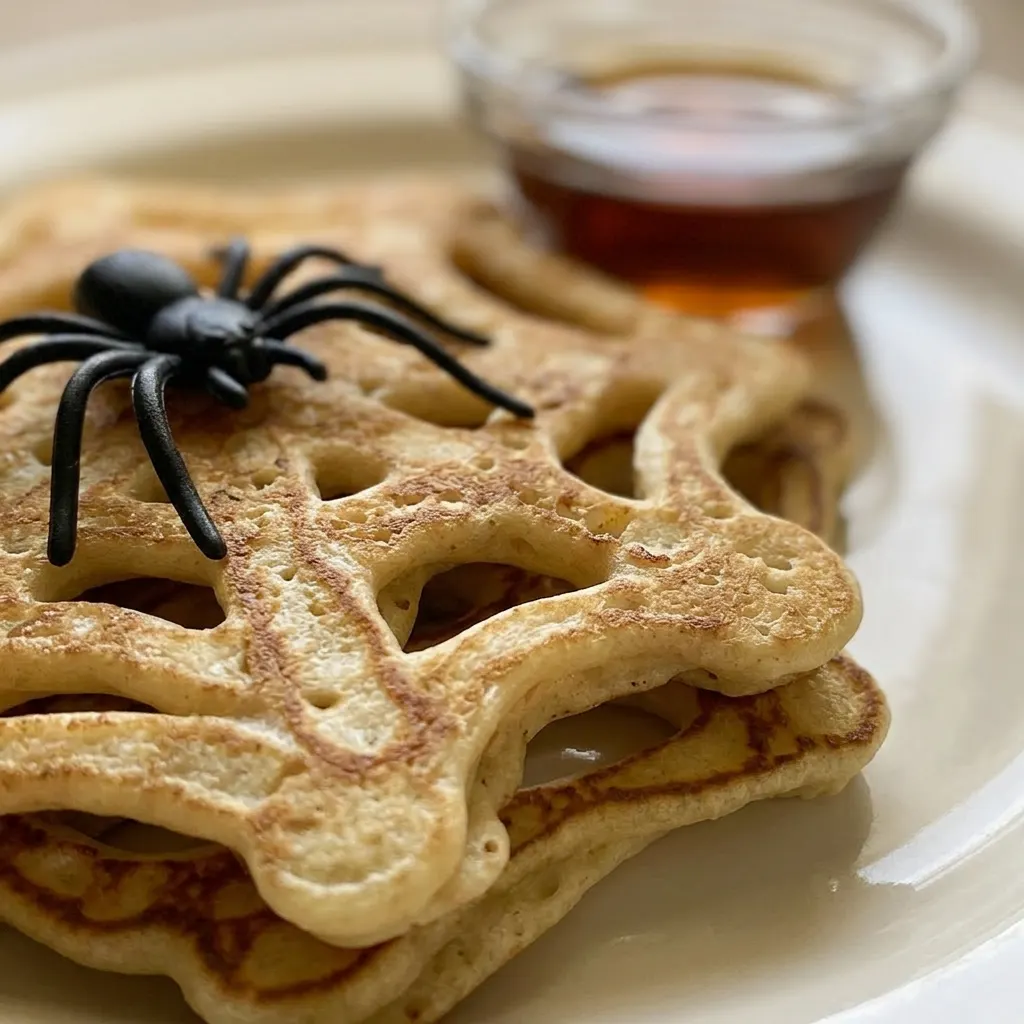
Prep: 8 min · Cook: 2 min · Total: 10 min · Servings: 24 · Calories: 320 kcal
Ingredient picks for crisp, dippable webs
All-purpose flour: Standard all-purpose flour gives just enough structure for thin lines that hold shape.
Baking powder: Fresh baking powder ensures the batter puffs just enough without blowing out the web.
Milk: Whole milk adds richness; lower fat milk works but makes slightly less tender pancakes.
Egg: A large egg binds the batter without making it too heavy for delicate lines.
Unsalted butter: Melted unsalted butter keeps the flavor clean; salted butter can make the webs taste salty.
Draw spiderweb lines that hold and flip cleanly
Mix the batter just until combined
Whisk the dry ingredients, then pour in the wet all at once. Stir until the flour disappears, lumps are fine. Overmixing makes the lines thick and doughy.
Fill the squeezable bottle and test the stream
Spoon batter into the bottle and screw the cap on. Squeeze a test line onto the griddle, it should flow in a steady, thin ribbon. If it blobs, thin with a teaspoon of milk.
Cook the first side until the web sets
Squeeze four crossing lines, then connect them with curves. Cook until the surface looks dry and the edges lift easily, about 45 seconds to 1 minute. Bubbles mean it’s ready.
Flip and finish for 30 seconds
Slide a thin spatula under the web and flip quickly. Cook just until the underside is lightly golden, about 30 seconds. Thicker lines may need a few seconds more.
Stack and serve with maple syrup
Transfer the finished spiderwebs to a plate. They’re best warm and tender, for dipping. The syrup clings to the lacy pattern.
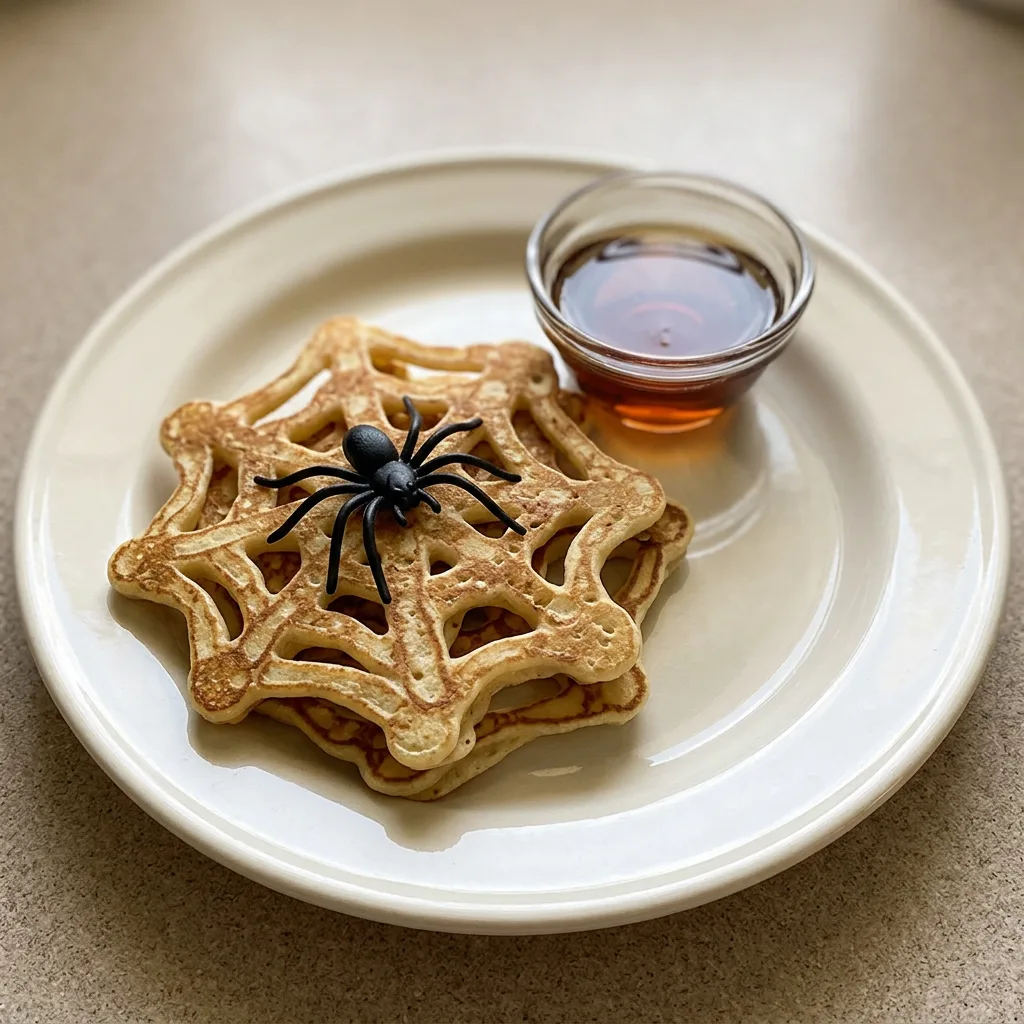
Mini Spiderweb Pancake Dippers
Ingredients
Method
Sift dry ingredients:
Sift the flour, baking powder, sugar, and salt together in a large bowl.Whisk wet mixture:
Create a well in the middle. Pour in the milk, egg, melted butter, and vanilla. Whisk until just blended; avoid overmixing.Cook spiderweb pattern:
Grease a griddle or frying pan lightly and preheat to medium-high (375°F / 190°C). Transfer the batter to a squeezable condiment bottle. Once hot, cautiously squeeze a spiderweb pattern on the griddle: begin with four crossing lines, then join them with curving lines. Cook until the batter sets, typically less than a minute.Flip and finish:
Turn over and cook for another 30 seconds. Modify cooking time depending on line thickness.Serve with syrup:
Accompany with maple syrup for dipping.
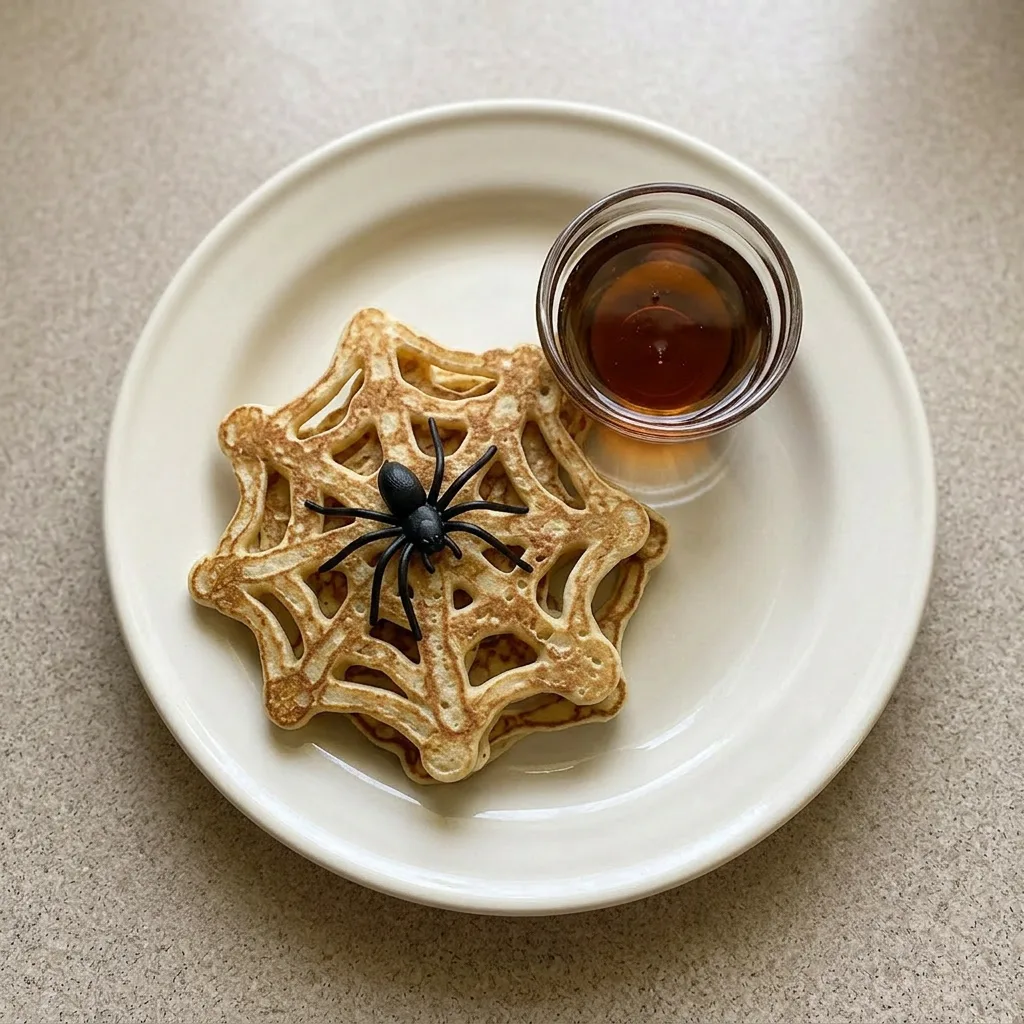
What you can swap in spiderweb pancake batter, and what to leave alone
All-purpose flour: Gluten-free all-purpose blend (cup-for-cup style, e.g., King Arthur or Bob’s Red Mill). The lines will be slightly more delicate and less crisp, but they still hold together for dipping. Keep the baking powder and butter amounts the same, the blend’s starch and xanthan gum mimic gluten’s structure here.
Milk: Any non-dairy milk (unsweetened almond, oat, or soy). The batter will be runnier with almond milk, so thin your squeeze lines a bit to compensate.
Oat milk comes closest to whole milk’s richness. The web sets a tad slower, so cook the first side an extra 10 to 15 seconds until it lifts cleanly.
Butter: Coconut oil or a neutral vegetable oil. Use melted coconut oil or canola oil in the same 3 tablespoons. The pancakes will be a little less tender and the flavor more neutral.
Avoid margarine, it has water that can make the lines spread.
Egg: Flax egg (1 tablespoon ground flax + 3 tablespoons water, let sit 5 minutes). The web will be more fragile and may tear on the flip. The lines puff less, so you get a flatter, crispier texture.
Works for vegan, but handle gently. No other egg replacer gives the same set.
Tips
- If the batter flows too quickly from the bottle, add 1 tablespoon flour to thicken it; this prevents the lines from merging into a solid pancake on the griddle.
Storing and Serving Spiderweb Pancake Dippers
Serve spiderweb pancakes within an hour of cooking for the best texture: the thin lines stay crisp at the edges and tender inside. After that, they soften from residual steam. Store leftovers in an airtight container at room temperature for up to 2 days.
Refrigeration dries them out, so skip it unless your kitchen is very warm. To reheat, toast in a toaster or oven at 350°F for a few minutes until crisp. Microwaving makes them chewy.
These pancakes don’t freeze well: the delicate lines become brittle and lose their shape. If you must freeze, do so in a single layer, then reheat directly from frozen in a toaster. Serve with maple syrup for dipping; add the syrup just before eating to keep the pancakes from getting soggy.
Frequently Asked Questions
Can I make the batter ahead of time and refrigerate it?
No, the batter loses its lift quickly because the baking powder starts reacting as soon as it hits the wet ingredients. Within an hour, the bubbles fade and your webs will turn flat and dense. Mix it fresh right before you cook, and use it all within 10 minutes.
Why did my spiderweb lines merge into a blob?
Your griddle was too hot or you squeezed the batter too slowly. High heat makes the batter spread instantly before it sets, so the thin lines run together. Lower the heat to medium-high and work quickly: draw the full web in one smooth sequence, then let it cook undisturbed.
How do I keep the pancake dippers warm while cooking the rest?
Set a baking sheet in a 200°F oven and lay the cooked webs in a single layer as you go. Don’t stack them, they’ll steam and lose their crisp edges. They stay tender and dippable for up to 30 minutes this way.
Can I use this batter for regular pancakes too?
Yes, it makes good round pancakes, tender and lightly sweet. Pour ¼ cup batter per pancake onto the griddle and cook as usual. You’ll get about 8 standard-sized pancakes instead of 24 webs.
What’s the best way to serve these for a party?
Serve them within an hour of cooking, arranged on a platter with small bowls of warm maple syrup for dipping. They’re meant to be eaten fresh, the lacy edges stay crisp and the center stays tender. Cold leftovers can be re‑crisped in a toaster.
