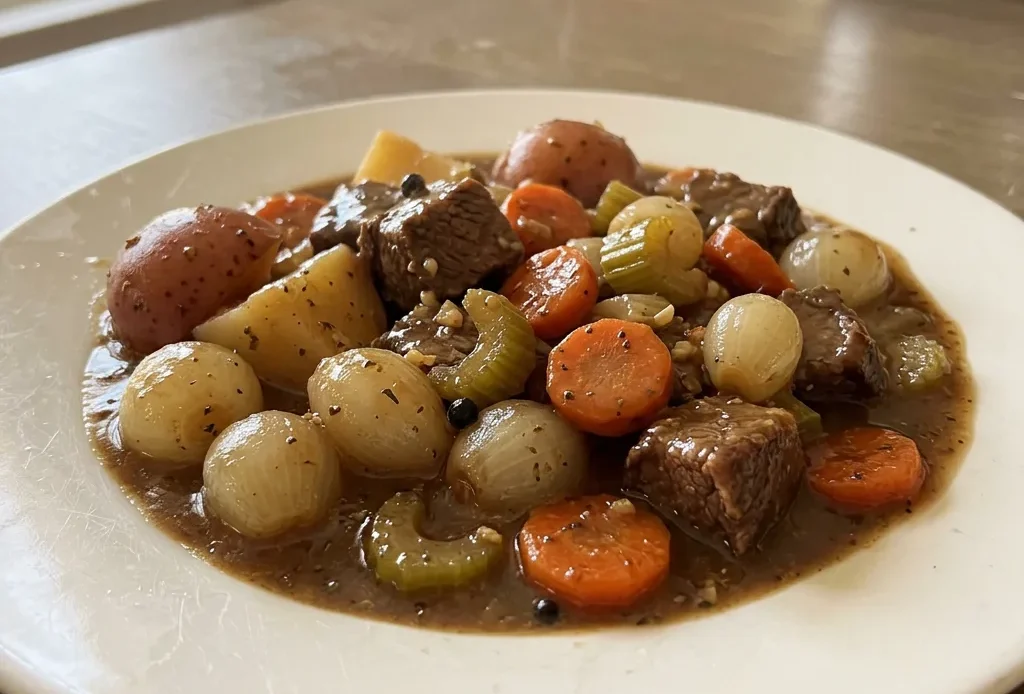
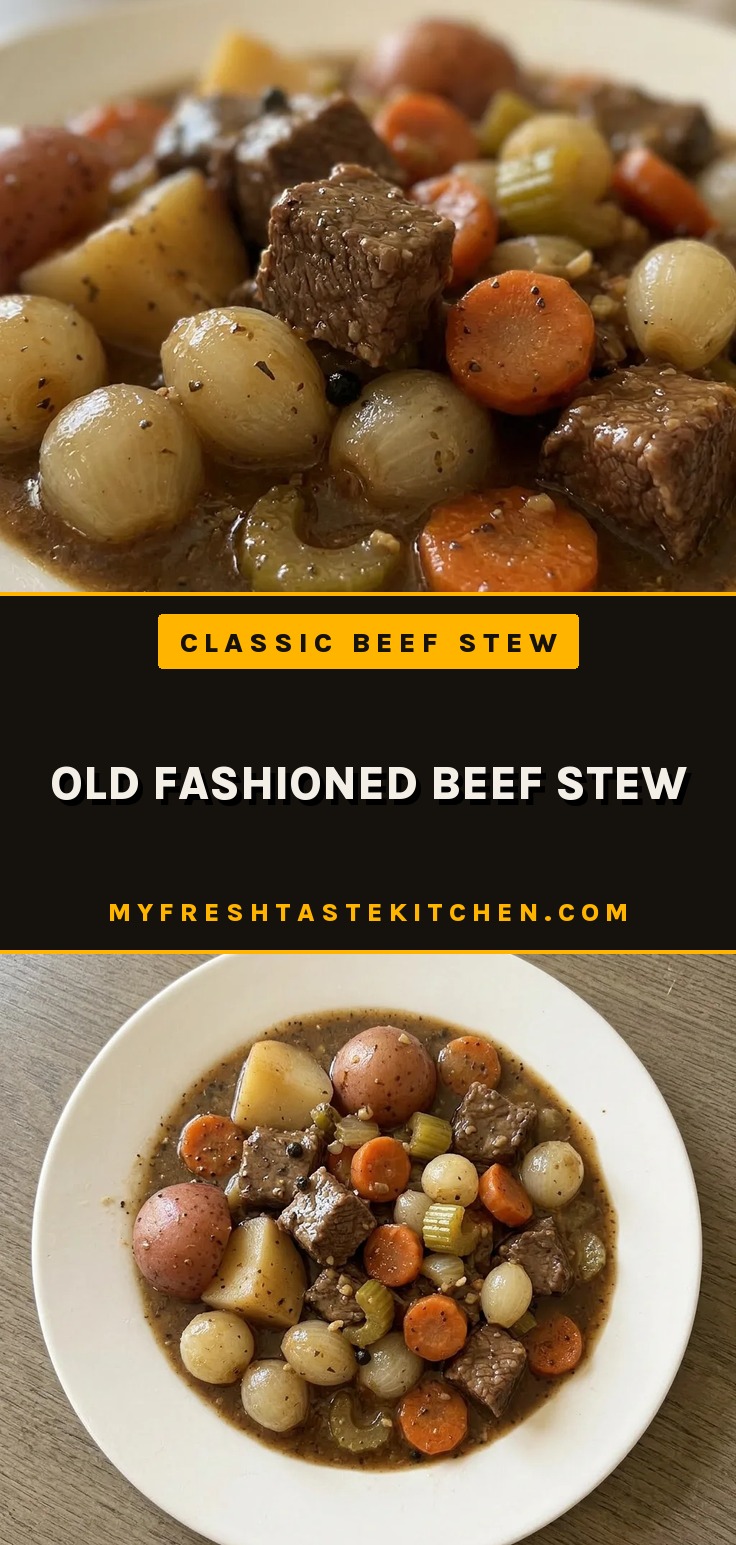
The hardest part of a beef stew isn’t the simmer, it’s getting the broth to coat the spoon without turning the meat to shoe leather. This old fashioned beef stew sidesteps the flour roux entirely, using cornstarch in two separate moments: first on the raw beef to build a dark crust, then as a last-minute slurry. The result is a glossy, rich sauce that lets the chuck roast and vegetables speak for themselves.
That allspice in the background? It’s the quiet detail that makes the broth taste like it’s been bubbling for hours longer than it actually has.
Coat the beef in cornstarch before searing
Cornstarch on the meat does two jobs at once. It helps the beef brown faster in the hot oil, building a darker crust than plain meat would.
As the stew simmers, that same cornstarch gradually releases into the liquid, thickening it without a separate roux. This recipe splits the cornstarch: half goes on the raw beef, the other half gets stirred into cold water at the end.
The first batch starts working early, so by the time you add the slurry, the stew already has a light body. You end up with a glossy, rich sauce that clings to the meat and vegetables, no flour paste needed.
Build depth with tomato paste, Worcestershire, and allspice
Tomato paste gets sautéed right after the garlic, which concentrates its sweetness and darkens its color. That caramelized paste forms the flavor backbone. Worcestershire sauce adds a fermented tang and savory punch that beef broth alone can’t match.
The surprise is allspice: just a quarter teaspoon, but it brings a gentle warmth that rounds out the other flavors without shouting. Together, these three create a broth that tastes like it simmered all day, even though the real work comes from the vegetables and the long cook.
Why the long simmer matters for chuck roast
Chuck roast has plenty of collagen, which needs time and gentle heat to break into gelatin. That gelatin is what gives the stew its silky mouthfeel and rich body. A 90-to-120-minute simmer at low heat lets the meat fibers relax and separate, so each piece turns tender enough to cut with a spoon.
The same slow cooking lets the herbs, vegetables, and meat juices infuse every spoonful. Rushing this step or boiling hard will toughen the beef and keep the flavors flat. Patience here pays off in a stew that feels substantial and satisfying.
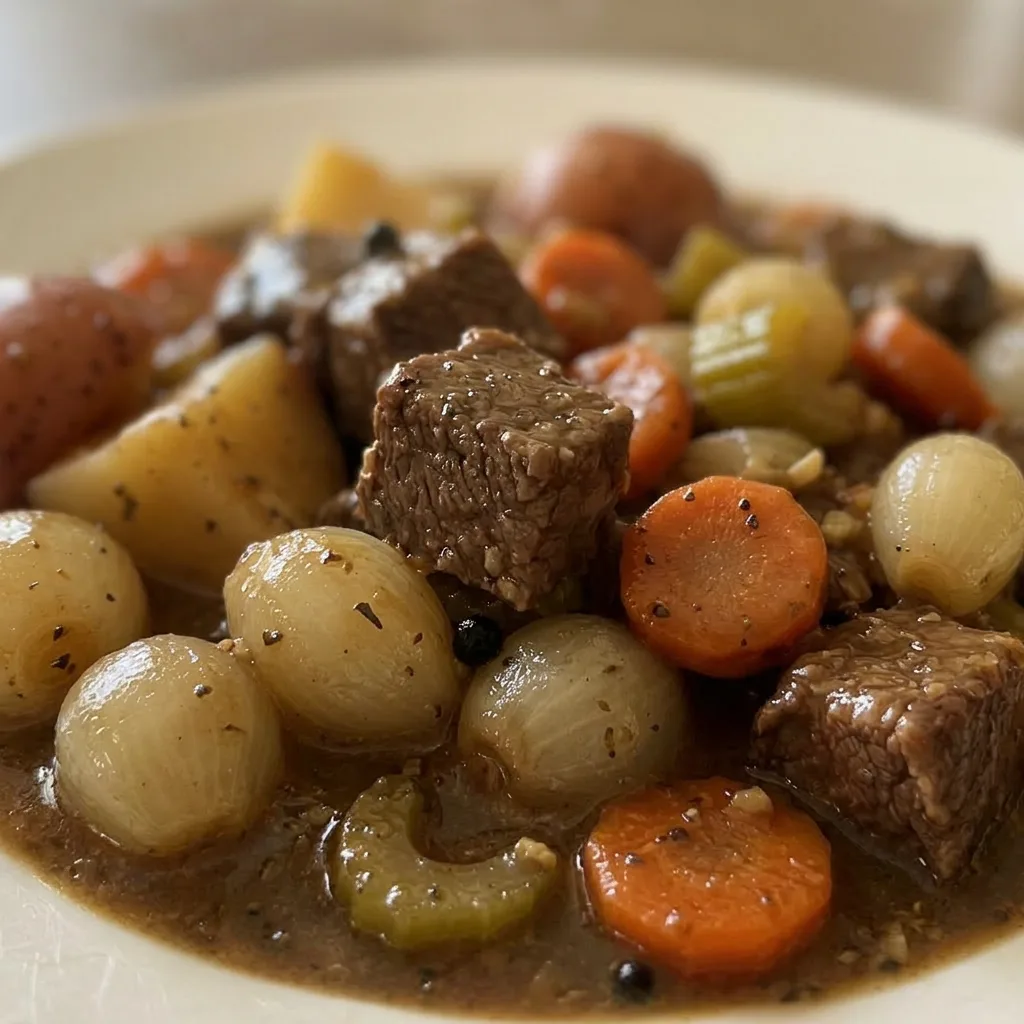
Prep: 20 min · Cook: 2 hr · Total: 2 hr 20 min · Servings: 8 · Calories: 320 kcal
What to look for at the store
Beef stew meat: Buy chuck roast and cut it yourself. Precubed stew meat is often random scraps that cook unevenly.
Pearl onions: Frozen pearl onions are peeled and ready. Fresh ones need a hot water blanch to slip the skins off.
Red potatoes: Red potatoes hold their shape during the long simmer. Yukon Golds work too but get slightly softer.
Worcestershire sauce: Lea & Perrins is the standard. Generic brands are thinner and less savory, so stick with the original.
Allspice: Ground allspice fades fast. If your jar is more than a year old, buy a new one for this stew.
How to build and finish Old Fashioned Beef Stew
Sear the meat
Heat olive oil in a Dutch oven over medium-high until it shimmers. Add the cornstarch-coated beef in a single layer, don’t crowd the pot. Let it sit undisturbed for a minute, then turn.
You want a deep brown crust, not gray. If the fond on the bottom starts to blacken, turn the heat down.
Cook the aromatics
Stir in garlic and tomato paste. Cook until the paste darkens to a rusty red and smells sweet, about a minute.
If it smells sharp or burnt, you’ve gone too far. Scrape the bottom with your spoon to incorporate any browned bits.
Deglaze and build the broth
Pour in beef broth and Worcestershire sauce, scraping up all the fond. Add the vegetables, sugar, and dried herbs. Bring to a vigorous boil, then immediately reduce to a gentle simmer, bubbles should barely break the surface.
Simmer low and slow
Cover and cook for 90 to 120 minutes. Check after an hour: the beef should be fork-tender but not falling apart. If you poke a piece and it shreds easily, it’s done.
If it resists, keep simmering. Taste the broth, it should be savory and slightly sweet.
Thicken the stew
Mix the remaining cornstarch with cold water until smooth. Stir the slurry into the simmering stew slowly.
Within a minute, the liquid will go from thin to glossy and coat the back of a spoon. If it looks clumpy, you added it too fast.
Simmer a few more minutes to cook out the raw starch.
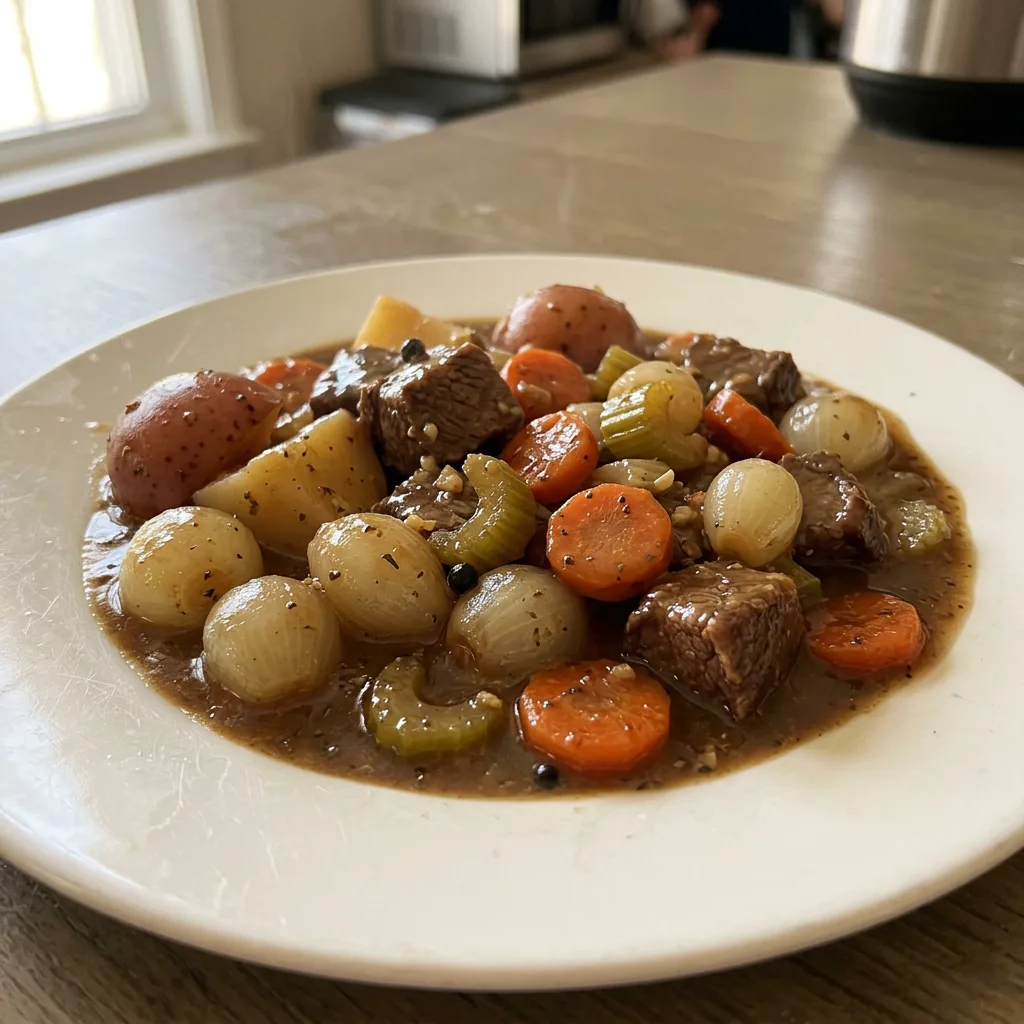
Old Fashioned Beef Stew
Ingredients
Method
Coat and Season Beef:
Coat 2 lb beef stew meat with 2 tbsp cornstarch and season using 1 tsp salt and 1/4 tsp black pepper.Sear Beef in Oil:
Warm 2 tbsp olive oil in a large pot or Dutch oven over medium-high heat. Add the coated beef and sear for roughly 5 minutes, turning often, until browned on all sides.Sauté Garlic and Tomato Paste:
Mix in 2 cloves minced garlic and 2 tbsp tomato paste. Sauté for 1-2 minutes until aromatic.Deglaze and Add Vegetables:
Deglaze the pan by pouring in 4 cups beef broth and 1/4 cup Worcestershire sauce, scraping up any browned bits. Add the potato chunks, pearl onions, carrot slices, and celery slices. Stir in 1 tsp granulated sugar, 1/2 tsp dried basil, 1/2 tsp dried oregano, 1/2 tsp dried parsley, 1/2 tsp paprika, and 1/4 tsp ground allspice. Mix thoroughly.Simmer Until Tender:
Raise heat to high and bring the stew to a boil, then lower to low heat. Cover and let simmer for 90 to 120 minutes, stirring from time to time, until the beef becomes tender.Thicken with Cornstarch Slurry:
Combine the remaining 2 tbsp cornstarch with 1/4 cup cold water in a small bowl, stirring until fully dissolved. Gradually add the slurry to the stew while stirring constantly. Continue cooking on low for several minutes until the stew thickens.Adjust Seasoning and Serve:
Check seasoning and add more salt and pepper if desired. Serve hot.
Which swaps work (and which don’t) in this stew
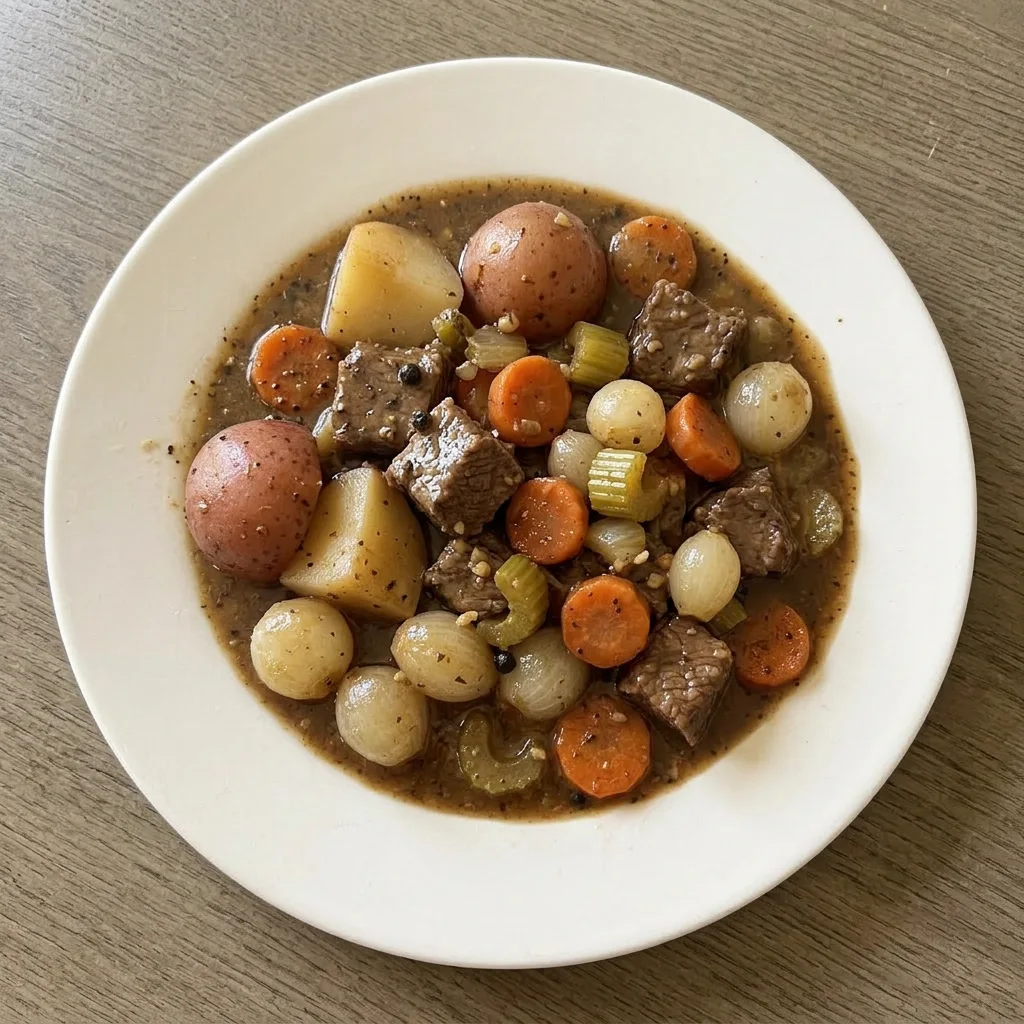
Pearl onions: Frozen pearl onions, or one medium yellow onion diced. Frozen pearl onions skip the peeling step and soften the same way. A diced yellow onion gives a stronger onion flavor and breaks down more, so the stew ends up with a slightly sweeter broth and no whole onion bites.
Red potatoes: Yukon Gold or Russet potatoes. Yukon Golds hold up fairly well but turn creamier than reds. Russets will break apart more, thickening the stew further, still good, just expect a softer texture and cloudier broth.
Cornstarch: Do not swap. Cornstarch is used twice in this recipe: once on the beef to aid browning and early thickening, and again as a slurry to finish. No other thickener (flour, arrowroot, potato starch) performs the same way in both roles.
Flour would need a separate roux and would dull the glossy finish. Arrowroot doesn’t hold up to extended simmering. Substituting here changes the texture and the sear.
The stew may not brown as well, the broth might be cloudy or thin, and the final consistency could be gummy or grainy.
Allspice: Do not swap. A quarter teaspoon of allspice rounds out the savory notes without being identifiable.
No single spice (clove, nutmeg, cinnamon) replicates that balance; a blend of cinnamon and clove would overpower. The recipe’s flavor profile depends on it.
The broth will taste flat, missing the warmth that makes it taste long-cooked.
Storing and Serving Old Fashioned Beef Stew
Let the stew cool completely before refrigerating. Transfer to an airtight container and store for up to 4 days. The stew thickens as it cools; the cornstarch continues to set.
When reheating, add a splash of beef broth or water to loosen the sauce to your liking. For longer storage, freeze the stew for up to 3 months. The texture of the potatoes will soften slightly after thawing, but the flavor remains true.
Thaw overnight in the fridge and reheat gently on the stove. Serve hot. For the best texture, eat within 2 days; the vegetables stay firmer and the broth remains silkiest.
Tips
- Cut the chuck roast into 1.5-inch cubes. Smaller pieces dry out during the long simmer; larger ones won’t get tender in time.
- If the stew tastes flat after simmering, add a splash of red wine vinegar or lemon juice just before serving. The acidity brightens the broth without making it sour.
Frequently Asked Questions
Can I make this stew in a slow cooker instead of on the stovetop?
You can adapt it to a slow cooker, but you’ll lose the fond, the browned bits that build flavor. Sear the beef in a skillet first, then transfer everything to the slow cooker and cook on low for 7 to 8 hours or high for 4 to 5 hours. The broth won’t reduce the same way, so skip the cornstarch slurry until the end: whisk it with cold water and stir in during the last 15 minutes on high.
Why is my beef tough after simmering?
Most likely the heat was too high, a hard boil tightens the collagen instead of melting it. The recipe calls for a gentle simmer, where bubbles barely break the surface, for the full 90 to 120 minutes. Also check that you used chuck roast; lean cuts like round will stay tough no matter how long you cook them.
Can I freeze leftovers?
Yes, freeze the stew for up to 3 months in an airtight container. The potatoes will soften a bit after thawing, but the flavor holds. Thaw overnight in the fridge and reheat gently on the stove, adding a splash of broth or water if it’s too thick.
How do I prevent the stew from becoming too thick or too thin?
If it’s too thin, the cornstarch slurry might need more time, stir it in and let it simmer a full two minutes. For too thick, add beef broth or water a quarter cup at a time until it loosens. The cornstarch from the meat and the final slurry both contribute, so stick to the amounts in the recipe and adjust liquids at the end, not during the simmer.
What makes this stew ‘old fashioned’ compared to other beef stews?
It skips the modern shortcuts, no wine, no balsamic, no soy sauce. Instead, a pinch of allspice and the vegetable-sweetened broth (from the pearl onions, carrots, and a teaspoon of sugar) give that mild, savory-sweet profile people remember from older recipes. The cornstarch method, split between searing and finishing, creates a glossy sauce without a flour roux, which keeps the broth clear and the beef flavor forward.
