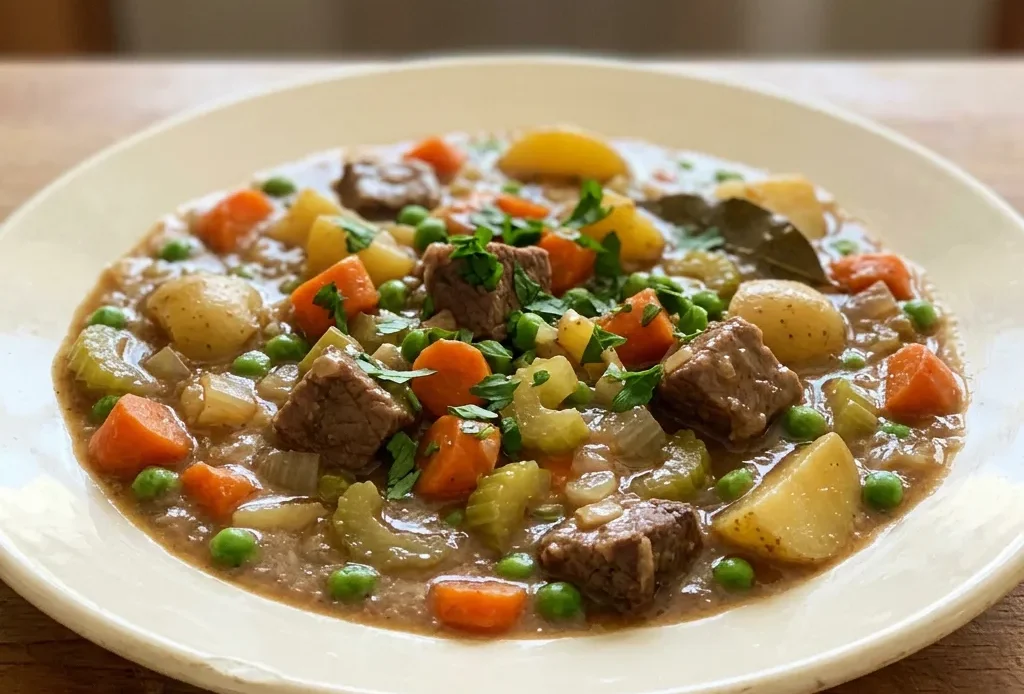
A slow cooker stew that tastes like it simmered all day on the stove comes down to one thing: building flavor before the lid goes on. Browning the beef in batches, not all at once, creates a deep crust, and cooking tomato paste until it darkens adds a concentrated savory note that no amount of simmering can fake. That glossy, rich gravy happens because of a cornstarch slurry stirred in at the end, not a flour roux that clouds the broth.
The result is a slow cooker beef stew where the meat falls apart and each spoonful is clear and beefy. No shortcuts here, just the right moves upfront.
Why Brown in Batches
Beef browns only where it contacts the pan. Crowd the pan and the meat steams instead, releasing juices that boil it gray.
A flour coating helps, it speeds browning and leaves a fond that later thickens the stew. Each batch needs room so the surface gets hot enough for the Maillard reaction. That crust is where deep beefy flavor comes from.
Skip this step and the stew tastes flat, no matter how long it cooks.
Three Ingredients for Savory Depth
Tomato paste, Worcestershire sauce, and balsamic vinegar each hit different notes. Cook the paste for a minute and it darkens, turning from raw tomato to a concentrated umami. Worcestershire brings a funky, savory punch from anchovies and molasses.
Balsamic vinegar cuts through the richness with acidity, brightening everything. Together they create a base that tastes like it simmered all day, even though it’s built in a few minutes.
You can taste each one clearly, but none overpowers.
A Slow Cooker Tames Tough Meat
Chuck roast has lots of connective tissue that makes it chewy when cooked quickly. The slow cooker’s low, moist environment breaks down that collagen into gelatin.
That’s what gives the meat a silky, fork-tender texture. The fat renders slowly, keeping the meat moist. You’ll know it’s done when a fork slides through with no resistance.
No other cut gives you that combination of richness and tenderness for this price. A quick simmer won’t do it.
Cornstarch Slurry for a Clear Finish
Flour-based thickeners can turn a slow-cooked stew cloudy or lumpy if added early. Cornstarch, stirred in at the end as a slurry, gives a glossy, transparent sauce.
The slurry, cornstarch mixed with cold water, pours in smooth and thickens quickly without clumps. Since the stew already has deep flavor, you don’t need a roux.
The cornstarch just holds it all together without muting the taste. Look for the liquid to coat the back of a spoon, not turn pasty.
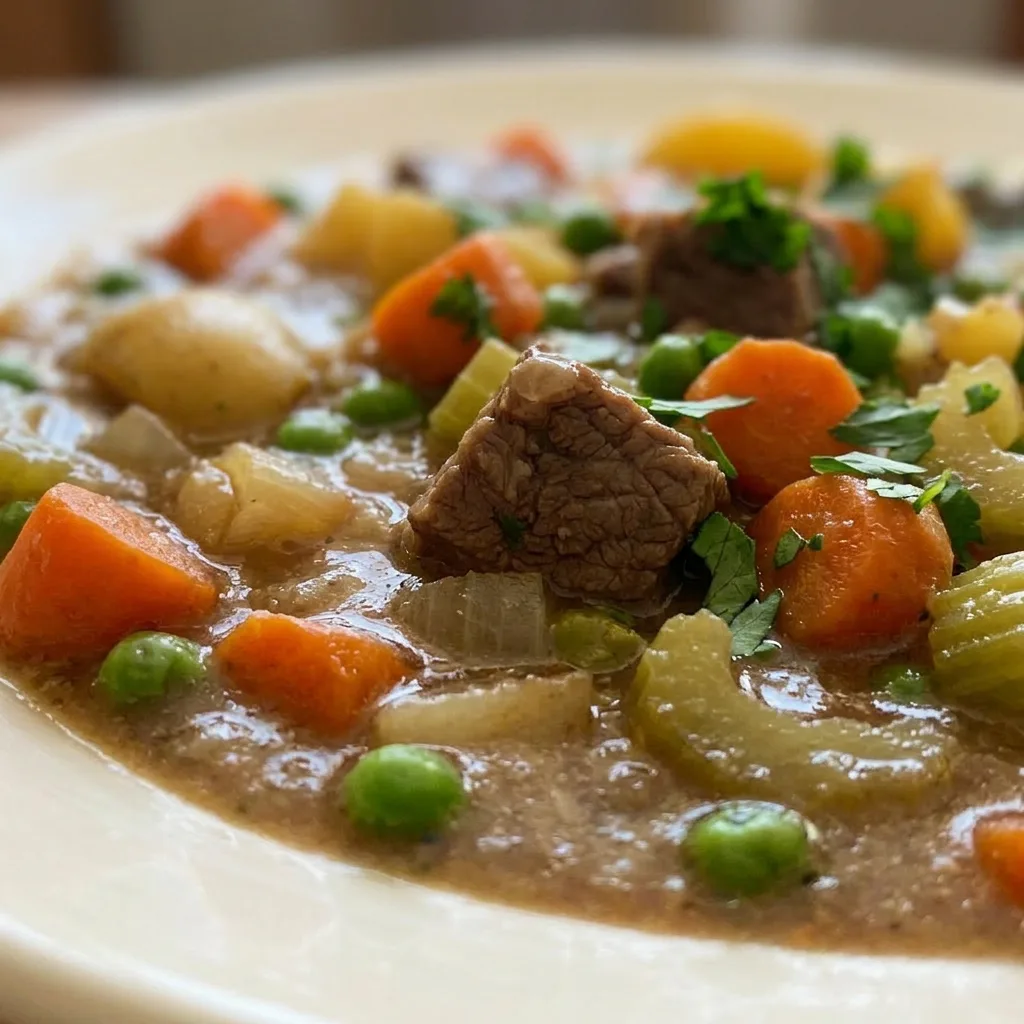
Prep: 15 min · Cook: 4 hr 20 min · Total: 4 hr 35 min · Servings: 8 · Calories: 530 kcal
Choose the Right Meat and Prep It Right
Stew meat (chuck roast): Buy chuck roast and cube it yourself. Pre-cut stew meat is often random scraps that cook unevenly.
Baby yellow potatoes: No need to peel. Just halve or quarter them so they’re about 1.5 inches. They hold shape without going soggy.
Frozen peas: Don’t thaw them first. Add straight from the freezer to keep their color and texture.
Build Deep Flavor Before the Slow Cooker
Brown the beef in batches
Heat 1 tablespoon oil in a large pan over medium-high. Sear half the coated beef, don’t crowd, until all sides are deep brown, about 3 minutes per side. The second batch gets the remaining oil.
If the pan looks dry, add a splash more oil.
Sauté aromatics in the fond
Melt butter in the same pan over medium. Add onion and celery with salt and pepper; stir occasionally until softened and translucent, about 4 minutes. The browned bits on the pan bottom will start releasing, that’s flavor.
Cook the tomato paste until darkened
Stir in garlic, tomato paste, and thyme. Cook for 1 minute, stirring constantly. The paste will turn a shade darker and smell richer.
Stop before it burns, you want a deep red, not brown.
Deglaze with Worcestershire and vinegar
Pour in Worcestershire sauce and balsamic vinegar. Scrape up all the browned bits from the pan bottom until they dissolve into the liquid. The pan should look clean, and the liquid will smell savory and tangy.
Transfer everything to the slow cooker
Scrape the onion mixture into the slow cooker insert. Add carrots, potatoes, beef stock, bay leaves, and more salt and pepper.
Gently fold everything together. The liquid should nearly cover the solids, add a little water if it doesn’t.
Cook until meat is fork-tender
Cover and cook on high for 4 hours (or low for 8). After 4 hours, test a potato, it should be tender. The meat should pull apart with a fork.
If not, continue cooking in 30-minute increments until done.
Thicken with cornstarch slurry
Mix cornstarch with cold water until smooth. Stir the slurry and frozen peas into the stew. Cook on high for 1 hour uncovered if you want a thicker sauce.
The liquid should coat the back of a spoon, glossy, not cloudy.
Finish with fresh parsley
Remove bay leaves. Taste and adjust salt and pepper.
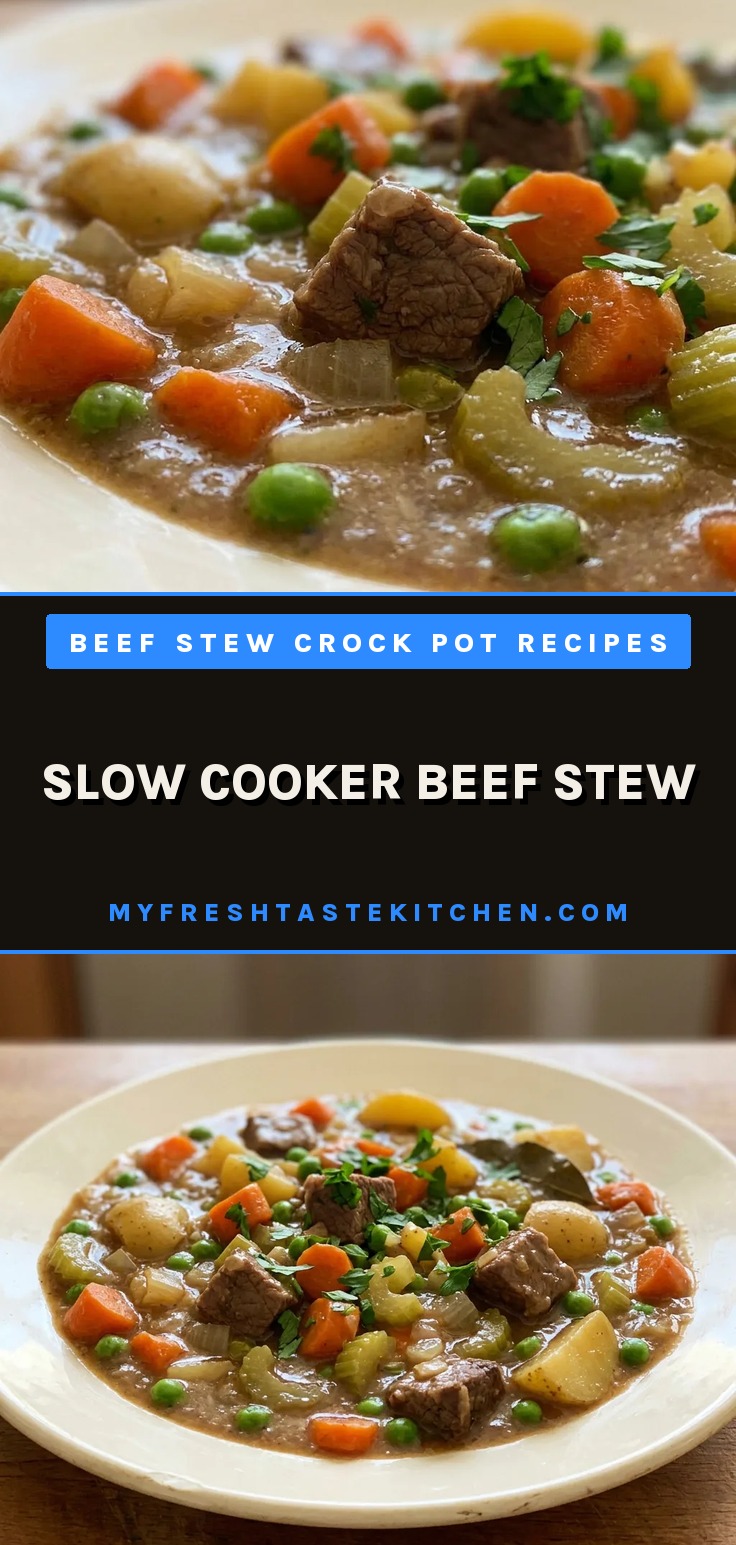
Sprinkle chopped parsley over the top just before serving. The stew should be rich, savory, and the meat completely tender.
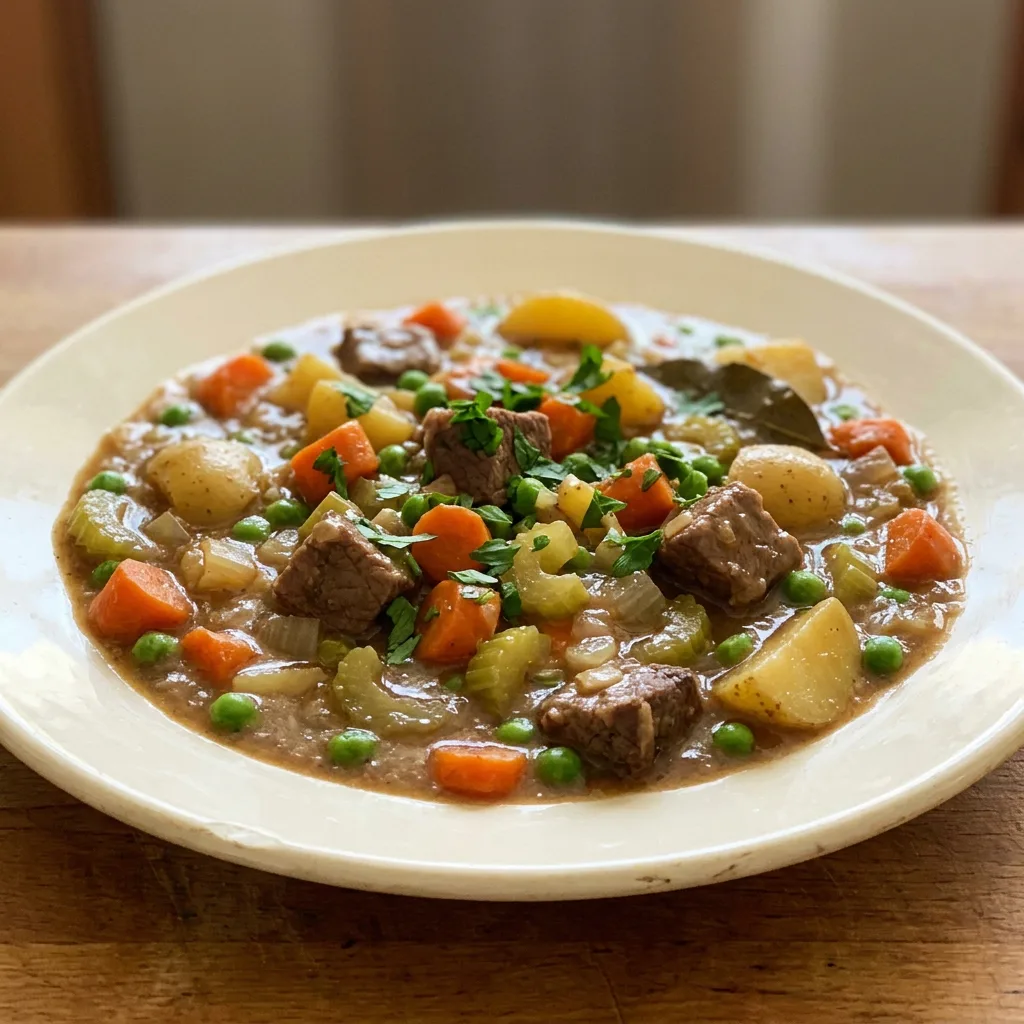
Slow Cooker Beef Stew
Ingredients
Method
Heat oil:
Warm 1 tablespoon olive oil in a large sauté pan or 5-quart braising pan over medium-high heat.Coat beef in flour:
In a large shallow bowl, whisk together flour, garlic powder, celery salt, and several generous pinches of salt and pepper. Coat beef cubes in the flour mixture.Brown beef batches:
Place half the beef into the pan and brown on all sides. Add the remaining 1 tablespoon olive oil to the pan and sear the second batch of beef. Move all beef to the slow cooker insert.Sauté onion and celery:
Without cleaning the pan, add butter and let it melt over medium heat. Toss in onion and celery with a couple pinches of salt and pepper. Sauté, stirring now and then, for about 4 minutes.Cook garlic and tomato paste:
Stir in garlic, tomato paste, and dried thyme. Cook, stirring often, for 1 minute.Deglaze with Worcestershire and vinegar:
Pour in Worcestershire sauce and balsamic vinegar to deglaze the pan, scraping up the browned bits from the bottom.Transfer to slow cooker with vegetables:
Transfer the onion mixture to the slow cooker. Add carrots, potatoes, beef stock, bay leaves, and a few generous pinches of salt and pepper. Gently mix everything together.Cook on high or low:
Cook on high for 4-5 hours or on low for 8-10 hours.Thicken with cornstarch slurry:
Mix 3 tablespoons cornstarch with 3 tablespoons cold water. Stir the slurry and frozen peas into the stew and cook on high for 1 hour.Finish and garnish:
The stew is ready when potatoes are fork-tender and meat falls apart easily. Adjust seasoning with salt and pepper. Sprinkle fresh parsley on top before serving.
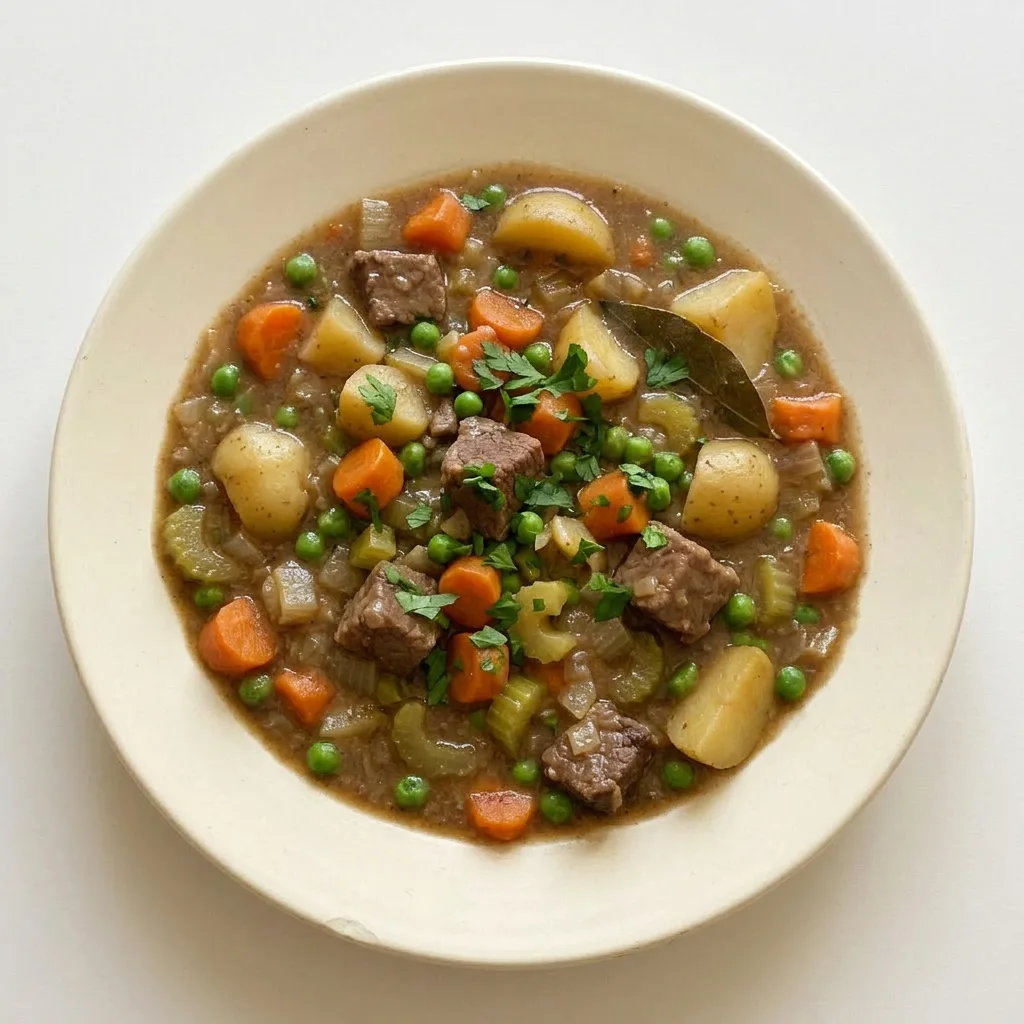
Storage and Serving
This stew improves after a night in the fridge. The flavors deepen and the meat becomes more tender. Store leftovers in an airtight container for up to 4 days.
The potatoes and carrots soften over time but remain intact if reheated gently. To reheat, warm portions in a saucepan over medium-low, stirring occasionally until hot. If the stew thickens too much, add a splash of beef stock or water.
Avoid boiling, which can turn the vegetables mushy. For longer storage, freeze the stew without the peas for up to 3 months. Peas lose texture when frozen; add fresh or frozen peas when reheating.
Thaw overnight in the fridge, then reheat as above. The stew serves best within the first 2 days for the best vegetable texture, but it remains satisfying for the full 4 days.
Garnish with fresh parsley just before serving, not earlier, as the parsley wilts quickly.
Tips
- Salt the beef cubes 30 minutes before browning. This gives salt time to penetrate the meat, improving moisture retention and seasoning from the inside out. Without this step, the salt mostly stays on the surface and can draw out moisture during browning, making the meat drier.
Swapping Meat and Potatoes Without Losing Texture
Stew meat (chuck roast): Boneless short ribs. Short ribs have more marbling and connective tissue, so they take the same time to become fork-tender but yield a richer, beefier flavor. Trim excess fat before cubing; too much fat left on can make the stew greasy.
Baby yellow potatoes: Yukon Gold potatoes. Yukon Golds have a similar waxy texture and hold their shape during long cooking. 5 inch pieces.
Avoid russets, they break down into mush and cloud the broth.
All-purpose flour: Gluten-free all-purpose flour blend (with xanthan gum). Use the same amount to coat the beef.
The blend will brown similarly, though the crust may be slightly less crisp. The stew thickens the same way from the slurry at the end, so no change in final consistency.
Unsalted butter: Olive oil or vegan butter. Use the same amount. Butter adds a subtle richness, but olive oil keeps the sauté step similar.
Vegan butter mimics the flavor of butter without dairy. The stew won’t taste noticeably different either way.
Frequently Asked Questions
Can I cook this stew on low instead of high? How does that affect the time?
Yes, cook on low for 8 to 10 hours instead of 4 to 5 on high. The lower temperature gives the connective tissue more time to break down, making the meat even more tender. Check at 8 hours; the potatoes should be fork-tender and the meat pull apart easily.
My stew came out watery. What went wrong and how can I fix it?
Most likely the cornstarch slurry wasn’t cooked long enough or the stew had too much liquid. Make sure you cook on high for the full hour after adding the slurry, it needs that time to thicken. If it’s still thin, mix another tablespoon of cornstarch with cold water, stir it in, and cook on high for another 15 minutes.
Can I make this stew ahead of time and reheat it?
Absolutely. The stew improves after a night in the fridge, flavors deepen and meat gets even more tender. Store in an airtight container for up to 4 days.
Reheat gently in a saucepan over medium-low, adding a splash of beef stock or water if it’s too thick. Add fresh parsley just before serving, not before storing.
Why does my beef turn out tough in the slow cooker?
The chuck roast needs enough time for the connective tissue to break down into gelatin. If it’s tough, it hasn’t cooked long enough, cook on high for 4 to 5 hours or low for 8-10 until a fork slides through with no resistance. Also, browning the beef in batches first builds flavor, but skipping it won’t affect tenderness.
Is this stew gluten-free? How can I adapt it?
As written, it’s not gluten-free because of the all-purpose flour used to coat the beef and the Worcestershire sauce. To adapt, swap the flour for a gluten-free all-purpose blend with xanthan gum, same amount, it browns similarly. Use a gluten-free Worcestershire sauce (Lea & Perrins is not gluten-free, but some brands are).
The cornstarch slurry at the end is already gluten-free.
