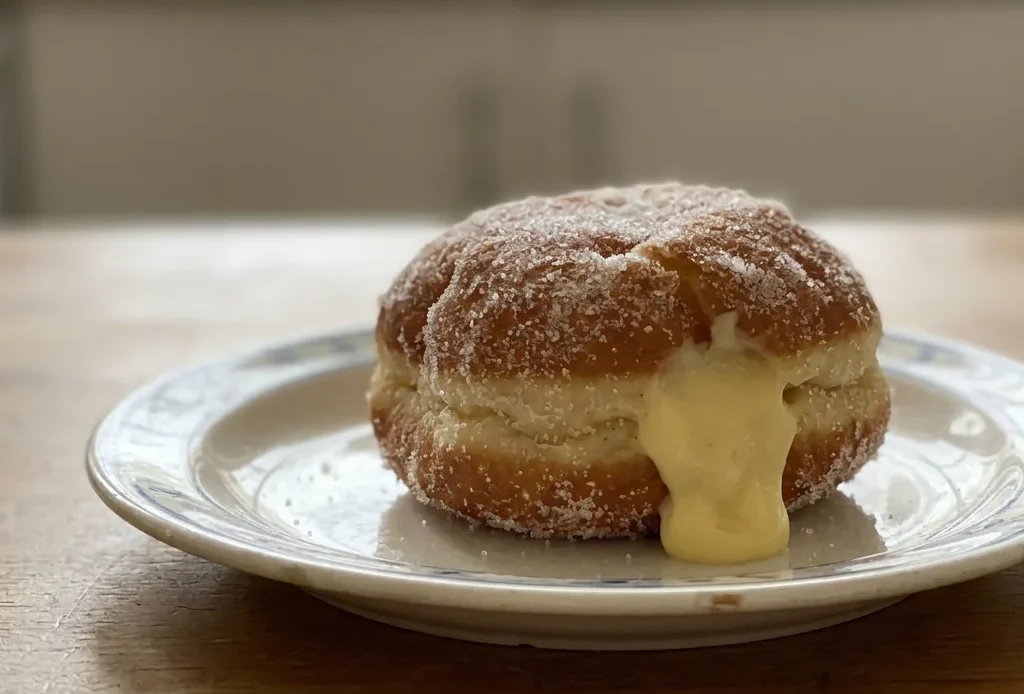
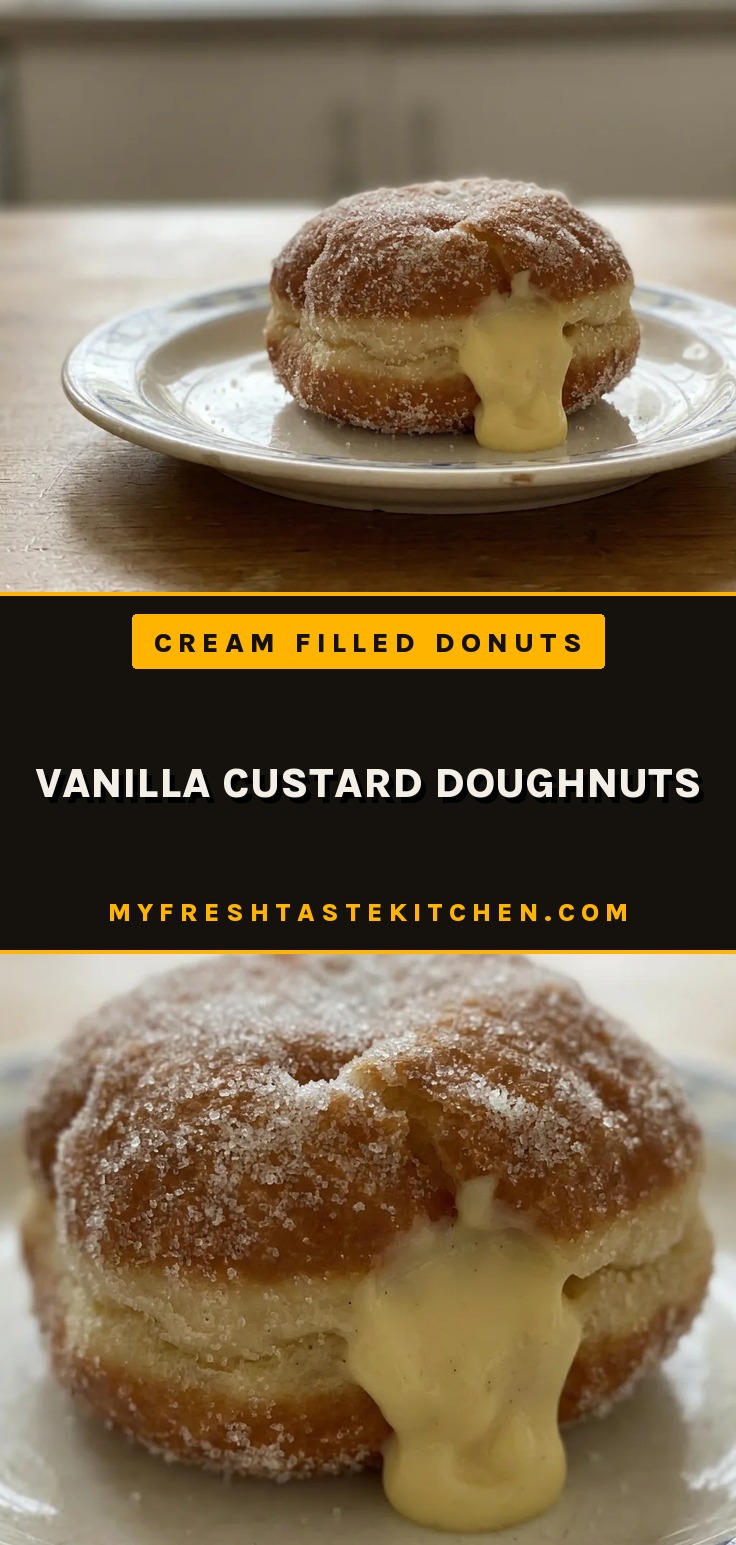
Most homemade doughnuts turn out dense and greasy because the dough isn’t mixed long enough or the oil temperature wavers. These vanilla custard doughnuts nail the balance: a light, airy yeast shell that shatters when you bite, giving way to a smooth, sliceable pastry cream.
The custard itself is stable enough to pipe without oozing, cornstarch and a full-minute boil see to that. The dough requires a solid 10-minute knead after the butter goes in to build gluten that traps steam during frying. Fry at a steady 340°F, and the crust turns deep golden while the inside cooks through, no raw center.
Why must the dough be firm before adding butter?
Mixing the flour, eggs, and milk first yields a stiff, tight dough. That initial dryness is intentional, it soaks up the liquid without becoming sloppy.
Working the stiff dough for a couple of minutes starts gluten development before fat enters. Then the softened butter gets added, and the dough turns silky. The gluten strands, already formed, stretch and strengthen as you continue mixing for at least 10 minutes.
The result is a smooth, pliable, resilient dough that will trap air during proofing and frying. If you add butter too early, the fat coats the flour, gluten can’t link up, and the dough stays weak.
How does the custard achieve a sliceable, stable texture?
Cornstarch is the backbone here. It thickens the milk as it heats, creating a gel that holds its shape even when warm.
Egg yolks add richness and emulsify the fat, but they also help the custard set. Boiling the mixture for a full minute after it bubbles is crucial: that heat fully swells the starch granules so they can’t thin out later.
You’ll feel the custard go from runny to thick and resistant in that minute. The result is a pastry cream that cuts cleanly, not a loose sauce.
Why fry at 340°F (170°C) for golden doughnuts?
Oil temperature is a balancing act. Too hot, and the outside burns to a dark brown before the center cooks through, leaving a raw, doughy core.
Too cool, and the doughnuts absorb oil, turning greasy. At 340°F, the heat penetrates the 1/2-inch-thick dough evenly.
Two minutes per side gives a deep golden crust while the inside steams and sets. Homemade donuts need that steady heat, if the temperature climbs above 350°F, the crust hardens too fast and the interior stays undercooked.
What does the 30-minute rest after cutting do?
After rolling and cutting, the dough needs time to recover. That 30 to 60 minute rest allows a final proof: the yeast produces gas, puffing the rings. The gluten, tightened by rolling, relaxes, so the dough doesn’t shrink when it hits hot oil.
If the surface looks dry, a light water brush prevents a skin from forming, which would trap steam and make the crust tough. Without that rest, you’d fry dense, heavy donuts.
The rest is what makes them light and airy.
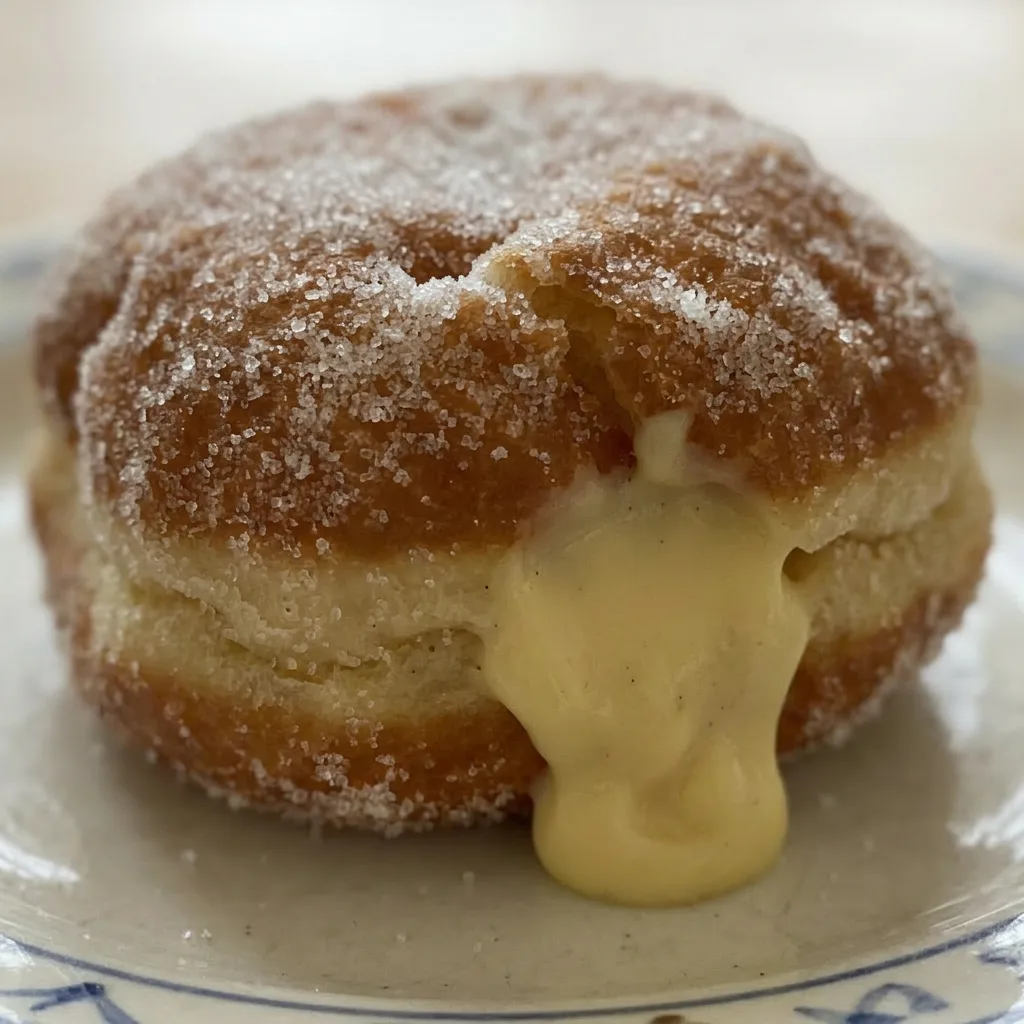
Prep: 30 min · Cook: 30 min · Total: 5 hr · Servings: 14 · Calories: 200 kcal
What to look for in each ingredient
instant yeast: Instant yeast mixes straight into the flour; active dried yeast needs proofing in the milk first.
high-grade flour: High-grade flour has more protein than all-purpose, giving the doughnuts a better chew.
vanilla bean: For the custard, scrape the seeds from the bean for specks and the most intense flavor.
cornstarch: Cornstarch thickens the custard and keeps it stable; do not substitute with flour.
neutral oil: Use an oil with a high smoke point like rice bran or canola; olive oil will overpower the doughnuts.
Mix the dough in two stages for a light, airy crumb
Combine dry ingredients first
Mix milk, yeast, sugar, eggs, flour, vanilla, and salt until a stiff dough forms. It will feel tight and dry, that’s right. The gluten starts building before the butter coats the flour.
Add butter and knead until silky
Add softened butter and knead on medium for 10 minutes. The dough becomes smooth and elastic, pulling away from the bowl. Pinch a piece, it should stretch thin without tearing.
Let the dough rise until doubled
Cover and let rise in a warm spot until doubled, about 1 to 2 hours. For deeper flavor, refrigerate overnight. The dough will be soft and puffy, not sticky.
Make the custard while the dough rests
Heat milk to a simmer. Whisk yolks, sugar, salt, vanilla, and cornstarch until smooth. Slowly stream in hot milk, whisking constantly.
Return to heat and whisk until bubbling thick, continue for 1 full minute.
Chill the custard properly
Whisk in butter, then press through a sieve for silky texture. Press plastic wrap directly onto the surface to prevent skin. Cool to room temperature, then refrigerate until firm, at least 2 hours.
Roll and cut the doughnuts
Punch down dough, roll to 1/2-inch thick. 5-inch rounds and place each on a square of baking paper. Gather scraps, rest briefly, then re-roll and cut.
Let rest 30 to 60 minutes until puffy.
Fry at steady 340°F
Heat oil to 340°F. Lower doughnuts on paper into oil, then remove paper with tongs. Fry 2 minutes per side until deep golden brown.
Keep oil between 340, 350°F, if it climbs, the outside burns before the center cooks.
Coat and fill while warm
Drain fried doughnuts on a rack, then toss in sugar while hot. Let cool completely. Poke a hole in the side with a small knife, then pipe in chilled custard until the doughnut feels heavy and full.
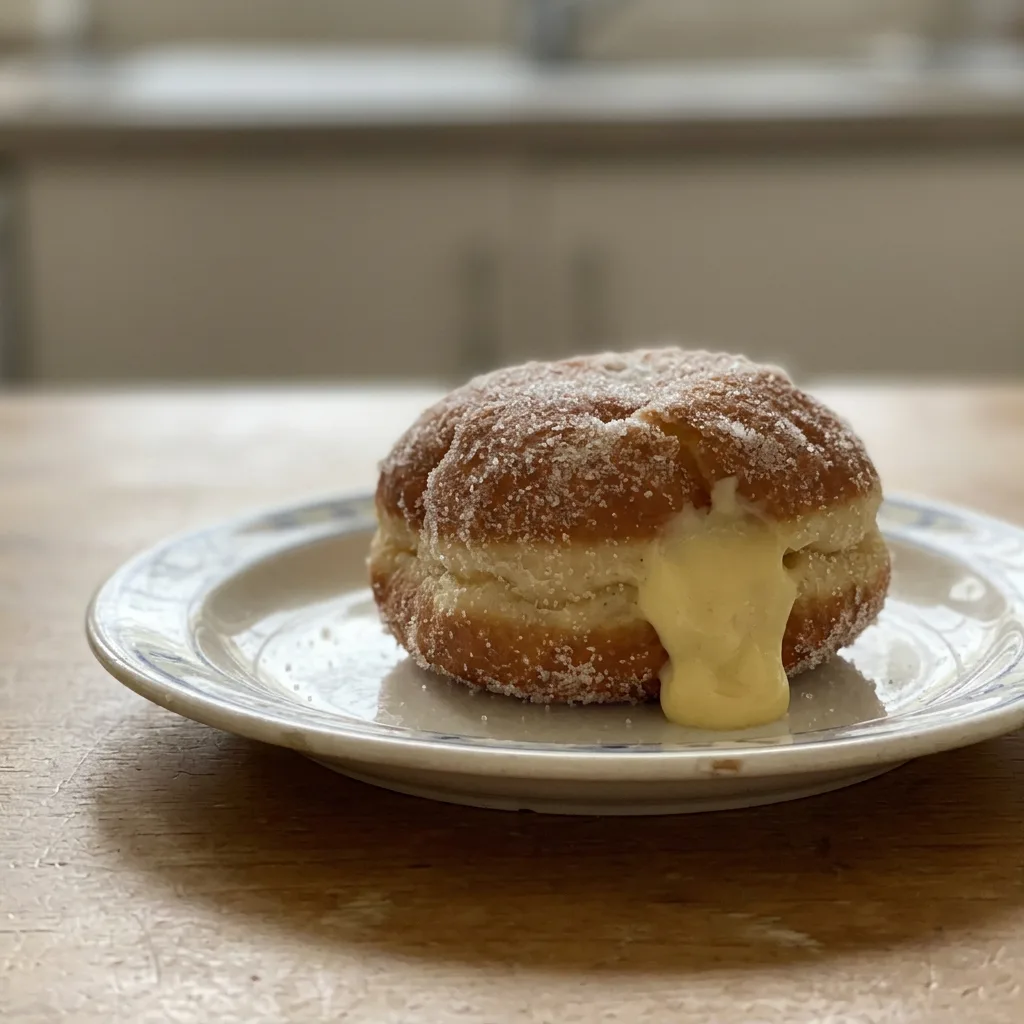
Vanilla Custard Doughnuts
Ingredients
Method
Mix milk, yeast, sugar:
Pour the lukewarm milk into a stand mixer bowl with a dough hook, then mix in the yeast and sugar. If using active dried yeast, allow it to rest for 5 to 10 minutes until frothy.Add eggs, flour, vanilla:
Add the eggs, flour, vanilla, and salt to the milk mixture. Run the mixer on low speed, or combine by hand, until a stiff dough forms. The dough will be quite firm and tight initially; this is expected, as it will soften after the butter is added. Mix for about 2 minutes to begin gluten development.Incorporate softened butter:
Incorporate the softened butter. Increase the mixer to medium speed and beat until the dough becomes elastic and pulls away from the bowl sides. Continue mixing for at least 10 minutes to achieve optimal gluten structure. The dough should feel smooth, pliable, and resilient.Let dough rise:
Form the dough into a ball and transfer it to a lightly greased large bowl. Cover and let it rise in a warm environment until doubled in size. For a more developed flavor, refrigerate the dough overnight.
Warm milk for custard:
In a medium saucepan, warm the milk until it just begins to simmer; avoid boiling.Whisk egg yolk mixture:
As the milk heats, whisk together the egg yolks, sugar, salt, vanilla, and cornstarch in a separate heatproof bowl until the mixture is smooth.Temper egg mixture:
Set the bowl on a damp kitchen towel to prevent slipping. Slowly pour the hot milk into the egg mixture while whisking continuously.Cook custard until thick:
Return the combined liquid to the saucepan and place over medium heat, whisking constantly until it begins to bubble. Once bubbling, the custard will thicken. Continue whisking steadily for 1 minute while it bubbles.Add butter, strain custard:
Remove from heat and whisk in the butter until fully incorporated. Transfer the hot pastry cream to a clean bowl. For an exceptionally smooth texture, press it through a fine-mesh sieve.Chill pastry cream:
Press a piece of plastic wrap directly onto the custard’s surface to prevent a skin from forming. Allow it to cool to room temperature, then refrigerate until fully chilled. The pastry cream can be prepared up to 2 days ahead.
Roll dough into rectangle:
Gently punch down the dough and turn it out onto a lightly floured surface. If the dough was refrigerated, it will be firm. Shape it into a mound, dust the top with flour, and roll it into a rectangle 1/2 inch (1.3 cm) thick.Cut doughnut rounds:
Using a cookie cutter or jar lid, cut out rounds 3 1/2 inches (9 cm) in diameter. Place each doughnut on a piece of baking paper. Gather the scraps, knead them into a ball, let rest for a few minutes (to relax the gluten and prevent spring-back), then roll and cut again.Rest doughnuts until puffy:
Allow the doughnuts to rest for 30 to 60 minutes until they become puffy. If they appear dry, lightly brush the tops with water. Using kitchen scissors, cut around each doughnut on the baking paper so each sits on its own square.Heat oil for frying:
Shortly before frying, pour oil into a deep fryer or deep pot and heat to 340°F (170°C). Fill a shallow bowl with the coating sugar.Fry doughnuts 2 minutes per side:
Carefully lower 2 to 3 doughnuts into the hot oil, using tongs to remove the baking paper. Fry for 2 minutes until deep golden brown, then flip and fry for another 2 minutes.Monitor oil temperature:
Maintain the oil temperature, ensuring it does not exceed 350°F (175°C), or the doughnuts will brown on the outside before the centers are cooked.Coat doughnuts in sugar:
Remove the fried doughnuts with a slotted spoon and briefly place them on a wire rack. While still hot, toss them in a bowl of granulated or caster sugar to coat, then return to the rack and continue frying the remaining doughnuts.
Fill doughnuts with custard:
Whisk the chilled custard to loosen it, then spoon it into a piping bag fitted with a round tip. Insert a small knife tip into the side of each cooled doughnut to create a hole. Pipe the custard through the hole to fill each doughnut.
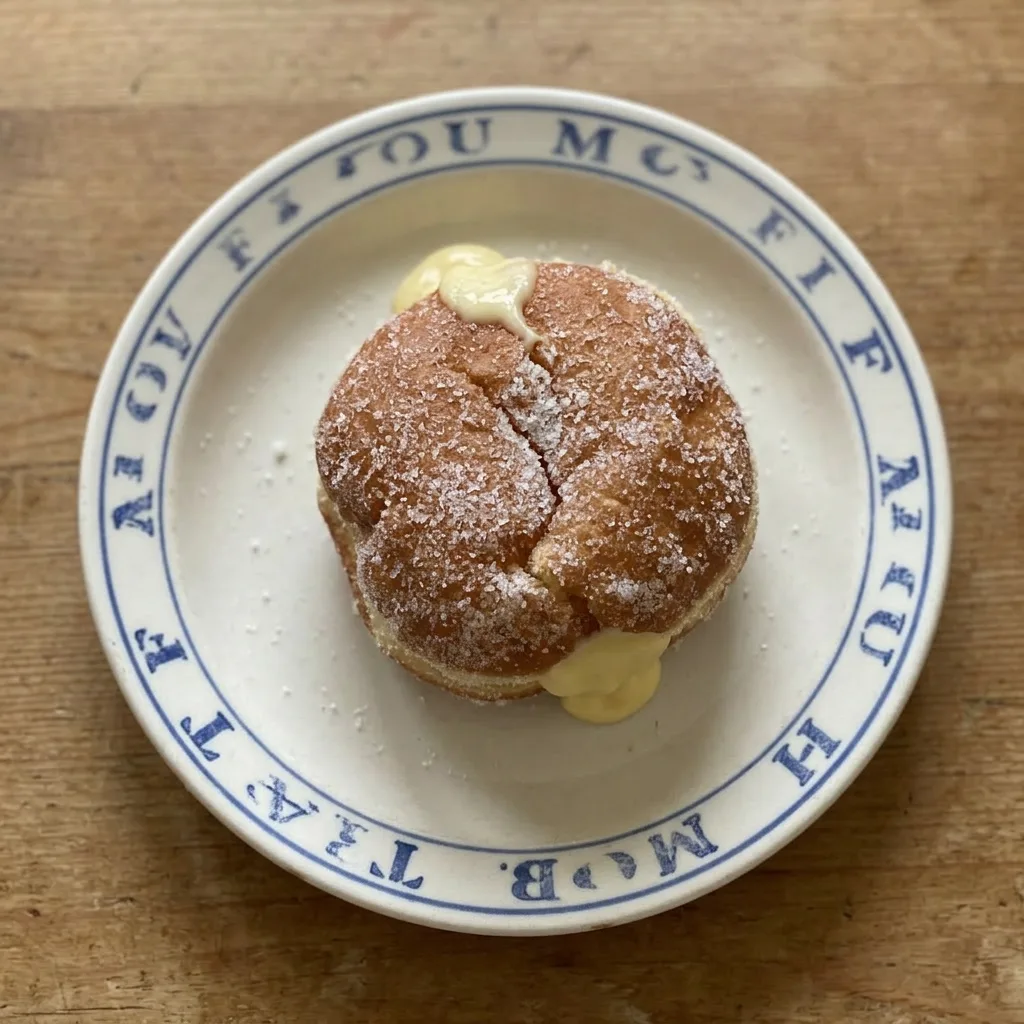
Storage and Serving
For the best texture, fill the doughnuts just before serving. Filled doughnuts soften quickly: the custard soaks into the fried shell, turning it soggy within a few hours.
Serve them within 1 hour of filling. If you need to make ahead, keep the unfilled fried doughnuts in an airtight container at room temperature for up to 2 days, and store the custard separately in the fridge.
Fry the doughnuts, let them cool completely, then keep them in a single layer (or stacked with parchment between layers) in a sealed bag or container. Re-crisp them in a 350°F oven for about 3 minutes if they’ve softened.
Fill only what you’ll eat right away. Leftover filled doughnuts can sit at room temperature for 1 day, but the shell will be noticeably less crisp.
Do not refrigerate filled doughnuts; cold makes the shell tough and the custard weep.
What you can swap in these doughnuts, and what you shouldn’t
instant yeast: active dry yeast. Proof it in the lukewarm milk with a pinch of sugar for 5 to 10 minutes until frothy before adding the rest of the dough ingredients. No other changes needed; the rise time is the same.
high-grade flour: all-purpose flour. All-purpose works fine but produces a slightly softer, less chewy crumb. The dough will feel a bit less elastic during kneading; don’t reduce the mixing time.
butter (salted): unsalted butter. If you use unsalted, add 1/4 teaspoon extra salt to the dough and a pinch to the custard. The final flavor will be cleaner, but the salt in salted butter helps balance sweetness.
cornstarch: flour. Do not substitute. Cornstarch gives the custard its clean, sliceable set.
Flour would make it pasty and starchy, and you’d need twice as much, throwing off the sweetness and texture.
Tips
- Use a probe thermometer to monitor oil temperature continuously; clip it to the pot so you can adjust the burner without opening the lid.
- Fry in small batches of 2-3 doughnuts to prevent the oil temperature from dropping more than 10°F, which would cause greasy doughnuts.
People think a soft dough is a good dough, but when you add butter too soon, you end up with a sticky mess that never comes together.
Frequently Asked Questions
Can I make the dough and custard a day ahead?
Yes. The custard can be made up to 2 days ahead and chilled. The dough can be refrigerated overnight after its first rise; cold dough is firmer and easier to roll.
Just shape and proof as directed before frying.
Why did my doughnuts come out greasy?
Greasy doughnuts usually mean the oil was too cool. Frying at 340°F is key, below that, oil soaks into the dough instead of forming a crisp crust. Also check that the dough had enough rest time after cutting; underproofed dough is denser and absorbs more oil.
How do I know when the custard is thick enough?
The custard is ready when it bubbles and you feel it turn noticeably thick and resistant under the whisk. Let it bubble for a full minute, that’s when the cornstarch fully activates. Once it coats the whisk heavily and holds a ribbon trail when lifted, it’s done.
